-
-
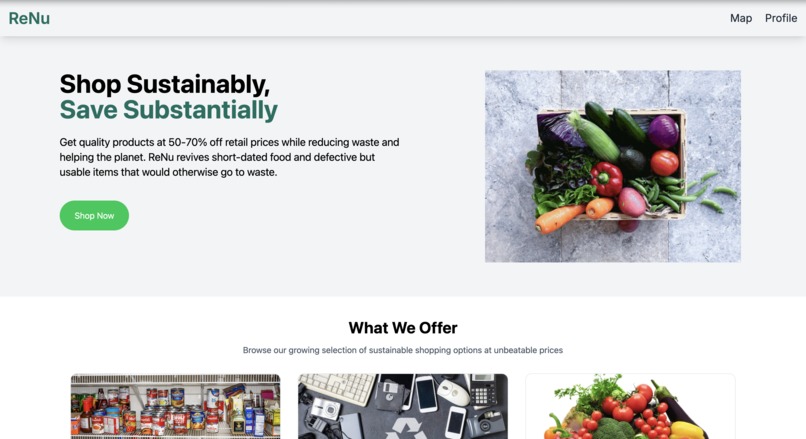
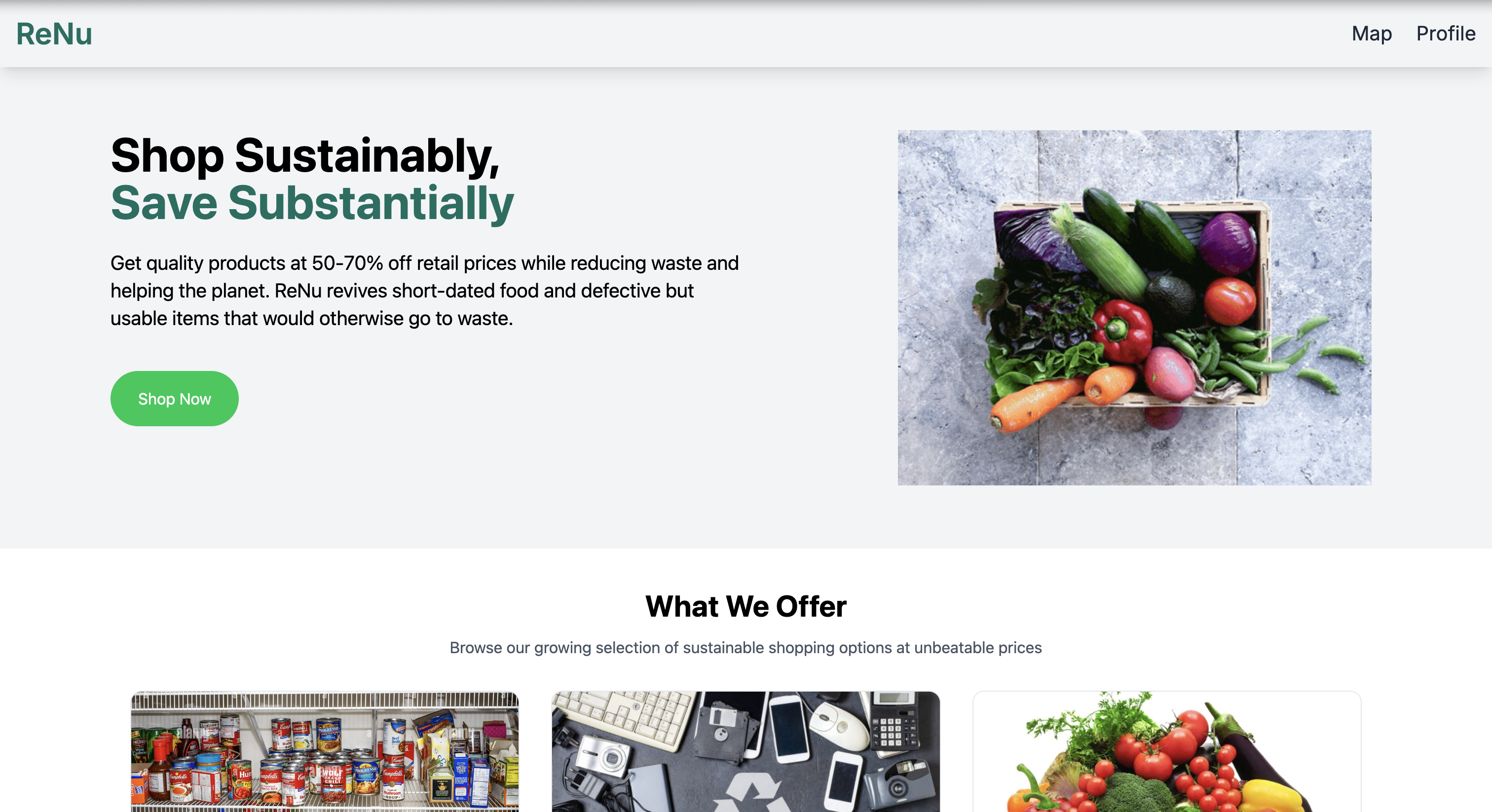
Landing page
-
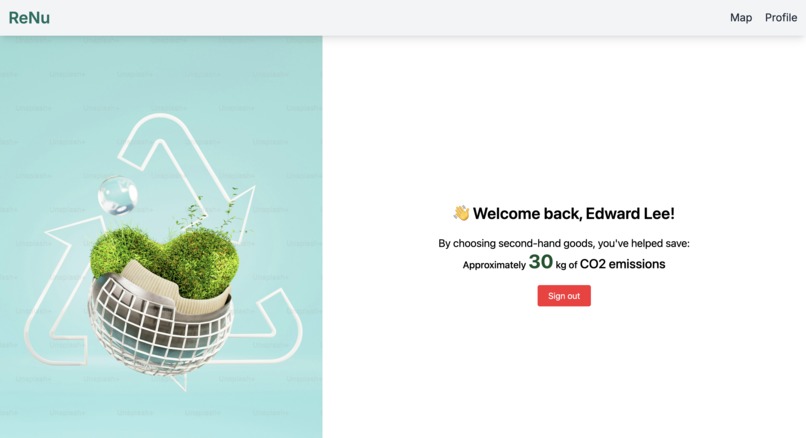
Emissions tracking
-
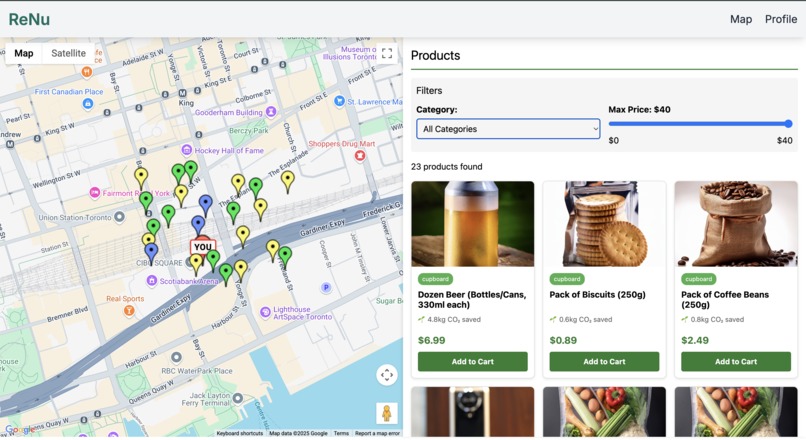
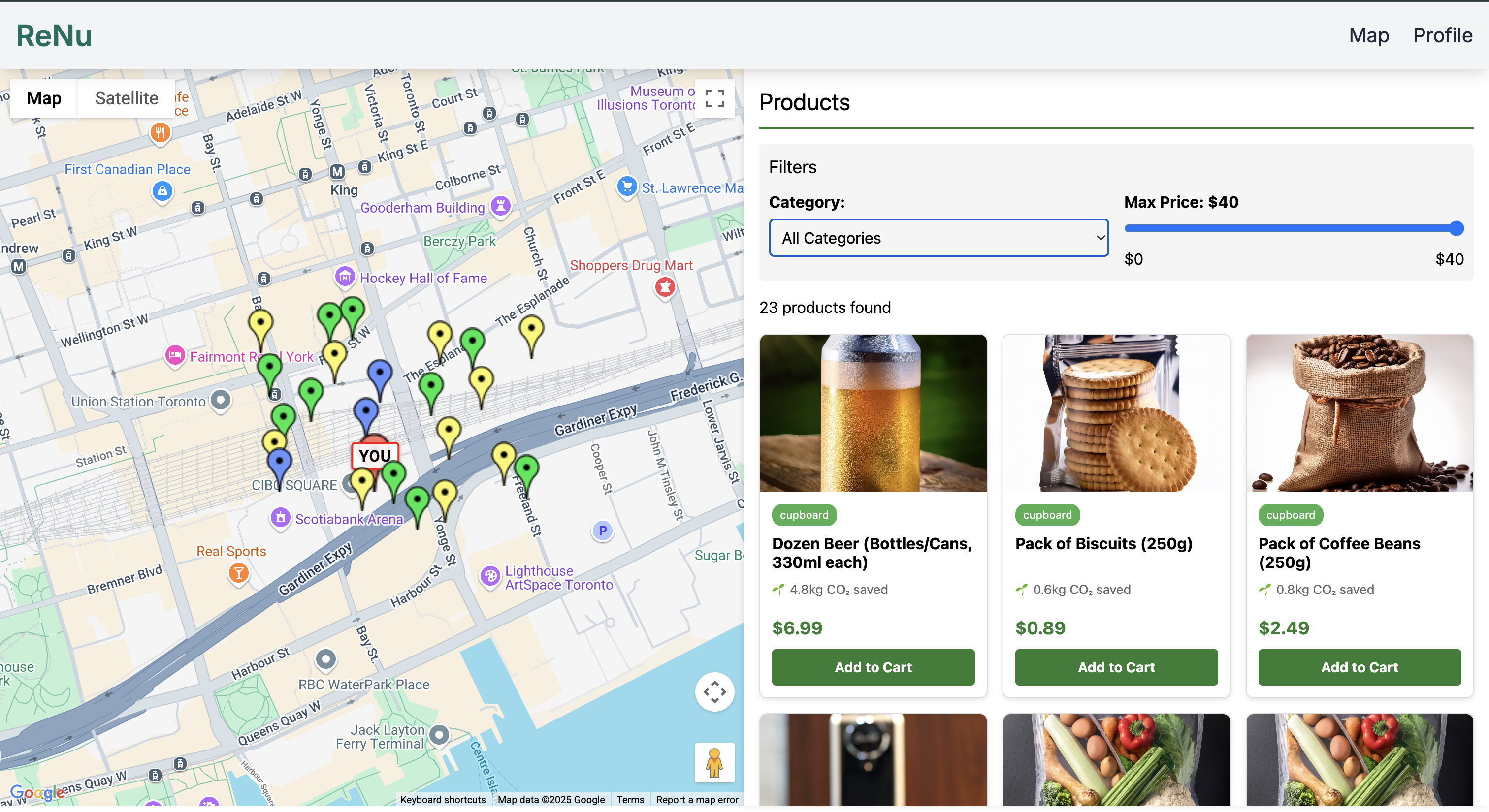
Initial map render
-
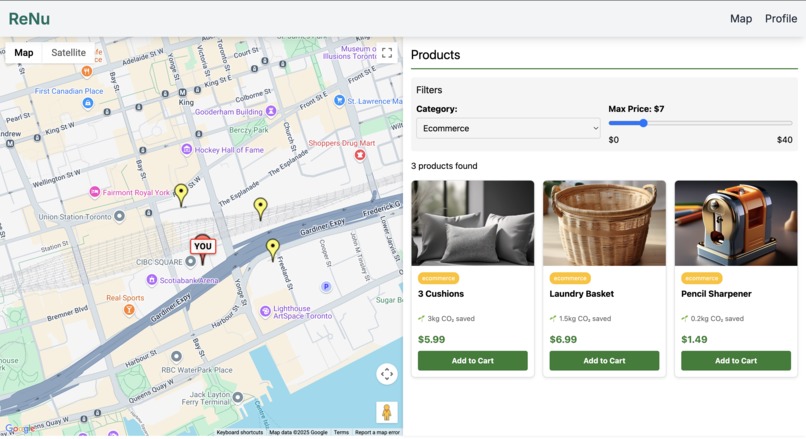
Filtering functionality


ReNu: Reviving Short-Dated & Defective Products to Reduce Waste & Promote Sustainable Living
Inspiration
The world is grappling with an alarming amount of waste, particularly in food and consumer goods. Retailers throw away short-dated, imperfect, or unsellable items while millions face hunger and environmental harm from unnecessary waste. We were inspired to create a solution that helps reduce this waste by providing customers with quality products at discounted prices while promoting a sustainable lifestyle.
ReNu was born from the desire to tackle food waste, defective consumer goods, and over-purchasing. By rescuing short-dated and imperfect items and selling them at a fraction of their retail price, we aim to create a positive impact on both the environment and consumers' wallets.
What Does Our Solution Do?
Our solution connects retailers, manufacturers, and e-commerce platforms with customers through a centralized platform, enabling the sale of short-dated, returned, or defective products at discounted prices. The key features include:
1. Product Selections
Stage 1: Cupboard Food
We acquire short-dated food or products with defective packaging from supermarkets and food manufacturers. These items are repackaged and sold at a discount before expiration.Stage 2: Returned / Defective E-Commerce & Lifestyle Items
Partnering with e-commerce platforms like Amazon, eBay, and Alibaba, we acquire returned or defective products that are still usable. These items are cleaned, repaired if necessary, and resold.Stage 3: Overbought Stock from F&B
We collect surplus food from the food and beverage industry, repackaging it into cooking bundles or food packages to be sold through pickup points or online channels.
2. Sales & Marketing Methods
E-Commerce Platform
Our website and mobile app allow customers to browse and purchase items easily. By analyzing customer behavior and purchase history, we suggest products that meet their needs.Click and Collect
Customers can pre-order and pick up items at our local stores, such as those located near universities or in downtown areas.
3. Pricing and Profit
Products are priced based on their proximity to expiration, offering customers savings of 50-70% compared to retail prices. We focus on creating a sustainable commerce ecosystem, prioritizing environmental impact over profits, while reinvesting our earnings to expand operations.
How We Built It
Our solution is developed with the following tech stack:
Frontend
- React.js: Built the website for a smooth and user-friendly interface using React.js.
- Tailwind CSS: Used Tailwind CSS for efficient and responsive UI styling.
Backend
- Firebase: Integrated for backend services, including:
- User Authentication: Secure user login and sign-up functionality.
- Storage: Storing product images and other media files.
- Real-Time Database (Firestore): Managing inventory, product tracking, and real-time updates.
- Hosting: Deployed the website using Firebase Hosting for fast and reliable delivery.
Inventory & Logistics Management
- Google Maps API: Used for store pickup location selection and easy navigation. We integrated interactive map features that allow users to find nearby pickup points easily.
Testing & Validation
We focused on validating core features, including product registration and pricing logic. Through user feedback and testing, we refined our approach, ensuring that the system can handle real-time stock updates and order fulfillment effectively.
Challenges We Faced
Connecting Firebase to Google Maps API
One challenge we faced was figuring out how to integrate Firebase Storage with the Google Maps API to display location-based images (like photos of store pickup points or product packaging). While Firebase Storage handled storing and retrieving images, connecting those images with the specific locations on the map was tricky. We needed to ensure that the correct images were linked to the right geospatial coordinates and that they displayed properly on the map. This required creating a system to map the image URLs from Firebase Storage to the corresponding map markers, and handling issues around performance, especially when loading multiple images at once. Ensuring everything synced correctly and performed smoothly was a key hurdle we had to overcome.Displaying Nearby Products Based on User Location
We initially planned to use the Google Maps Geolocation API to detect the user's location and display nearby products or relevant information. However, since the hackathon was global, users could access the platform from anywhere, making it challenging to ensure that products tailored to specific regions would display correctly. To solve this, we decided to set BCG-Toronto as the default location and showcase products available in that area. This approach allowed us to bypass the complexities of location tracking and provided a consistent experience for all users.
Accomplishments/Learnings
- User-Centered Design: We focused on understanding user needs, which resulted in a responsive, intuitive interface that customers love.
- Sustainable Impact: We’re proud of our contribution to reducing waste, saving money for consumers, and helping promote sustainable living.
- Technical Growth & Problem Solving: Overcoming technical challenges significantly improved our team’s engineering skills. Successfully integrating Firebase with Google Maps API, troubleshooting API key permission issues, and enhancing data synchronization provided valuable learning experiences.
- Team Collaboration & Agility: Working under tight deadlines with teammates across different time zones and countries required effective teamwork and quick decision-making. We maintained clear communication channels, assigned roles efficiently, and utilized agile practices to adapt to evolving project requirements.
What's Next?
1. Improvements with More Time
- Enhanced AI Recommendations: With more time, we would develop an AI recommendation system to offer even better, personalized suggestions.
- Push Notifications: We would implement push notifications for deals, stock updates, and personalized reminders.
2. Long-Term Scalability
- Global Expansion: To make the solution scalable, we plan to develop partnerships with global e-commerce platforms and retailers.
- Smart Warehouses: We aim to implement smart warehouse solutions using robotics and AI to optimize operations.
3. Localized Expansion
- After achieving traction and profitability, we plan to open Click and Collect stores in other university campuses and urban locations, expanding our reach and impact.
Conclusion
ReNu is more than just a business. It's a movement to reduce waste and create a more sustainable future. By offering quality products at discounted prices, we empower consumers to make eco-conscious choices without compromising their lifestyle. Our solution helps reduce waste, promote sustainability, and foster a more responsible way of living. We’re excited to continue growing and expanding our impact.
Built With
- firebase
- google-cloud-map
- google-maps
- react.js
- tailwind

Log in or sign up for Devpost to join the conversation.