-
-
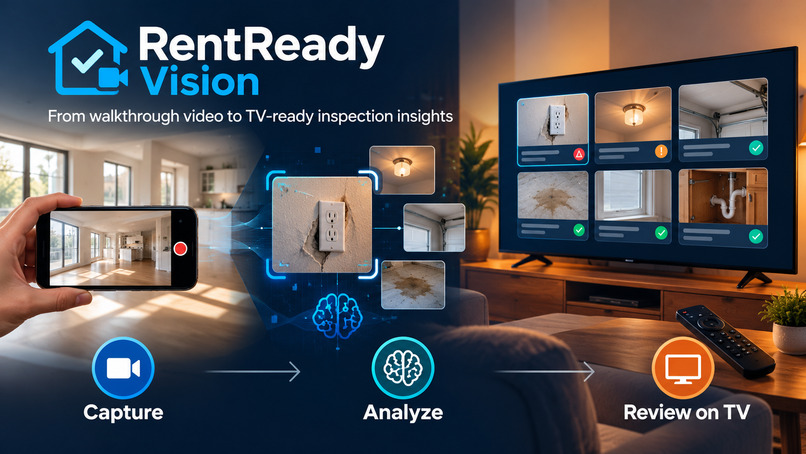
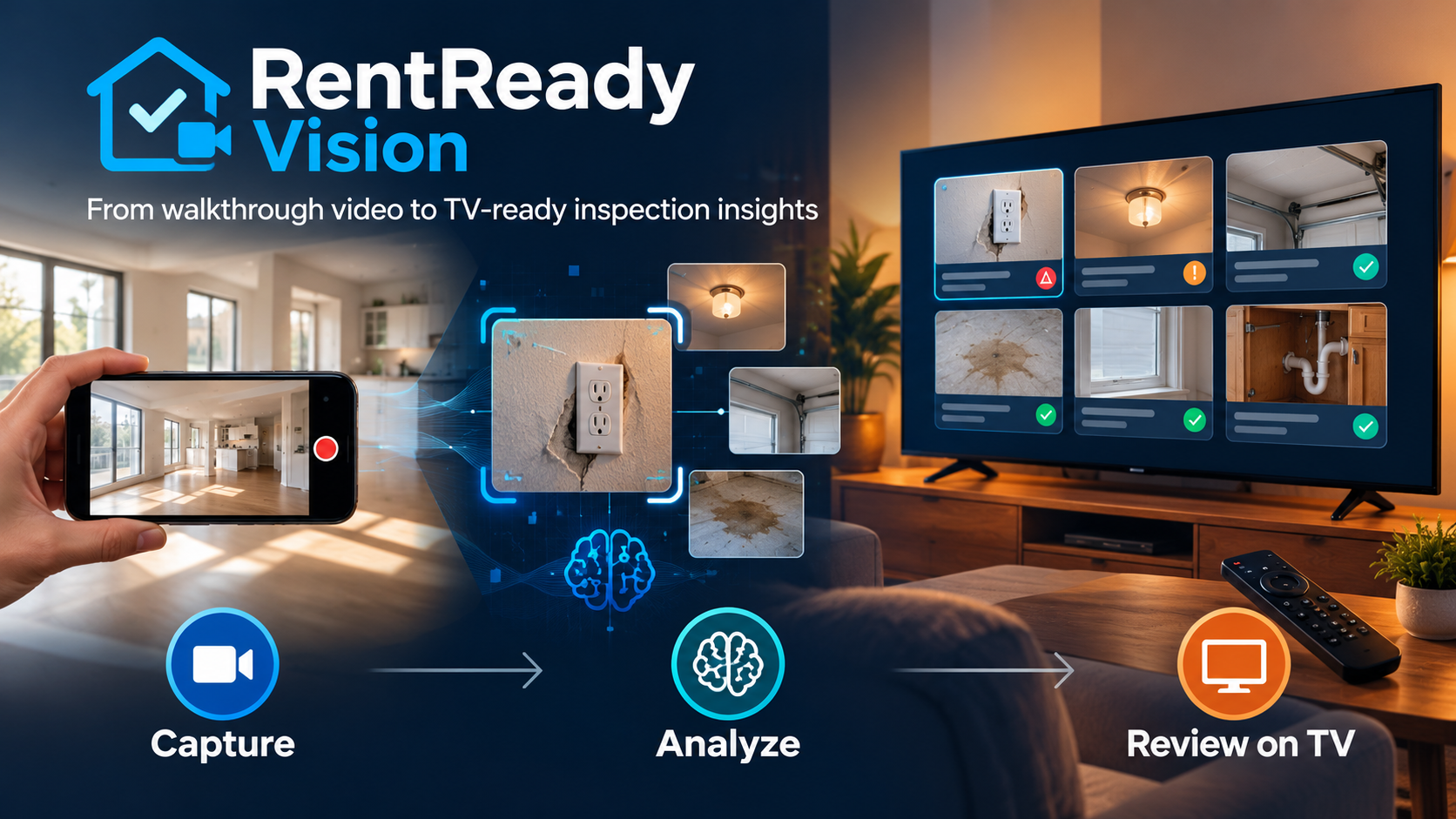
Concept illustration: From rental walkthrough videos to AI-assisted inspection findings and Fire TV evidence review.
Inspiration
I manage rental properties, and whenever a property becomes vacant, one of my responsibilities is making sure it is in good condition before welcoming the next tenants.
This means walking through the property, checking each room for visible damage, identifying maintenance issues, and determining what needs to be repaired. It can be time-consuming, and even with a careful walkthrough, smaller problems can be easy to overlook.
That experience gave me an idea: What if I could simply record a walkthrough video with my phone and use AI to help identify potential issues?
I imagined an application that could analyze a property walkthrough video and generate a structured report highlighting possible damage, maintenance concerns, recommended repairs, supporting images, and timestamps. Instead of manually reviewing an entire video and taking notes, I could use AI to help organize what needs attention before the next tenant moves in.
That idea became RentReady Vision, an AI-assisted property inspection application combining computer vision, OpenCV, and AI to turn walkthrough videos into actionable rental-preparation reports.
Why bring RentReady Vision to Fire TV?
After developing the video analysis and reporting experience, I started thinking about how property inspection results could be reviewed more effectively.
A phone or computer is useful for uploading videos and generating reports, but a television offers a much better experience for reviewing visual evidence together.
With Fire TV, I wanted to transform the inspection report into an interactive, big-screen experience where property owners, family members, and maintenance teams could:
- Explore the property room by room using a TV remote.
- Examine photographs of potential damage on a larger screen.
- Watch short evidence clips to better understand possible issues.
- Review which AI findings have been confirmed or rejected by a human.
- See an Amazon Bedrock-powered rental-readiness briefing to help prioritize what needs attention.
Imagine sitting in your living room after a property walkthrough, opening the inspection on your TV, and reviewing the potential repairs with someone else instead of passing a phone around or searching through a long video.
The goal is to make property preparation more visual, collaborative, and organized, while keeping people responsible for verifying findings and deciding what actually needs to be repaired.
That's what inspired RentReady Vision for Fire TV: bringing AI-assisted property inspection results from the phone and computer to the biggest screen in the home.
Walk through once. Review the evidence together.
What it does
RentReady Vision analyzes rental property walkthrough videos using computer vision and AI to identify potential issues, organize inspection evidence, and generate structured findings.
The new Fire TV experience allows users to:
- Navigate inspections and rooms using a TV remote.
- Review potential maintenance findings room by room.
- Examine preserved photographic evidence on a large screen.
- Play selected video clips associated with findings.
- Distinguish human-confirmed findings from rejected AI suggestions.
- View an Amazon Bedrock-powered rental-readiness briefing with prioritized recommendations.
The goal is to make inspection results easier to understand, verify, and discuss collaboratively.
Findings are advisory and require human verification; the application is not a substitute for a professional property inspection.
How I built it
The existing RentReady Vision backend uses Python, FastAPI, OpenCV, and AWS infrastructure to process uploaded walkthrough videos.
OpenCV evaluates video frames for sharpness, exposure, motion, scene changes, and duplication. Selected evidence frames support downstream AI analysis and inspection reporting.
The backend uses Amazon S3 for private media storage, Amazon DynamoDB for inspection state, Amazon SQS for asynchronous processing, and Amazon EC2 with Graviton-based processing infrastructure.
For the hackathon, I developed a new Android/Kotlin application targeting the Fire TV experience.
The television interface uses remote-first navigation, Android TV components, and authenticated API integrations to retrieve saved inspections, evidence photographs, and video clips.
I also integrated Amazon Bedrock using Amazon Nova 2 Lite to generate rental-readiness recommendations from saved inspection findings. Recommendations are validated and cached in DynamoDB before being presented on the television.
The Fire TV application accesses cached inspection results rather than processing walkthrough videos directly on the television.
Challenges I encountered
Several challenges required particular attention:
- Designing predictable D-pad navigation and focus behavior for a television remote.
- Maintaining secure access to private inspection images and video evidence.
- Implementing restricted device pairing without exposing privileged AWS credentials.
- Preserving the relationship between AI-generated recommendations, original findings, and subsequent human-review decisions.
- Controlling AWS processing costs through on-demand infrastructure and cached model results.
- Establishing a reproducible Android TV emulator testing and judge-access workflow.
Accomplishments
I developed a working television application that extends RentReady Vision beyond its original browser-based inspection workflow.
The application supports room navigation, evidence review, video playback, restricted access to an approved inspection, and a Bedrock-powered readiness briefing.
I validated five consecutive end-to-end demonstration journeys on a Google Android TV emulator, including a cold boot, and prepared both an offline demonstration and a restricted live AWS demonstration for judges.
The Android TV emulator is an accepted hackathon testing environment. Physical Fire TV hardware and Fire OS compatibility have not been independently tested.
What I learned
This project reinforced the importance of designing AI applications around verifiable evidence and human judgment rather than treating model predictions as unquestionable conclusions.
I also gained practical experience with television-first interaction design, Android/Kotlin development, secured device authentication, AWS service integration, and managing cloud costs.
What's next
Potential future improvements include collecting reviewer feedback on false positives and missed issues, expanding detector evaluation, improving inspection accuracy, and adding broader device compatibility testing.
Significant updates during the hackathon
RentReady Vision development began on August 26, 2026, five days before the Amazon Developer Hackathon started.
The initial project was an early OpenCV video-processing prototype. Development of the inspection platform continued during the competition.
Beginning October 11, I developed the Amazon-specific television application, including its remote-first interface, room-by-room inspection review, evidence playback, secure pairing, and Amazon Bedrock-powered briefing.
These additions created a new television-based inspection experience while reusing the existing computer-vision and AWS backend.
The development history and distinction between existing functionality and new hackathon work are documented in the project's GitHub repository.
Built With
- amazon-bedrock
- amazon-cloudwatch
- amazon-dynamodb
- amazon-ec2
- amazon-nova
- amazon-sqs
- amazon-web-services
- android
- android-tv
- androidx-leanback
- aws-graviton
- fastapi
- fire-tv
- kotlin
- opencv
- python

