-
-
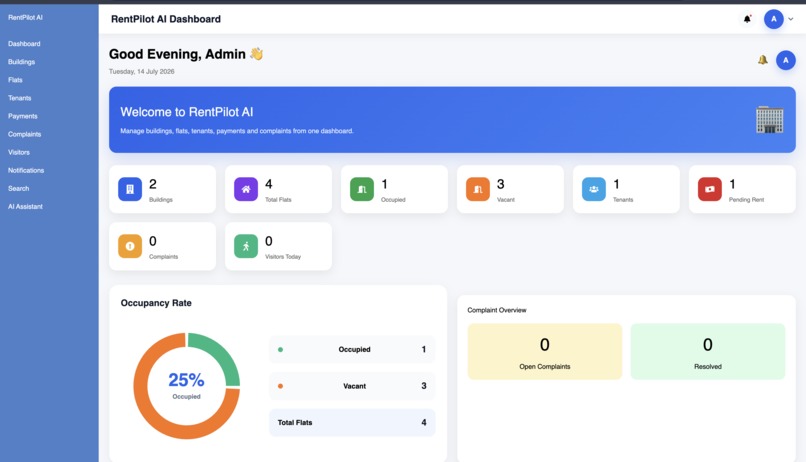
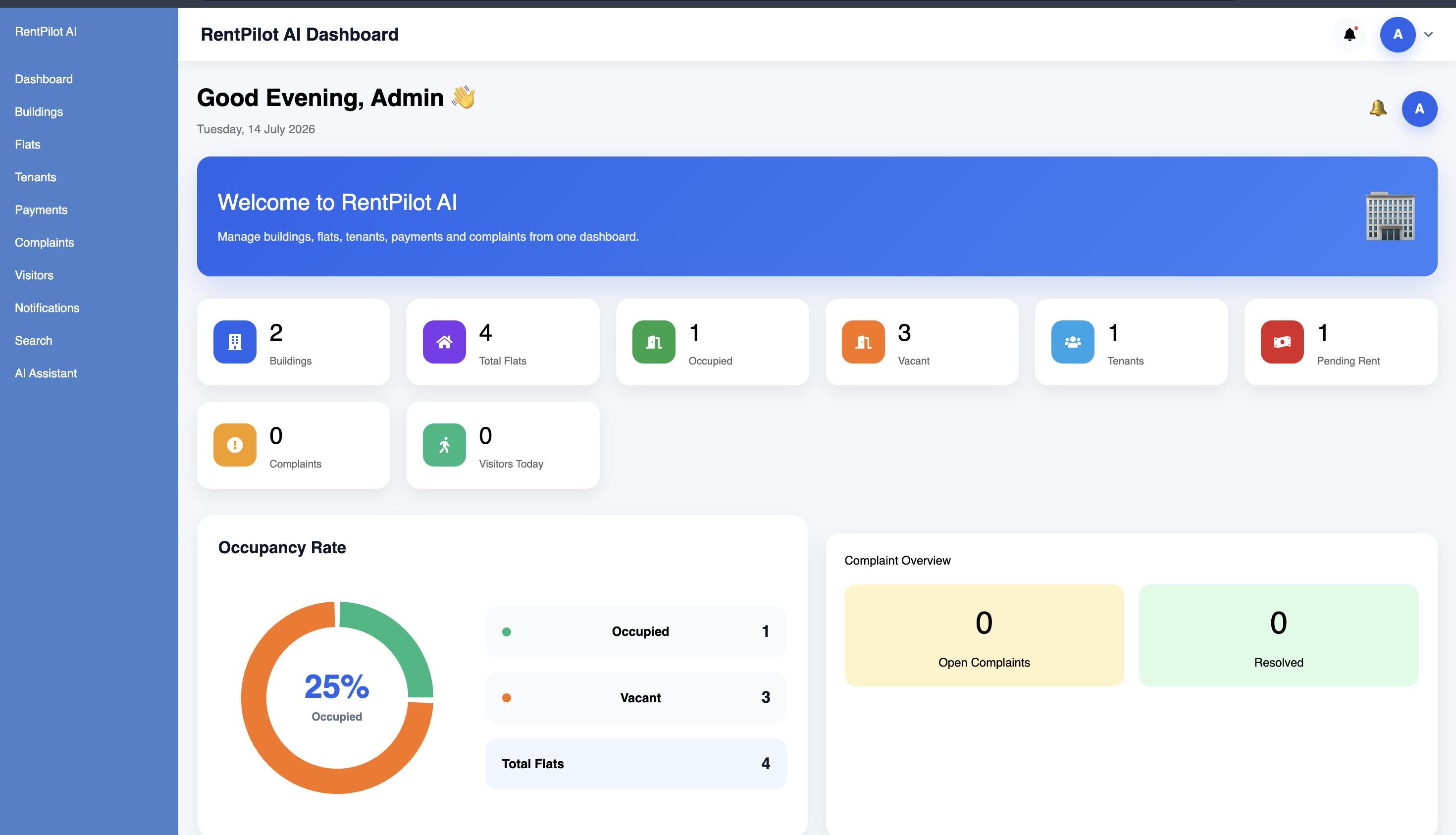
main dashboard
-
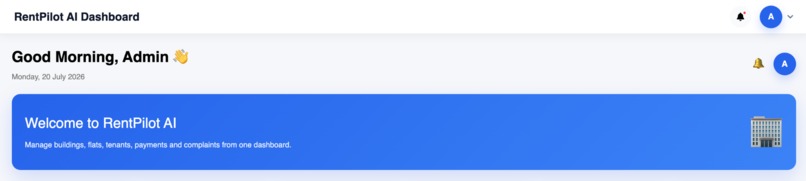
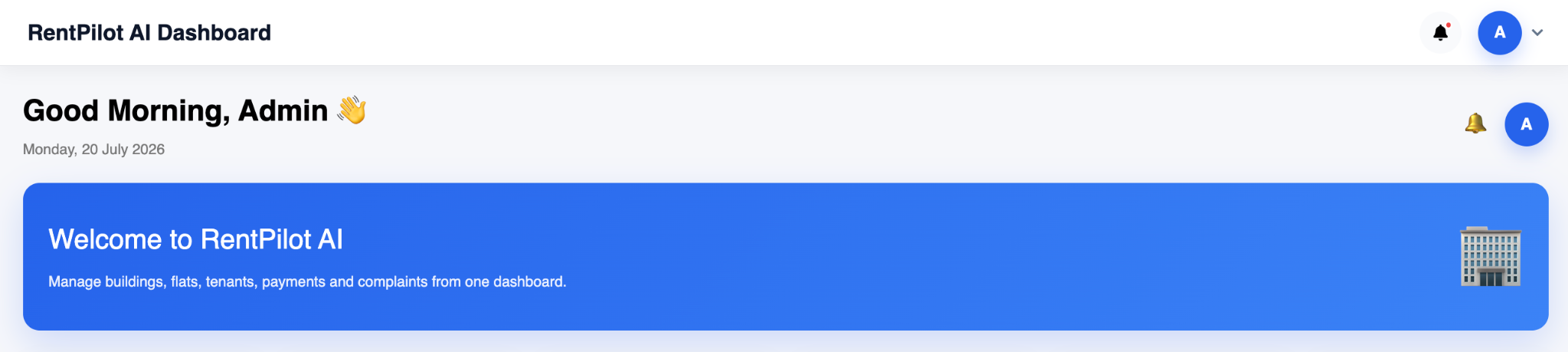
Welcome block
-
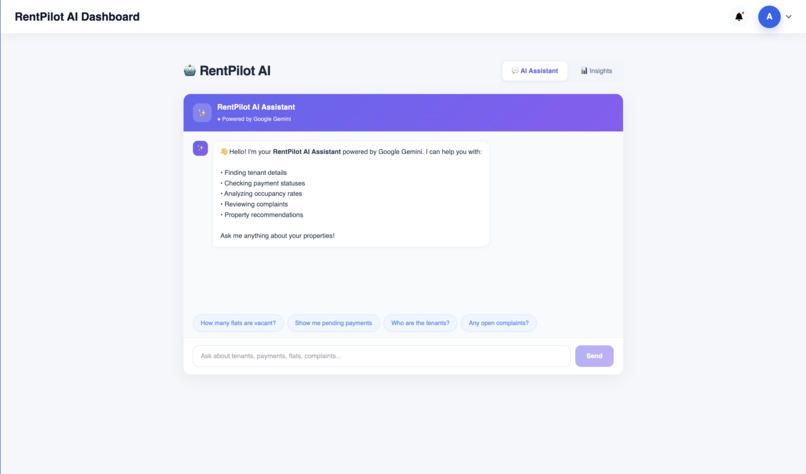
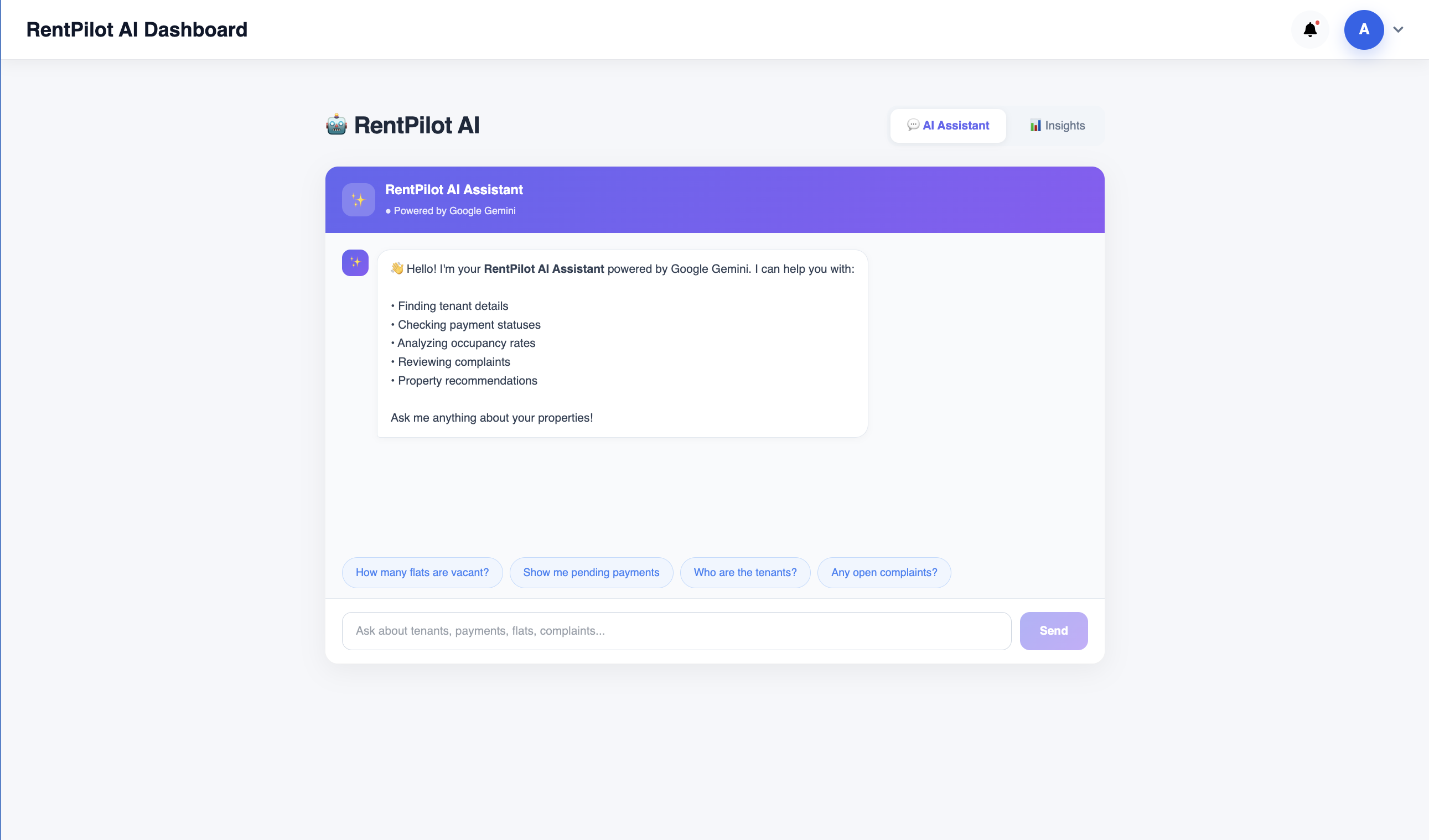
AI assistant Block
-
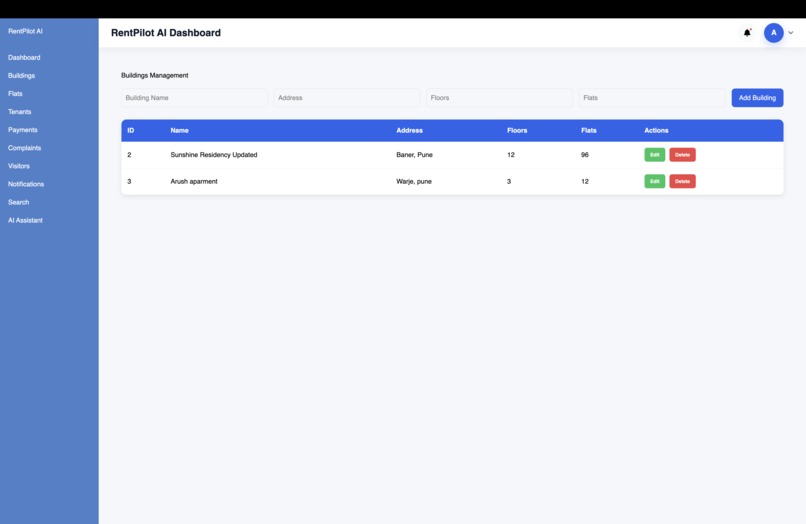
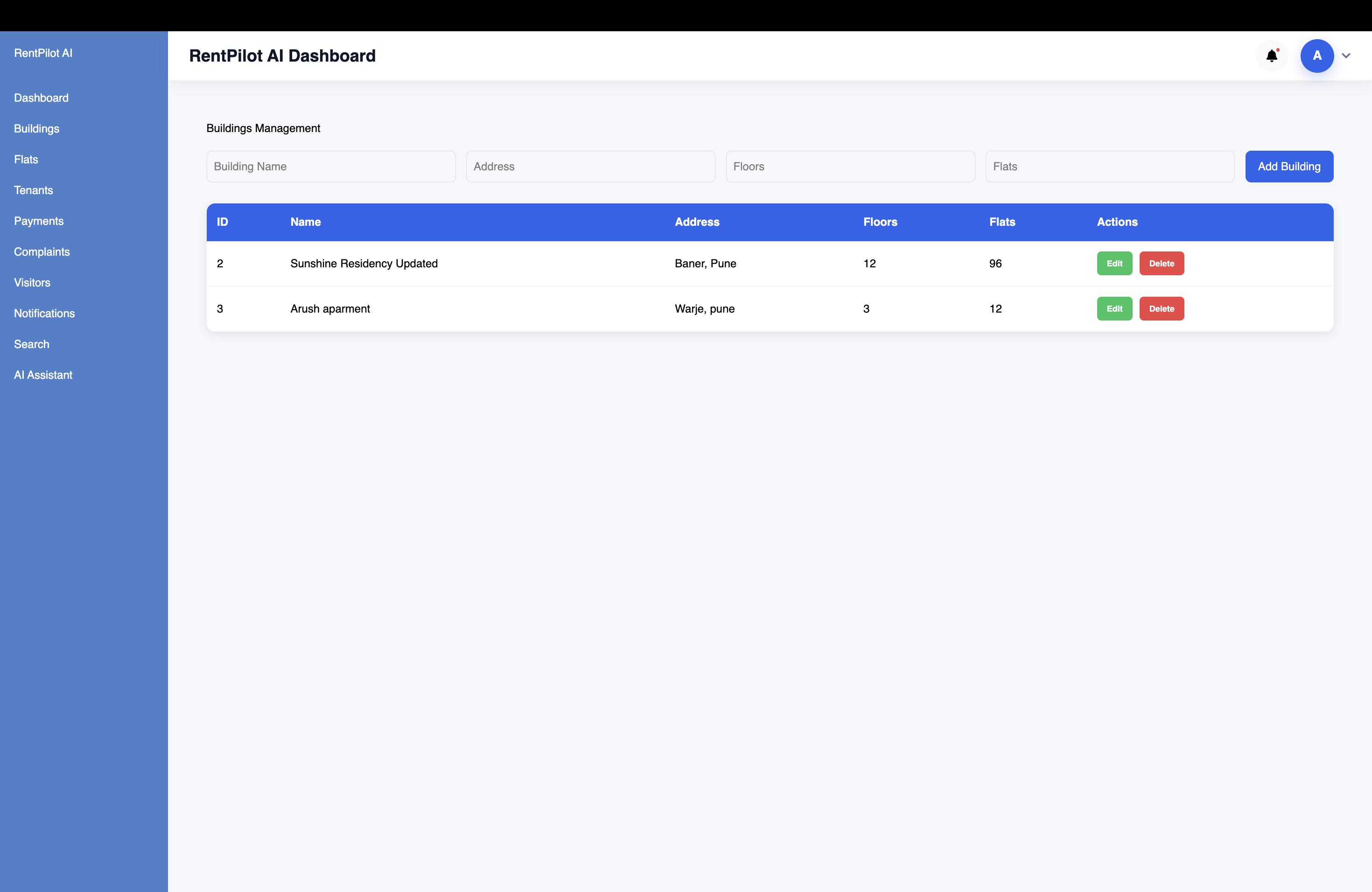
Buildings block
-
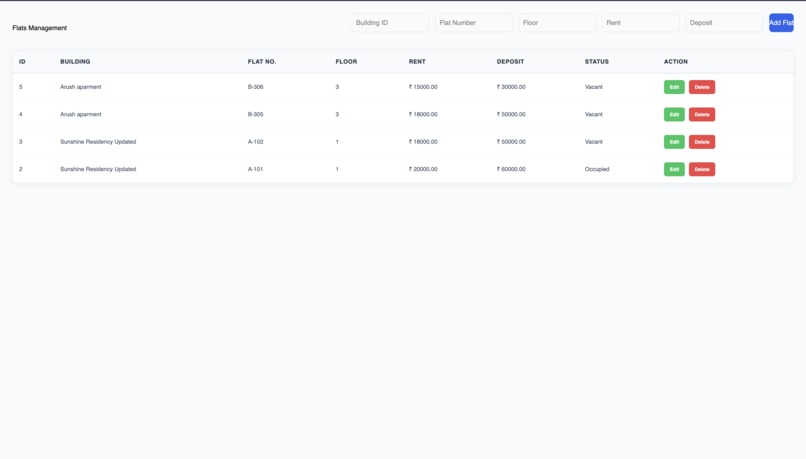
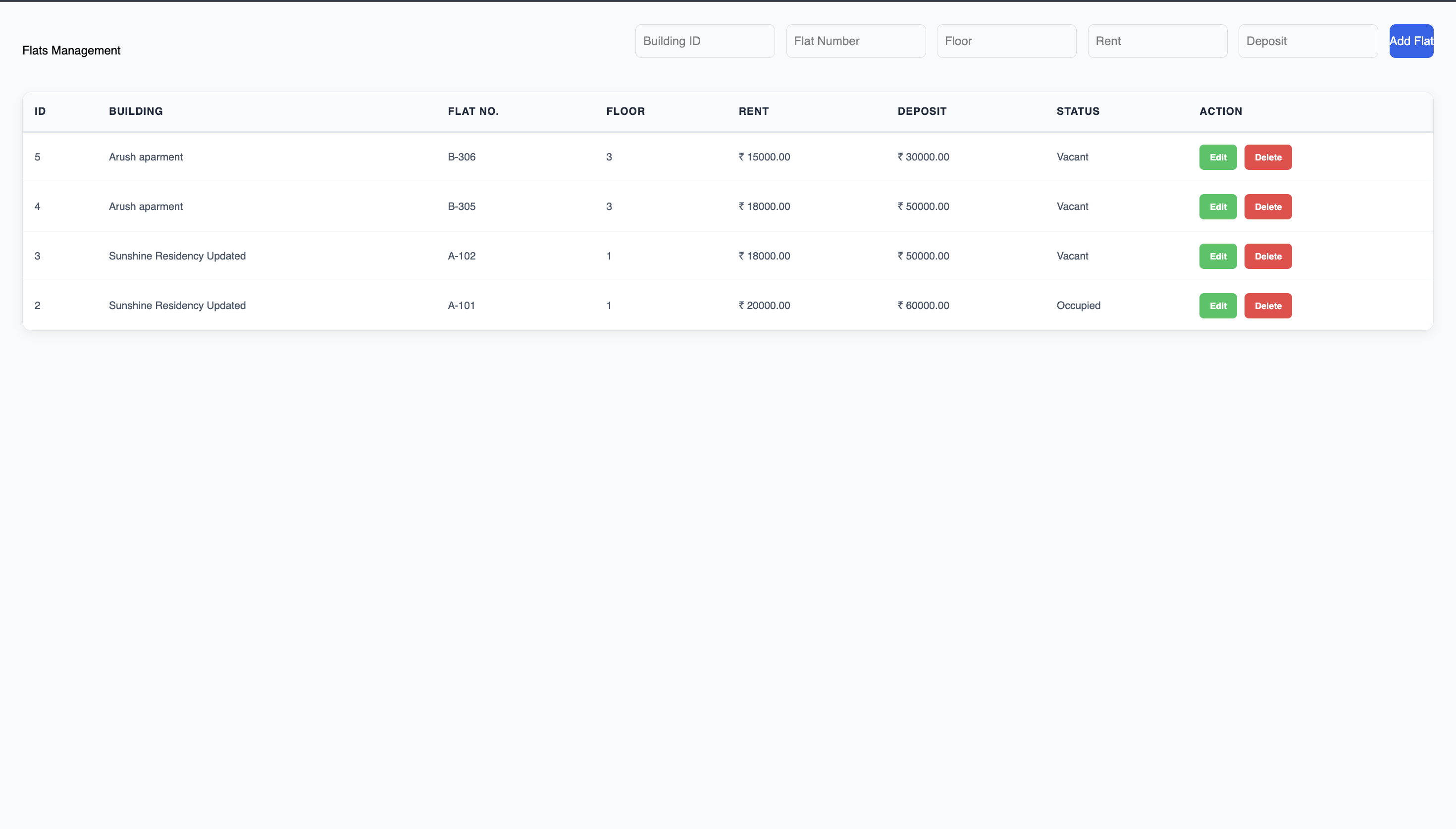
Flats Block
-
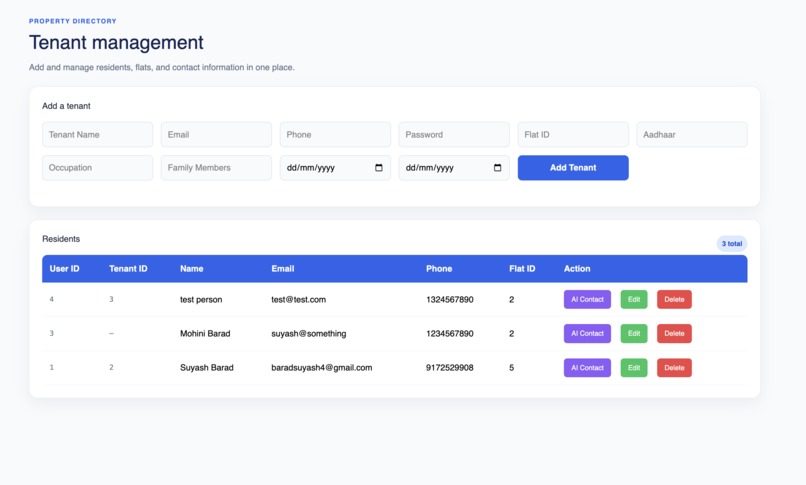
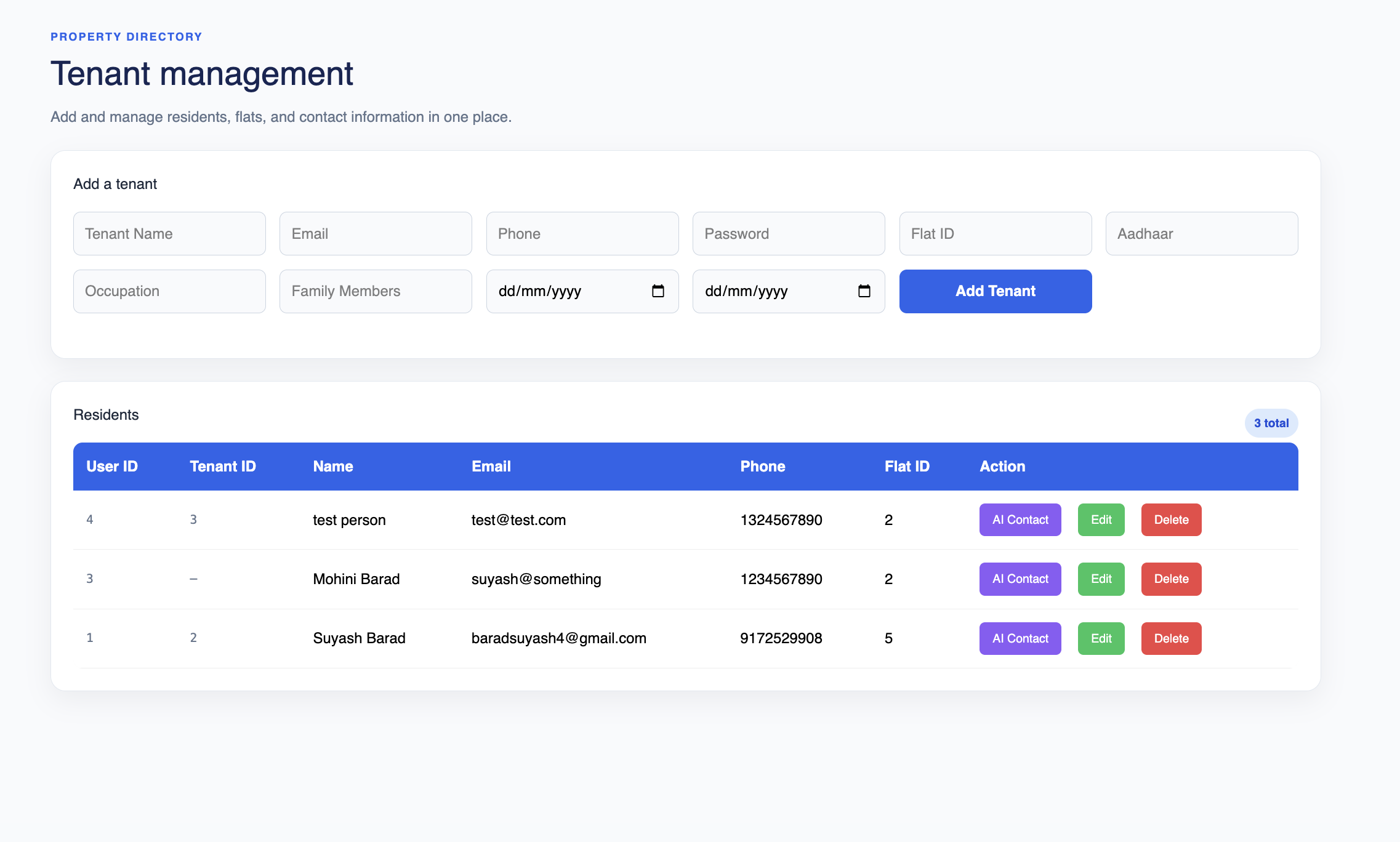
Tenants block
-
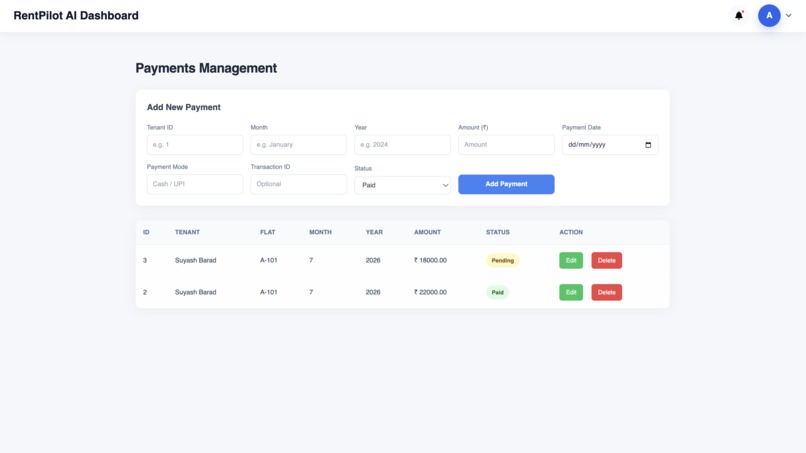
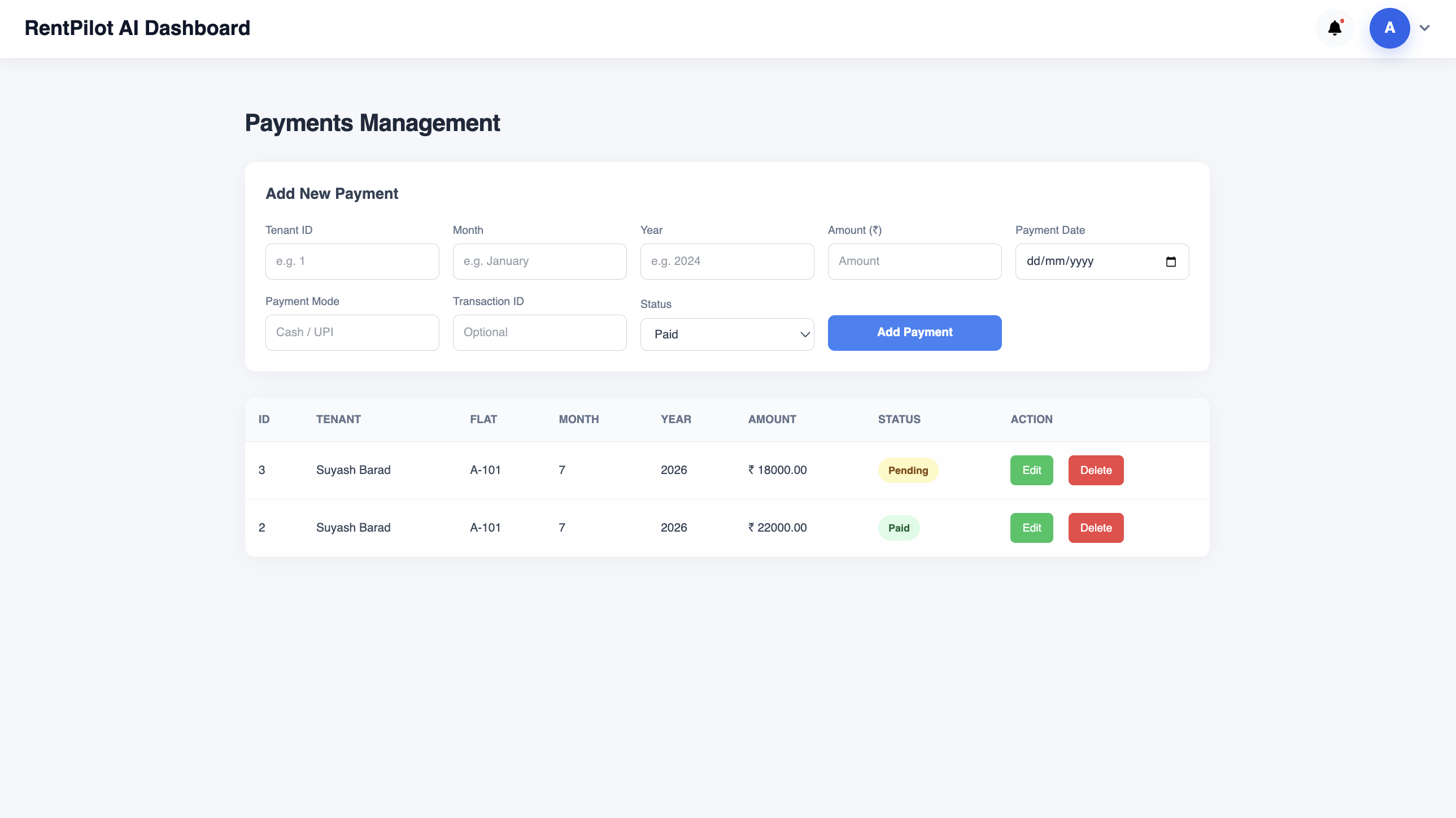
Payments block
-
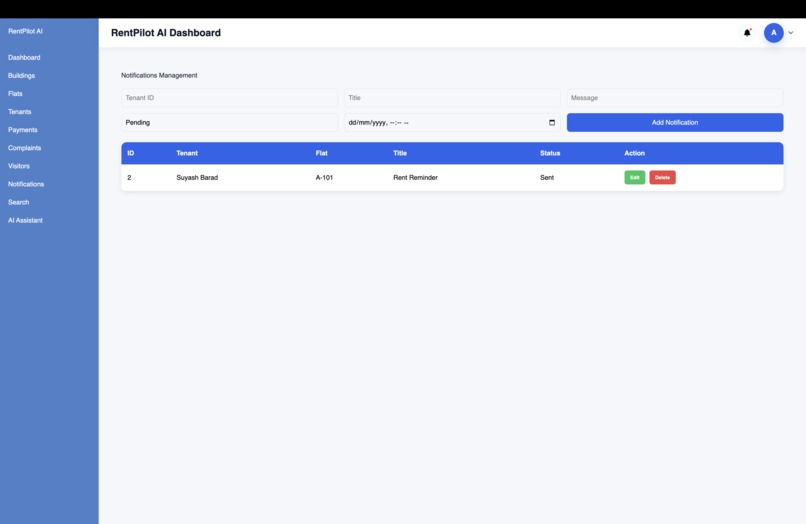
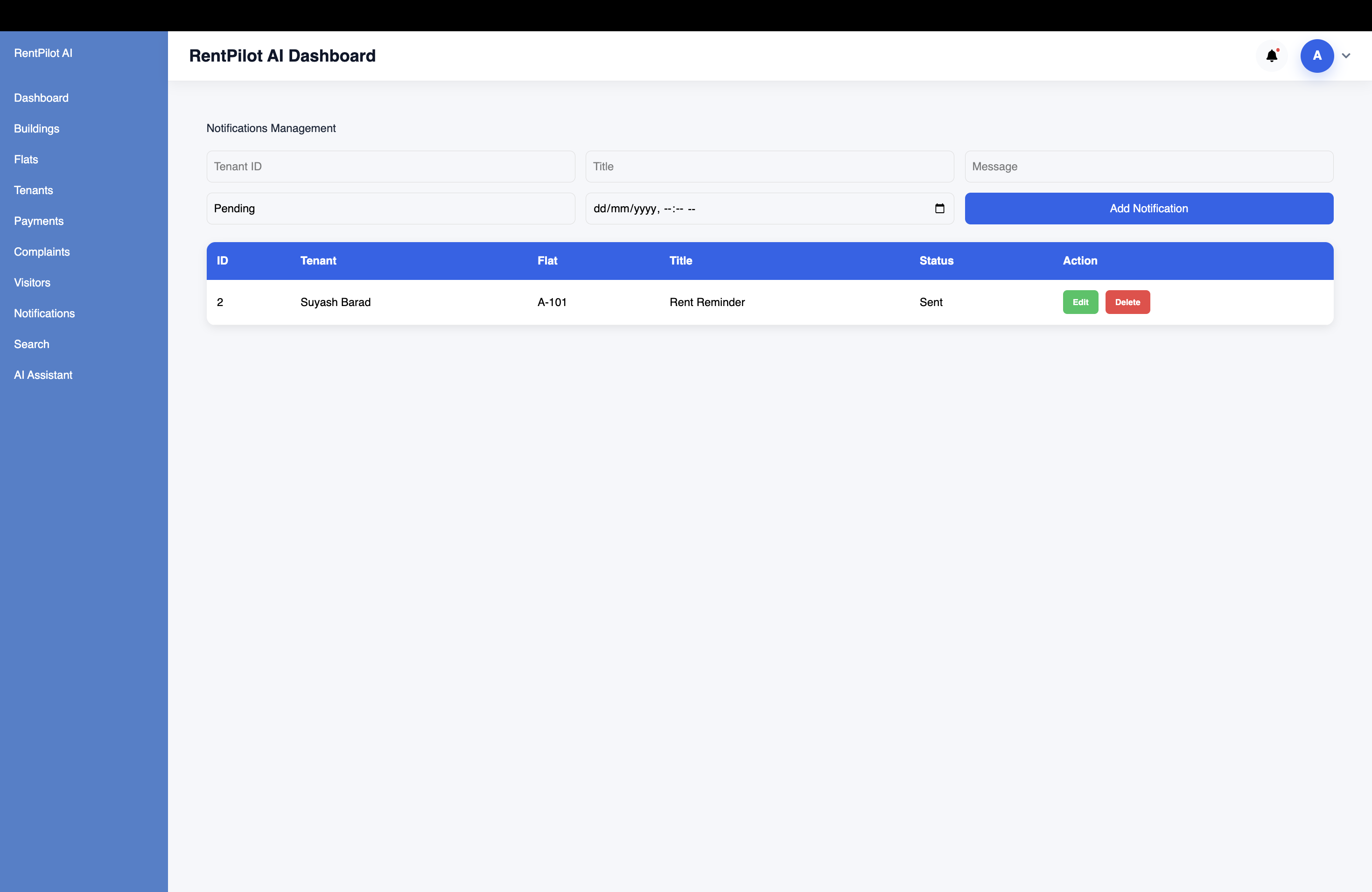
Notifications block
-
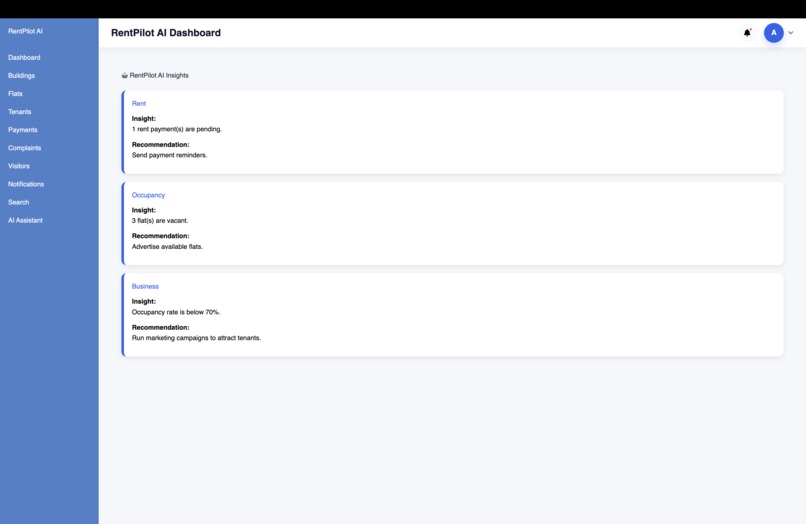
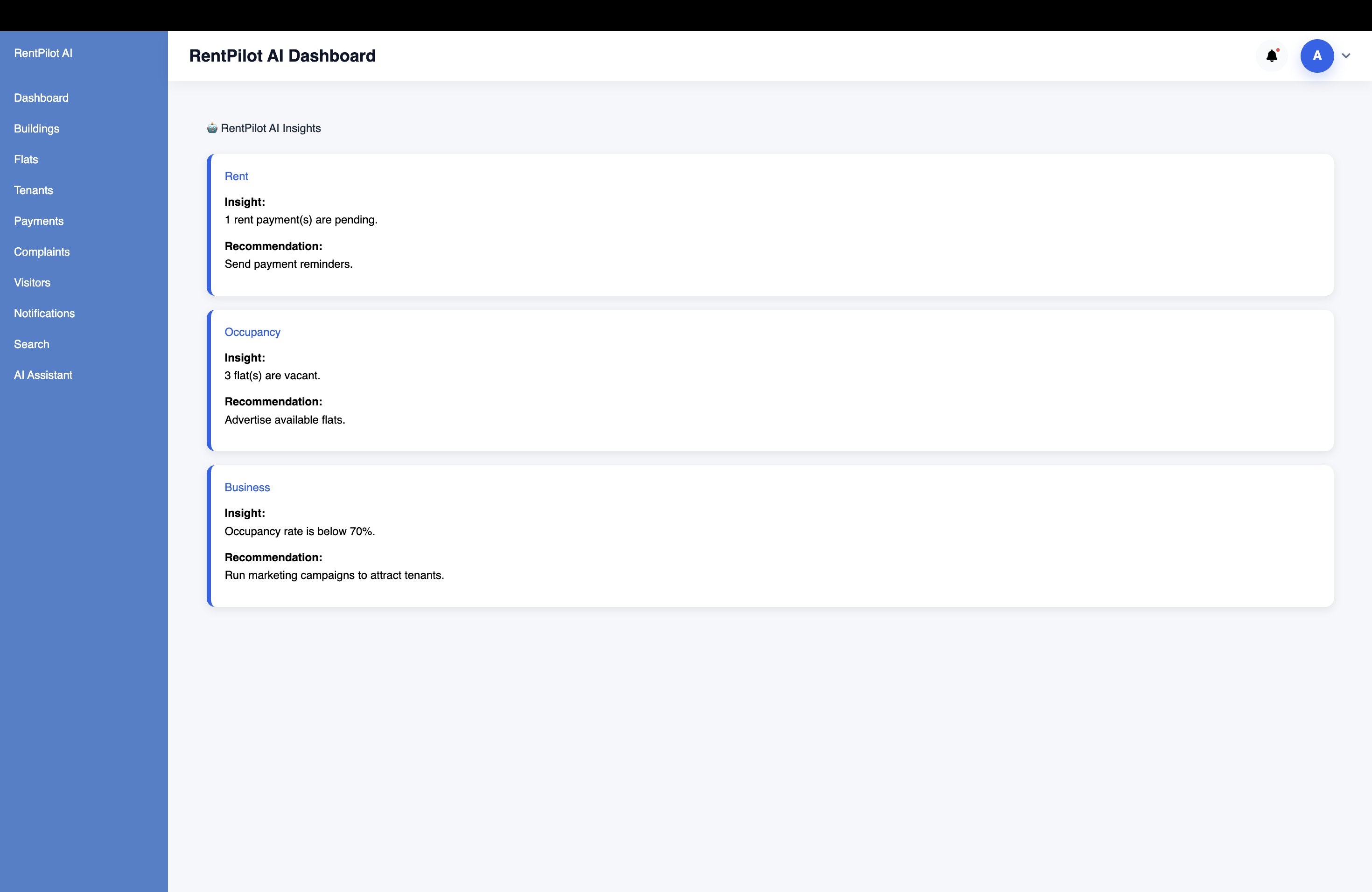
AI insights block
🏢 RentPilot AI
Inspiration
Managing rental properties often involves handling multiple tasks such as tracking tenants, rent payments, complaints, visitors, and property details. Many small landlords and apartment managers still rely on spreadsheets or manual records, which can be time-consuming and error-prone.
We wanted to build a centralized platform that simplifies these daily operations while exploring how AI can provide useful insights from property data. Our goal was to create a modern, scalable web application that combines traditional property management with AI-powered features.
What it does
RentPilot AI is a full-stack rent management system that helps property owners and managers efficiently manage residential properties.
Key features include:
- 🔐 Secure JWT Authentication
- 🏢 Building and Flat Management
- 👨👩👧 Tenant Management
- 💰 Rent Payment Tracking
- 📋 Complaint Management
- 🚶 Visitor Management
- 🔔 Notification System
- 📊 Dashboard Analytics
- 🔍 Global Search
- 🤖 AI Insights for property management
- 📖 Swagger API Documentation
The platform provides a clean dashboard where users can quickly view important information such as occupied flats, pending rent payments, complaints, and visitor statistics.
How we built it
We followed a modular full-stack architecture.
Frontend
- React
- Vite
- Axios
- React Router
The frontend provides a responsive user interface for interacting with the backend APIs.
Backend
- Node.js
- Express.js
The backend follows an MVC architecture with separate controllers, routes, middleware, and utility modules.
Database
- MySQL
MySQL stores all application data including buildings, flats, tenants, rent payments, complaints, notifications, and visitors.
Security
- JWT Authentication
- Password hashing using bcrypt
DevOps
- Docker
- Docker Compose
- GitHub Actions
Docker simplifies local development while GitHub Actions automatically validates the project during development.
Deployment
- Frontend deployed on Vercel
- Backend deployed on Render
- Database hosted on Aiven MySQL
Challenges we ran into
During development, we faced several practical challenges:
- Designing a database that supports multiple interconnected modules.
- Connecting the React frontend with the Express backend while handling authentication securely.
- Managing environment variables across local development, Docker containers, and cloud deployments.
- Deploying the backend and ensuring reliable communication with the cloud-hosted MySQL database.
- Debugging API responses and database connectivity issues during deployment.
- Organizing the project into a clean and maintainable folder structure as new features were added.
Each challenge helped us better understand how full-stack applications are developed and deployed in real-world environments.
Accomplishments that we're proud of
Some achievements we're especially proud of include:
- Successfully building a complete full-stack web application.
- Implementing secure authentication using JWT.
- Creating REST APIs for all major property management modules.
- Deploying the frontend, backend, and database on separate cloud platforms.
- Containerizing the application using Docker.
- Adding Swagger documentation for easier API testing.
- Integrating AI-powered insights into the application.
- Creating a scalable project structure that can support future features.
What we learned
This project significantly improved our understanding of full-stack development.
Some of the major concepts we learned include:
- React component-based frontend development
- REST API design using Express.js
- MySQL database design and relationships
- JWT authentication and authorization
- Secure password storage using bcrypt
- API testing with Swagger
- Docker containerization
- GitHub Actions for CI
- Cloud deployment using Vercel, Render, and Aiven
- Managing production environment variables
- Building scalable applications using modular architecture
More importantly, we learned how different technologies work together to create a production-ready application.
What's next for RentPilot AI
We plan to continue improving RentPilot AI by adding:
- 🤖 AI chatbot for tenant support
- 💳 Online rent payment integration
- 📧 Email and SMS notifications
- 📈 Advanced analytics and reporting
- 👥 Role-Based Access Control (RBAC)
- 📱 Mobile application
- ☁️ Kubernetes deployment
- 📊 Predictive AI models for occupancy and rent forecasting
- 🌍 Multi-property and multi-owner support
Our long-term vision is to evolve RentPilot AI into a complete smart property management platform that leverages AI to simplify rental operations for property owners and managers.


Log in or sign up for Devpost to join the conversation.