-
-
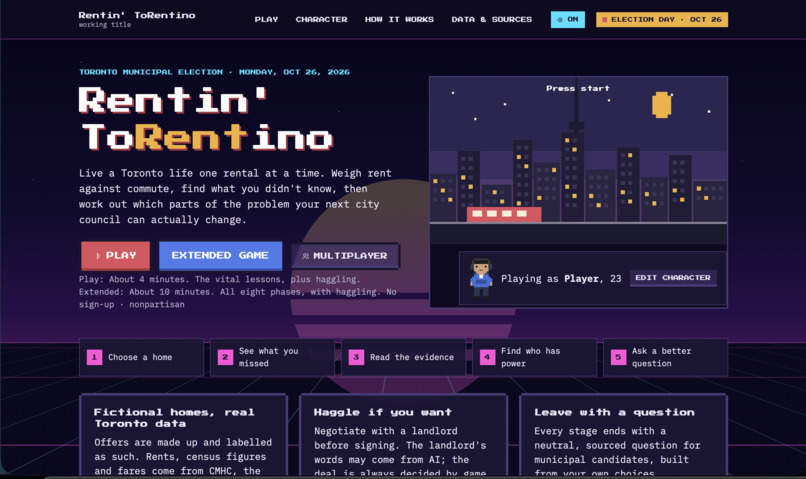
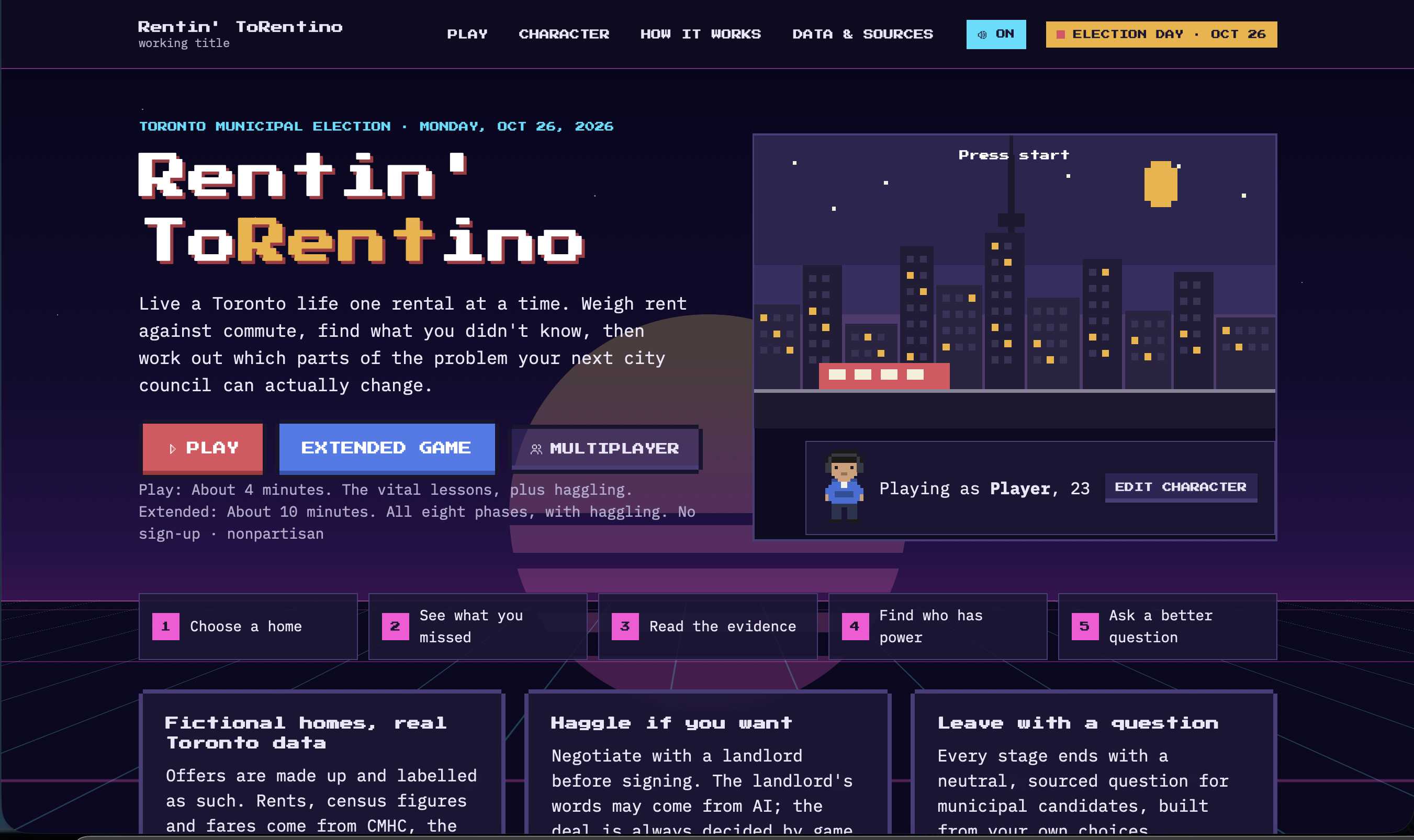
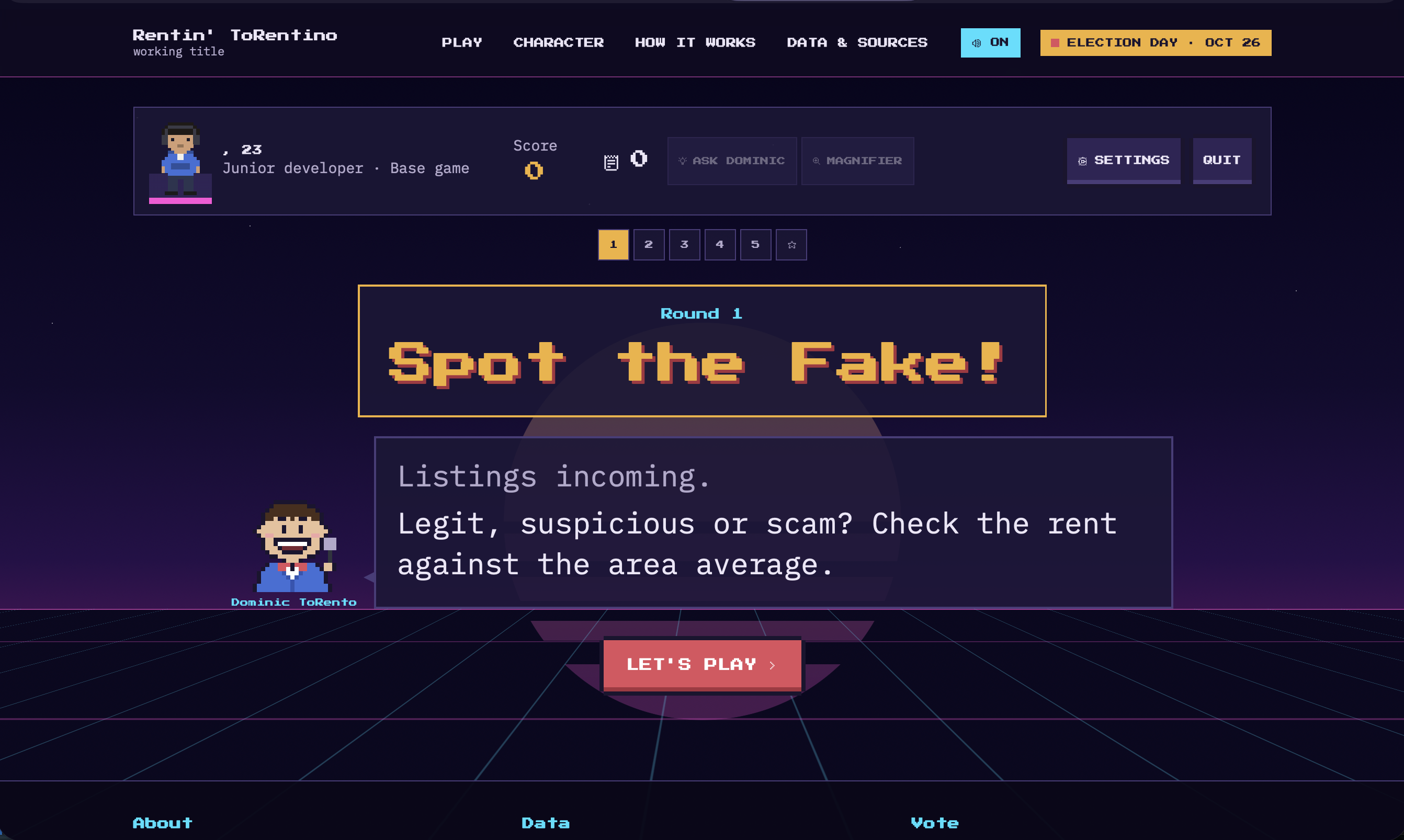
First Landing Page
-
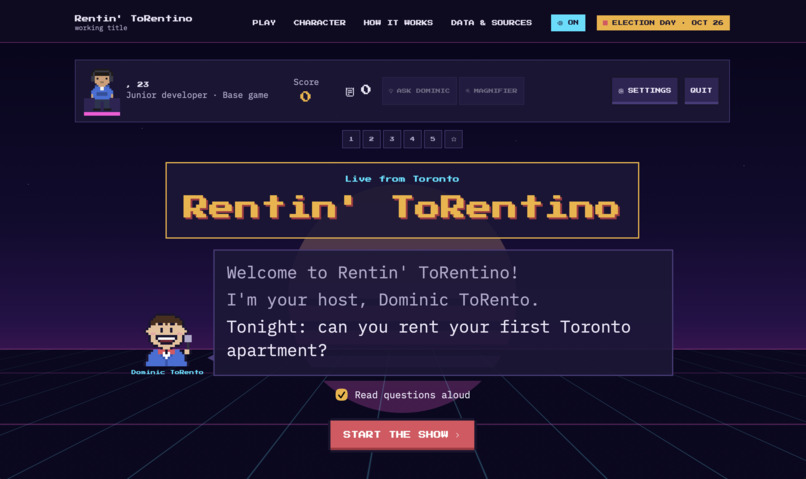
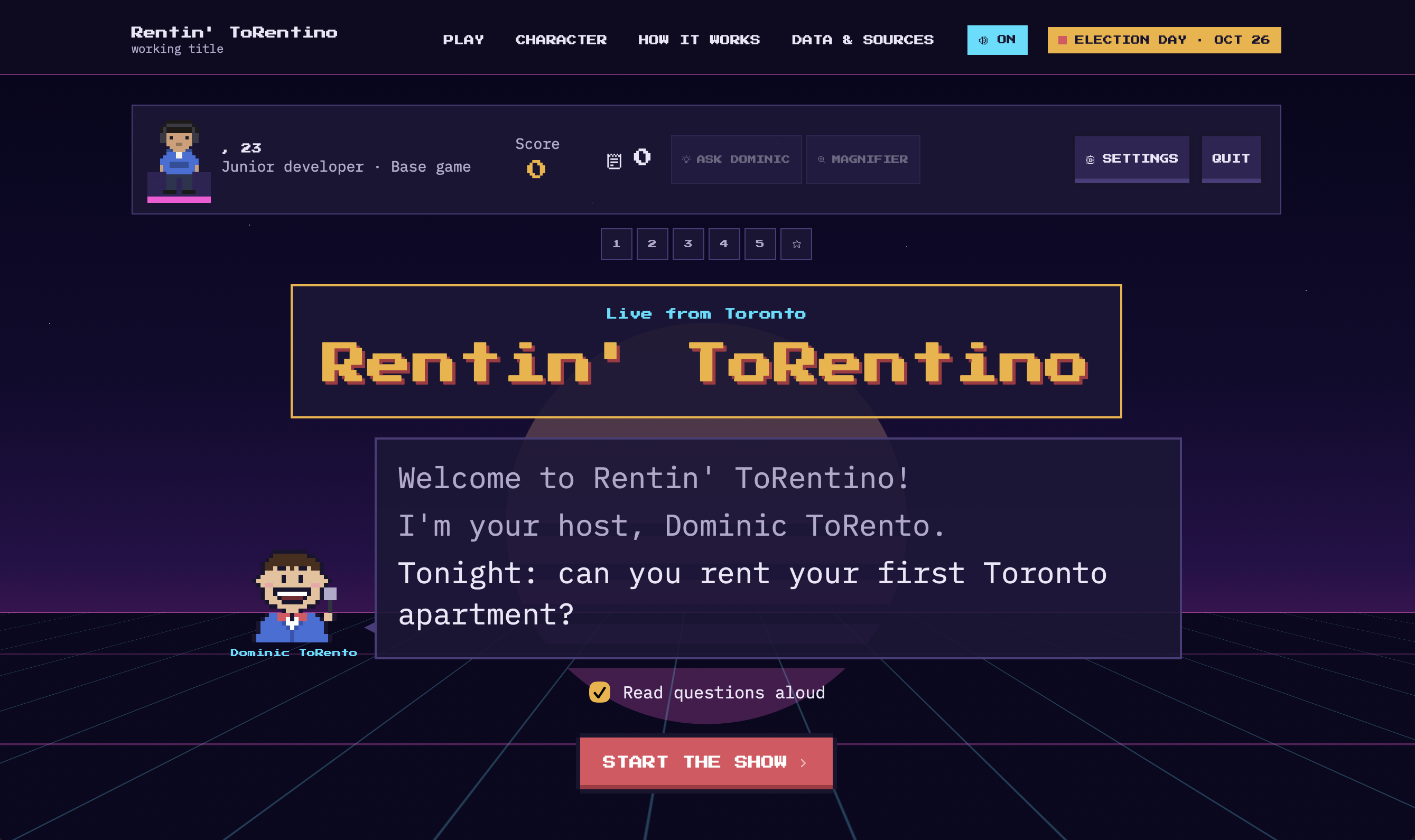
Start the Game
-
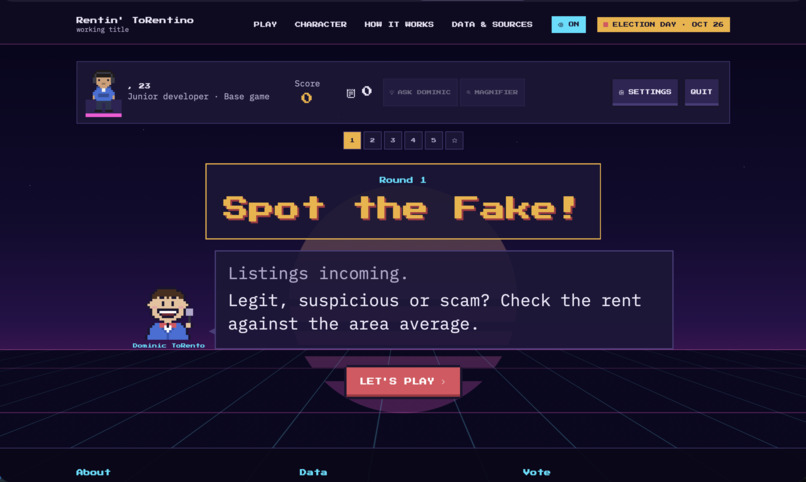
Round 1
-
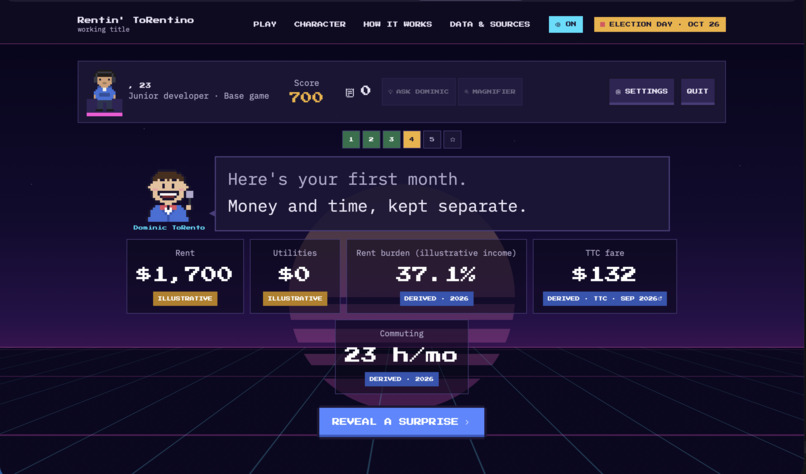
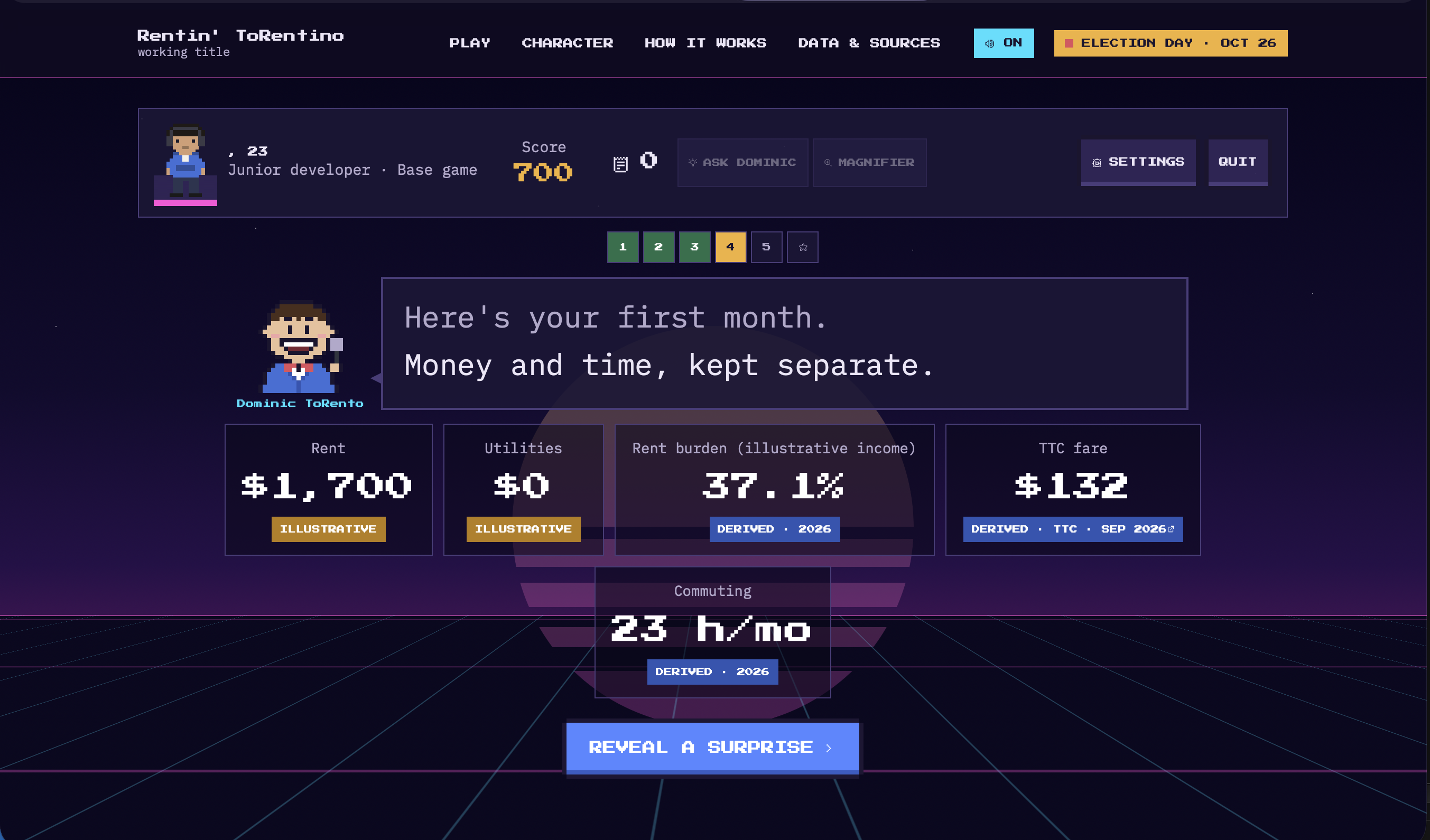
In Progress of the Game
-
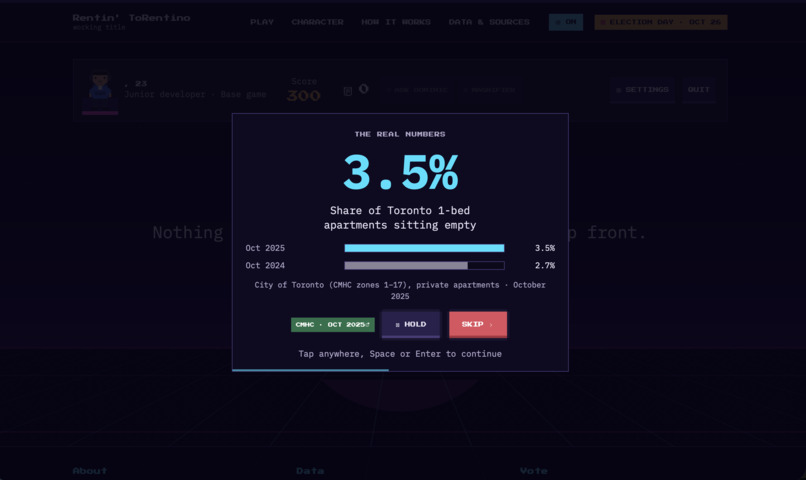
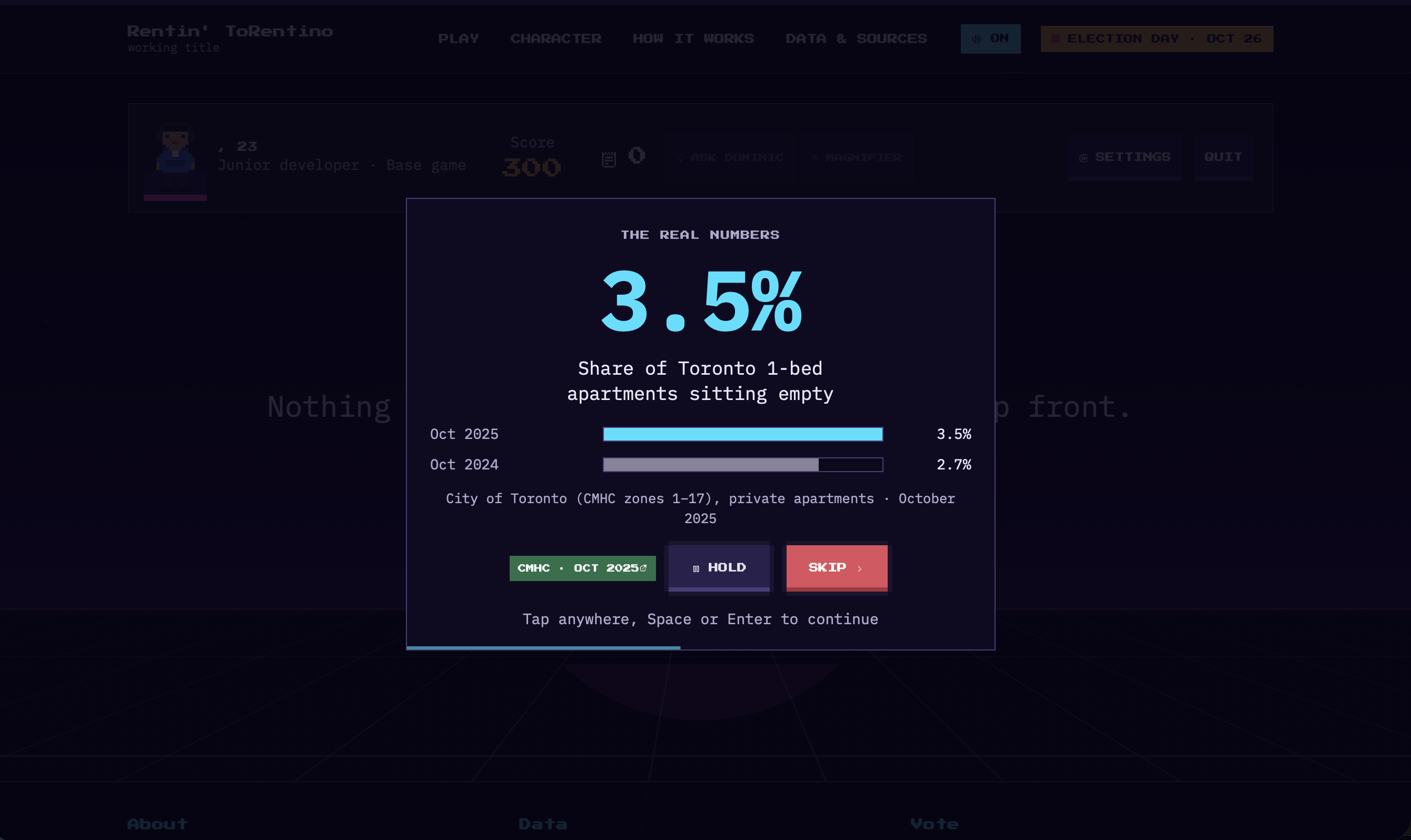
Useful Related Statistics
-
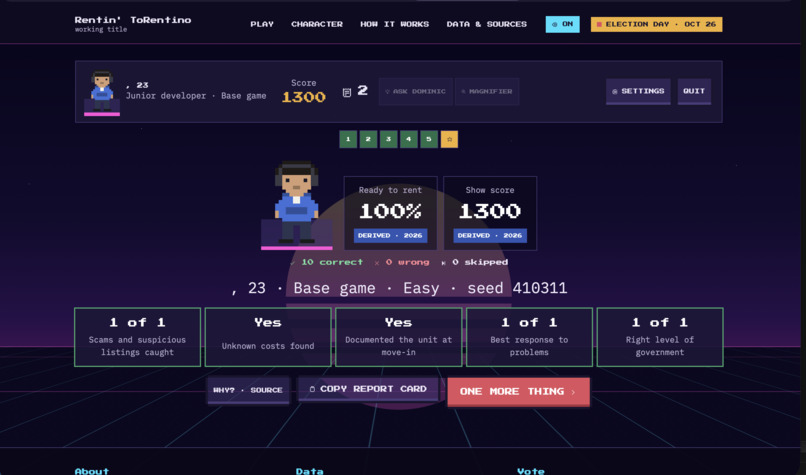
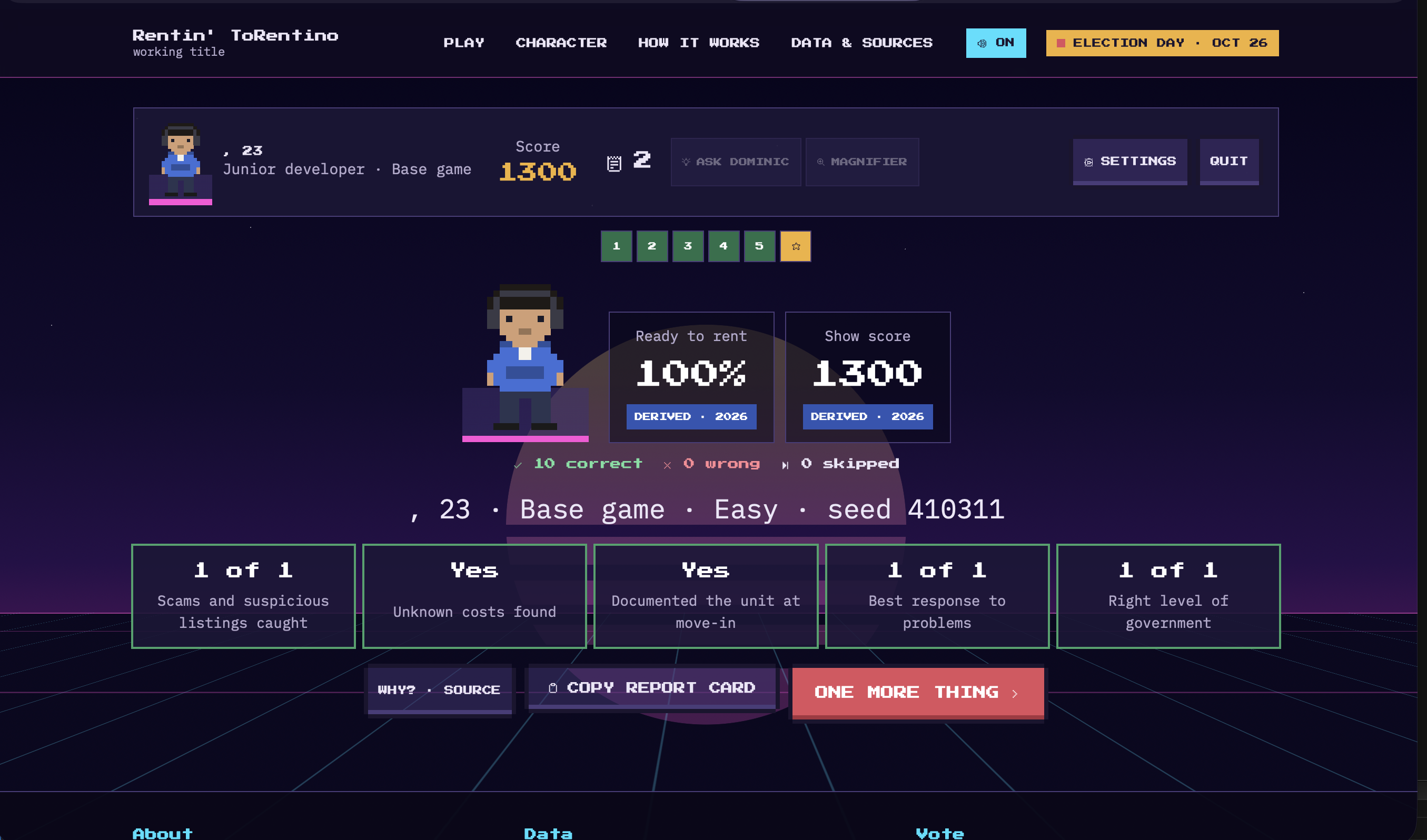
Ending Page for the Game
Inspiration
Finding an apartment in Toronto can be a gruelling process - there are far too many sources of listings, tons of fake ones, vague wording about things like utility fees, etc. And even after moving in, one has to know about due process for move-in day, reporting damages, etc. We wanted to create something backed by real Toronto data, that would teach users all this while also being incredibly fun - and we did! Presenting Rentin' ToRentino!
What it does
Rentin' ToRentino is a short browser game about renting a first apartment in Toronto. Players move through a first-lease journey: spot a fake listing, compare places, apply, haggle, read the lease, move in, handle something that breaks, and move out.
The listings are illustrative, not available units. The numbers behind them come from City of Toronto, CMHC, and Census data. Players see the cash and commute tradeoff, including costs that were easy to miss, and sort each problem by who controls it: themselves, the landlord, the City, or another government. The game ends with one sourced, nonpartisan question they can ask a ward candidate before the October 26 election.
How we built it
The app is Next.js with TypeScript. Rents, burdens, fares, and the candidate question are computed in code. Gemini writes the fictional landlord’s dialogue during the optional haggle, and also generates some of the questions and answers; the game code decides the deal and checks the model’s wording. ElevenLabs provides the text-to-speech. Every on-screen figure carries a source and a status, so a measured neighbourhood statistic stays separate from an illustrative scenario.
Challenges we ran into
Most of our time went into the data. Toronto’s housing figures are spread across City, CMHC, and Census sources that do not share a geography, so we had to map rental zones onto neighbourhoods and keep missing values blank instead of inventing them. We also cut the numbers down to what a renter needs in the moment. The hard part was turning those figures into decisions: a listing to judge, a cost to notice, and a question tied to the player’s own tradeoff.
Accomplishments that we're proud of
We put real Toronto housing data inside a game a new renter can finish in a few minutes. Players leave knowing what to verify before they pay, which level of government owns each constraint, and one evidence-backed question for their ward candidate.
What we learned
An abstract idea, “a game about Toronto rent,” only became buildable once we separated the data work from the play. Cleaning mismatched sources came first. Choosing which numbers teach a decision came second. The civic question had to be written from the player’s choice and a cited figure, not from a generic housing slogan.
What's next for Rentin' ToRentino
The next playable stages are later points in a renter’s life, each one shipping only when its municipal lever has an official source. We also want the same journey for more neighbourhoods, so the question at the end stays specific to the place the player chose.


Log in or sign up for Devpost to join the conversation.