-
-
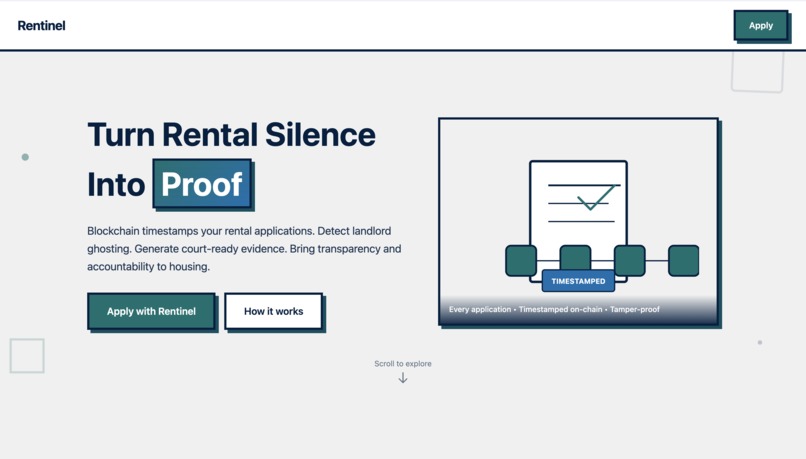
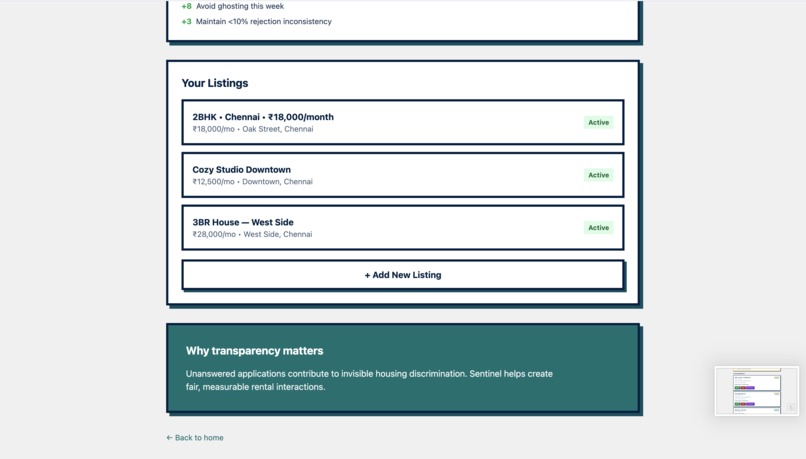
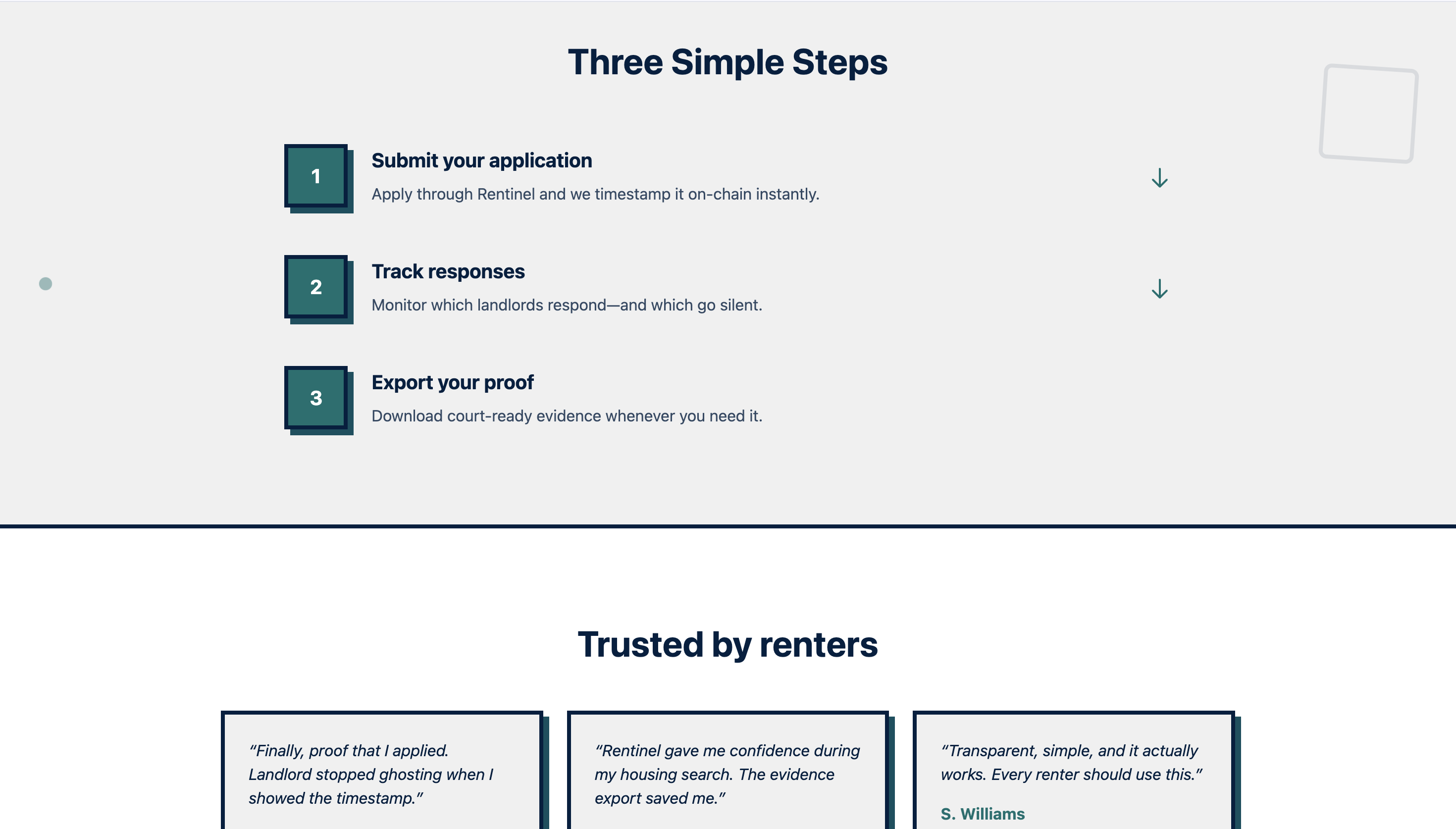
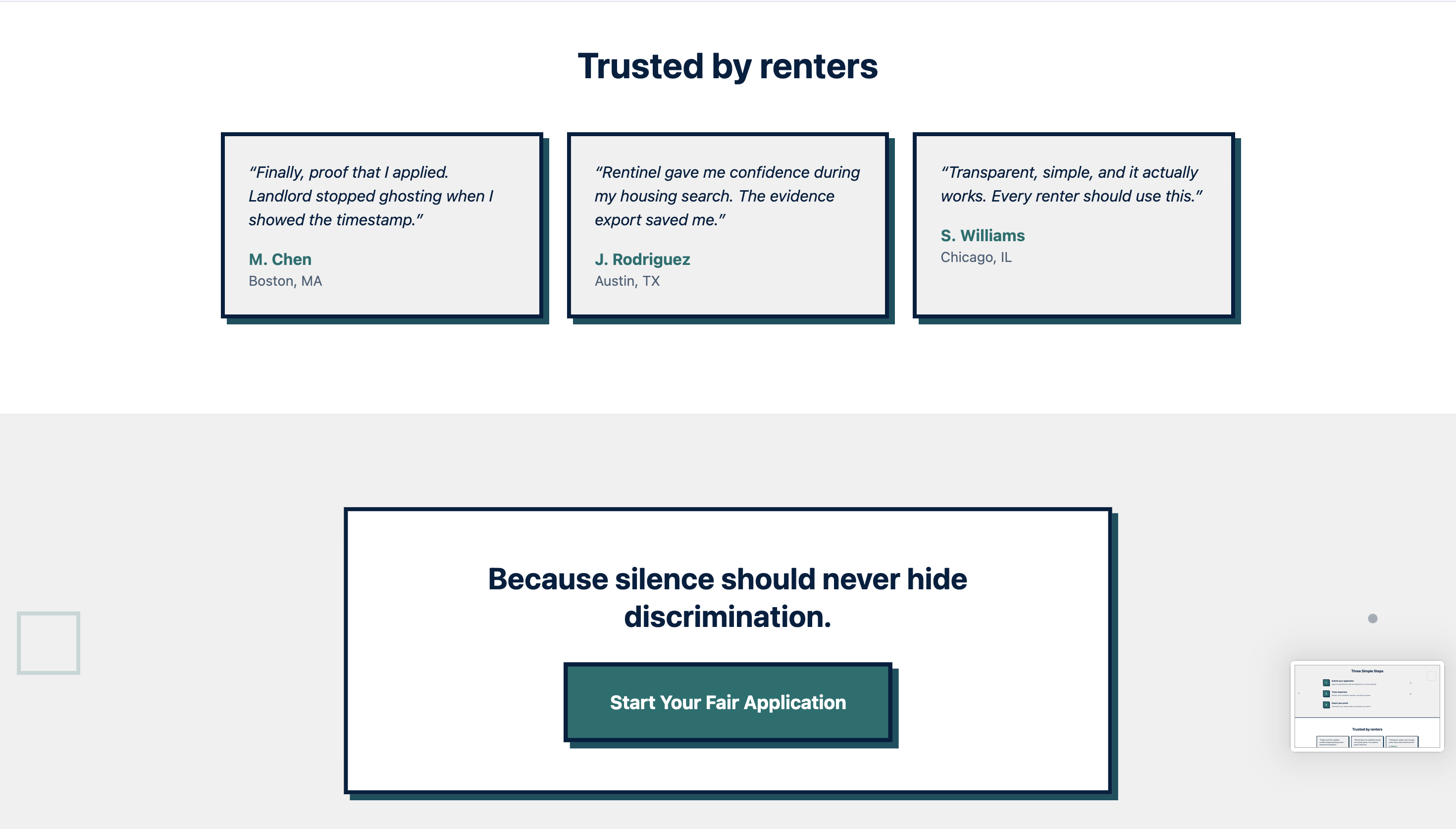
landing page
-
-
-
-
-
-
-
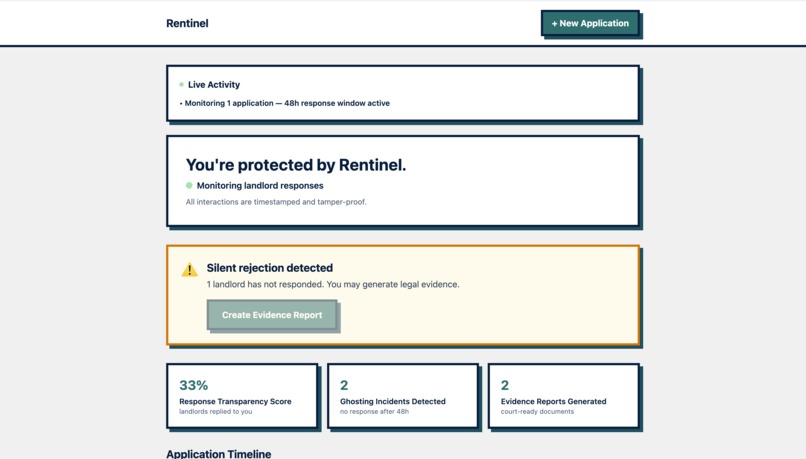
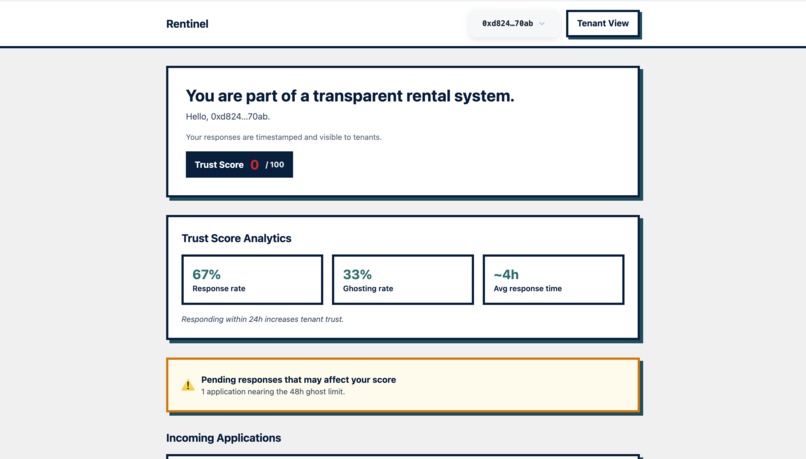
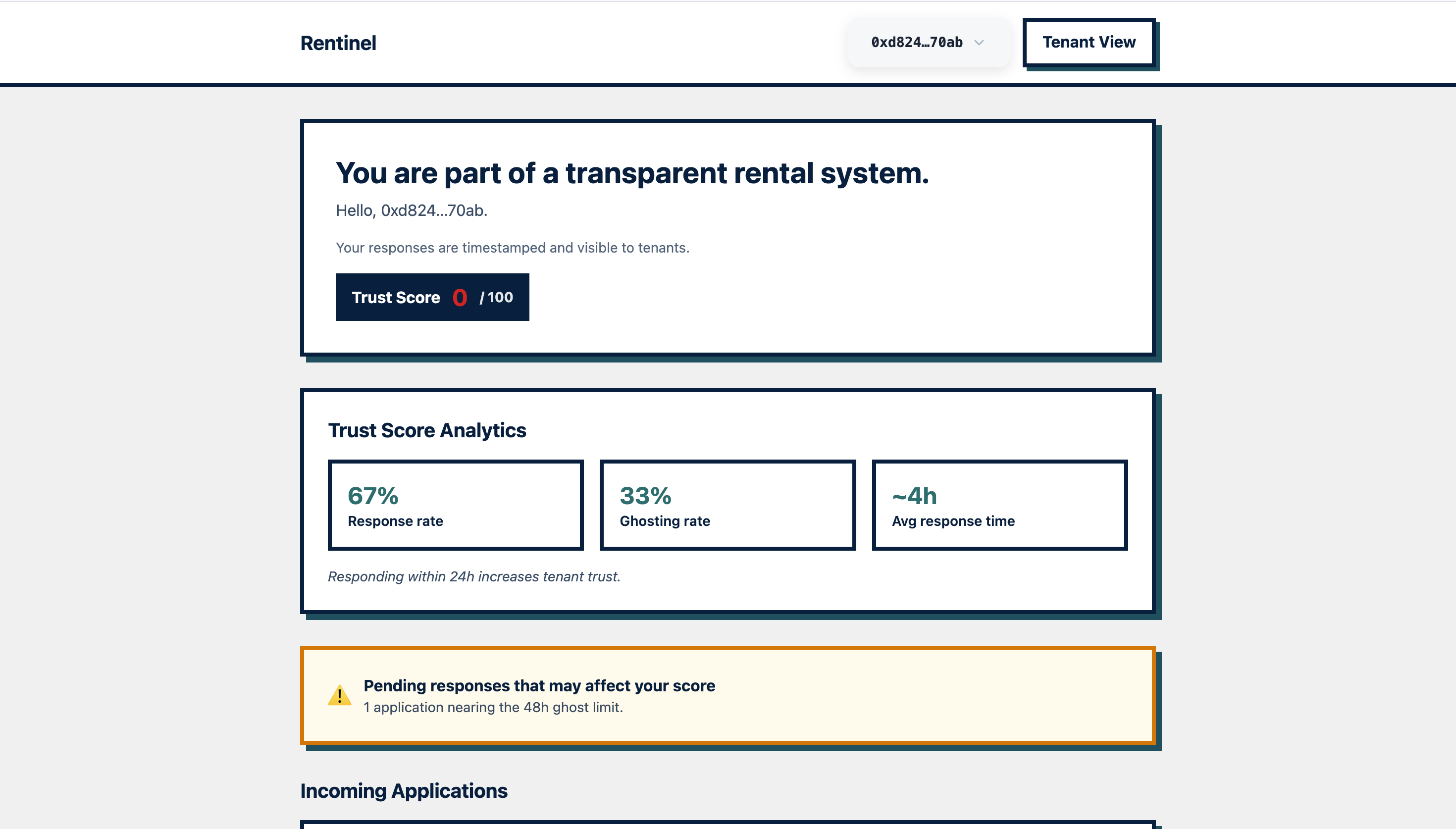
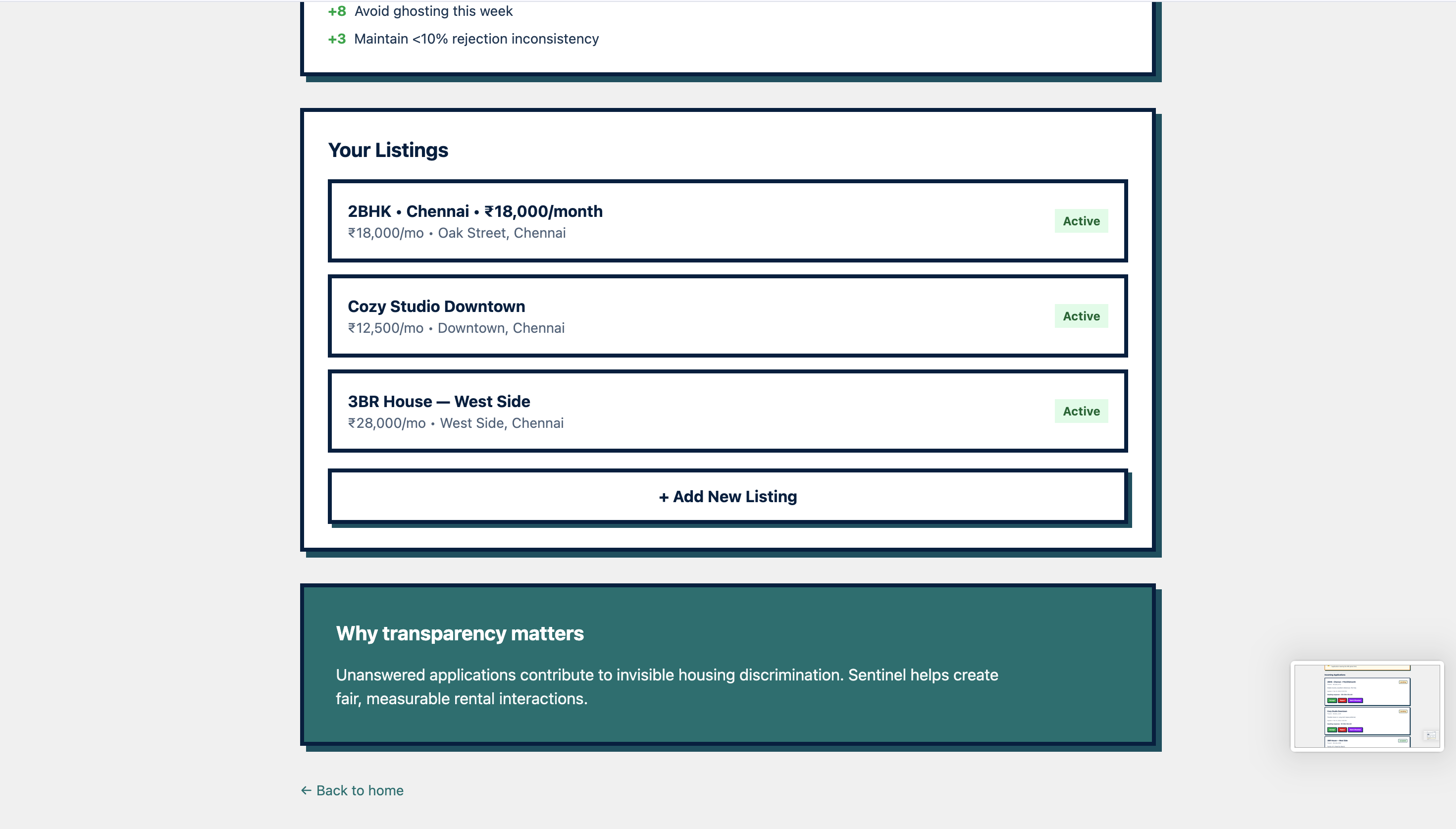
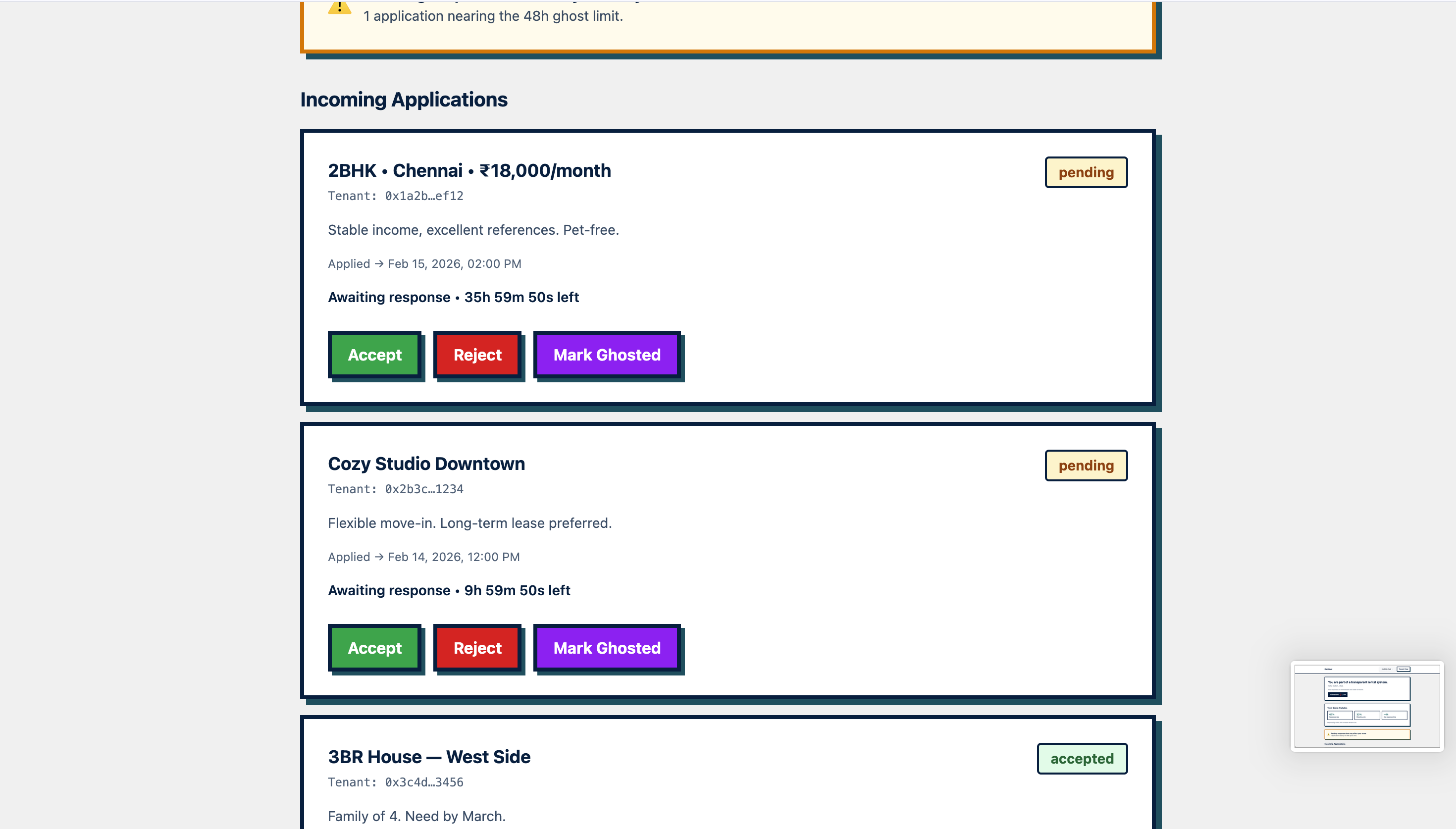
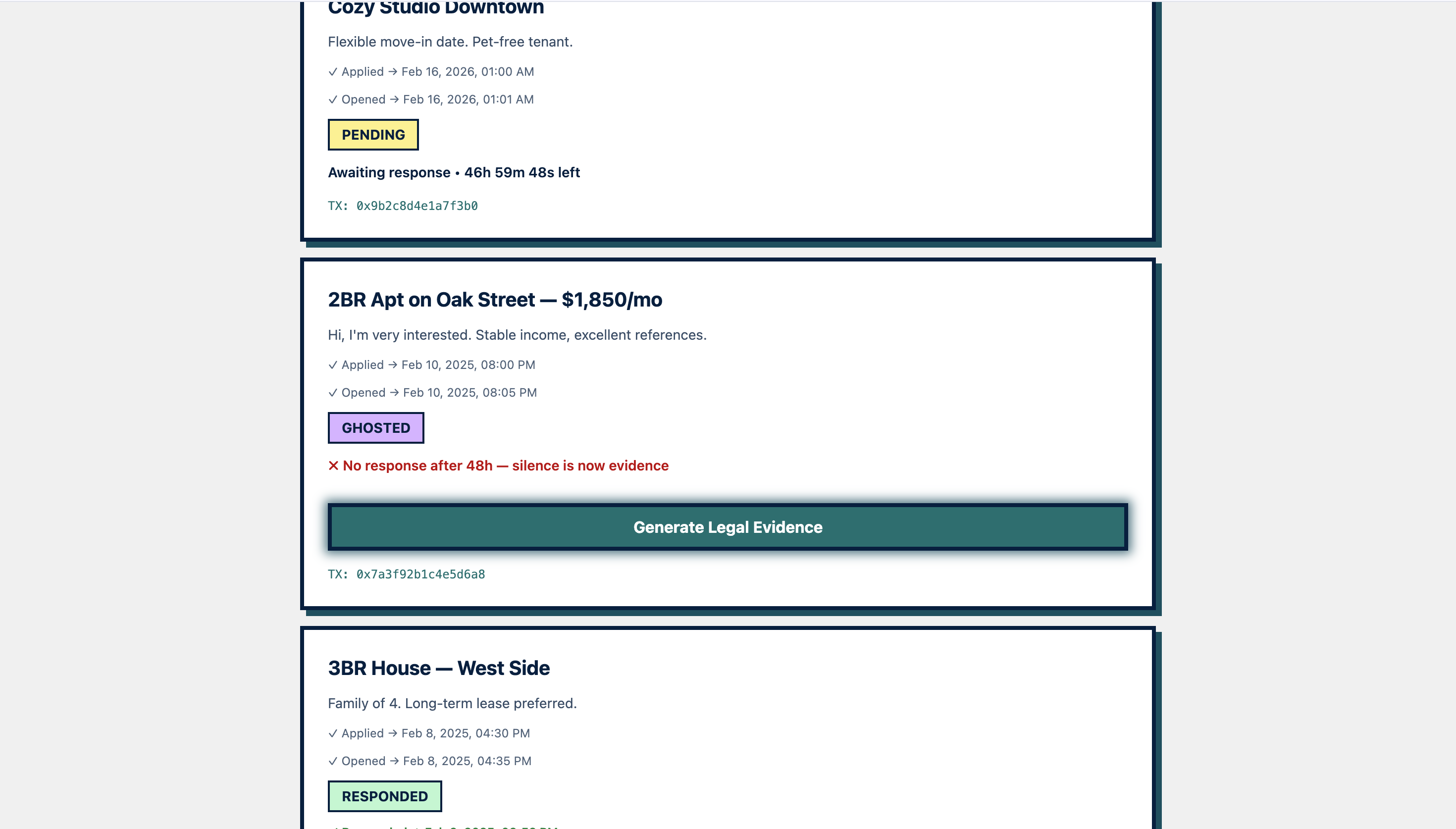
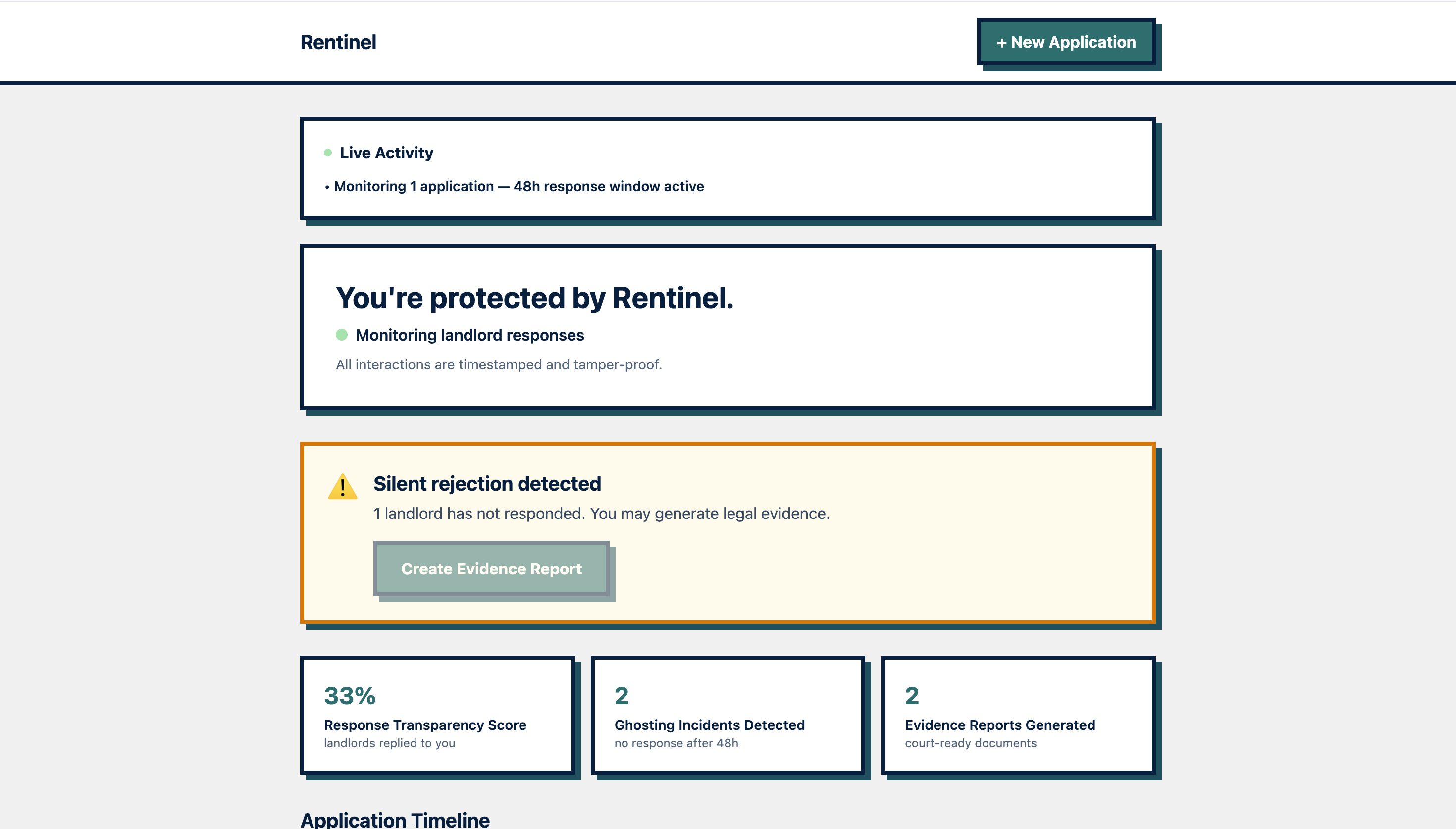
tenant dashboard
-
-
-
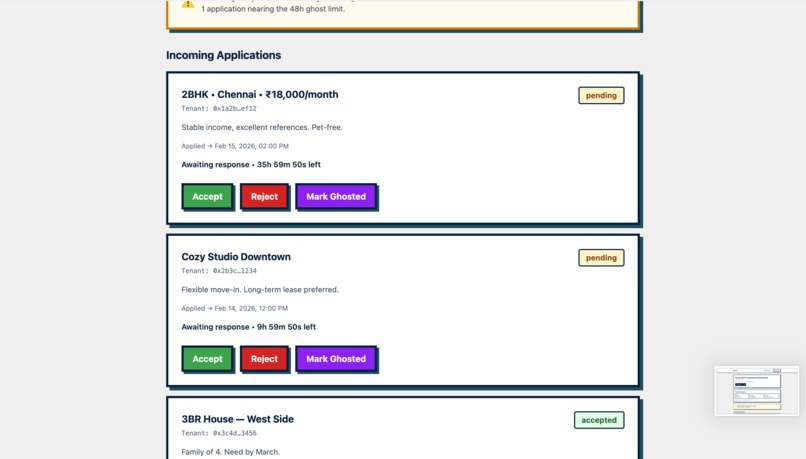
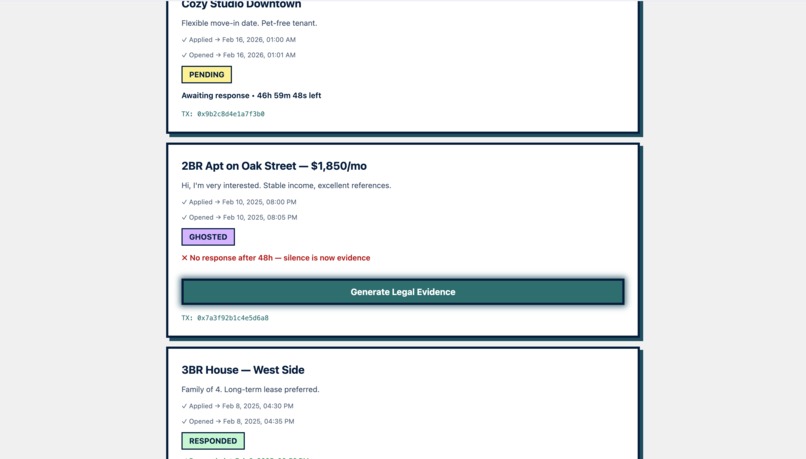
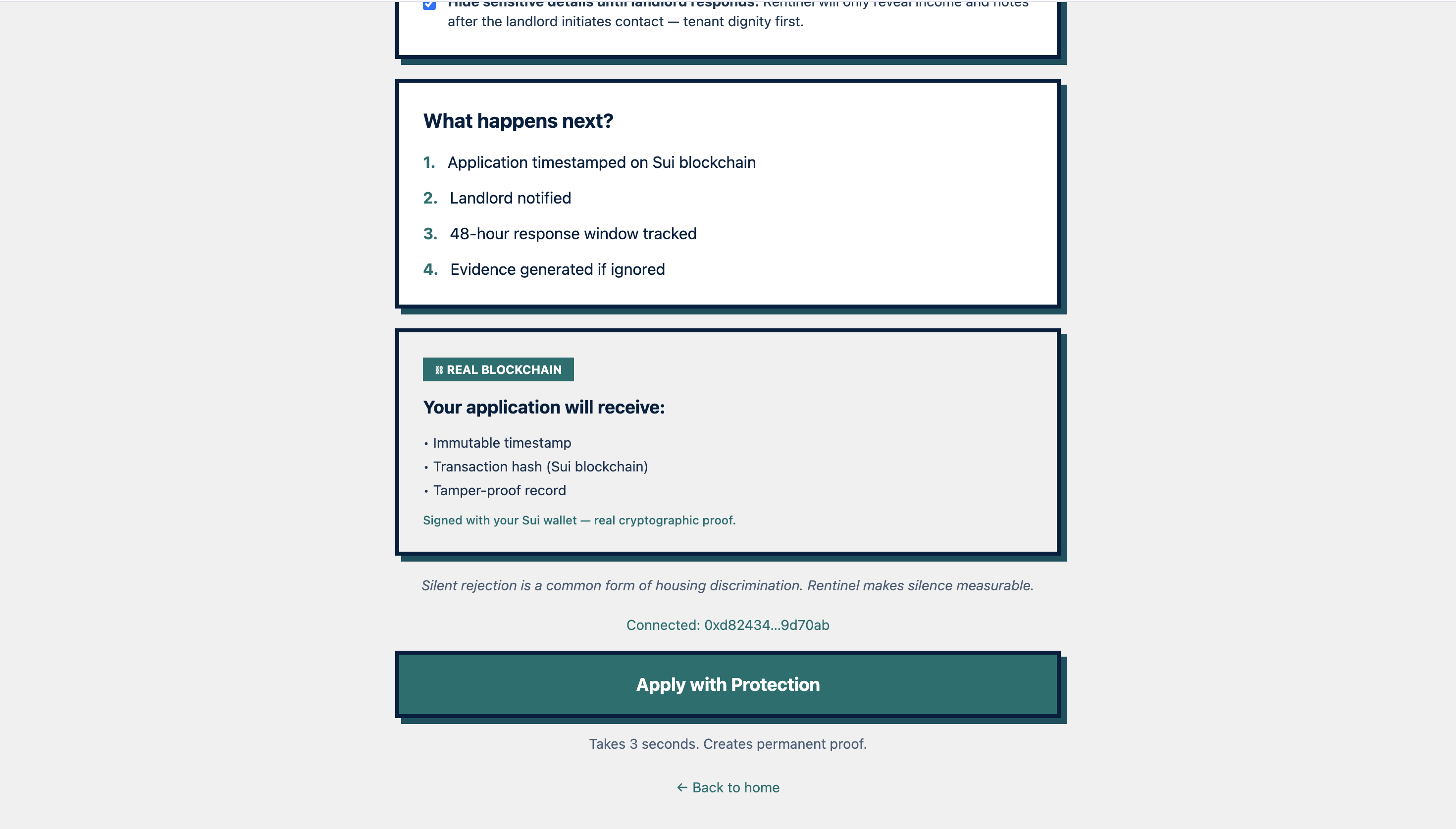
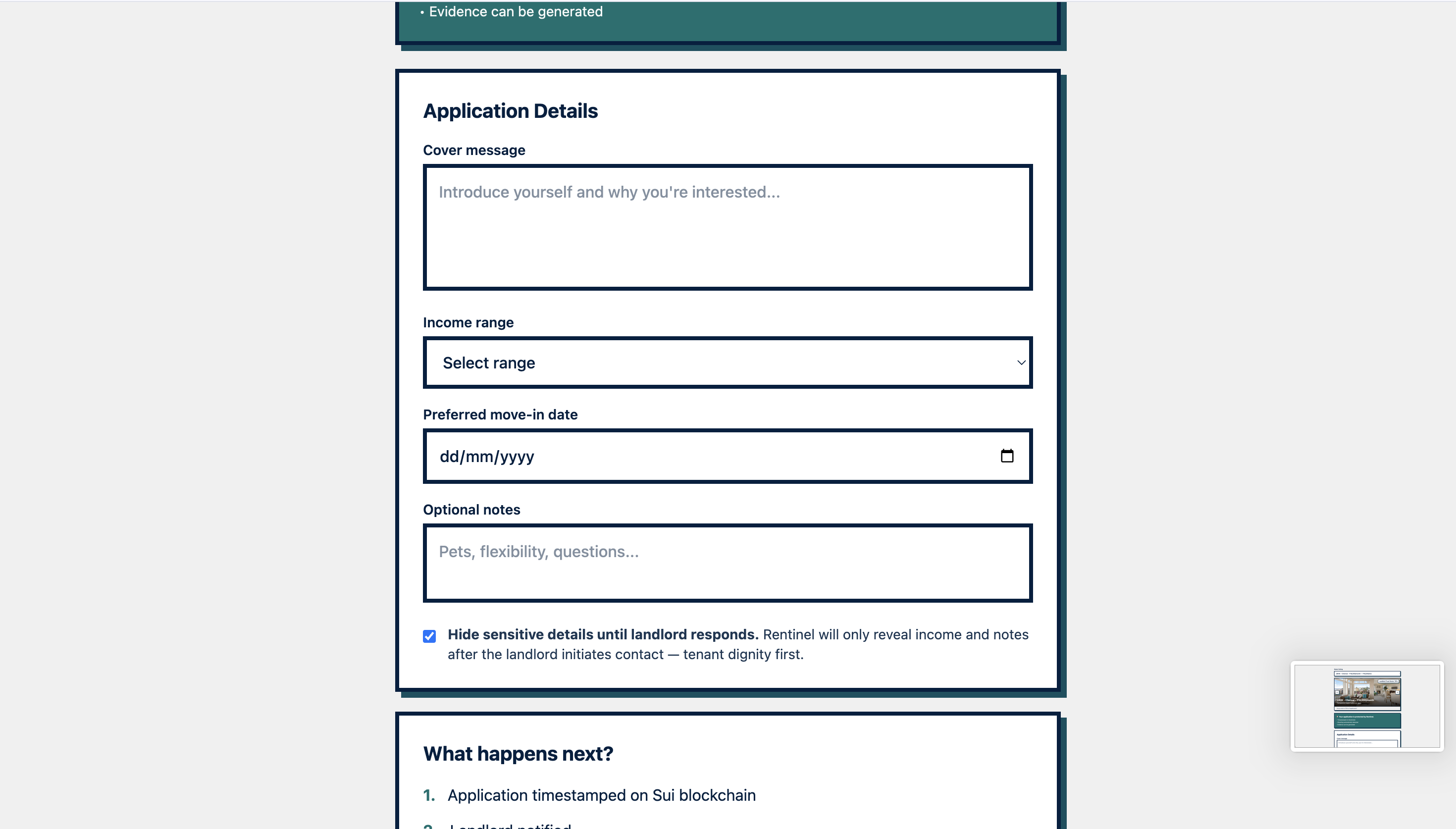
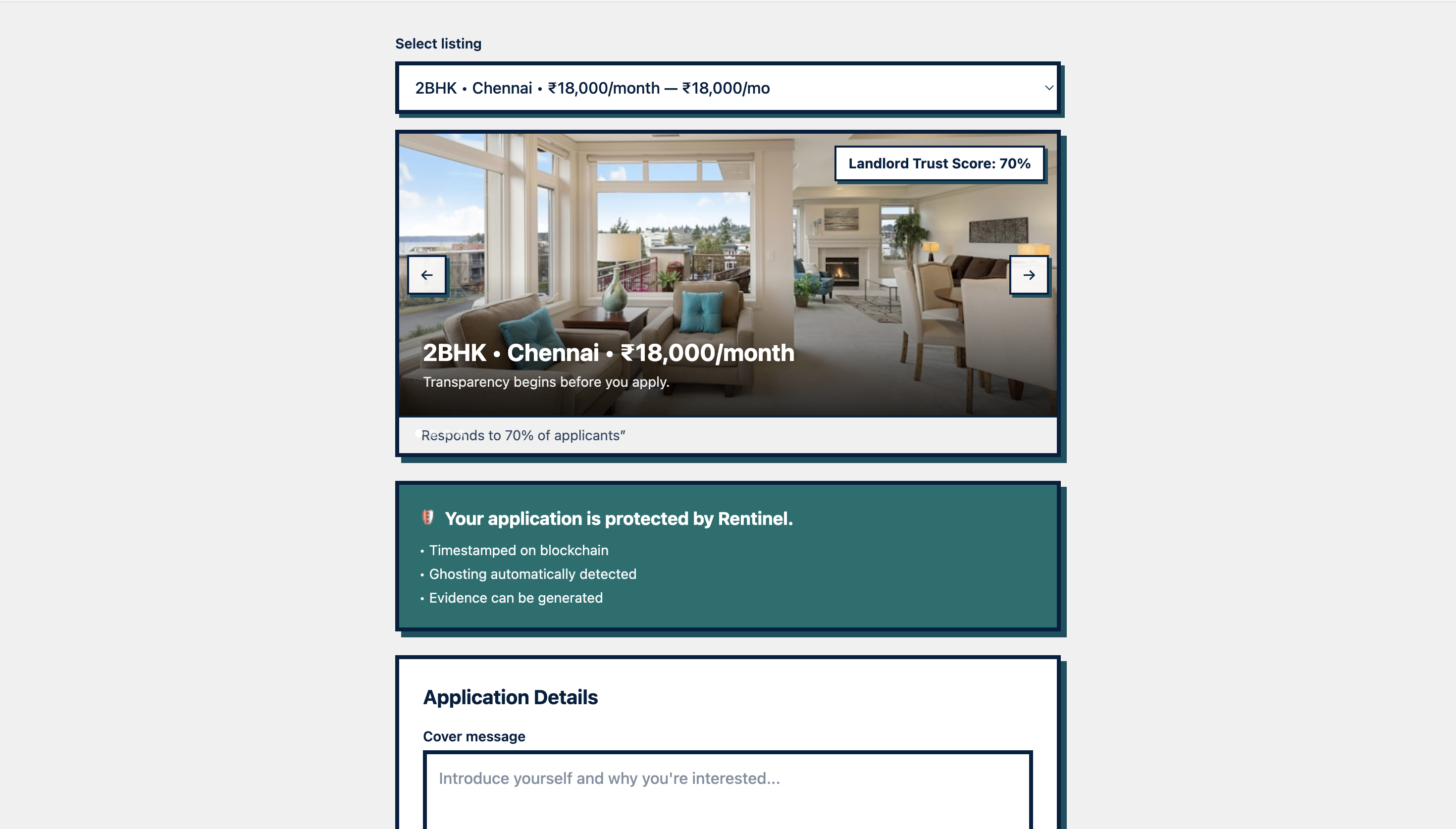
application page
About the Project
Inspiration
Every day, thousands of rental applicants experience a silent but deeply harmful outcome — they are not rejected, not accepted, just ignored.
This phenomenon, commonly called rental ghosting, is one of the most widespread and least provable forms of housing discrimination. Without a timestamped trail of interaction, tenants have no evidence, no accountability, and no recourse.
We asked a simple but powerful question:
What if rental silence itself could become verifiable evidence?
That question became the foundation of Rentinel.
What Rentinel Does
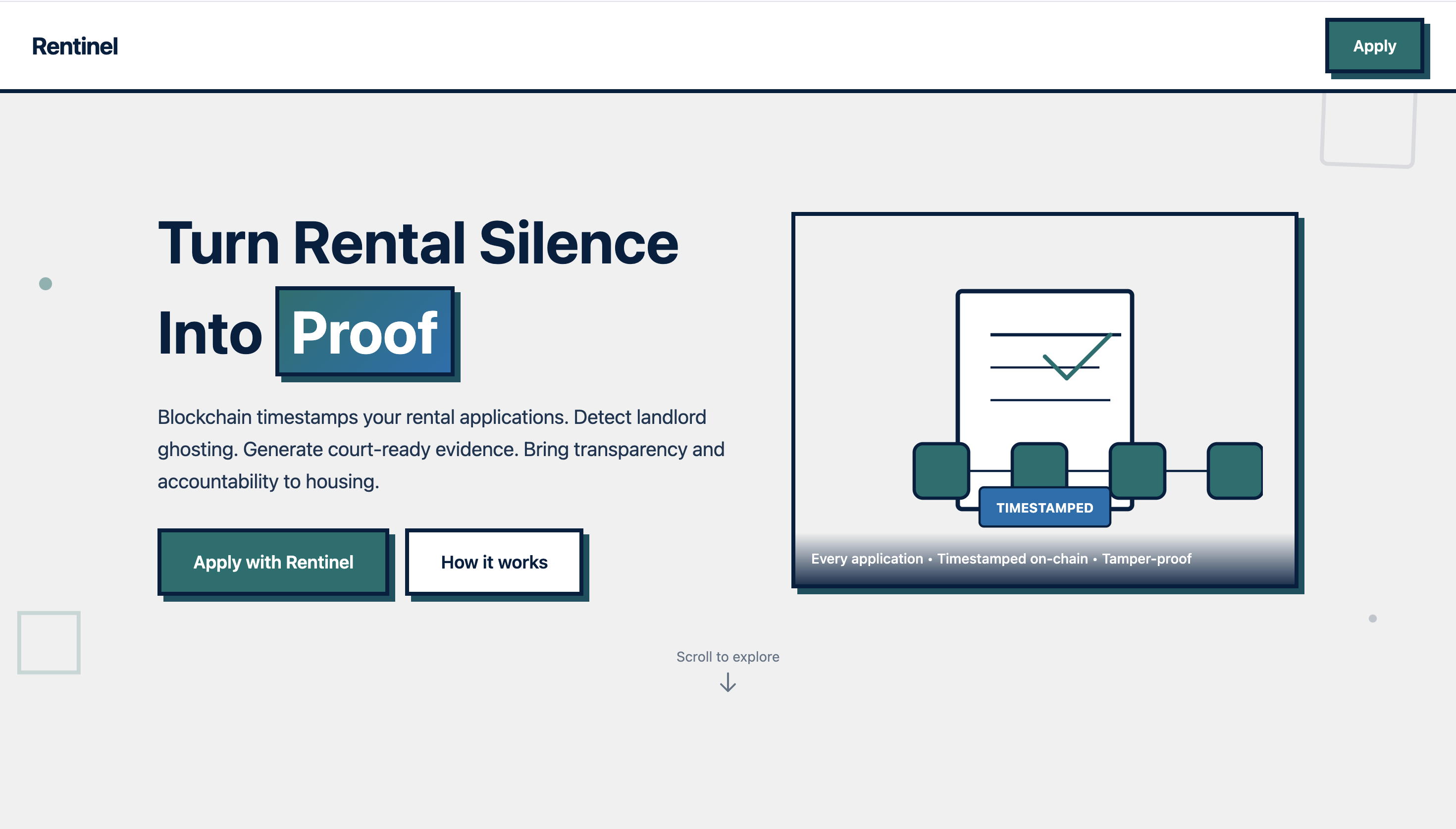
Rentinel is an on-chain rental fairness protocol that transforms invisible inaction into public, cryptographically verifiable proof.
The system ensures that every rental interaction is:
- Timestamped
- Immutable
- Transparent
- Provable
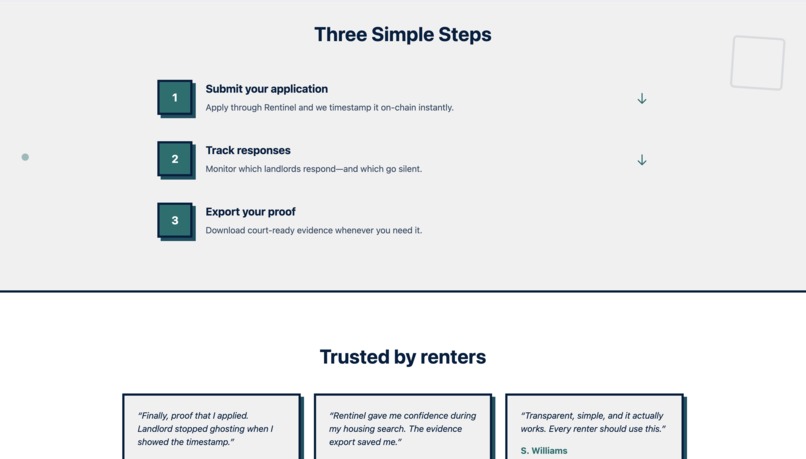
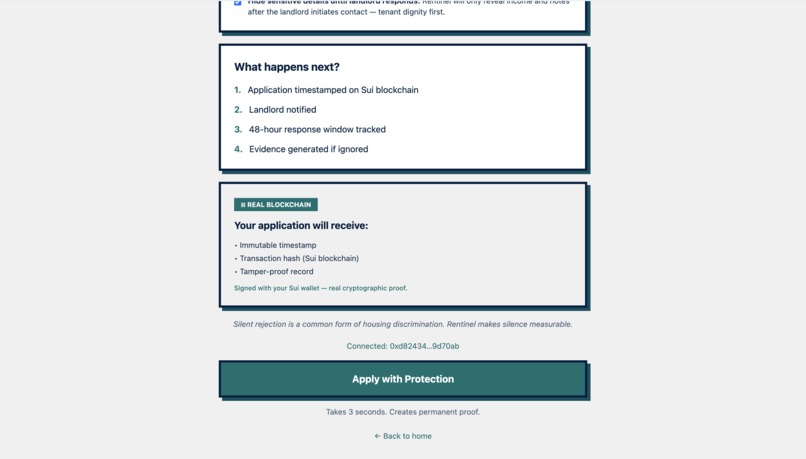
Tenant applications are anchored to the Sui blockchain, landlord responses are tracked in real time, and unresolved silence beyond a defined threshold (e.g., (48) hours) becomes verifiable ghosting evidence.
In simple terms:
$$ \text{Silence} + \text{Time} + \text{Immutability} \rightarrow \text{Accountability} $$
This converts hidden discrimination into court-credible transparency.
How We Built It
Rentinel combines Web3 infrastructure, civic-tech thinking, and minimal deployable architecture:
Blockchain Layer
- Sui Move smart contracts store application lifecycle states
- Immutable timestamps ensure tamper-proof evidence
- On-chain objects enable public verification
Application Layer
- React + Tailwind frontend for tenant and landlord dashboards
- Node.js real-time tracking to monitor response windows
- Automated ghosting detection logic after defined inactivity
Evidence Generation
- jsPDF-based legal-style reports
- Embedded on-chain verification links
- Designed for policy, mediation, or legal workflows
The architecture was intentionally designed to be:
- Simple enough for hackathon delivery
- Serious enough for real-world civic deployment
Challenges We Faced
1. Designing for Real Social Impact
We needed to avoid building “just another Web3 demo” and instead create something aligned with actual housing justice workflows.
2. Balancing Minimalism and Credibility
Smart contracts had to remain lightweight while still producing evidence strong enough to matter outside the app.
3. Creating a Two-Sided Incentive System
For transparency to work, the system must provide value to:
- Tenants → proof and fairness
- Landlords → trust signaling and reputation
Achieving this balance was critical to realism.
What We Learned
Building Rentinel revealed several key insights:
- Silence becomes data when timestamped.
- Transparency alone can change behavior without enforcement.
- The strongest Web3 use cases may lie in civic accountability, not finance.
Most importantly:
Fairness begins the moment invisibility ends.
Vision
Rentinel is not just an application. It is public fairness infrastructure for housing.
By making rental silence:
- Measurable
- Verifiable
- Provable
Rentinel shifts the rental ecosystem from:
$$ \text{Secrecy} \rightarrow \text{Transparency} \rightarrow \text{Accountability} $$
Our long-term vision is a world where housing decisions cannot hide in silence, and where trust is earned through verifiable action.

Log in or sign up for Devpost to join the conversation.