-
-
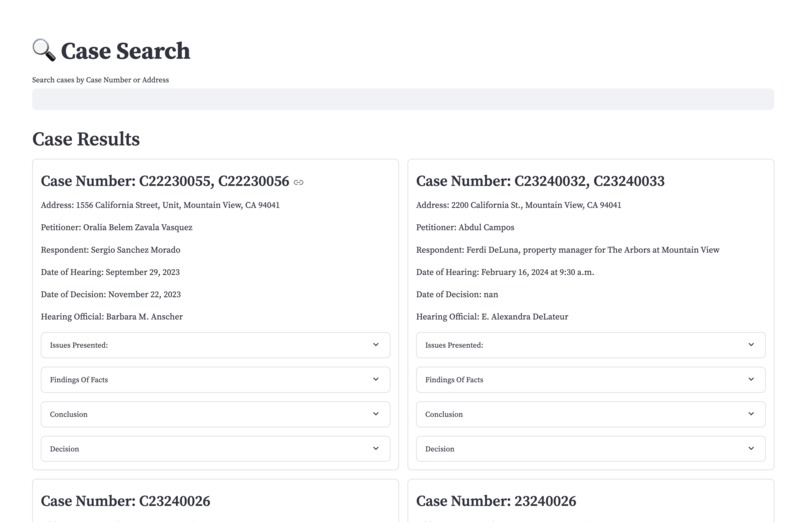
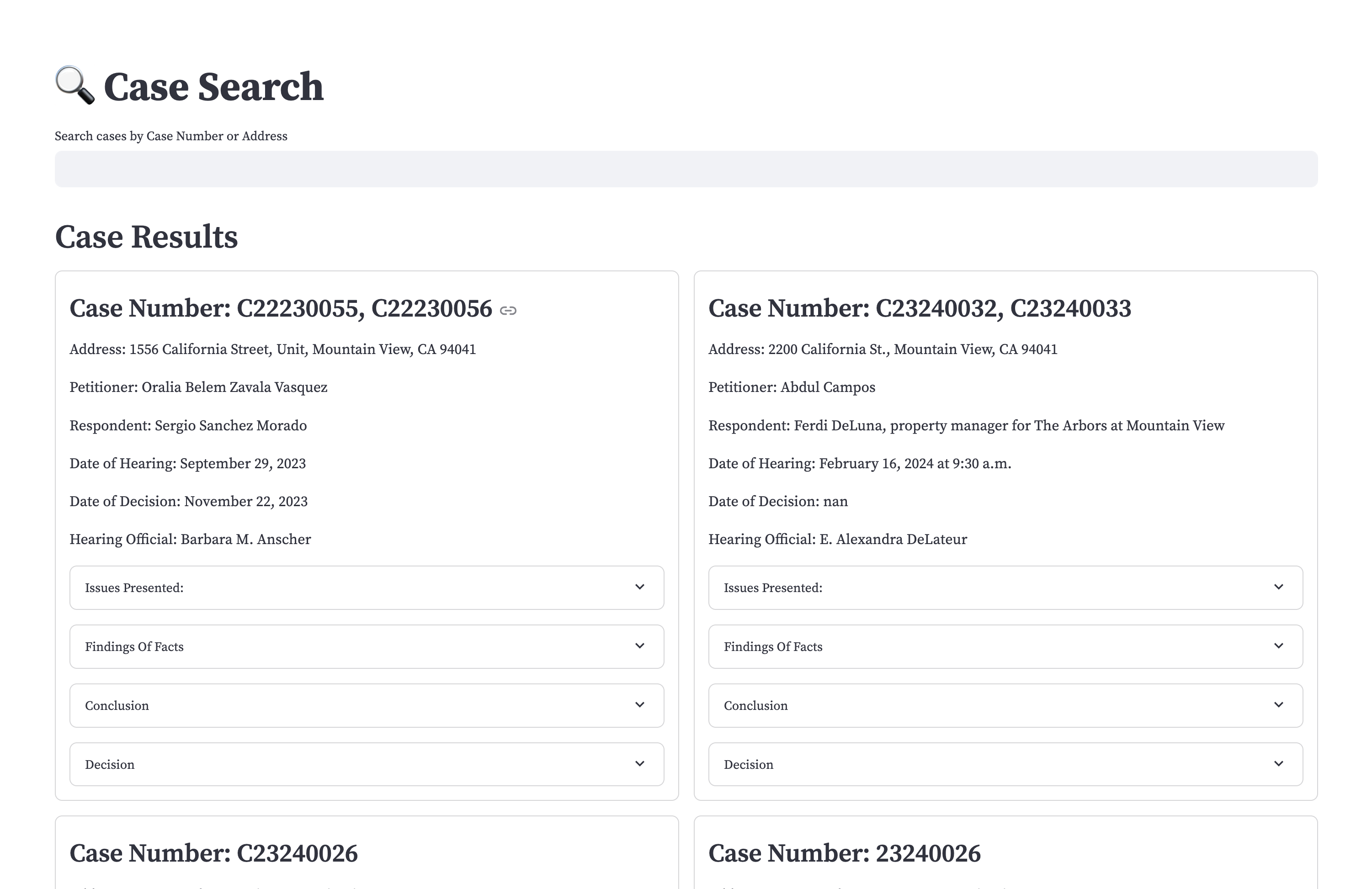
This highlights the case search functionality
-
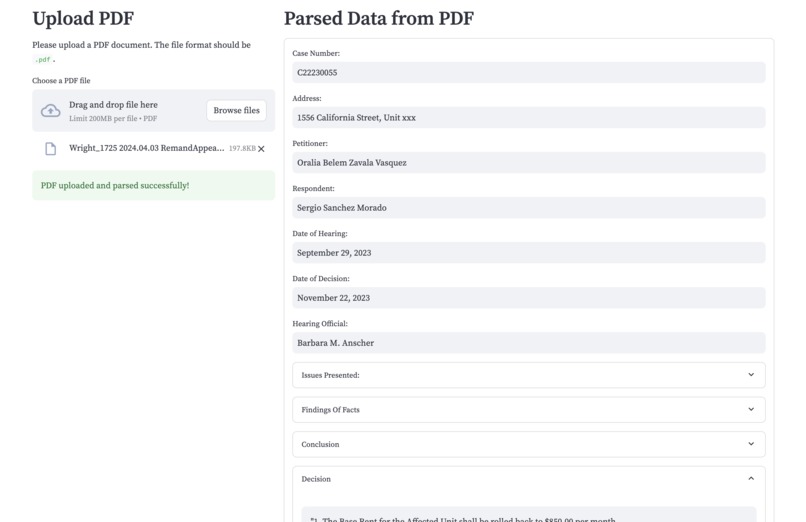
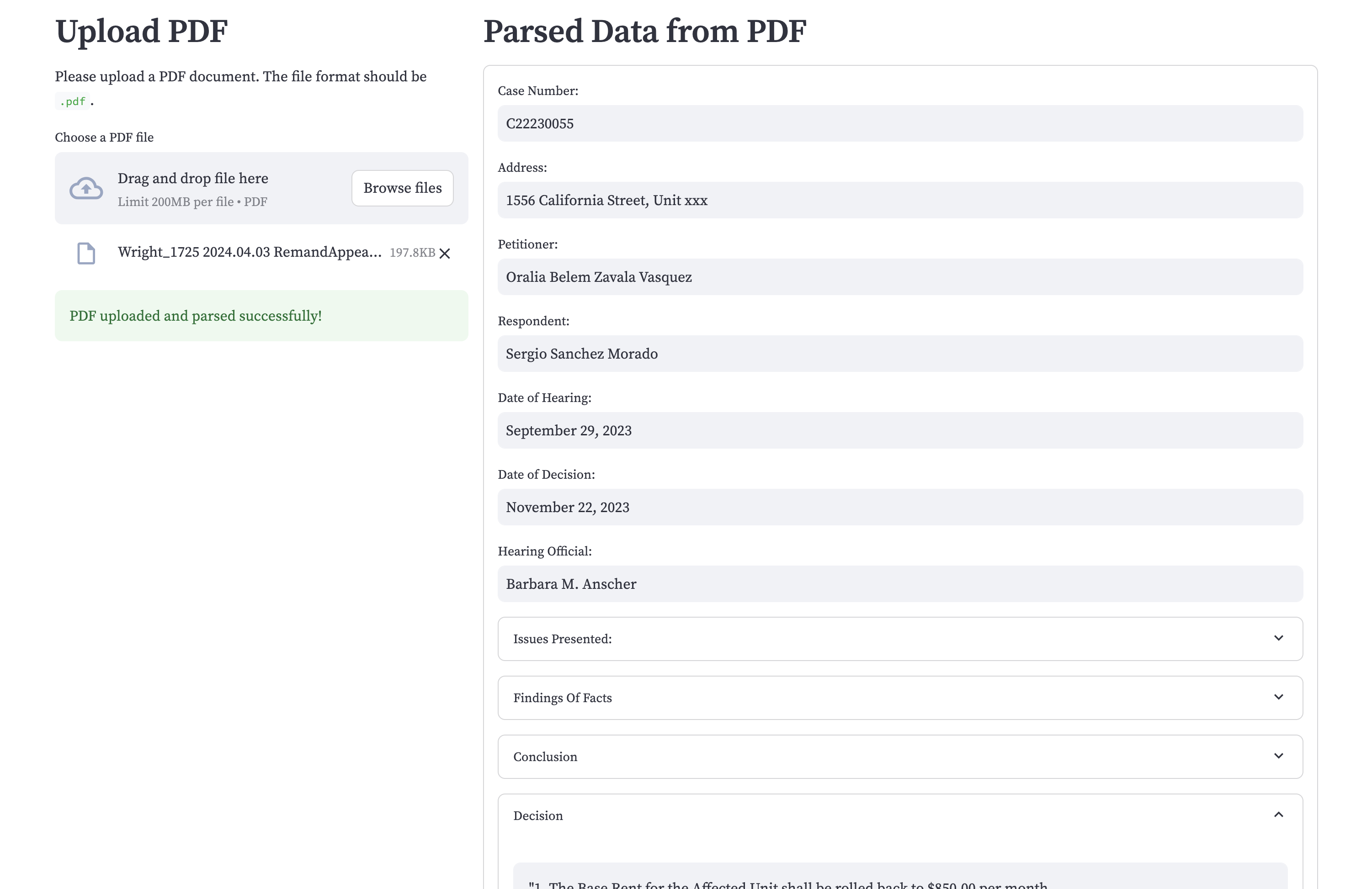
File upload and auto parser functionality
-
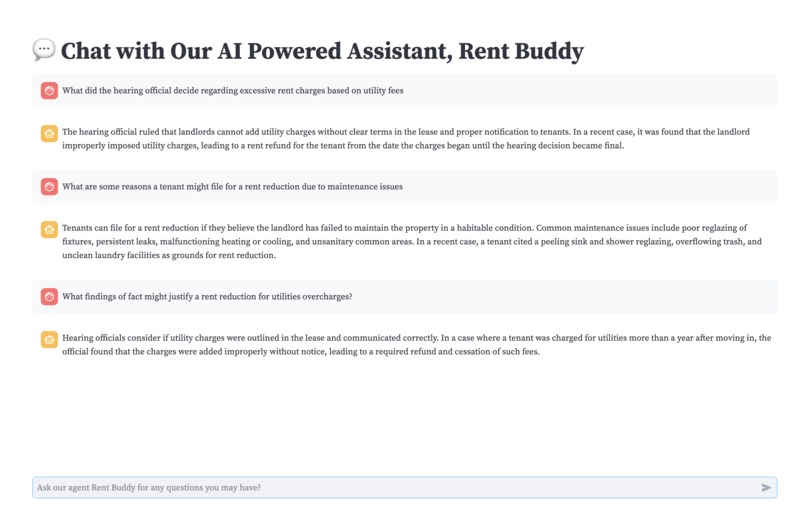
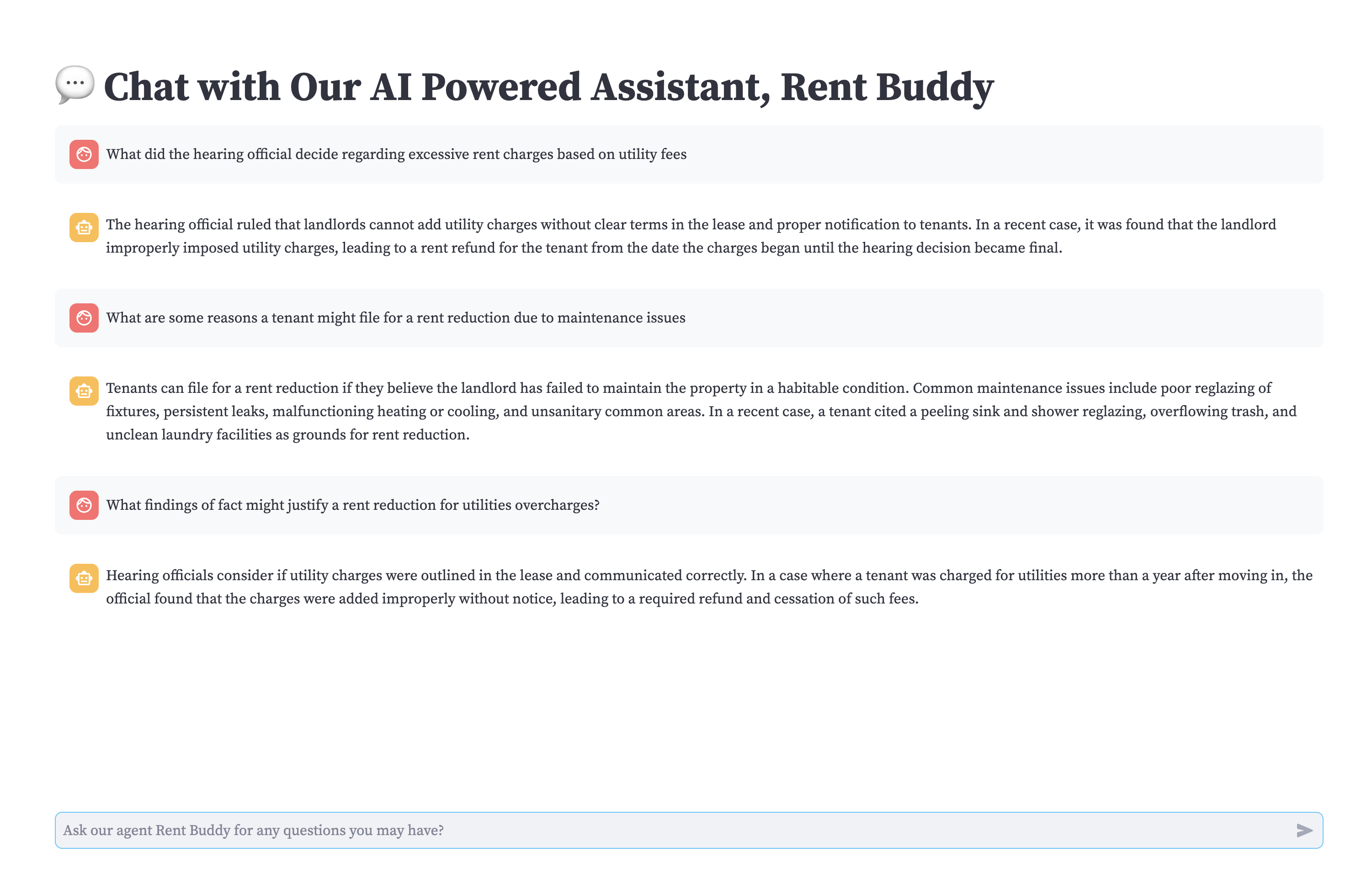
Chatbot functionality
Inspiration
For many tenants, understanding what to expect from a rental dispute is challenging. Cases involving similar issues, such as mold or heating failures, can have vastly different outcomes. This lack of consistency stems from a few factors: limited access to previous cases, the subjective nature of individual rulings, and the absence of a standardized database for tenant-related administrative decisions. This variability creates a knowledge gap that makes it difficult for advocates to advise clients accurately and for tenants to know their rights.
What it does
RentGuard is a tenant support platform that simplifies access to past cases, offers a chatbot for guidance based on previous rulings, and continuously updates its database with input from CLSEPA and city officials. Think of it as a tenant-focused legal research tool—but rather than relying on traditional legal databases, it’s designed specifically for rental disputes and tailored to help tenants and advocates make informed decisions.
RentGuard offers three core features:
- A Searchable Case Database – Users can easily search past cases and rulings, filtering by issue type, ruling officer, and awarded damages. This feature allows advocates to view trends and case outcomes to better guide tenants on what to expect.
- AI-Powered Chatbot Assistance – Our chatbot provides instant guidance, answering tenants’ common questions based on a growing library of past cases. If a tenant has issues like mold or heating failures, the chatbot helps estimate potential outcomes, offering advice on what to request in a petition.
- Real-Time Updates from City Officials – A dedicated portal enables officials to upload new cases and decisions, ensuring our database remains accurate and comprehensive. This keeps the data relevant and valuable as an advocacy tool.
How we built it
The backend was written in golang, and the frontend was written in streamlit, we used a bunch of packages for parsing the PDFs like TesseractOCR and the whole thing is powered by a DuckDB database. We make calls to OpenAI LLM endpoints for chat completions, and use OpenAI's vectorizers to build the vector indexes.
Challenges we ran into
Parsing unstructured documents (PDF) into a structured database to index was harder than anticipated.
What's next for RentGuard
RentGuard has the potential to drive real impact. With data at their fingertips, advocates can advise clients with more confidence, and tenants are empowered to understand what they’re entitled to request. Over time, the database can also serve as a transparency tool, encouraging cities to adopt standardized practices in housing-related rulings. And as tenant advocates, we can better demonstrate the broader need for tenant protections, influencing policy changes that could benefit communities everywhere.


Log in or sign up for Devpost to join the conversation.