-
-
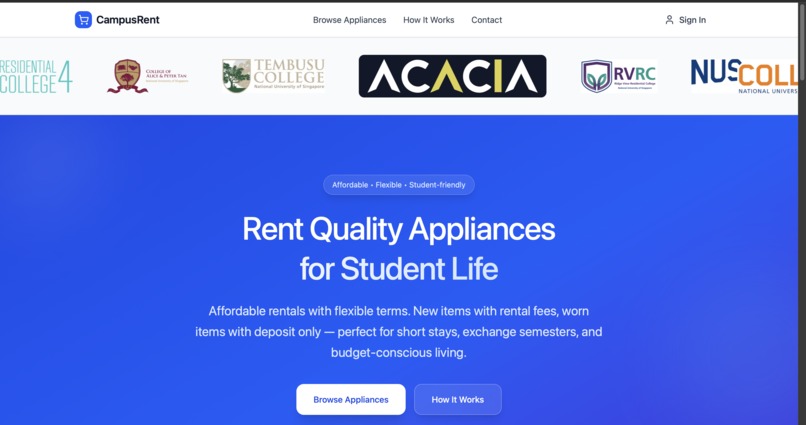
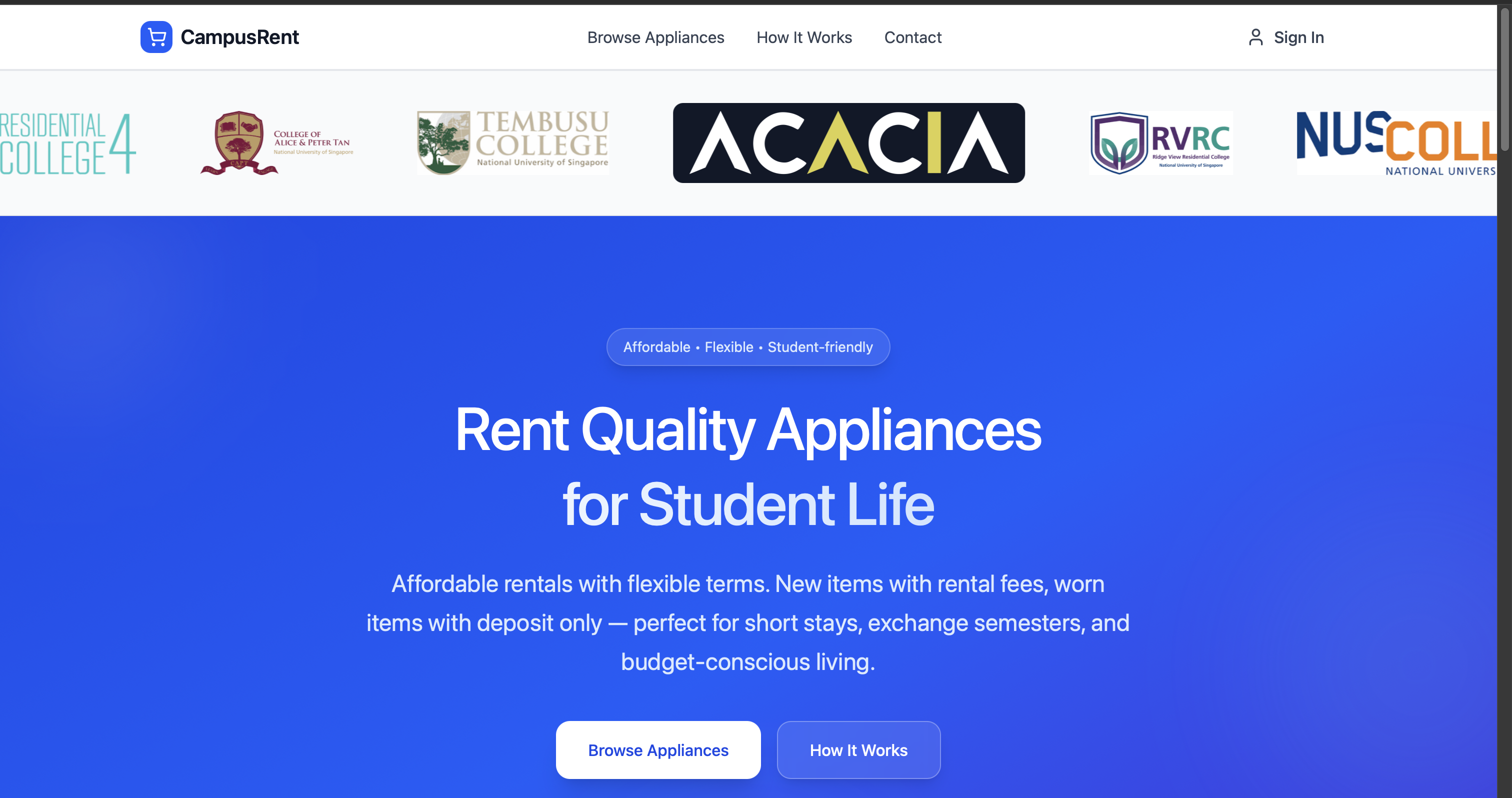
Homepage
-
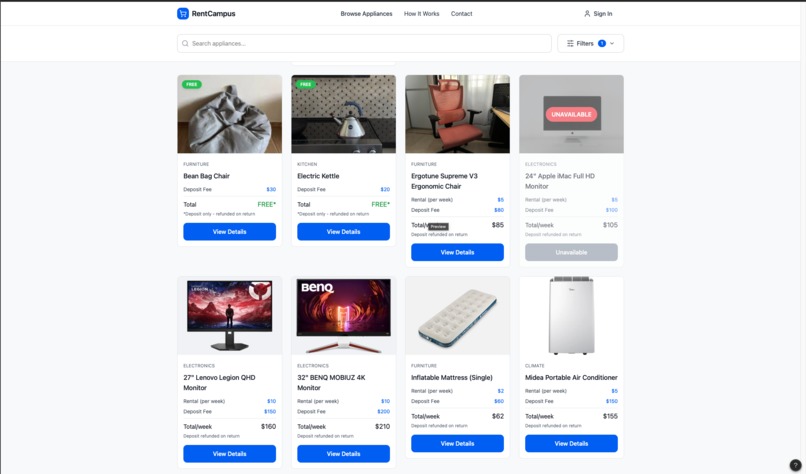
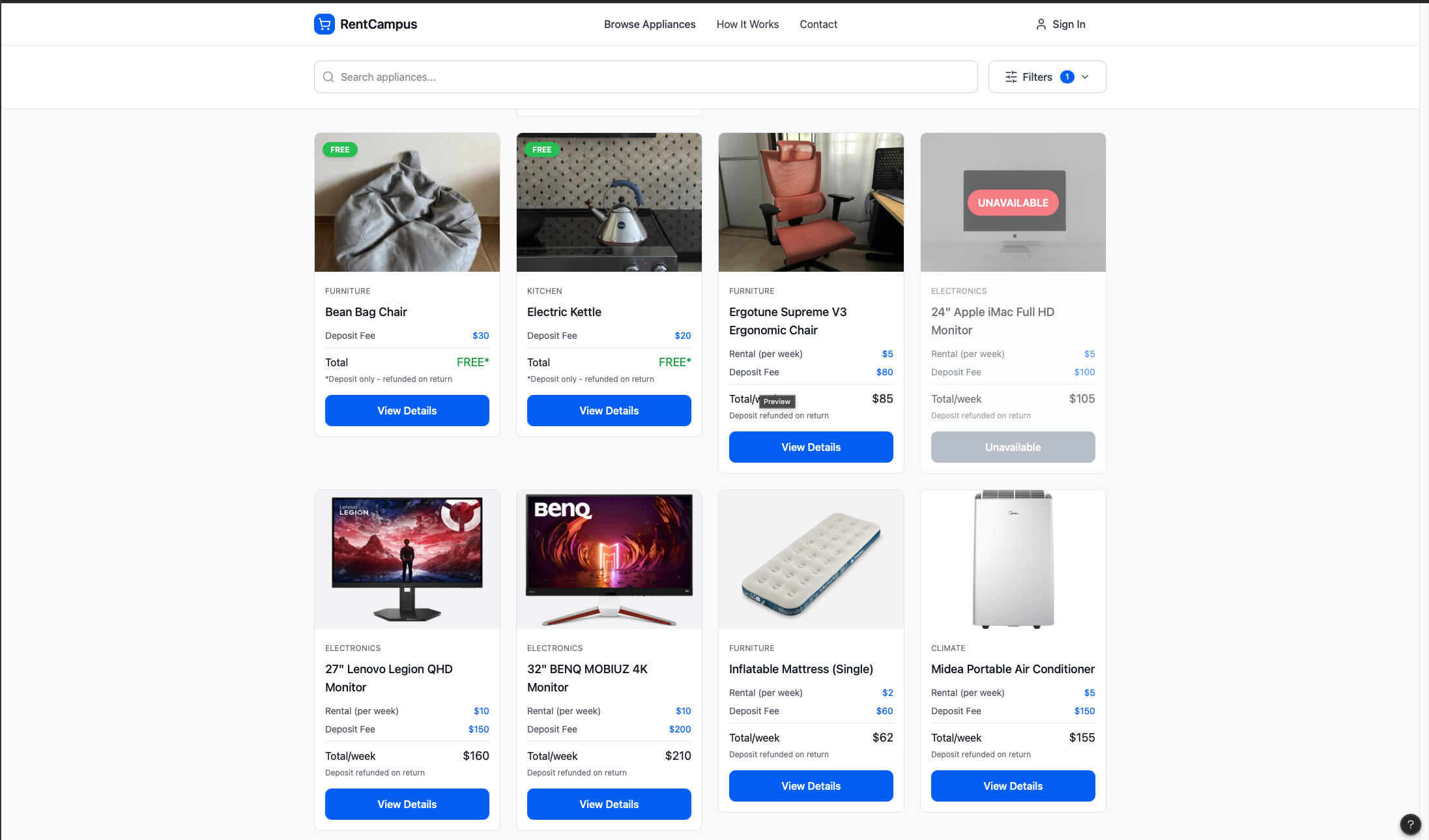
Browse Appliances
-
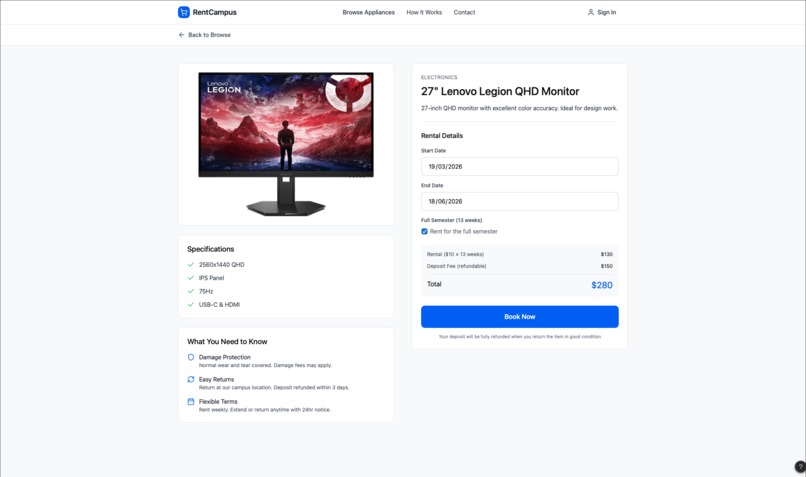
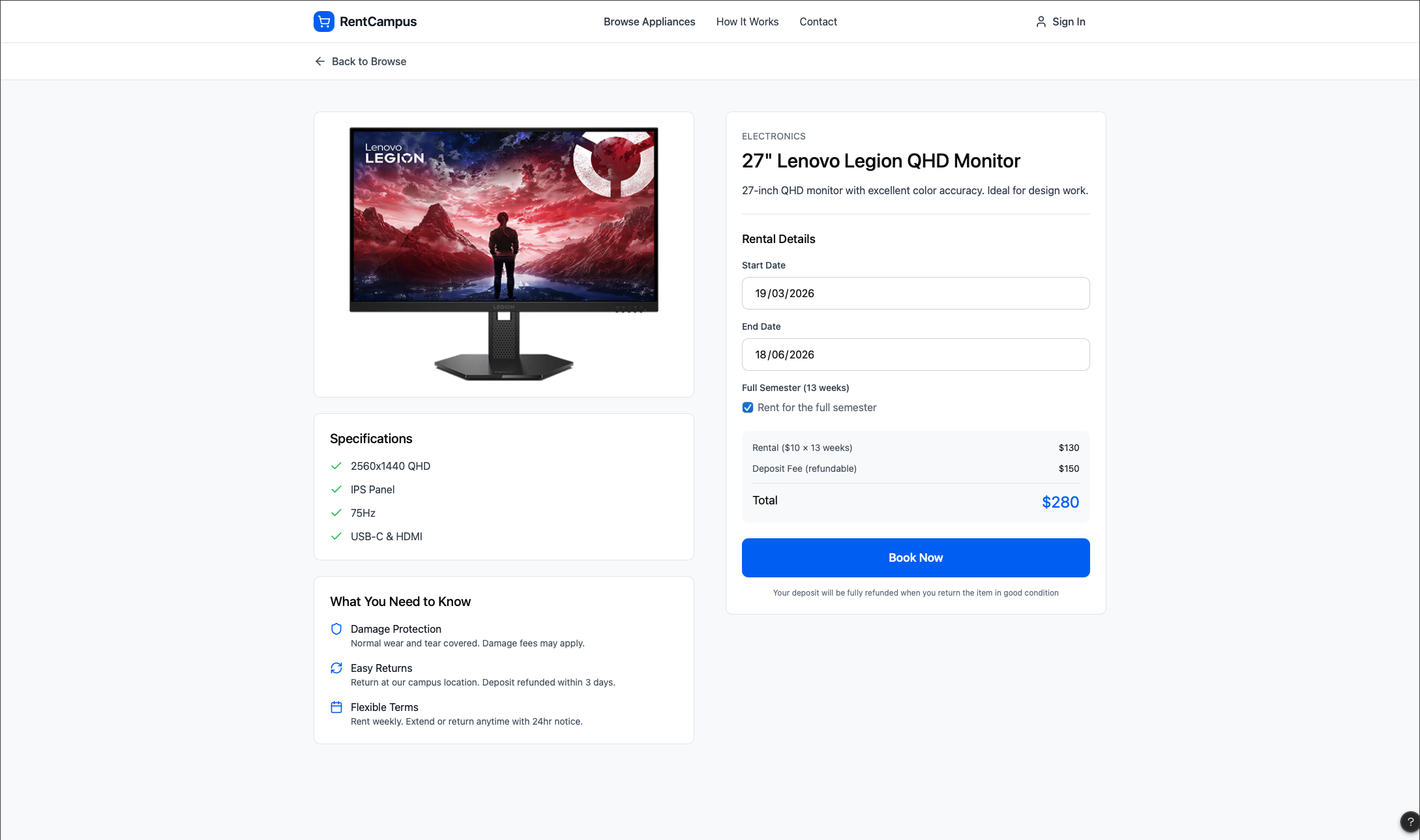
Appliance and Rental Details
-
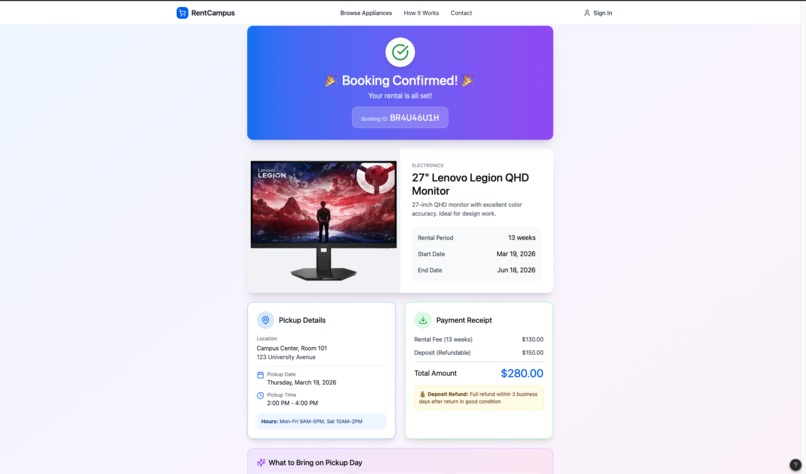
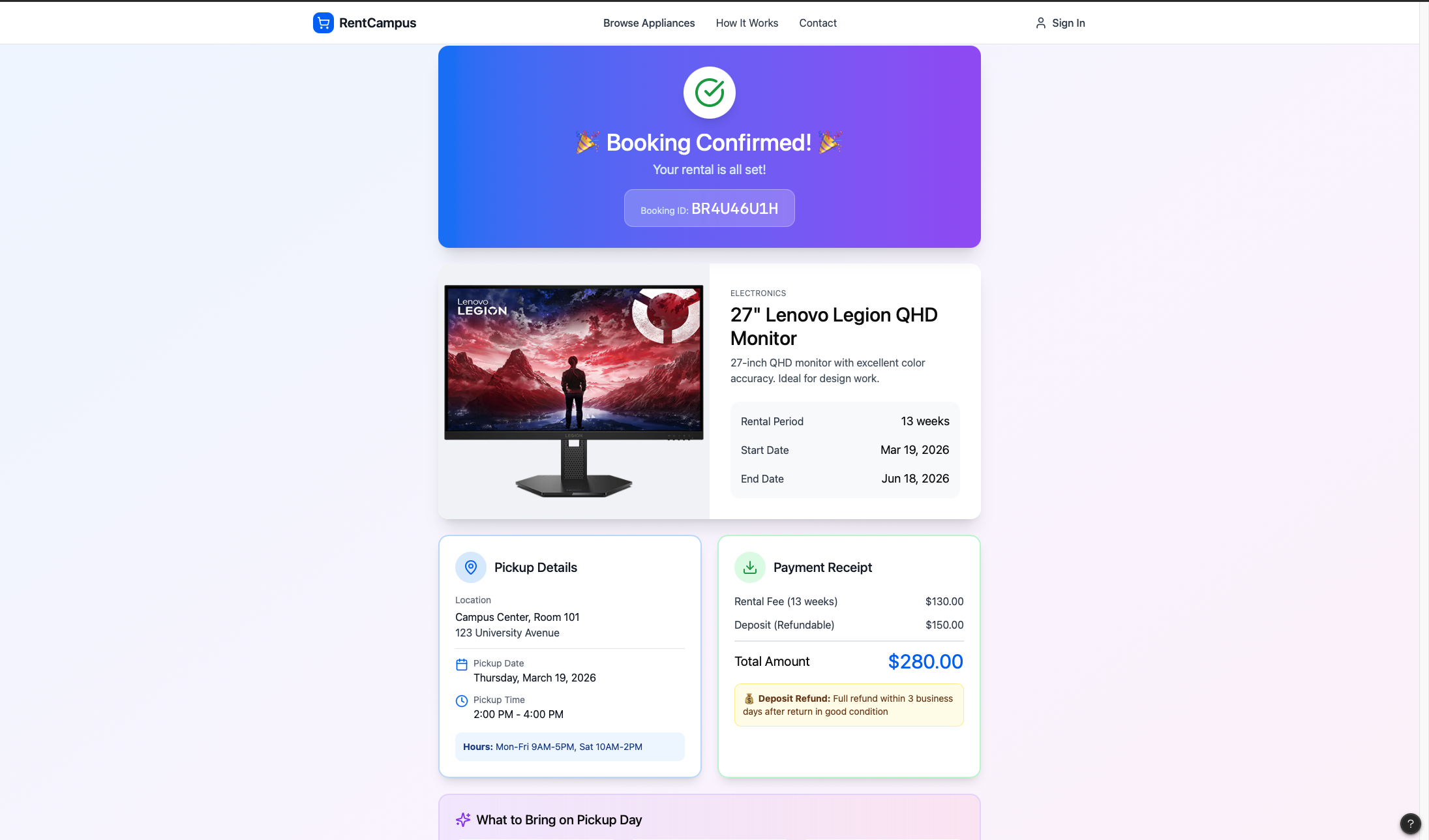
Rental Confirmation Page
Inspiration
Seeing recycling bins filled with discarded furniture and electrical appliances deeply saddens us. Many of these items remain in usable condition, yet they are thrown away simply because residents are moving out of RCs. In reality, most of these products have a lifespan far exceeding two years, making their premature disposal environmentally unsustainable, even more so when exchangers only use them for six months to a year.
At the same time, we observed that many students operate on tight budgets and are understandably reluctant to pay full price for furnishings they will only need temporarily. This reveals a clear gap: usable items are being wasted, while others face difficulty accessing affordable essentials. Our project aims to address both issues simultaneously by reducing unnecessary waste and facilitating the reuse of pre-owned household goods among residents.
What it does
To achieve this, we propose a platform where residents can donate, sell, or borrow household items through an accessible website. Instead of discarding their belongings, outgoing residents can pass them on to others who need them.
We believe that renting household goods for free or at a low price makes RC life much more affordable, especially for exchange students residing for a single semester, as well as students with financial constraints. Furthermore, because our operations are based within the NUS campus, collection and return of rented items is incredibly straightforward, eliminating the hassle of transporting bulky items off-campus.
How we built it
We developed the frontend of our platform using JavaScript to create a responsive, accessible user interface. The documentation and foundational structure were built using HTML, while the core backend logic, database management, and operational rules were powered by Java. The UI/UX was styled using CSS.
Challenges we ran into
We have considered key challenges and solutions to ensure the project’s sustainability and scalability. One of the main challenges was figuring out sustainability. For sourcing, we accept donations, which we foresee making up the bulk of low-valued items. However, donations alone may not be enough, especially for higher-value items.
Hence, to ensure a diverse inventory, we also plan to purchase higher-value goods from outgoing residents at a fraction of their initial price. The cost incurred from this one-time starting fund will be earned back through dynamic rental fees. We have to maintain a tough balancing act of affordability with practicality; we want the platform to remain low-cost, but we still need to account for maintenance and replacement of items over time.
Another challenge was ensuring responsible use. Since multiple users will be sharing the same items, we needed a system that encourages accountability. Hence, we implemented a deposit system to ensure items can serve its full shelf life. Borrowers pay a refundable deposit when renting, which is returned upon safe handover. Additionally, we have integrated a feedback page so users can easily raise concerns over the condition of items.
Accomplishments that we're proud of
We take immense pride in knowing that by establishing this circular system, we are transforming potential waste into reused community assets instead of watching perfectly good items pile up in bins. This proves that a more sustainable way of living in RC is practical and beneficial to its residents.
Besides the environmental aspect, we are deeply proud of how this project alleviates financial stress for both local and exchange residents. By providing a pathway to affordable essentials, such as a reliable ergonomic chair or necessary appliances, we ensure that a student's budget do not dictate their quality of life. We have built a solution that truly elevates the RC experience, empowering every resident to feel at home without having to purchase costly household items.
What we learned
We learned that the effective technical solutions often rely on having an understanding of socio-economic realities. By analyzing why students discard items and how financial friction affects residents, we realized that building a successful platform requires empathy and behavioural design just as much as robust backend logic.
We also learned to think beyond features and focus on systems, such as how sourcing, pricing, logistics, and incentives all connect
What's next for RentCampus (RC)
To reduce manual labor and scale our operations, our next phase heavily integrates Artificial Intelligence to manage inventory and pricing:
Automated Defect Detector (ADD): We will employ AI computer vision to automatically scan returned items, detecting any physical damages. This will streamline the categorization process and act as an objective check for user misuse.
Automated Price Predictor (APP): Working in tandem with the ADD, this system will provide an estimated, dynamic rental price based on the AI-assessed condition of the item.
Automated Appraisal System (AAS): To encourage more outgoing residents to supply high-value goods, prospective sellers will be able to upload photographs of their items to instantly receive an estimated appraisal value before committing to sell their used items.


Log in or sign up for Devpost to join the conversation.