

Inspiration
There is a lot of concerns related to global warming and climate change in the modern day. One of the policies of the German government, which we build our project around is aimed to increase the number of electric cars in Germany and eventually switch all the cars to electric ones. In fact, by 2030 we may expect 15 million electric cars throughout the country. Rental agencies will drive and accelerate the adoption of them, since they are often the first contact people will make with electric vehicles. We want to improve acceptance of electric cars in general population and make car sharing more accessible.
What it does
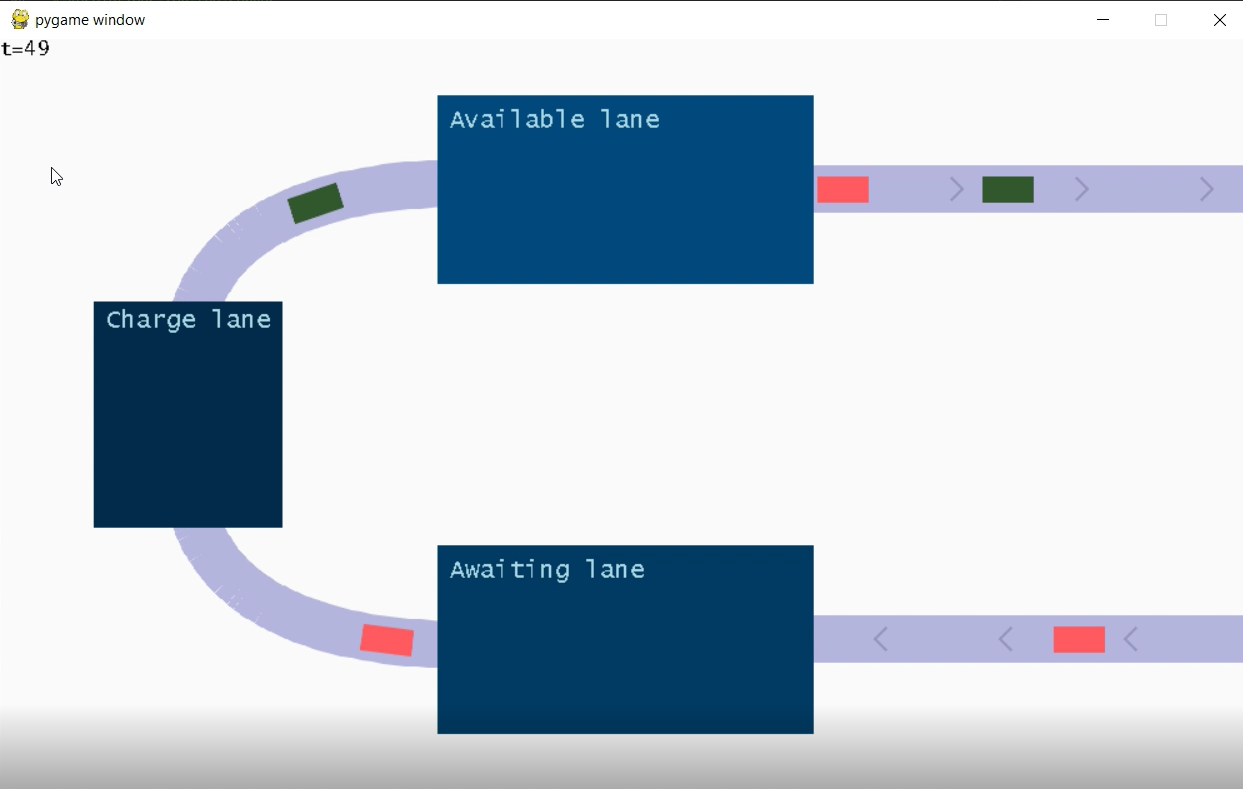
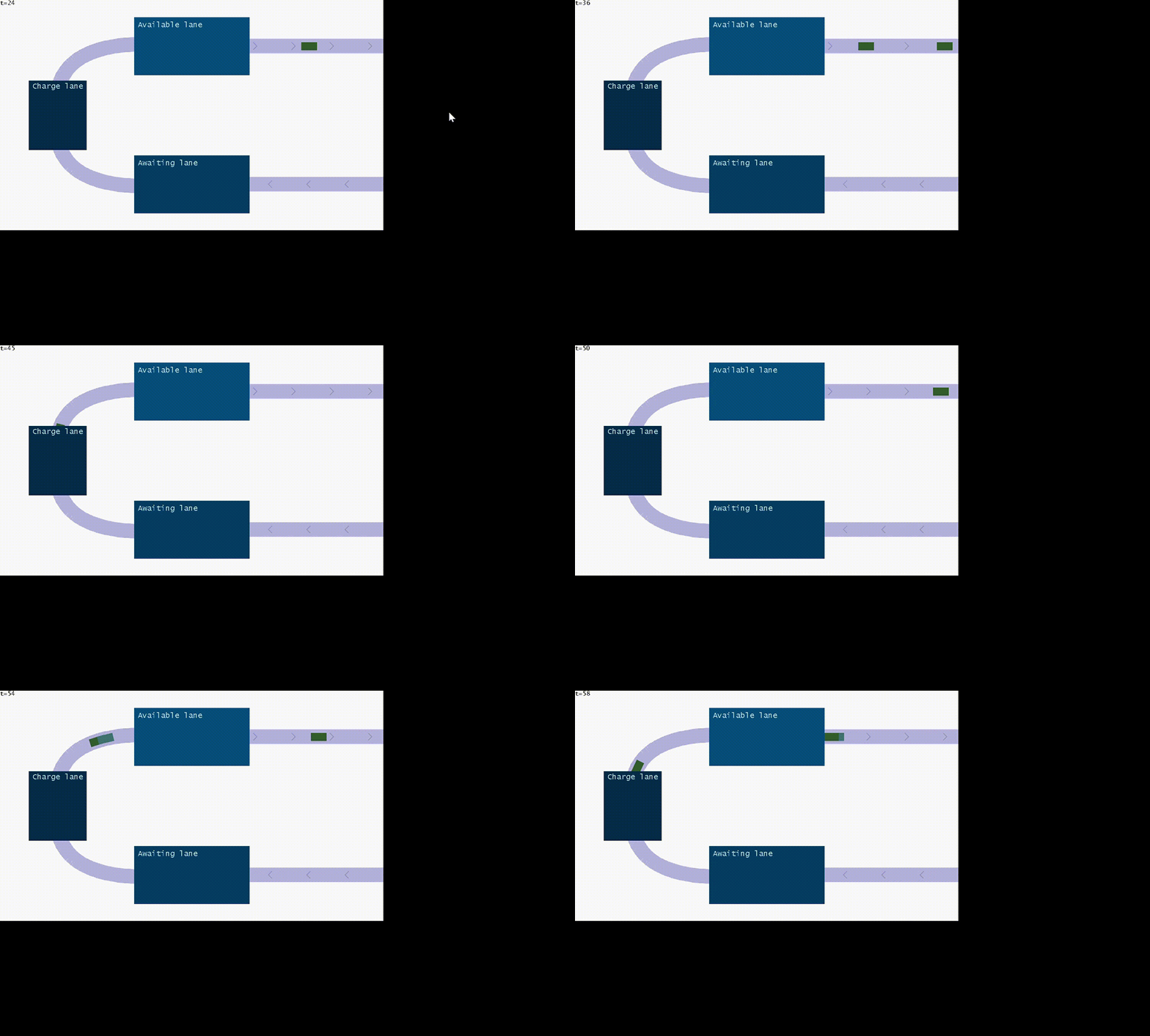
The project is simulating a rental Station with an adaptive and collaborative charging level. With the introduction of EVs there is not only a need to control when or how many cars are leaving the station, but also when they will return with which charge. Since the charging times drastically increase for EVs. Our model shows that it has a significant effect to introduce a incentivized requested return level of the battery, which is rewared by a bonus for future rentals. It is only asked for if there is a demand due to many cars getting returned at the same time and is computed with respected to the ratio of demand to numbers of charging stations.
How we built it
We started to do some model assumptions on how a rental station functions and operates. After that we implemented the simulation in Python and pygame. We've splitted it into two different versions. One for getting data and one for a visual display.
Challenges we ran into
- Time constraints.
- Making the graphics work together with the simulation logic.
Accomplishments that we're proud of
- Working with pygame, which noone knew
- Managing to pull this off with 3 people!
- Working as a team successfully under tight time restrictions
What we learned
- Project design
- How to work collaboratively on a project
- How to to divide tasks when the distinction is not very clear
What's next for Rentaru
Adapt the model with actual data to fit parameters to actual customer behavior and Improve model complexity to capture the full process.

