-
-
-
Scanning
-
RentRadar
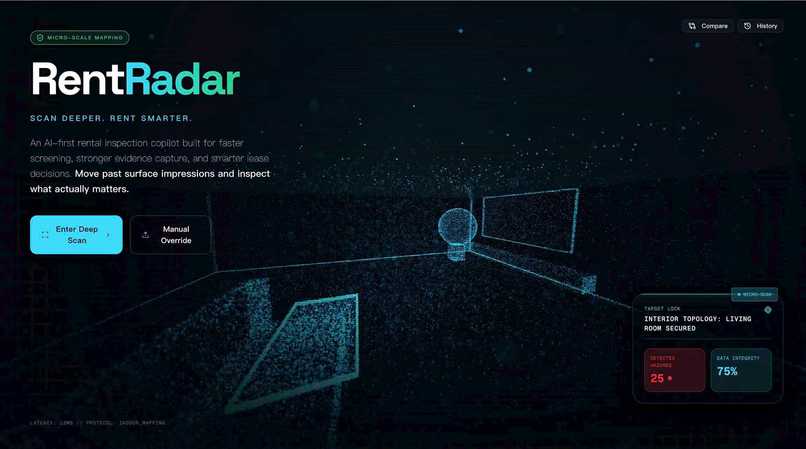
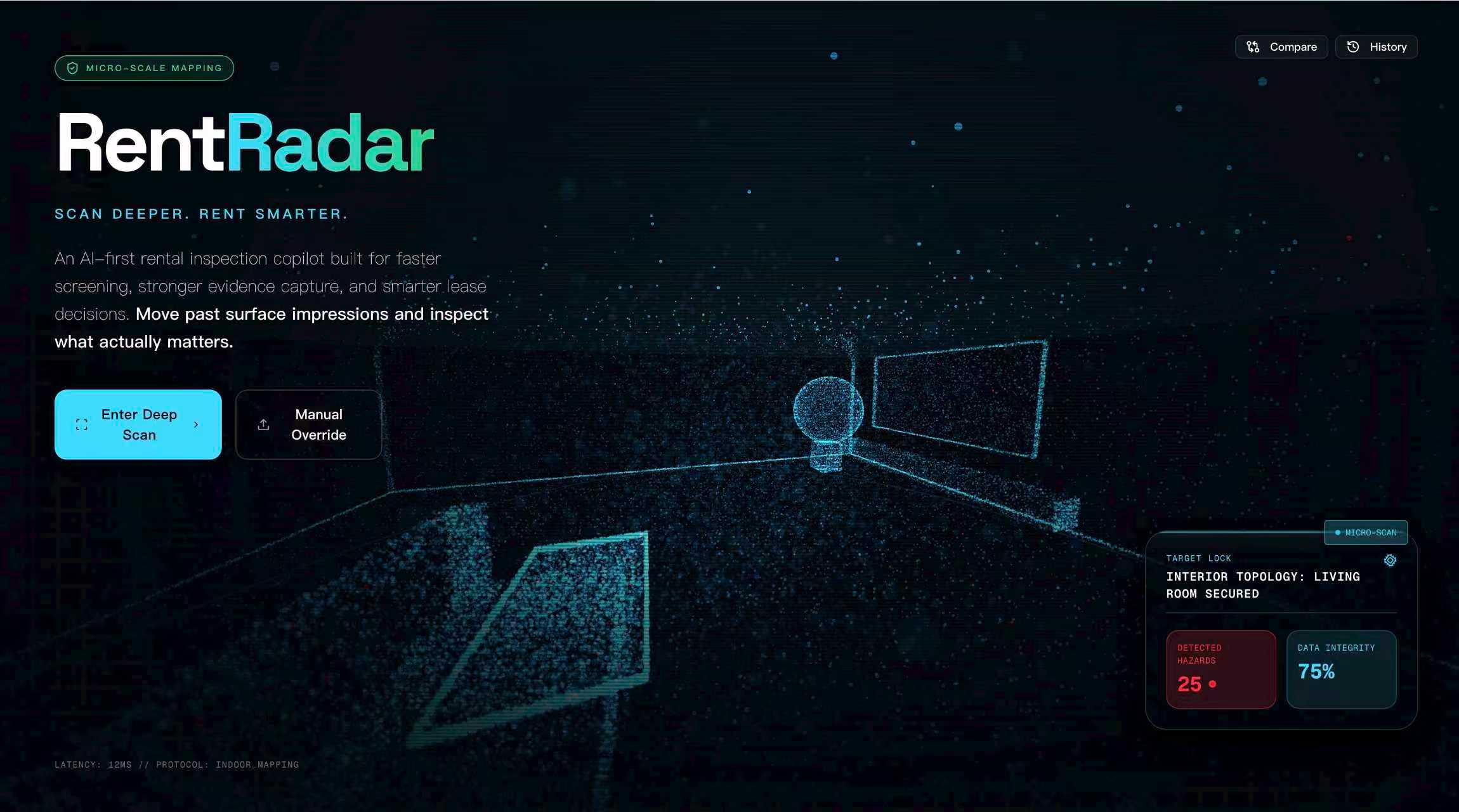
🏠 RentRadar is an AI-powered rental inspection assistant that detects hidden property risks and helps renters avoid bad housing decisions.



Inspiration
Have you ever walked out of a rental inspection and wondered:
- Did I miss something important?
- Is there hidden mold behind that wall?
- Is this area actually good to live in?
For many renters — especially students and first-time tenants — property inspections are stressful and rushed. You might only have 10 minutes to look around, while the real problems are often subtle: mold in corners, structural cracks, water damage, poor lighting, or noise from nearby roads.
Even worse, choosing a place to live isn’t just about the room itself. Questions like these matter just as much:
- 🚆 Is the commute actually convenient?
- 🏘 Is the neighborhood safe and livable?
- 💬 Does the agency have a bad reputation?
Yet most renters are expected to figure all of this out on their own.
So we asked ourselves:
What if you could bring an AI assistant to every inspection?
That idea became RentRadar — a tool designed to help renters detect risks, understand properties better, and avoid signing leases they might regret.
What it does
RentRadar is an AI-powered rental inspection assistant designed to help renters make smarter housing decisions.
Instead of relying on a quick visual check, users can:
📷 Scan a room live during an inspection
or
🖼 Upload photos of a property
Our AI then analyzes the images to detect potential hazards, such as:
- structural damage
- water leaks or mold
- electrical issues
- environmental problems
But RentRadar goes beyond just the room.
The platform also gathers location intelligence, analyzing factors like:
- 🚆 transport access and commute time
- 🏪 nearby amenities and infrastructure
- 🏘 community feedback
- 🏢 agency reputation
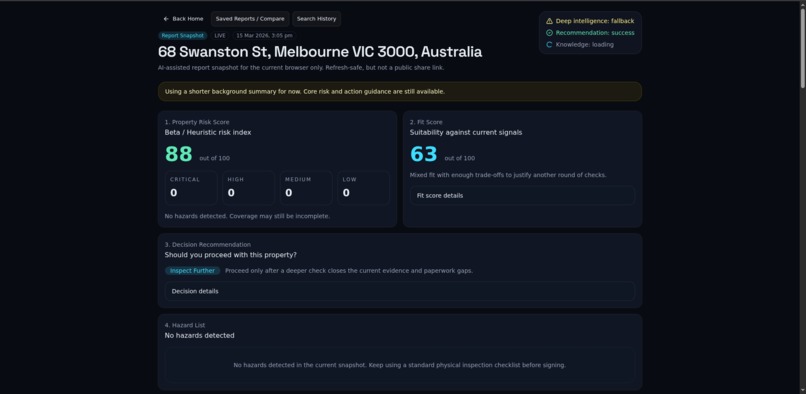
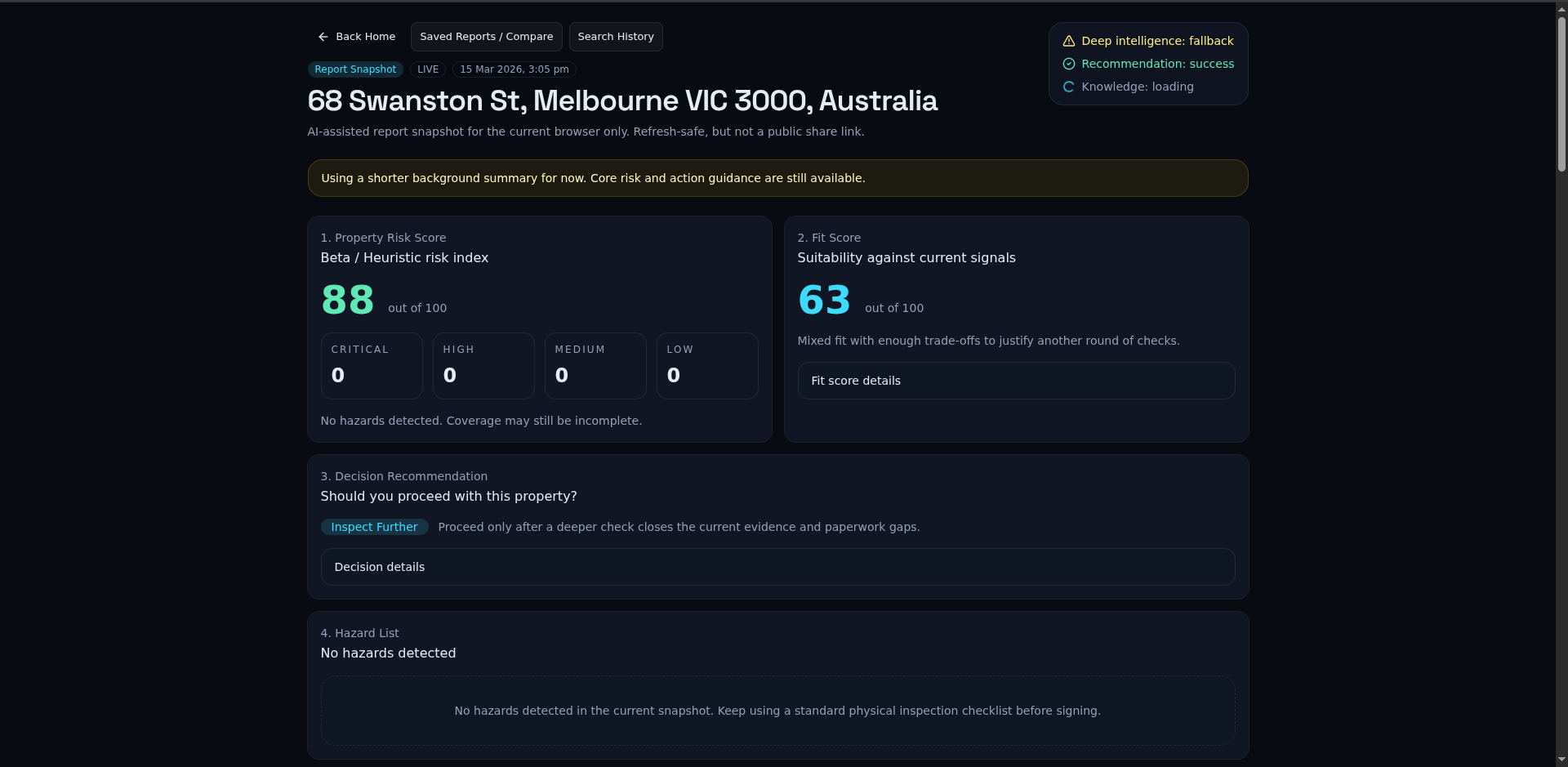
All of this information is combined into a clear inspection report, including:
- ⚠️ detected hazards
- 📊 a risk score
- 🧠 AI recommendations (apply, negotiate, or walk away)
Users can also compare multiple properties side-by-side, making it easier to choose the best option instead of guessing.
How we built it
RentRadar is built as a TypeScript monorepo combining a modern web interface with AI-powered backend services.
Frontend
The user interface was built using:
- Next.js + React
- Tailwind CSS
- shadcn/ui
- Framer Motion
These tools allowed us to build a fast and interactive experience where users can scan rooms, upload photos, and explore inspection reports.
We manage application state with Zustand, and inspection reports are stored locally using IndexedDB, allowing users to revisit previous scans and property comparisons.
AI Vision & Analysis
For property inspection, we use Google Gemini models (Gemini 2.5 Flash / Pro) to perform image analysis.
This allows the system to:
- analyze photos in real time
- detect visible property hazards
- generate structured inspection insights
To keep the system fast and efficient, we implemented a Smart Gateway that dynamically routes tasks between models — using faster models for simple tasks and stronger reasoning models for complex analysis.
Location Intelligence
To understand the environment around a property, we integrate several Google Maps APIs, including:
- Geocoding
- Places
- Routes
- Static Maps
These allow RentRadar to evaluate factors such as transport convenience, surrounding infrastructure, and neighborhood accessibility.
We also gather additional signals through web search, helping the system identify community feedback or agency background information.
Knowledge Retrieval (RAG)
To provide grounded rental advice, we implemented a Retrieval-Augmented Generation (RAG) system.
This pipeline uses:
- Cohere embeddings
- Qdrant vector database
This allows the system to retrieve relevant knowledge before generating responses, reducing hallucinated advice and improving reliability.
Additional Features
RentRadar also supports several advanced capabilities:
🏘 Multi-property comparison
📄 AI-generated inspection reports
🧊 Approximate 3D room reconstruction from photos
These tools help renters visualize properties and evaluate trade-offs more clearly.
Challenges we ran into
One of our biggest challenges was supporting both live camera scanning and manual photo uploads while keeping the analysis pipeline consistent.
Vision models can also be unreliable — sometimes they detect issues that are not actually problems, or miss subtle hazards.
To handle this, we implemented:
- structured output schemas
- confirmation logic for detected hazards
- fallback mechanisms when AI services fail
Another challenge was integrating multiple AI services, APIs, and data sources while maintaining performance and reliability.
Accomplishments that we're proud of
We’re proud that we built a working prototype that combines:
- computer vision
- location intelligence
- AI reasoning
into a single rental inspection workflow.
The system can analyze property photos, evaluate surrounding areas, and generate a clear inspection report that helps renters make better decisions.
We are especially proud of the multi-property comparison system, which allows users to evaluate rental options more systematically instead of relying on intuition.
What we learned
Through this project we learned how challenging it is to integrate multiple AI systems into a real application.
We also learned that building reliable AI products requires more than just calling APIs. Designing fallback mechanisms, structured outputs, and resilient workflows is essential when external services fail or behave unpredictably.
What's next for RentRadar
This is just the beginning.
Next, we plan to improve the accuracy of hazard detection models and expand the platform’s neighborhood intelligence, making property analysis more reliable and comprehensive.
In the long term, we hope RentRadar can become a standard step in the rental process.
If renters and property platforms adopt tools like RentRadar before signing leases, it could:
- increase transparency in the rental market
- help tenants avoid hidden housing problems
- encourage higher housing standards across the industry
Because finding a place to live shouldn’t feel like gambling.
Built With
- digitalocean-spaces-(s3-compatible-presigned-upload)-minimax-tts-google-maps-platform-(geocoding
- docker
- elasticsearch-8
- framer-motion-zustand
- frontend-next.js-16.1.6
- indexeddb-(idb)
- maps-js)-shared-packages-packages/contracts-?-zod-schemas
- openai-compatible-llm-yaml-workflow-engine
- places
- react-19
- [email protected]/react-google-maps
- routes
- shadcn/ui
- shared-types-packages/ui-?-shared-ui-components-ops-agent-(python)-python-3.10+
- static-maps
- systemd
- three.js-html2canvas-+-jspdf-backend-/-server-next.js-route-handlers
- typescript-tailwind-css-v4
- zod-@google/genai-(gemini-2.5-flash-/-pro)-jimp


Log in or sign up for Devpost to join the conversation.