-
-
Home Page (1)
-
Home Page (2)
-
ZIP Code View (1)
-
ZIP Code View (2)
-
Methodology (1)
-
Methodology (2)
-
About (1)

Inspiration
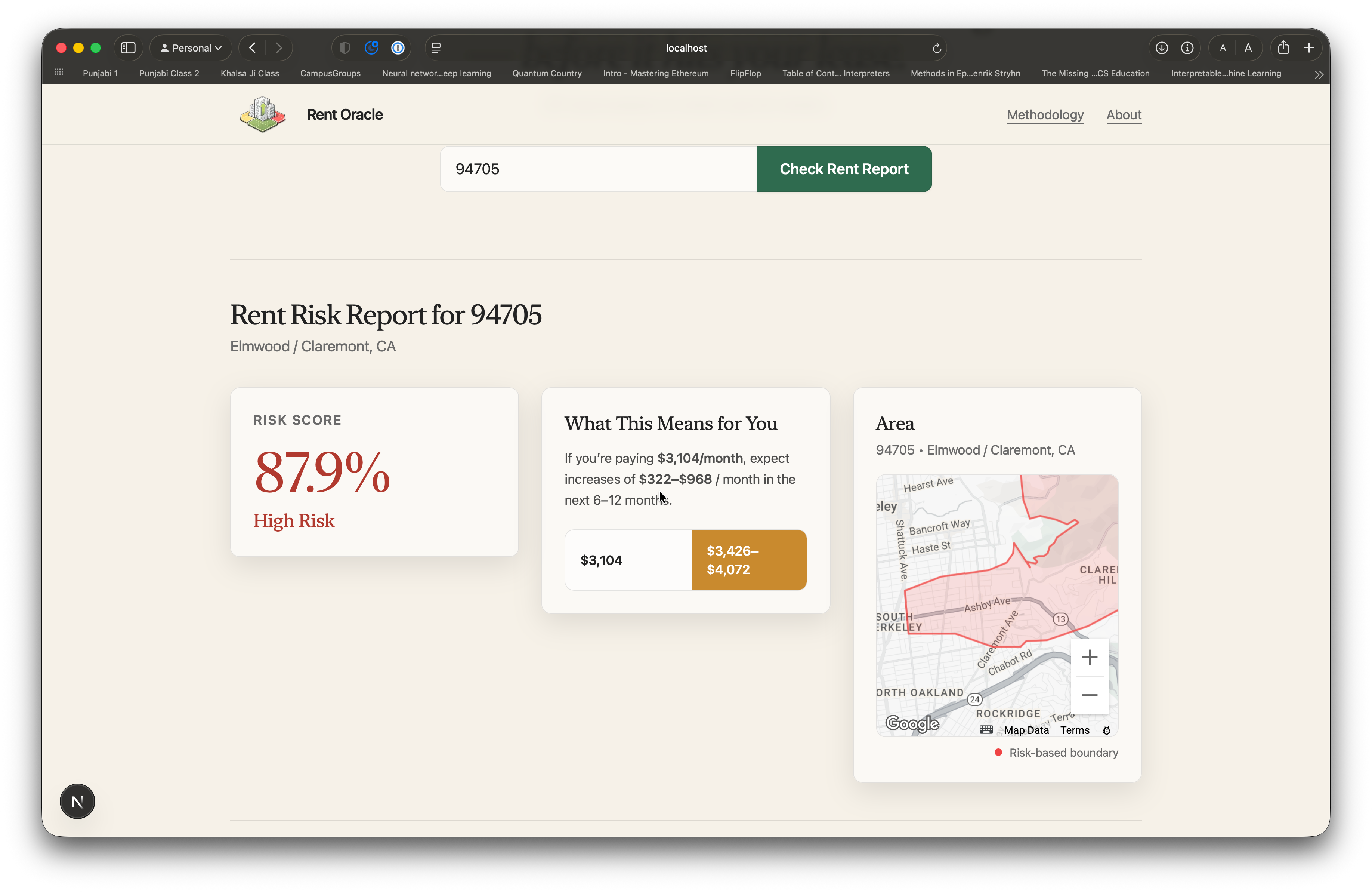
Rent Oracle is inspired by the struggles of renters living in the Bay Area, where supply is low and rent is always increasing.
What it does
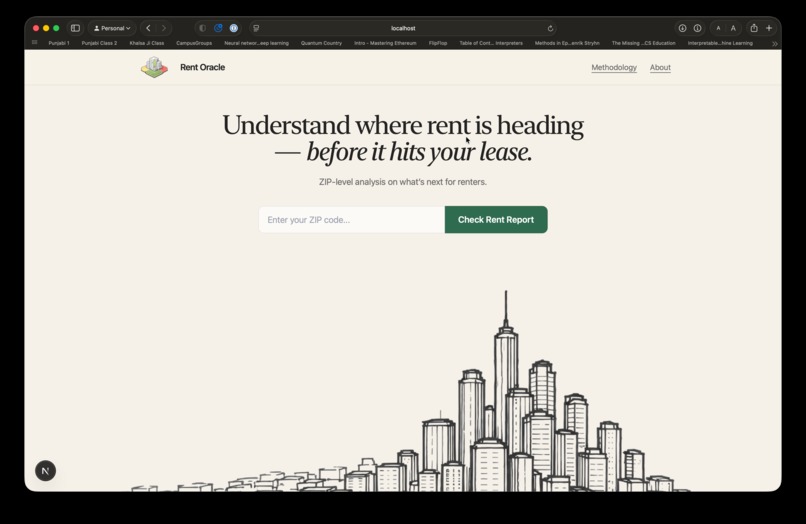
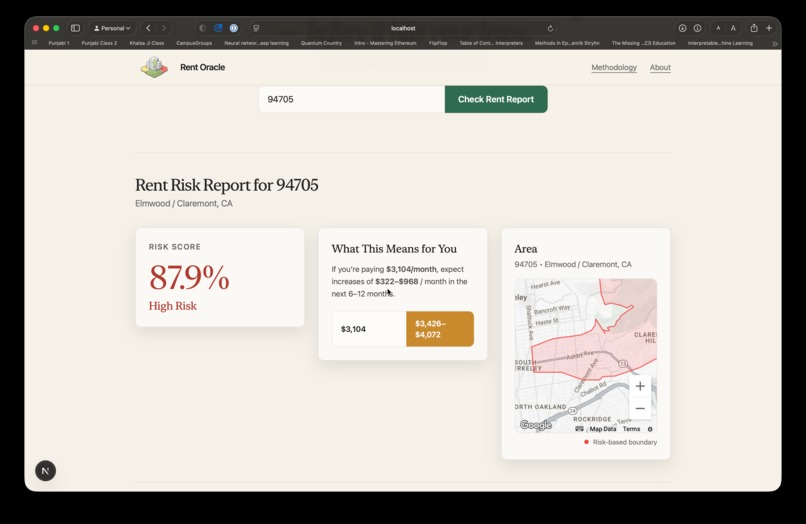
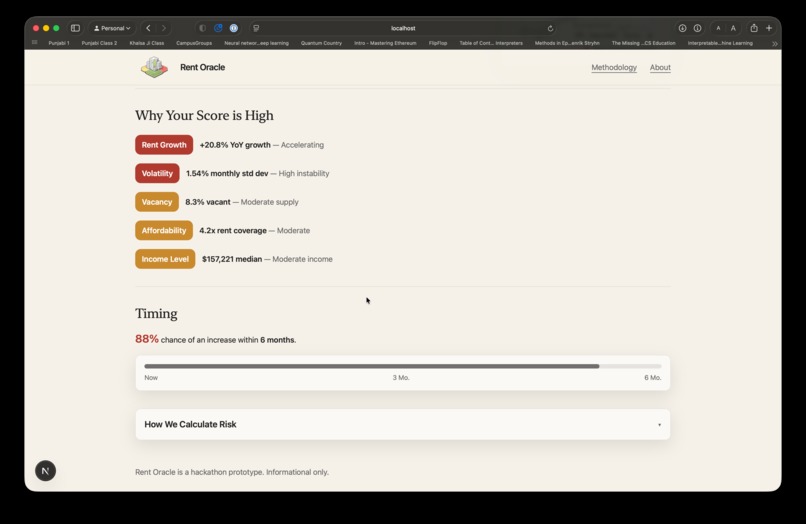
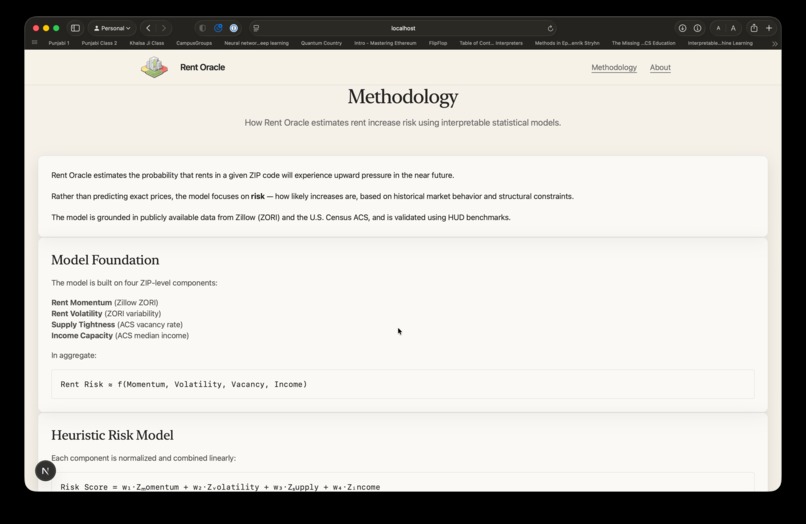
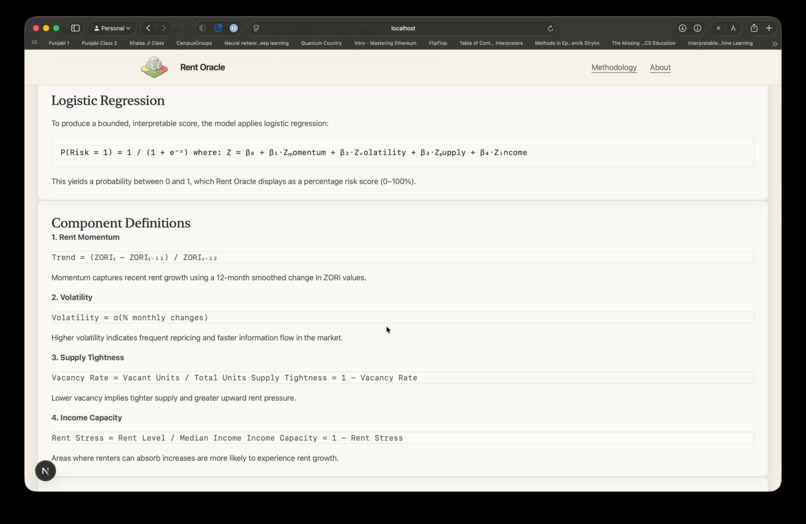
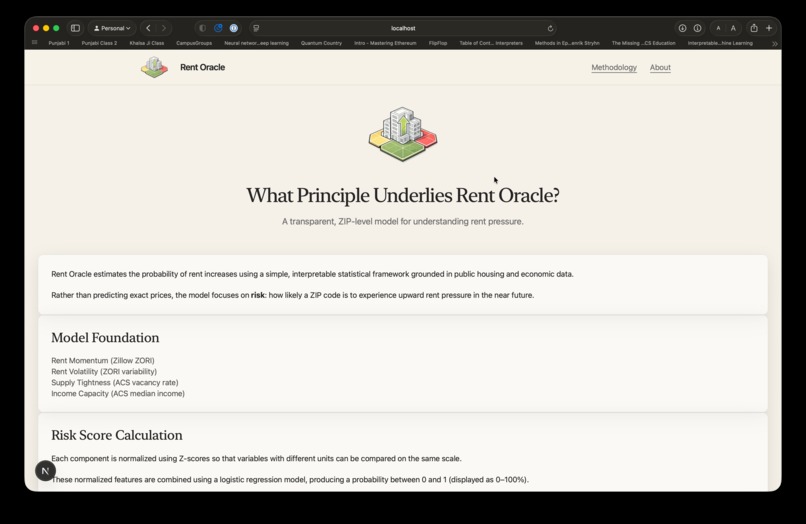
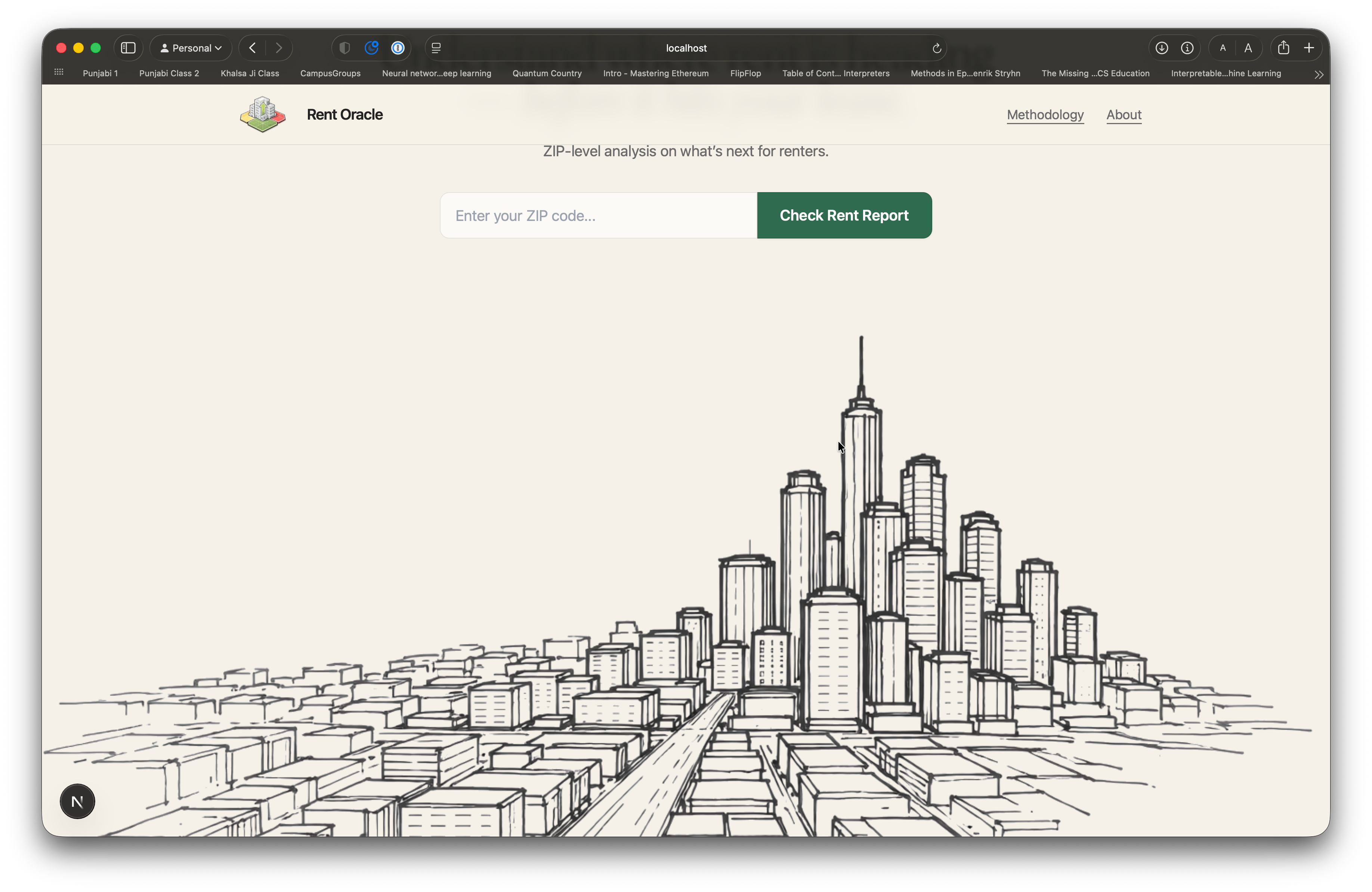
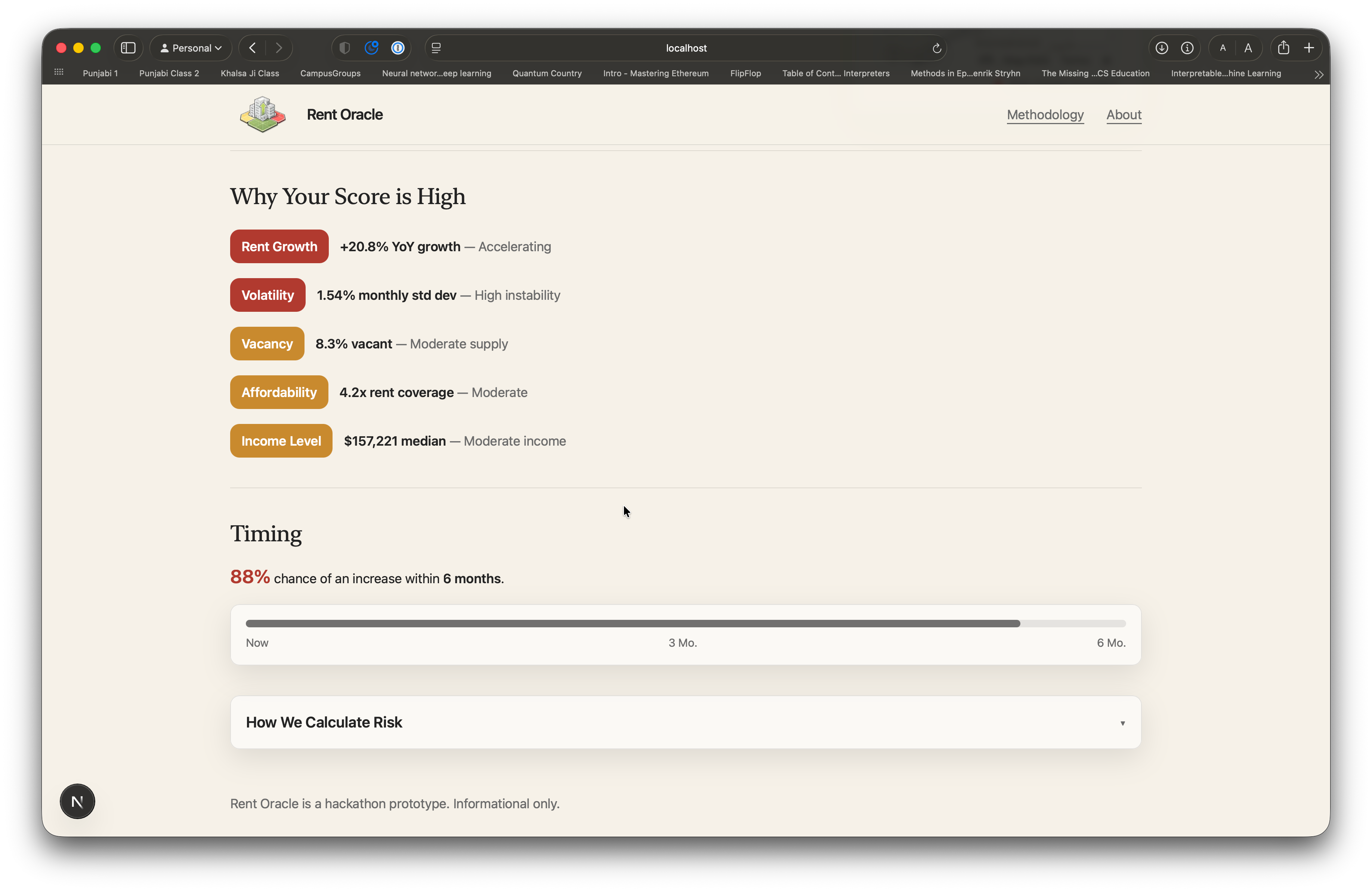
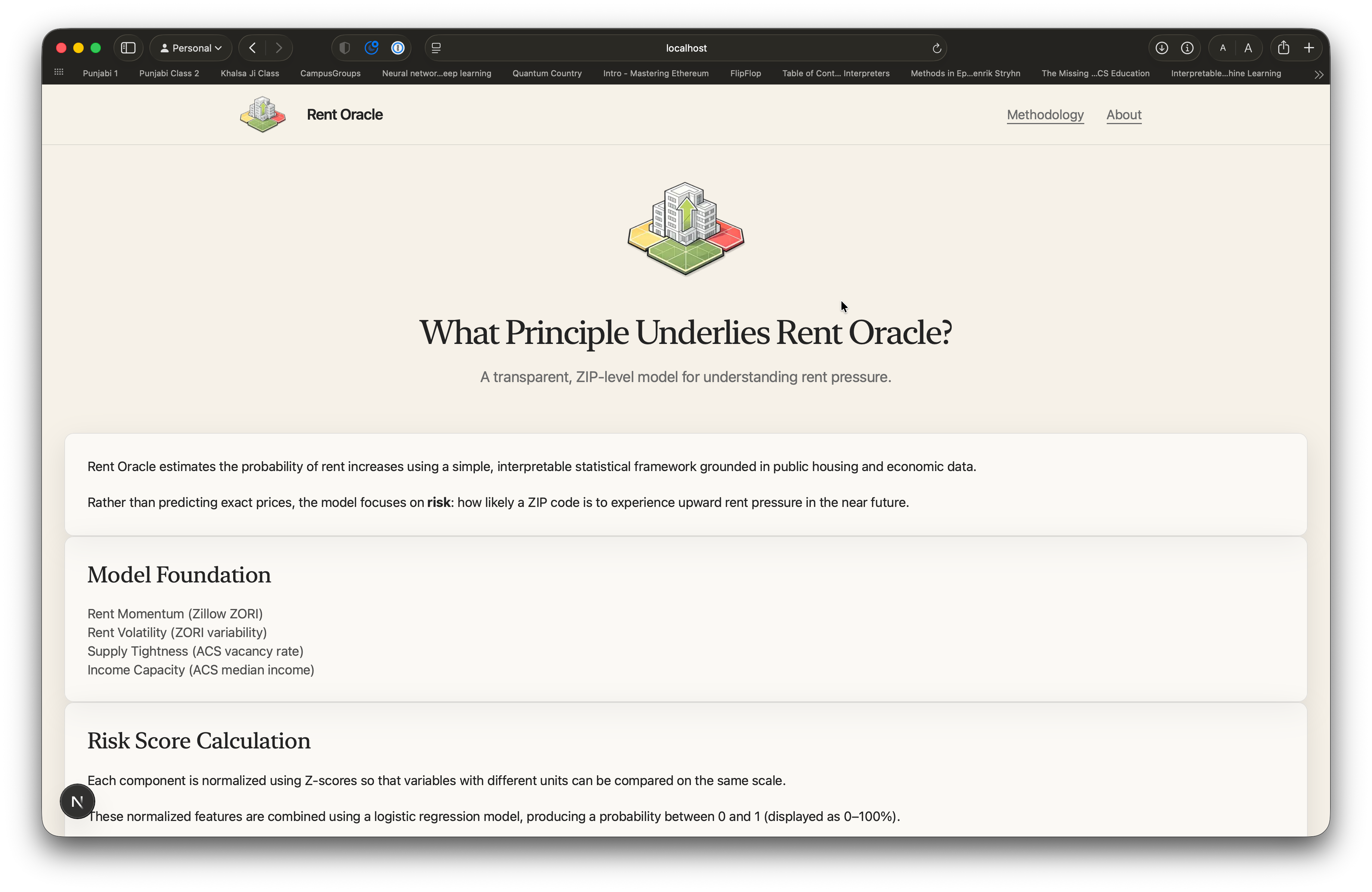
Rent Oracle uses current market trajectories and historical data to predict rent increases that will occur in the next six months in a certain zip code. Renters can use this forewarning to save or sign a new lease accordingly, on their own terms.
How we built it
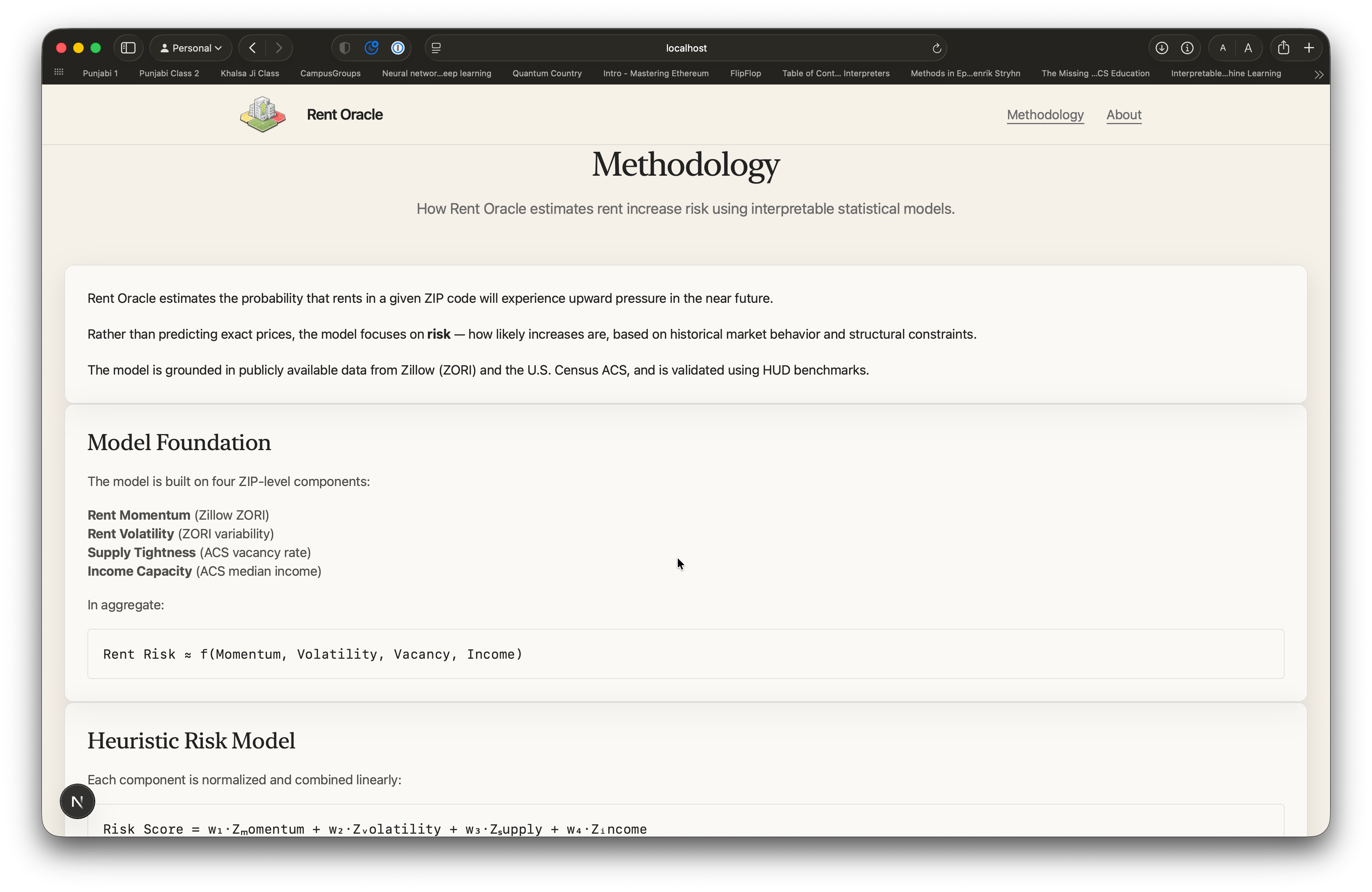
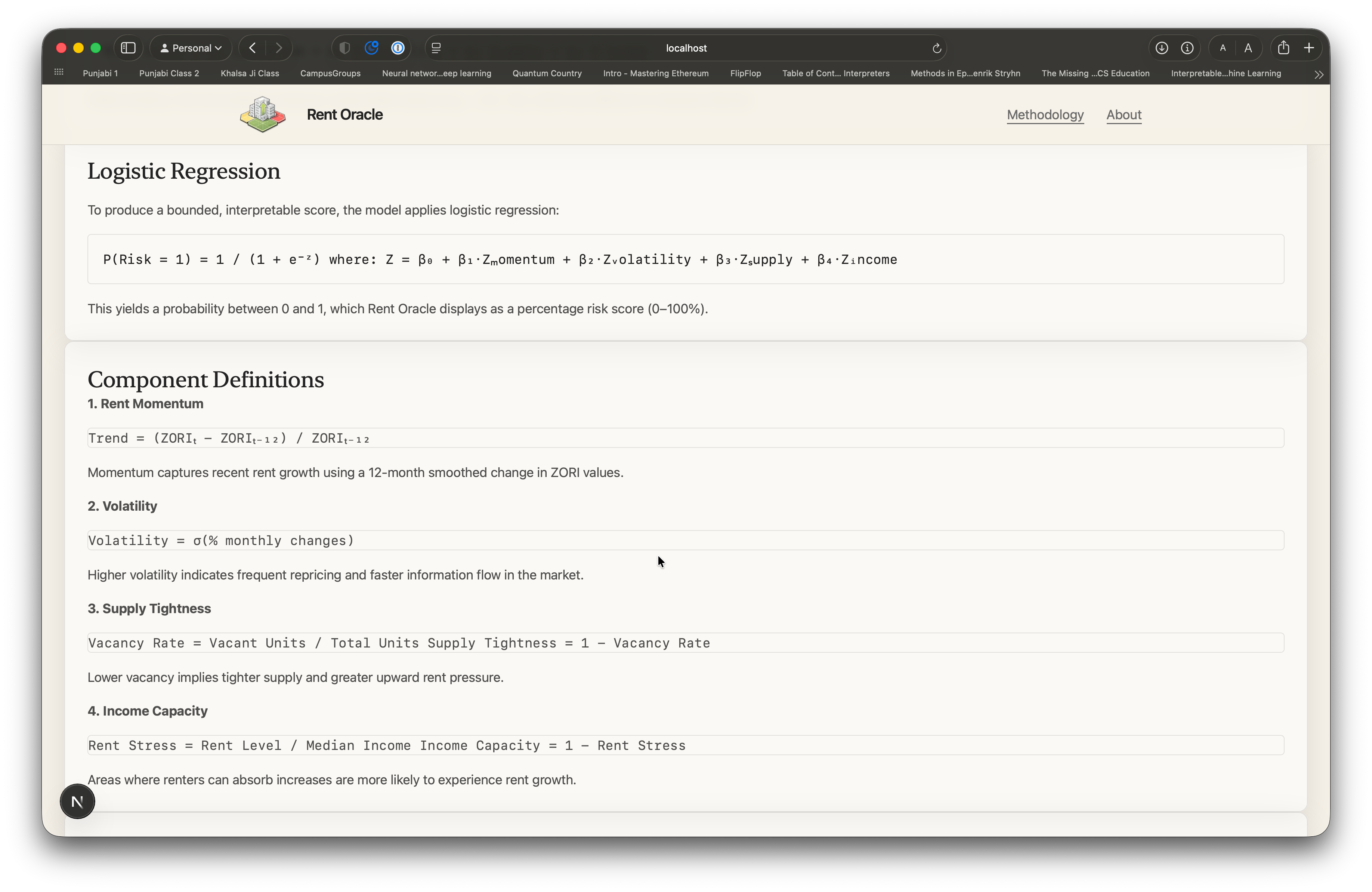
Rent Oracle is built on Zillow monthly rent data and the US Census. It uses trends identified in these data sets and presents these insights in a straightforward way for consumers. The backend is build using FastAPI and Pandas. The frontend is built with Next.JS.
Challenges we ran into
The biggest challenges were first, finding relevant datasets that provided more real-time metrics rather than lagging features, and secondly, calculating new measures that provided clear signals to users.
Accomplishments that we're proud of
We are proud developing the underlying model, as well as expanding to include not only Berkeley, but also the entire United States. Additionally, we utilized mathematical concepts to develop our algorithm.
What we learned
We were amazed that having a clear problem statement, pitch, and defined MVP allowed us to develop and iterate quickly without getting lost in extraneous concerns.
What's next for Rent Oracle
We plan on integration a few features, such as:
- Alternative ZIP codes: if a renter's current ZIP code has a risk score above a certain threshold, they will be provided a list of nearby ZIP codes that have lower risk scores. The data is already available, it just needs to be unlocked on the frontend.
- Integrating real-time, local data: Once we are able to scale this application, we plan to support renters notifying our service of rent increases. Aggregating this data will allow us to provide neighborhood-level insights in real-time.
Built With
- fastapi
- javascript
- nextjs
- pandas
- python


Log in or sign up for Devpost to join the conversation.