Inspiration
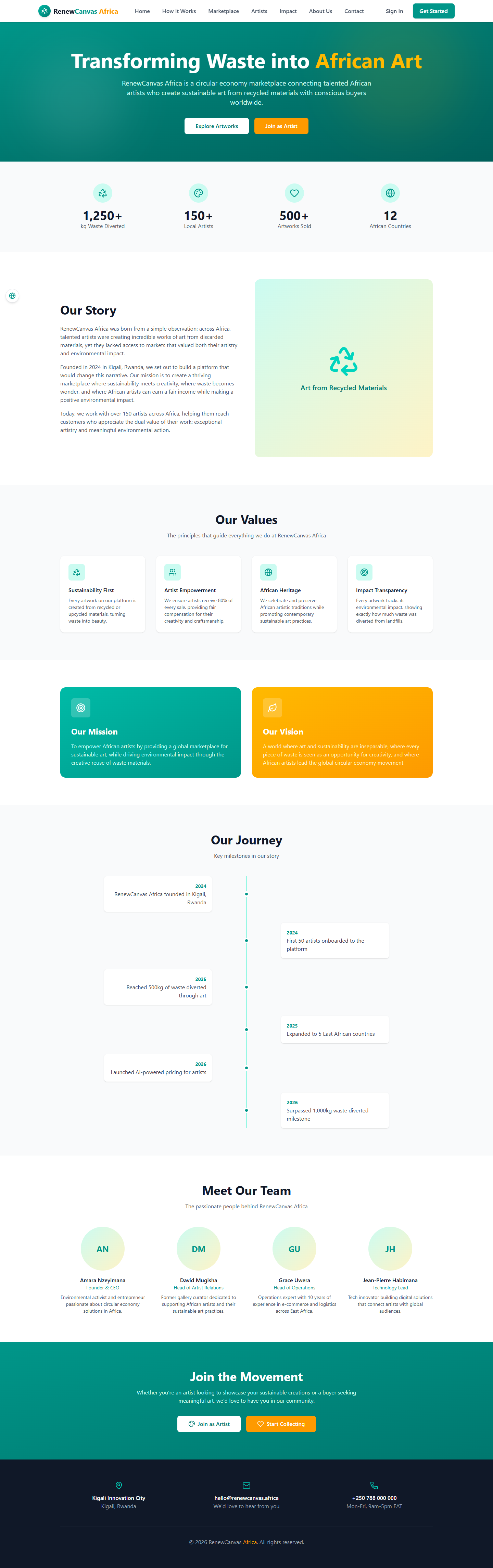
RenewCanvas Africa was inspired by two connected problems: the growing challenge of poorly managed recyclable waste and the limited income opportunities available to many emerging artists. Across African cities, materials such as plastic bottles, bottle caps, cardboard, paper packaging, and fabric scraps are often discarded without being reused meaningfully. At the same time, many artists struggle with visibility, pricing, access to materials, and access to buyers.
We wanted to build a solution that does not treat waste only as a problem, but as a creative resource. RenewCanvas Africa turns recyclable waste into art, income, and measurable impact by connecting waste sources, artists, and buyers through a circular economy marketplace.
What it does
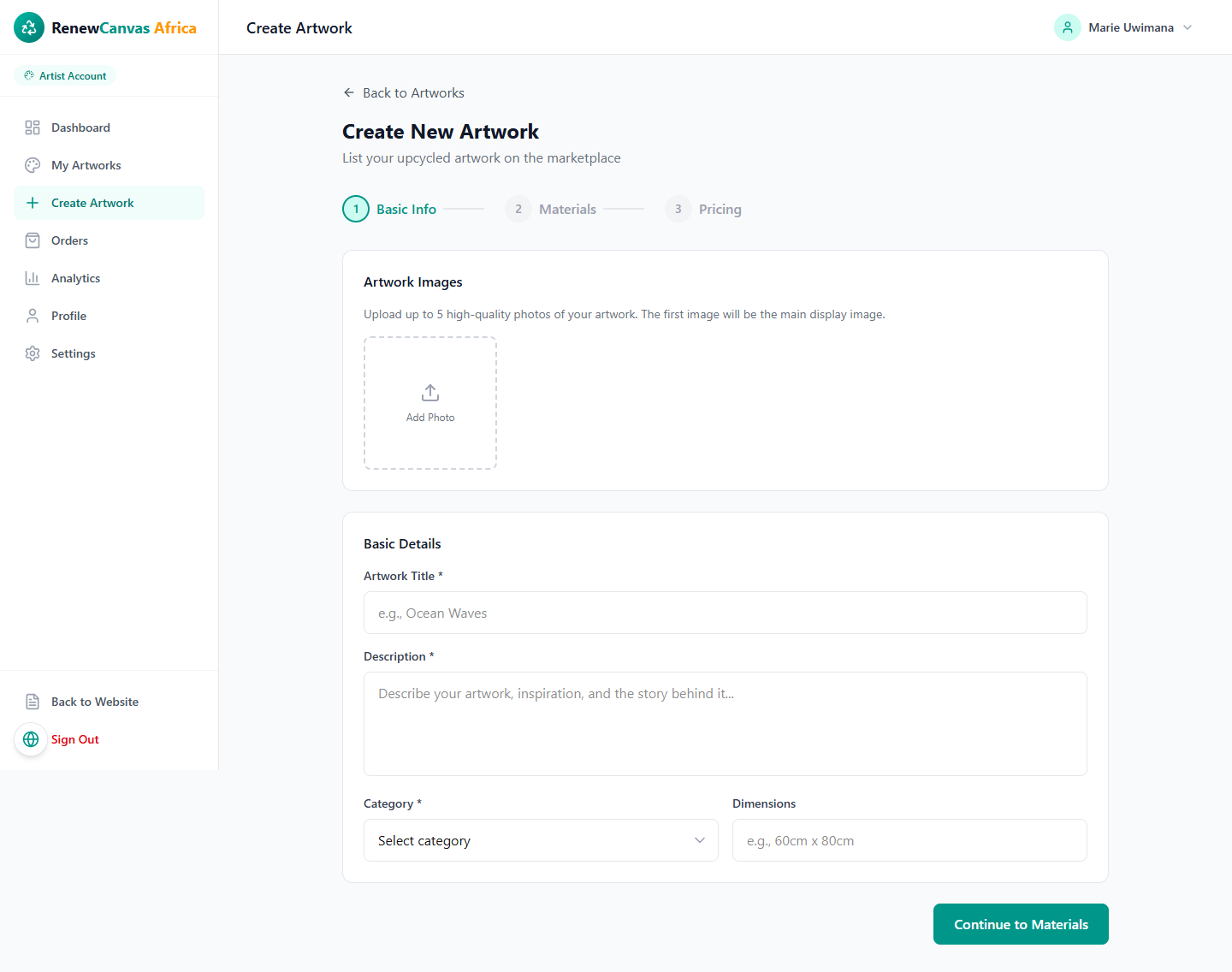
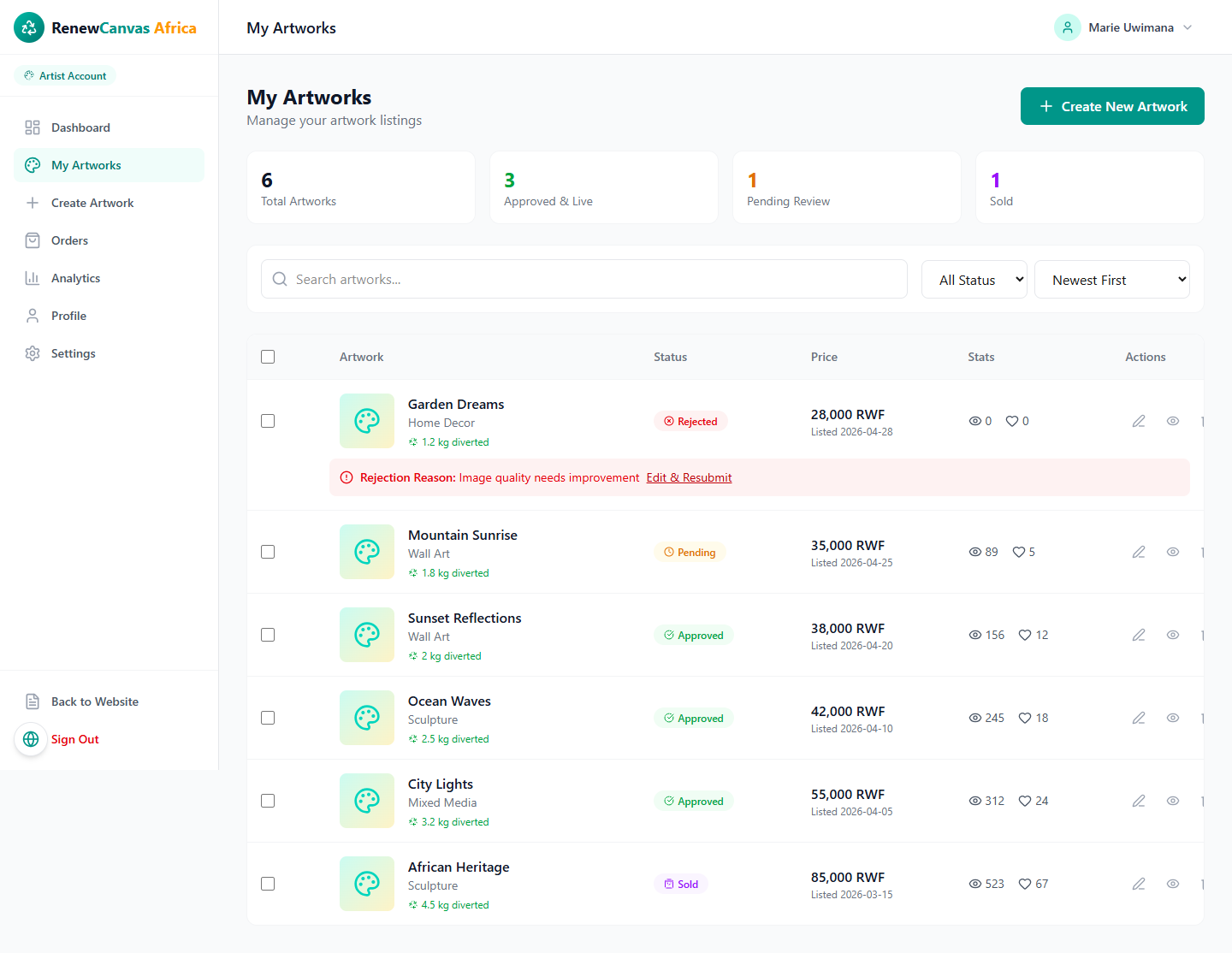
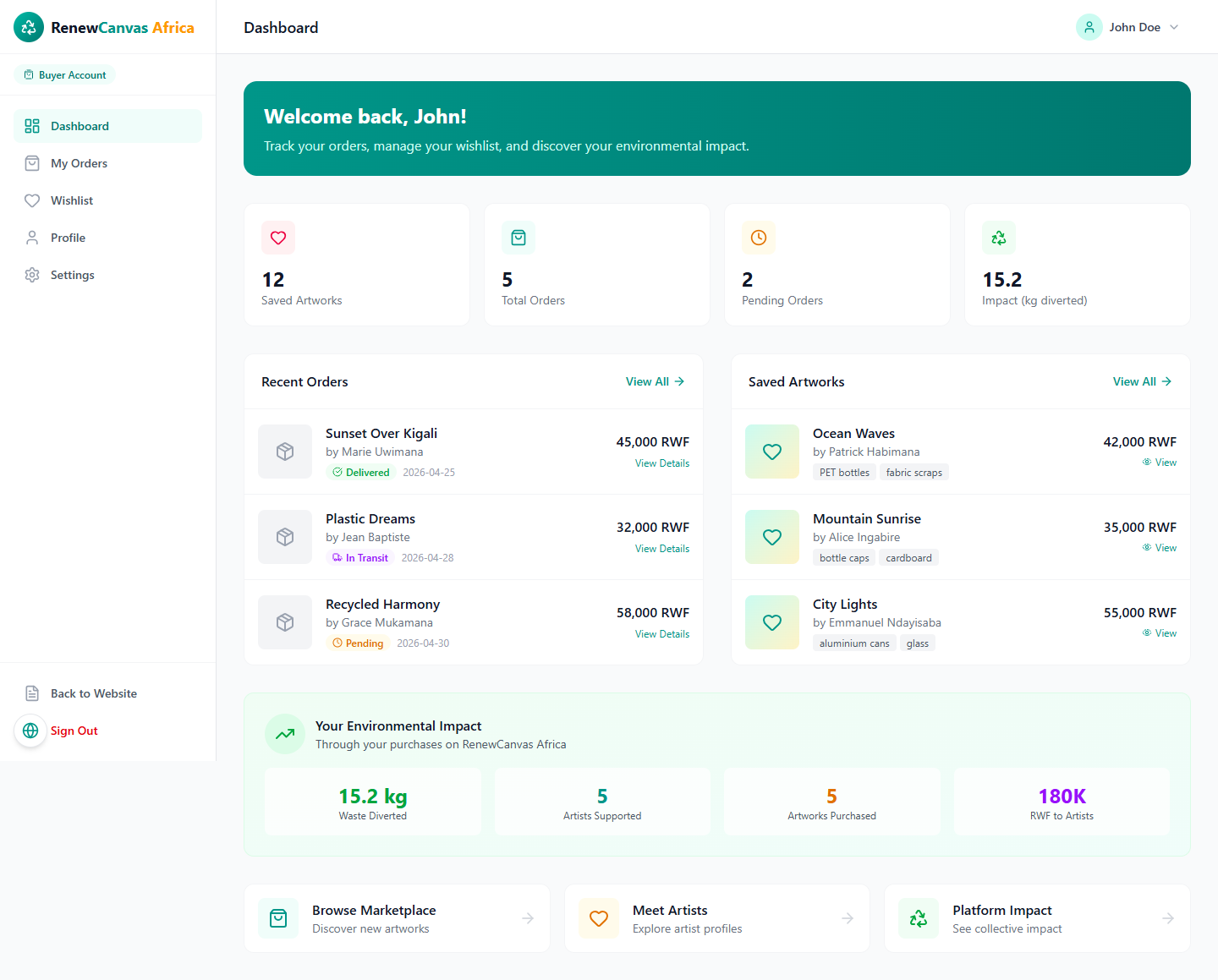
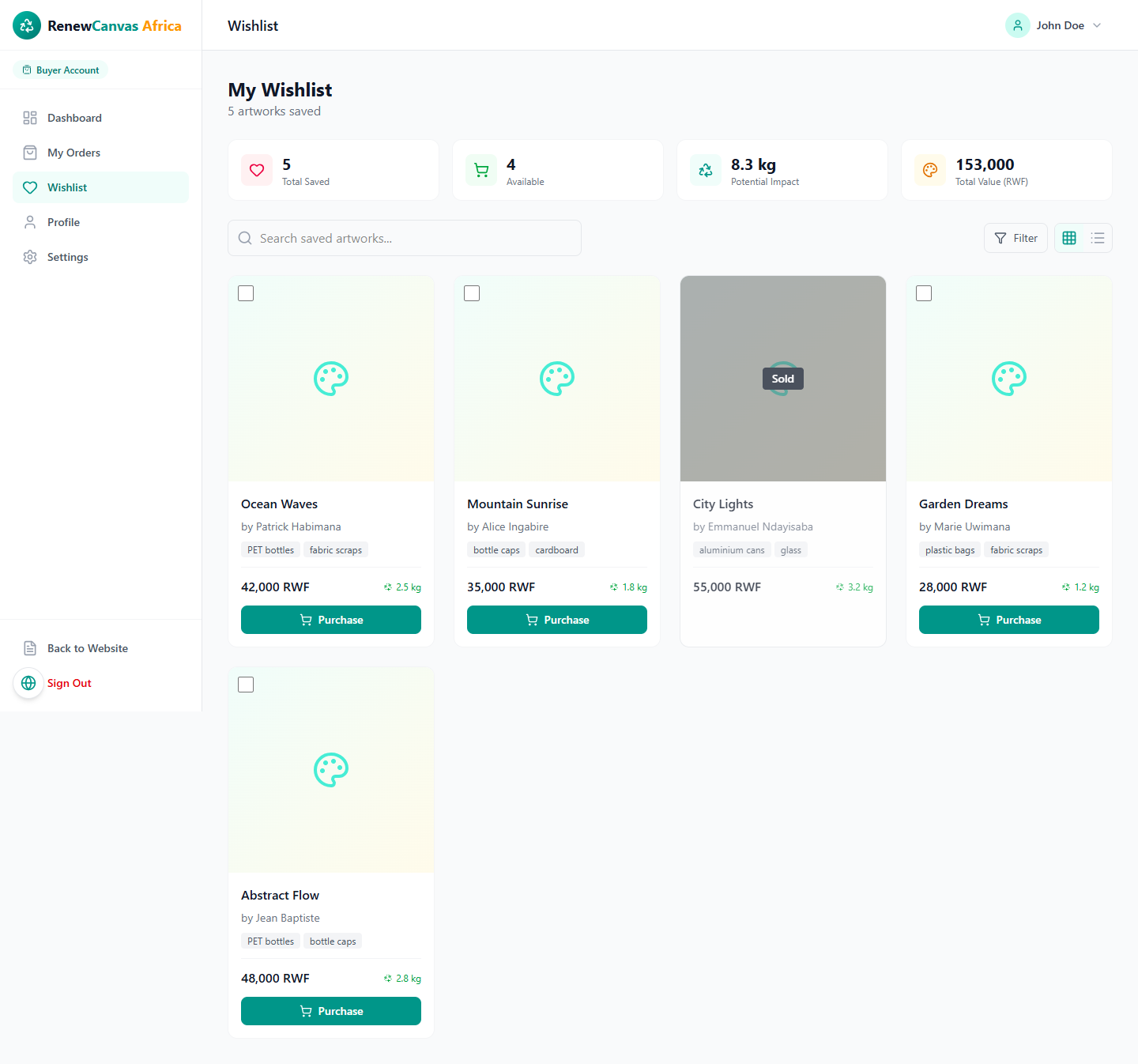
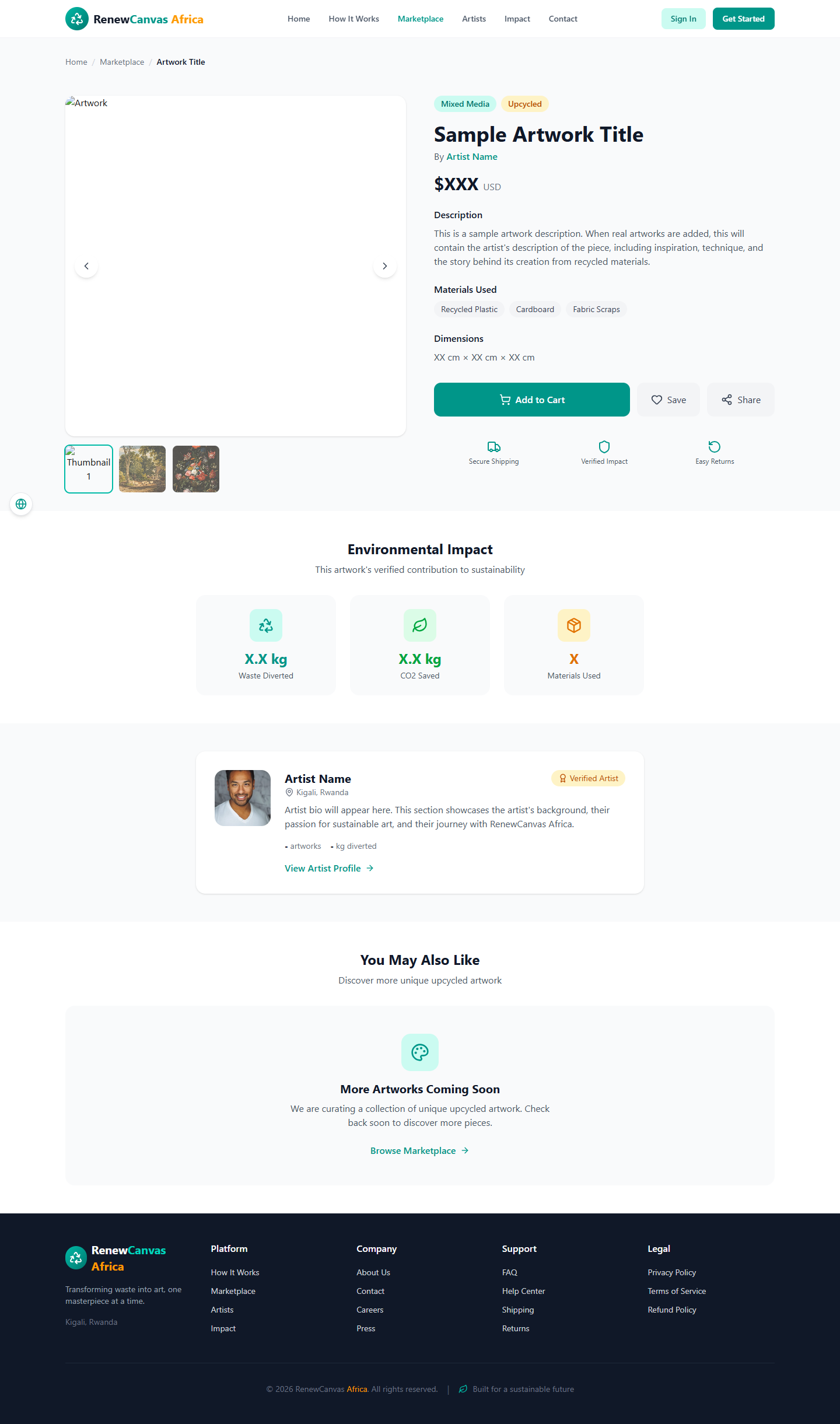
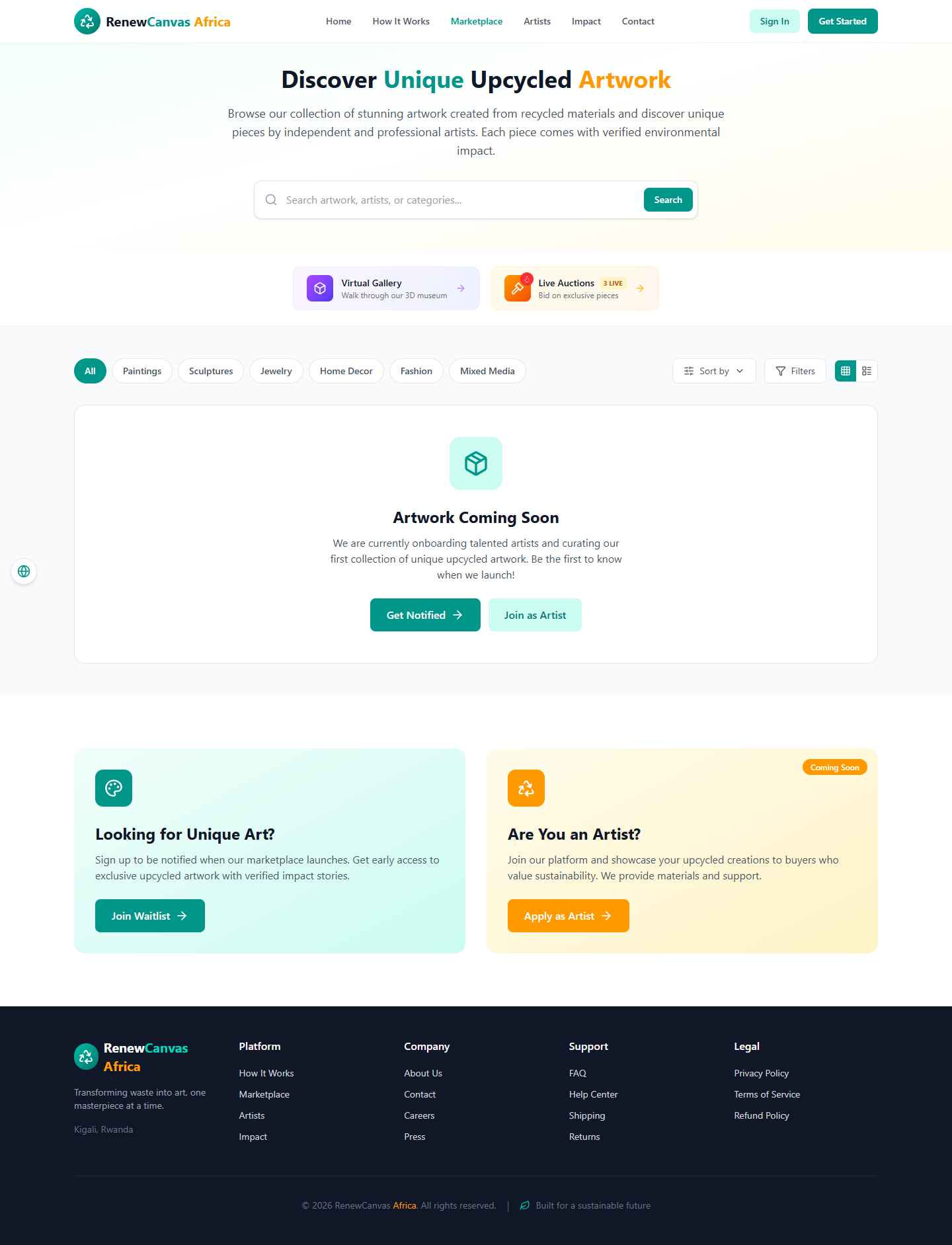
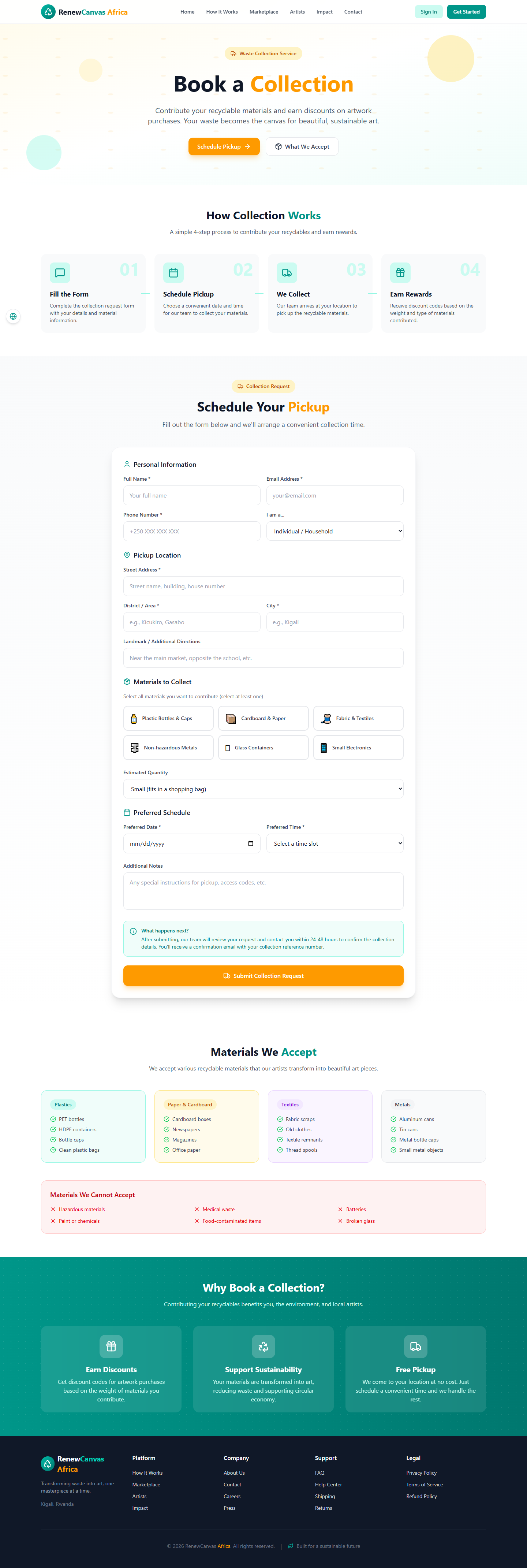
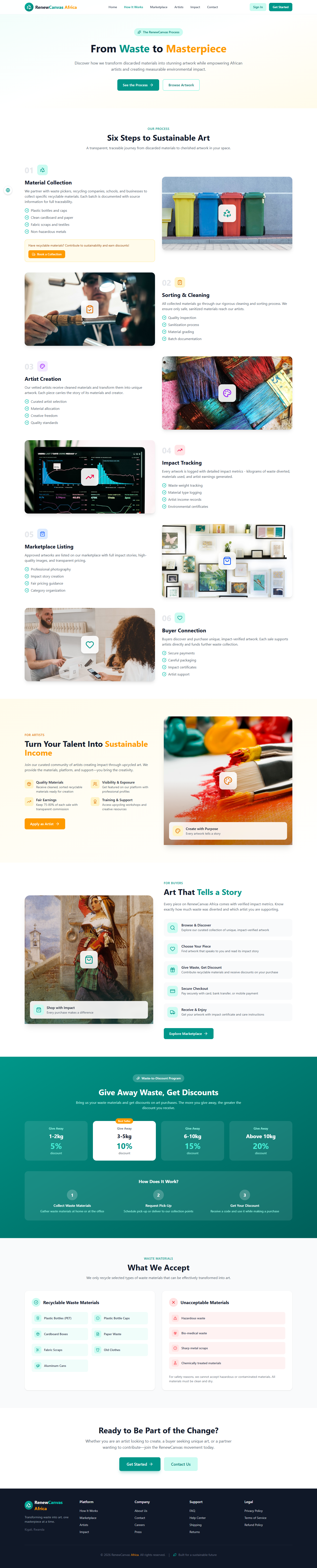
RenewCanvas Africa is a digital platform where artists can create and list upcycled artworks made from recovered materials. Buyers can explore and purchase sustainable art pieces while seeing the environmental impact behind each artwork.
The platform supports:
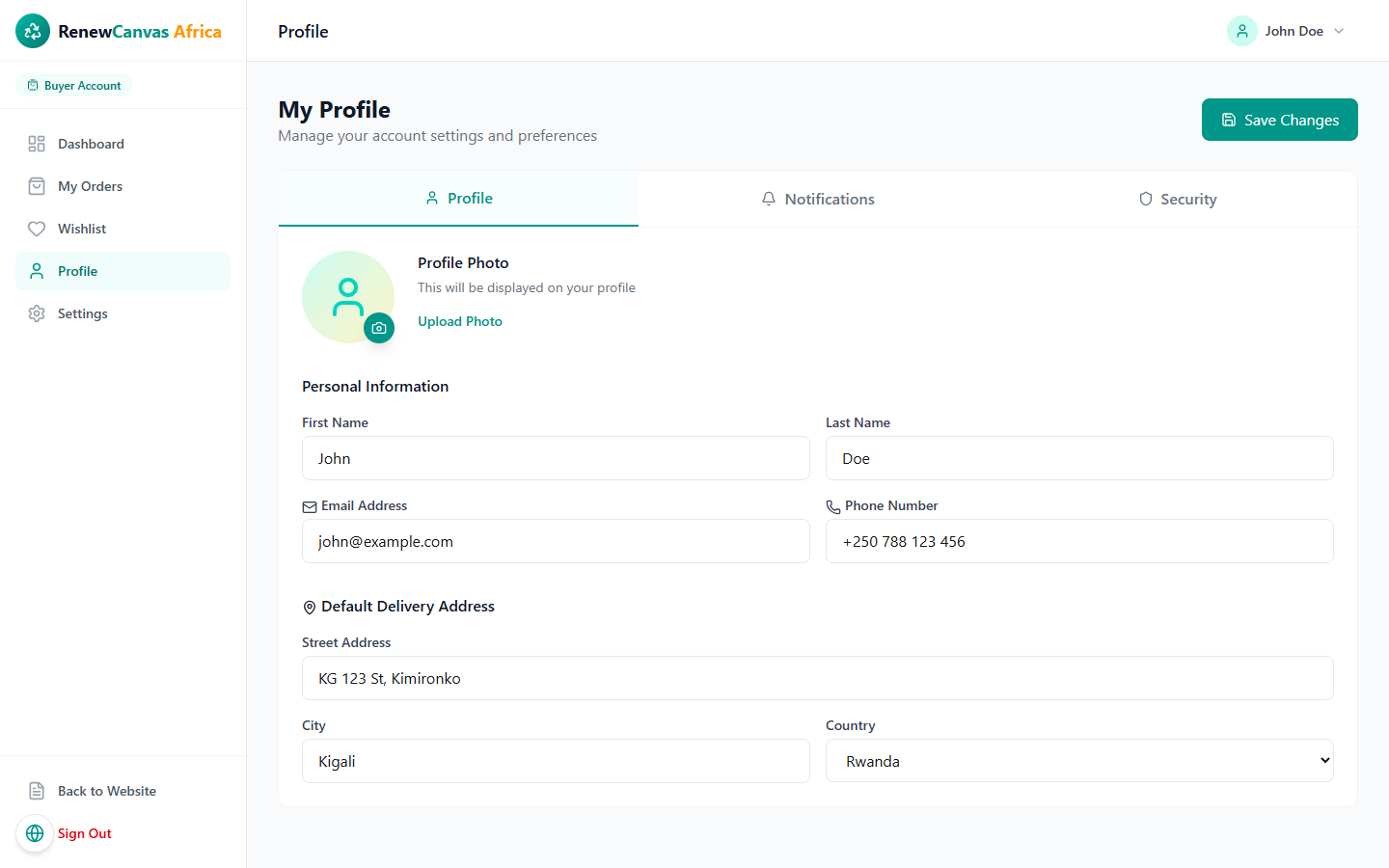
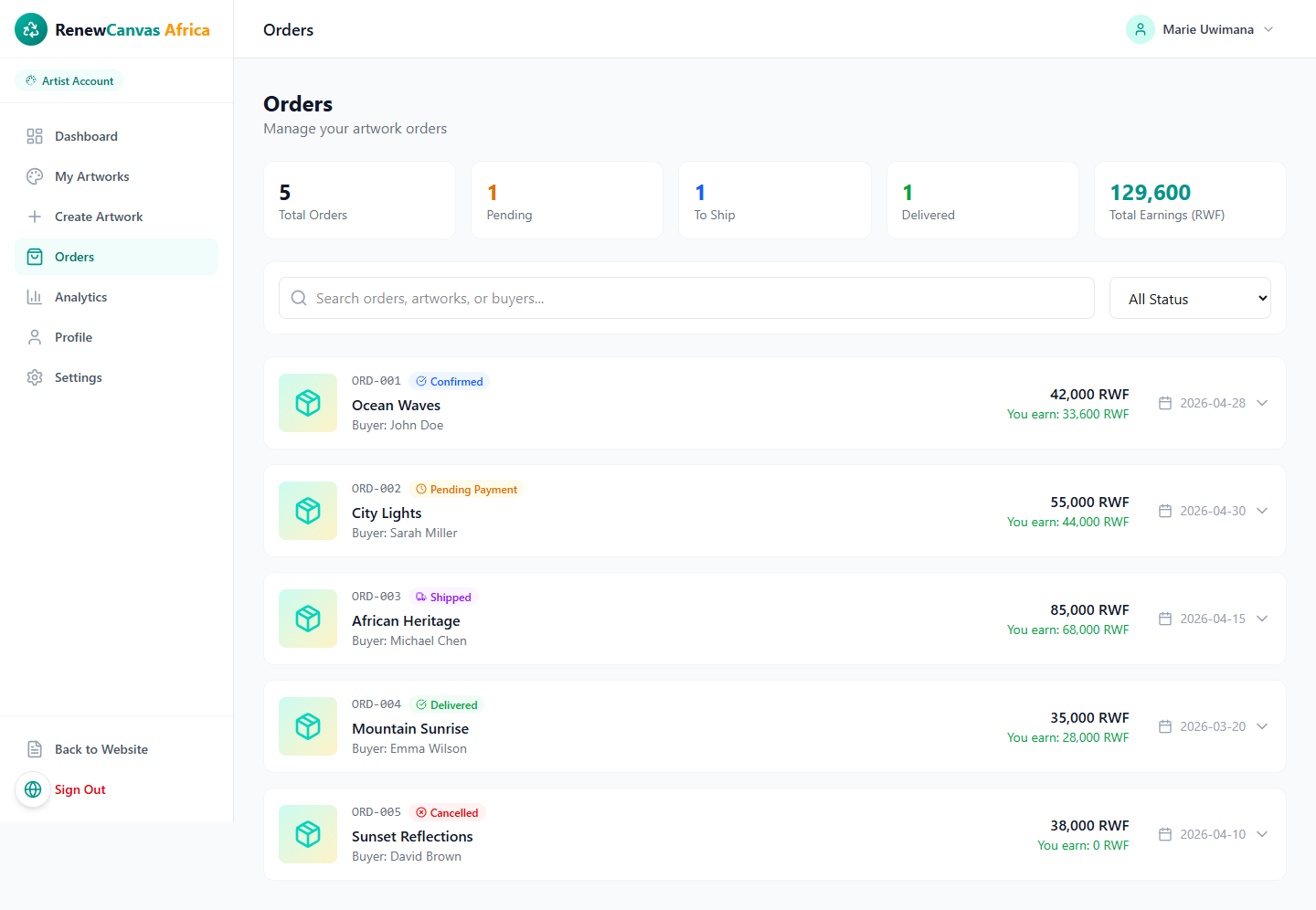
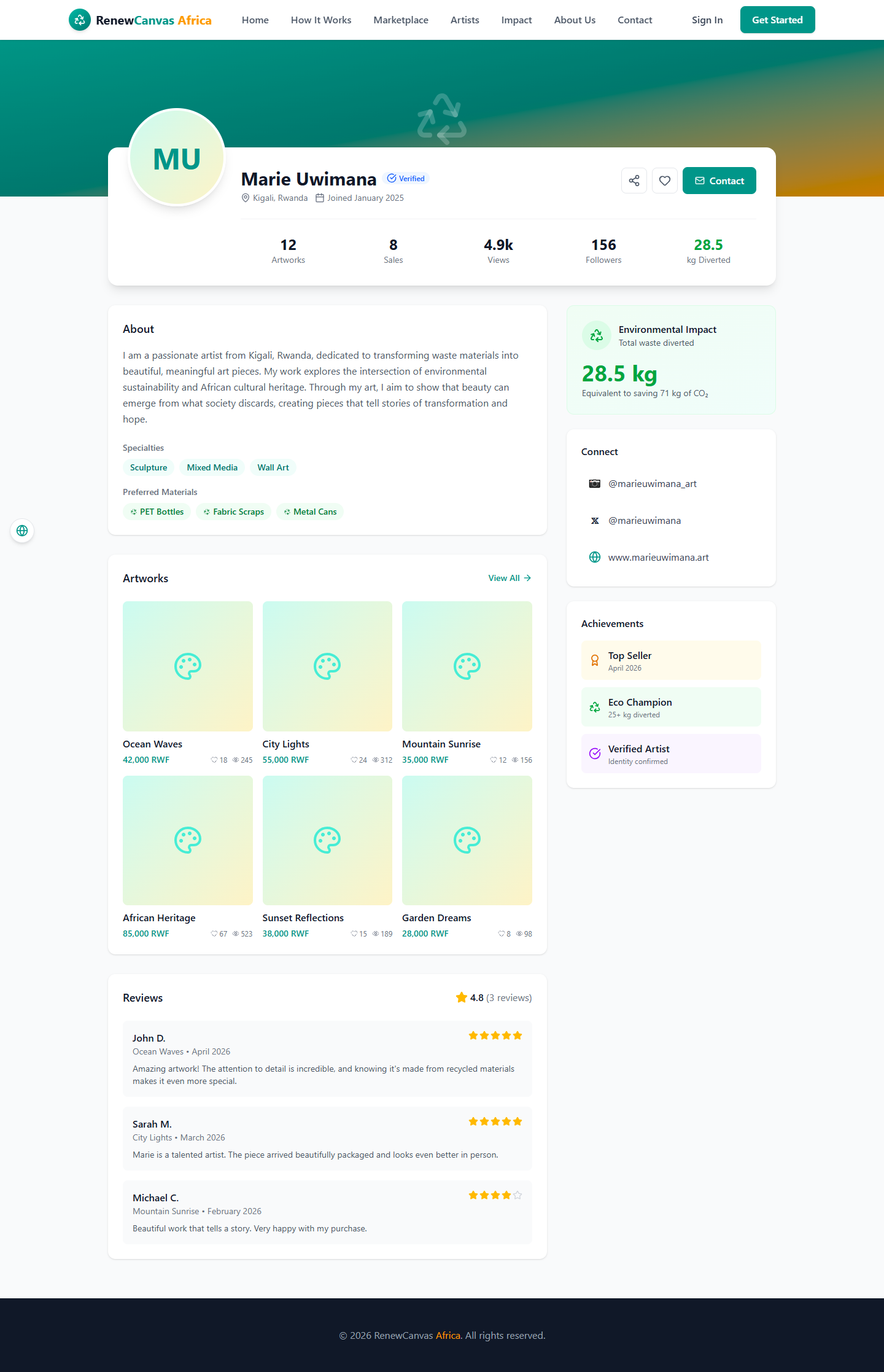
- Artwork listings and artist profiles
- Material tracking for each artwork
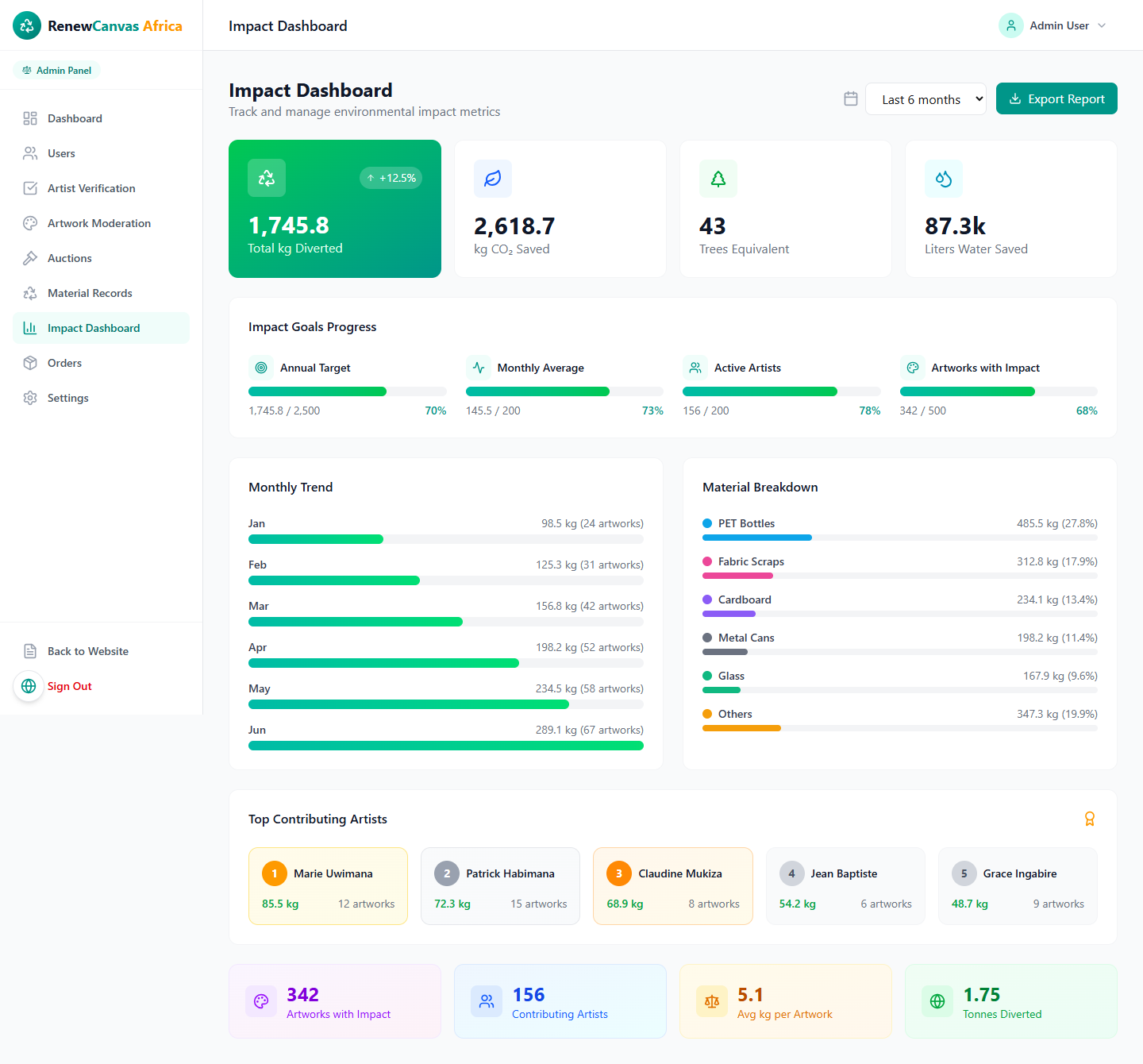
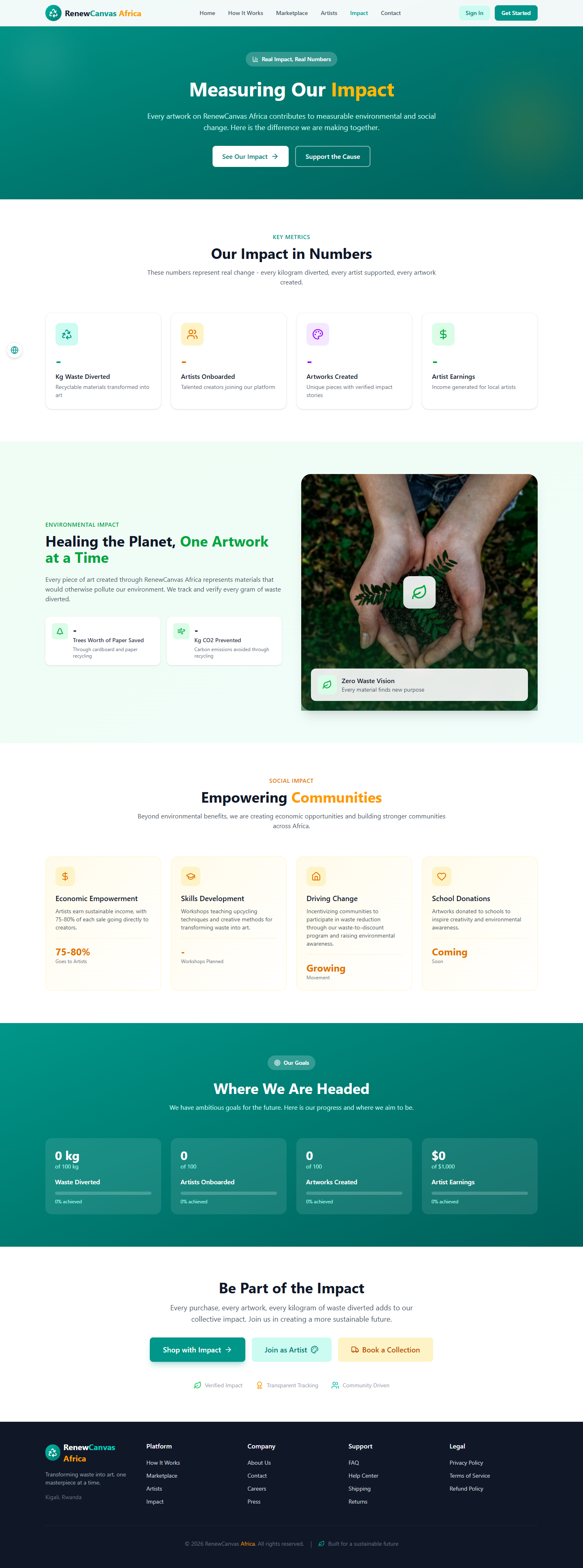
- Impact metrics such as estimated kilograms of waste diverted
- AI-assisted pricing support for artists
- Buyer marketplace and wishlist features
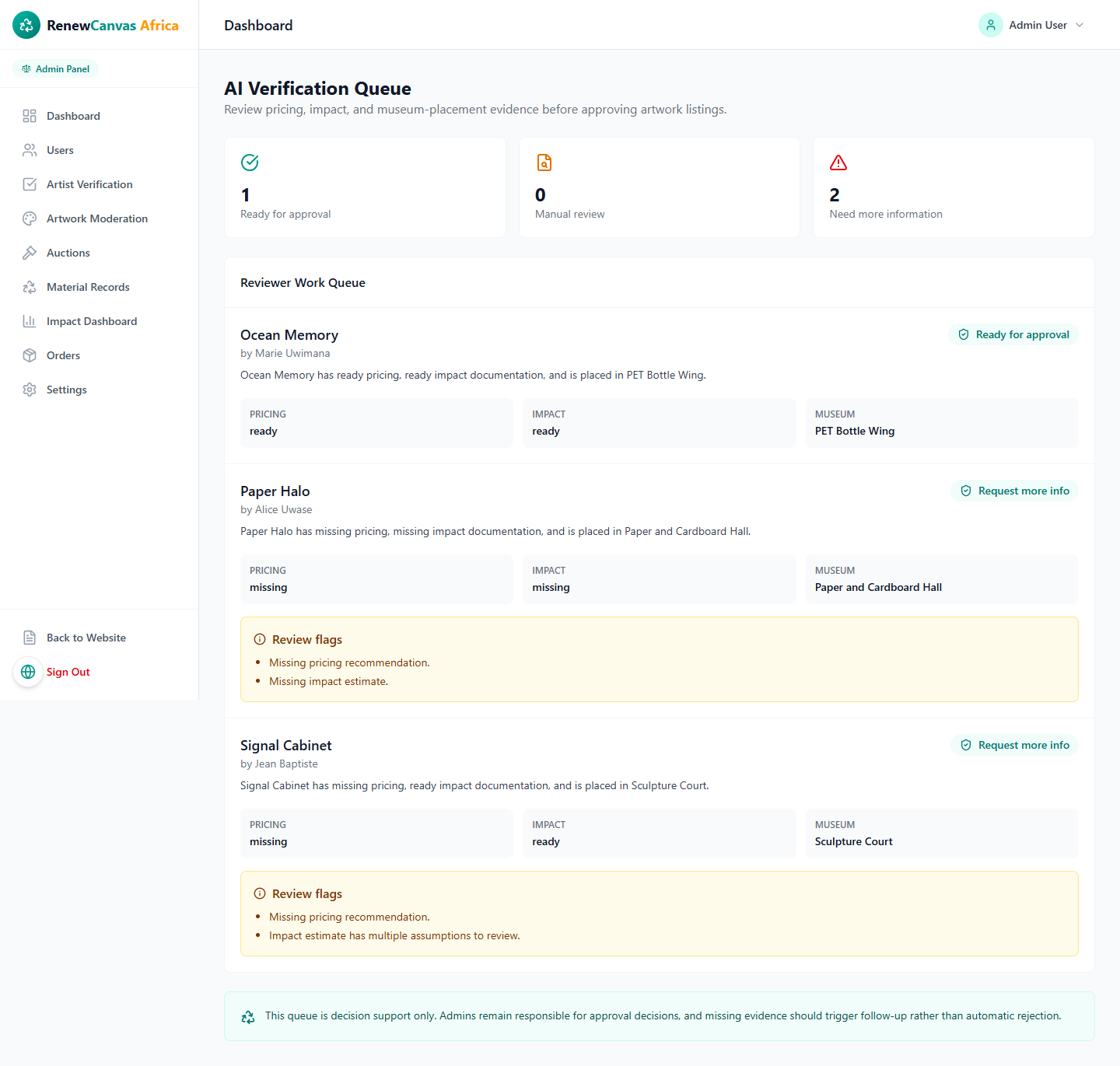
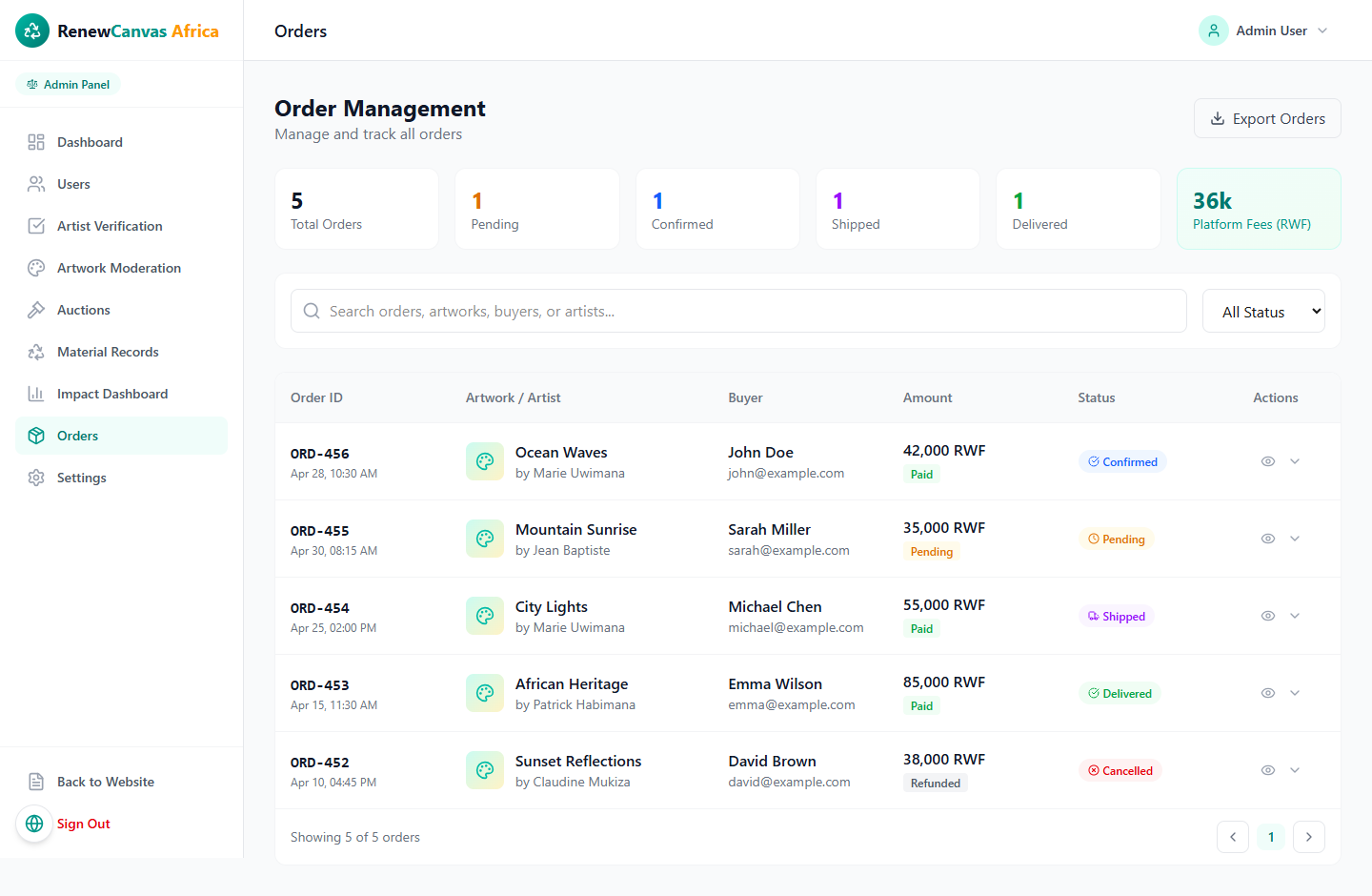
- Admin verification for artists, artworks, and material records
The goal is to make circular impact visible, trusted, and commercially sustainable.
How we built it
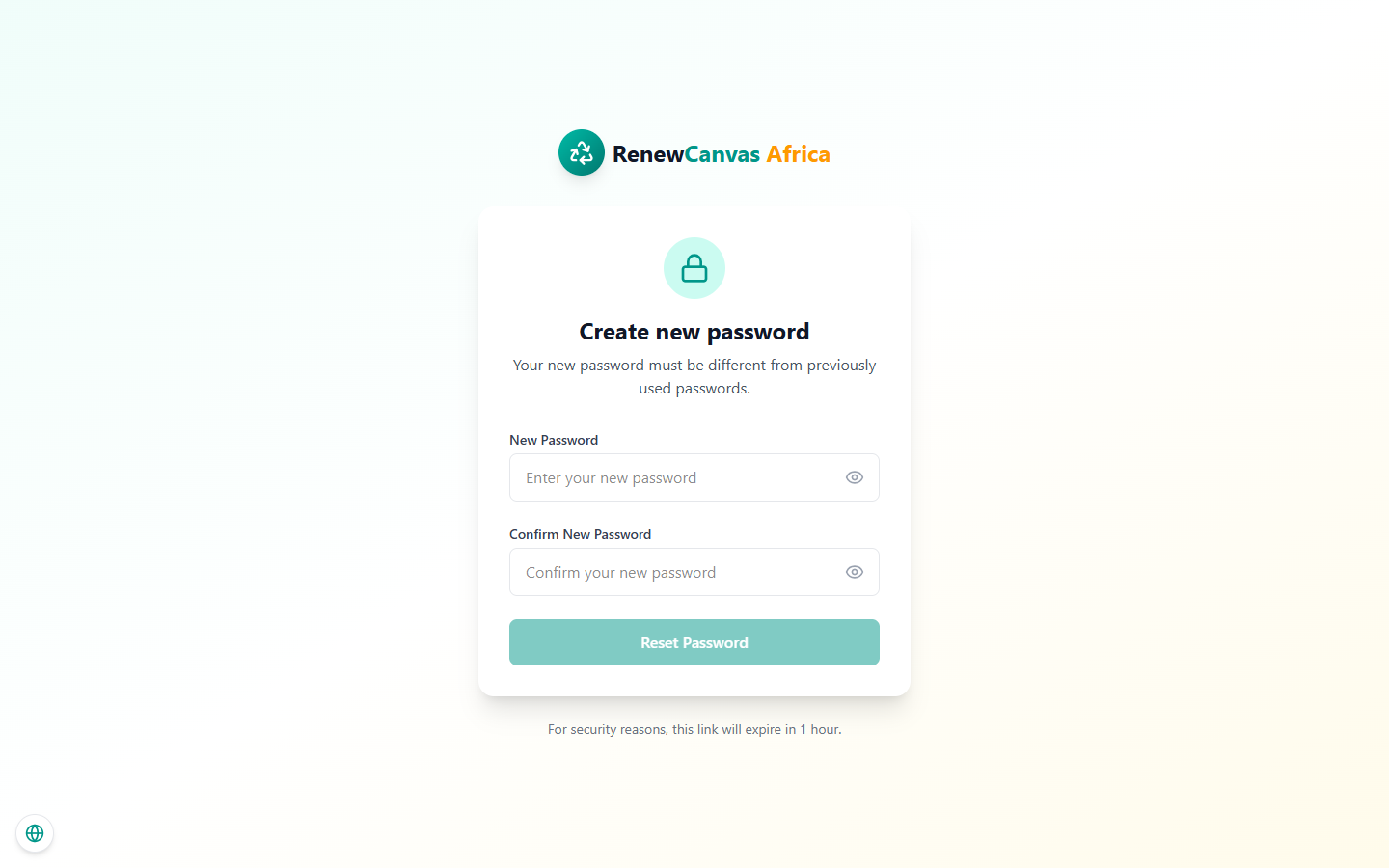
We designed RenewCanvas Africa as a web-based MVP with a React frontend and a FastAPI backend. The frontend focuses on the user experience for buyers, artists, and admins, while the backend is structured to support secure data handling, artwork records, material tracking, pricing support, and impact reporting.
We also designed the platform around a pilot model. The first implementation will begin in Kigali with selected artists, controlled recyclable material collection points, branded collection bins, digital weighing scales, and a modest operational space for sorting and temporary storage.
A key technical feature is the AI-assisted pricing tool. Artists provide details such as artwork category, size, materials used, complexity, production effort, and artist level. The system then suggests a price range while allowing the artist to make the final decision.
What we learned
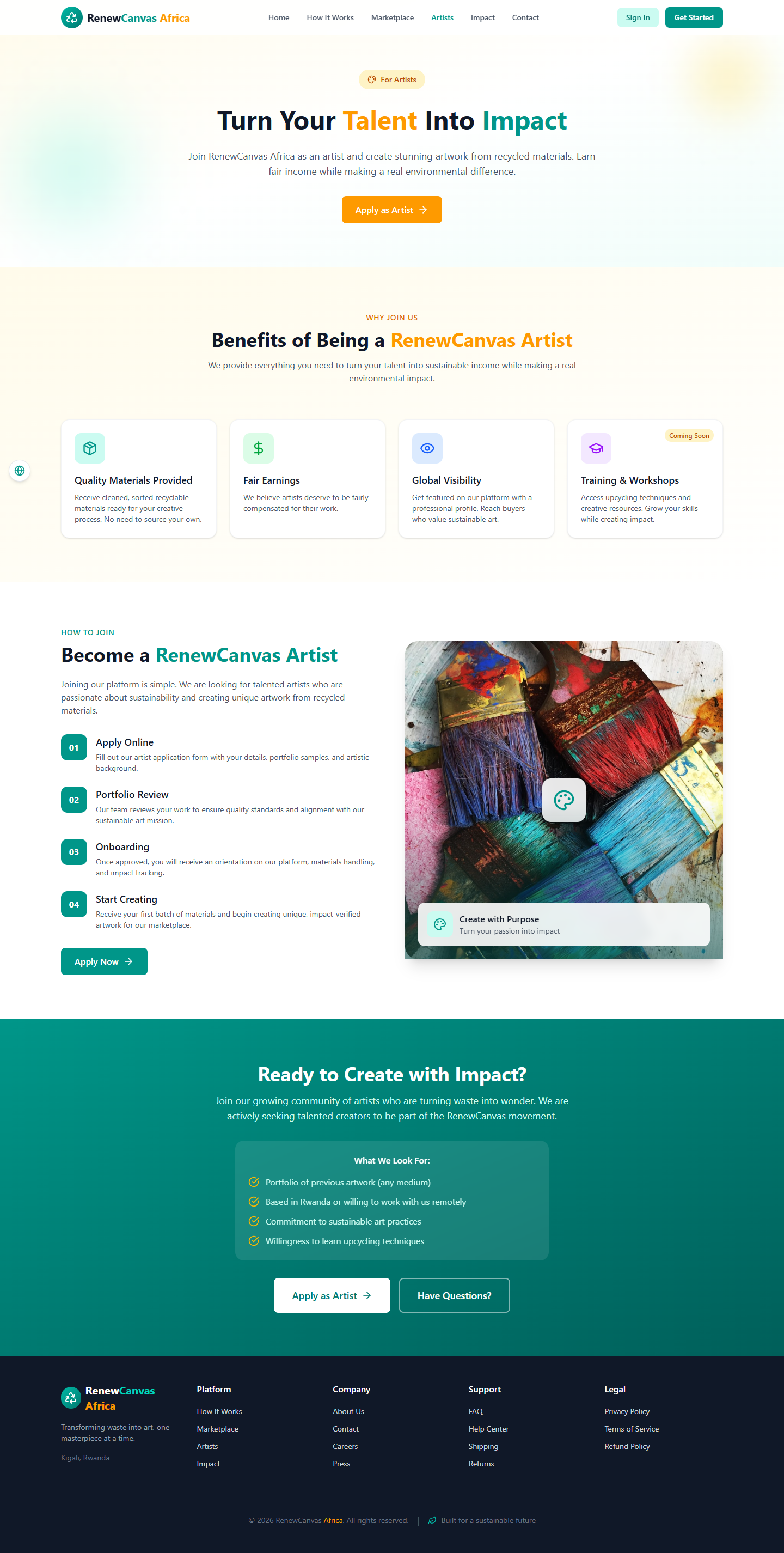
We learned that the platform must be more than an art marketplace. For users to trust the model, each artwork needs a clear record of the materials used and the impact created. We also learned that artists need practical support, not just a place to upload work. Pricing, visibility, quality standards, and buyer trust are all important.
Our early validation also showed that a contained pilot is the right starting point. Instead of trying to scale too quickly, RenewCanvas needs to prove the full cycle first: collect materials, track them, support artists, list artworks, attract buyers, and report impact.
Challenges we faced
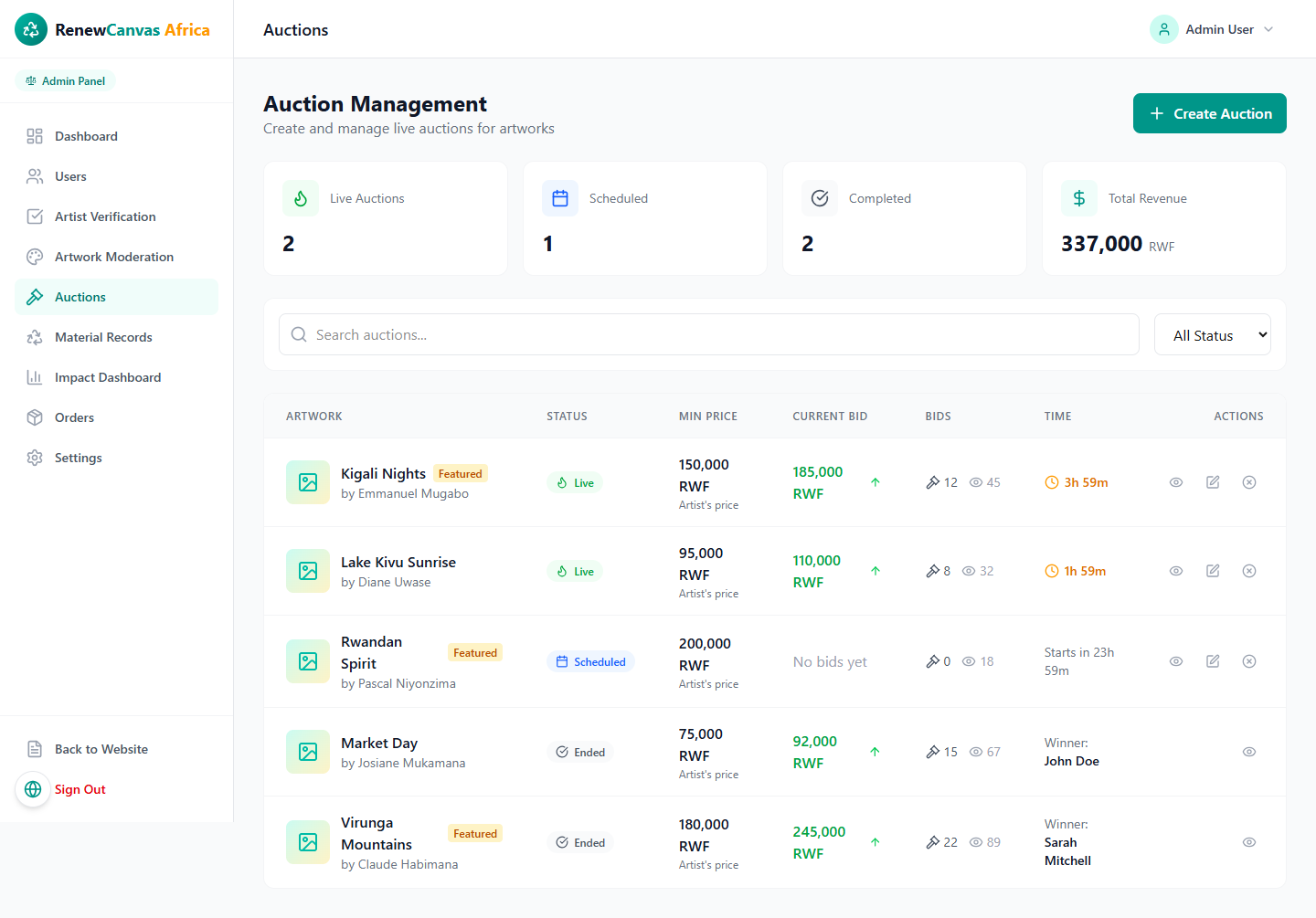
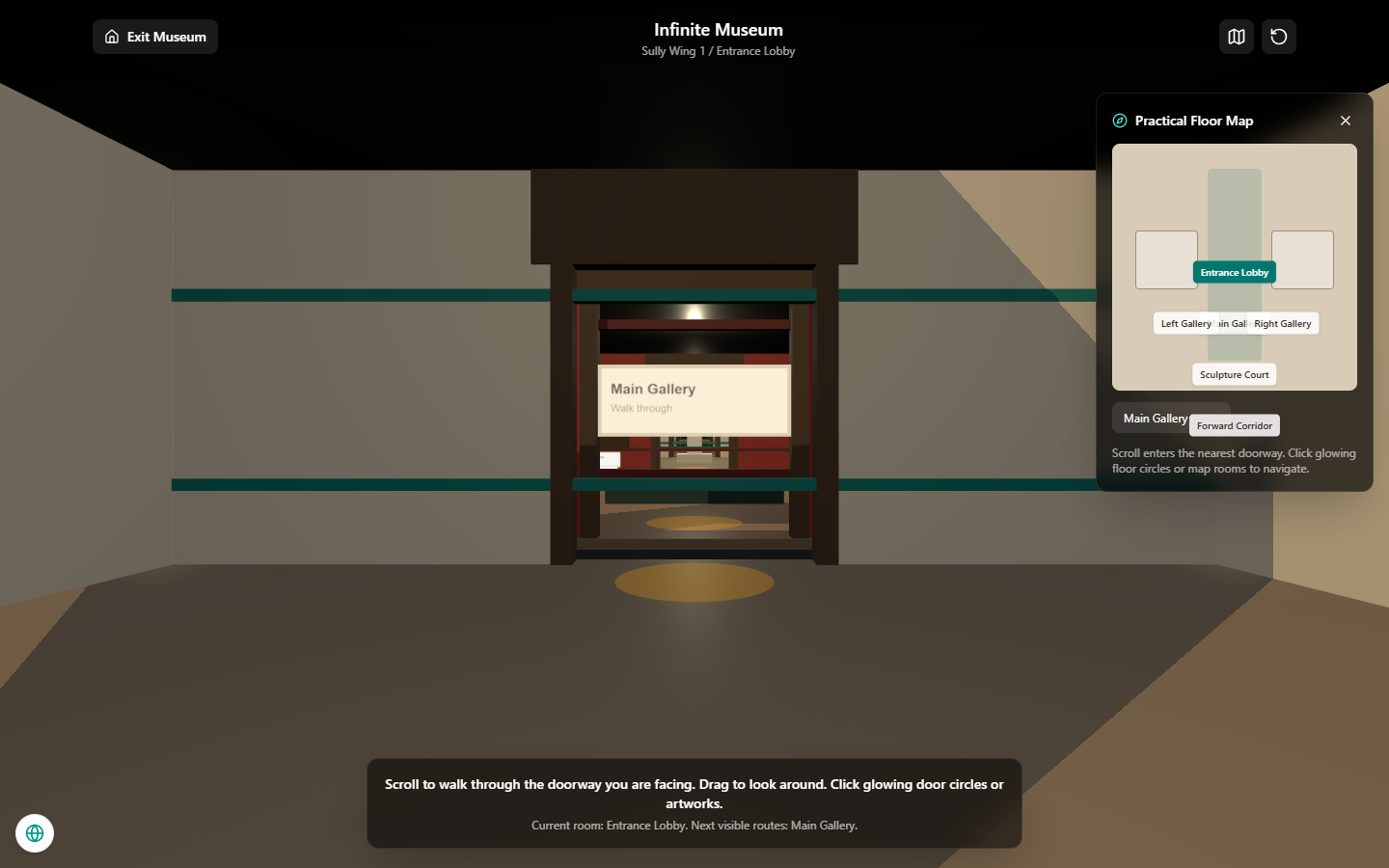
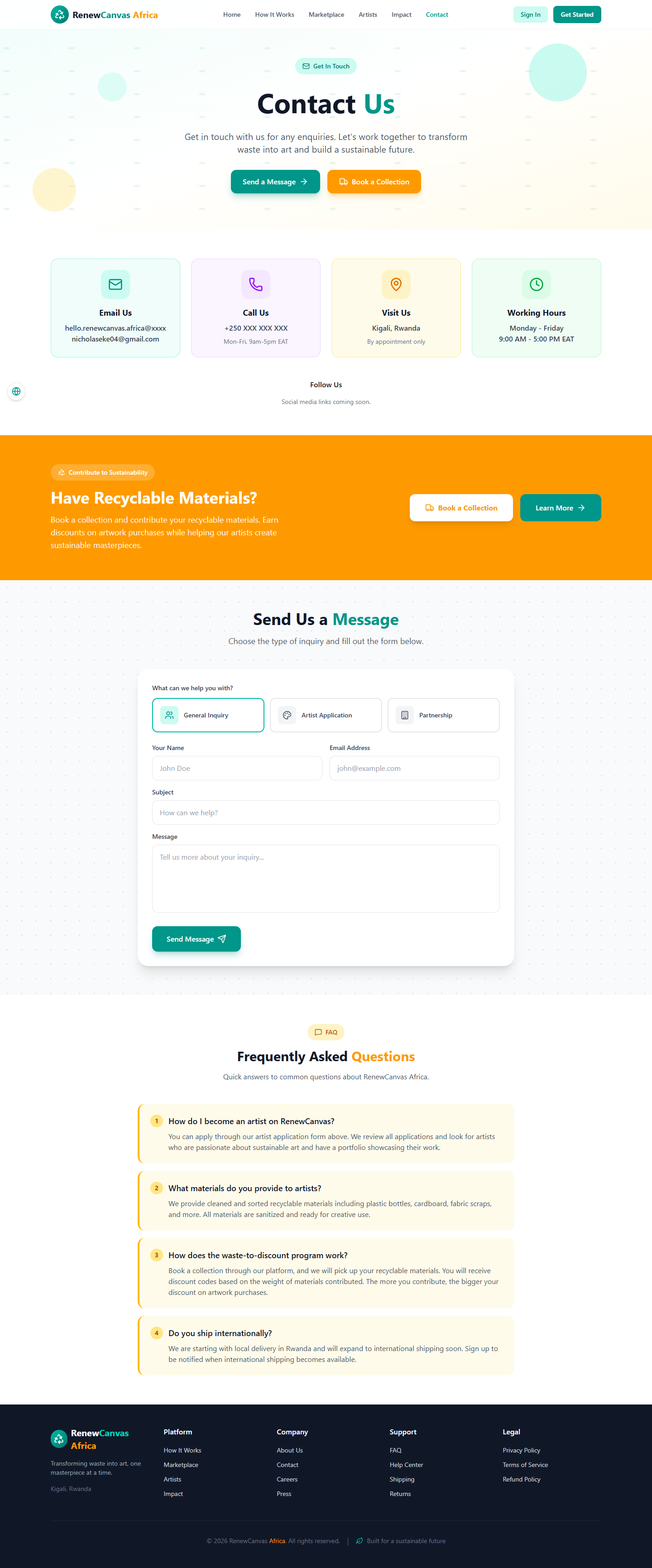
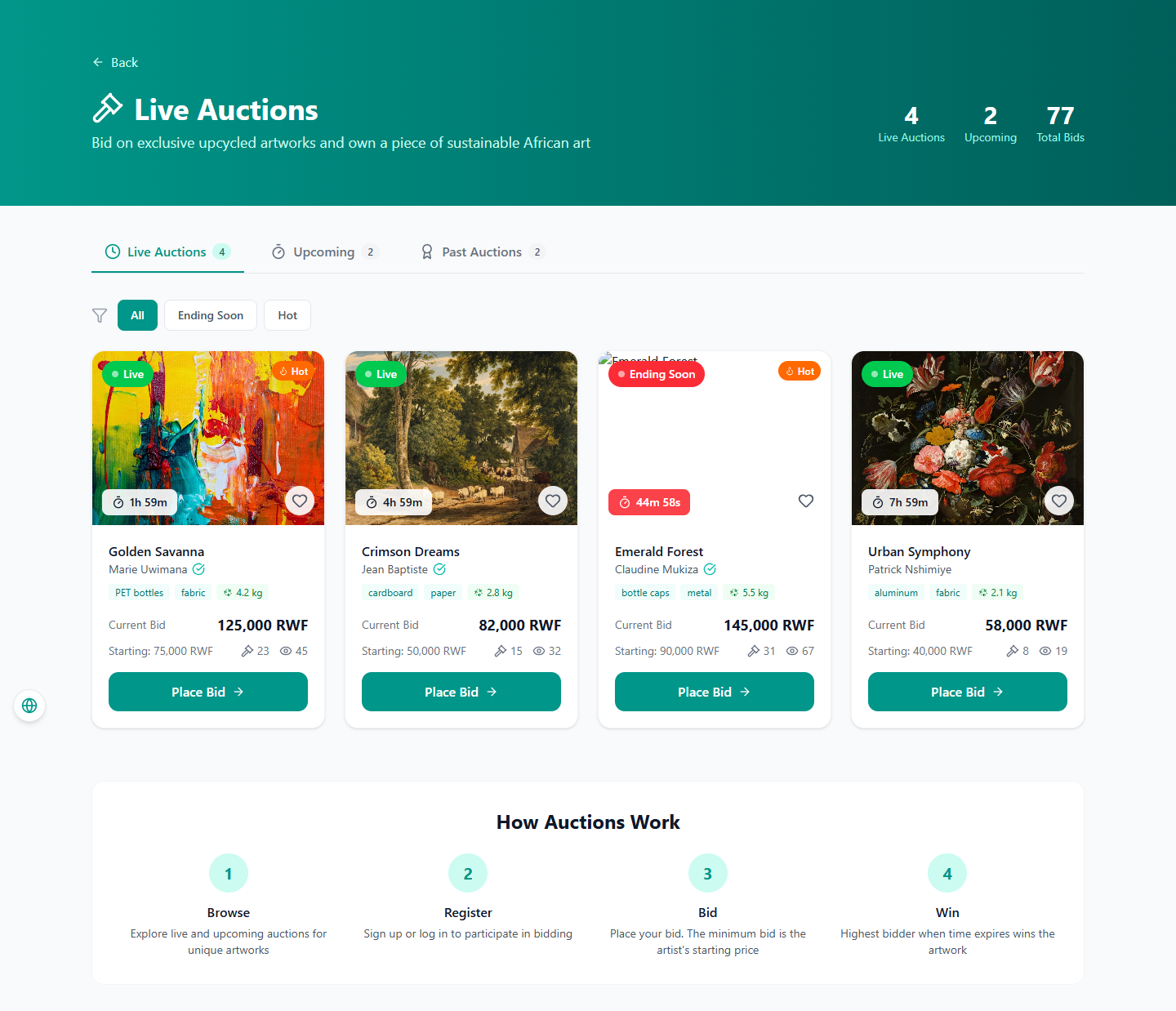
One of the biggest challenges was defining a realistic first version of the platform. RenewCanvas has many possible features, including auctions, virtual galleries, school donation programmes, commissions, and waste-for-discount models. However, we had to prioritise the features that are most important for an MVP: artist onboarding, artwork listing, material tracking, impact reporting, AI-assisted pricing, and admin verification.
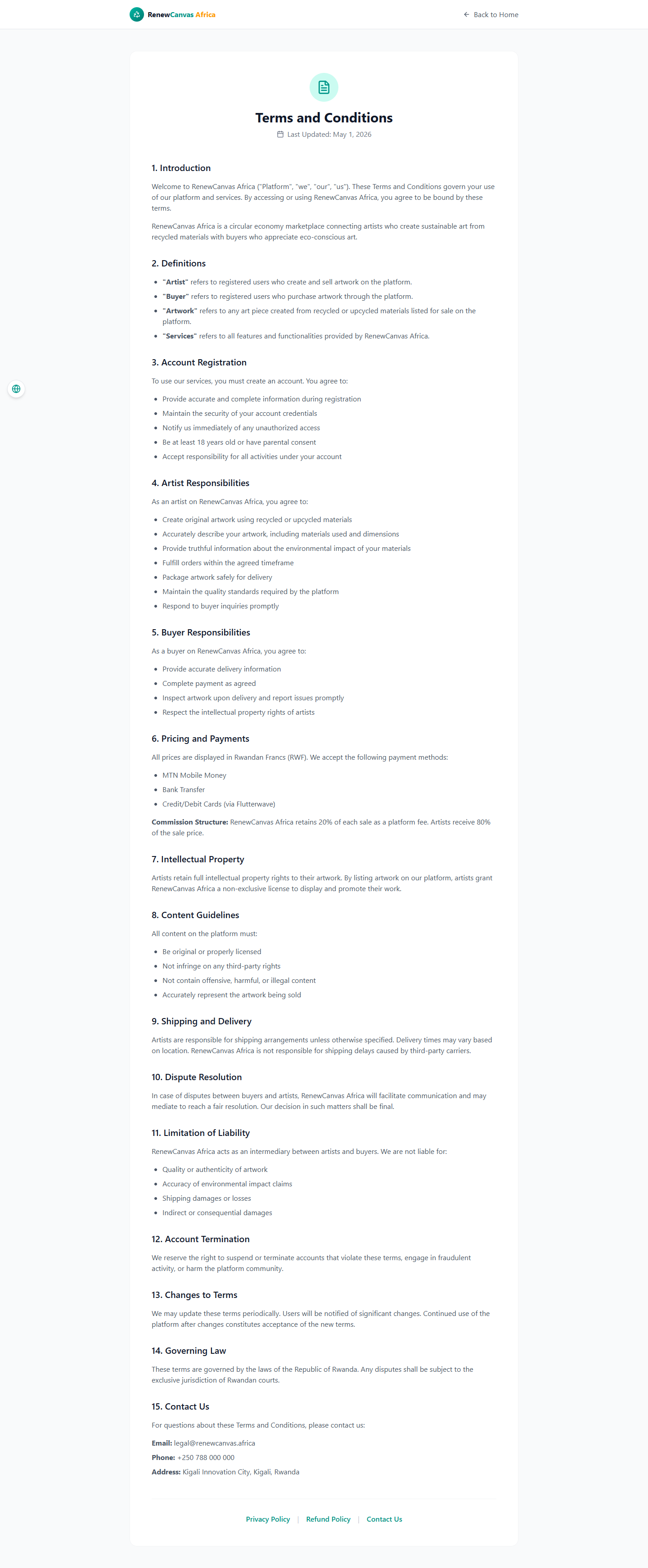
Another challenge was balancing social impact with commercial sustainability. The platform must create environmental value, but it must also generate revenue and income for artists. We addressed this through a commission-based marketplace model where artists keep most of the sale value while RenewCanvas earns a percentage to sustain operations.
What is next
The next step is to complete the functional MVP, publish the open-source material tracking and impact framework, onboard pilot artists, set up collection points, and run a controlled pilot in Kigali. Over the next 12 months, we aim to validate the model, generate early sales, track waste diversion, and build the foundation for scaling RenewCanvas across Rwanda and eventually other African markets.
Built With
- claude
- fastapi
- github
- next.js
- react
- supabase
- typescript

Log in or sign up for Devpost to join the conversation.