-
-
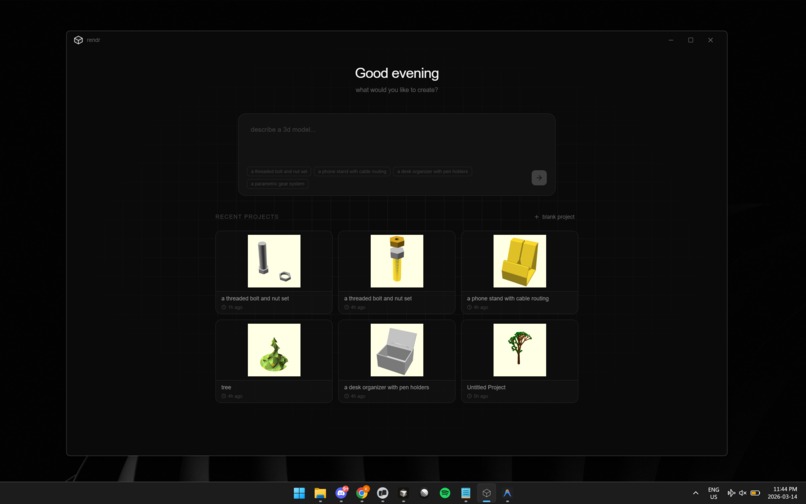
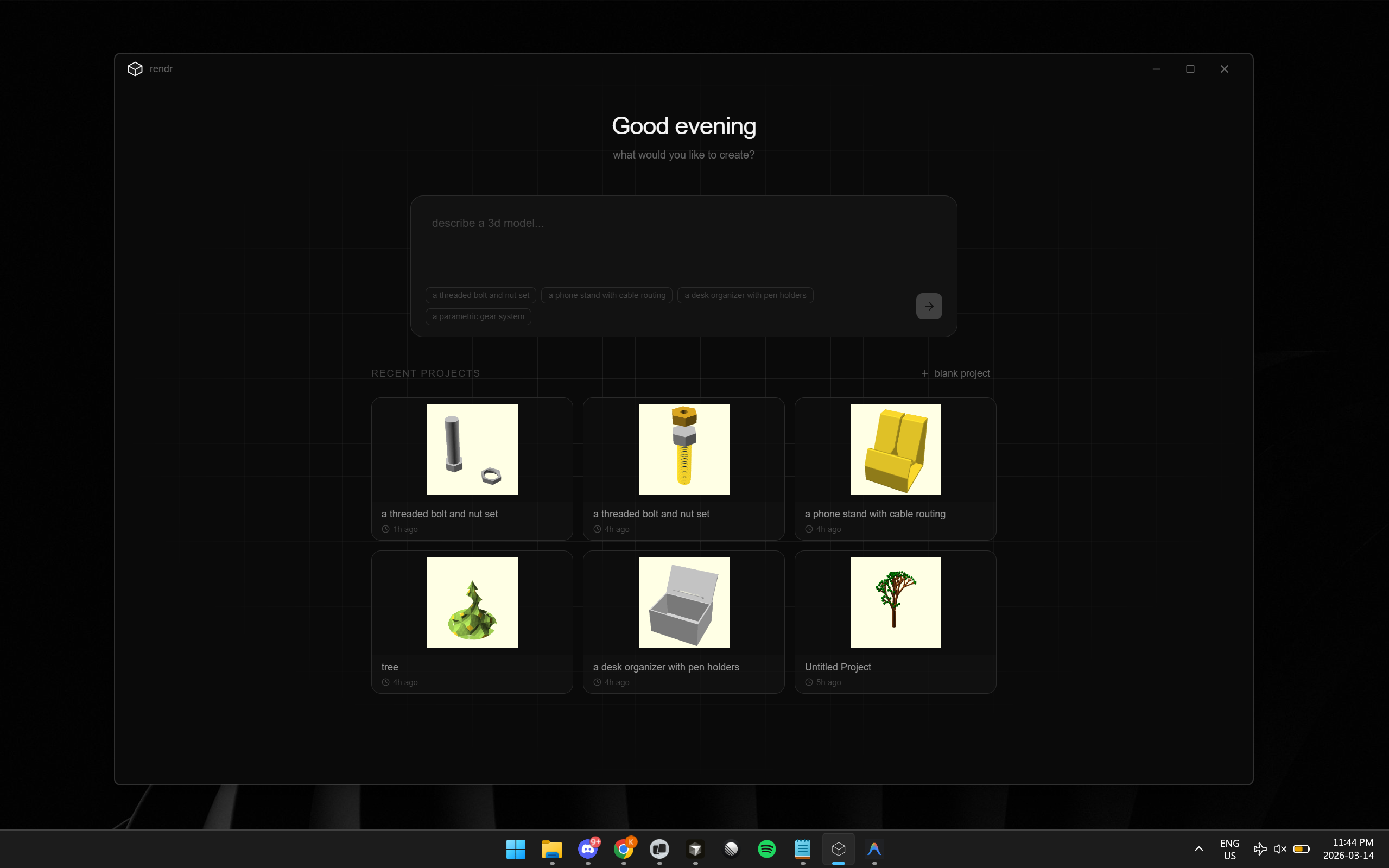
Home Screen
-
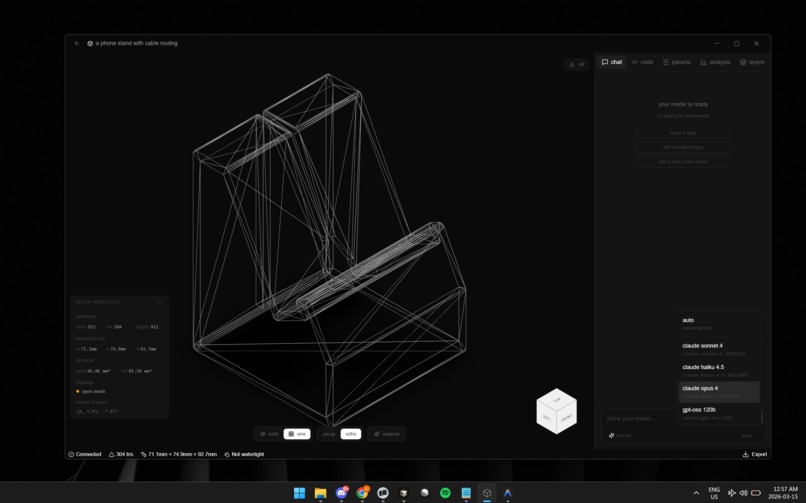
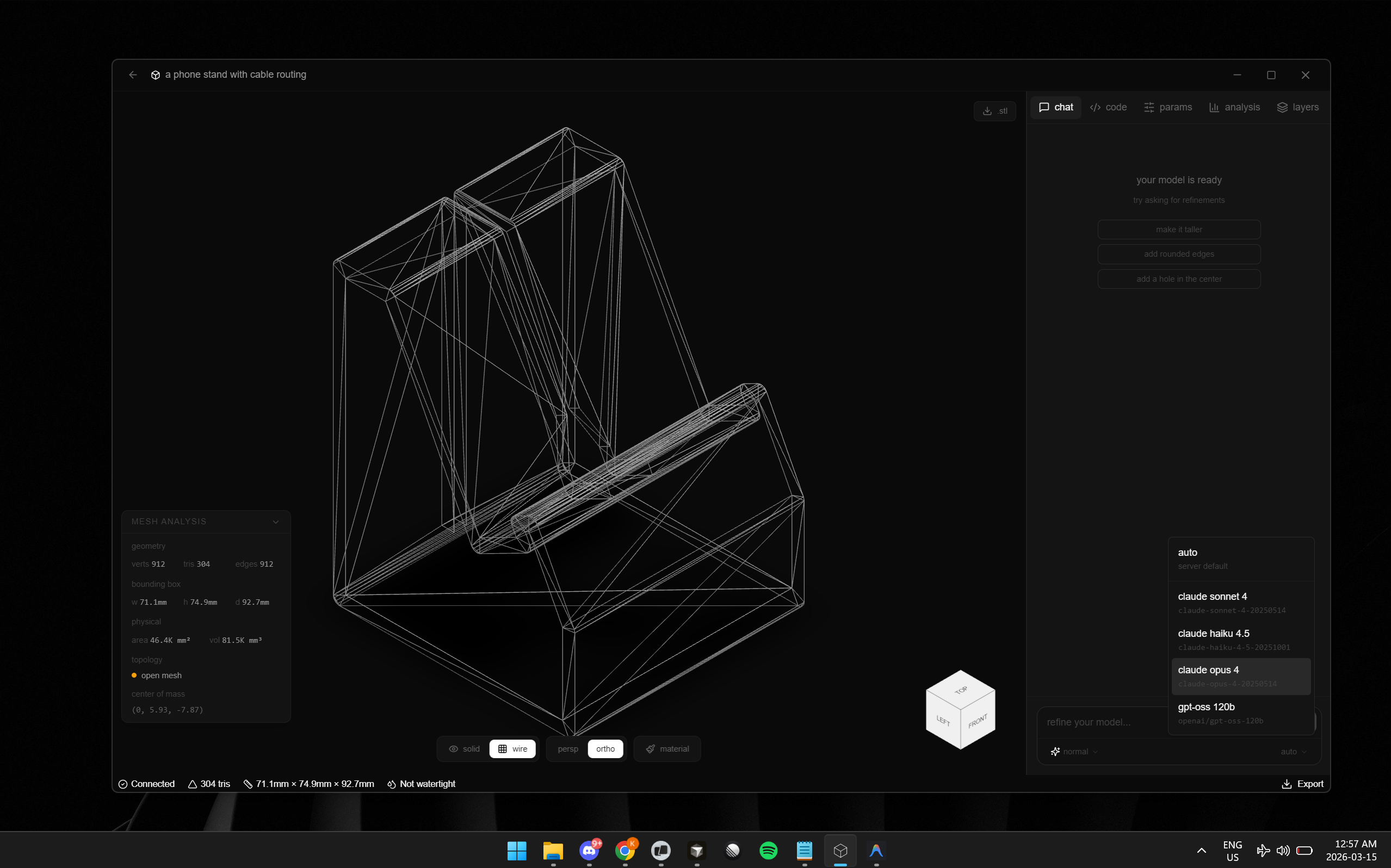
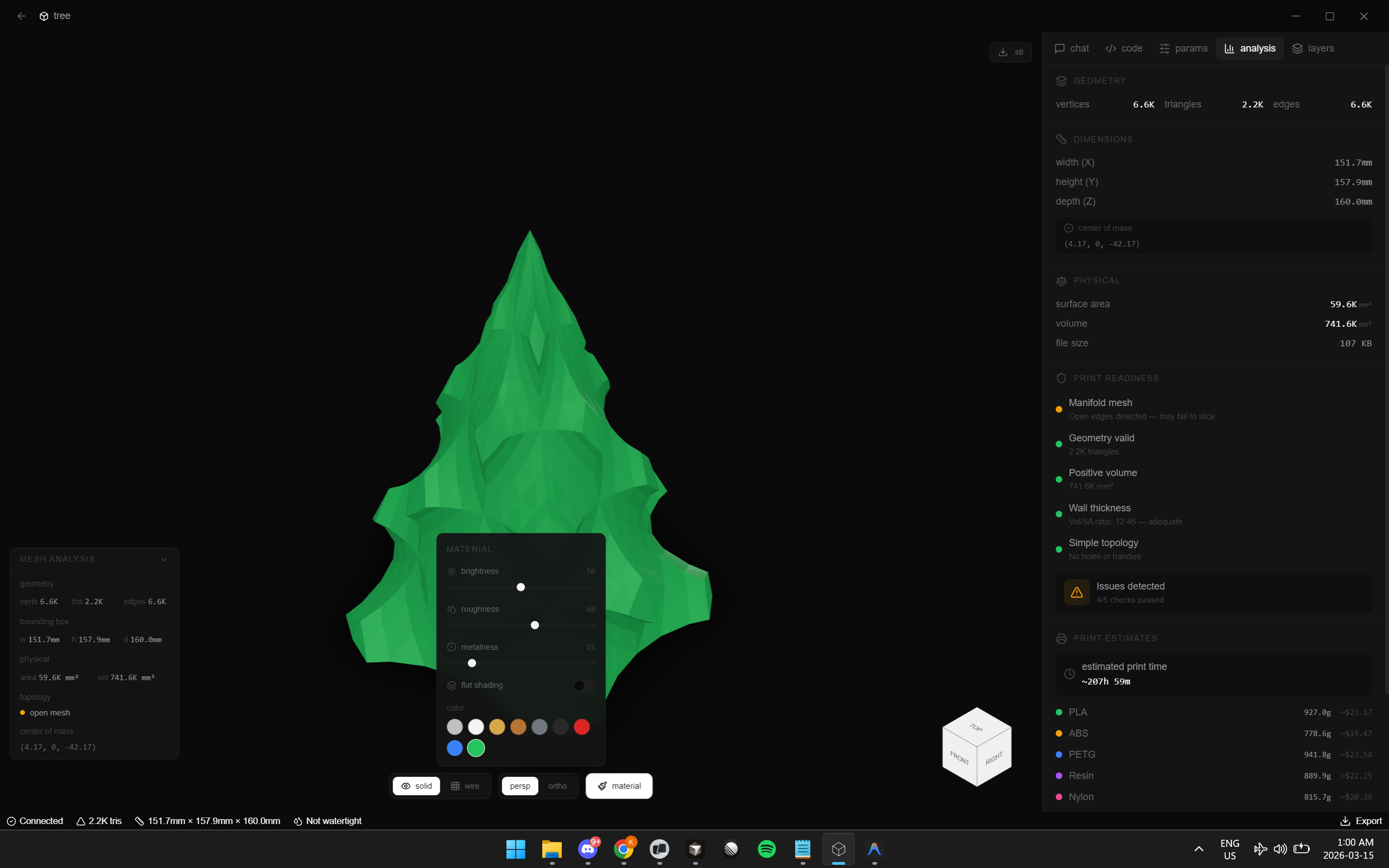
3D mesh preview and code editor
-
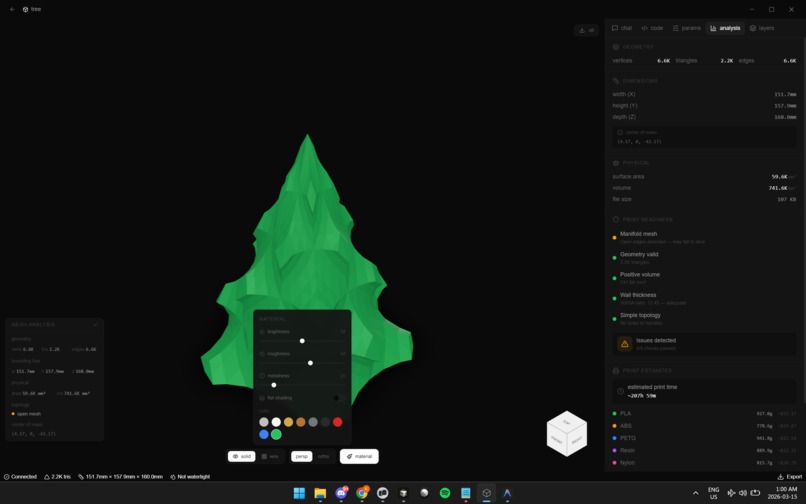
Parametric controls
-
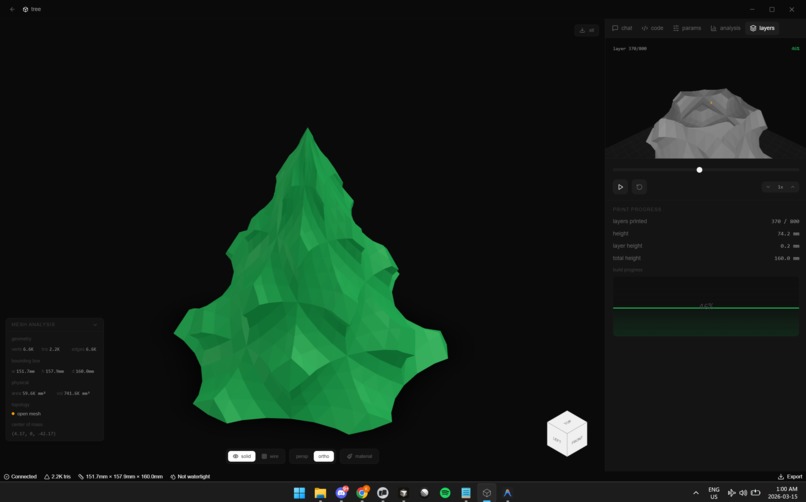
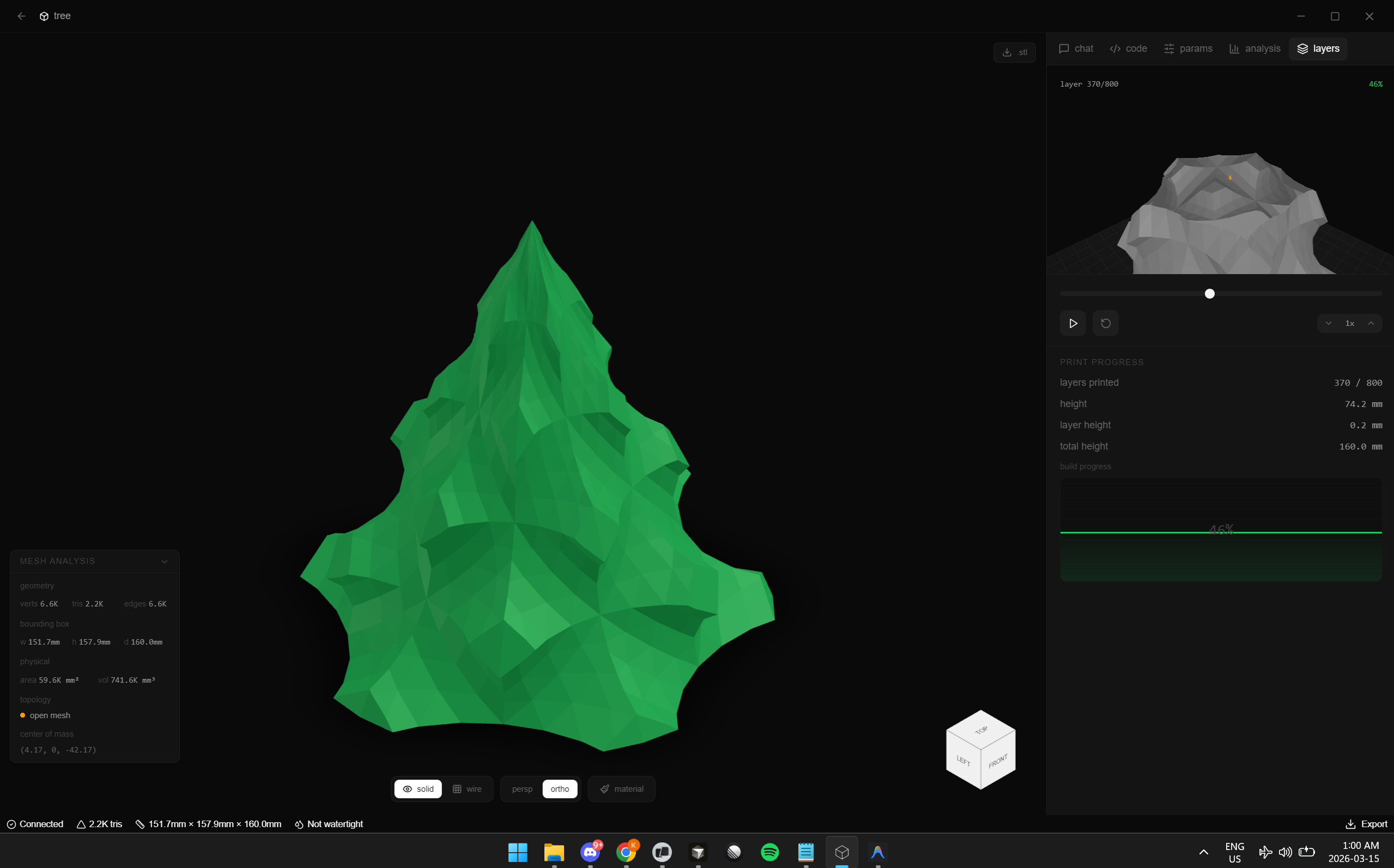
Print simulation
-
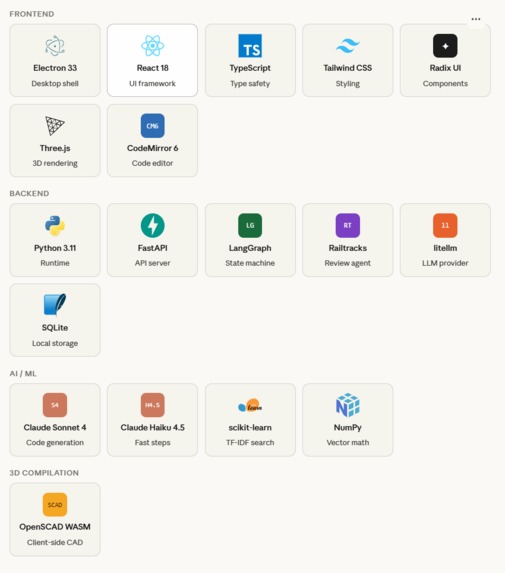
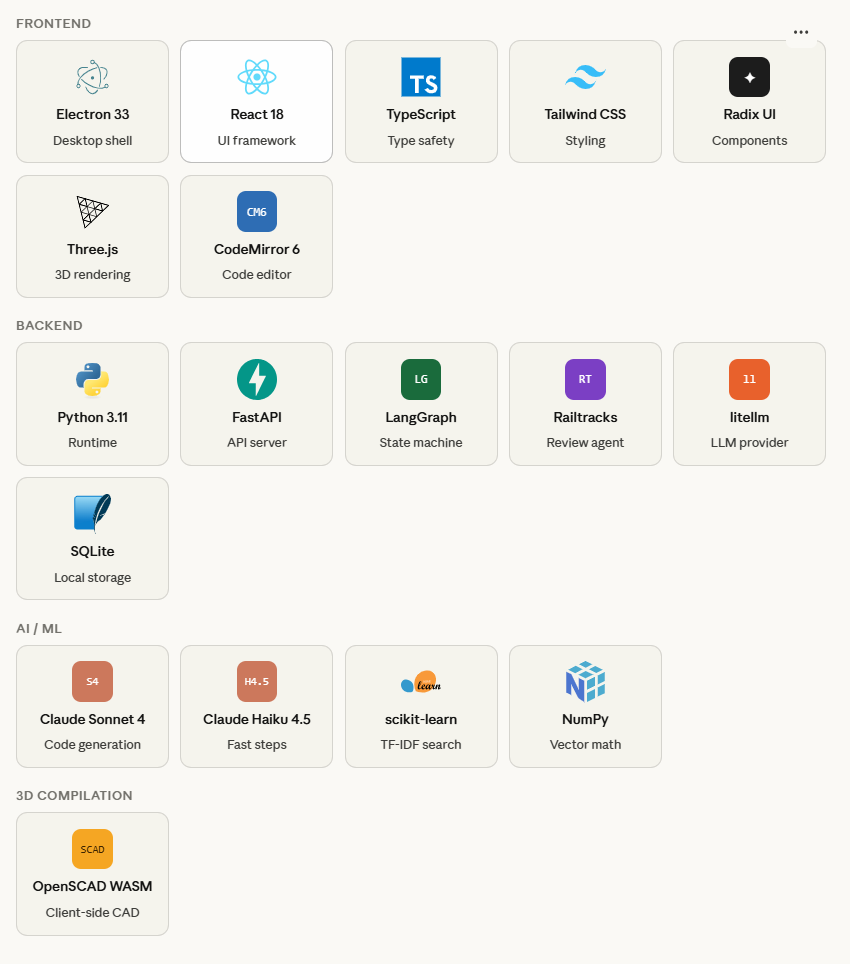
Tech stack
-
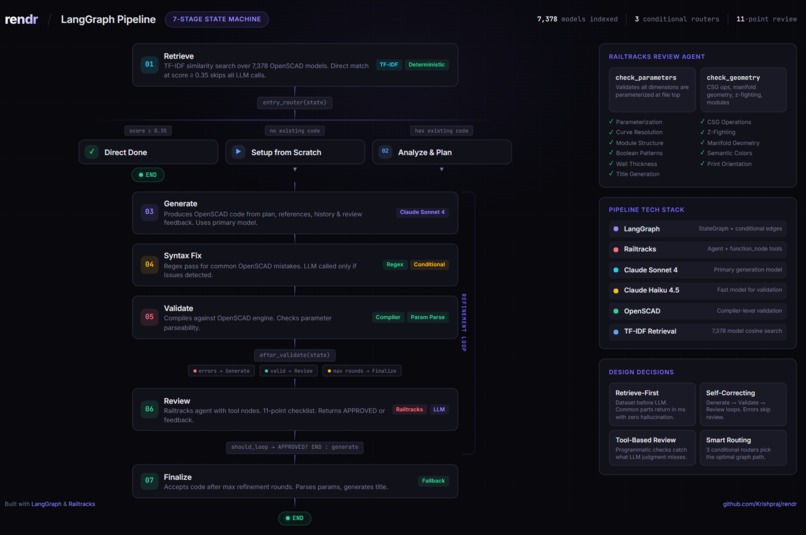
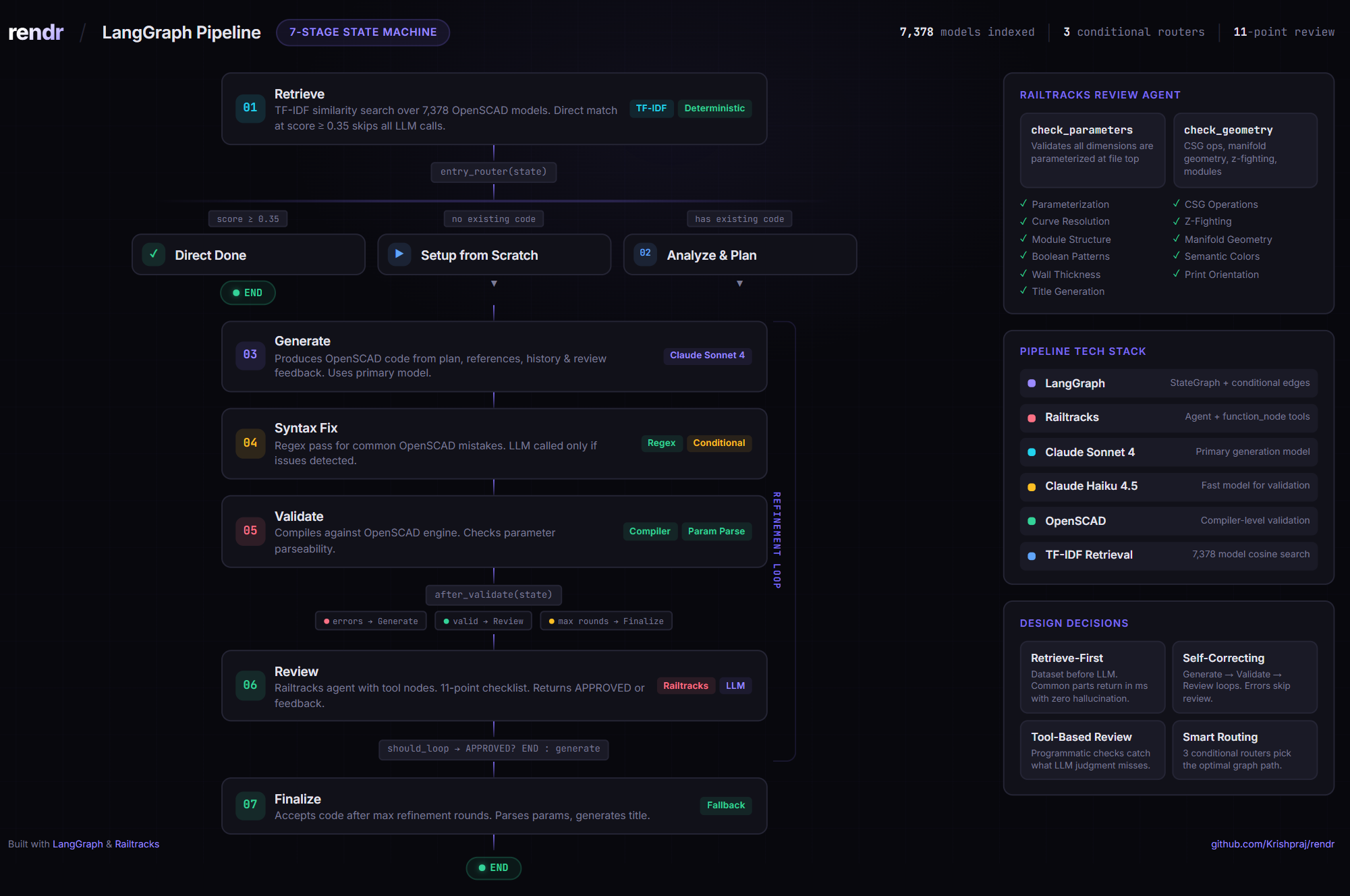
Pipeline
The Problem
The 3D printing market is $20B+ and growing, but the design step is still gated behind expensive CAD software and years of training. rendr removes that barrier.
We aren't competing with SolidWorks. Those tools serve engineers who already know what they're doing. rendr is for everyone else: makers, students, and small manufacturers who know what they need but have no path to a printable file. Existing text-to-3D tools produce meshes that look right but fail at the printer. rendr produces verified, parametric, manufacturable geometry.
What It Does
Describe a part in plain English, get back source code that compiles to a real mesh, checked for print readiness, and ready to export.
- 3D Generator: describe a part in plain English to generate a 3D model, or refine an existing one conversationally, with live pipeline progress
- 3D viewer: solid/wireframe modes, material controls, direct STL export
- Parametric controls: dimensions become sliders, one prompt generates a whole family of parts
- Mesh analysis: watertightness, wall thickness, 5-point print readiness checklist
- Material estimates: weight, time, and cost across PLA, ABS, PETG, Resin, Nylon, TPU
- Print simulation: layer-by-layer visualization before you open a slicer
- Export: download as STL, ready to drop into any slicer or send directly to a printer
How We Built It
Frontend: Electron 33, React 18, TypeScript, Tailwind CSS, Radix UI, Three.js via React Three Fiber, CodeMirror 6.
Backend: FastAPI, LangGraph (pipeline state machine), Railtracks (review agent), litellm, scikit-learn, numpy. Claude Sonnet 4 for generation, Claude Haiku 4.5 for validation.
3D compilation: OpenSCAD as WASM in a Web Worker. The browser compiles .scad to STL with no server round-trips.
Storage: SQLite keeps everything on-device. No account, no cloud.
Pipeline: Retrieve (TF-IDF over 7,378 Thingiverse models, high-confidence matches skip the LLM entirely) → Analyze → Generate → Syntax Fix → Validate → Review (Railtracks agent, 11-point checklist) → Finalize.
Biggest Challenge
AI models have almost no training data on OpenSCAD. The model lacks context, so you can't trust raw output. Early versions produced code that looked correct but generated broken geometry, or compiled fine but couldn't print.
Prompting harder didn't fix it. We built a reviewer system instead: every file is automatically corrected, compiled against the real OpenSCAD engine, and checked by an agent before it reaches the user. The AI generates, the pipeline verifies.
Differentiation
Most AI 3D tools output a mesh. rendr outputs parametric source code that compiles through a real CAD engine and passes manufacturing validation.
| Mesh tools (Meshy, Shap-E) | rendr | |
|---|---|---|
| Output | Static mesh | Parametric OpenSCAD → compiled mesh |
| Editable? | Regenerate from scratch | Sliders + direct code editing |
| Manufacturable? | Rarely | Print readiness analysis built in |
| Reliable? | Single-shot | 7-stage pipeline with correction loops |
| Grounded? | Pure generation | RAG over 7,378 real models |
Generating a shape that looks right is easy. Generating one that actually works is the problem rendr solves.
What We Learned
- You can't trust raw LLM output for niche languages. The model lacks context, so verification infrastructure matters more than prompt quality.
- RAG is underrated for code generation. Grounding output in real working examples dramatically improves reliability, and for common parts you can skip the LLM entirely.
- The gap between "looks right" and "is manufacturable" is bigger than we expected. Closing it required real geometric analysis, not just visual inspection.
- Streaming UX matters for long pipelines. Showing users which stage is running transforms a 20-second wait from frustrating to informative.
What's Next
- Multi-part assemblies: generate interlocking components from a single description
- Fine-tuned open source models: train domain-specific models on OpenSCAD so the pipeline relies less on general-purpose LLMs and gets more reliable with every iteration
- Live manufacturing context: web fetching to pull real-time material availability and pricing from PLA suppliers so users can go straight from a finished model to placing a print order
Built With
- aiosqlite
- anthropic-api
- claude-haiku-4.5
- claude-sonnet-4
- codemirror-6
- electron
- fastapi
- langgraph
- litellm
- node.js
- openscad
- pydantic
- python
- radix-ui
- railtracks
- react
- react-three-fiber
- scikit-learn
- sqlite
- tailwind-css
- tf-idf
- three.js
- typescript
- vite
- web-workers
- webassembly


Log in or sign up for Devpost to join the conversation.