-
-
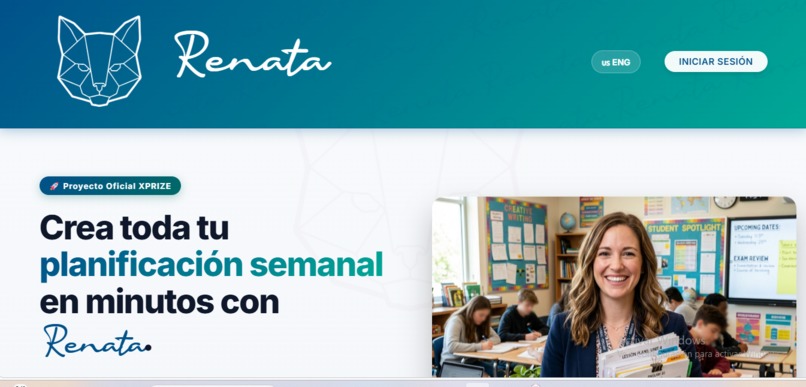
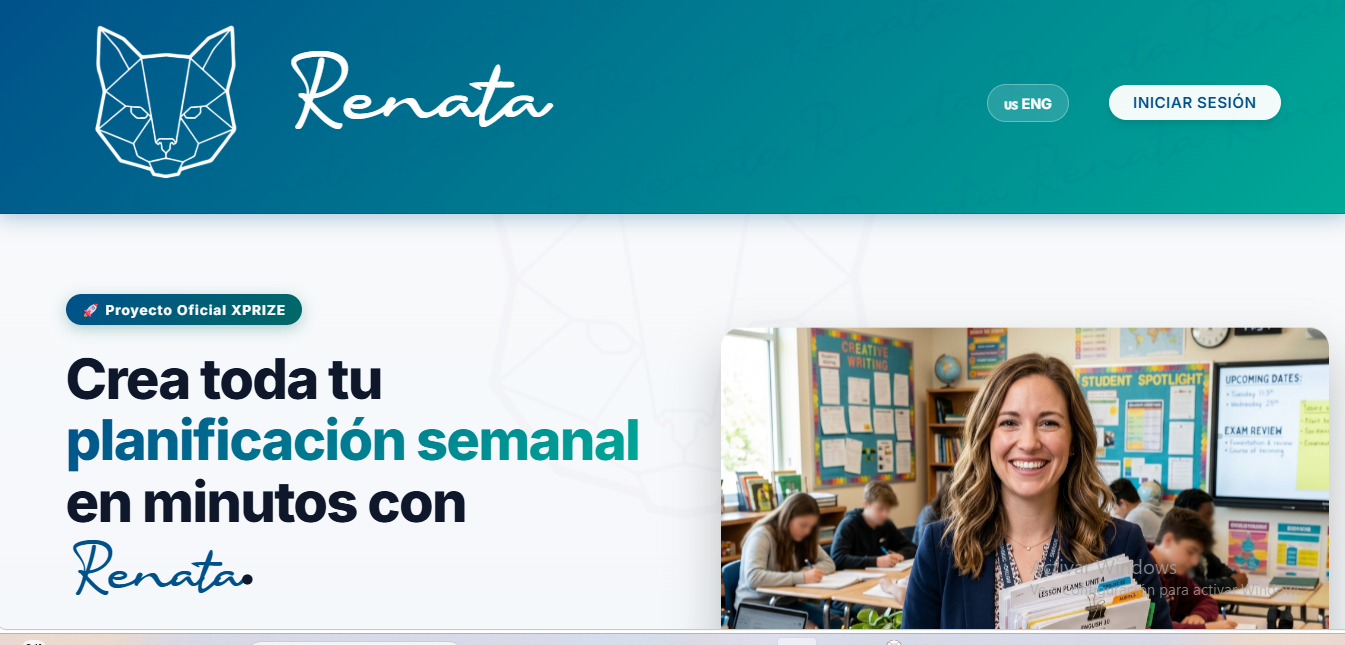
RENATA's landing page: AI-powered lesson planning for Ecuadorian teachers to save hours of work.
-
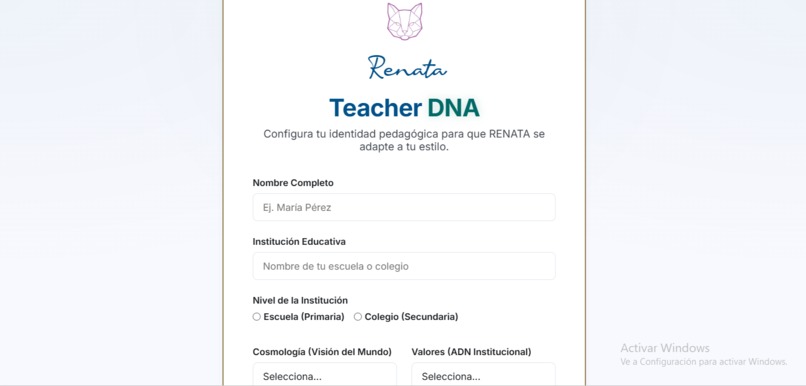
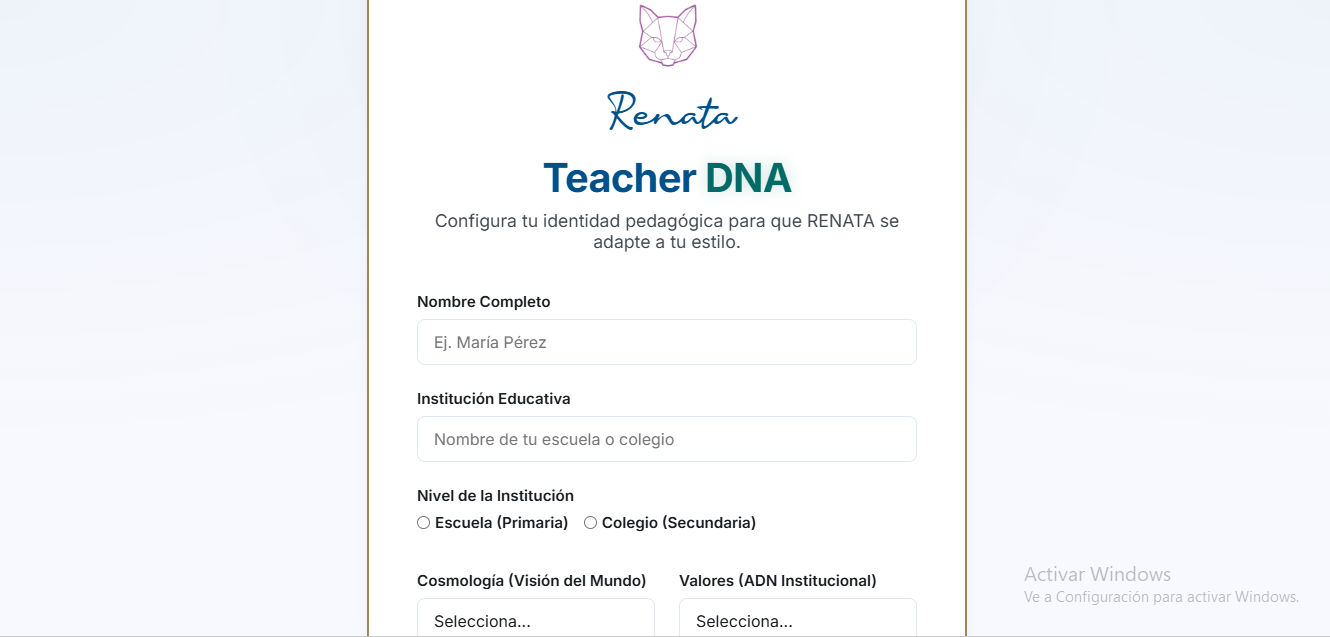
Teacher DNA onboarding: Hyper-personalized pedagogical profiles with strict LOPDP data compliance
-
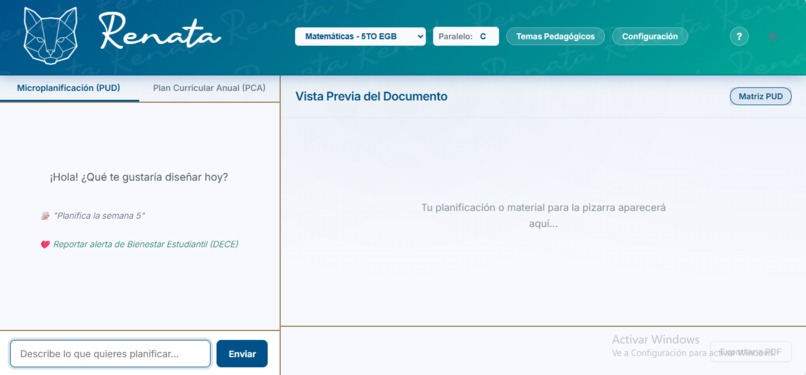
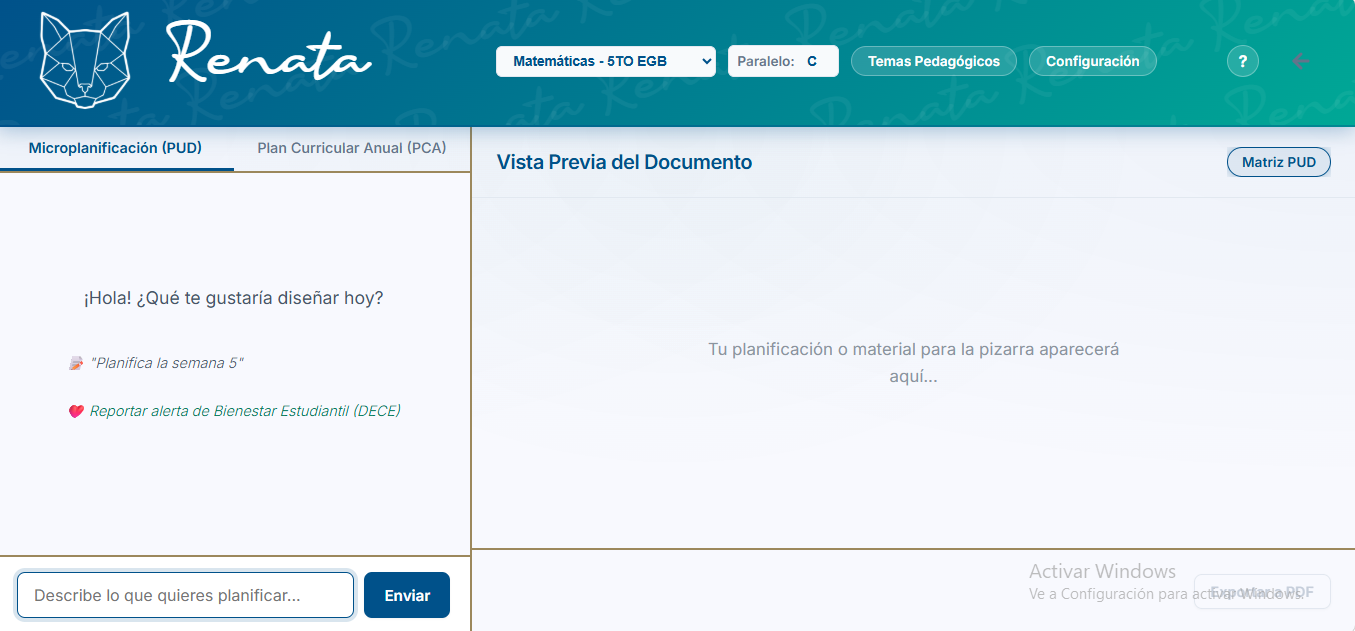
Interactive AI dashboard: Where teachers chat to instantly generate curriculum-aligned materials
-
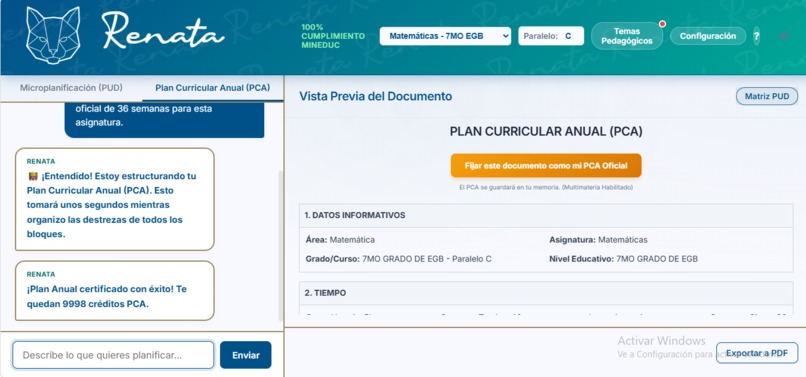
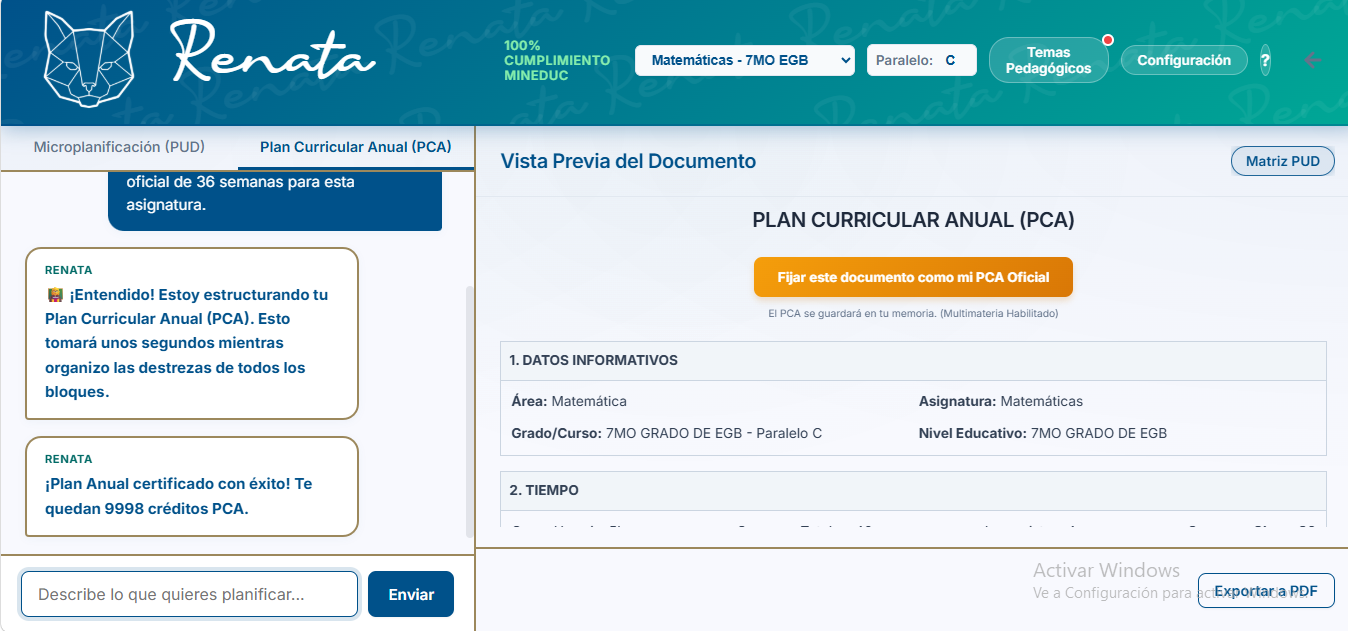
Real-time document generation: Delivering certified, curriculum-aligned annual plans in seconds via Gemini.
-
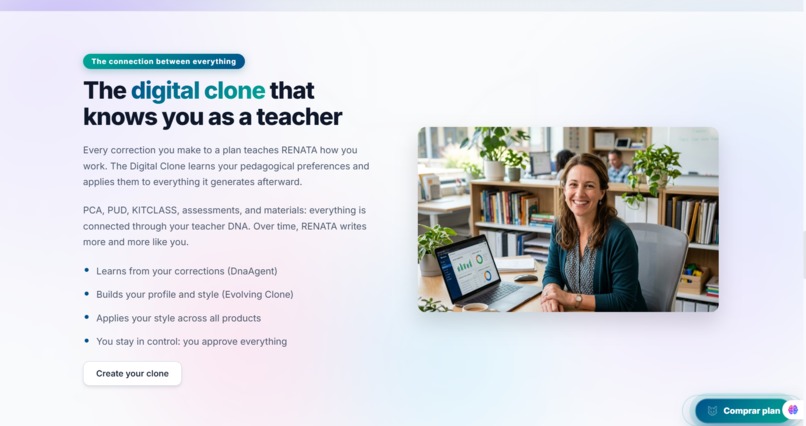
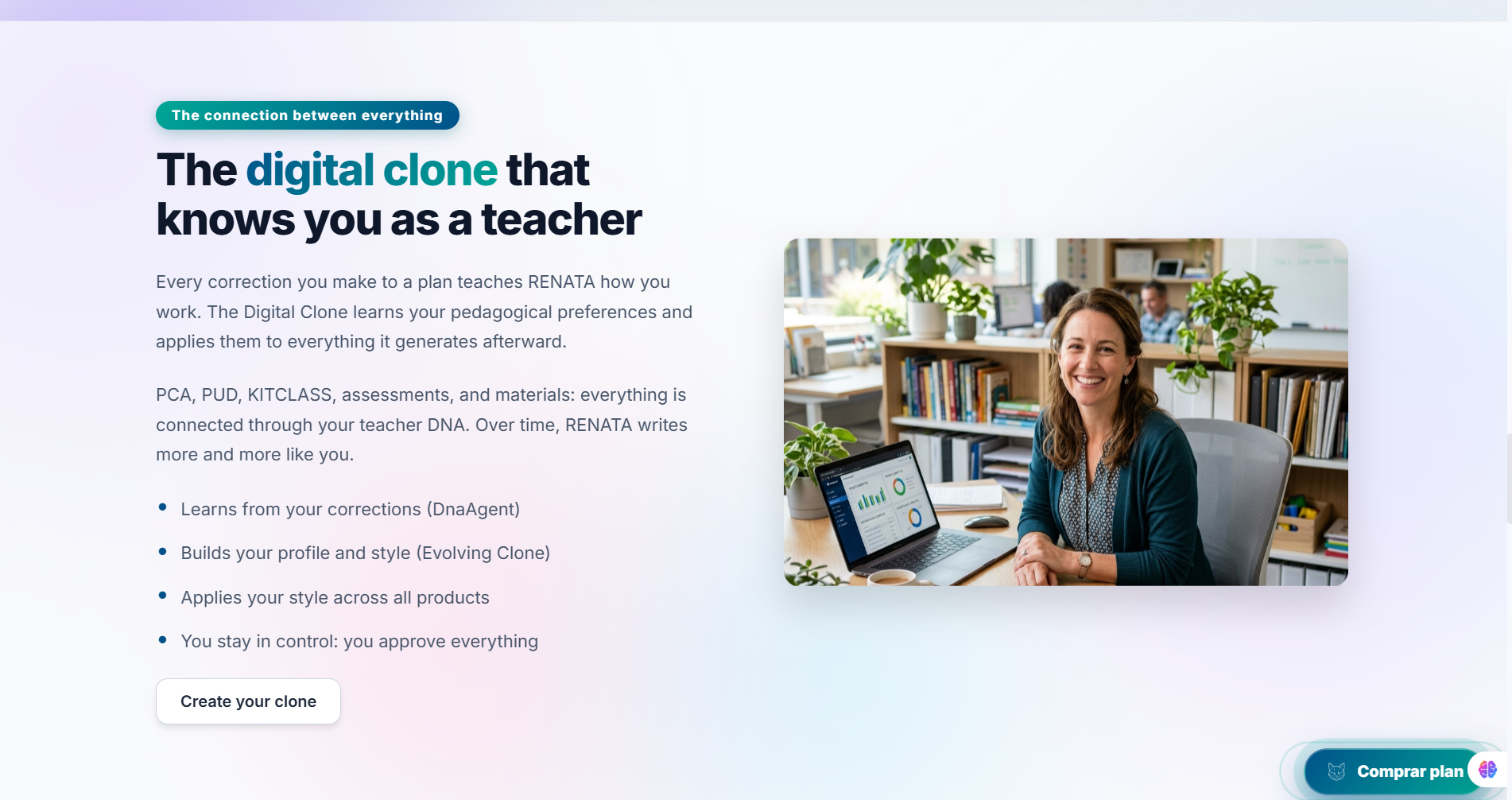
The Teacher's Digital Clone: RENATA learns from every correction and applies your teaching DNA to all documents.
-
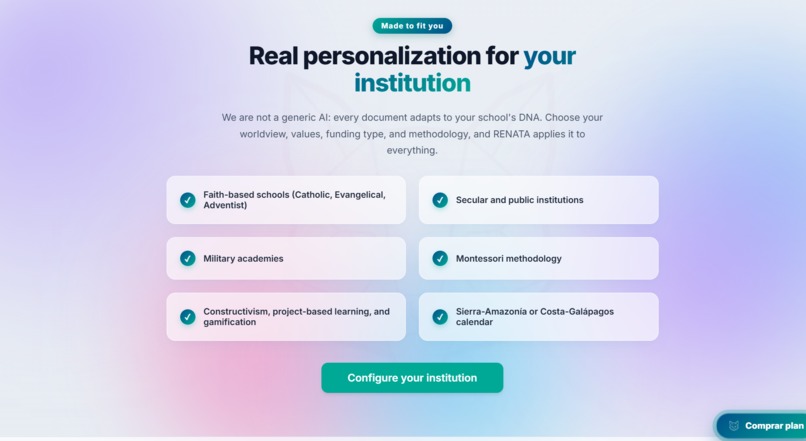
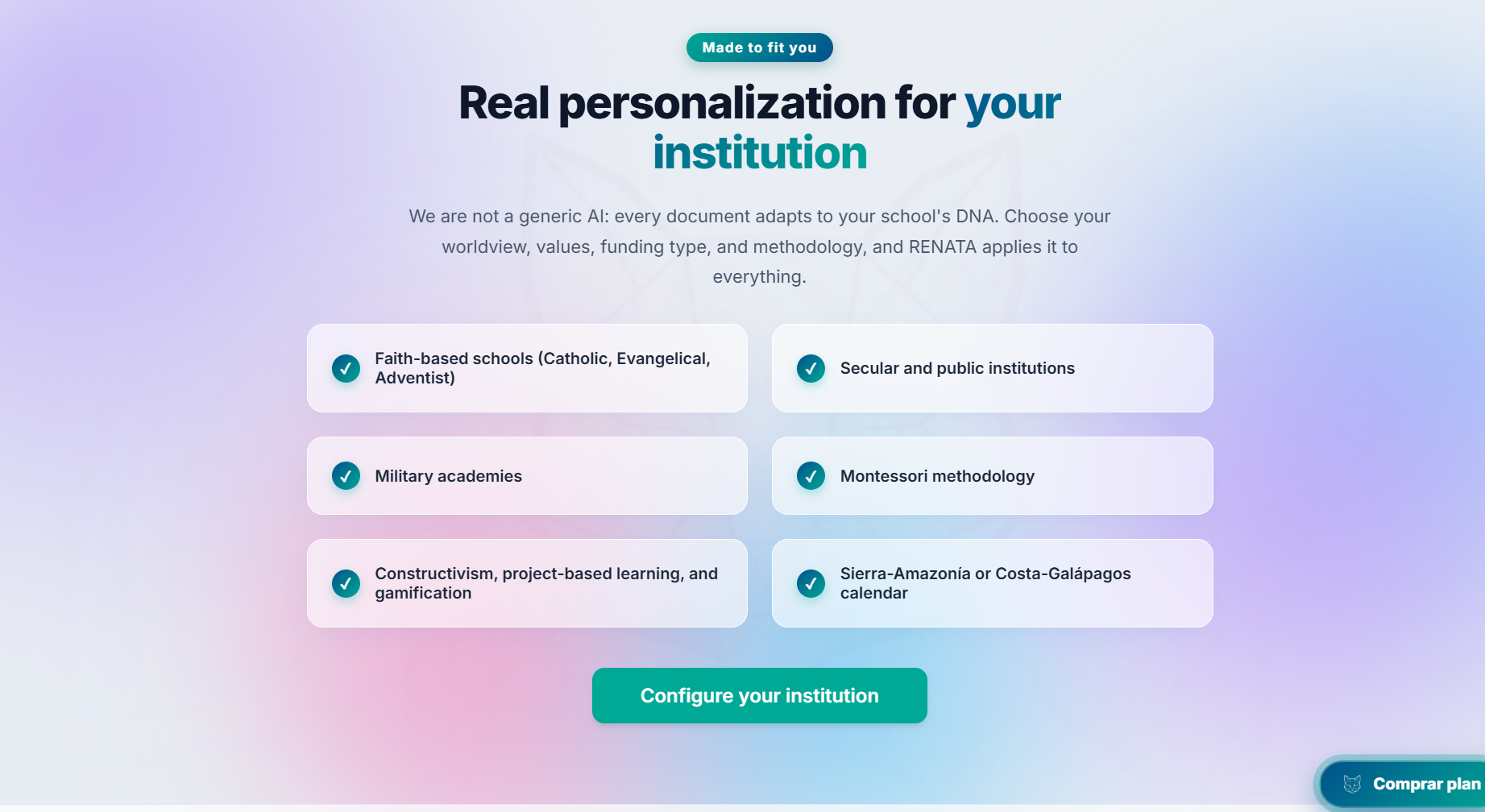
"School DNA personalization: worldview, values, funding type, methodology and Ecuadorian calendar applied to every generated plan."
-
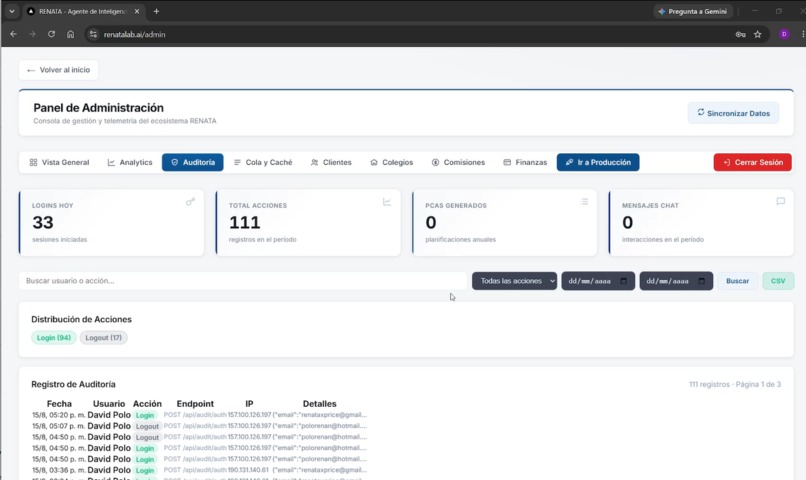
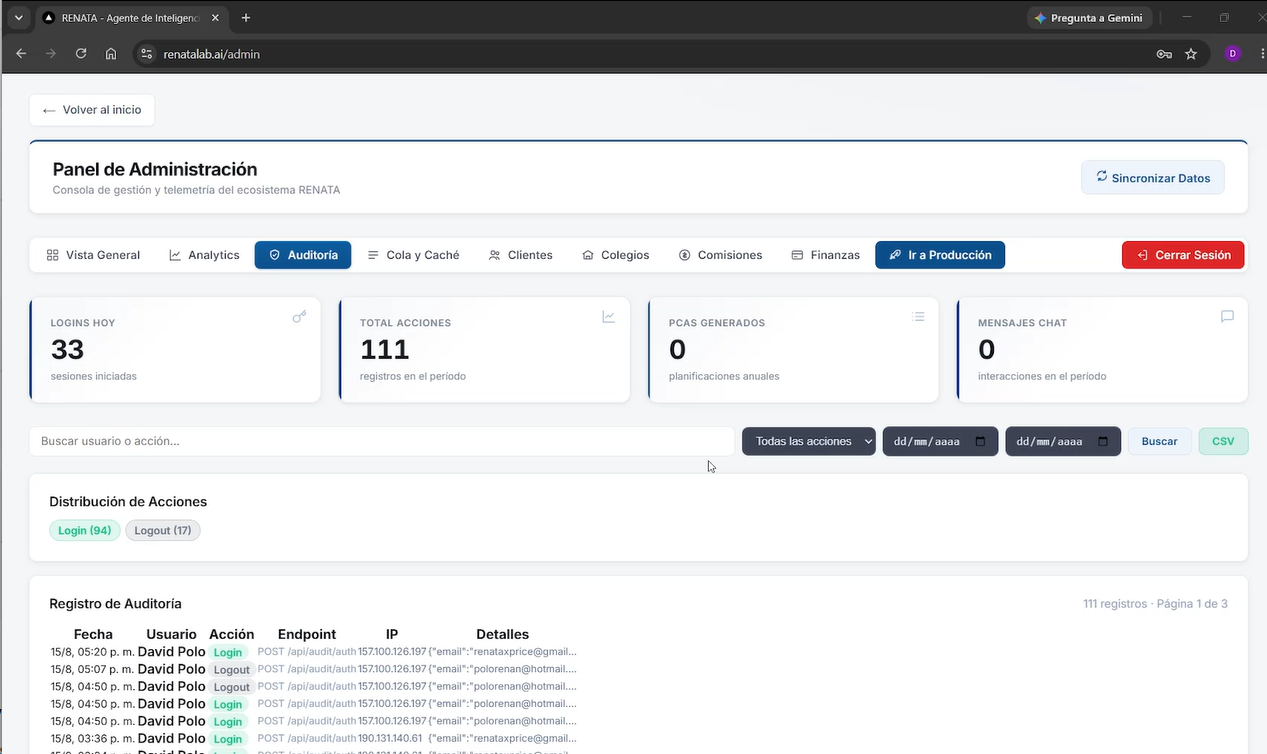
Admin console: real-time monitoring of generation costs, the work queue and AI agent telemetry.
-
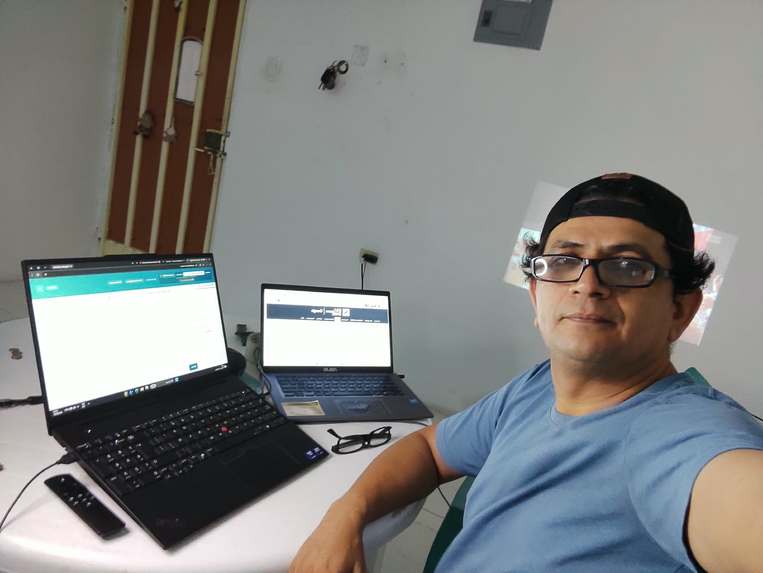
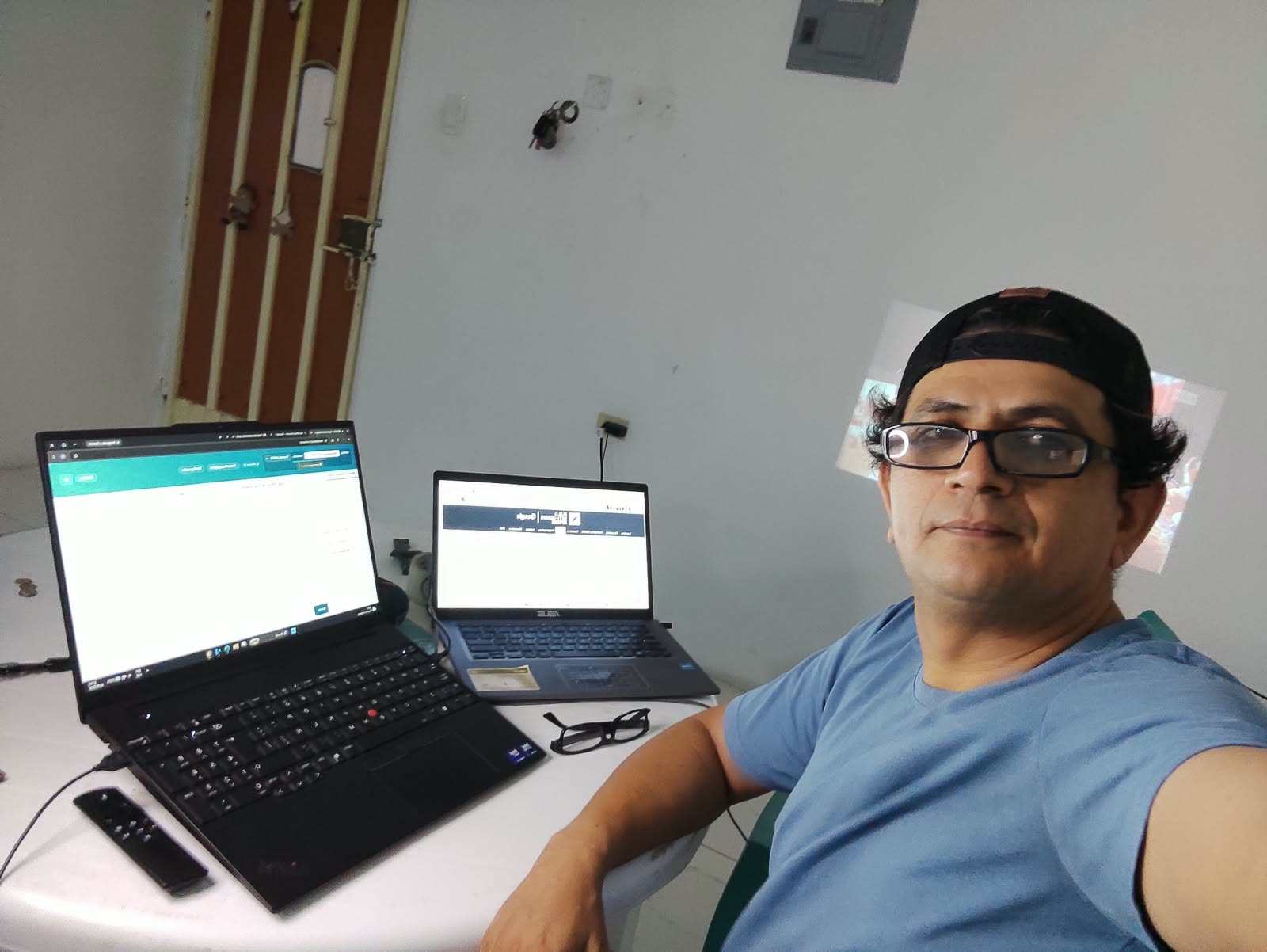
Building RENATA — development setup
Inspiration
My name is David Polo. I'm 46 years old. I sell textbooks to schools for a living, and I also drive Uber to make ends meet. I don't know how to code — not a single line.
But I know something most tech founders don't: I walk into schools every single day. I see what Ecuadorian teachers go through — buried under mountains of paperwork: lesson plans, rubrics, evaluations, curricular adaptations — spending 15+ hours every week on bureaucratic documentation instead of teaching. And here's what breaks my heart: the same content is used identically in every classroom, even though every school has its own vision and every teacher has their own unique way of teaching.
I believe in what AI can do. And I decided: if education needs to change, I'll start that change myself. That's how RENATA was born — not in a Silicon Valley lab, but from the frustration of a textbook salesman who knew there had to be a better way.
What it does
RENATA is a Sovereign SWARM — a multi-agent AI system with Google Gemini at its core — that eliminates the bureaucratic nightmare of teaching and replaces it with hyper-personalized, curriculum-aligned educational resources generated in minutes.
- Traditional approach: the teacher builds every plan by hand, copying and formatting documents for hours.
- RENATA's approach: the teacher sets up their profile once and RENATA generates their plans, materials and adaptations in minutes.
What RENATA generates:
- Annual Plans (PCA) aligned with the Ministry's official curriculum instructivo
- Micro-plans (PUD) with ERCA methodology (Anticipation, Construction, Consolidation) and activities aligned to the student's cognitive level (Bloom's taxonomy) with objectives in the infinitive-verb format required by the Ministry's instructivo
- Complete ClassKits: story premise, worksheets, readings, activities, rubrics and teacher guide
- Rubrics with achievement-level indicators · formal assessment instruments
- UDL/DUA adaptations · real SEN/NEE adaptations (ADHD, dyslexia, intellectual disabilities)
- Reading plans · academic theater scripts · DECE counseling reports
- Complete class materials personalized to each teacher
The secret weapon: the teacher's digital clone. RENATA creates a digital clone of each teacher from their profile — their subject, their level, their institution's vision, their teaching philosophy — and continuously learns from every teacher action: from their approvals, edits and preferences. Every resource is born from that clone: it doesn't sound like a robot, it sounds like that teacher wrote it — and it knows them better every time.
How we built it
Even though I'm not a programmer, I understood the architecture RENATA needed because I understand the problem deeply. Working with Google's AI-assisted development agent (Antigravity), I built the core of the platform, and refined the final development in VS Code with an AI coding assistant.
Frontend (Next.js on Vercel): a productivity dashboard, not a chatbot. Bilingual (Spanish/English).
Backend — the Swarm (Node.js/TypeScript): an asynchronous multi-agent orchestration system that processes PCA, PUD and ClassKit through a work queue.
| Agent | Role |
|---|---|
| Orchestrator | Routes jobs and validates security (anti-prompt-injection, PII protection) |
| Curricular Agent | RAG with 2,881 official curriculum codes |
| Book Agent | Maps the teacher's textbook to the curriculum: provides the concrete material for each week |
| Identity Agent | Injects the Teacher DNA |
| Fiscal Agent | Audits every ClassKit looking for errors |
| Curricular Supervisor | Expert-collapse that verifies PCA and PUD |
| Lince Chaos | Red team: attacks RENATA (prompt injection, XSS) to find vulnerabilities |
| Fenix | Retries failed generations |
| Economist | Controls API costs in real time |
AI Engine: Gemini at the core — 3.5 Flash (generation), 3.7 Flash (curriculum extraction), 3.1 Flash Lite — with a DeepSeek cost layer for the highest-volume creative step. Structured JSON prompts: sub-cent cost per generation.
Knowledge Base (RAG): 2,881 official curriculum codes (1,807 DCDs + 375 evaluation criteria + 699 indicators), verified 100% against the Ministry's official PDFs — zero-hallucination generation.
Database: Supabase (PostgreSQL) with row-level security, multi-tenant.
Challenges we ran into
- I don't know how to code — my biggest challenge and my greatest asset.
- Curriculum complexity — thousands of interconnected codes across 10+ subjects; 2,881 verified one by one.
- Making AI sound like an Ecuadorian teacher — the Teacher DNA solved it.
- Real inclusion — actionable adaptations, not checkboxes.
- Agent coordination — strict orchestration protocols, jurisdiction validation and output contracts.
- Security — Lince Chaos attacks RENATA; every ClassKit passes an automatic quality audit before reaching the teacher.
Accomplishments that we're proud of
- A plan that takes 3–4 hours is generated in under 5 minutes
- 2,881 official codes verified 100% — zero hallucinations
- Real inclusion, not generic disclaimers
- Sovereign Gemini-first architecture — no OpenAI dependency
- Built by a non-programmer who understands education from the ground up
- The Teacher DNA makes every output sound like that teacher
What we learned
- Domain knowledge beats technical knowledge.
- Teachers don't want AI content: they want their content, faster.
- Inclusion must be engineered, not appended.
- Multi-agent systems are the future: a single prompt can't handle curriculum alignment + personalization + inclusion + quality verification at once.
- Gemini Flash models are remarkably powerful for structured educational content at a fraction of the cost.
What's next for RENATA
Phase 2 — The Student Revolution: Google Classroom · WhatsApp for parents · ultra-personalization of classes for each student (content adapted to every child's level, interests and learning style) · student personality engine · per-student licenses · scale to Latin America.
The vision: millions of children with an AI that doesn't replace the teacher — it empowers them — and personalizes education for every student, not just every classroom.
Built by a textbook salesman who believed education deserves better. Powered by Google Gemini.
Built With
- deepseek
- express.js
- gemini-3.5-flash
- gemini-3.7-flash
- gemini-api
- google-cloud
- google-cloud-run
- google-cloud-vertex-ai
- javascript
- multi-agent-system
- next.js
- node.js
- rag
- react
- supabase
- tailwind-css
- typescript
- vercel
- zod


Log in or sign up for Devpost to join the conversation.