RenalSense – AI-Based Non-Invasive Kidney Function Monitoring System
Inspiration
Chronic Kidney Disease (CKD) is one of the fastest-growing non-communicable diseases worldwide and is often referred to as the "Silent Killer" because patients rarely experience noticeable symptoms during its early stages. By the time symptoms such as fatigue, swelling, or reduced kidney function become apparent, irreversible damage has often already occurred. According to global health reports, millions of people remain undiagnosed until they require dialysis or kidney transplantation, significantly increasing healthcare costs and reducing quality of life.
The situation is even more concerning in developing countries and rural communities, where regular kidney screening is limited due to the high cost of laboratory tests, lack of medical infrastructure, and shortage of nephrologists. Traditional diagnostic methods rely heavily on blood tests, urine analysis, and hospital visits, making continuous monitoring nearly impossible for many patients.
Our team wanted to challenge this traditional approach by asking a simple yet powerful question:
"Can we continuously monitor kidney health without needles, laboratory tests, or frequent hospital visits?"
This idea led to the development of RenalSense, an AI-powered wearable smart belt that combines biomedical sensors, bioimpedance spectroscopy, Internet of Things (IoT), and Machine Learning to provide continuous, non-invasive kidney health assessment. Our goal is not only to detect potential kidney abnormalities earlier but also to empower individuals to proactively monitor their kidney health from the comfort of their homes.
What it does
RenalSense is an intelligent wearable healthcare system designed to continuously monitor physiological signals that are associated with kidney function. Unlike conventional diagnostic methods that require invasive blood sampling, our solution estimates kidney health using multiple non-invasive biomedical signals collected through an abdomen-worn smart belt.
The wearable integrates multiple sensors that work together to create a comprehensive physiological profile of the user.
The AD5941 Bioimpedance module measures changes in body fluid composition and tissue impedance, which can indicate fluid imbalance and kidney-related physiological changes. The MAX30001 records high-quality ECG signals to monitor cardiovascular health, while the MAX30102 continuously measures heart rate and blood oxygen saturation (SpO₂). The MAX30205 monitors body temperature, the LSM6DS3 tracks body movement and physical activity, and the FSR402 pressure sensor ensures proper contact between the wearable and the user's body for reliable data acquisition.
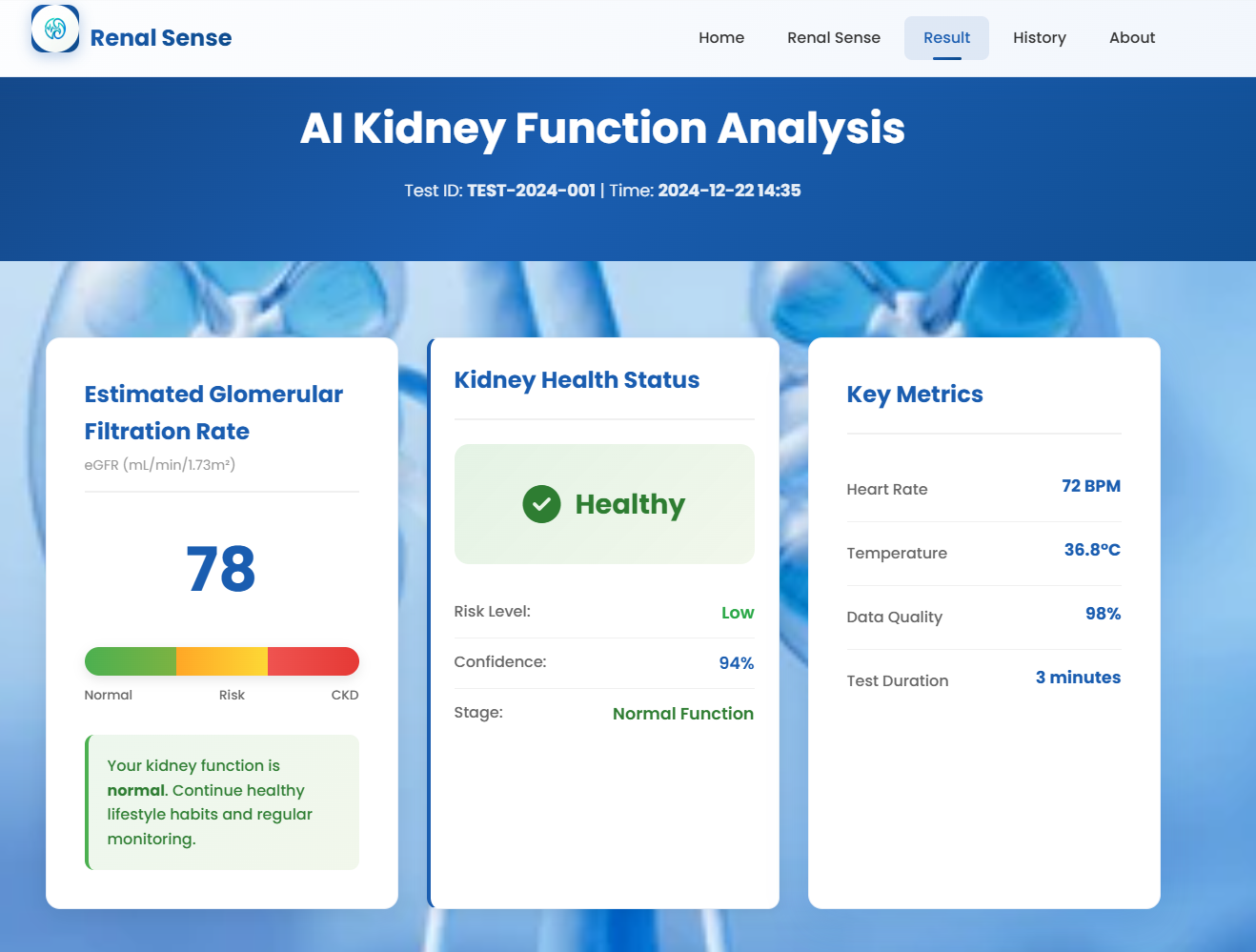
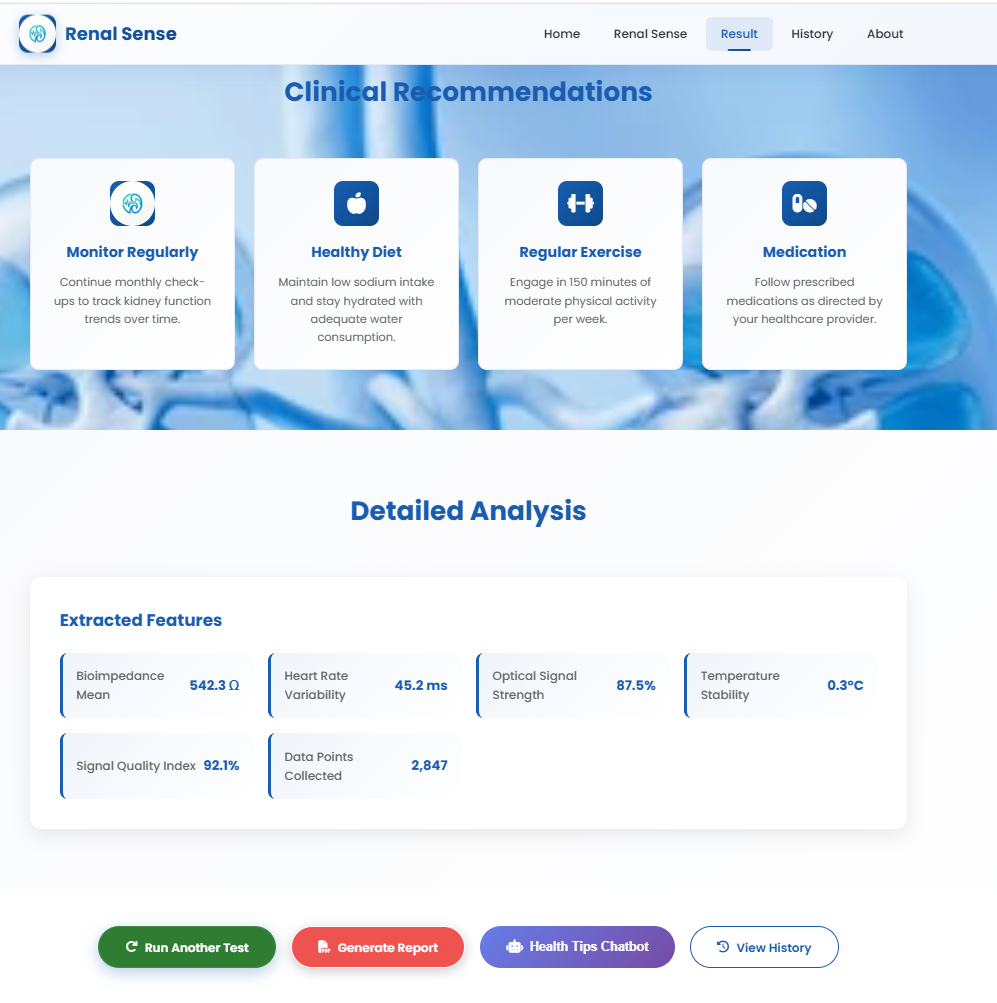
All sensor readings are transmitted wirelessly through Bluetooth using the ESP32-S3 microcontroller to a secure cloud platform. The collected physiological data undergo preprocessing, noise removal, feature extraction, and Machine Learning analysis. Our AI models estimate kidney health, predict eGFR trends, classify kidney risk levels, and provide personalized health recommendations.
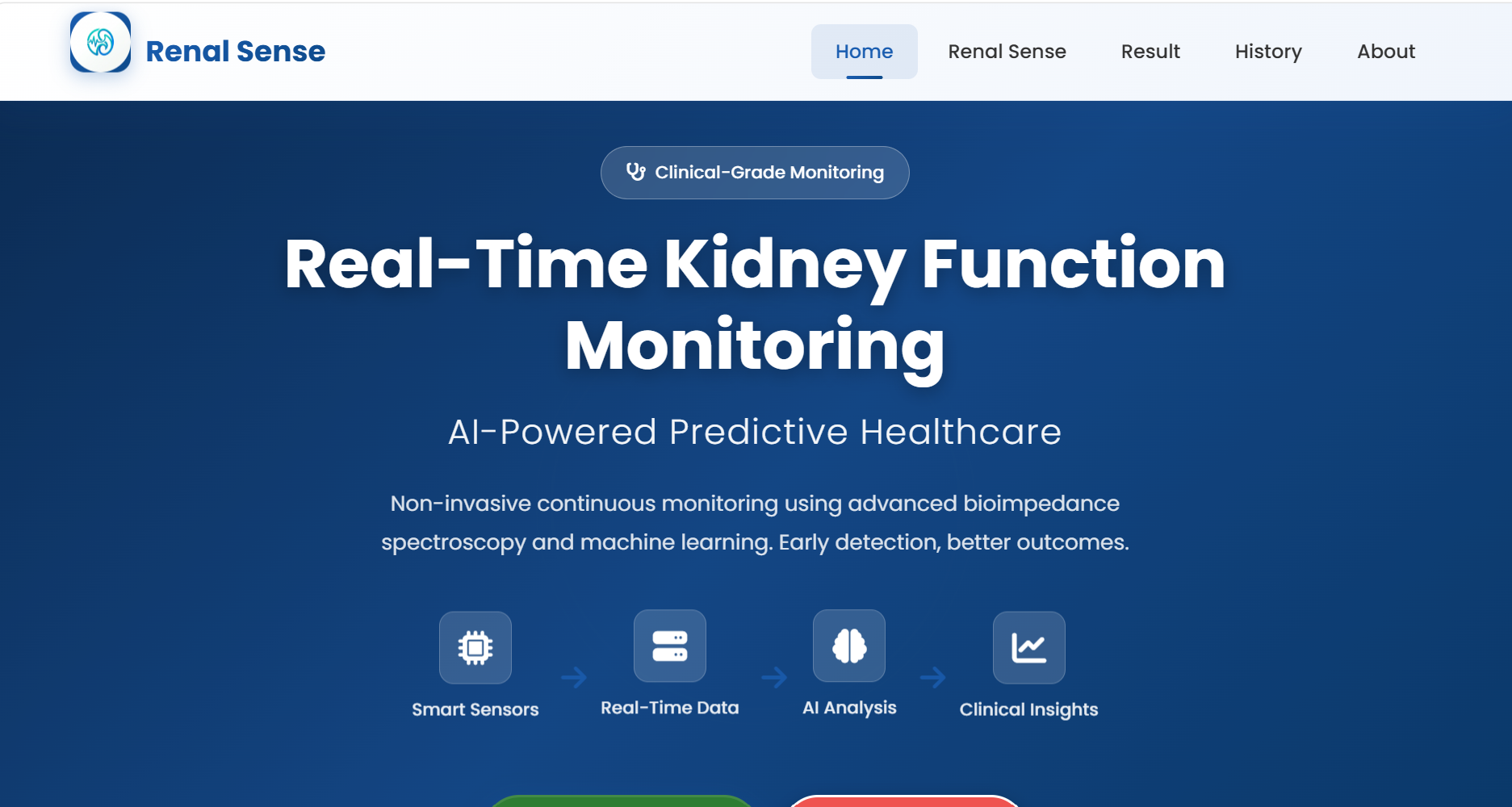
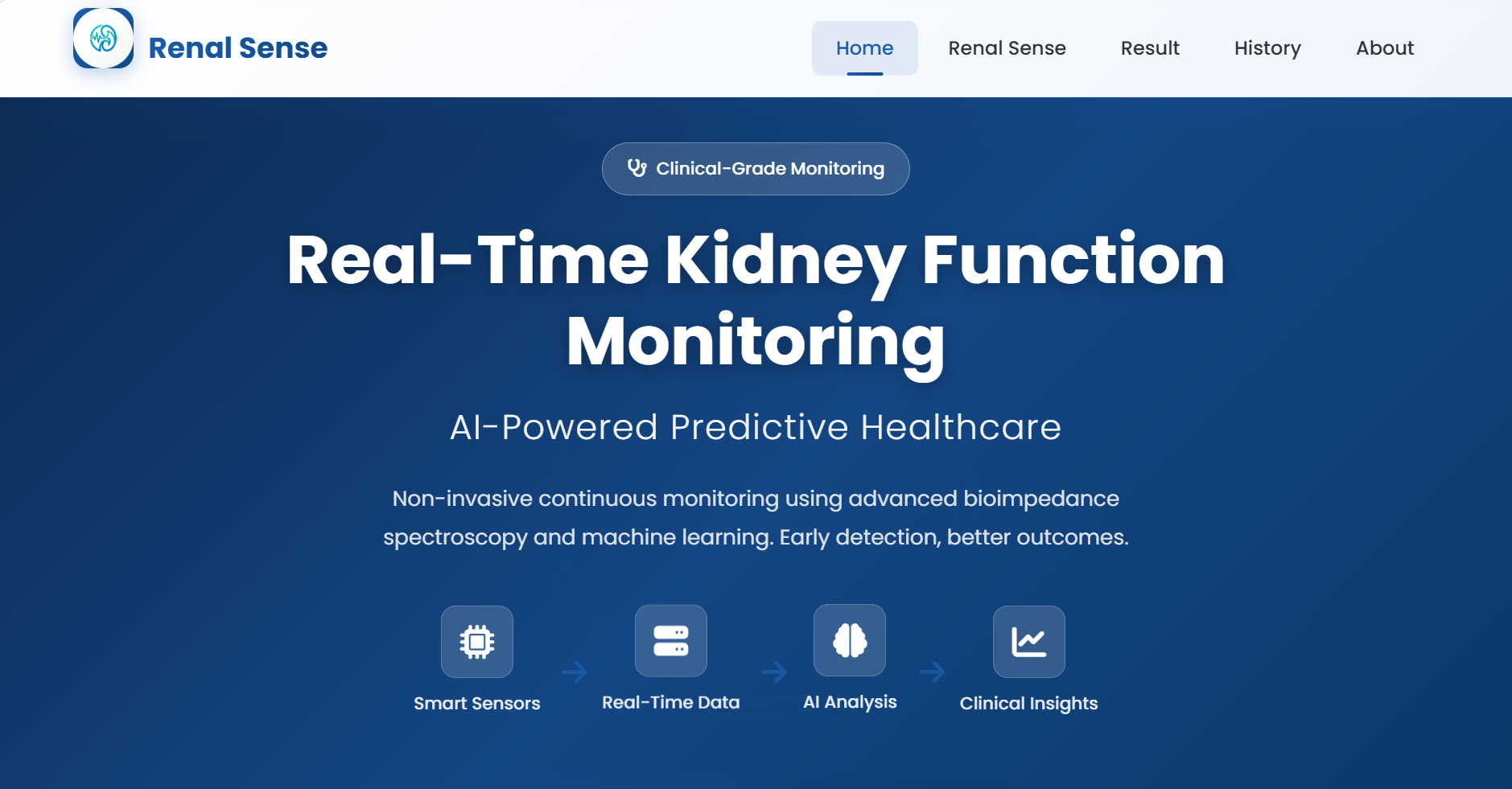
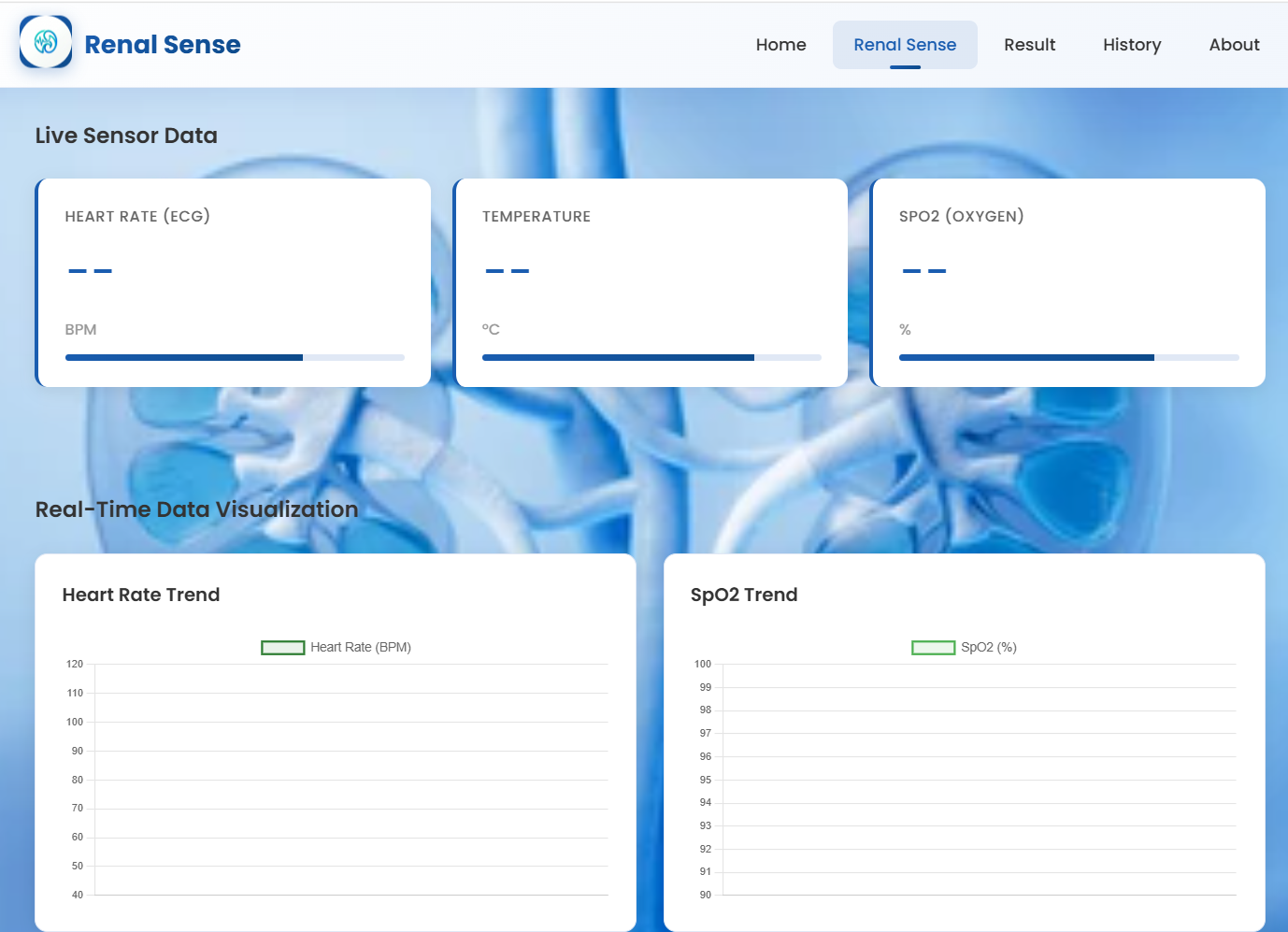
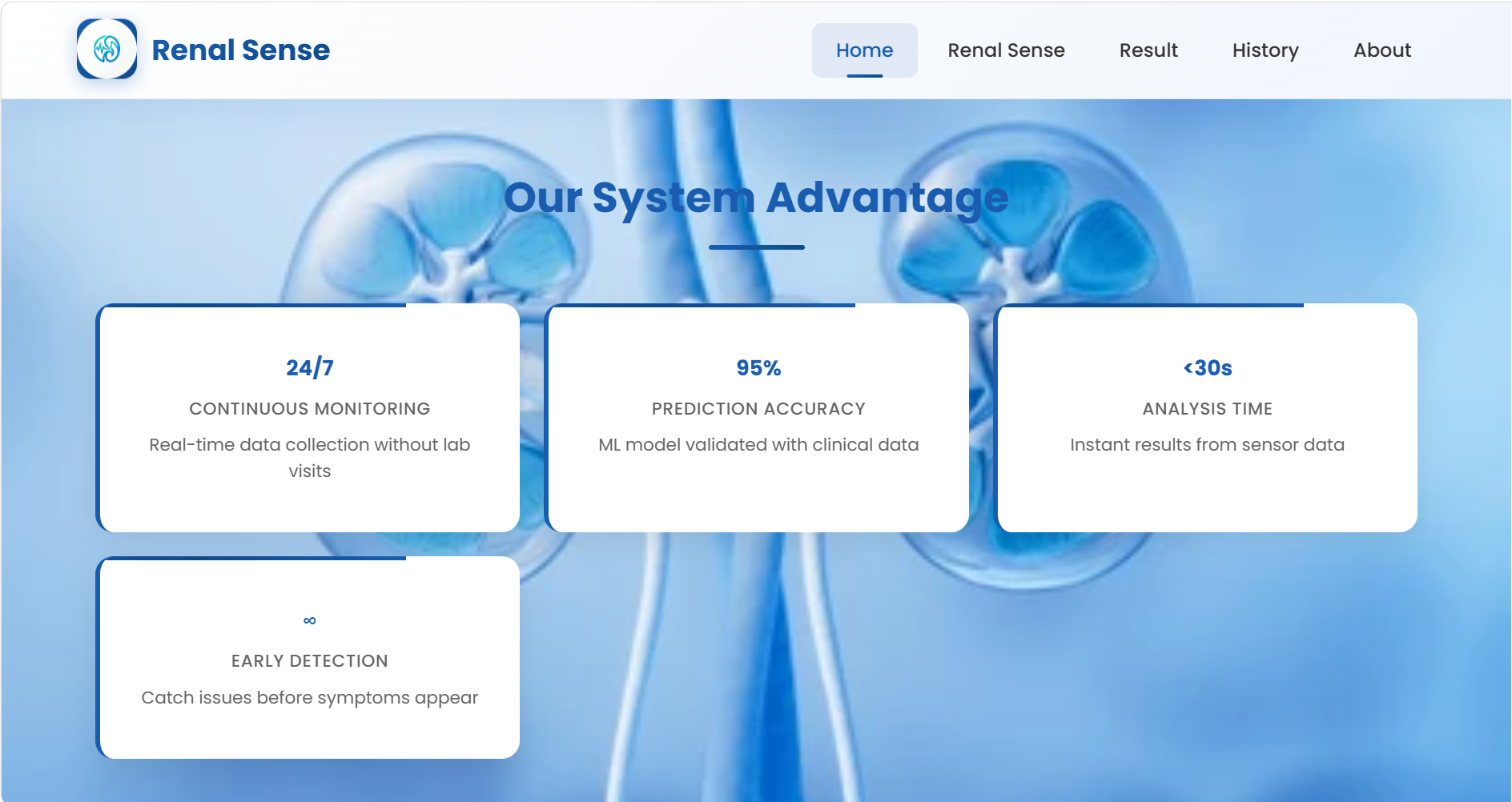
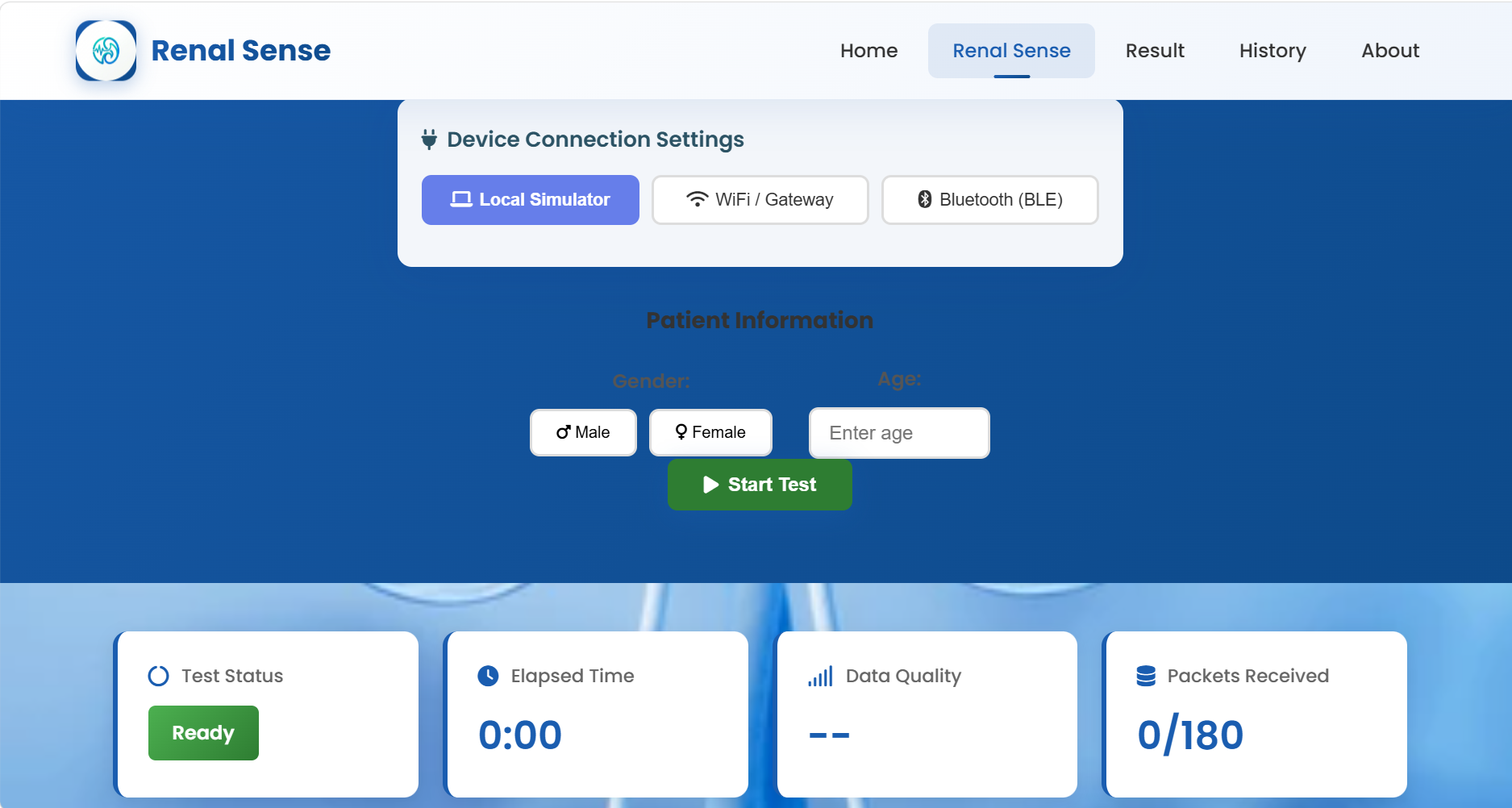
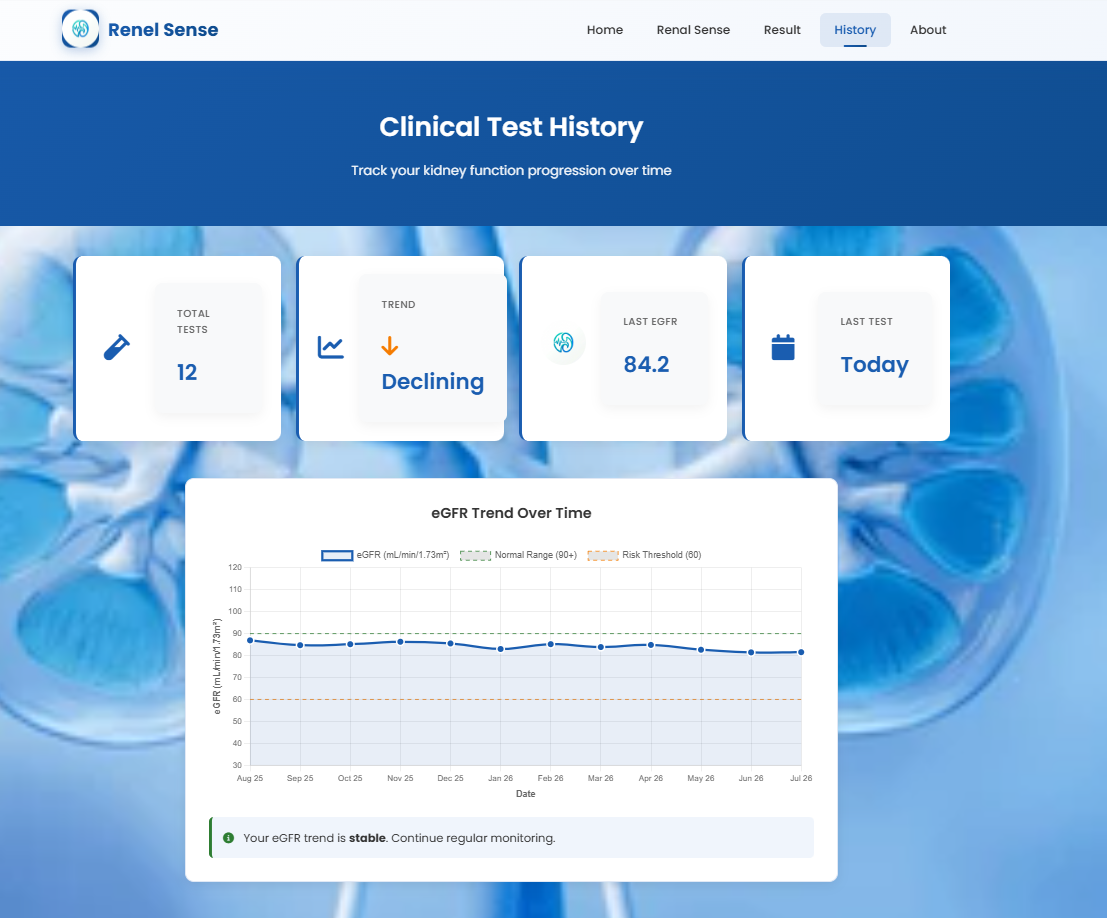
The web dashboard enables healthcare professionals and users to monitor real-time sensor data, historical trends, AI predictions, and alerts. The system is designed for continuous home monitoring, telemedicine support, preventive healthcare, and early intervention before severe kidney damage occurs.
How we built it
RenalSense is the result of integrating embedded systems, biomedical engineering, cloud computing, artificial intelligence, and web technologies into a unified healthcare solution.
We started by designing a wearable hardware platform using the ESP32-S3 as the central processing unit because of its powerful processing capabilities, integrated Wi-Fi, and low power consumption. The ESP32 communicates with multiple biomedical sensors using both SPI and I²C communication protocols.
Our sensing layer consists of:
- AD5941 Bioimpedance Analog Front-End
- MAX30001 ECG Analog Front-End
- MAX30102 Optical Heart Rate & SpO₂ Sensor
- MAX30205 Digital Temperature Sensor
- LSM6DS3 6-Axis Accelerometer & Gyroscope
- FSR402 Force Sensitive Resistor
Each sensor continuously collects physiological information at predefined sampling intervals. The raw signals undergo filtering and preprocessing on the ESP32 before being transmitted to the cloud.
On the backend, we developed a Node.js and Express.js server that manages communication between the wearable device, Machine Learning services, and the web dashboard. Real-time communication is handled using WebSockets, allowing sensor data to be visualized instantly without refreshing the webpage.
The Machine Learning component was developed using Python. After preprocessing and feature engineering, Random Forest and Gradient Boosting algorithms were trained on kidney-related datasets to estimate kidney health indicators. These models analyze more than twenty-five physiological features extracted from multimodal sensor data to identify subtle abnormalities that may indicate declining kidney function.
The prediction service is deployed through a Flask REST API, enabling seamless communication between the cloud server and the AI model. The prediction results are then displayed through an interactive web dashboard built using HTML, CSS, JavaScript, and Chart.js.
The dashboard displays live physiological signals, historical health trends, AI-generated kidney health assessments, risk classifications, estimated eGFR trends, and personalized recommendations for users and healthcare professionals.
Challenges we ran into
Building a non-invasive kidney monitoring system proved to be significantly more challenging than traditional wearable health devices because kidneys cannot be monitored directly through a single physiological signal.
One of our biggest challenges was identifying measurable physiological parameters that have meaningful relationships with kidney function. Unlike heart rate or body temperature, kidney health depends on multiple interconnected physiological processes. We therefore had to combine several sensors to create a multimodal dataset capable of supporting accurate Machine Learning predictions.
Another major challenge was integrating multiple biomedical sensors onto a single embedded platform. Each sensor communicates using different protocols and sampling frequencies, requiring careful synchronization to ensure consistent data collection.
Signal quality also became a significant obstacle. Motion artifacts, environmental noise, inconsistent skin contact, and electrode placement all affected the reliability of collected signals. We spent considerable time improving signal preprocessing, filtering, and sensor calibration.
Developing the Machine Learning model presented another challenge because publicly available kidney datasets primarily contain laboratory values rather than wearable physiological signals. We had to perform extensive feature engineering and identify indirect relationships between physiological measurements and kidney health indicators.
Power management, wearable ergonomics, and cloud communication also required continuous optimization to ensure that RenalSense remained lightweight, comfortable, reliable, and capable of real-time monitoring.
Accomplishments that we're proud of
We are proud of successfully developing a fully functional prototype that demonstrates the feasibility of non-invasive kidney health monitoring using wearable technology.
Our achievements include:
- Successfully integrating six biomedical sensors into a single wearable platform.
- Developing a compact smart belt capable of continuously collecting physiological data.
- Building a cloud-connected IoT healthcare system capable of real-time monitoring.
- Creating Machine Learning models that achieved an R² score of approximately 0.91 for kidney health prediction.
- Designing an interactive web dashboard for healthcare professionals and patients.
- Demonstrating seamless communication between embedded hardware, cloud services, AI models, and visualization tools.
- Creating a scalable architecture that can support telemedicine and remote patient monitoring.
- Building an affordable concept that has the potential to improve kidney healthcare accessibility in underserved communities.
Beyond the technical achievements, we are proud that RenalSense focuses on preventive healthcare rather than reactive treatment. Our project demonstrates how AI and wearable technology can transform kidney care by enabling earlier detection and intervention.
What we learned
Working on RenalSense provided us with valuable interdisciplinary experience that extended far beyond software development.
We learned how biomedical sensors operate and how physiological signals can be used to estimate internal health conditions. We gained practical knowledge of bioimpedance spectroscopy, ECG acquisition, signal processing, embedded programming, wireless communication, and cloud computing.
On the Artificial Intelligence side, we learned the importance of feature engineering, dataset preparation, model selection, evaluation metrics, and healthcare-oriented Machine Learning workflows. Building an AI model for medical applications also taught us the importance of interpretability, reliability, and ethical considerations.
The project also strengthened our understanding of system integration. Developing hardware, backend services, Machine Learning pipelines, and frontend dashboards simultaneously required careful planning, teamwork, debugging, and iterative testing.
Most importantly, we realized that impactful healthcare innovations are created by combining expertise from multiple domains—including electronics, computer science, biomedical engineering, and artificial intelligence—to solve real-world problems.
What's next for RenalSense
RenalSense is currently a functional prototype, but our vision extends far beyond this stage.
Our immediate goal is to conduct clinical validation with hospitals and nephrologists using real patient data to further improve the accuracy and reliability of our Machine Learning models. We also plan to enhance our AI pipeline by incorporating deep learning techniques and personalized health prediction models.
Future versions of RenalSense will include a dedicated Android and iOS application, allowing users to monitor kidney health anywhere while receiving personalized notifications and health recommendations.
We also plan to integrate Electronic Health Records (EHR), telemedicine platforms, and doctor portals, enabling physicians to remotely monitor patients and intervene before serious kidney complications develop.
Another exciting direction is the development of RenalSense Pro, a clinical screening device designed for hospitals, pharmacies, diagnostic centers, and rural primary healthcare facilities. This version will provide rapid kidney screening without requiring laboratory infrastructure, making preventive healthcare significantly more accessible.
In the long term, we envision RenalSense becoming a comprehensive AI-powered kidney health ecosystem that supports continuous monitoring, early disease prediction, remote patient management, population health screening, and preventive healthcare worldwide. Our ultimate mission is to shift kidney care from reactive treatment to proactive prevention, helping millions of people detect kidney problems earlier and improve their quality of life.
Built With
- ad5941
- arduino
- bioimpedance
- c++
- chart.js
- css3
- esp32-s3
- express.js
- flask
- fsr402
- gradientboosting
- healthcareai
- html5
- iot
- javascript
- lsm6ds3
- machine-learning
- max30001
- max30102
- max30205
- node.js
- python
- randomforest
- wearabletechnology
- websockets

Log in or sign up for Devpost to join the conversation.