-
-
RenAIssance: Engineering Safer Kidney Care with use of Data and AI
Inspiration
The problem we are trying to solve is "assessment of water balance and kidney perfusion to prevent Kidney Injury " using handheld ultrasounds
What it does
This is currently a specialized skill set that is acquired after years of training, requires complex assessments and calculations
But the advent of cheap handheld ultrasounds, not just from GE, Phillips, Kosmos, etc, and more affordable Chinese ones now offers a possibility of deskilling this task - with image AI solutions.
How we built it
Challenges we ran into
Bringing cloud-based solutions into a healthcare organizations, upskilling of the medical workforce on point of care ultrasound ( POCUS) , and dealing with hospital bureaucracy which is not still used to fast-paced technological changes
Accomplishments that we're proud of
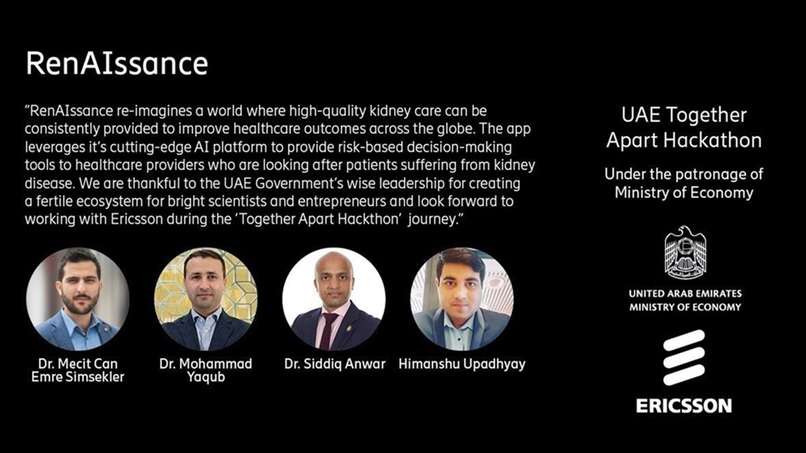
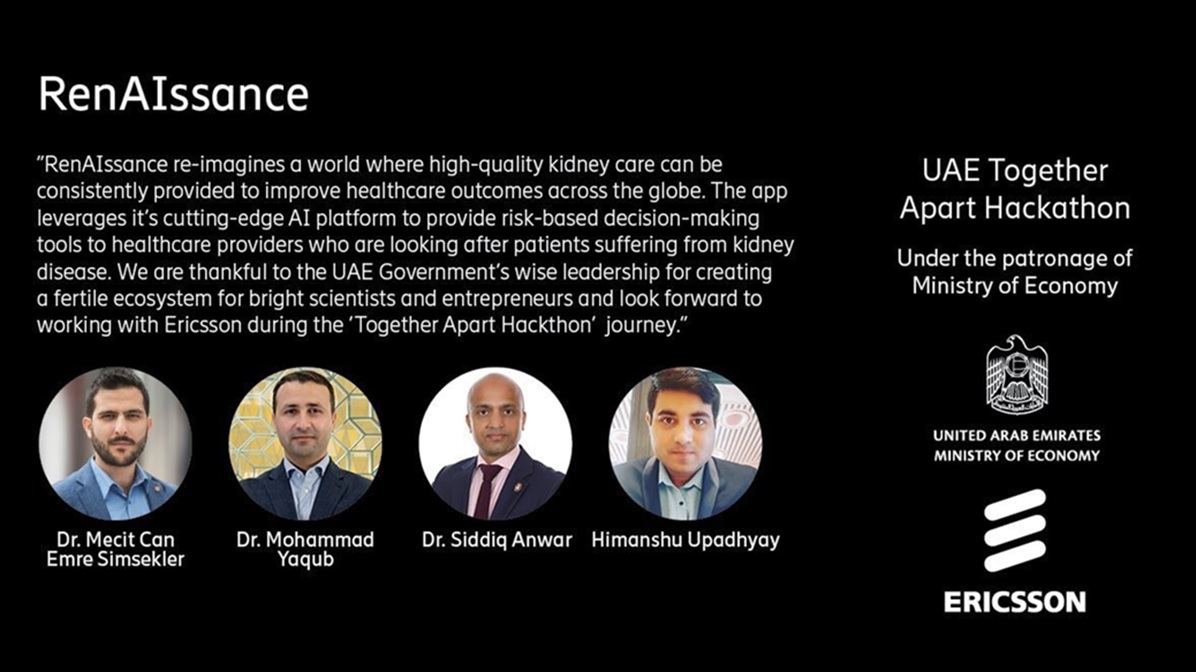
RenAIssance – Won the Grand Prize in a Hackathon organized by Ericsson & UAE Ministry of Economy. https://www.ericsson.com/en/events/together-apart-hackathon
. This project helped established the Sheikh Shakhbout Medical City (SSMC) POCUS Academy, the region's first. https://tinyurl.com/MEPOCUS . The goal of the SSMC POCUS Academy is to roll out this training to all members of the multidisciplinary teams i.e., Internal medicine specialties, ED, Advance Nurse Practitioners, Critical Care, Trauma, Paramedics, General Practitioners etc. all speak the same language around physical assessment with POC ultrasound.
Has led to CRRT Center of Excellence in SSMC in partnership with Baxter to help bring high-quality CRRT training to the region to improve AKI care.
Won the Patient Safety award - a Gold Winner under the category Advanced Health Care Technology Initiative for improvement of care for those who are at risk to develop inpatient acute kidney injury, an important patient safety thermometer
What we learned
The current paradigm in hospitals has multiple medical devices, and health care providers, including nurses, doctors, allied health professionals, and health operations personnel all feeding data to the in-hospital EMR’s and hospital PACS (picture archiving and communication system). The primary goal of all these activities is to help with Revenue Cycle Management All this stored data is not helping the health care providers make better health care systems There are already validated data-driven decisions making algorithms or AI algorithms out there that could be running on this data but have not been deployed in these mature healthcare markets. These needs need better connectivity, interoperability, and cloud computing which legacy IT systems are very poor with.
One of our team members led the digitalization of the Complete Acute Kidney Injury Management pipeline in one of the largest healthcare systems in the middle east , creating a unique structured dataset to build our AI solution https://tinyurl.com/OmniaHealthAKI
What's next for RenAissance
Deskilling Image Acquisition Process: We are creating a curated database of POCUS images of the complete hemodynamic circuit to develop an AI assisted imaging tool. Our AI-assisted Imaging tool will improve hemodynamic assessment with the use of handheld Point of Care Ultrasound Devices to acquire pertinent images. This will allow a non-expert to acquire these images and transmit them to an expert to view them and assist in patient management. In addition, our cloud-based AI algorithms will assist them in better healthcare decisions at the patient’s bedside improving care. This could be in an ambulance, a field of war, in a refugee camp, or by any first responder. It also could be used for follow-up of patients with chronic patients at home, saving hospital visits for clinic visits, radiology imaging, etc.

Log in or sign up for Devpost to join the conversation.