-
-
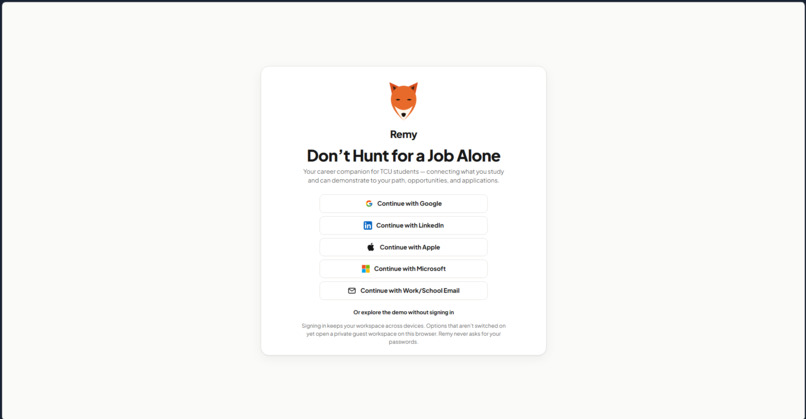
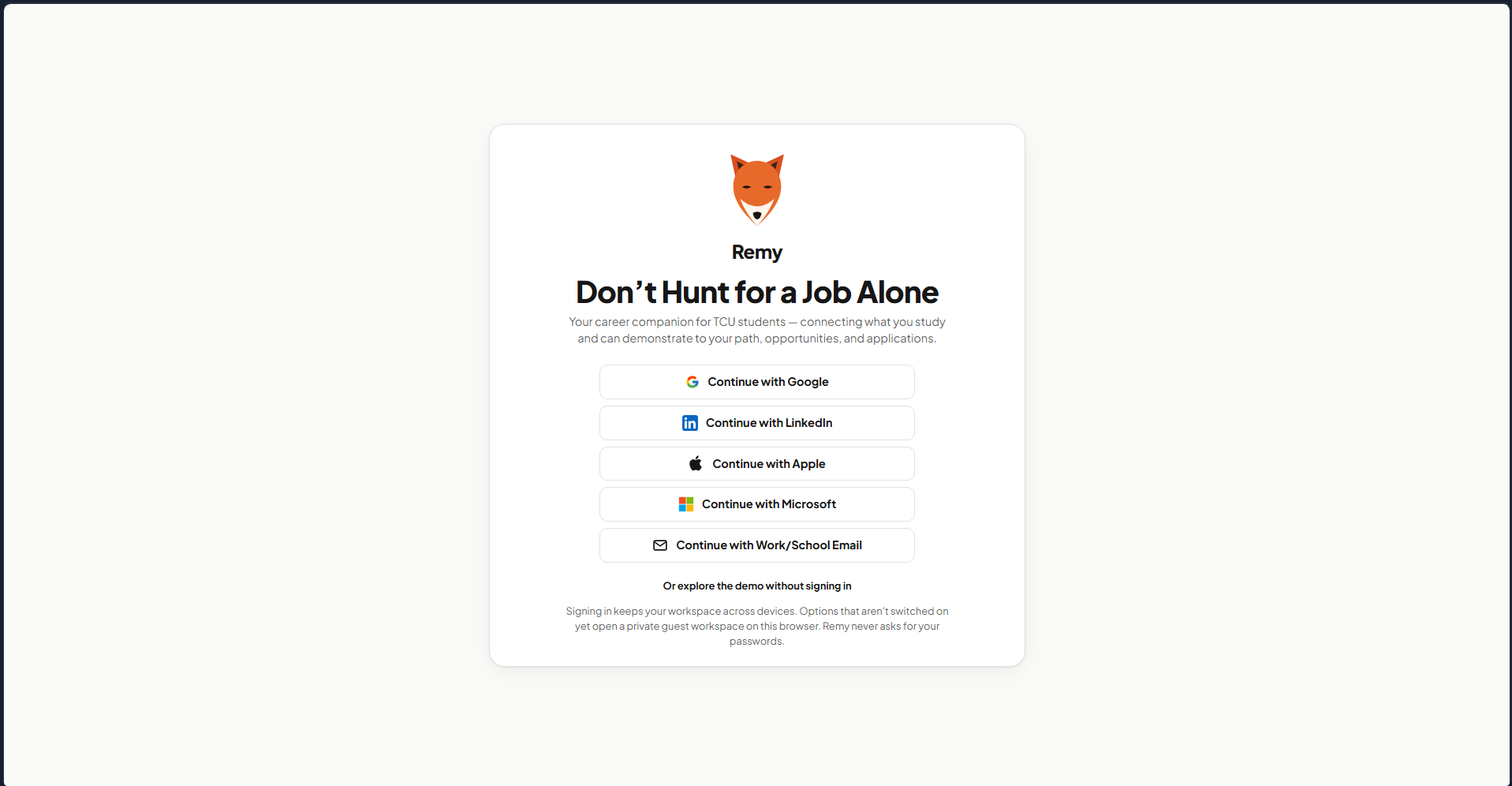
Login Page
-
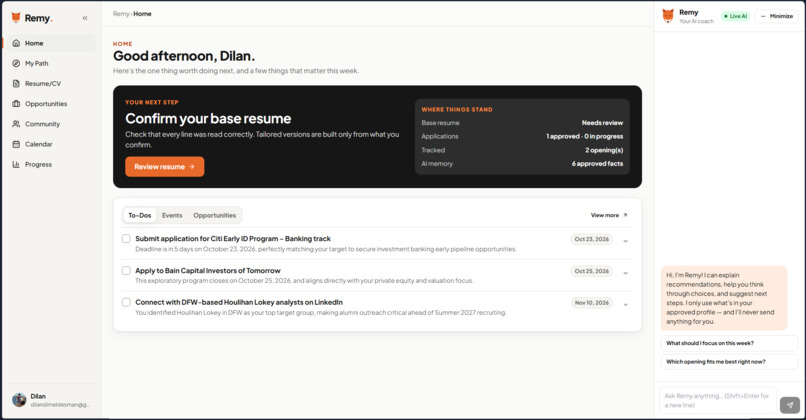
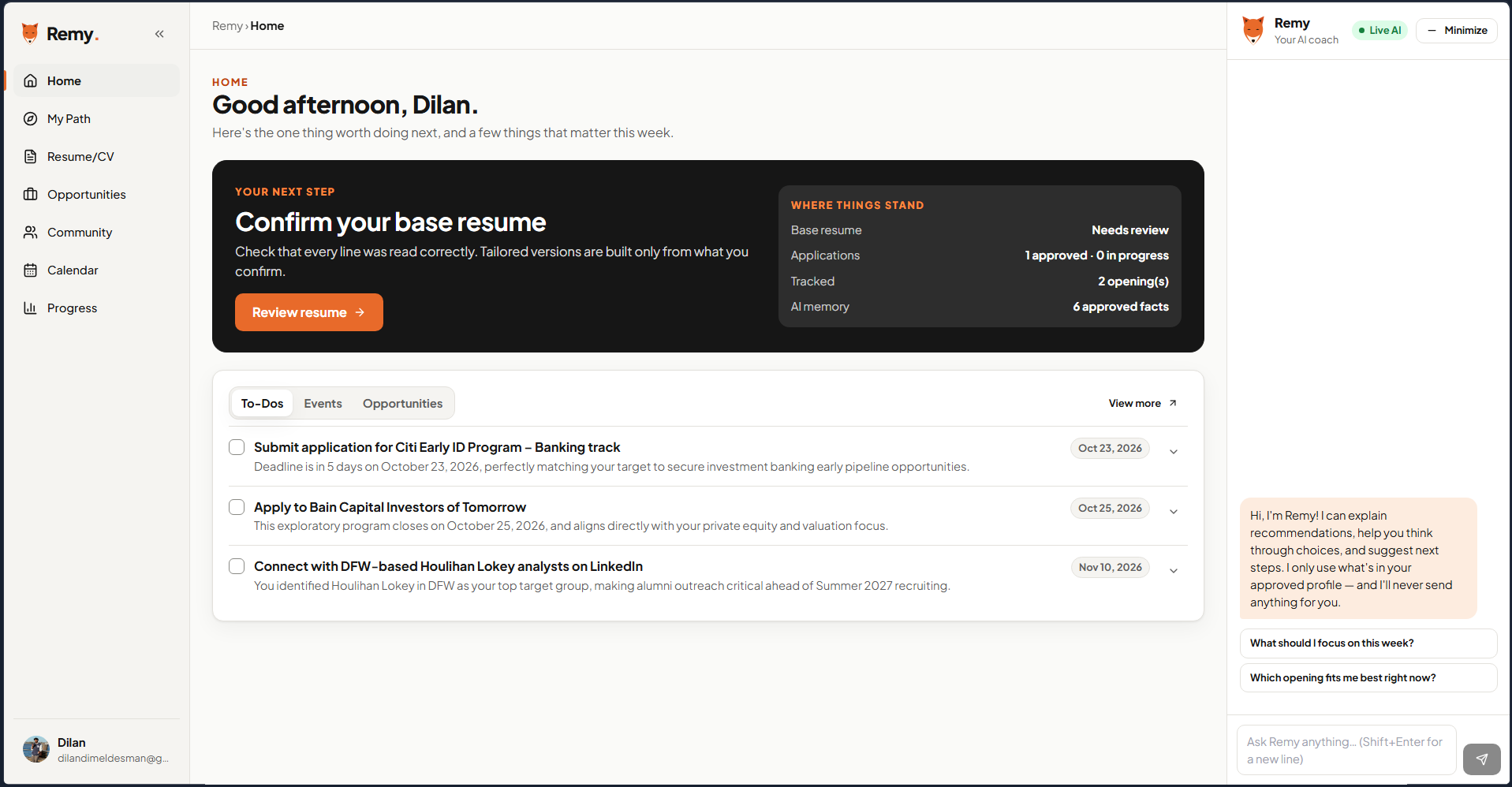
Homepage
-
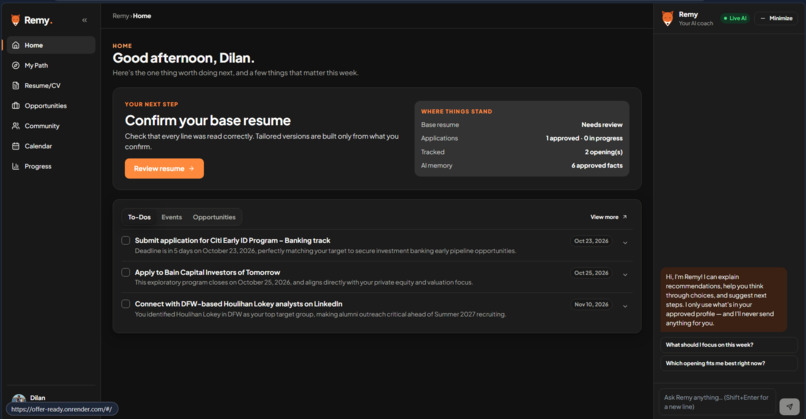
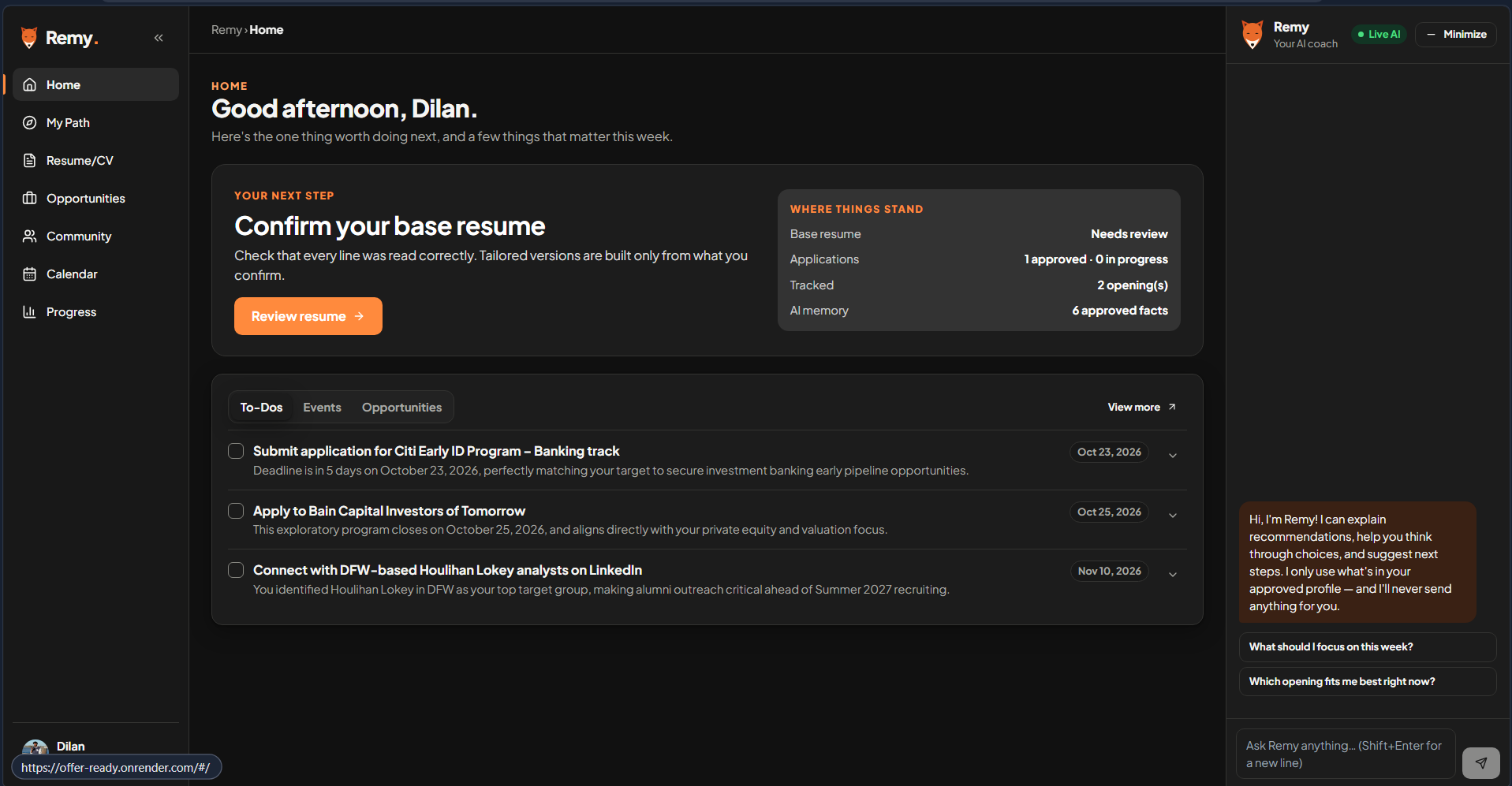
Homepage (Dark)
-
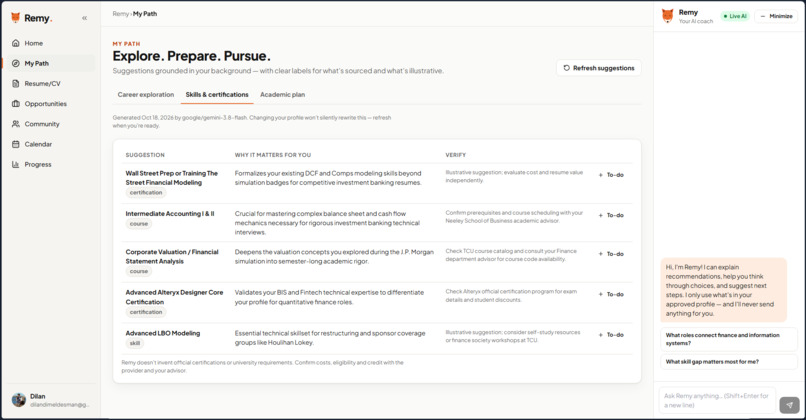
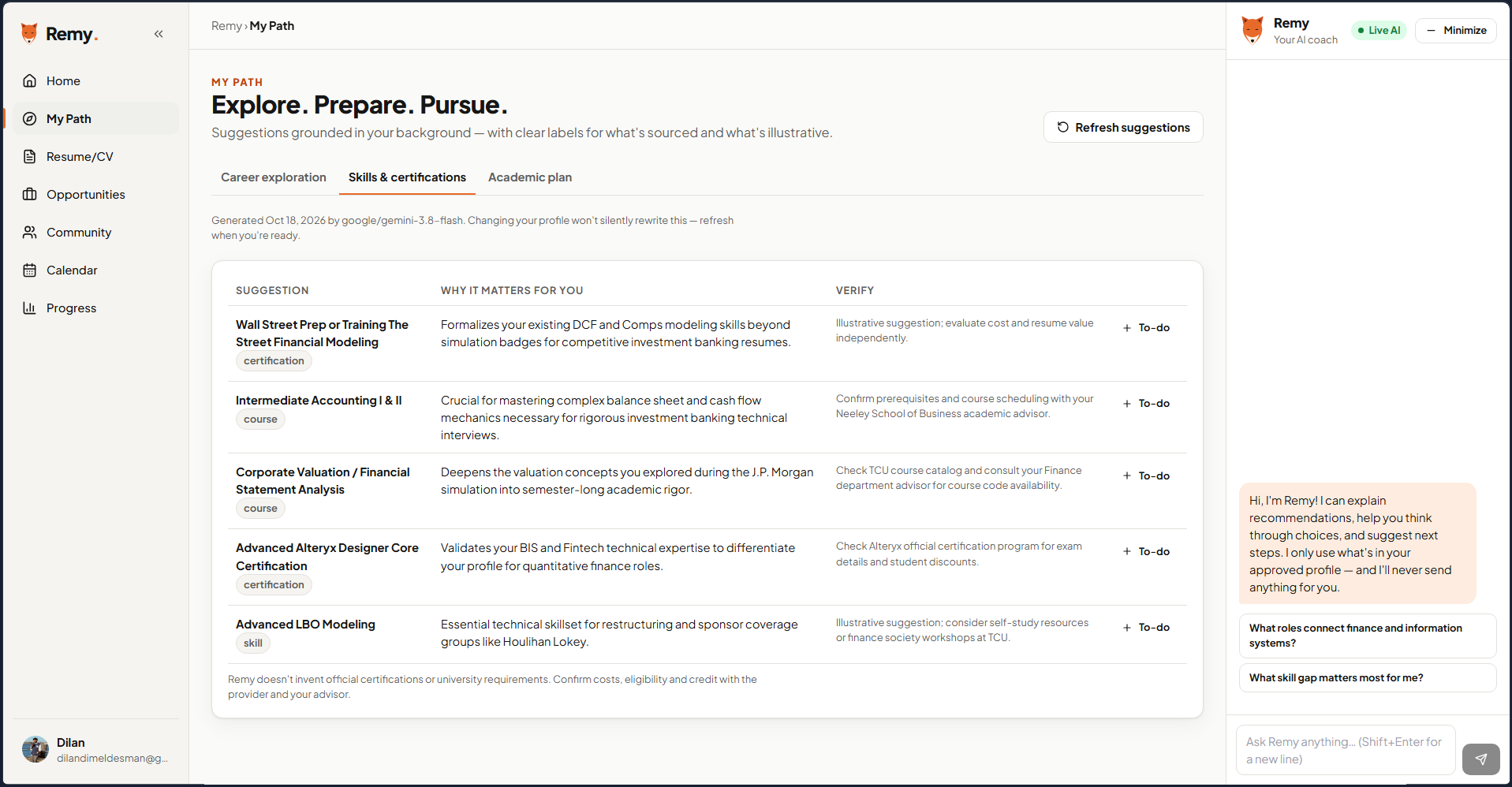
My Path
-
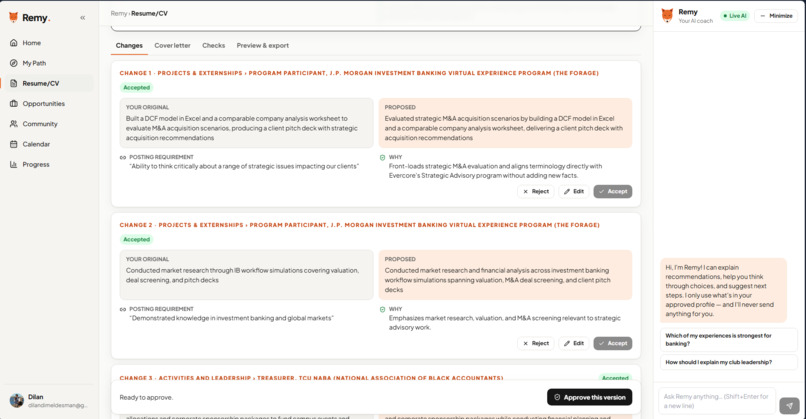
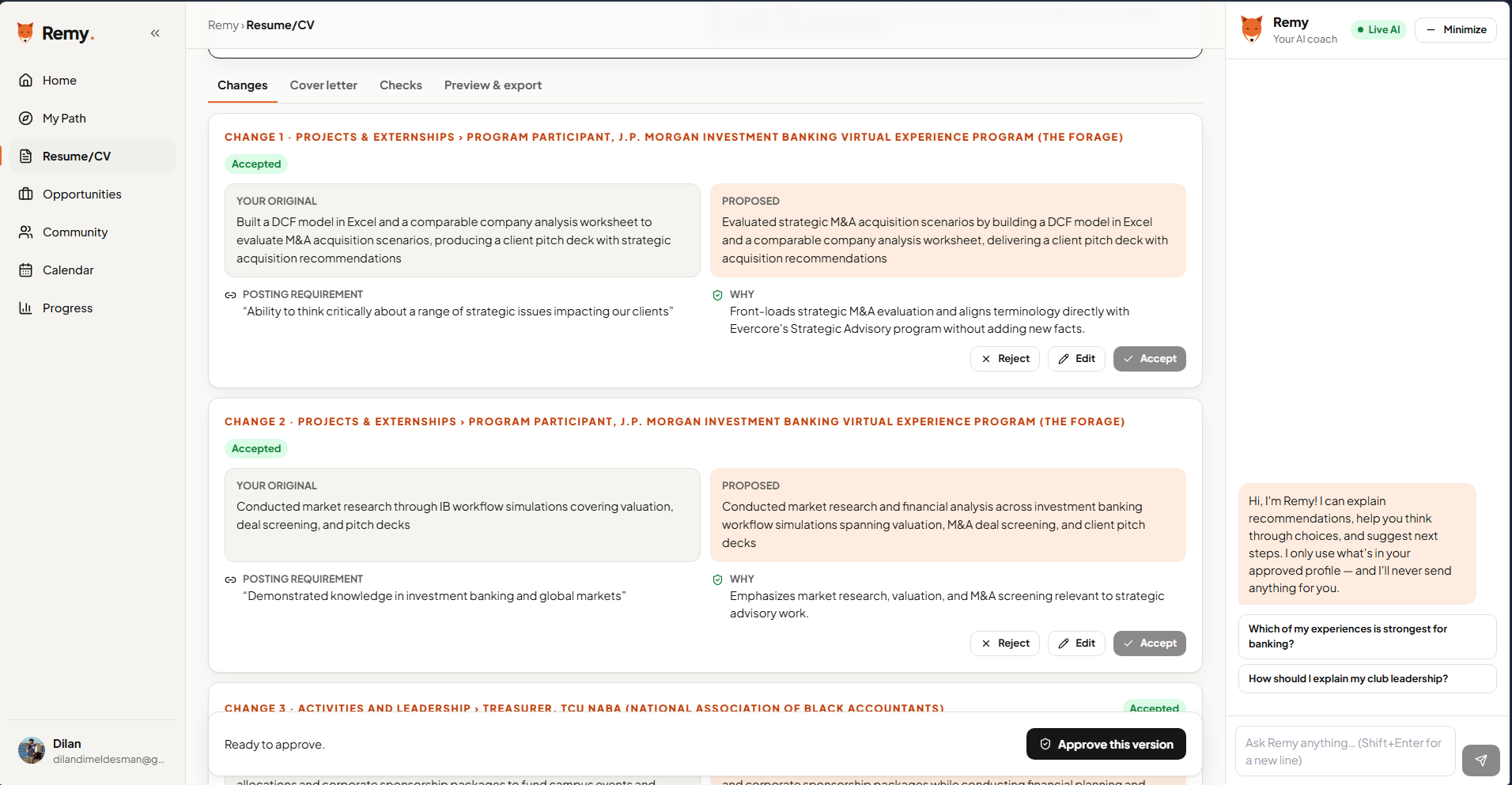
Resume/CV/Cover Letter
-
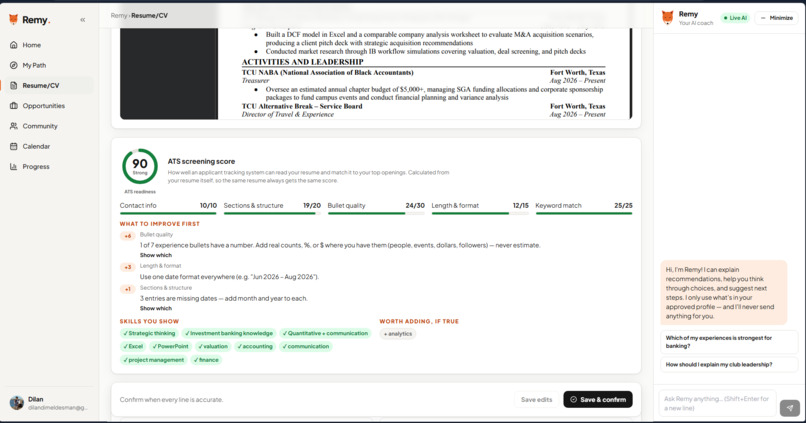
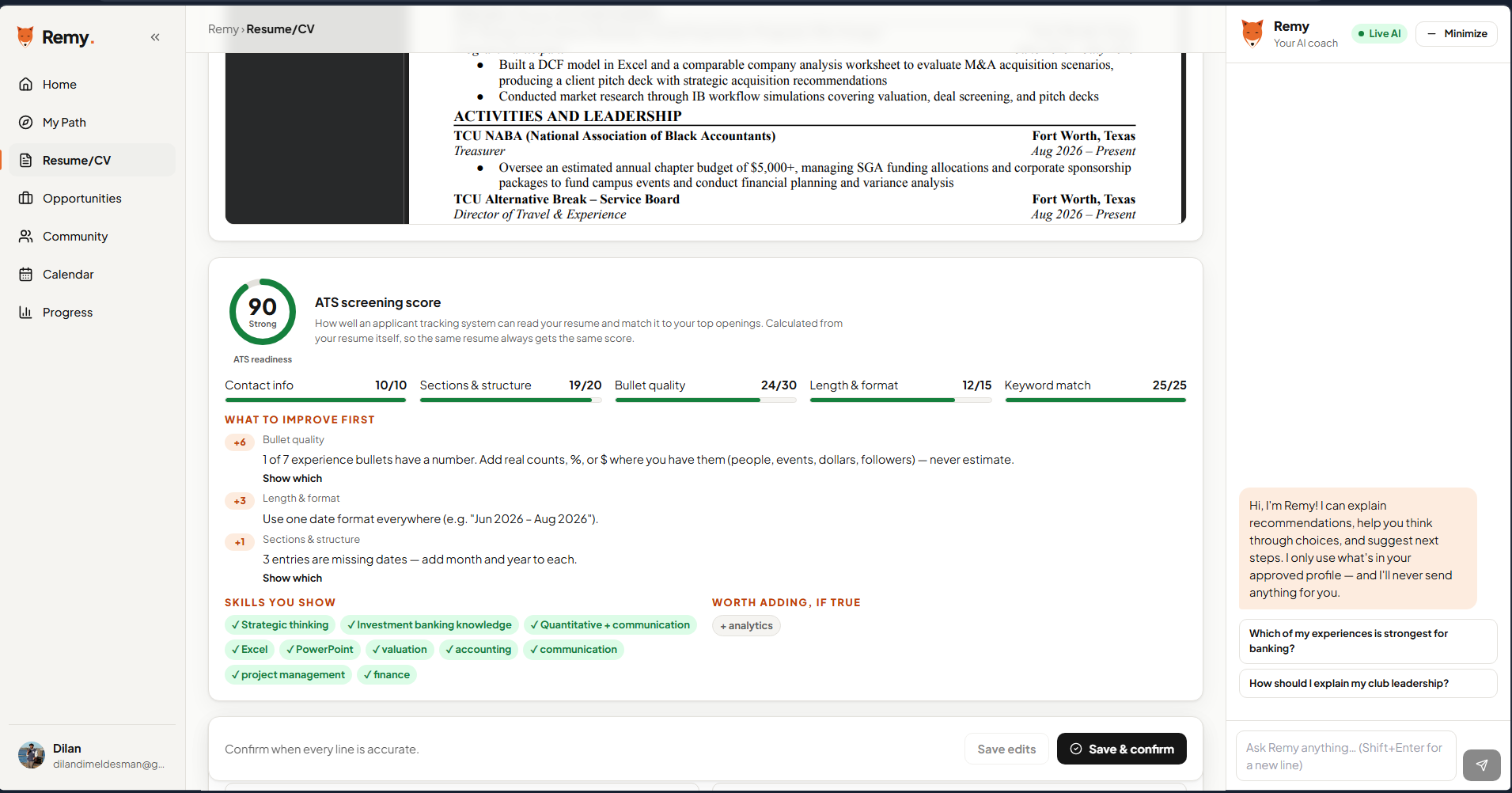
ATS Screening
-
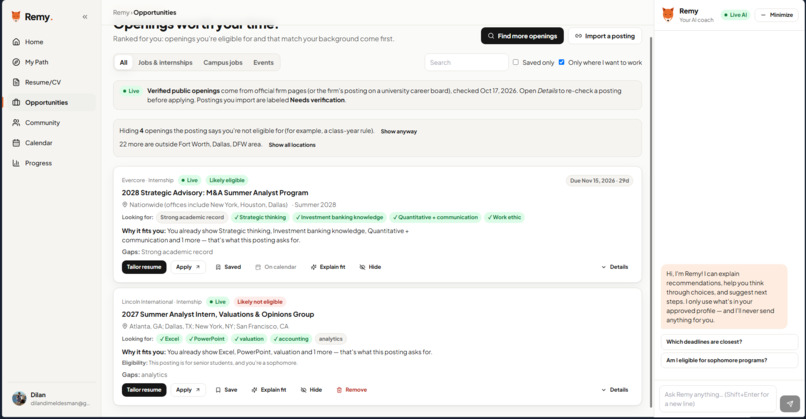
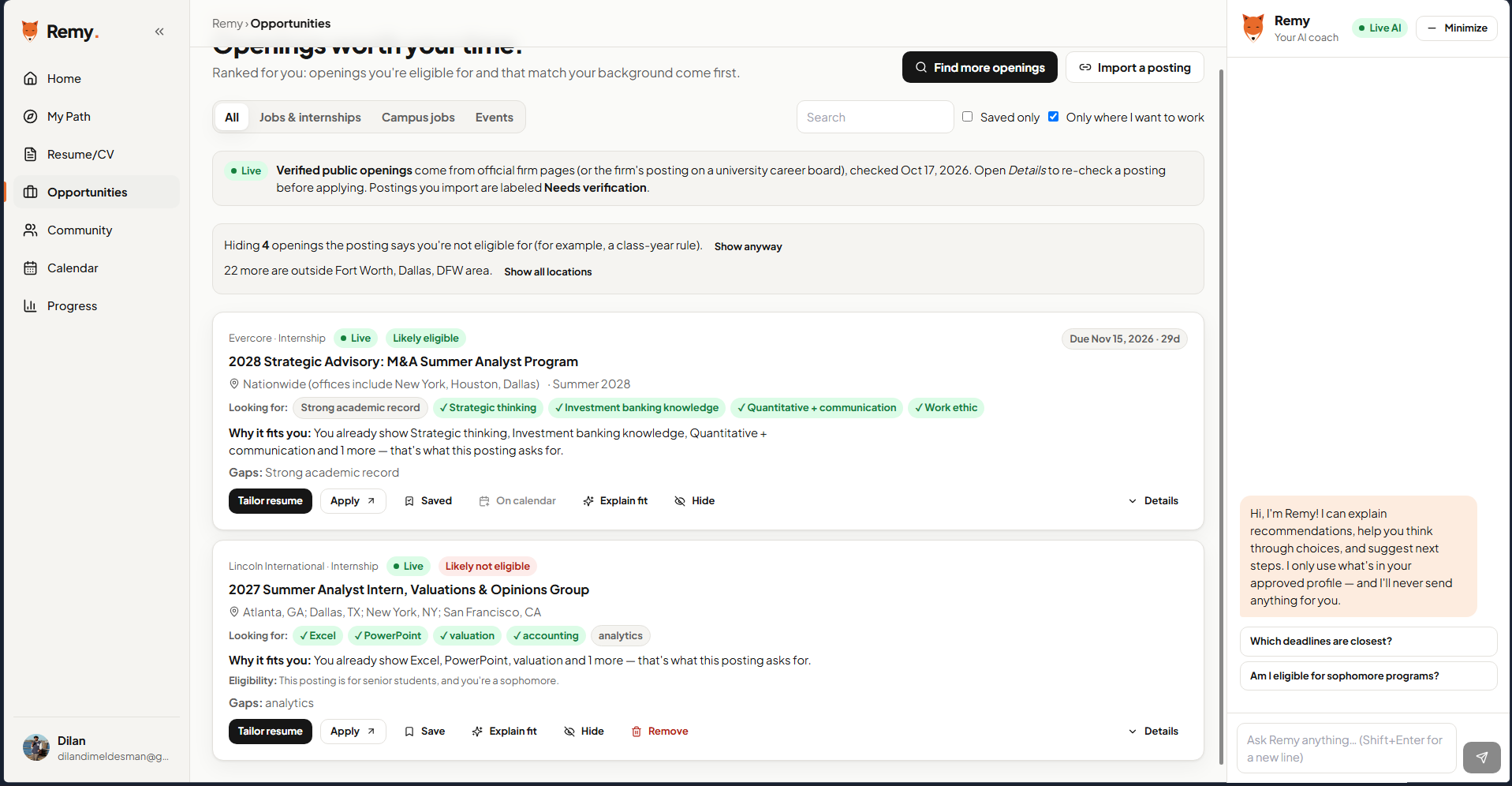
Opportunities
-
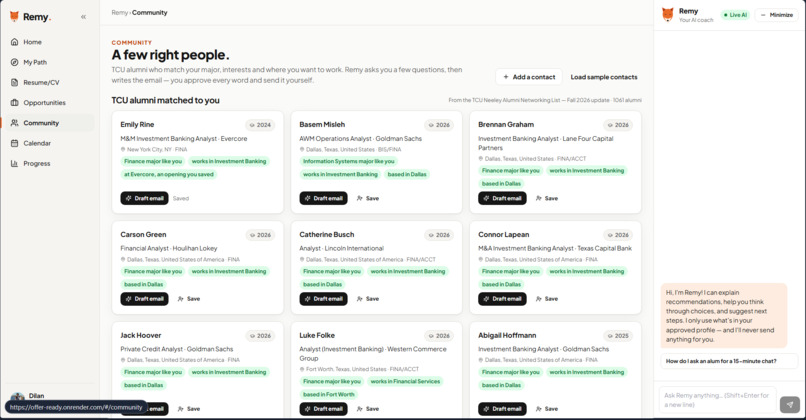
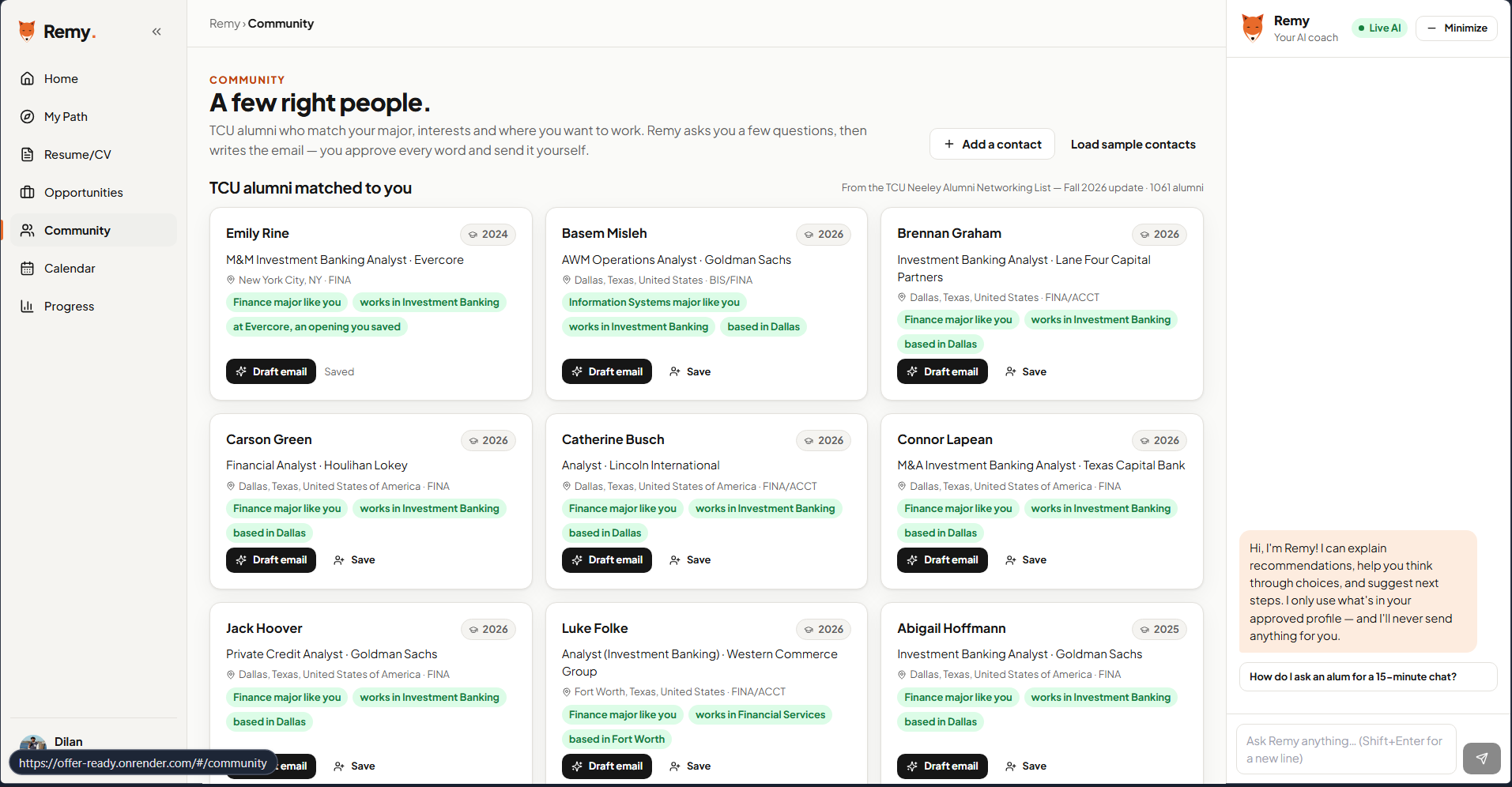
Community
-
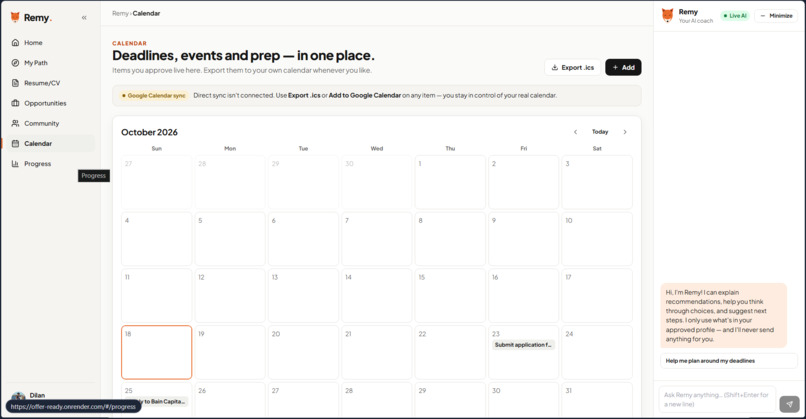
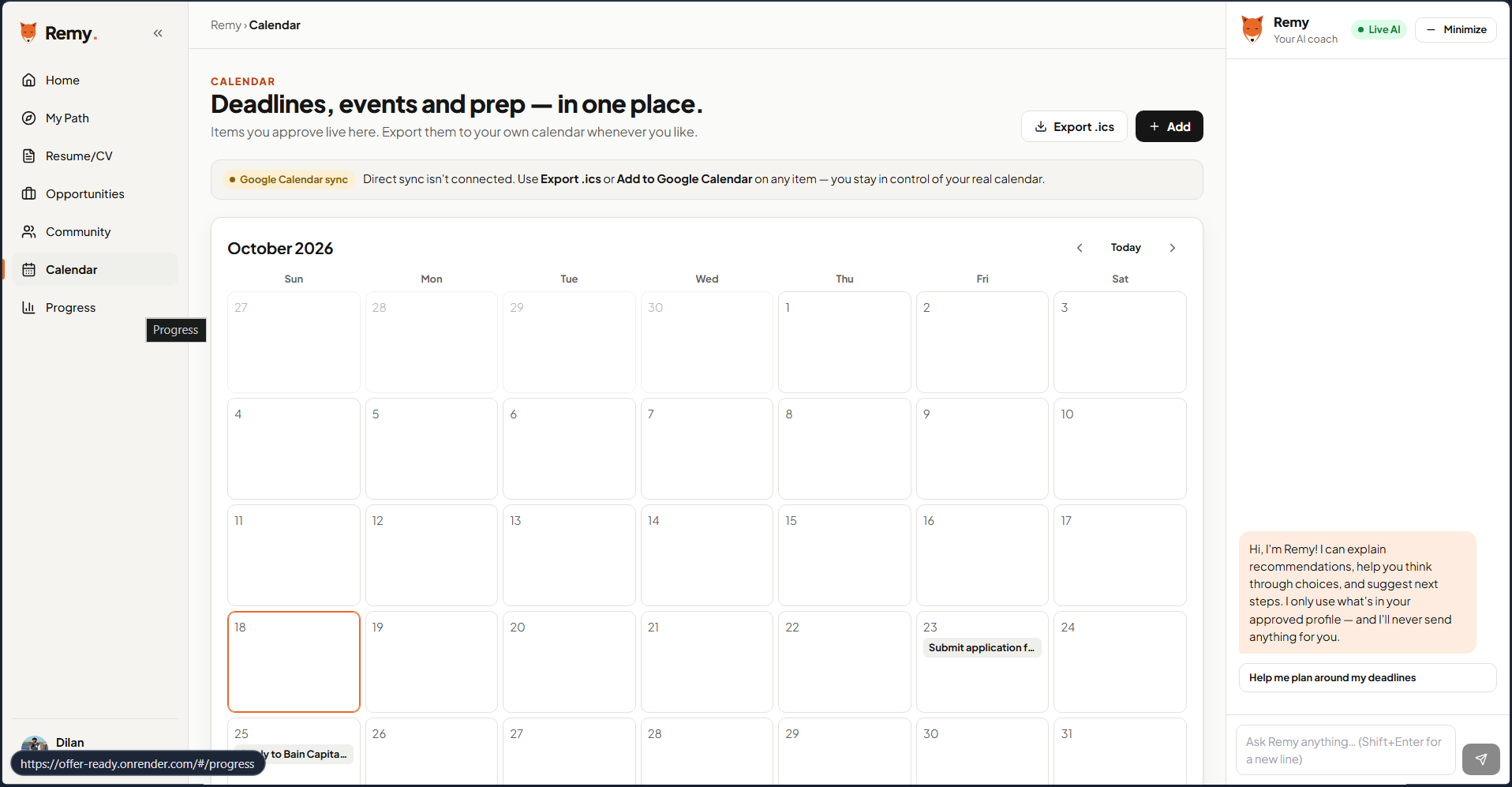
Calendar
-
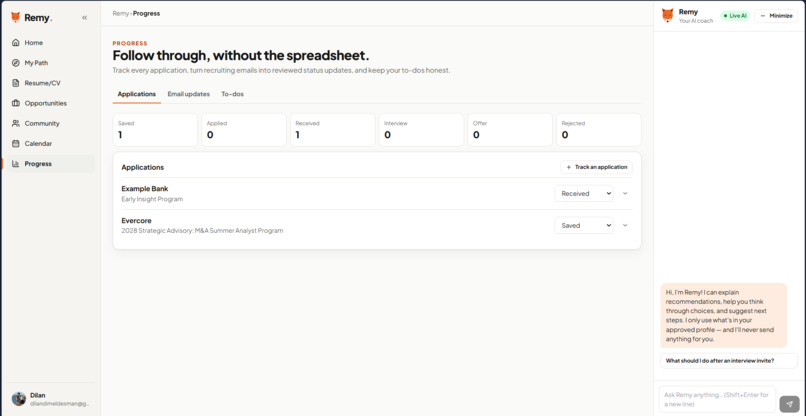
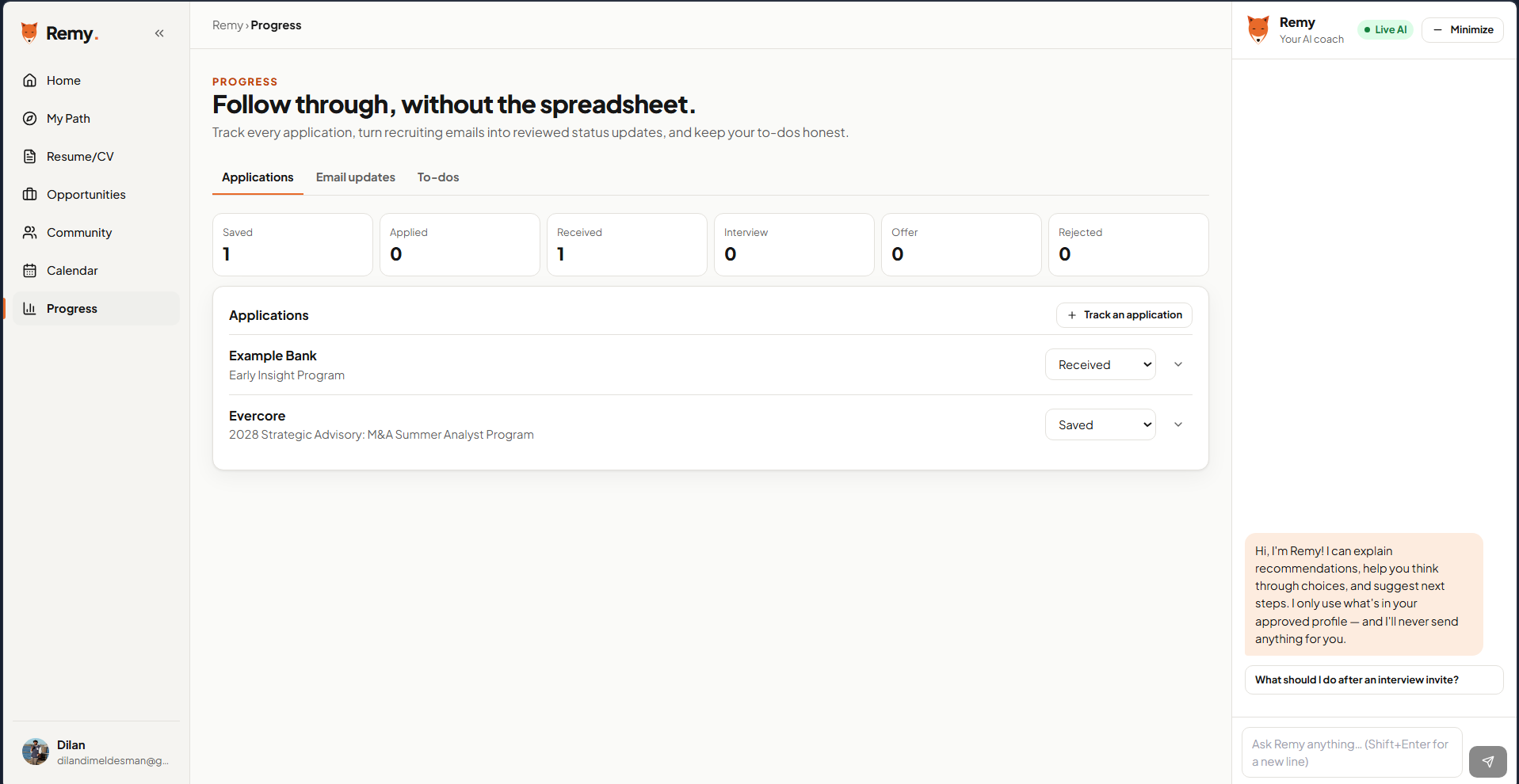
Progress
-
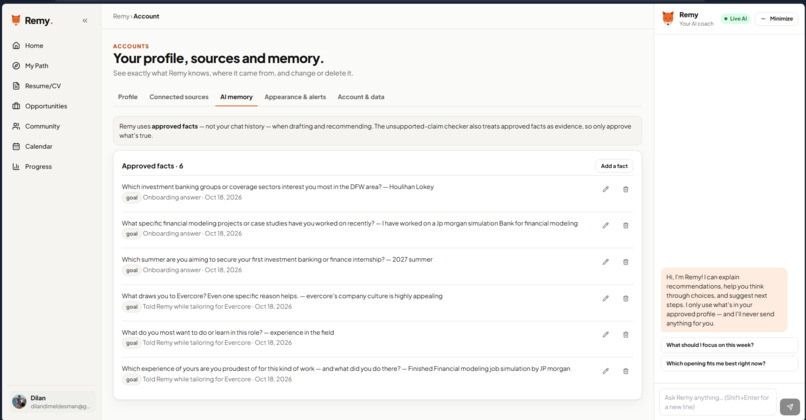
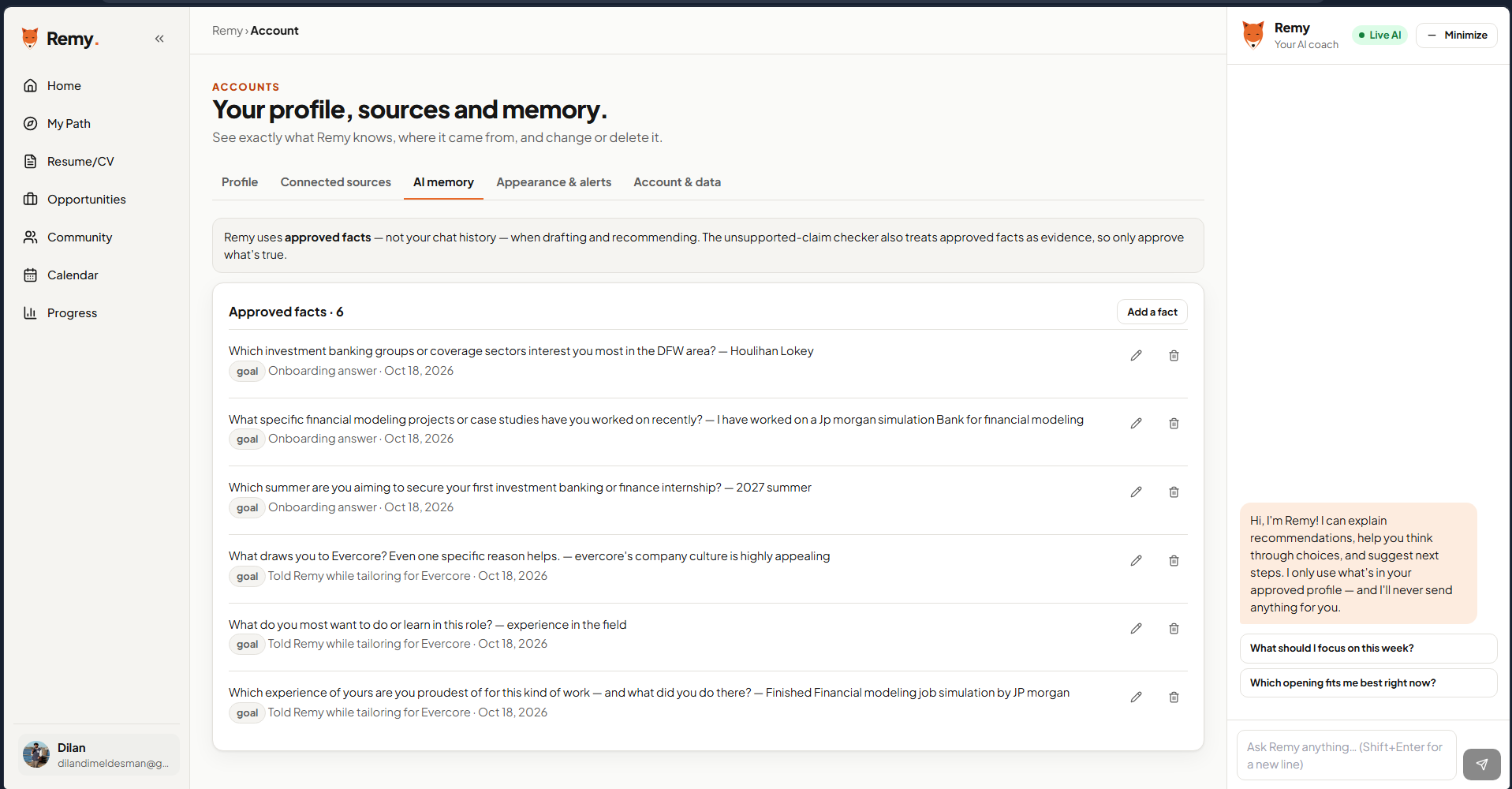
Memory
-
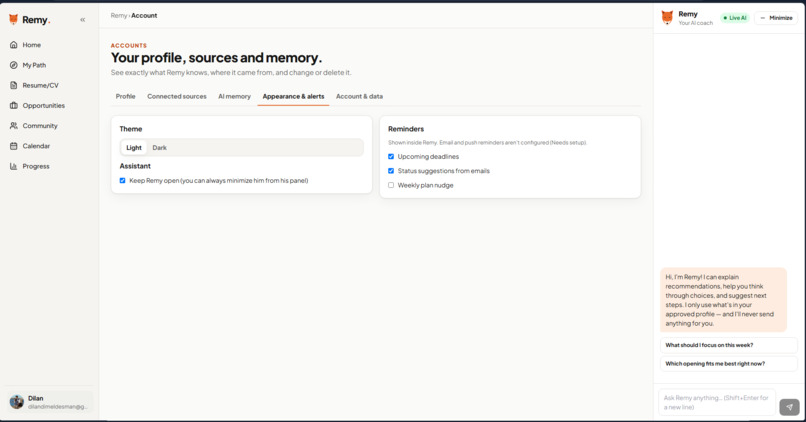
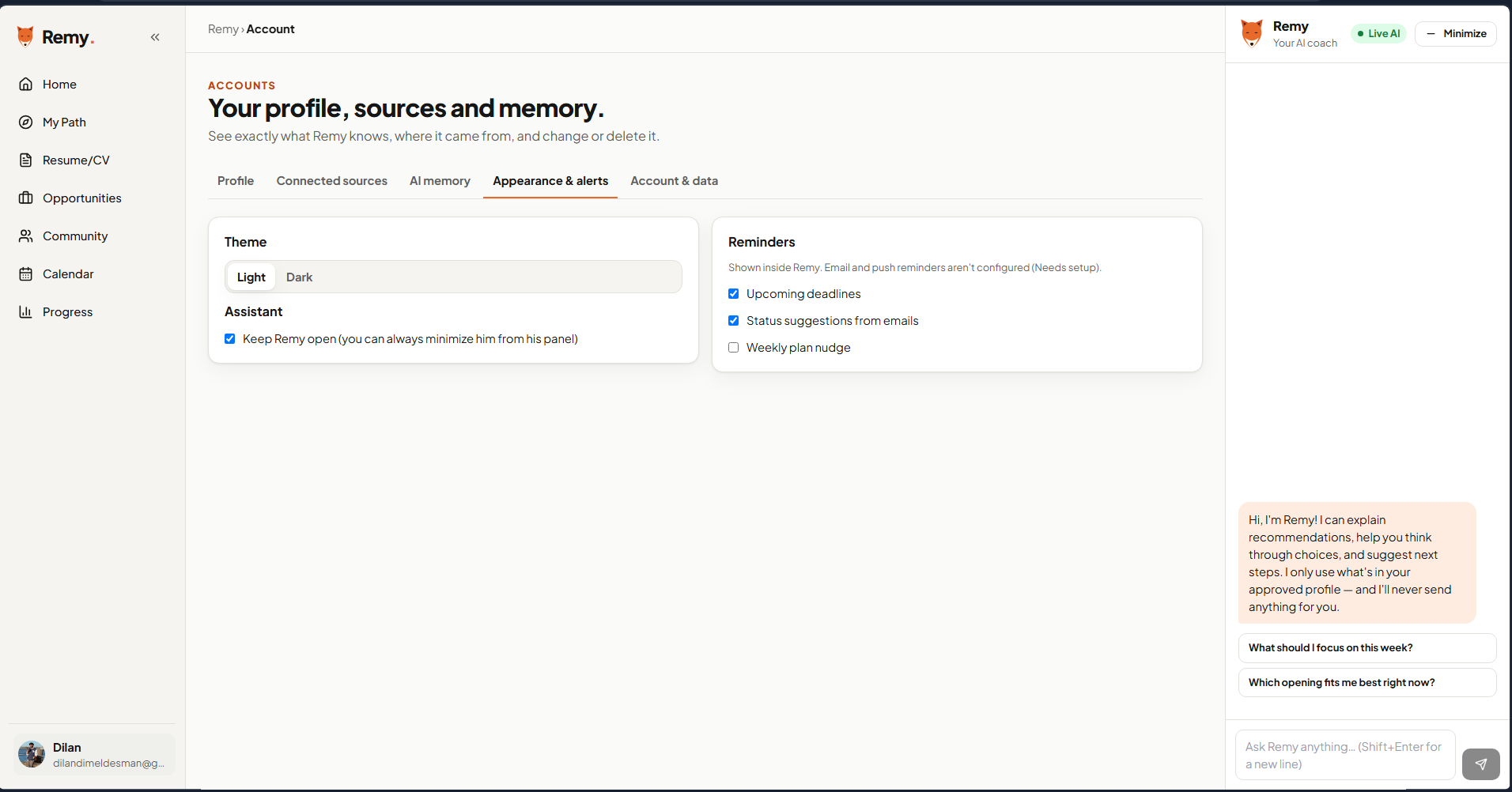
Extra Settings
Inspiration
We're TCU students, and we lived this problem. Job searching meant 47 tabs, a dozen job boards, one generic resume, and zero replies. Internships get posted late, networking events are buried on LinkedIn, and our Handshake inboxes fill up with alerts for jobs that have nothing to do with our majors. Nothing helped us honestly tailor a resume to each new opening, tracking everything during a busy semester was a job of its own, and reaching professionals in our field felt impossible. Career Services helps, but there are only so many appointment slots.
So we built the coach we wished we had. Our motto: Don't Hunt for a Job Alone.
Mission: Help TCU students turn their individual background, academic journey, and interests into informed career decisions and practical next steps through connected information, authentic AI guidance, and human support.
What it does
Remy is a personal AI career coach for TCU students:
- Asks before it acts. Remy learns your goals first ("Finance internship in Dallas, summer 2027"), then reads your resume.
- Finds real, open roles from public company career pages, filters out roles you're not eligible for, pulls 3–5 key requirements from each posting, and shows your Strongest Match: the experience of yours that best fits.
- Tailors your resume for each position. Remy asks you a few questions, then rewrites your real experience in your words. Every change maps to a line in the posting, and you accept or reject each one.
- Writes a custom cover letter for each job. Not a template with the company name swapped in, but your own story tied to what that company asks for.
- Flags what only you can add. If a detail is missing, Remy asks you instead of making it up.
- Checks for unsupported claims. Every draft is compared against your resume for invented numbers, skills, titles, or outcomes.
- Scores your resume for ATS readiness, with a category breakdown that explains exactly why the score moved.
- Connects you with TCU alumni in your field (visible only to signed-in students) and helps you draft a first email and LinkedIn note.
- Keeps you organized with an application tracker, calendar, checklist, and deadlines in one place.
How we built it
- Frontend: React + Vite + Tailwind, in a black/orange/white design system with Remy the fox as the guide.
- Backend: Node/Express with SQLite for persistence, deployed on Render.
- Auth: Supabase sign-in.
- AI: A multi-provider chain through OpenRouter, with fallback between models so the app keeps working if one provider is down.
- Safety layer: A deterministic unsupported-claim checker runs on every AI output, outside the model, so the AI never grades its own work.
- Reusable AI build: The same workflow, with no code changes, was pointed at three different real postings (Evercore M&A, Deutsche Bank Develop IB, and Insight Partners) and produced a tailored resume and cover letter for each. Those three pairs, with before/after change logs, are in our evidence folder.
- Promo video: Built in code with Remotion, with an ElevenLabs voiceover and an original music track.
Challenges we ran into
- The AI was confidently wrong, and our checker didn't always catch it. In one run, a cover letter described a work-study job as "a fast-paced office"; the resume never said that. Our checker missed it and we caught it in human review. We turned that miss into a new automatic check for workload descriptors. In another run, 3 of 6 resume rewrites added detail that wasn't in that resume entry, so we built an entry-level scope check that only counts the student's own bullets as evidence, never the posting.
- False positives. The checker flagged "10-week program" as an invented number when it came straight from the posting, and flagged "expanding access" as the skill "Microsoft Access." We tuned the rules so cover letters can cite figures that appear verbatim in the posting, while resume bullets stay strict.
- Personalization without placeholders. Early drafts left "[PERSONALIZE]" gaps. We replaced them with Remy asking the student short questions in chat and weaving the answers in.
- Privacy. The alumni directory is personal data, so we gated it behind sign-in and used only sample data in public demos.
Accomplishments that we're proud of
- A live, working app, not a mockup.
- Three real tailored resume and cover-letter pairs, where every change is traced to a posting requirement and approved by the student.
- A feedback loop that makes Remy better: every mistake we found in review became a new automatic check, documented in our AI log.
- An honest product. Features that aren't built yet are labeled "coming soon," and the AI asks instead of inventing.
What we learned
- AI is a strong writer but an unreliable witness. A deterministic checker narrows the risk, but it doesn't replace the student's line-by-line review. That's why Remy requires an explicit Accept on every change.
- Asking students two or three good questions produces far better, more authentic materials than any template.
- Students don't need another job board. They need one place that connects their background to the right openings and tells them what to do next.
What's next for Remy - Job Search Case
- Academic roadmap: connecting degree plans (Stellic) to career goals.
- Advisor meetings: turning advising notes into follow-up tasks.
- Interview prep tailored to each saved role.
- Smart notifications: only relevant openings and deadlines, not spam.
- Clubs & certifications recommended by career path.
- Direct connections to LinkedIn, Handshake, and TCU accounts (currently labeled "coming soon").
Vision: Every student can understand their options, make purposeful use of their time at TCU, and adapt their path as their interests and opportunities change.


Log in or sign up for Devpost to join the conversation.