Inspiration
When the team first came together, they bonded over a shared vision: making physical therapy accessible, empowering, and engaging. Inspired by Ned's personal experience recovering from her first MS attack, which left her left hand paralyzed, she understood how isolating traditional therapy could feel. ReMotion VR combines peace, colors, and music to create a space where rehabilitation is effective and enjoyable, rather than monotonous or isolating. With studies showing that immersive therapy increases adherence by 85%, the team knew this approach could make a real difference.
What It Does
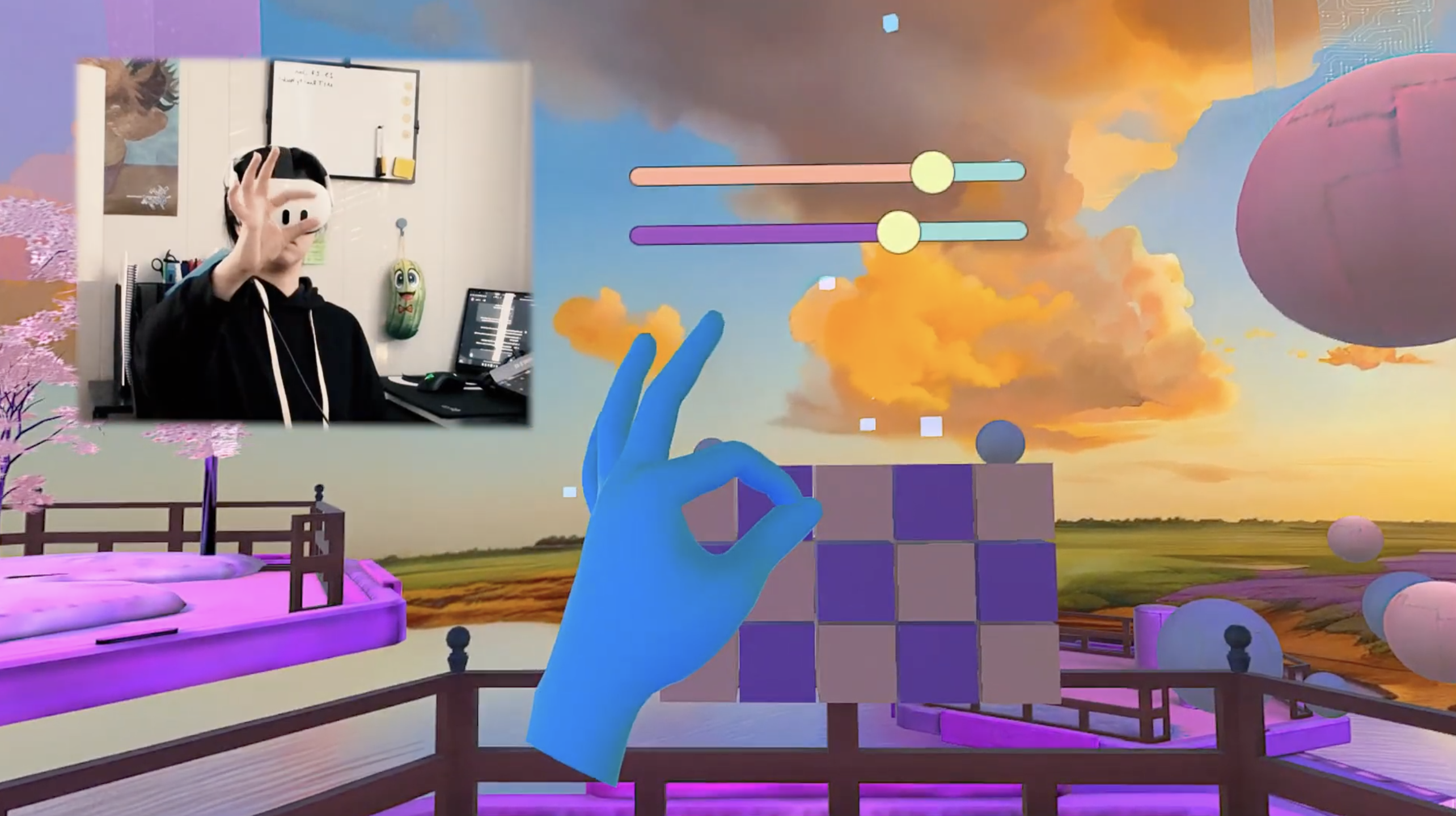
ReMotion VR uses VR hand-tracking to enable therapeutic exercises.
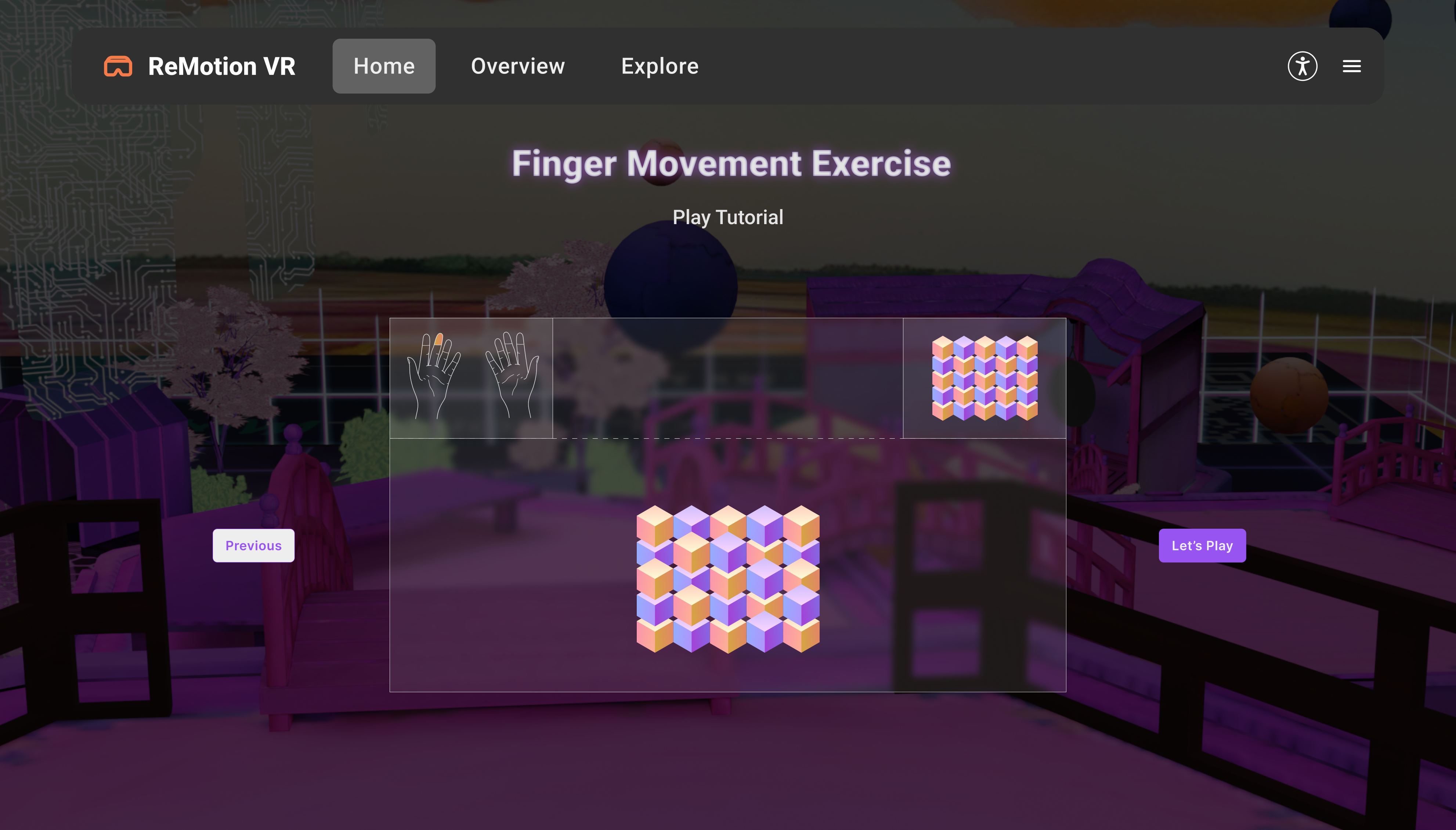
- Beginner Level: Index and middle finger pinching exercises trigger peach and purple cubes, progressing through an interactive UI slider that tracks performance.
- Future Levels: Introduce advanced gestures, patterns, and rewards to sustain engagement.
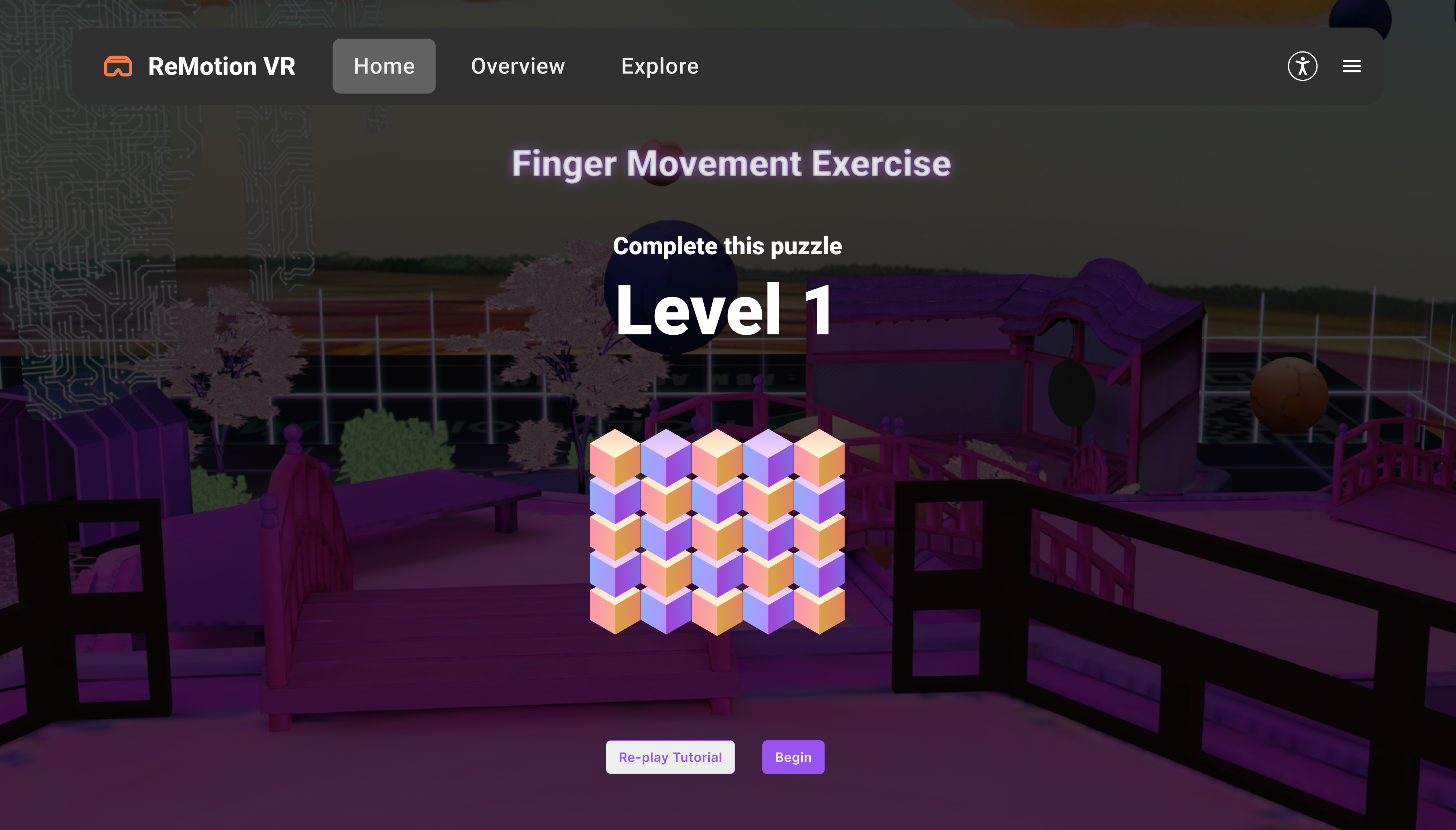
The intuitive onboarding UI demonstrates how users transition between levels, creating a cohesive and motivating progression system that improves motor skills and coordination.
How We Built It
Design Process
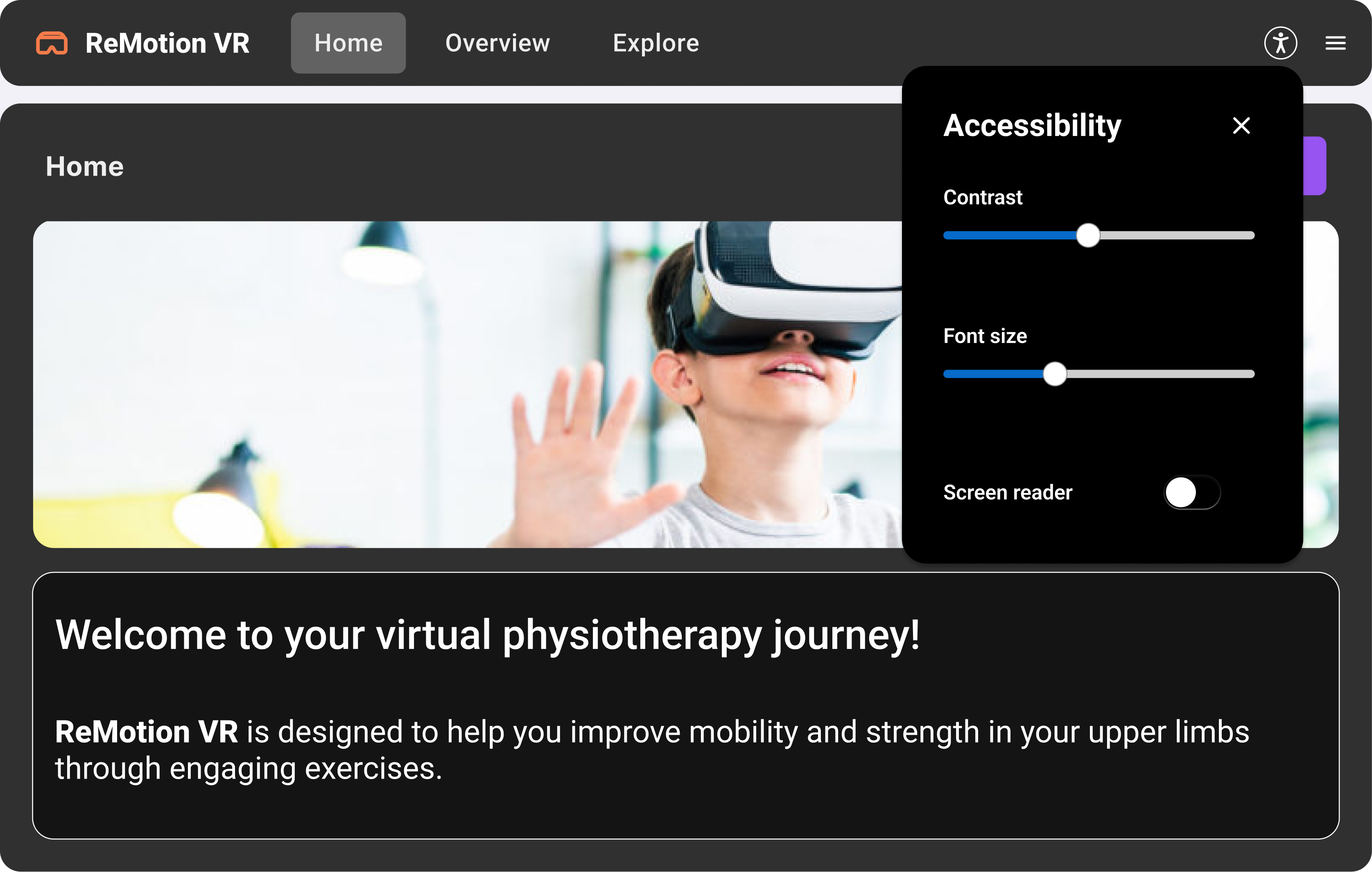
The UX/UI was meticulously designed in Figma, ensuring accessibility for a diverse range of users. These designs were prototyped in ShapesXR, enabling us to test interactions in a spatial environment.
Development Process
Core gameplay mechanics were built in Unity, leveraging:
- Oculus SDK: For precise hand-tracking.
- Procedural Audio: For interactive sound feedback.
- Meta Quest 3: As the testing and development platform to ensure a seamless user experience.
Tools & Technologies
- Unity: Development platform.
- Oculus SDK: Hand-tracking integration.
- Procedural Audio: Sensory feedback.
- Figma & ShapesXR: UI and prototyping.
- Meta Quest 3: Testing hardware.
Challenges
- Specific Finger Detection: Required multiple iterations for precision.
- Gesture-Pattern Integration: Balancing fluidity with engaging cube arrangements.
- Team Dynamics: Bridging design and development workflows.
Accomplishments
- Successfully built a beginner-level exercise showcasing accurate finger-tracking and a rewarding progression system.
- Seamlessly blended therapeutic aesthetics with gamified elements.
- Created an engaging, immersive environment that users can navigate effortlessly.
What We Learned
- Accurate gesture detection is critical for effective VR therapy games.
- Clear, user-friendly UI design simplifies gameplay and objectives.
- Collaboration between coding and design drives immersive VR applications.
Future Plans
- Expand exercises and gestures for broader therapeutic applications.
- Explore Mirror Therapy for bilateral motor rehabilitation.
- Test the prototype with individuals with physical impairments to refine usability and validate therapeutic benefits.
- Develop more complex cube arrangements tied to varying gesture sequences.
- Build the system into a fully testable app for research publication or commercialization.
Acknowledgments
A heartfelt thanks to the hackathon organizers, mentors, and teammates for their support and collaboration. ReMotion VR was inspired by personal experiences and driven by a passion for creating accessible and effective physical therapy solutions.


Log in or sign up for Devpost to join the conversation.