-
-
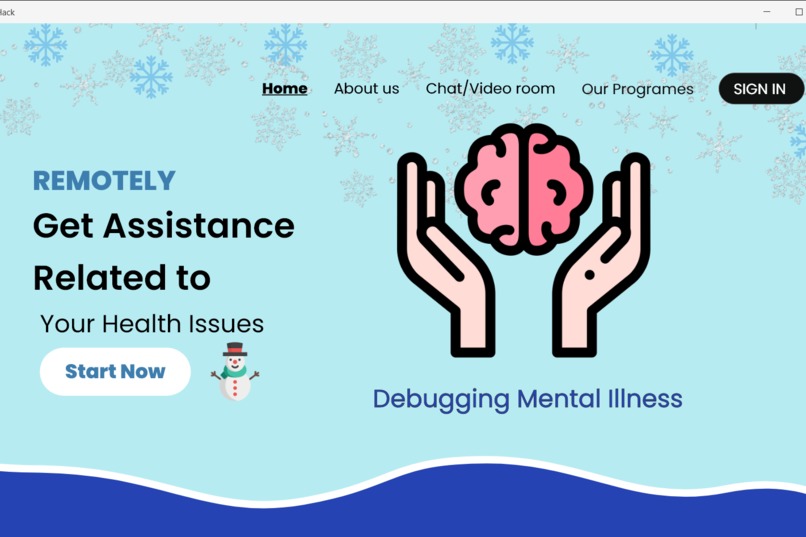
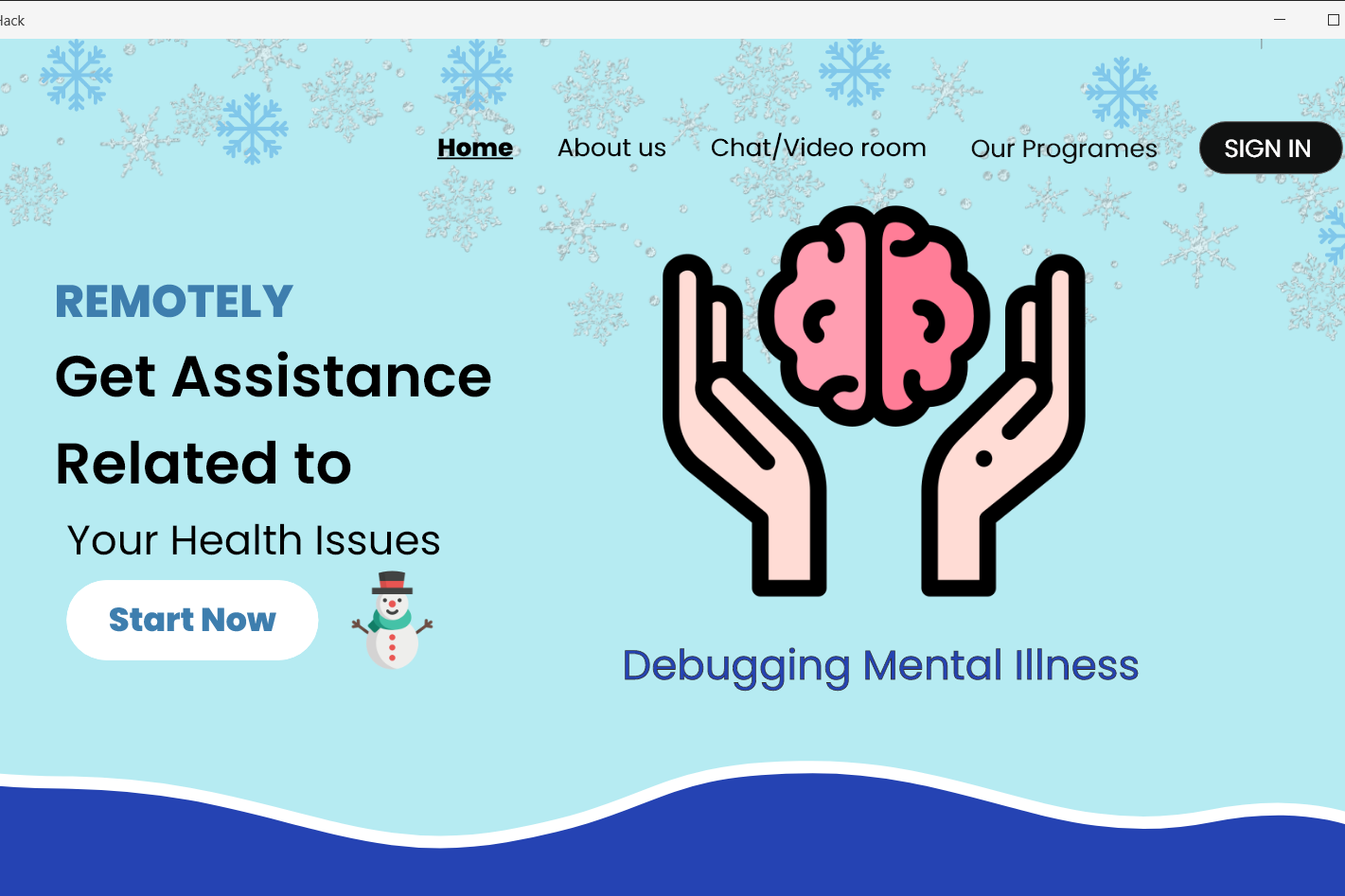
Our main page for Debugging Mental Illness
Inspiration
Due to the recent increase in mental illness/drug patients because of Covid 19, demand for mental health/drug assistance programs has been increasing. Just in Canada, a study conducted by CAMH (Center of Addiction and Mental Health) found out that 50% of Canadians experienced worsening mental health and 23% on the average increase in alcohol consumption since the lockdown began. In addition to that, the problem of not being able to go to the clinics really limited the places these people could go for therapy. This situation inspired us to create a special program for mental illness/drug patients to communicate and get therapy on a virtual platform.
What it does
Debugging Mental Illness is a platform where people who are diagnosed with mental health illness or have drug addiction can meet each other to make each individual feel less alone about their situation. Debugging Mental illness generates several groups in chat/video rooms with experts and mental health illness people, to provide them with online activities and "lessons" on the topic of drugs and addiction from which experts can help educate people with mental health issues to help cope with their situation by keeping them connected, accepting and helping them make right choices.
How we built it
We started out discussing different technology techniques and the programming languages to perform for our project. Then we divided into groups of two: web design and programming. We built a program using Python and Flask great for creating groups with filters. Git and Github were used to enable collaboration for programming as well. Two of our team members performed a UX/UI designer job to design a user-friendly webpage which basically prototypes our project’s content using Adobe XD tool since it was powerful in terms of creating a prototype within the program. After looking around the web for inspiration we finally came up with the web design and the code for group generating with filters. We also built a chat moderator using python that auto-detects cyberbullying cases or abusive language.
Challenges we ran into
- At the beginning of the hackathon, our team struggled to decide on ideas for the project until it was between combating drug addiction and creating a group creator project. In the end, we decided "Hey, why not incorporate both?" so that's exactly what we did. Upon further research, we found out that loneliness and isolation can strengthen and lead to addiction and mental illness. This is why we aim to eliminate loneliness and isolation with our project.
- Another problem we faced was how we were going to create a functional website with the programming language Python. Then we decided to use Flask to combat our problem. Learning how to use Flask with Python, HTML, and CSS was a challenge to learn at first as we had little to no experience at web creation. Eventually, we got the base of the website to work.
- We struggled to get Git and Github to work properly. After many attempts, we got it to work and coded our program.
- We struggled to make a working prototype of the group sorting system. In the end, we made the program possible to enter names, their health issues, and their hobbies, and save it in a data storage.
Accomplishments that we're proud of
We’re proud of ourselves that we built a platform for people who need to connect and we accomplished our goal of making a little impact on some lives by making a system to generate mental illness or drug addiction people in groups with providing filters ( therapy, meditate, lessons, activities). We are glad that we have solved two problems; debugging mental illness and solving cyberbullying issues by building a chat moderator. We're so happy that we pulled through this hackathon within 48 hours and worked together effectively even though we have never met each other. At first, we thought we wouldn't be able to finish it in time. However, we came together and split the work effectively so that we could finish our project with precision and on time.
What we learned
We learned how to use Flask, HTML, CSS to build a complicated grouping program with filters. We also learned how to use Git and Github in order to collaborate and edit code. Not only were there accomplishments in the programming field but in the designing field, we got to learn Adobe XD and used it to perform high-end UI design. When we reflect on the Hackathon, nothing was more valuable than the experience and know-how we gained.
What's next for Debugging Mental Illness
Moving forward Debugging Mental Illness (DMI) is going to expand in two fields, accessibility, and usability. DMI will become an app so that more people can access it in an easier and faster way with additional features. For example, our group generator feature can be for projects and can work in schools when teachers have a hard time making groups. This way everyone can have an advantage of using DMI for multiple tasks. In addition to making it more portable, we are planning to make offline courses, so pre-recorded or offline worksheets for individuals. This will allow the user to interact with DMI whenever, and wherever they are.


Log in or sign up for Devpost to join the conversation.