Inspiration
In my hostel, one common-room TV means a nightly argument about what to watch. At home it's the same: grandparents, parents and kids all want different things, often in different languages. Recommendation apps assume one viewer. Real living rooms have many.
What it does
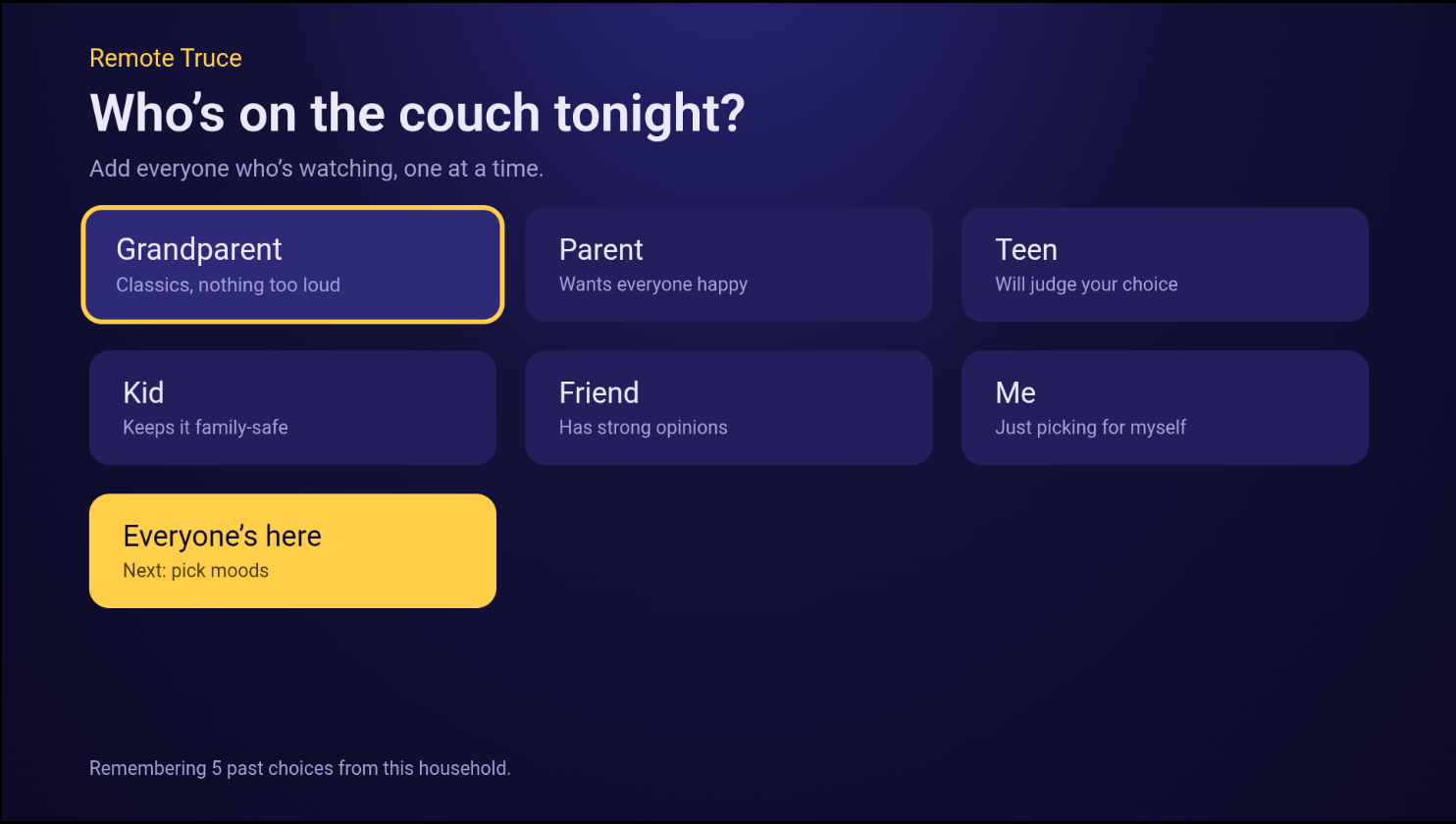
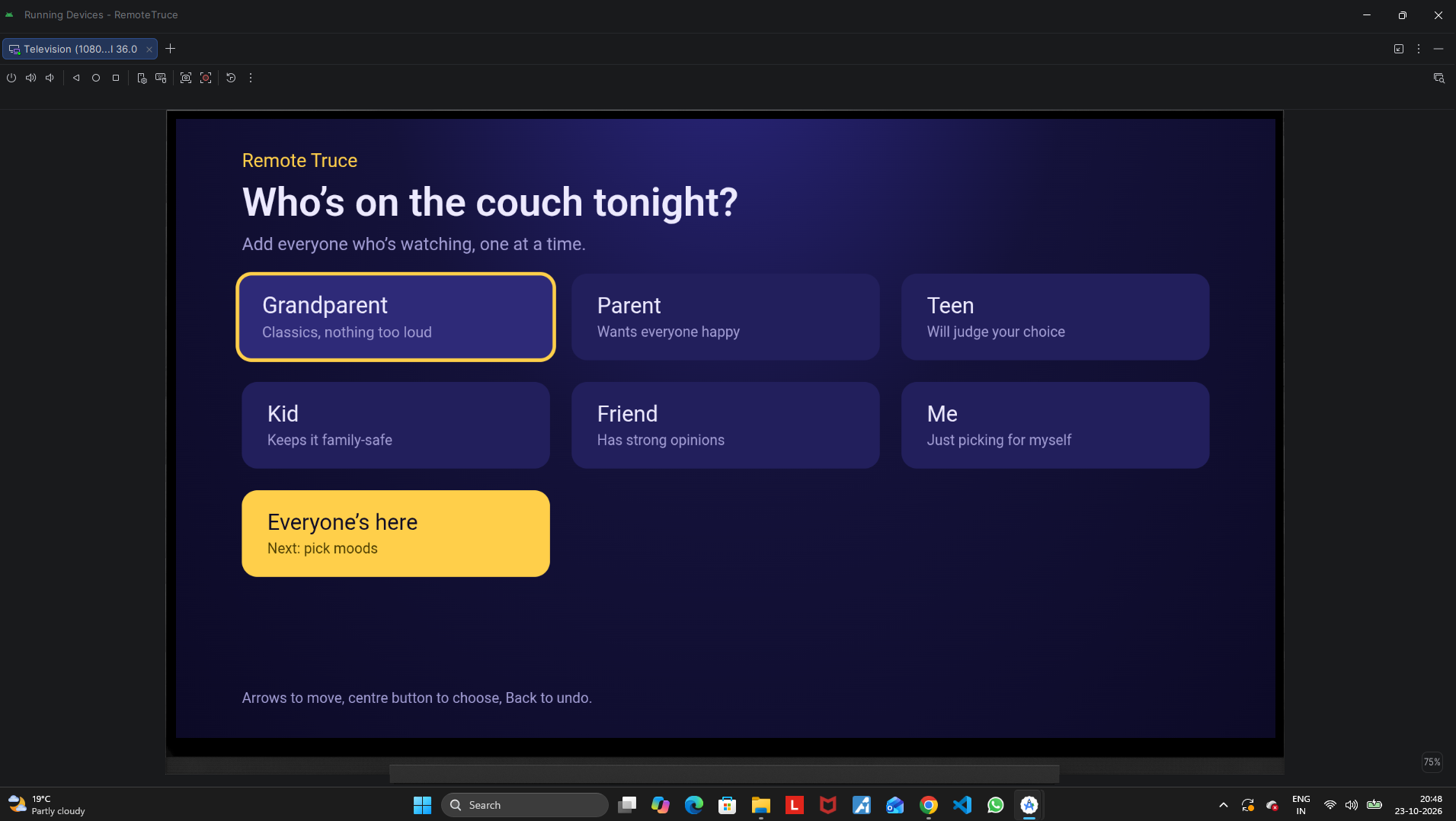
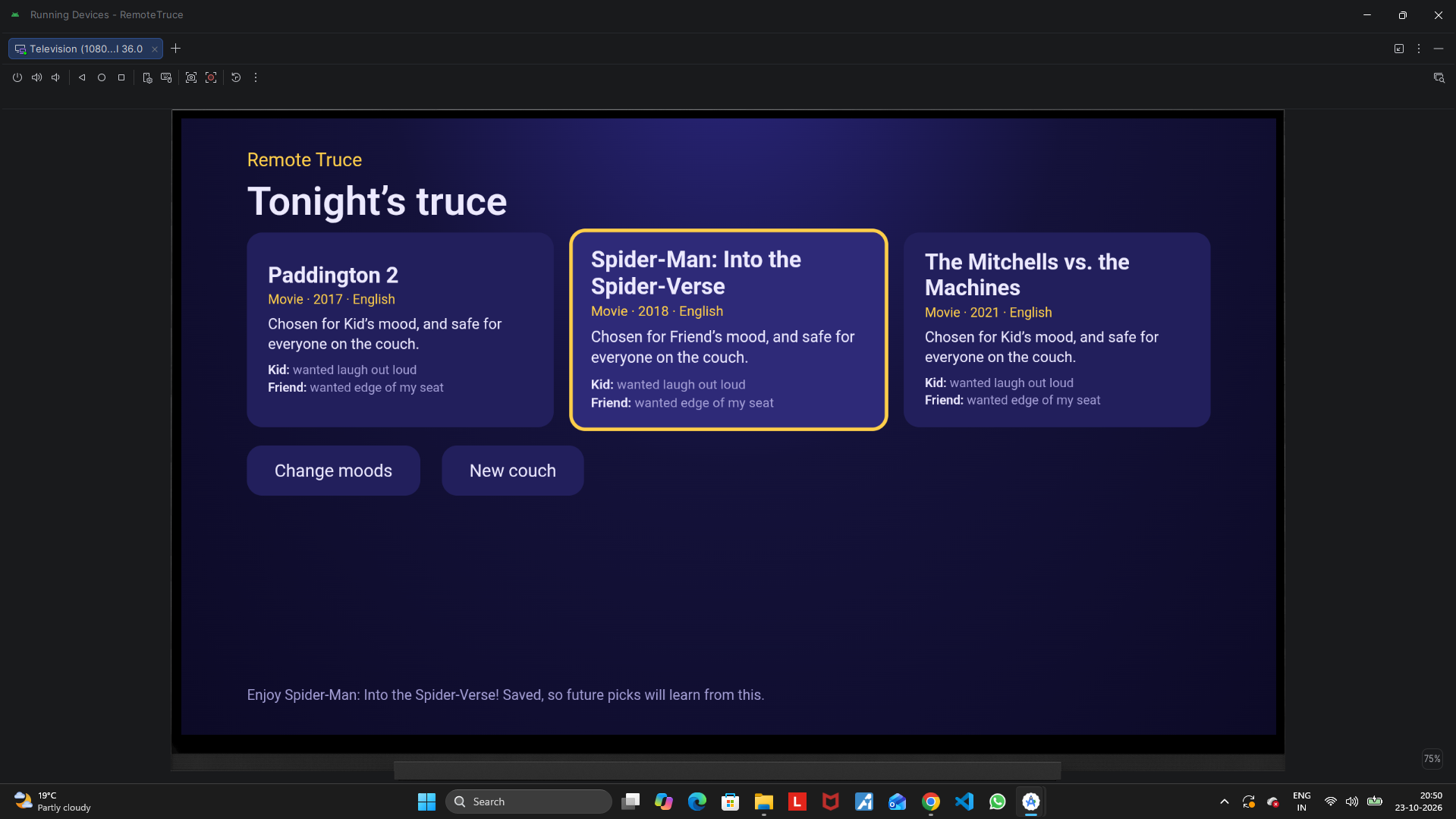
Remote Truce is a Fire TV app. Everyone on the couch is added (Grandparent, Parent, Teen, Kid, Friend, Me), then each person picks their mood by passing the remote. After a language choice, it suggests three titles that are a real compromise for the whole group, with a one-line reason for each person. It stays family-safe when a kid is watching and remembers what the household chose before, so future picks adapt to their taste.
How I built it
A Kotlin app for Fire OS hosts a web UI designed for 10-foot viewing. I wrote custom D-pad spatial navigation so every screen works with just the remote, and Back acts as "undo" at every step. Picks come from the Gemini API as structured JSON, with offline fallback picks that rotate through each person's mood so everyone still gets a say. Past choices are stored on the device and included in future requests.
Challenges
I started with zero Fire TV experience a few hours before the deadline. The hostel Wi-Fi blocked the Gradle download, so I downloaded it manually and pointed the project at the local file. I don't own a Fire TV device, and the Vega Virtual Device doesn't support Windows, so I tested on the Android TV emulator. The AI API returned 503 errors on the hostel network, which is why the offline fallback became important.
What I learned
Designing for a TV remote is very different from mouse or touch: focus states, large type, and making Back predictable matter a lot.
What's next
Alexa voice ("Alexa, start a truce"), filtering by the household's streaming apps, and per-person profiles.
Built With
- android
- css
- fire-os
- gemini
- html5
- javascript
- kotlin

Log in or sign up for Devpost to join the conversation.