Inspiration
We both had moments where our bodies knew something before we did. Waking up exhausted and having stressful dreams with no explanation. That gap between what we feel when we wake up and what we can actually explain is where Remmy began. 284 million people live with anxiety globally — many of them in therapy, most of them describing their nights in vague, subjective terms. Sleep trackers give them a score. Nobody has ever looked inside the dream itself.
What it does
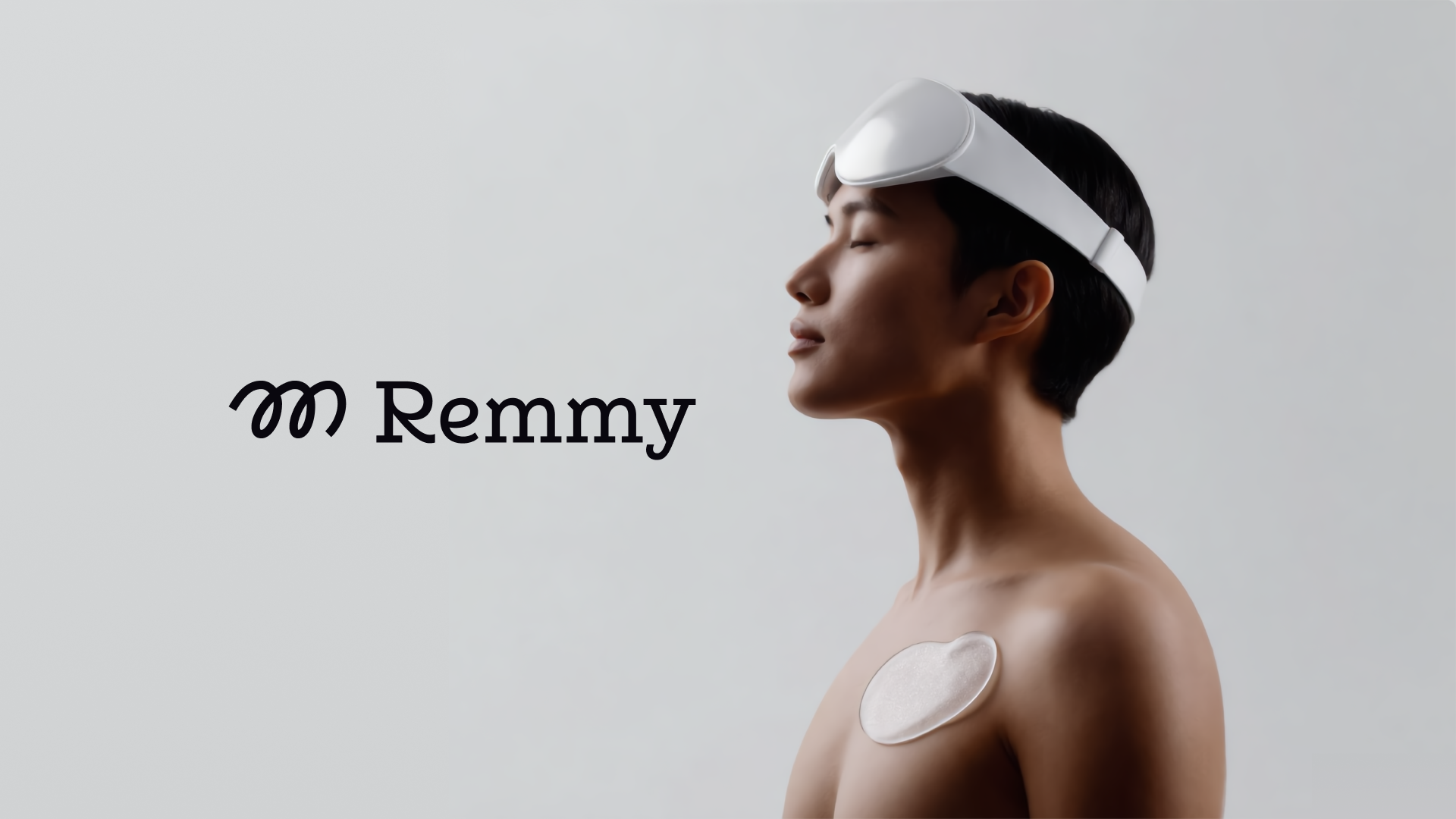
Remmy is a smart eye mask and skin patch system that reads physiological signals during REM sleep and cross-references them with a post-wake dream narrative recorded by the user.
How it works
You wear the eye mask and a skin patch to sleep. The eye mask handles REM detection at source, periocular GSR, eye movement, and facial micro-movement. The skin patch adds HRV, respiratory rate, and body micro-movements. On waking, you record a voice memo describing your sleep and dream (option to opt out). Remmy maps what your body did against what you dreamed, translates the patterns into plain language, and shows you what it found.
Challenges we ran into
The translation problem was the hardest: raw sensor data means nothing to a person who just woke up. Intangible data is hard to quantify. Dreams are also subjective. By linking intangible data to tangible data that happened at the same time, we could get meaningful insights from it. Not only is the data intangible, but there are multiple interoceptive senses. Our challenge was to make sense of all of them and create an information hierarchy of them.
The ethics architecture was equally difficult. Remmy reads signals that have never been read at the consumer scale before. Designing a system that opens doors without walking through them — that surfaces patterns without naming conditions — required building constraints into the product's core, not bolting it on afterward.
Built With
- figma


Log in or sign up for Devpost to join the conversation.