Inspiration
As apps are an easily accessible tool, and iPhones are very popular devices that most users will trust, we thought to use an Apple-based app as a way of accomplishing one of the major goals of the Physics department. Our speaker who is a PhD student at UNC Physics dep introduced I and the other attendees of the Quantum Computing Hackathon to the upcoming International Year of Quantum Science and Technology. This Initiative was passed at the latest General Conference of UNESCO to boost Quantum Science in one year, drawing grant funders, research and academic institutions, and the general public to advance their knowledge of and drive to innovate quantum science which has implications in every field.
What it does
This app is created with the purpose of giving the general public an easily accessible manner to approach and digest quantum science. Though still in the concept phase, this app will have space for news articles surrounding quantum science, topics that cover its implications in every fields (finance, farming, pharma) and informative videos that are paired to the explanatory stories and posted on our app's official YouTube channel.
How we built it
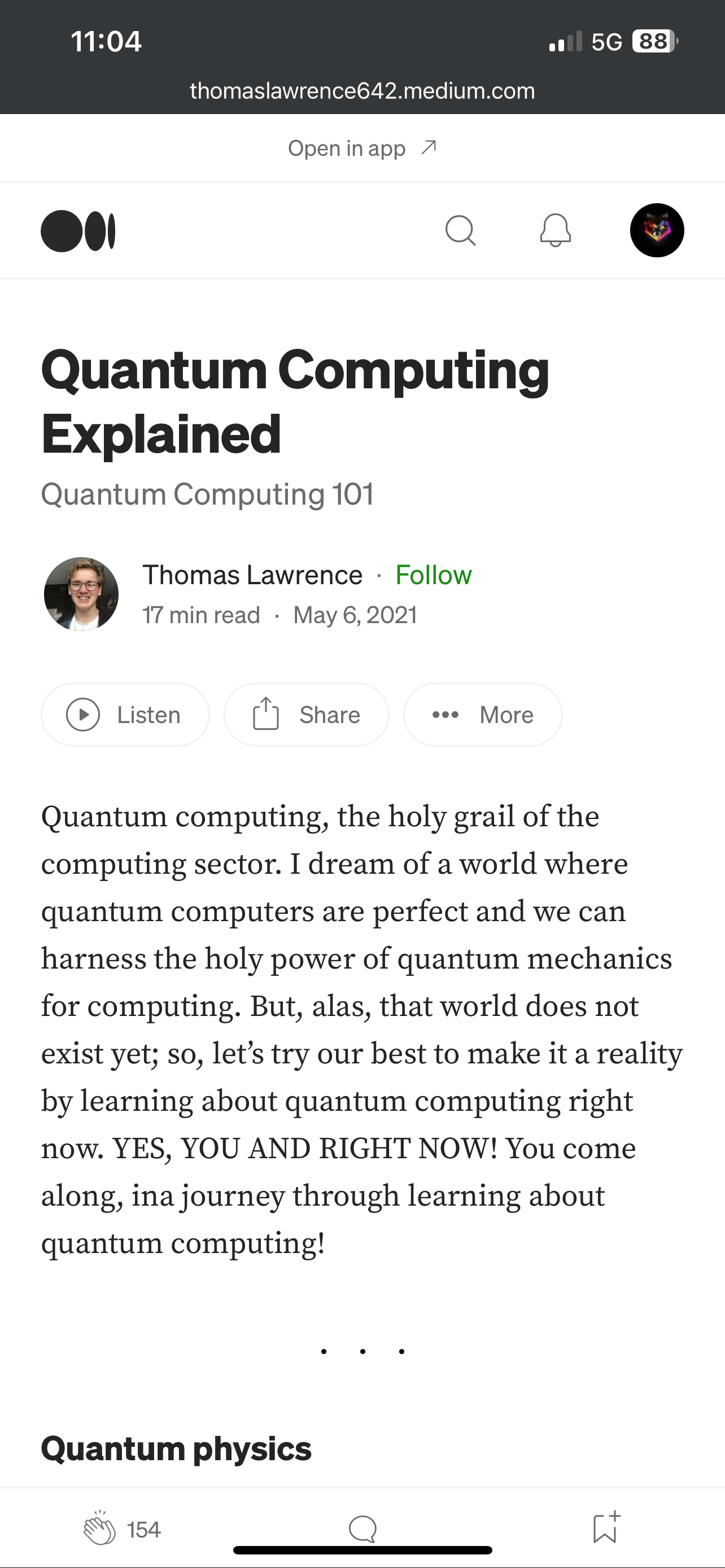
We plan to build the app through the Swift UI that the Carolina App team delivered a workshop on applying to our own applications during the hackathon. Inspiration from apps like Medium and Associated Press drives our vision, however, it will be a trademark, logo, and design that better reflects the various aspects of quantum computing, science, and technology. Current naming ideas include "Q-News," "Quant-Spot," and "Quantum Loop," the third of which we have found is the most liked, though it would present as "Q-Loop" under the app icon to be more catchy and simpler to share with others.
Challenges we ran into
As I lack access to a MacBook or desktop, I was forced to use my 2018 iPad to utilize this software which proved uncomfortable and yielded low quality. However, I still plan to use it as Swift offers the best functionality for iPhone app development, which 49% of US citizens own and 22% of people globally. Collaboration over this event-filled weekend has also been a hindrance but we are excited to pursue this idea to completion, through the collaboration of many clubs (App club, DTH, UNCQC), students from undergrad to post-grad, professors, academic departments, and institutions like the Morehead Planeterium.

Log in or sign up for Devpost to join the conversation.