📘 About the Project — Remindrift
🌟 What Inspired Me
As a student, I often found myself missing or nearly missing important deadlines—not because I lacked motivation, but because reminders didn’t fit the way students actually work. Tasks are created on one device, worked on from another, and often ignored when notifications appear at the wrong moment.
Most reminder apps are time-only, easy to dismiss, and poorly synchronized across devices. I wanted to build something that understands student behavior and helps ensure tasks are completed, not just notified.
This idea became Remindrift.
🧠 What I Learned
Building Remindrift taught me both technical and product-level lessons:
- How to design cross-device systems using real-time synchronization
- Implementing authentication and security with Supabase and Row Level Security (RLS)
- Structuring a full-stack application with Next.js + Supabase
- Handling real-world errors like failed API calls and authentication issues
- Designing features around user behavior, not just functionality
I also learned that a simple, reliable solution often has more impact than a complex one that is hard to demo or explain.
🏗️ How I Built the Project
🔧 Tech Stack
- Frontend: Next.js (React, TypeScript)
- Styling: Tailwind CSS
- Backend & Database: Supabase (PostgreSQL, Auth, Realtime)
- Auth: Email/Password + Google OAuth
- State Management: React Hooks
- Deployment: Web-based, cross-device compatible
⚙️ Core Architecture
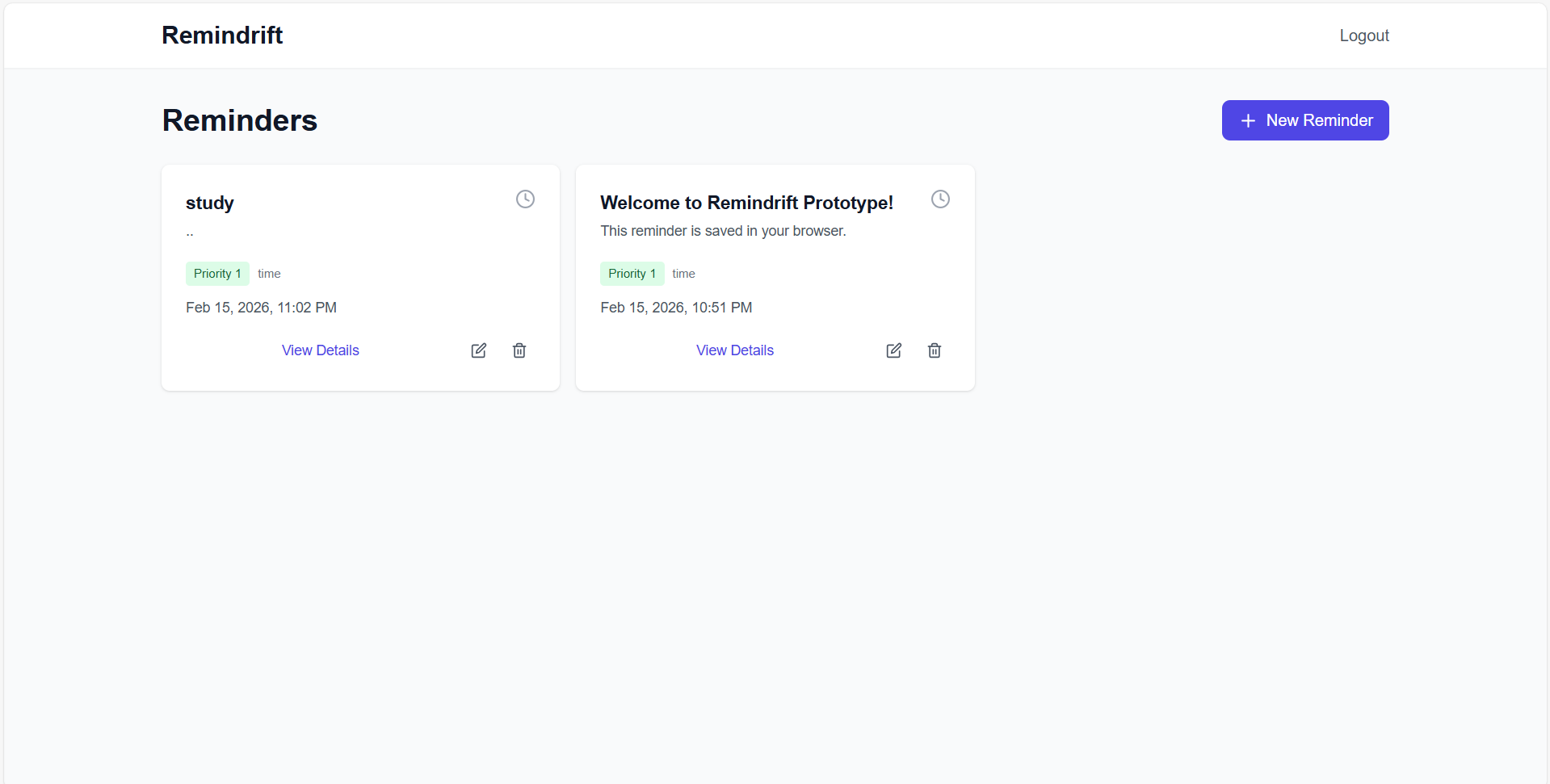
Remindrift uses a real-time database model, where reminders are synchronized instantly across devices.
Each reminder has a priority level and status, allowing the system to escalate alerts if they are ignored.
A simplified model:
[ \text{Reminder} = (title, time, priority, status) ]
Where escalation is triggered when:
[ \text{status} = \text{pending} \land \Delta t > \text{threshold} ]
This ensures important academic tasks remain visible until completed.
🚧 Challenges I Faced
1️⃣ Authentication & Connectivity Issues
One of the biggest challenges was handling authentication failures and environment configuration issues. I solved this by:
- Adding strict environment variable validation
- Improving error handling and visibility in the UI
2️⃣ Real-Time Synchronization
Ensuring reminders update instantly across devices required careful handling of subscriptions and state updates to avoid duplication or lag.
3️⃣ Feature Prioritization
With limited time, I had to choose features that delivered maximum impact:
- Reliable authentication
- Real-time sync
- Clear UI over experimental features that could risk stability.
4️⃣ Student-Centric Design
Balancing simplicity with power was challenging. I focused on a clean interface so students can manage tasks without feeling overwhelmed.
🚀 Final Outcome
Remindrift evolved into more than a reminder app—it became a student-focused productivity system designed to reduce stress, prevent missed deadlines, and support academic success.
This project strengthened my skills in full-stack development, system design, and problem-solving, while reinforcing the importance of building technology that truly fits users’ lives.
Remindrift — because deadlines shouldn’t be missed.
Built With
- languages:-typescript
- lucide-react-(icons)-cloud-&-database:-supabase-(auth
- postgresql
- react-18-styling:-tailwind-css
- realtime
- sql-frameworks:-next.js-14

Log in or sign up for Devpost to join the conversation.