Inspiration
The inspiration came from the time when my grandparents lived with me. My parents would constantly remind them to take their medicines, yet sometimes they would still miss their doses. Since my grandparents were quite active on their phones, I realized that an app like this could have made things much easier for them. When I thought about combining AI with healthcare, this was the idea that came to mind.
What it does
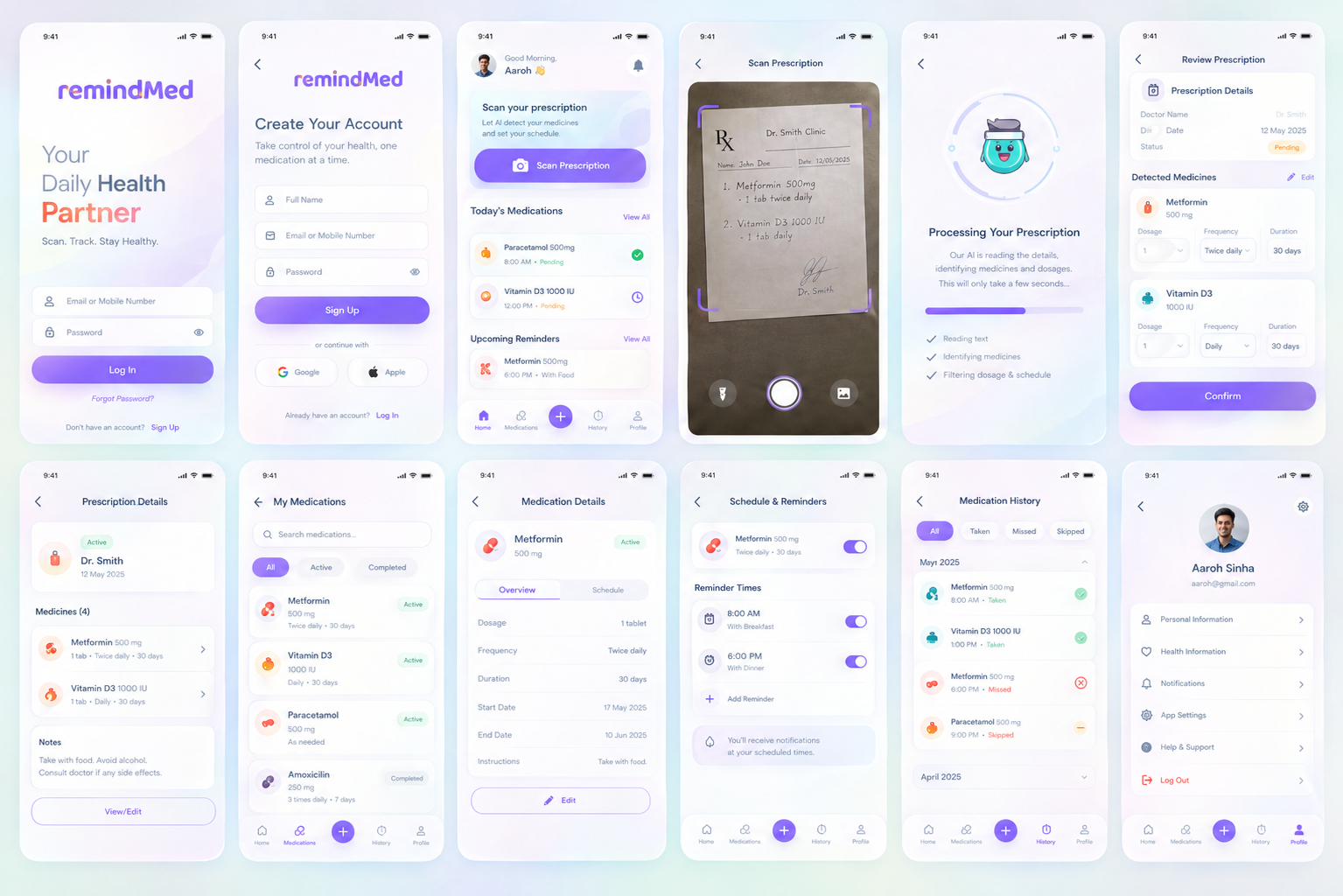
RemindMed allows users to scan their medical prescriptions and converts them into separate, editable medicine cards. Users can review the details, set their doses, and schedule notifications based on the prescribed dosage, dates, and timings.
How we built it
We used the Google Cloud Vision API to extract text from prescription images and the Gemini LLM API to convert that text into structured data.
Challenges we ran into
One of our biggest challenges was converting the LLM's JSON response into the correct database structure. Prescriptions vary significantly in their formats, dosage instructions, and timings, making it difficult to establish a single universal format. To address this, we designed the flow so that users can review, edit, validate, and confirm the extracted medicine details before proceeding.
What we learned
We learned a lot about working with LLMs, extracting structured information from unstructured text, handling inconsistent outputs, and integrating AI APIs into a practical healthcare application.
What's next for RemindMed
- Integrating multiple LLM models with a fallback or rotation strategy to improve reliability.
- Introducing usage credits and limits based on user accounts or IP addresses.
- Implementing Redis-based caching to reduce redundant processing and improve performance.
- Exploring an AI-powered assistant that guides users on preparation before taking their medicines, such as whether they should eat food or drink water.
Built With
- fastapi
- postgresql
- python
- react-native

Log in or sign up for Devpost to join the conversation.