-
-
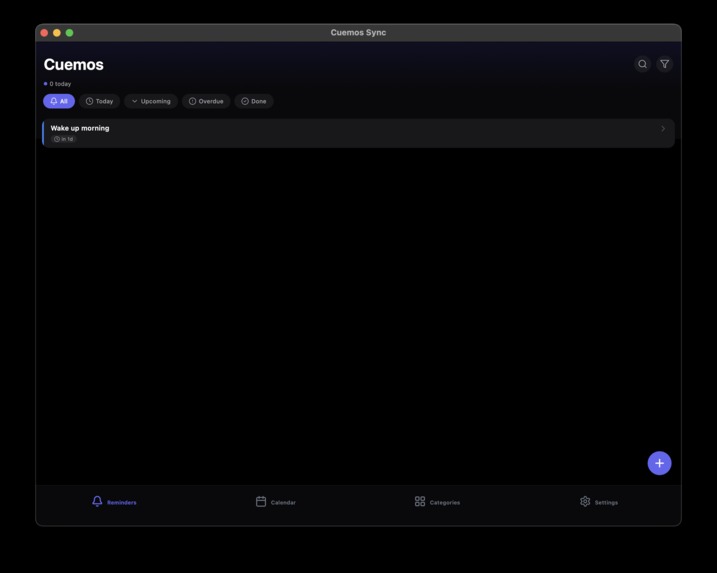
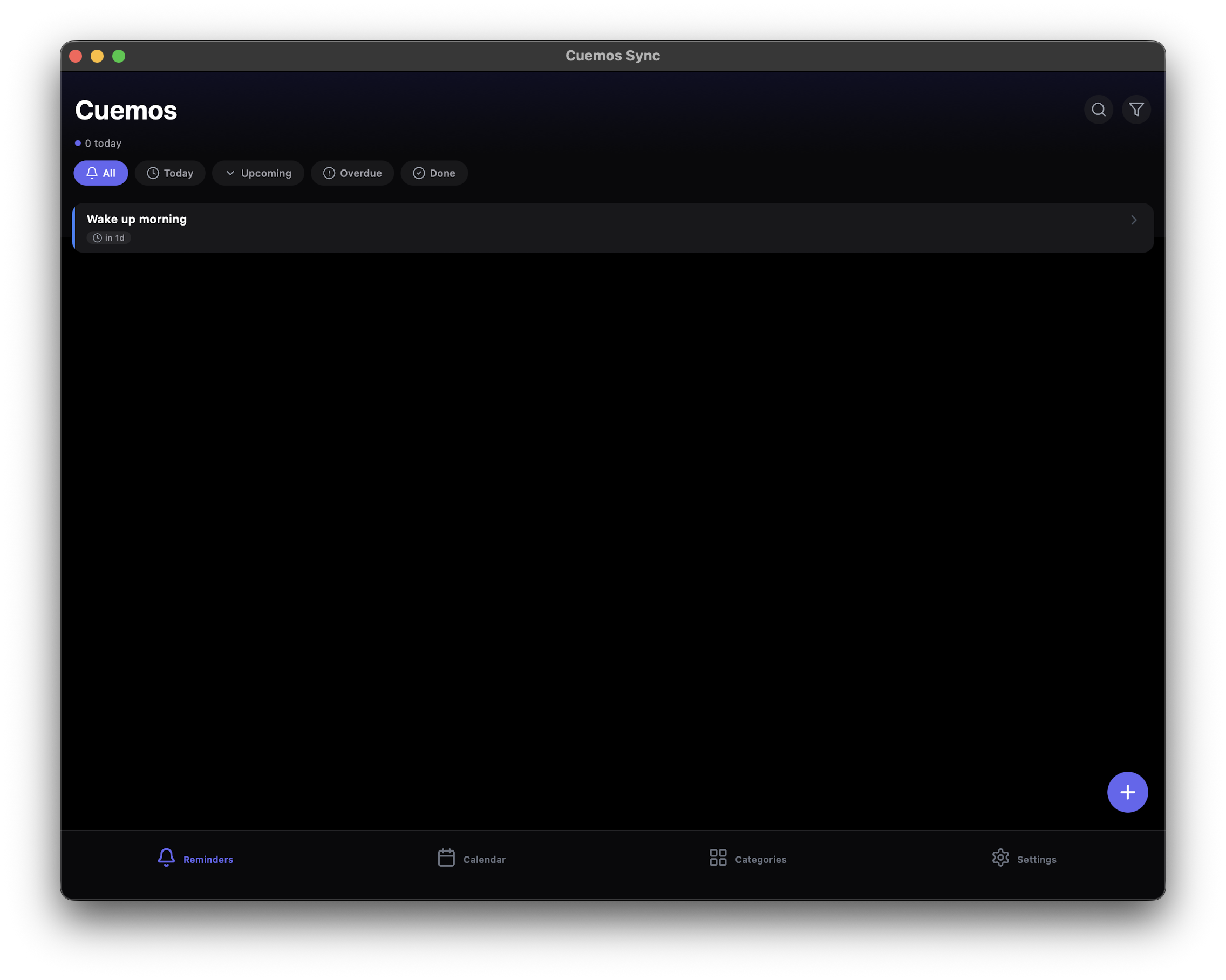
Home screen
-
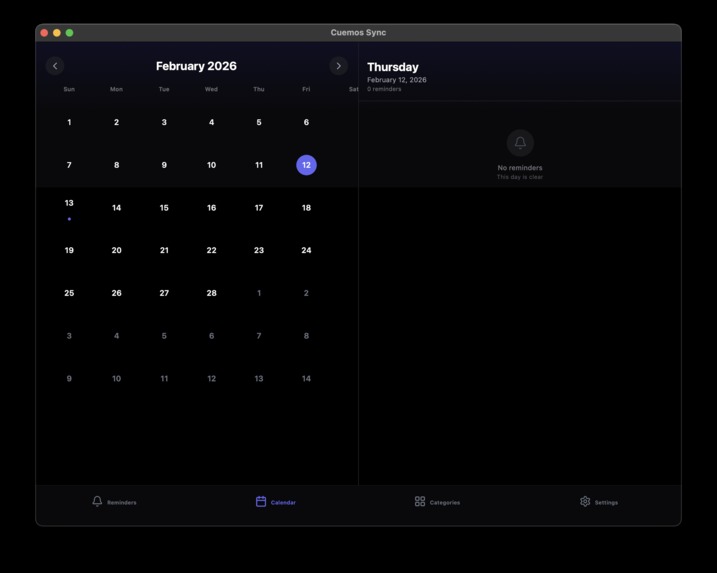
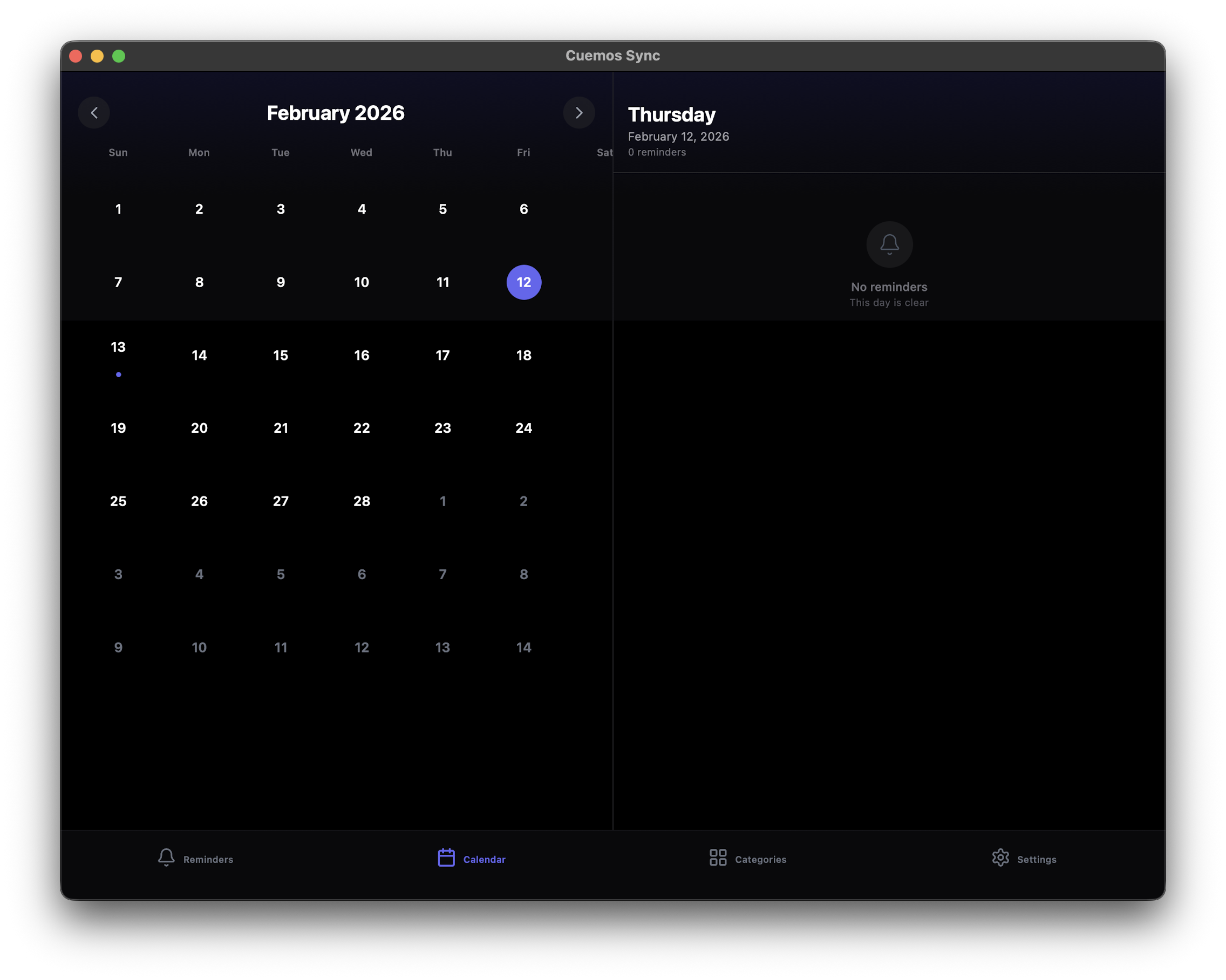
Calendar View
-
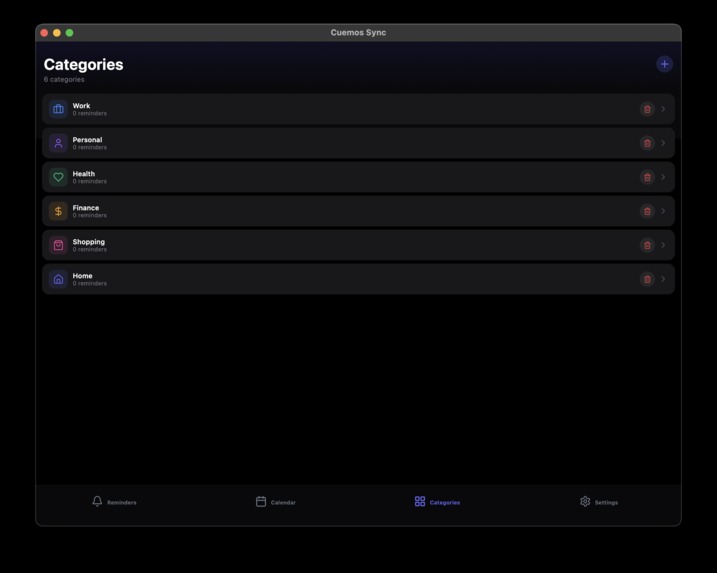
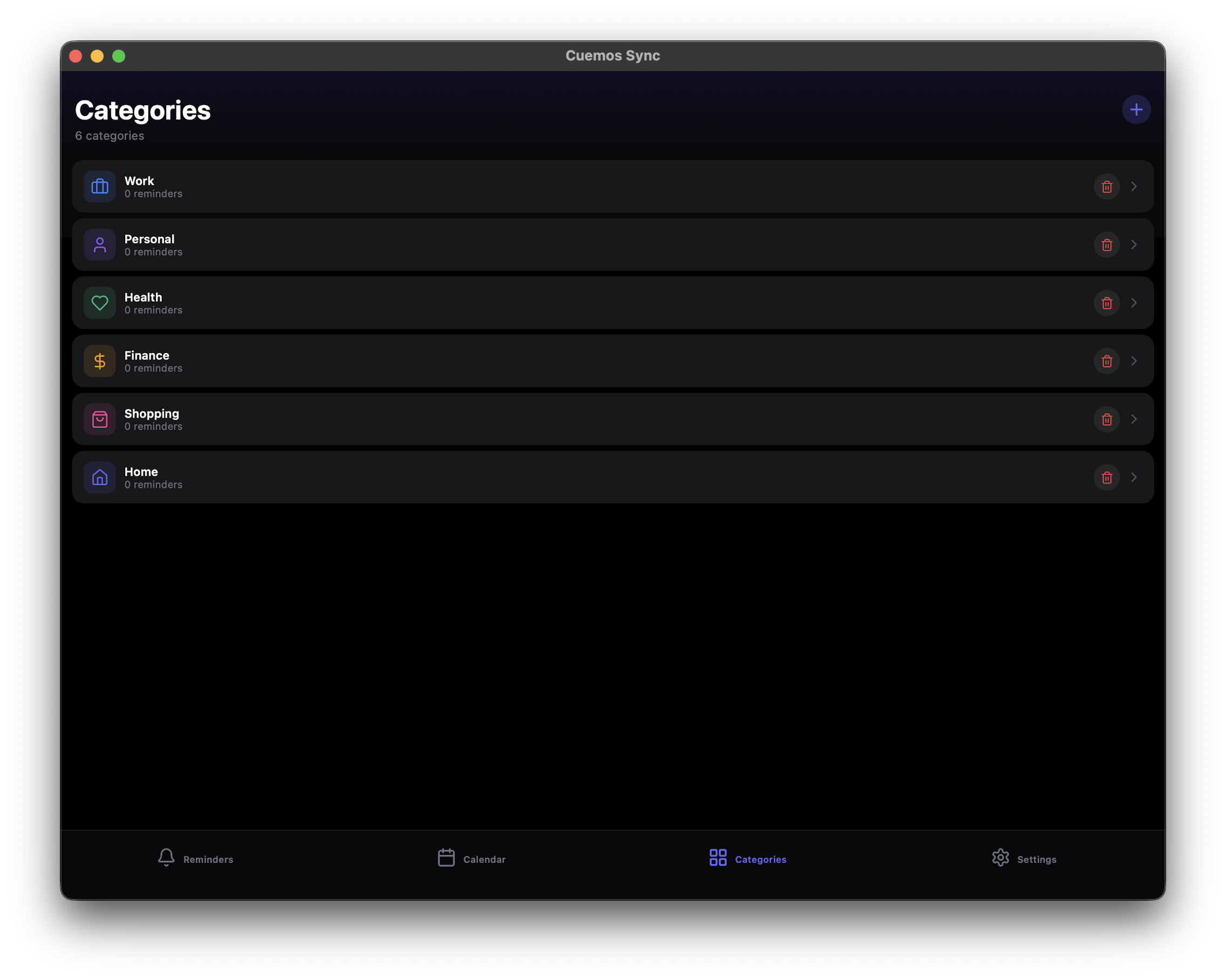
Categories screen
-
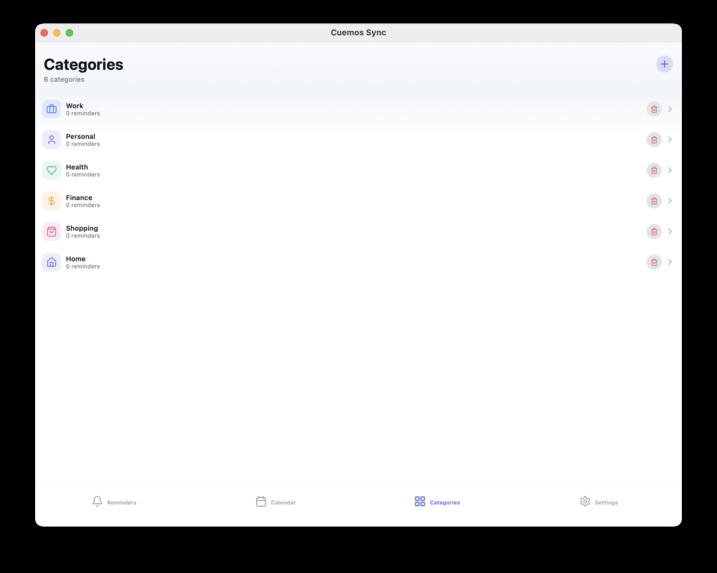
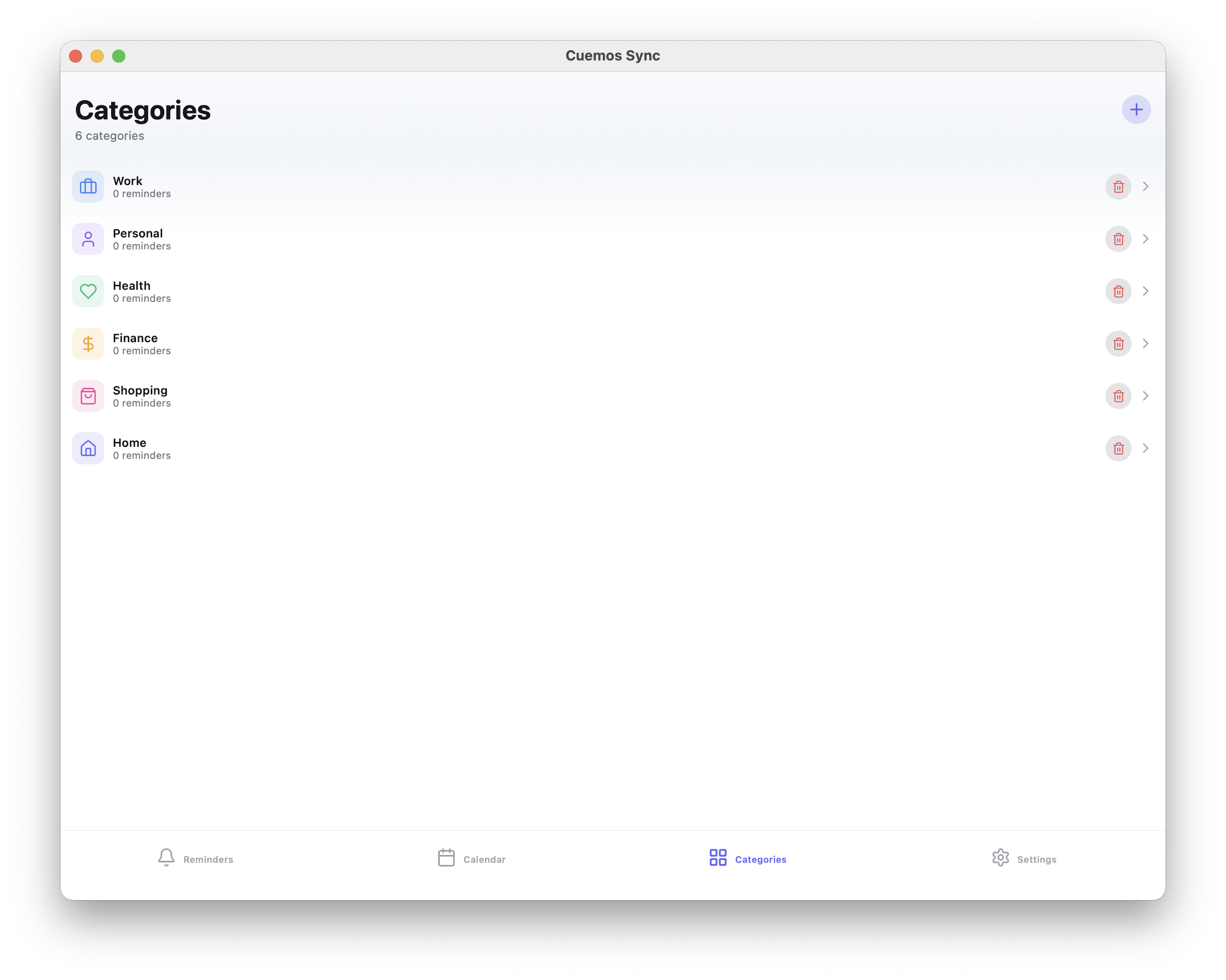
Light mode categories screen
-
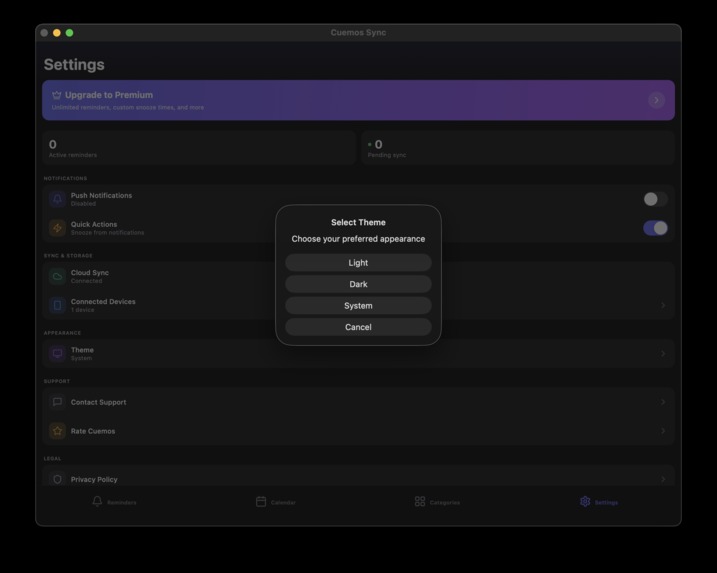
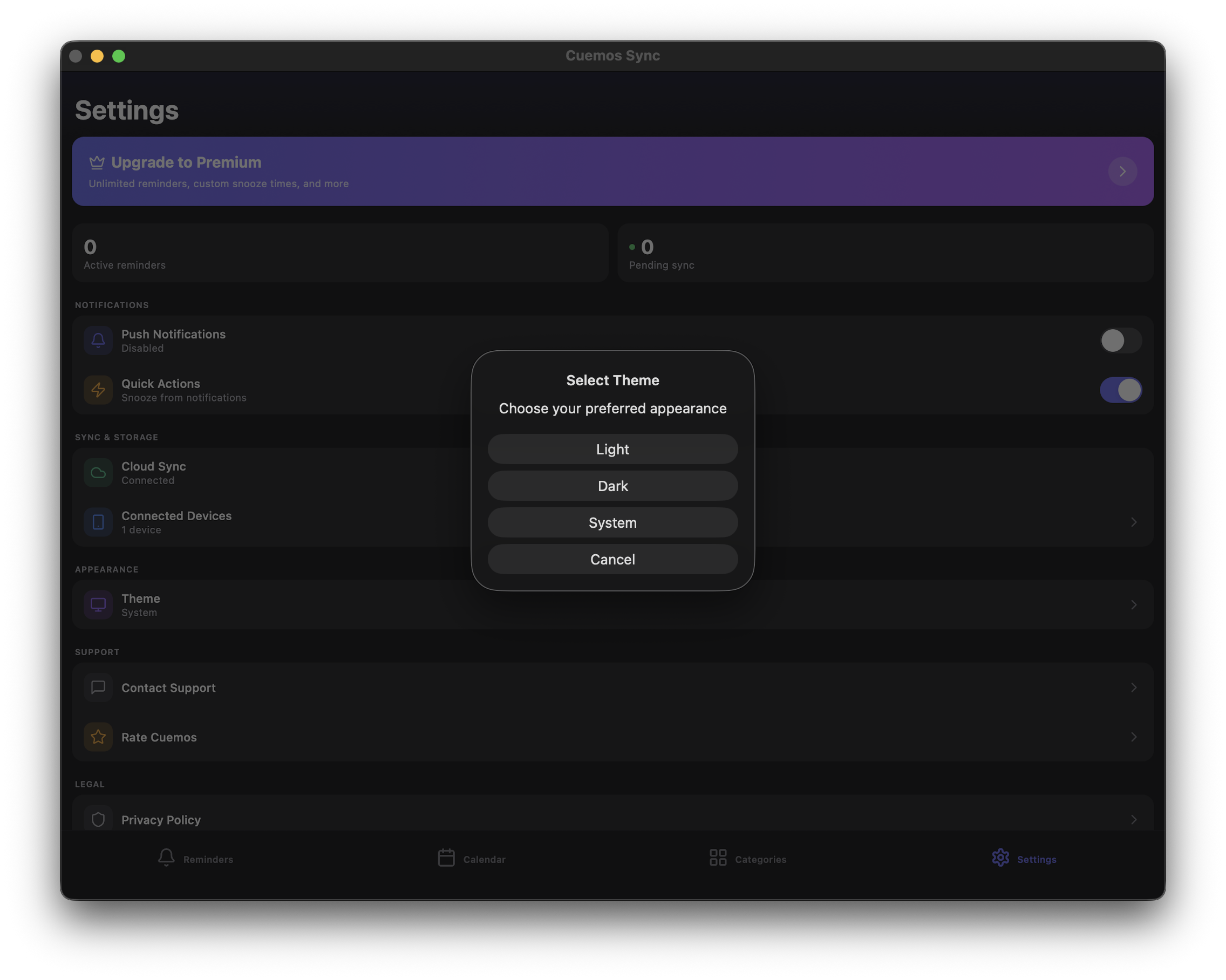
Theme selector
-
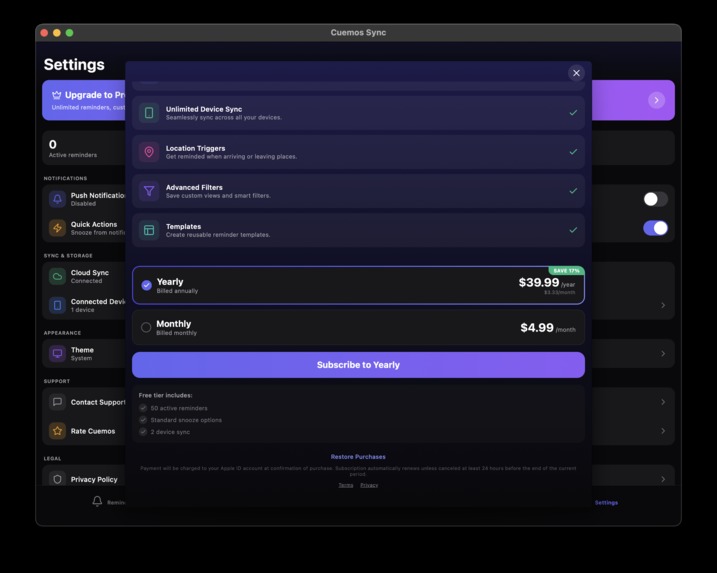
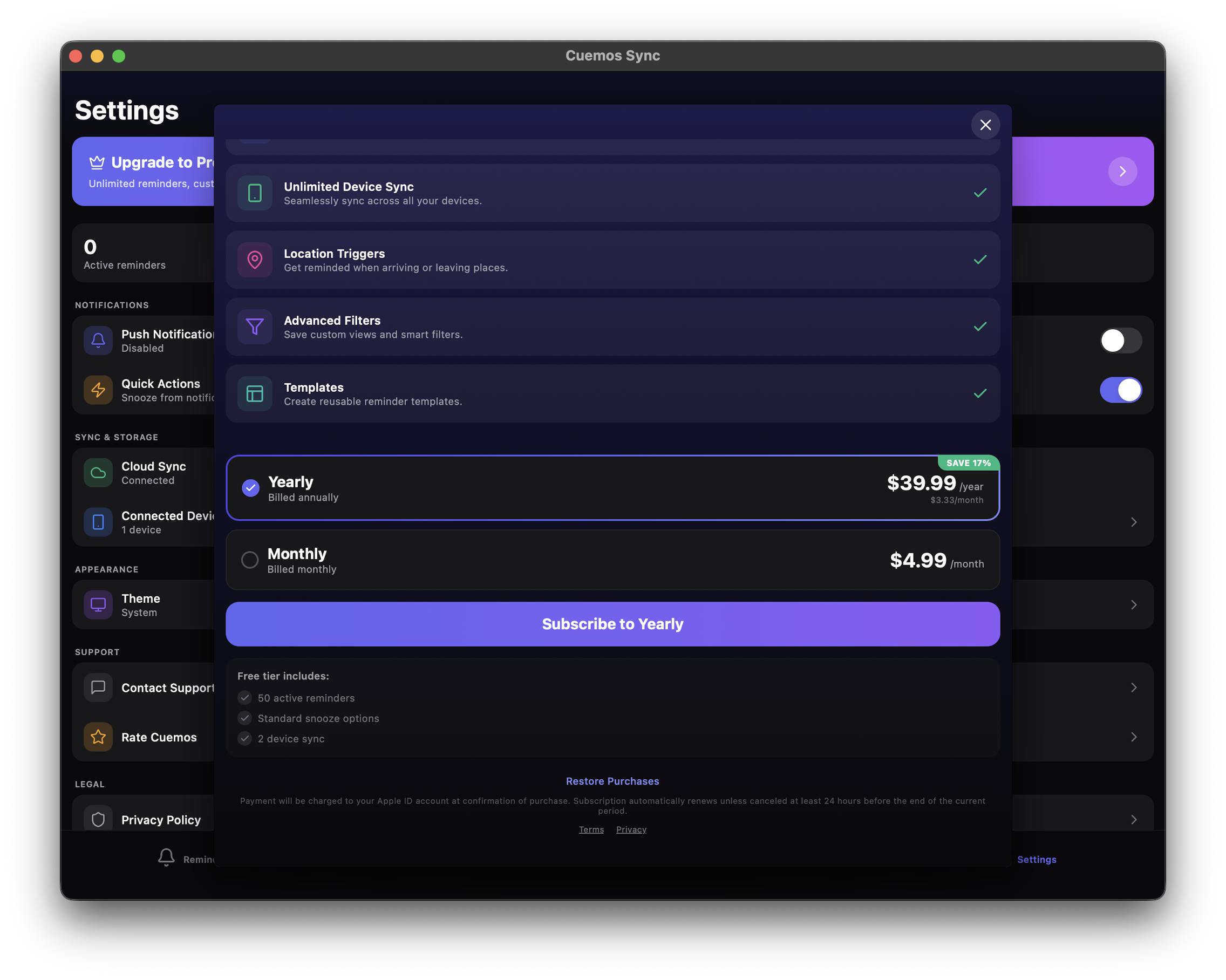
Payment wall
Inspiration
Cuemos was inspired after watching a video by Sam Beckman, which highlighted how modern reminder apps often fail at the one thing they are meant to do: work reliably across devices. That observation resonated strongly. Native reminder apps function well only within their own ecosystems, and the moment users switch between iOS, Android, or web environments, fragmentation appears. Reminders get duplicated, dismissed tasks resurface, and users are forced to maintain multiple systems. Cuemos was created to eliminate this friction and provide a single, consistent reminder experience regardless of device.
What it does
Cuemos is a reminder application that acts as a single source of truth for user tasks. It allows users to create reminders using natural language, apply flexible snooze and recurring options, and manage priorities efficiently. When a reminder is dismissed or updated on one device, the change is reflected everywhere automatically. The app is designed to work reliably even when offline, synchronizing changes once connectivity is restored.
How we built it
The MVP was built using Vibecode, which provided a managed environment for UI development, data storage, authentication, and synchronization. This allowed us to focus on reminder behavior, user flows, and feature design instead of backend infrastructure.
Subscriptions and premium feature access were implemented using RevenueCat SDK, enabling clean entitlement-based feature gating without embedding payment logic into the core app.
The application follows a state-driven design where reminders transition between states (active, snoozed, completed) based on user actions, with synchronization handled by the platform.
Challenges we ran into
One of the main challenges was designing reminder behavior without direct control over backend internals. We had to think carefully about state transitions and edge cases, such as dismissing reminders while offline or handling delayed notifications. Another challenge was limiting scope during the hackathon, as features like collaboration and multi-platform clients were intentionally deferred to maintain focus and stability.
Accomplishments that we're proud of
- Delivered a functional iOS MVP within hackathon constraints
- Designed a reminder system that behaves consistently across devices
- Implemented advanced snooze and dismissal logic
- Integrated subscriptions cleanly using RevenueCat
- Avoided overengineering while maintaining scalability
What we learned
We learned that reminder apps are more about correctness than complexity. Even with a low-code platform, clear system design and state thinking are essential. We also learned how important it is to separate core logic from monetization and how much speed a managed platform like VibeCode can provide without sacrificing product quality.
What's next for Cuemos
Next steps include expanding to Android and web platforms, adding widgets and wearable support, enabling shared reminders and collaboration, and introducing smart suggestions to help users schedule tasks more effectively. The long-term goal is to build a fully device-agnostic productivity tool that users can trust anywhere.
Built With
- natural-language-processing
- react-native
- revenuecat
- typescript
- vibecode


Log in or sign up for Devpost to join the conversation.