Inspiration
We’ve all been there: sitting in a lecture, frantically snapping photos of complex diagrams and dense slides. By the end of the semester, our camera rolls are "digital graveyards" of unorganized, contextless images. We realized that the value isn't in the photo itself, but in the structured knowledge within it. We wanted to bridge the gap between a chaotic gallery and an organized study guide.
What it does
ReMind is a web application that transforms real-time lecture photography into structured, searchable notes. Instead of manual filing, the app uses your Google Calendar to know exactly which class you're in. As you take photos through our in-app camera, the system automatically tags, organizes, and summarizes the content.
How we built it
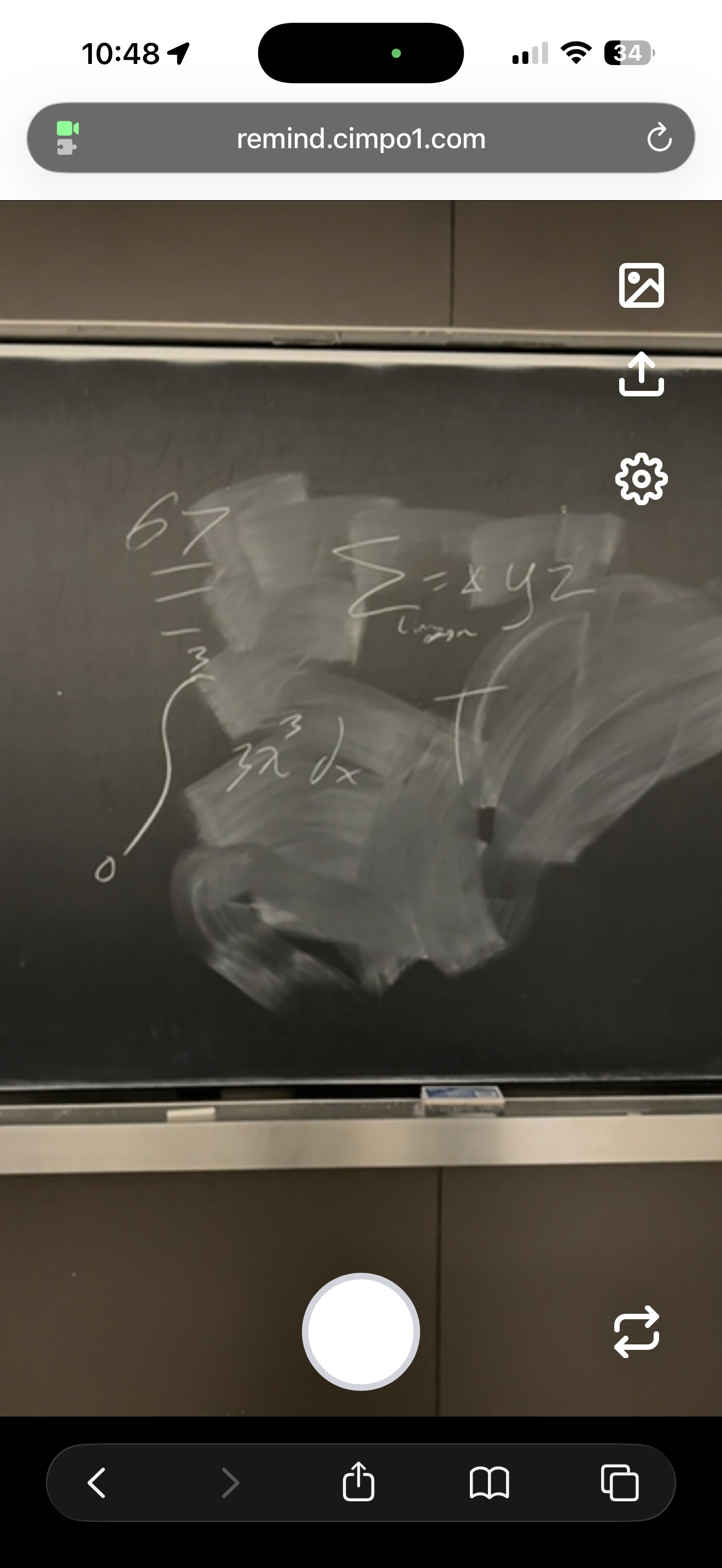
The Frontend: A responsive and mobile-friendly React web app featuring an embedded camera interface for seamless real-time capture.
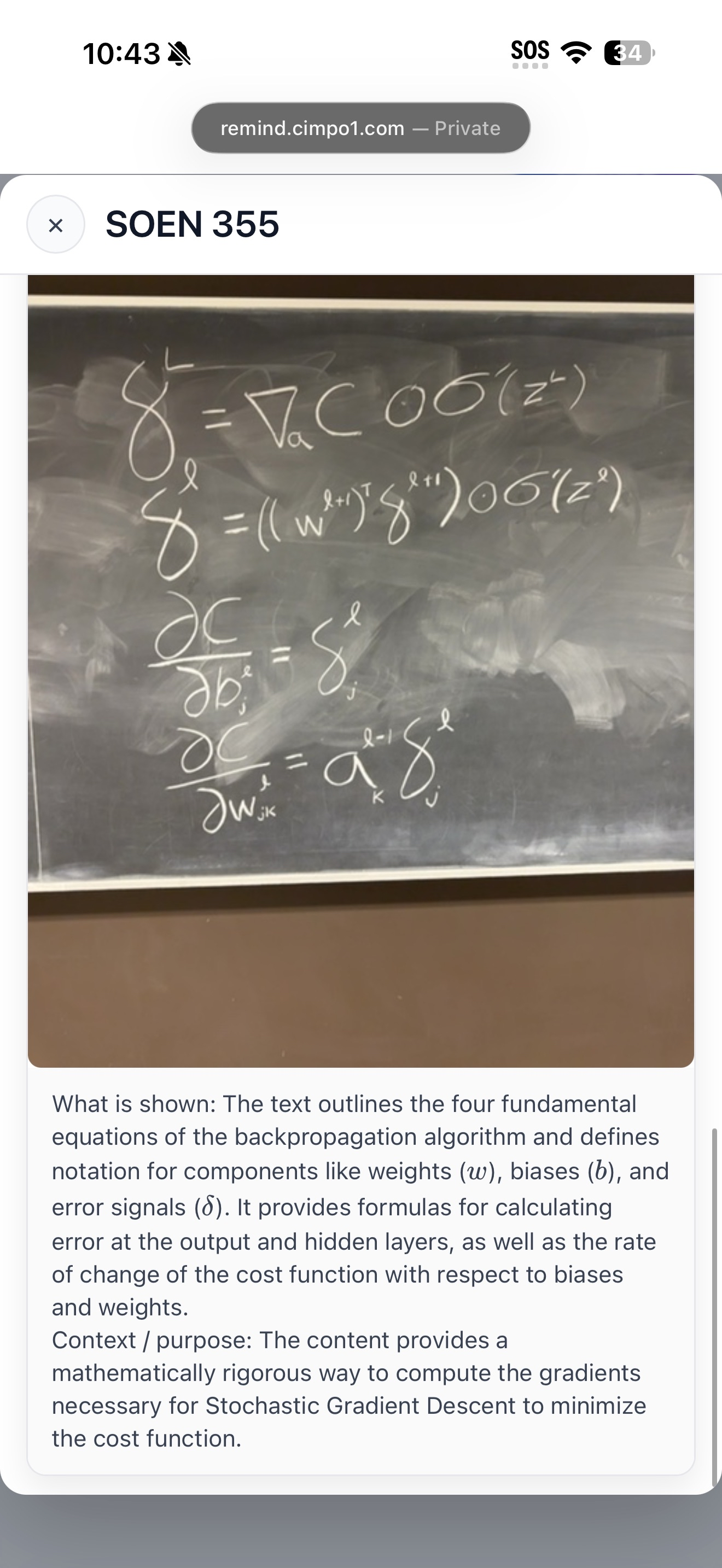
The Intelligence: We leveraged Gemini to process every image via a two-stage pipeline: Context Extraction: Pulling raw text, data, and visual context from the slide. Synthesis: Generating a clean, lecture-focused summary grounded strictly in the captured content.
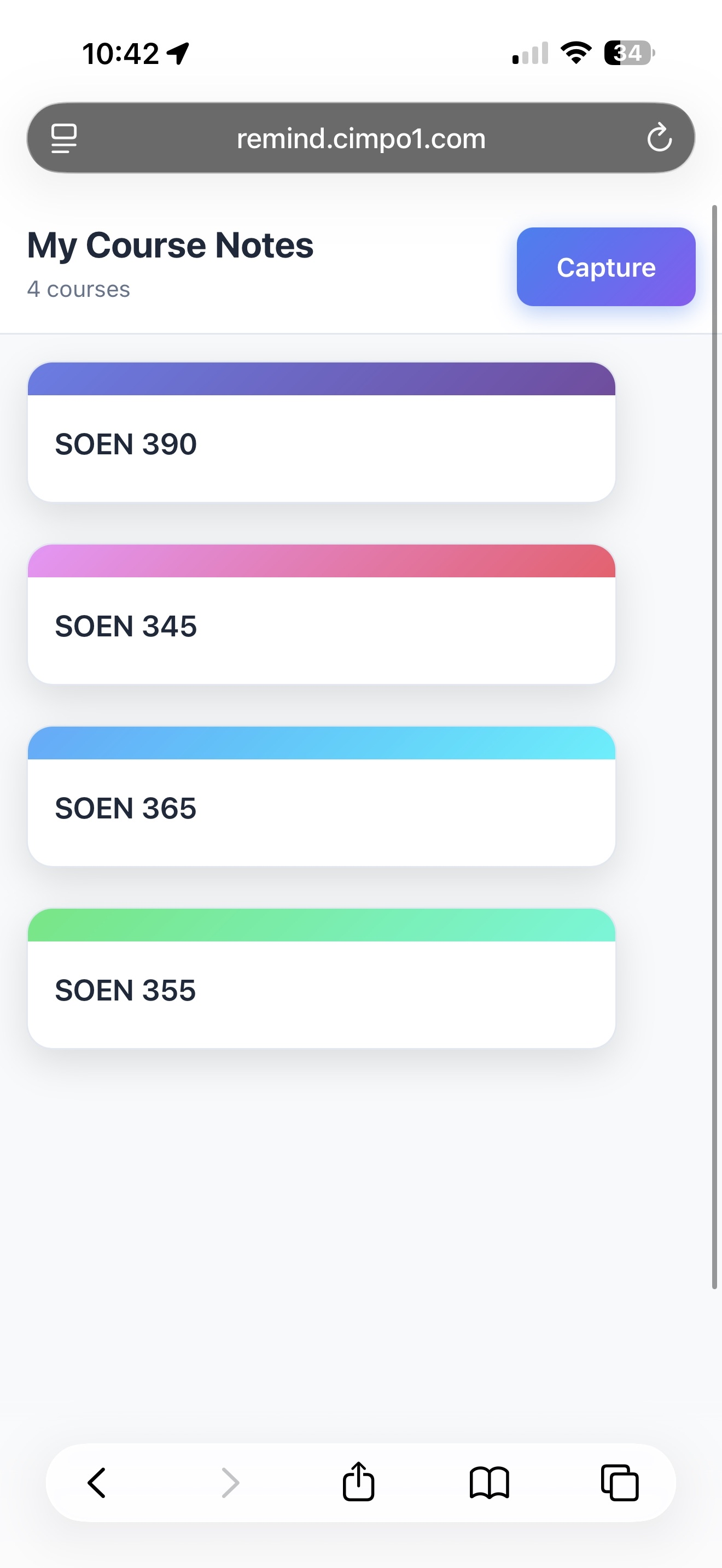
The Automation: The core functionality relies on a Google Calendar integration. By cross-referencing photo timestamps with the user’s active schedule, the system automatically assigns images to the corresponding course modules.
Challenges we ran into
Syncing real-time camera data with calendar APIs while ensuring the Gemini prompts were "grounded" enough to avoid hallucinations was a delicate balancing act. We spent a lot of time refining the prompt engineering to ensure summaries remained academic and accurate.
Accomplishments that we're proud of
We have effectively eliminated the administrative overhead associated with digital learning. The transition from capturing a whiteboard image to generating a structured Markdown document—automatically categorized by course title—represents the primary proof of concept for the system's efficiency
What we learned
The hackathon taught us the power of parallel workstreams. By clearly dividing tasks based on our core strengths—frontend, backend, and data—we maximized efficiency and eliminated redundant effort.
What's next for ReMind
Multi-Modal Notes: Integrating audio snippets alongside photos. AI Quiz Generation: Turning those structured notes into flashcards automatically. Collaborative Boards: Allowing students in the same lecture to contribute to a "Master Doc" in real-time


Log in or sign up for Devpost to join the conversation.