-
-
QR code (Scan to try out our app!)
-
App logo
-
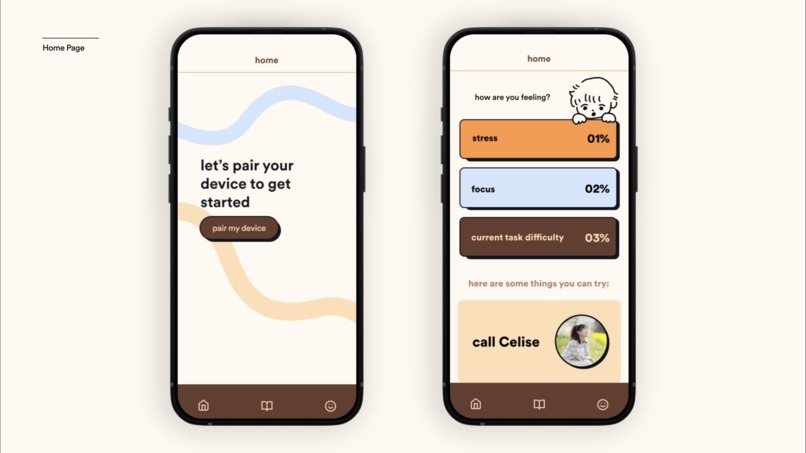
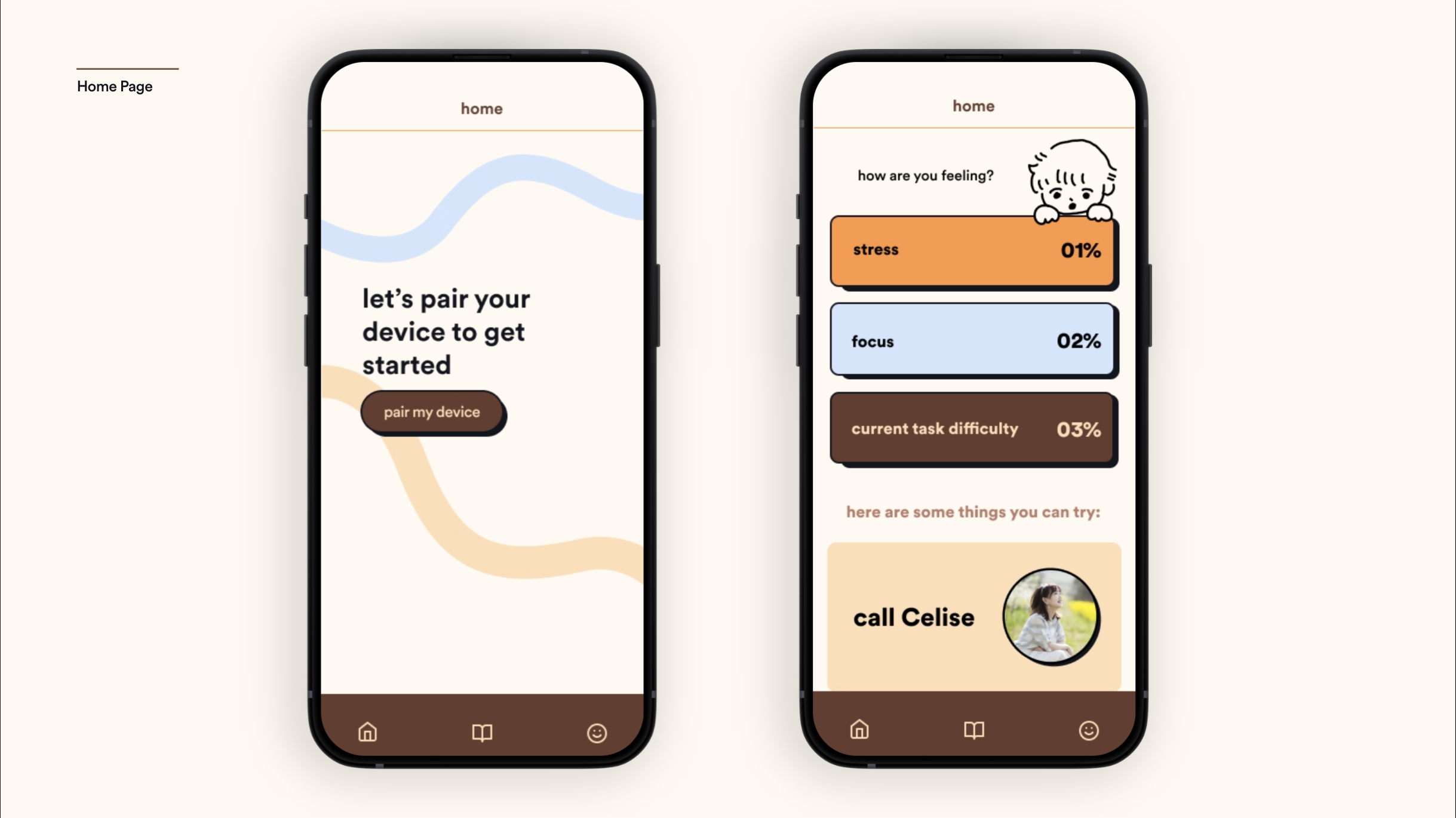
Home page
-
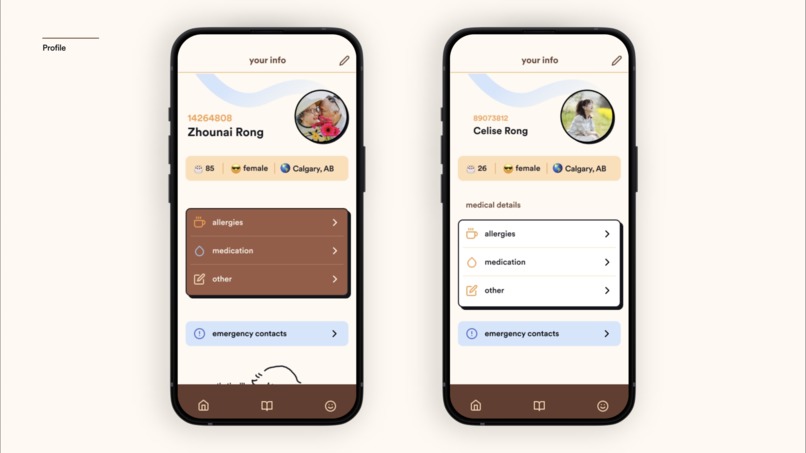
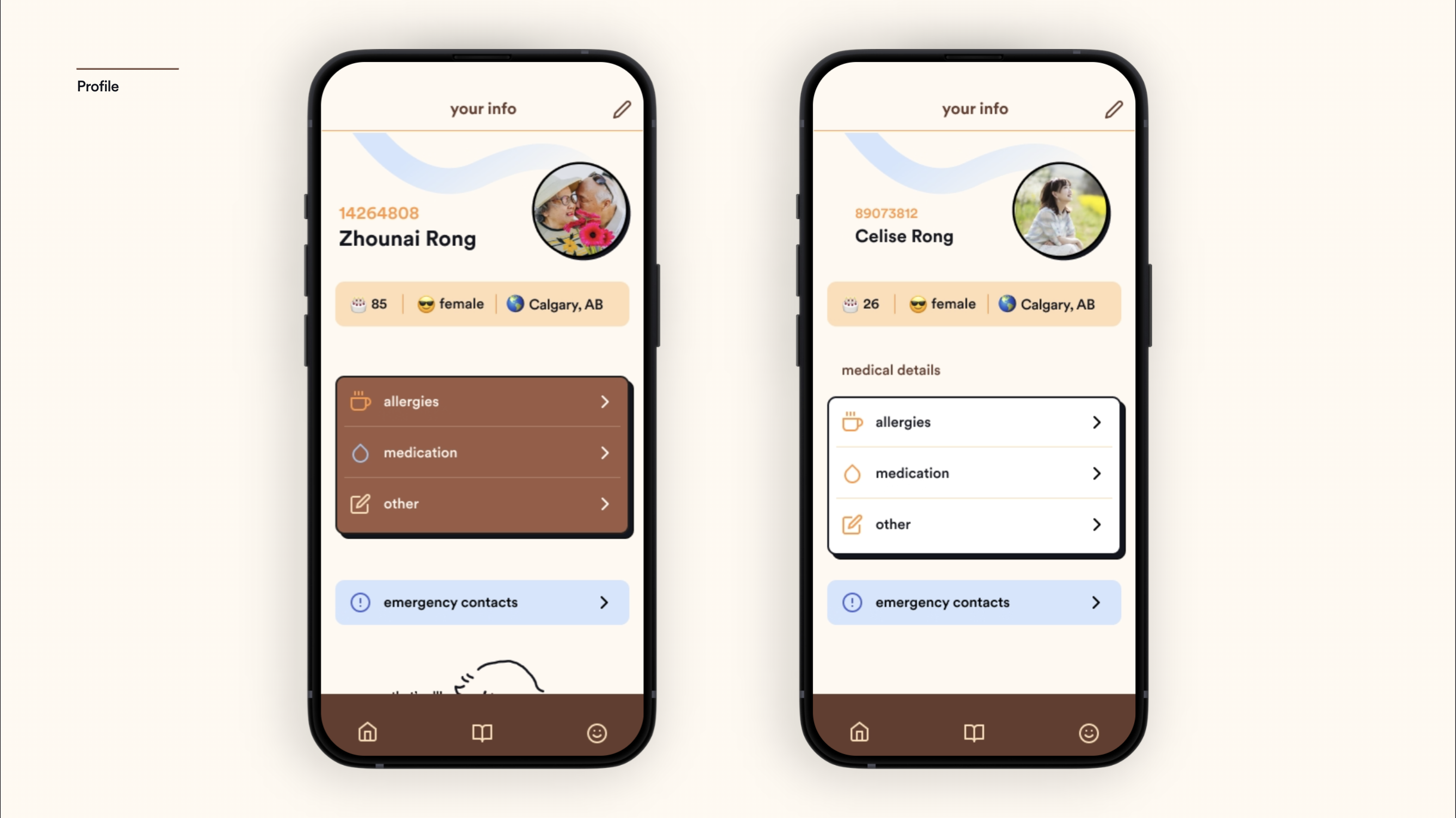
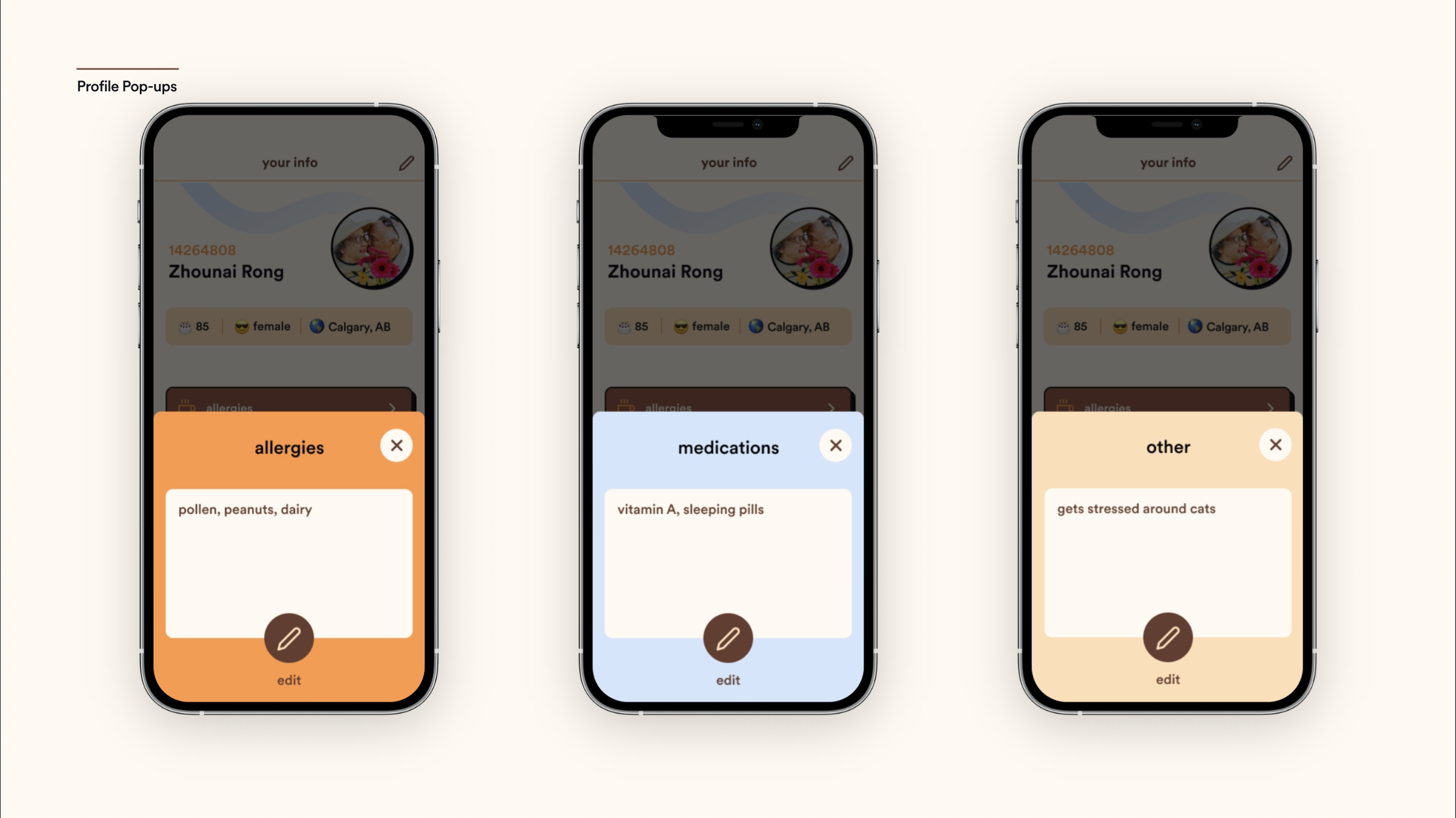
Profile
-
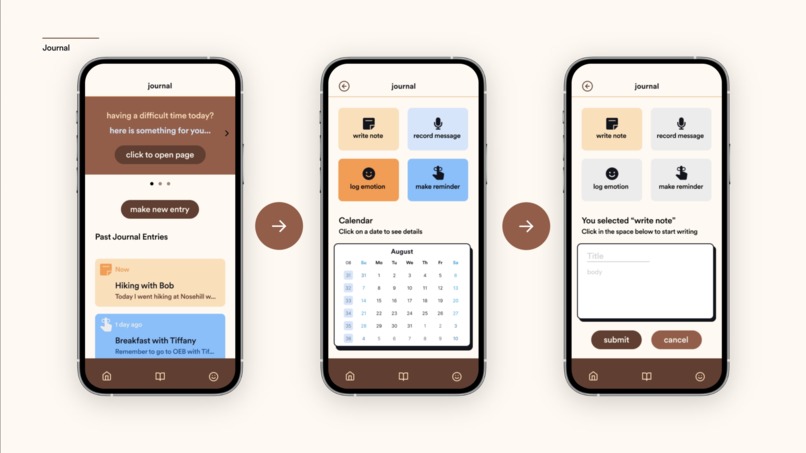
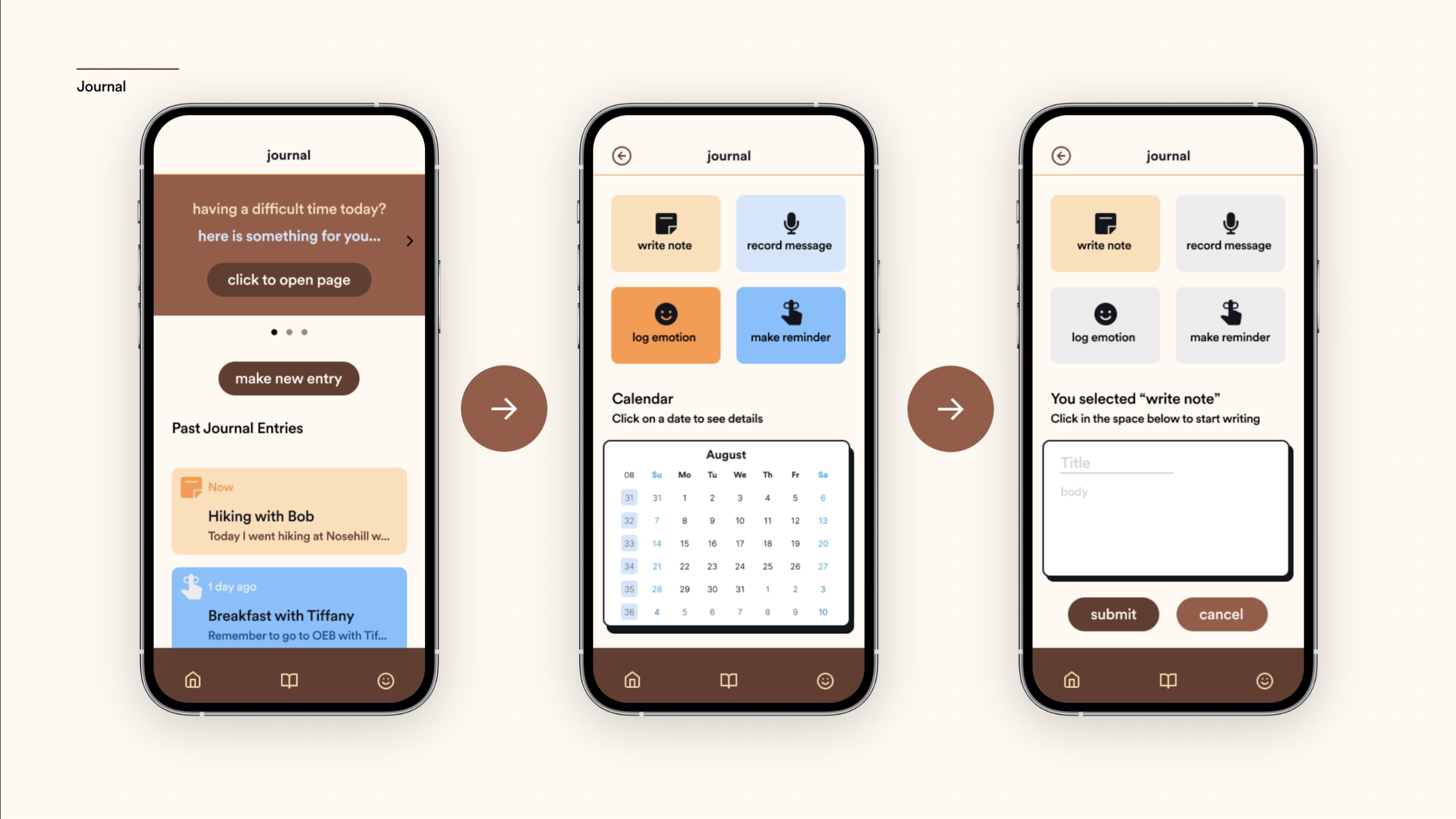
Journal
-
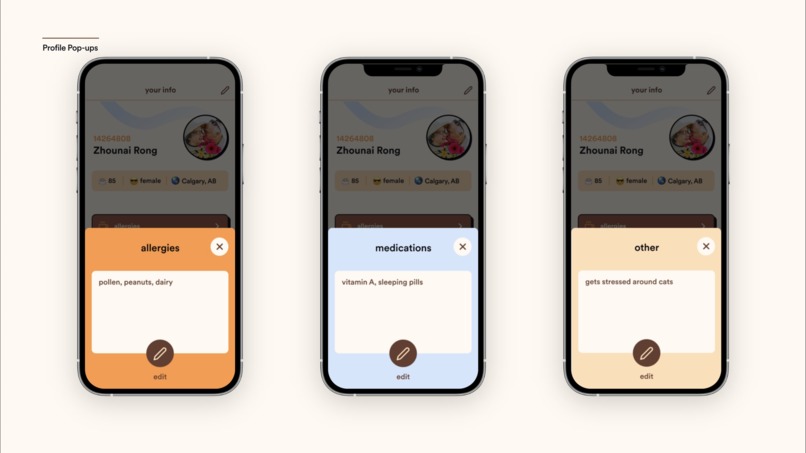
Add entries
-
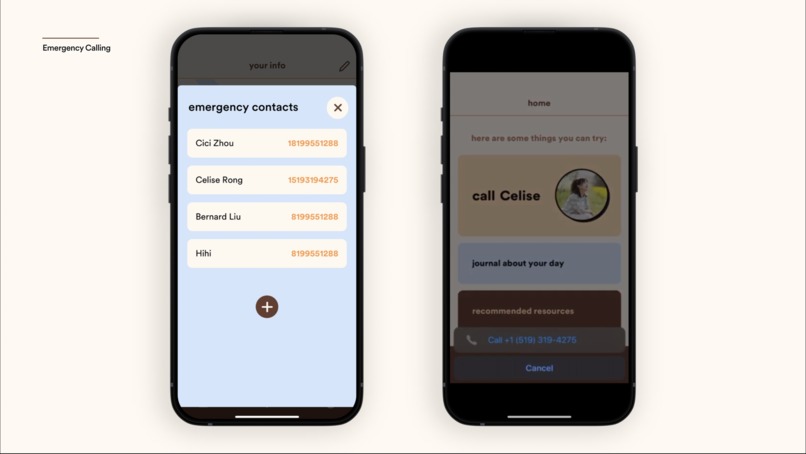
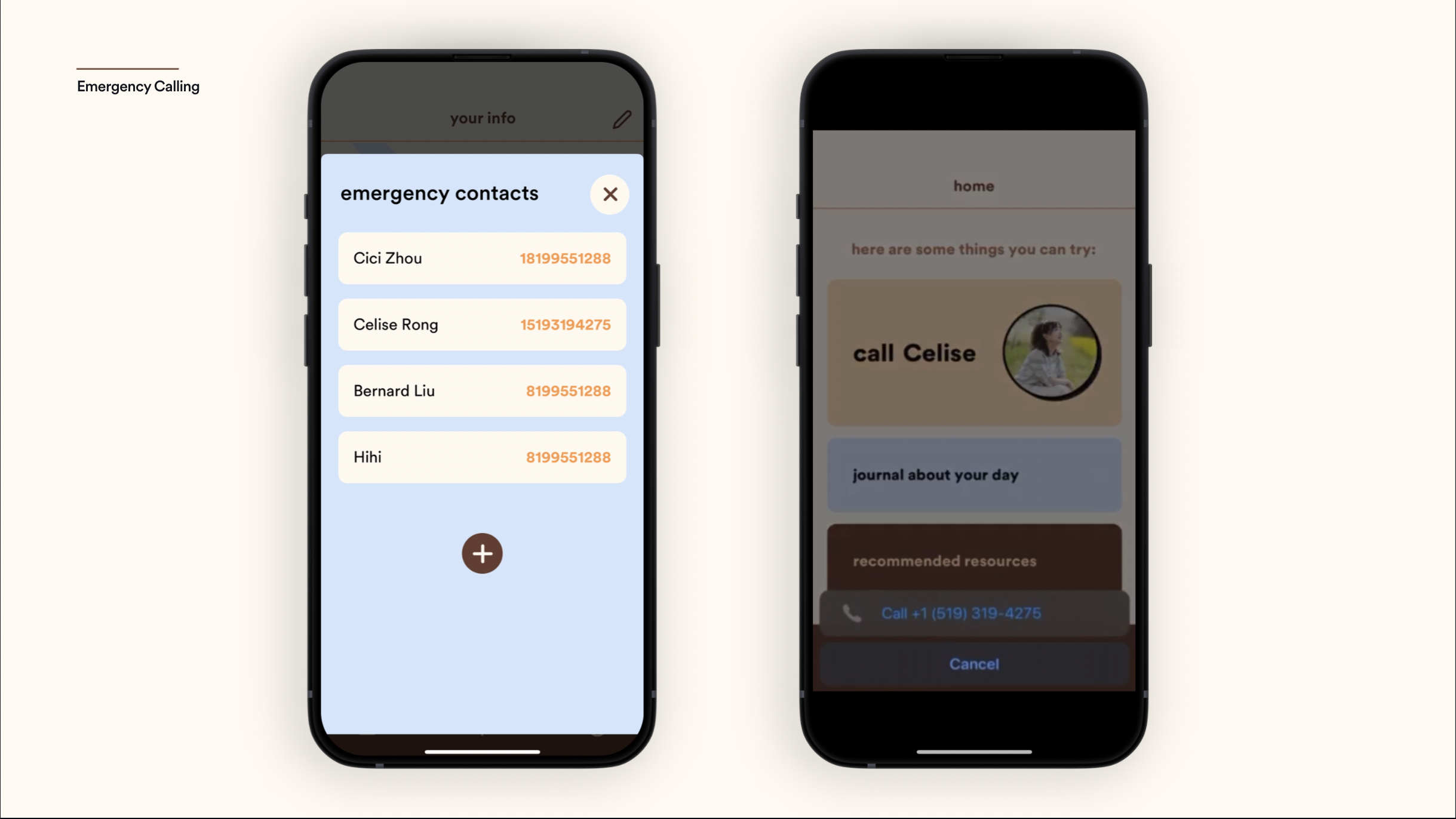
Emergency Calling
-
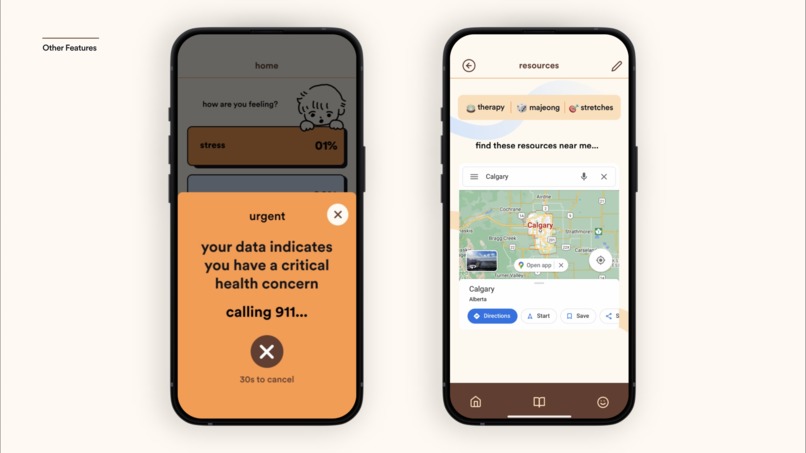
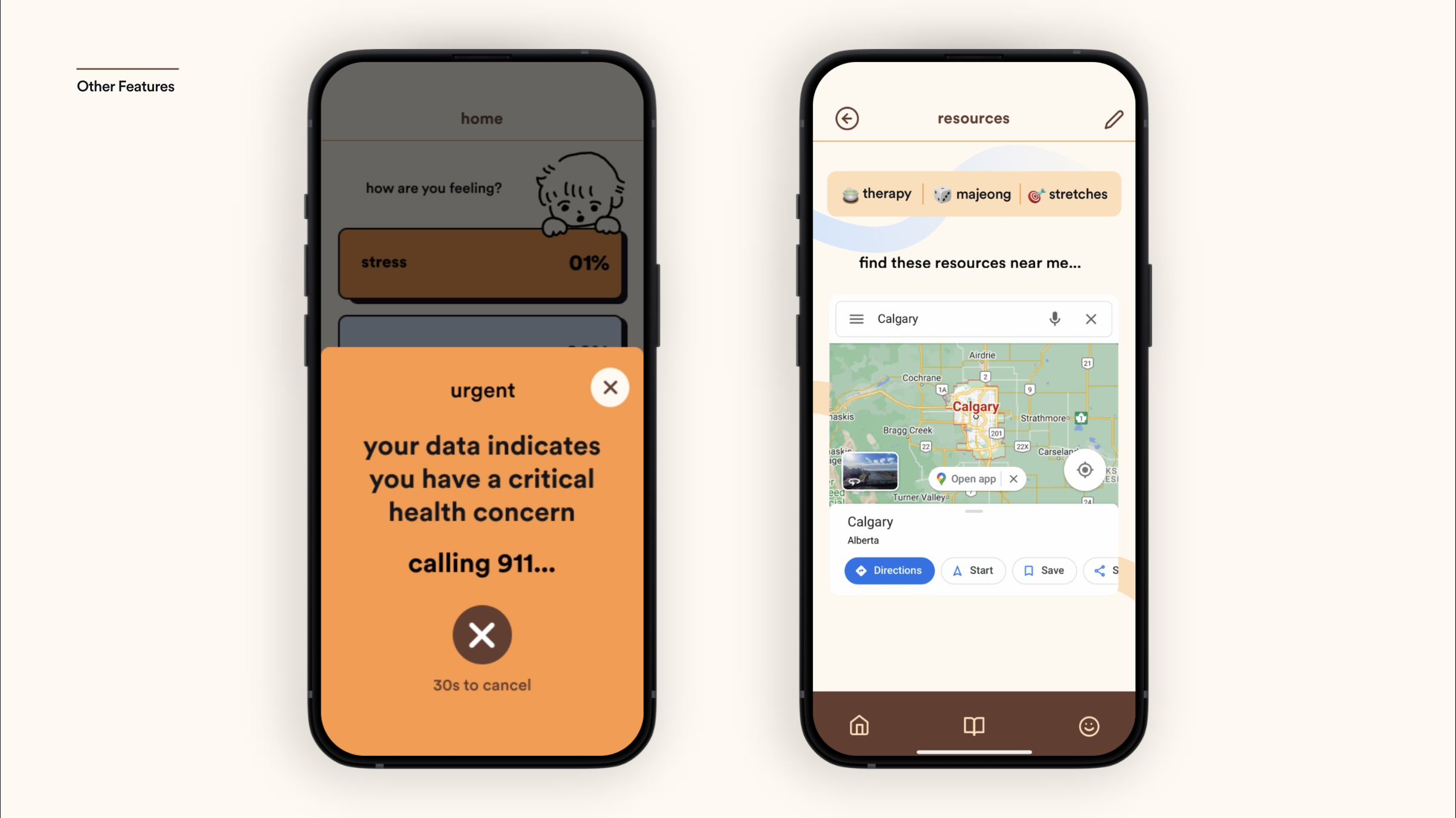
Additional Features
Inspiration
The impact of dementia on the aging population has become strikingly apparent with over 75% of cases attributed to Alzheimer’s Disease. Living with this condition often results in feelings of stress and unease. Our project was inspired by the resolve to lighten the burden on these individuals.
Code Architecture
Subsequently, we developed an electroencephalogram (EEG)-based application that extracts brainwave data from a Muse2 device and detects stressed states of the individual. Using Figma, we designed a layout of various pages in our app paying careful attention to accessibility and usability for seniors (e.g. colour choice, font size) . From there, Bravo was used to build a functional prototype of the mobile app and connect our design to external APIs. With no access to BCI hardware, we used MatLab EEG data obtained from a research study (Ghosh et al., 2021). We used FFT to decompose brainwave frequencies prior to adapting a multitaper spectral estimation algorithm–implemented in the open-source MNE-Python package. From statistical tests, we evaluated for significant changes in stress levels compared to baseline. The REST server interface, a client-service architecture, was hosted using Express–a Node.js web framework–to connect the backend to the frontend.
Functionality & Future Directions
Subsequently, our app notifies the patient of stressed states and follows up with necessary resources (links to websites, prompts to relax, etc.) in addition to contacting family members when needed. We aim to integrate more personalized features into our app, info sharing between family members, and integration of our app with other devices (e.g. smart watches).

Log in or sign up for Devpost to join the conversation.