-
-
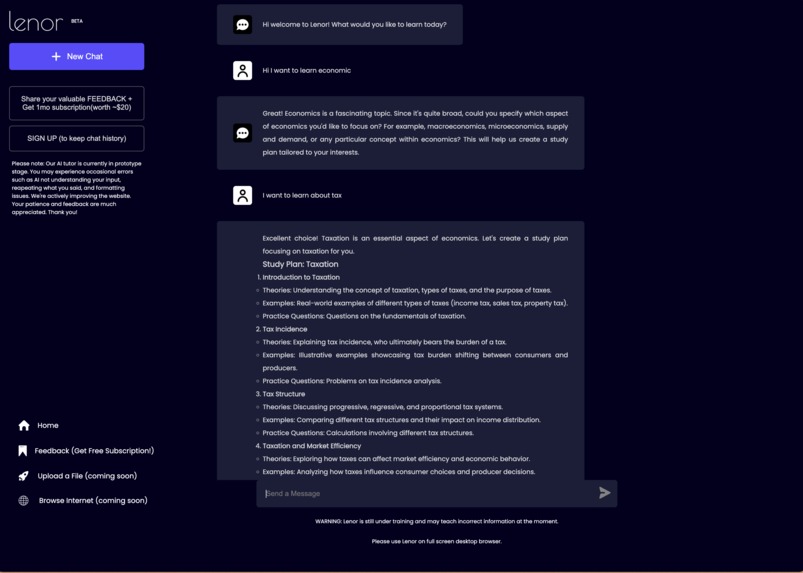
AI Tutor
-
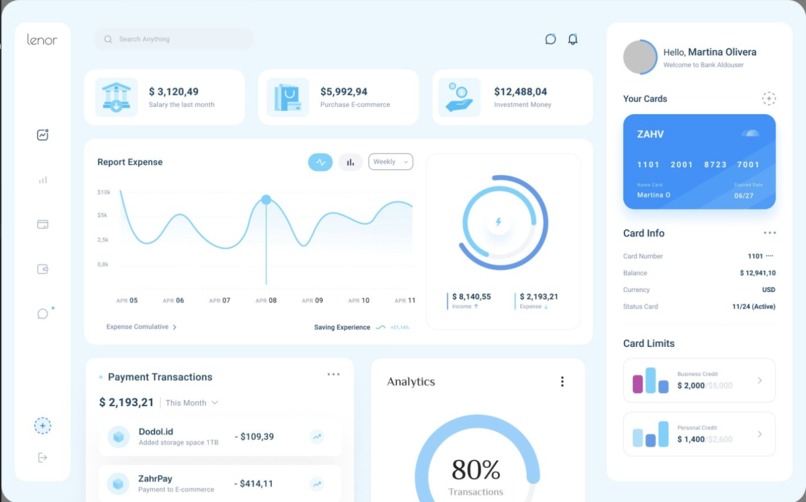
Investment Simulator
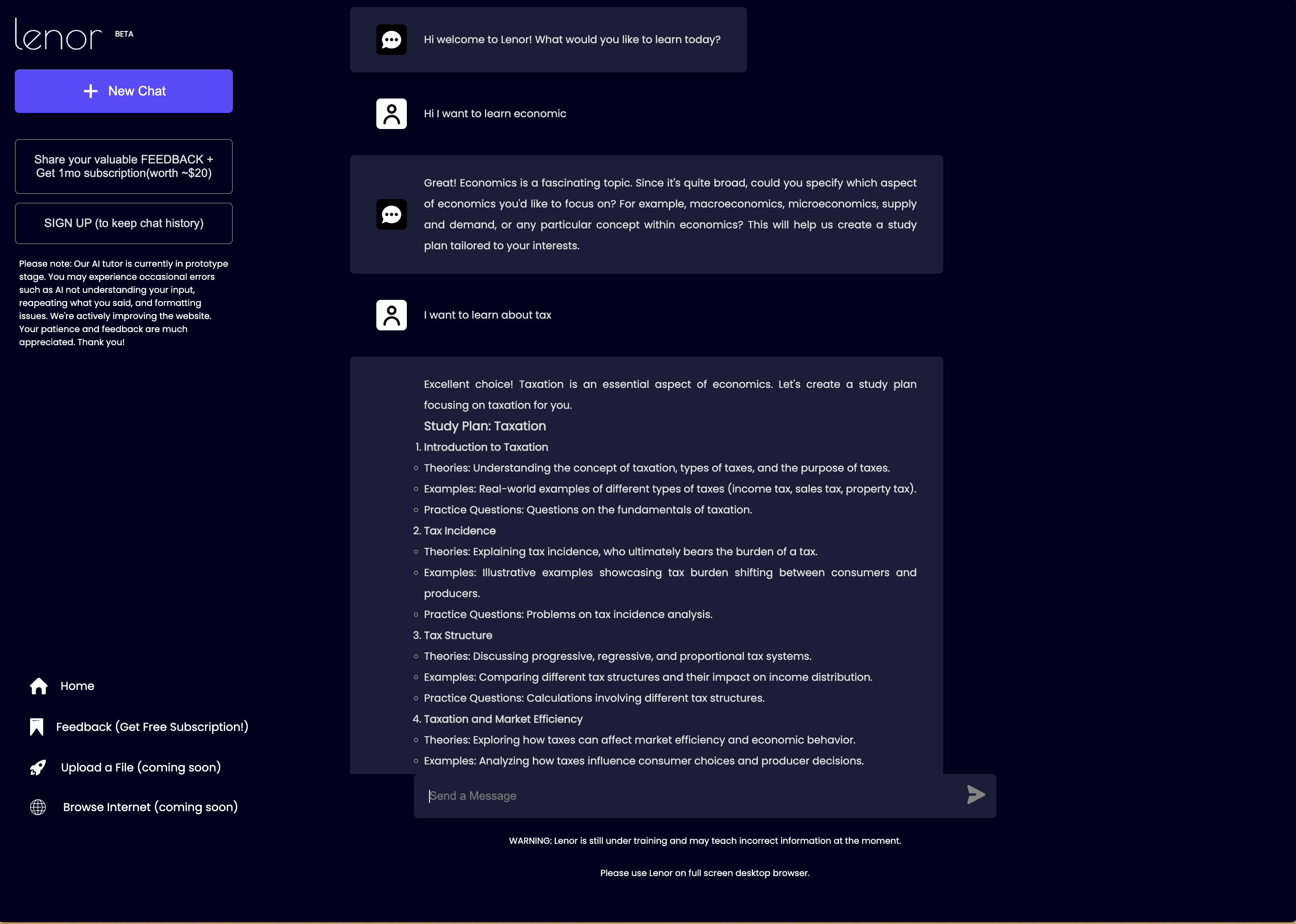
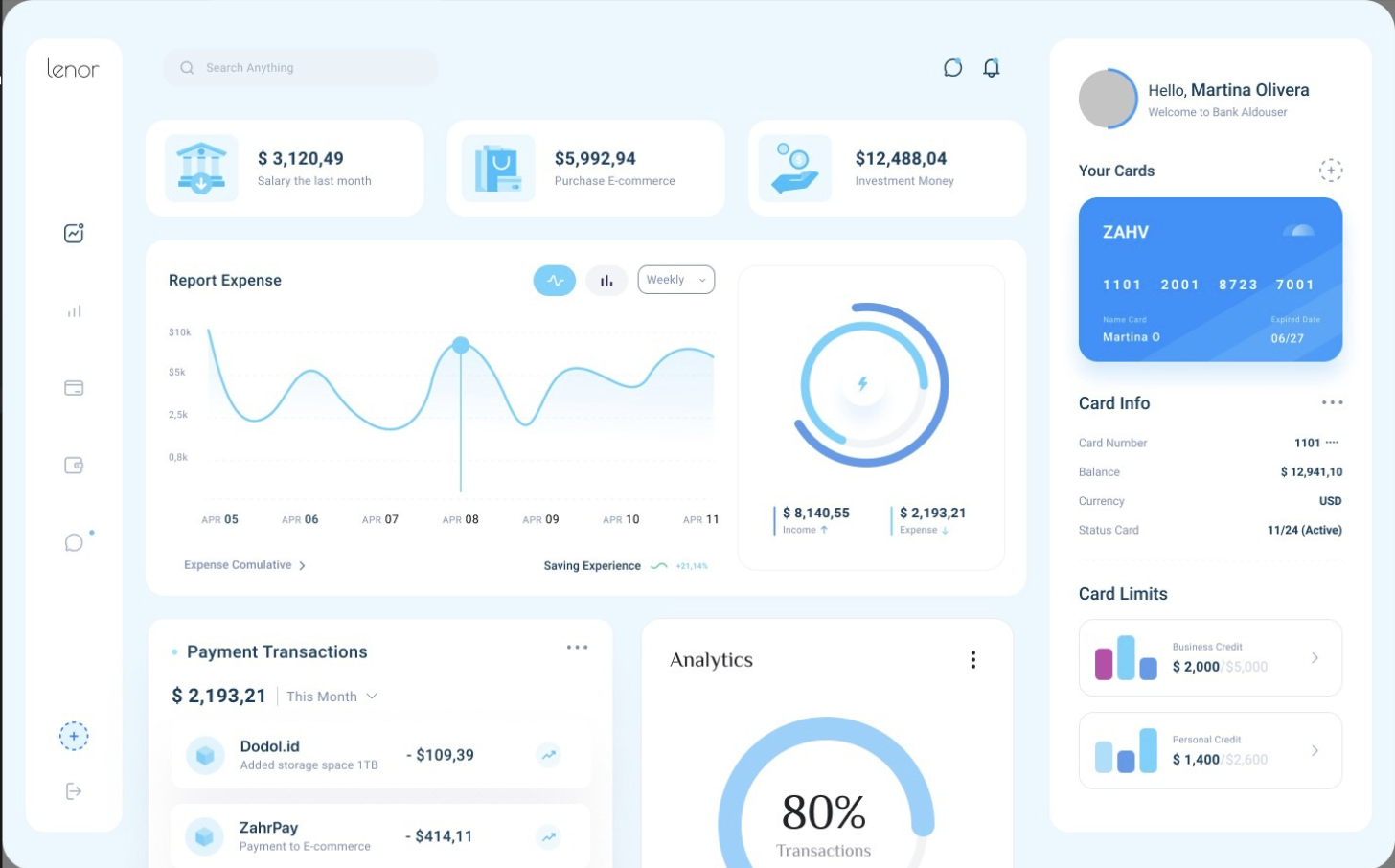
Inspiration
AI tools today are great at giving answers — but they’re terrible at teaching.
ChatGPT and other academic models are built to respond to questions, not to guide a learner through a concept from scratch. They don’t adapt to school curriculums, they don’t personalize for different learning styles, and they don’t use proven teaching strategies that actually help students improve. As a result, students get generic responses instead of meaningful, structured learning.
Meanwhile, private tutoring remains expensive and inaccessible — especially for students from underprivileged backgrounds. Many of them fall behind simply because they can't afford the help others can get.
We wanted to change that.
Our goal was to build an AI tutor that actually teaches, not just answers — one that adapts to the student's pace, aligns with their school curriculum, and creates custom pedagogy based on how they learn best. In short, we set out to make private-quality education accessible, personalized, and affordable — for every subject, for every student.
What it does
Our AI Tutor is designed to teach students any topic, step by step, in a way that feels like a real personal tutor.
- It adapts to each student’s learning pace and style (visual, verbal, logical, etc.)
- It aligns with real school curriculum content, so students feel the lessons are relevant
- It tracks progress across a 12-step learning framework, helping the student master concepts
- It delivers customized explanations, questions, and feedback based on the student's needs
- It uses a retrieval-based backend to ensure answers come from verified, real sources
- It supports multimodal learning inputs — including text, handwritten notes, slides, and even videos — so students can upload real materials from their school life
- It incorporates live browsing, allowing the AI to pull in up-to-date information during the learning process
- It generates visuals (charts, diagrams, step-by-step animations) to support learners who benefit from spatial or image-based reasoning
🧠 The Teaching-Adaptive Graph (TAG)
At the core of our tutor is the TAG engine — the Teaching-Adaptive Graph. It is a dynamic, evolving map that models each student’s conceptual understanding, learning style, and cognitive progression. TAG performs three essential functions:
- Concept Mapping – It identifies what the student knows, what they’re ready to learn next, and where they’re struggling.
- Learning Path Adjustment – It sequences and structures lessons based on their school syllabus and pace — but adapts instruction depth and type (e.g., visual explanation vs. worked examples) based on real-time student input.
- Pedagogical Personalization – Using historical response patterns, behavioral classifiers, and interaction feedback, it adjusts the teaching approach — mimicking how a private tutor would adapt their style over multiple sessions.
TAG integrates tightly with our retrieval and ML pipelines to ensure that no student receives static or generic content — every explanation, prompt, or follow-up is personalized and pedagogically grounded.
How we built it
We split the project into three main teams:
1. Retrieval-Augmented Generation (RAG)
- Built a semantic search system using Pinecone, OpenAI embeddings, and LangChain
- Allowed topic-specific question answering with source-cited responses
- Supports both local PDF ingestion (e.g. notes, slides, homework) and live web browsing for dynamic updates
- Streamlit was used as a proof-of-concept UI; supports topic-based dropdowns for namespace alignment
- Incorporated real-time document chunking and vector upsert using Pinecone with topic-specific namespaces
2. Machine Learning (ML)
- Built classification models to detect students’ learning stage (based on a 12-step model)
- Used synthetic data generation with GPT-3.5-turbo and
text-embedding-ada-002embeddings - Applied models like Random Forest, XGBoost, LightGBM with hyperparameter tuning via Optuna
- Created a second set of classifiers for learning style detection, categorized into:
- Visual
- Verbal
- Logical
- Active
- Passive
- Multimodal
- Used both traditional models and OpenAI multi-shot prompting to evaluate classification strategies
- TAG dynamically updates with these outputs to adjust lesson planning and delivery
3. Software Engineering (SWE)
- Overhauled the frontend using React.js
- Implemented user authentication, login, and secure file upload
- Built backend endpoints to interface with RAG and ML pipelines
- Hosted on Heroku, with infrastructure support via Google Cloud Platform
- Databases used: Firebase (for auth and real-time data) and MongoDB (for long-term student progress tracking)
- System is modular, ready for production integration of new modules (image generation, dashboards)
Challenges we ran into
- Fragmented inherited codebase: We had to refactor undocumented, broken legacy code and rename mismanaged branches.
- Multi-subject scalability: Teaching across all subjects — not just finance — required a flexible architecture and generalized pedagogy design.
- Curriculum alignment: Adapting generic AI outputs to specific school systems was complex but critical.
- Scheduling conflicts: With over 12 teammates across internships and study abroad programs, team coordination was difficult.
- Hallucination risks: Ensuring the RAG system didn’t fabricate information remained an ongoing technical challenge.
- Multimodal input processing: Enabling understanding of files like videos, scanned notes, and PPT slides required developing robust input parsers and OCR pipelines.
Accomplishments that we're proud of
- Successfully demonstrated a proof-of-concept AI tutor that can teach interactively and track student progress.
- Developed learning-style-aware classification models from scratch using both traditional ML and GPT.
- Built an intuitive frontend with user login and secure file uploads, ready for real testing.
- Created a flexible backend infrastructure to support subject-specific tutoring with source-cited QA.
- Designed and implemented TAG (Teaching-Adaptive Graph) as the core engine for dynamic pedagogy — the first of its kind in a student-facing AI tutor.
What we learned
- Good teaching is not just about knowledge, but delivery — and AI needs to learn that.
- Embedding curriculum knowledge and pedagogy into AI responses is just as important as LLM accuracy.
- The success of AI in education hinges on trust, accuracy, and personalization — all of which require careful design, not just strong models.
- Team dynamics matter: clear documentation, regular meetings, and scope control are essential when working with a large, distributed team.
- Sometimes, the hardest part of AI projects isn’t the model — it’s making it usable for real students with real school workloads and limitations.
What's next for Remarkably
Even though this started under the Financial Literacy vertical, the broader AI Tutor has opened up a new product path for us.
Next steps:
- Integrate real-time web search to keep content current and contextually accurate
- Improve student profiling via longitudinal TAG updates and classroom feedback
- Launch subject-specific versions (Math, Science, English, etc.) with curriculum alignment for each
- Add multi-modal outputs (diagrams, videos, simulations) to serve visual and kinesthetic learners
- Build and deploy a robust analytics dashboard for teachers and parents to monitor learning progress, identify at-risk students, and intervene early
- Begin pilot testing with schools and underprivileged communities to validate accessibility and equity goals
Our long-term goal is to make high-quality private tutoring accessible to every student, anytime, anywhere — not just with AI that answers, but with AI that teaches.

Log in or sign up for Devpost to join the conversation.