-
-
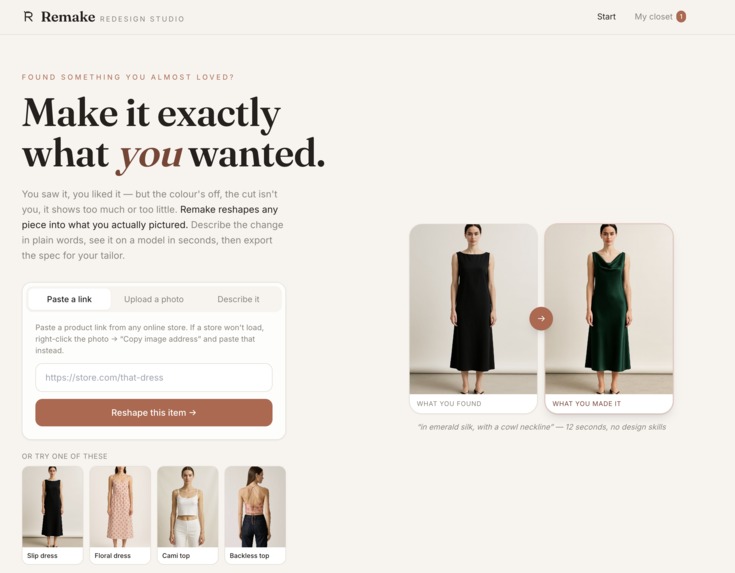
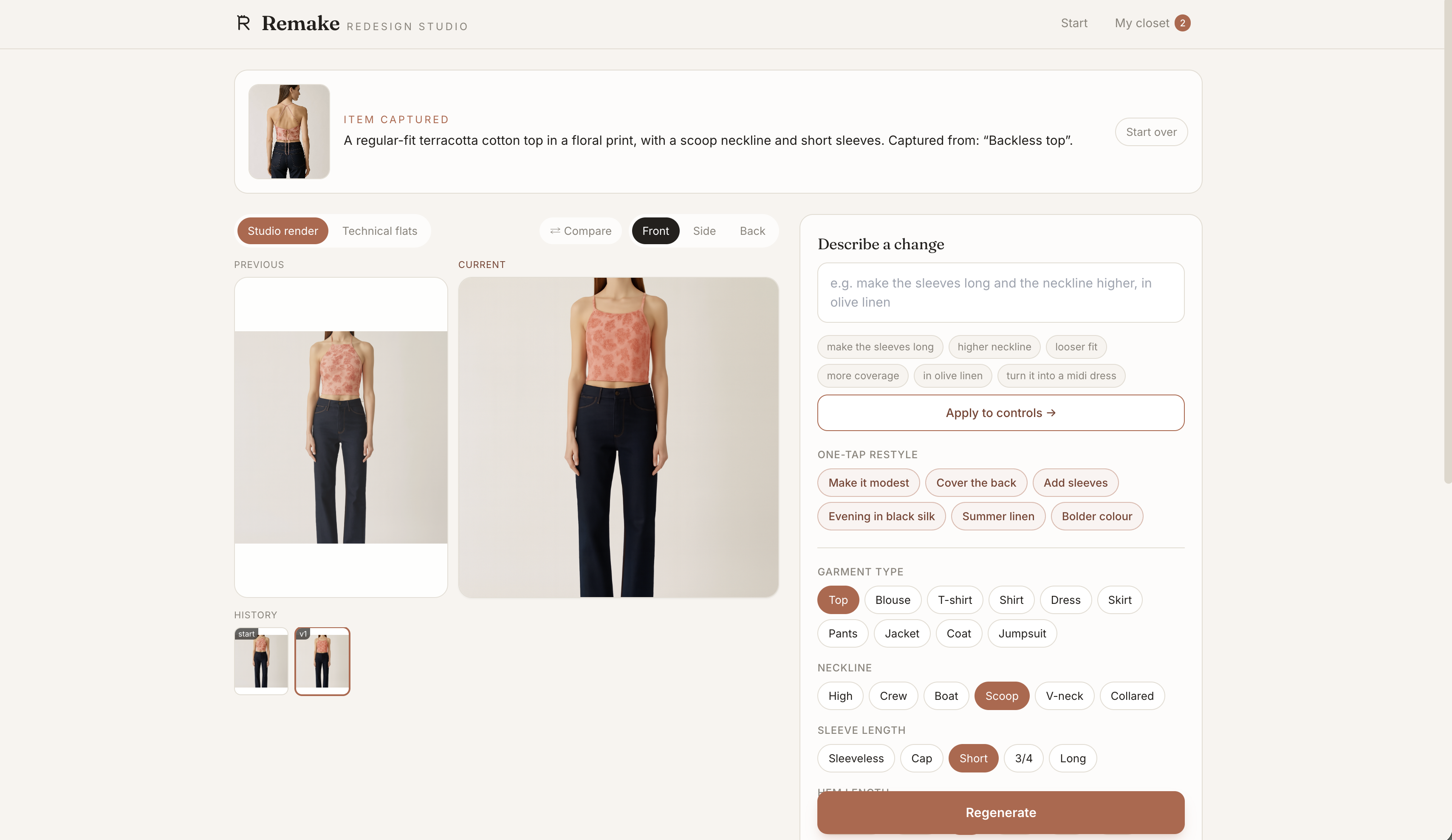
Photoreal model renders, front/side/back turntable
-
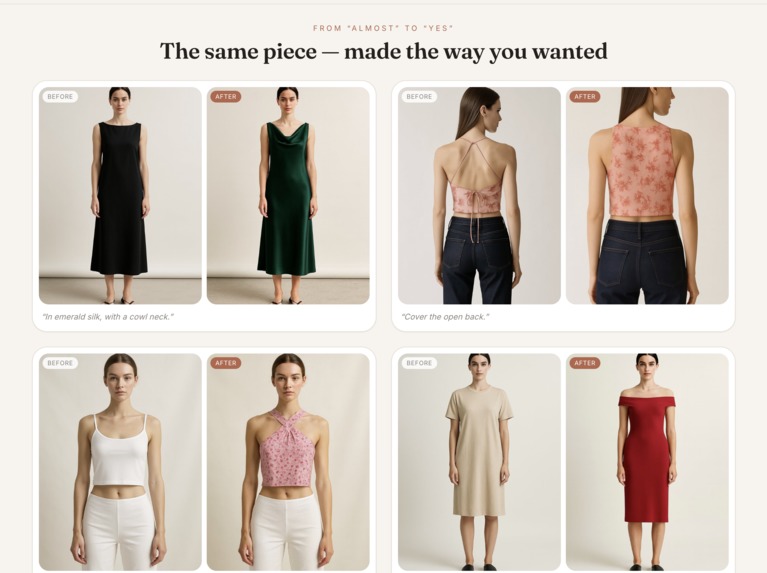
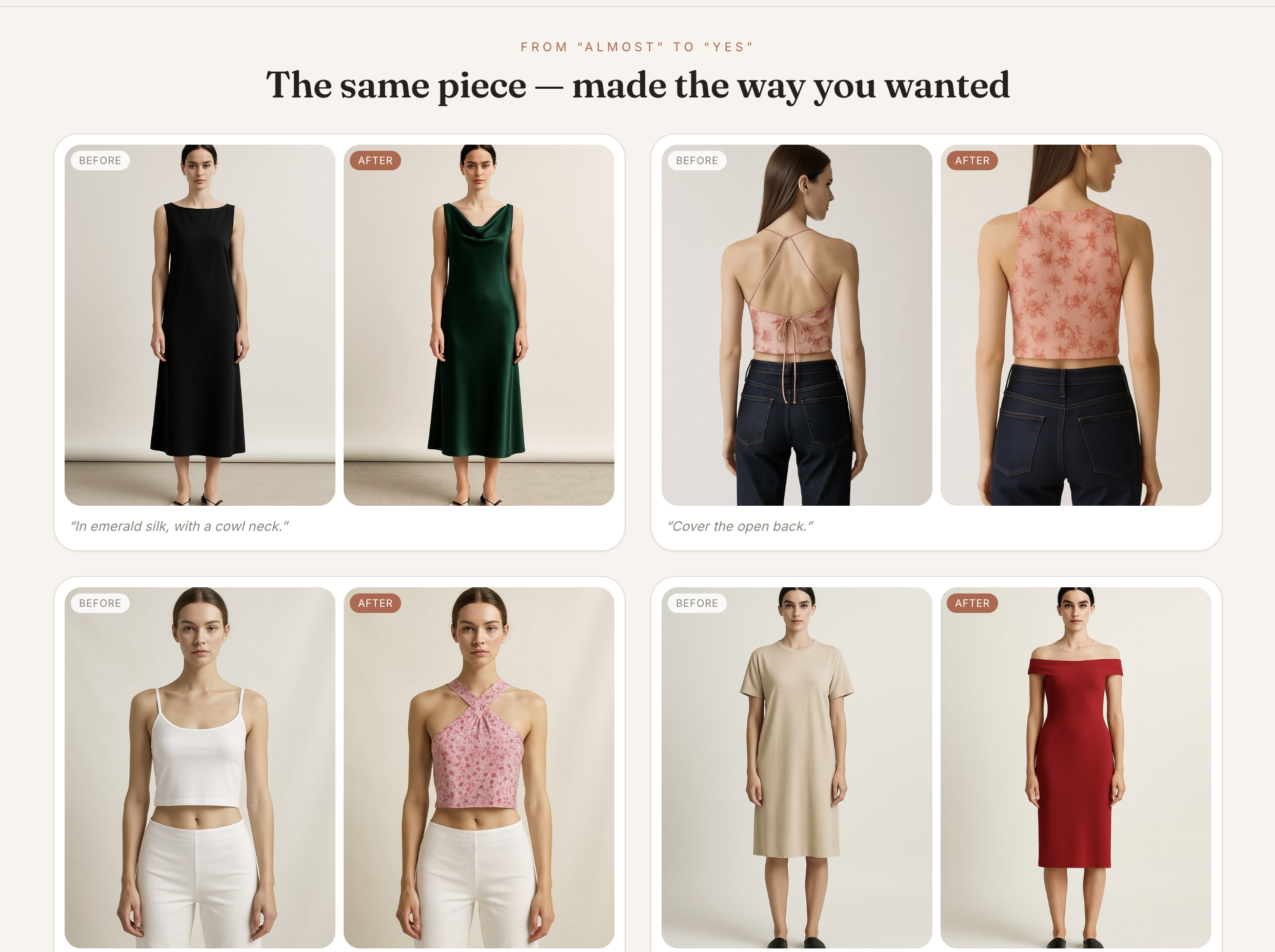
Before/after transformation
-
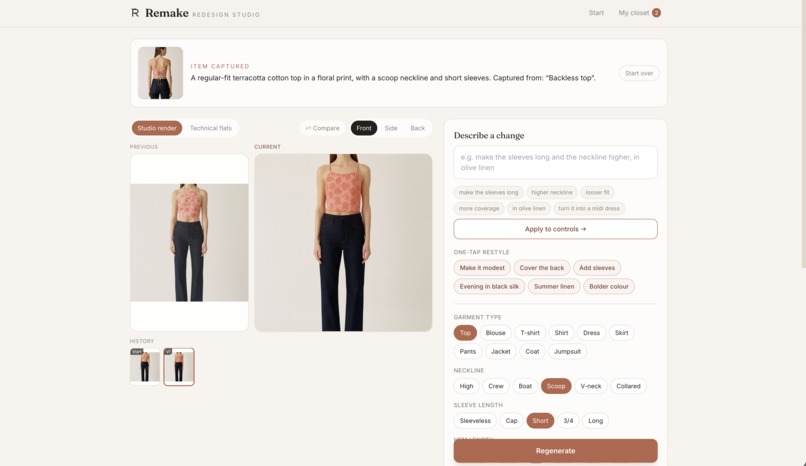
Redesign studio, Photoreal model renders, front/side/back turntable
-
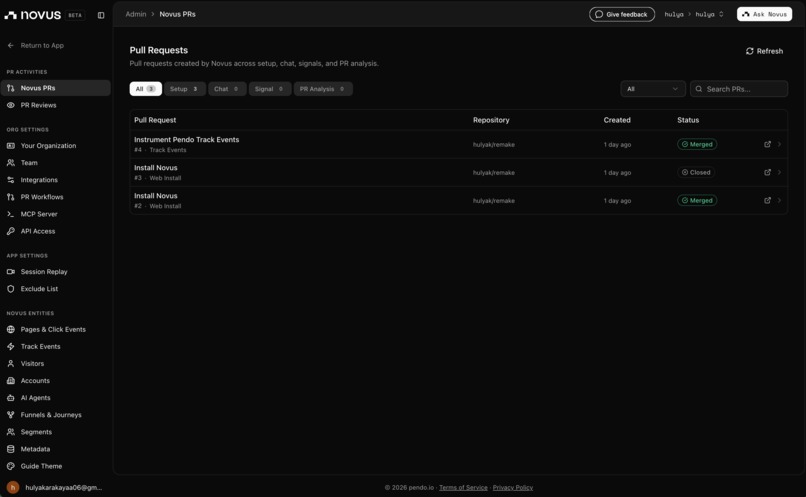
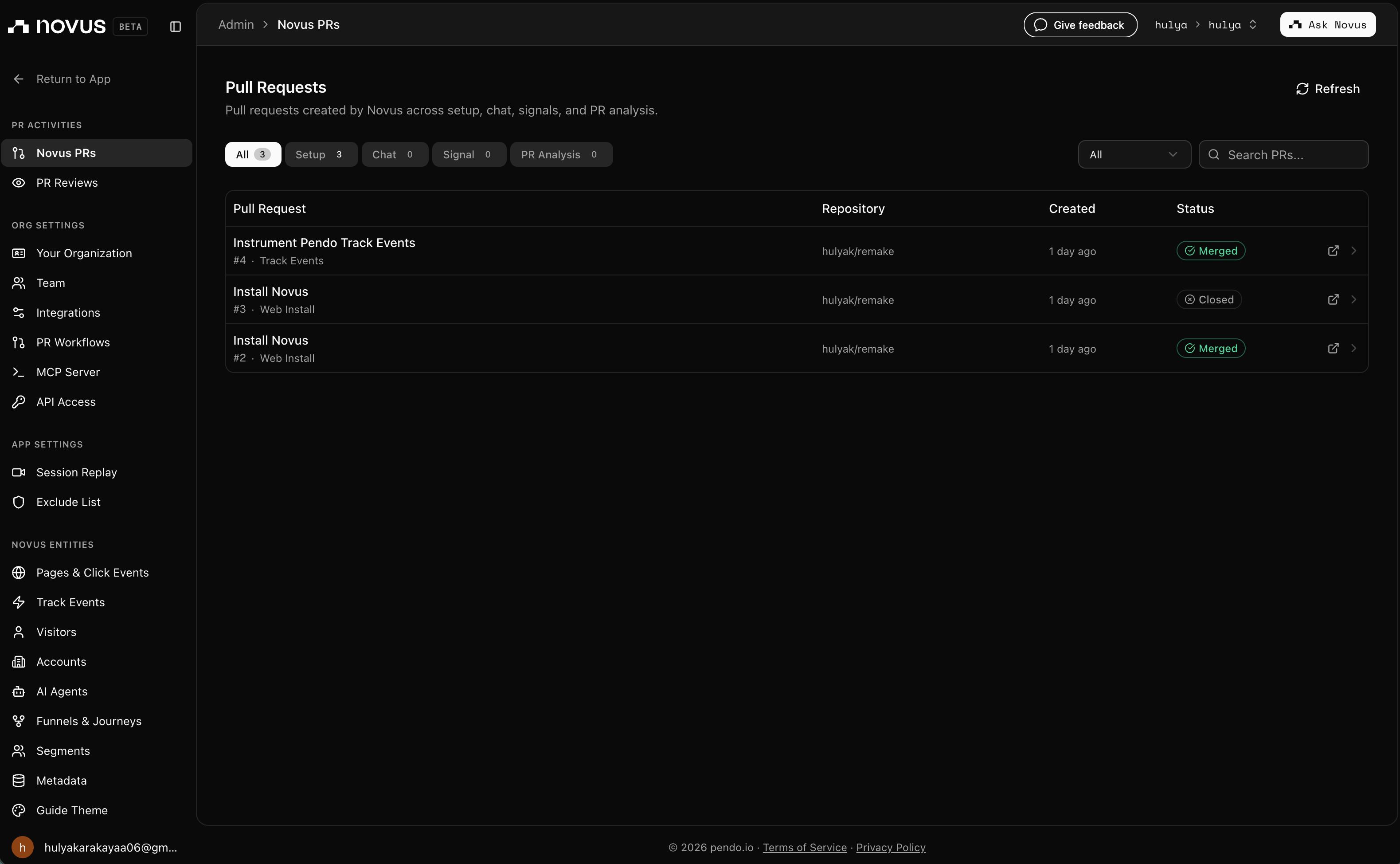
Novus dashboard
-
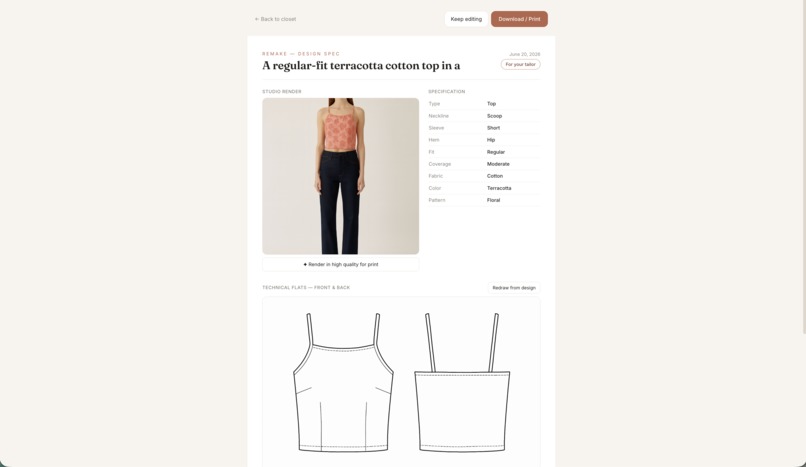
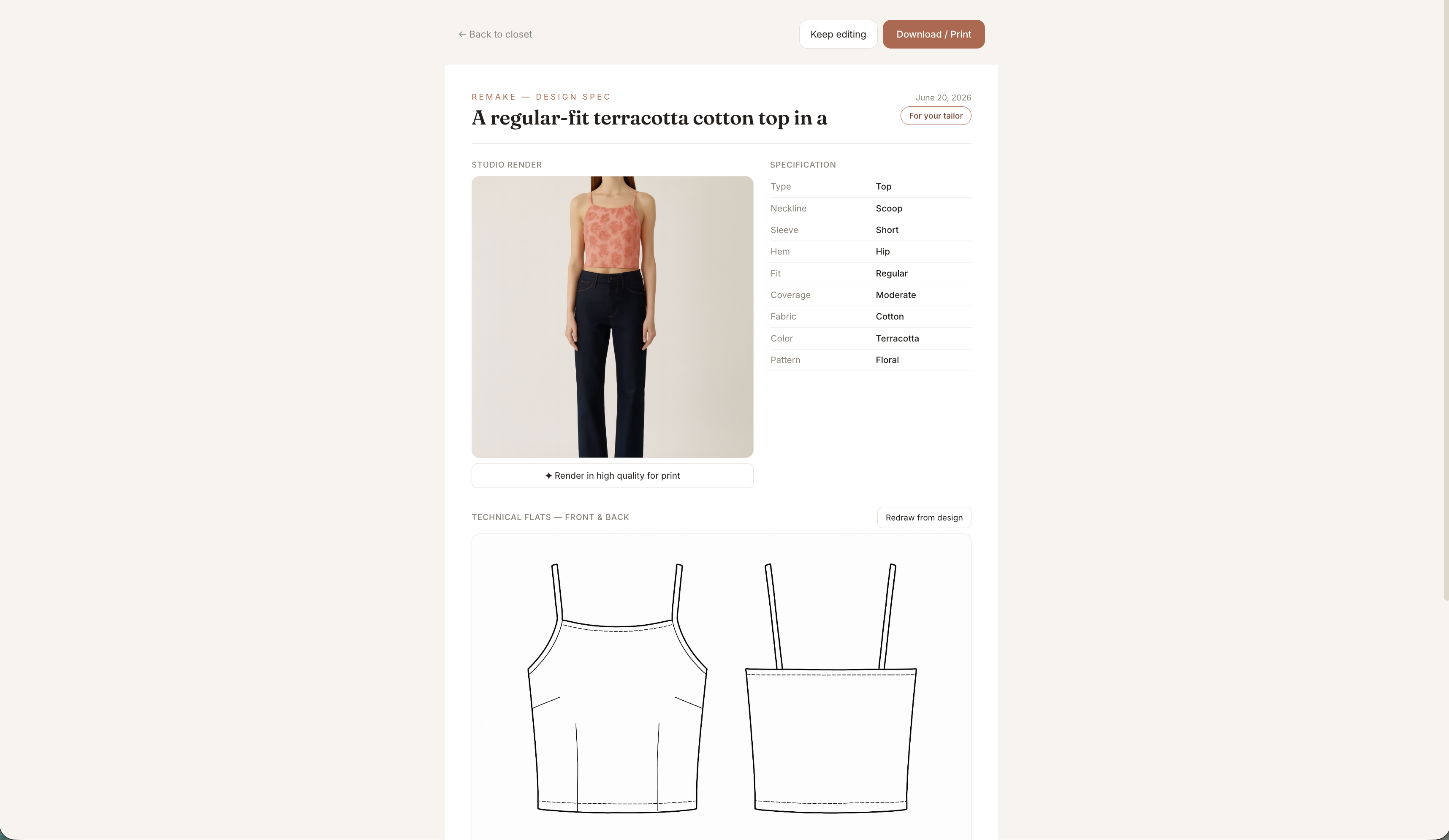
Export a tailor-ready spec sheet
-
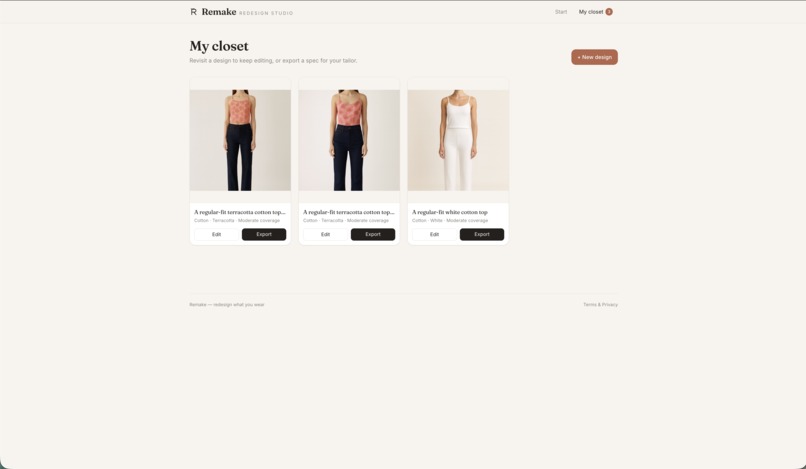
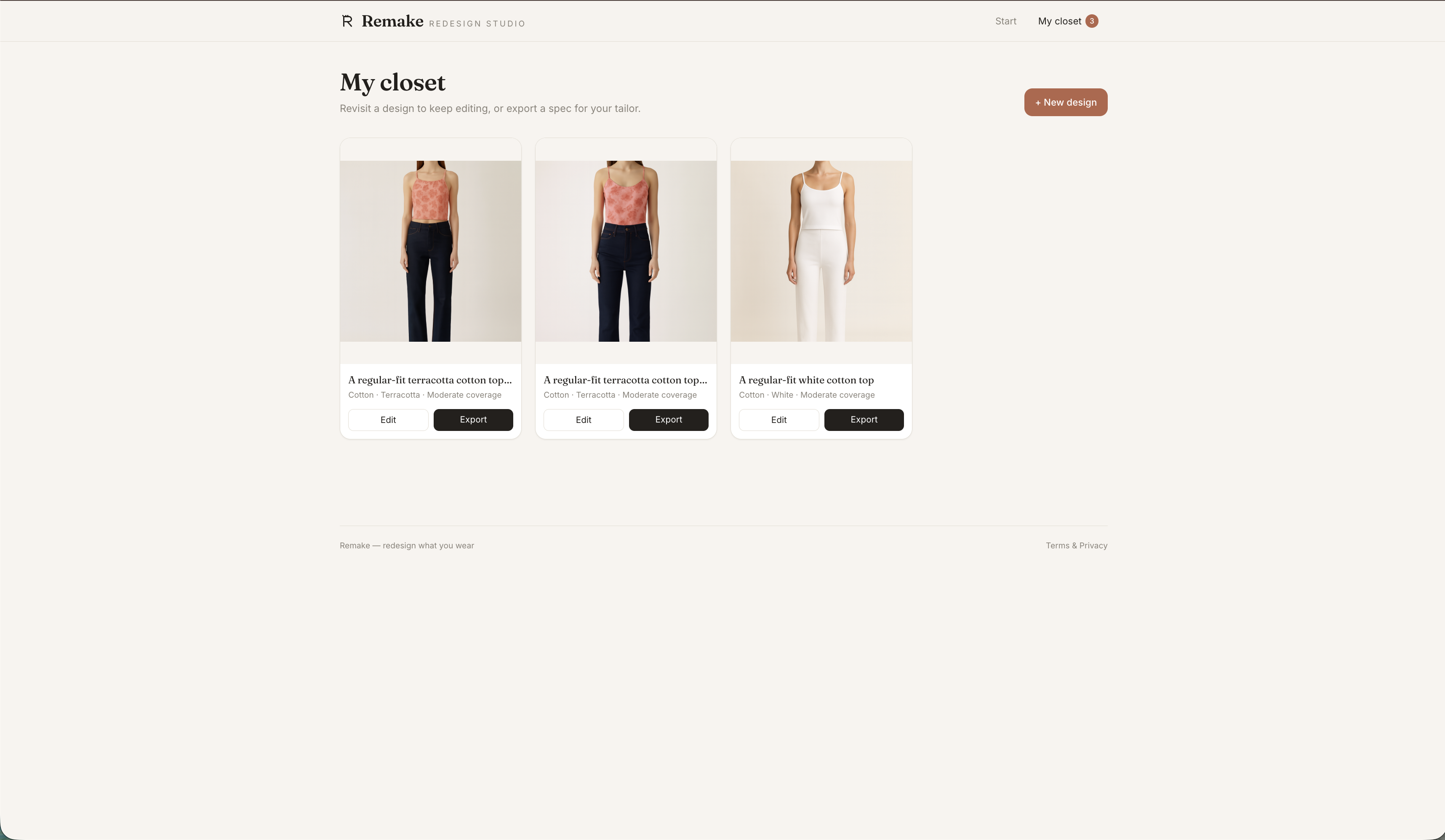
Save to a closet
Inspiration
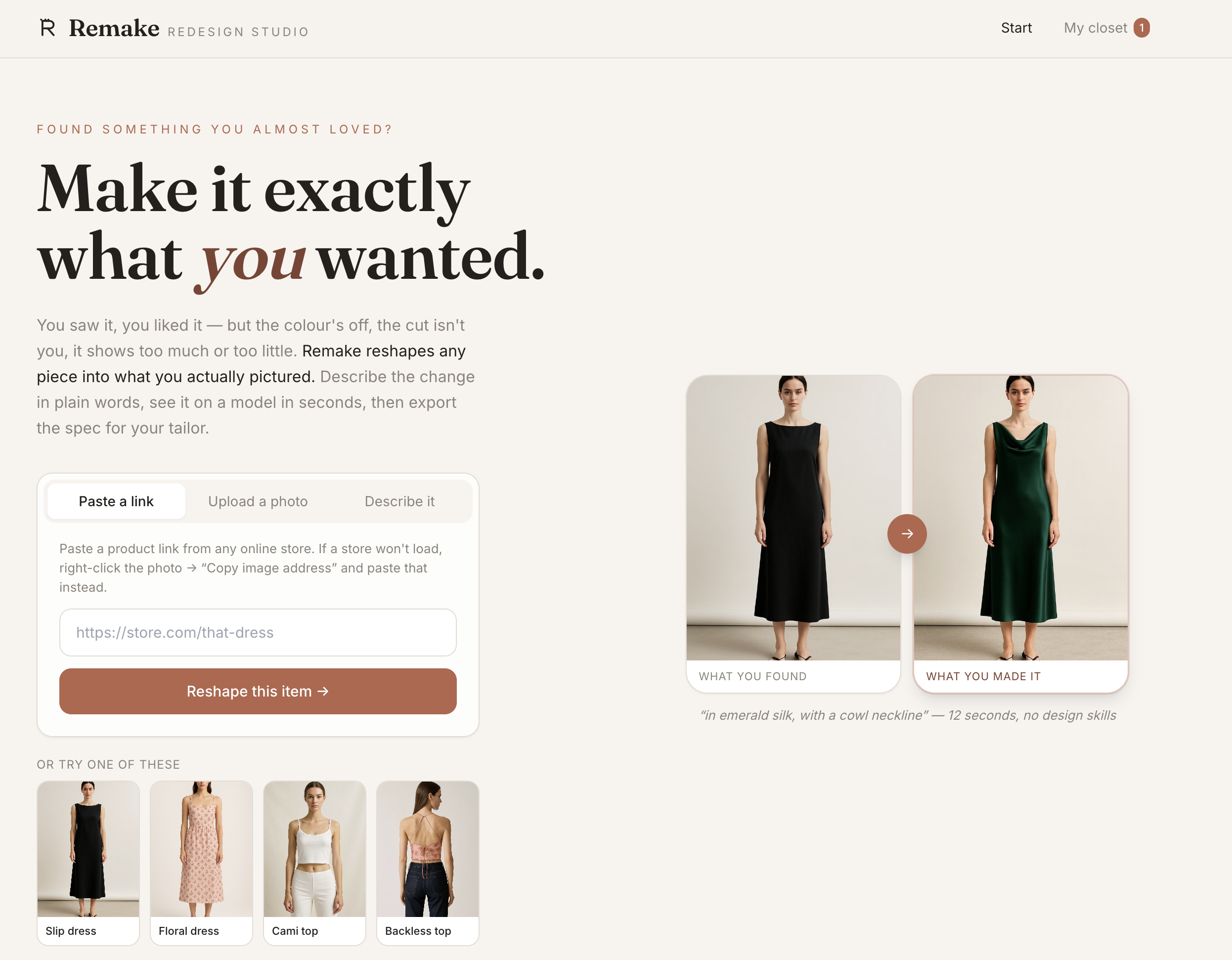
We've all done it. You find a piece online you genuinely love, but the color's slightly off, or the cut isn't you, or it shows too much or too little. So you sigh and close the tab. Stores only sell what's on the rack, and "just get it altered" means describing a vision to a tailor with no way to see it first. We wanted to close the gap between "I wish this were a little different" and "here it is, on a model, exactly how I pictured it," without needing any design skills to get there.
What it does
Remake lets anyone take an item they already like and turn it into what they actually wanted:
- Bring in any item. Paste a store link, upload a photo, drag or paste a screenshot, or use the "Send to Remake" browser extension.
- It appears on a model automatically. A photoreal render, not a sketch.
- Reshape it in plain language. Try "make it emerald, add a slit, give it sleeves, in linen," or use the quick controls (neckline, sleeve, hem, fit, coverage, fabric, color, pattern). Both precise edits and open-ended ones like "add a tie belt and a front slit" work.
- See it from every angle. Front, side, and back turntable on the same model, with a version history.
- Make it real. Save it to your closet and export a clean spec sheet with front and back technical flats to hand any tailor or made-to-order service.
How we built it
- Claude (Claude Code) to design and build the whole thing end to end, from idea to deployed product in days.
- Next.js (App Router), TypeScript, and Tailwind, deployed on Vercel.
- OpenAI gpt-image-1 for image-to-image editing, routed through a backend so the API key never touches the browser. We also wired in Amazon Bedrock Nova Canvas as an alternative provider.
- AWS S3 for durable storage of renders, so the browser only ever holds URLs.
- A parametric SVG renderer that generates the technical flats, which is the deliverable a tailor actually uses.
- Novus.ai (Pendo) for real-usage analytics from day one, plus rate limiting and a daily render cap to protect the billed endpoints.
Challenges we ran into
- AI editing is not the same as generation. Getting "change only the sleeves, keep everything else identical" took real prompt engineering and high input fidelity. We hit a nasty bug where a failed source-image fetch silently generated a different garment. The fix was to store the source in S3 and throw an error instead of inventing something. Modern store CDNs also serve AVIF, which the model rejects, so we normalize everything to PNG first.
- Stores block scrapers. Bot-protected sites 403 our server fetches, so we built capture paths that actually work: paste-image-URL, drag-and-drop, screenshot-paste, and a browser extension that runs in the user's own session.
- Shipping AI means shipping cost controls. Every render costs money, so rate limits, a global and per-device daily cap, and graceful failure all had to ship alongside the feature, not after it.
- Consistency across angles. Keeping the same model when turning from front to side to back meant feeding each new angle from the previous render.
- State that scales. Our 2MB renders overflowed localStorage, which pushed us to S3-backed storage with URL-only client state.
Accomplishments that we're proud of
- A real, deployed, usable product, not a demo with broken buttons. You can land on it and redesign something right now.
- Faithful, photoreal edits that keep your item recognizable while changing exactly what you asked for.
- A consistent front/side/back turntable and a genuinely useful tailor spec sheet, which bridges the gap from "pretty picture" to "thing you can actually own."
- Shipped in days with cost protection, analytics, and a polished editorial UI, and live with Novus from day one so we're learning from real usage instead of shipping into the void.
What we learned
- Image editing is a different discipline from generation. Fidelity, "change only X," and avoiding silent drift are the hard parts.
- Faithful capture beats clever scraping. Put the action in the user's own browser.
- Validate demand while you build. Quick keyword and niche research showed real, low-competition pull for clothing customization.
- For an AI product, the unglamorous parts (cost caps, graceful failure, storage) are the product, not an afterthought.
What's next for Remake
- Accounts and a cloud closet so designs follow you across devices.
- More garment types and richer edits like prints, trims, and layering.
- A tailor and made-to-order marketplace, so you're one tap from a spec sheet to a real quote and a finished garment.
- Shareable looks ("here's my redesign, what do you think?") to tap into the social and TikTok demand.
- A mobile app for screenshot-to-redesign in seconds.
Built With
- amazon-web-services
- claude
- next.js
- novus
- openai
- pendo
- s3

Log in or sign up for Devpost to join the conversation.