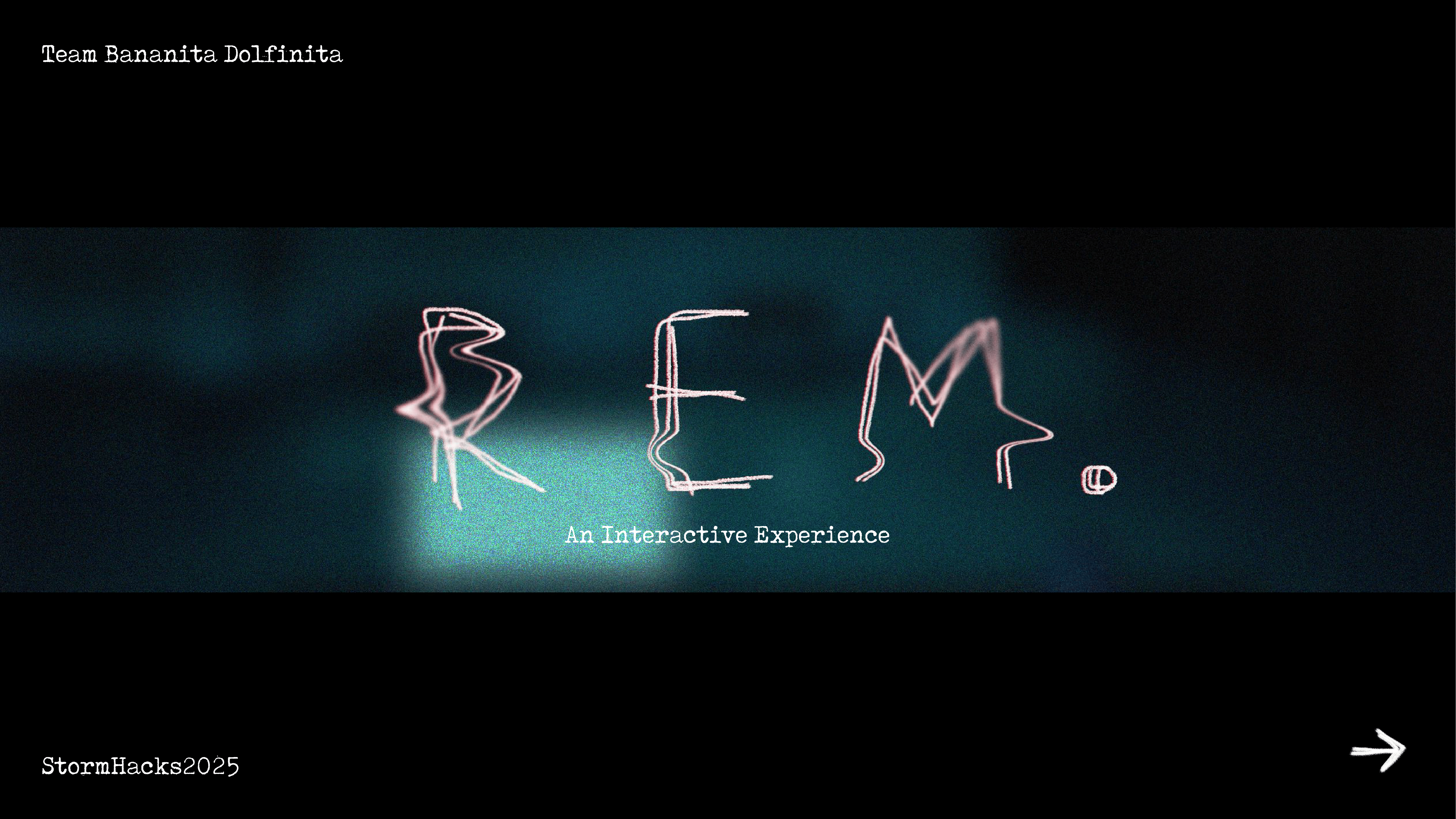
Inspiration
Inspired by friends and family who often stay up late for their career, we wanted to capture the suffocating tension of late-night studying, that familiar feeling of exhaustion, guilt, and pressure when your thoughts start turning against you.
REM was inspired by real experiences of burnout and insomnia, amplified through the language of psychological horror.
It asks a simple question: What happens when the drive to succeed becomes the thing that destroys you?
What it does
This is a simple mouse interaction game. Players have the ability to interact with 3 things infront of them: a laptop, a book, a can of Red Cow. As the line between thought and hallucination begins to blur, the game externalizes the player’s stress.
How we built it
We built REM using Python and Pygame, focusing on tight environmental storytelling and minimal UI. Also sweat and tears.
Challenges we ran into
From a design standpoint, scoping down the game: what's the emotional impact and value, what is it that we're trying to deliver, and what were our priorities in this idea, were tricky. We had to think of ways to accomodate for the lack of time and unexpected blockers.
Morever, since we decided to do everything from scratch using pygame, we wanted to limit the amount of bloat our project had, we eventually didn't go with tradional game engines. Since we made many things from scratch we ran into many architectural problems that required hacky solutions.
Accomplishments that we're proud of
Having a team with diverse backgrounds and skill levels was something we initially struggled with, but we eventually learned how to make it work. We spent a significant amount of time scoping and designing the game, time that made us uncertain as the deadline drew closer, yet we managed to meet almost all of our minimum viable goals under reasonable pressure. Our developers stayed up through the night debugging and learning Pygame from scratch, turning this hackathon into both a creative challenge and a genuine learning experience.
What we learned
We learned teamwork, dev-designer communication, game design, Pygame, game UXUI, and more.
What's next for REM.
We want to expand REM into a fuller narrative experience, exploring the stages of burnout through a series of dreamlike “study loops,” each more distorted than the last. Future updates could include voice-over internal monologues, branching dialogue choices, and a visual system that reacts to the player’s stress level. Ultimately, we want REM to remind players of that quiet, familiar question: When does perseverance become self-destruction?


Log in or sign up for Devpost to join the conversation.