-
-
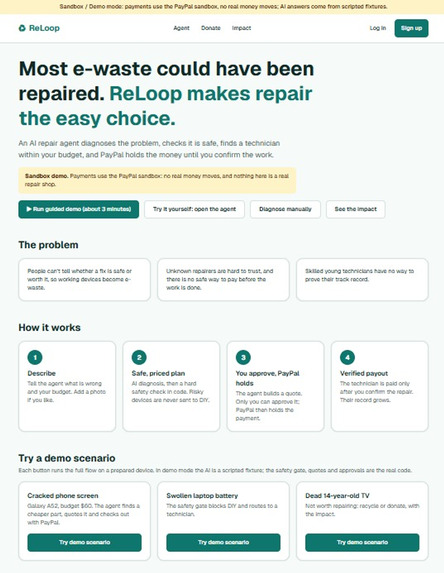
ReLoop: an AI repair agent that checks safety, finds a technician and has PayPal hold the payment.
-
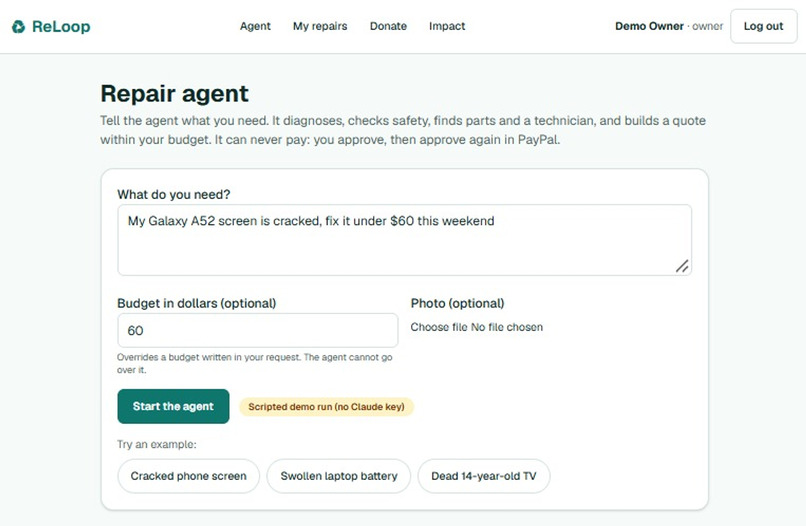
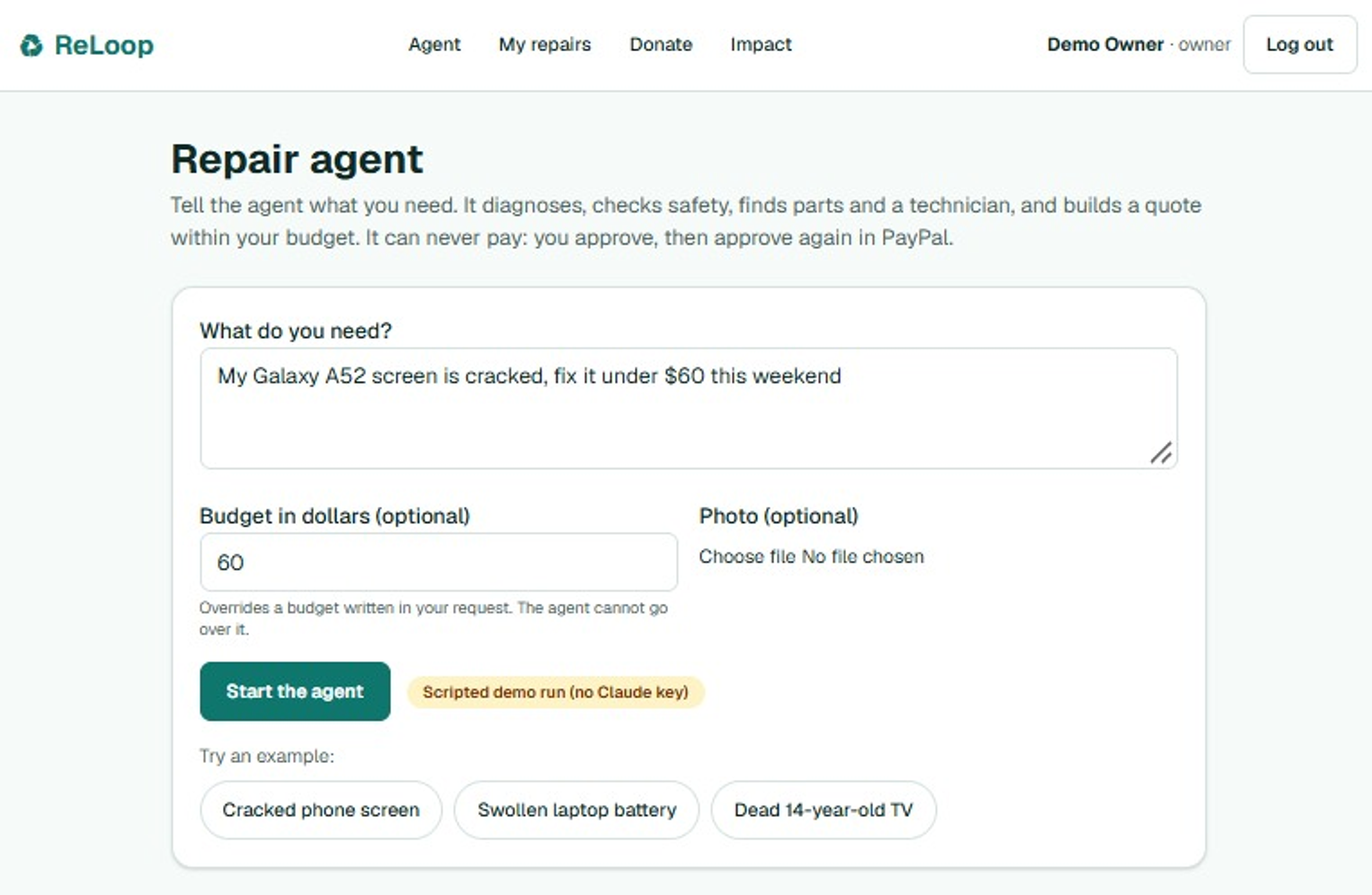
Describe what's broken and your budget. The agent can't pay: you approve, then approve in PayPal
-
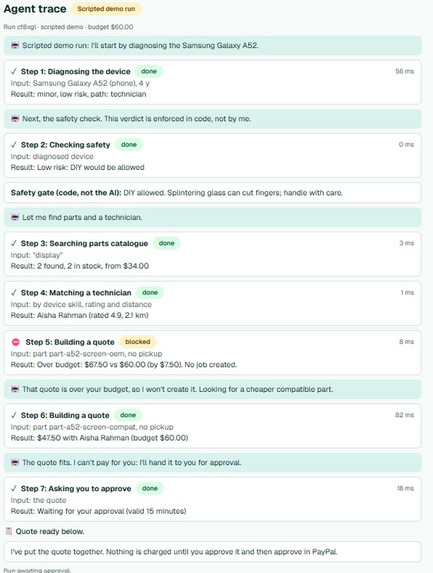
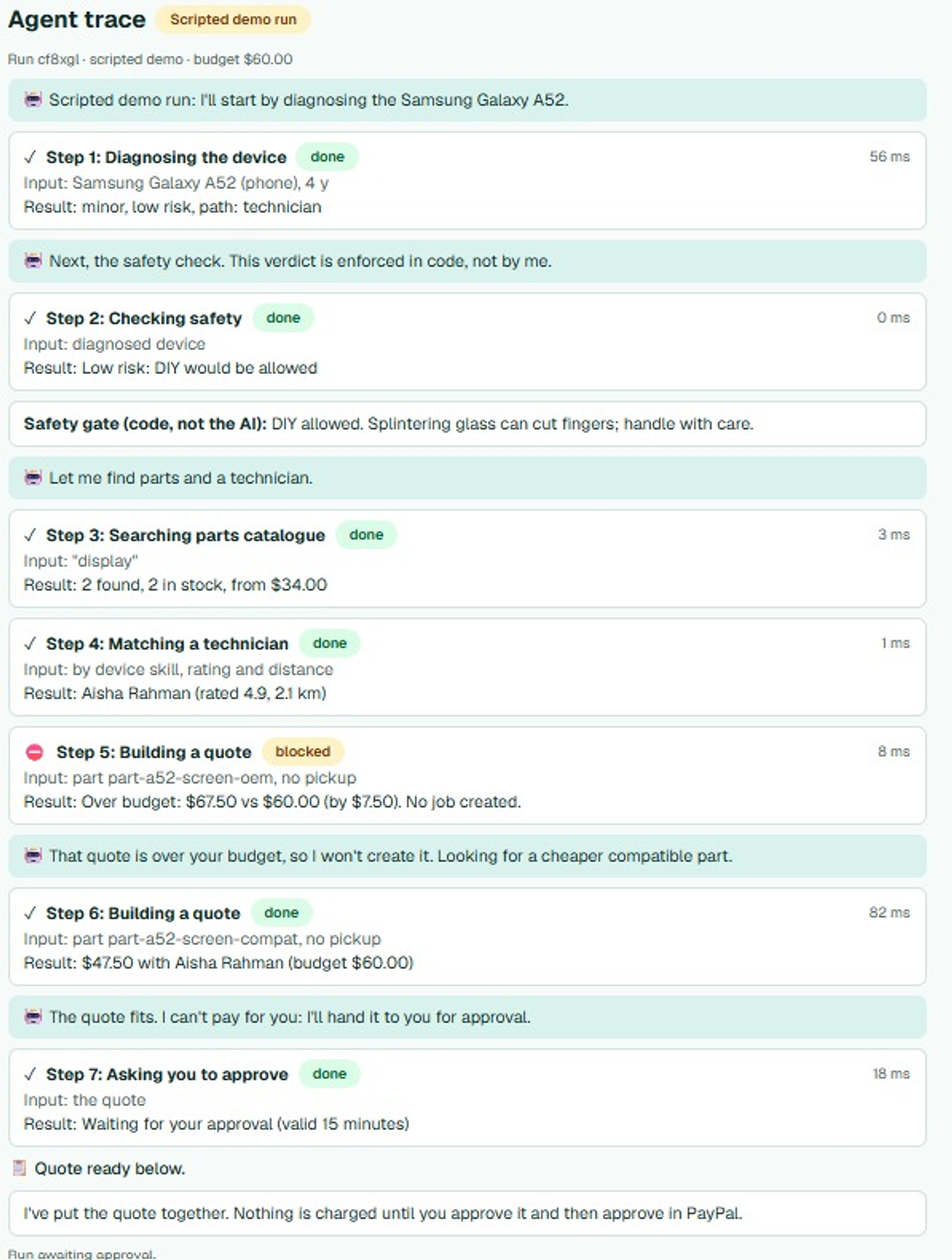
Agent trace: diagnosis, safety check, parts, technician. The over-budget quote is rejected in code
-
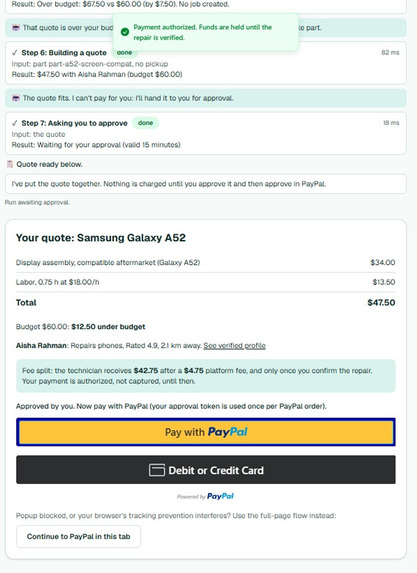
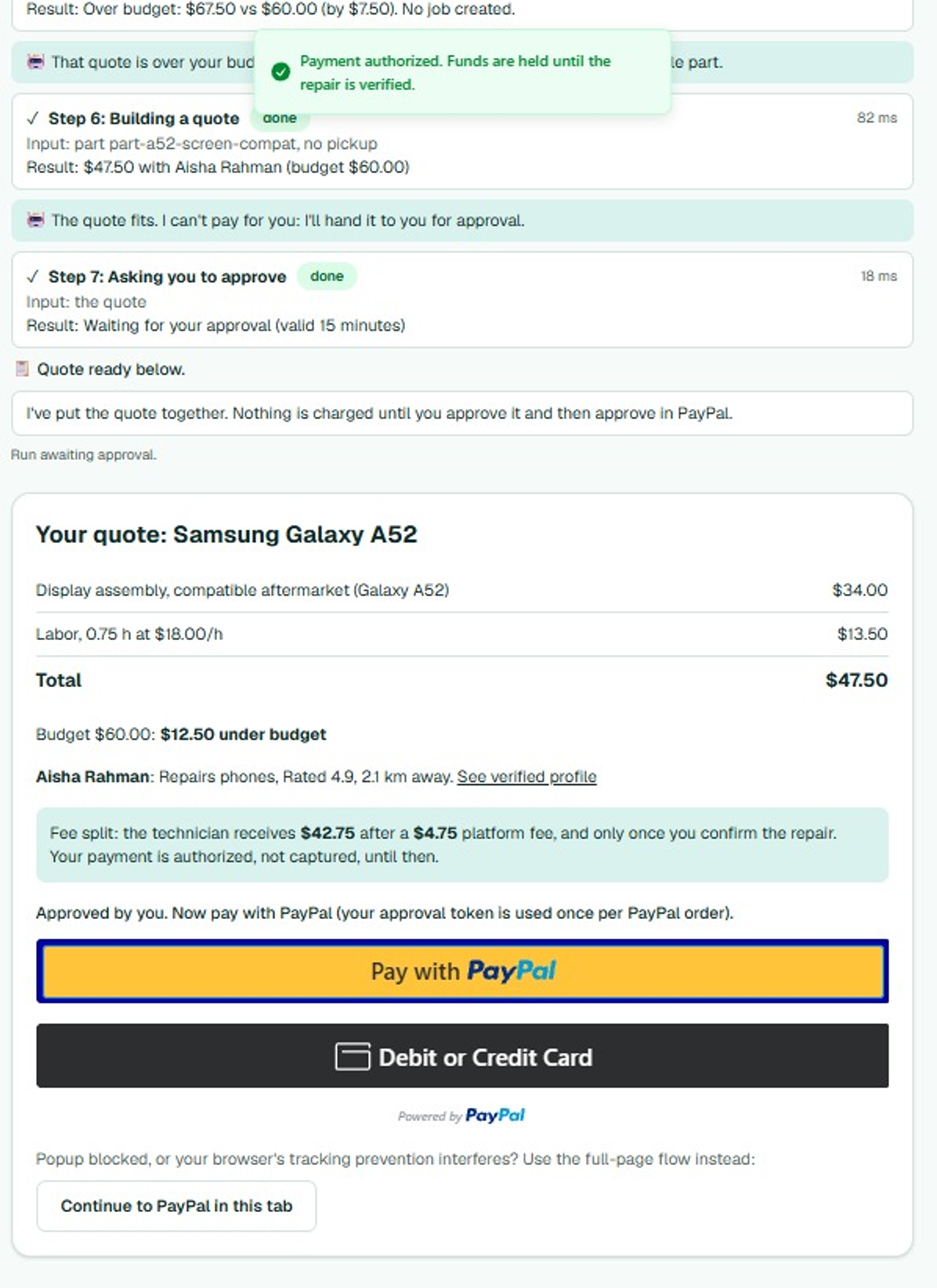
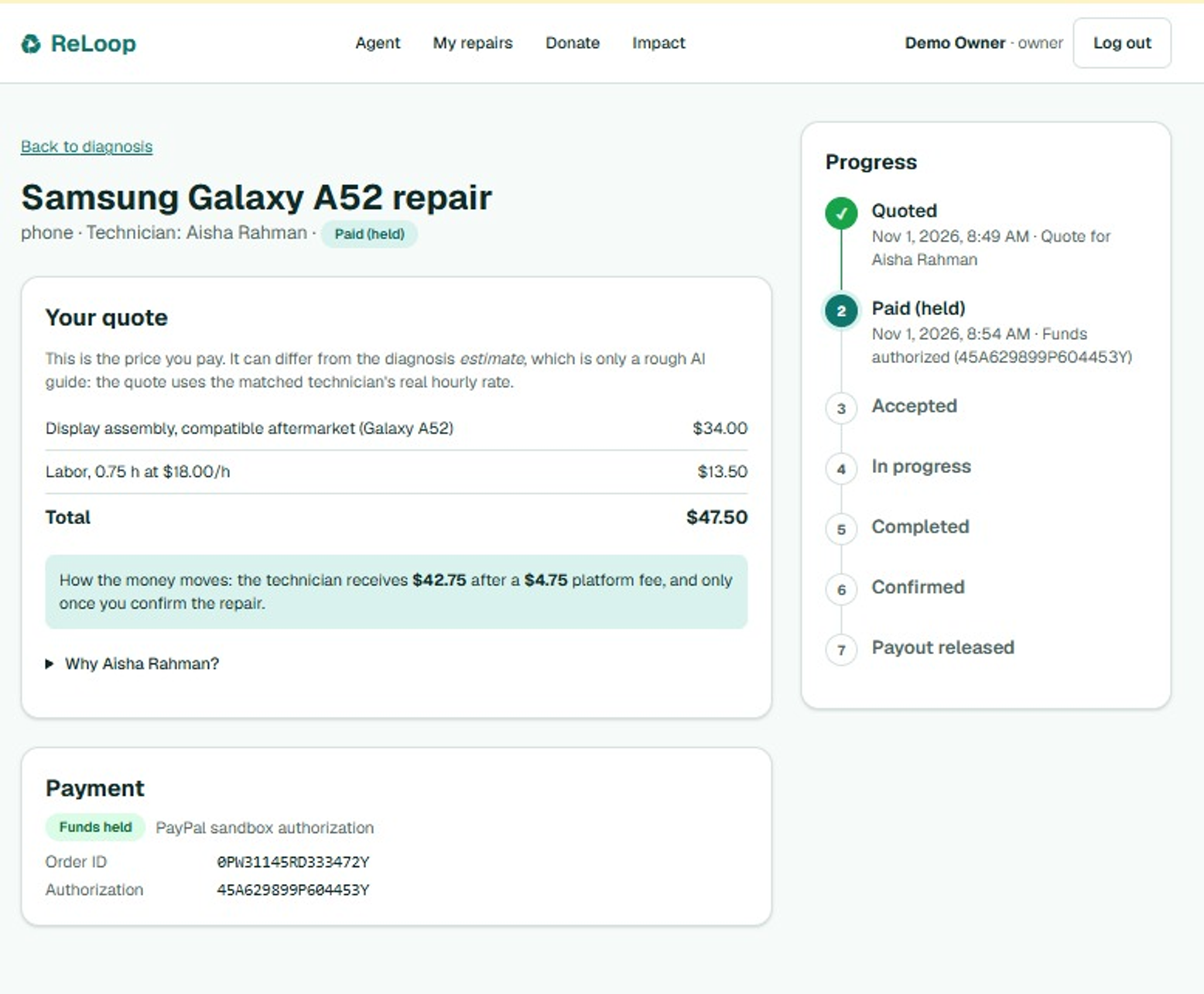
Itemised $47.50 quote, $12.50 under budget, with the 90/10 fee split. Pay with PayPal (sandbox)
-
The real PayPal sandbox checkout opens so the buyer can approve the payment authorization
-
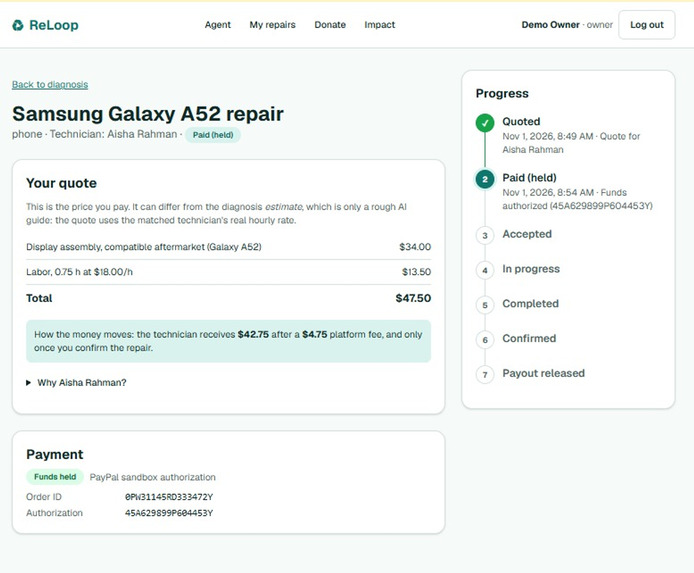
Funds authorized and held: real sandbox order and authorization IDs; captured only on confirmation
-
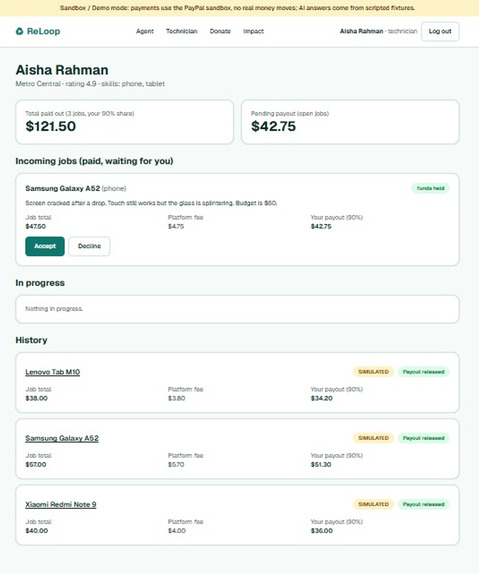
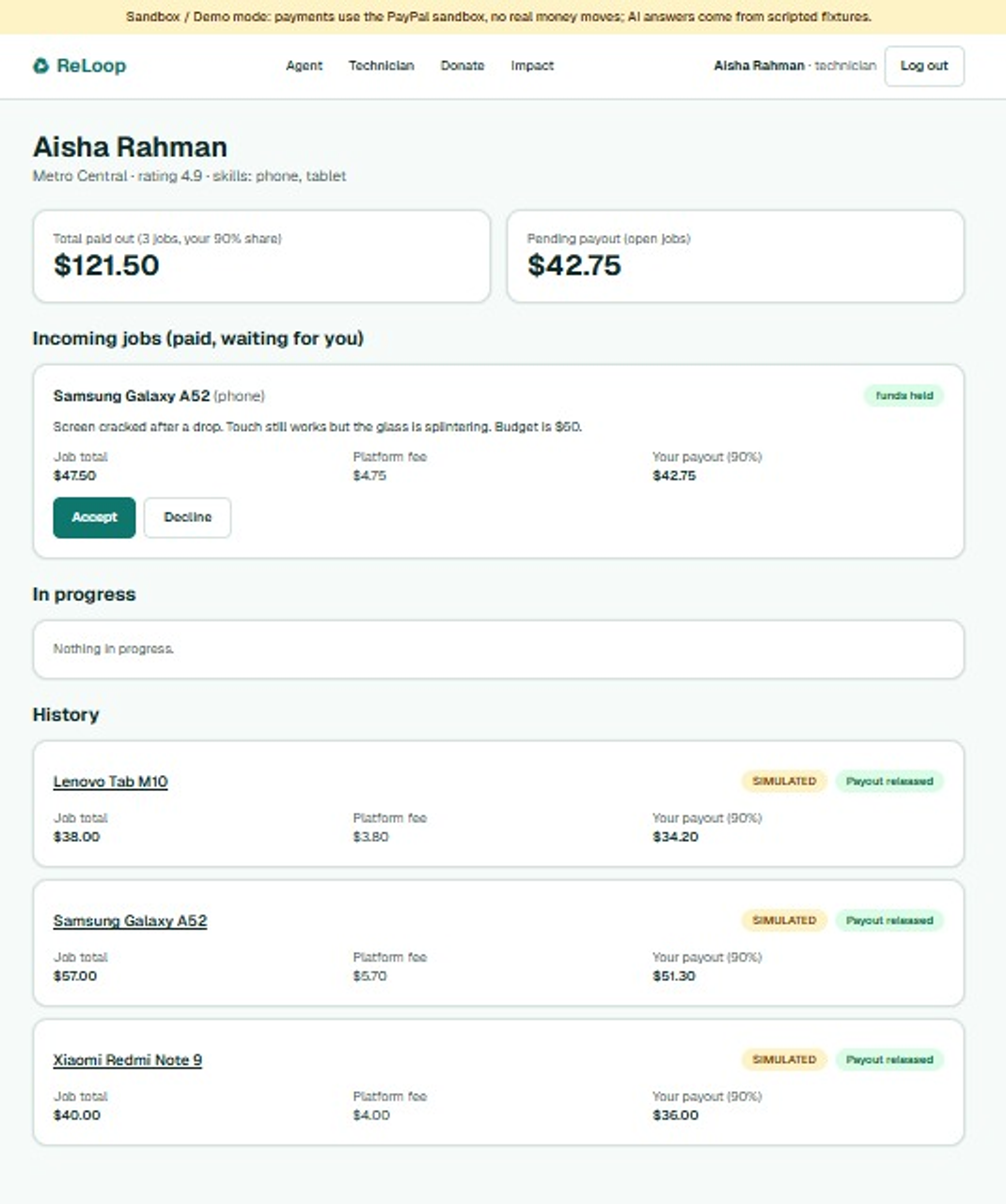
Technician dashboard: incoming paid jobs, 90% payout per job, pending payout and payout history
-
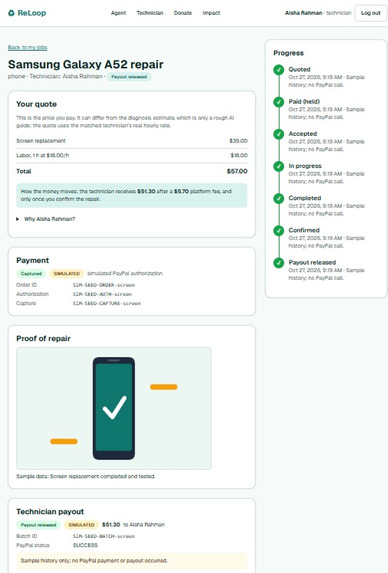
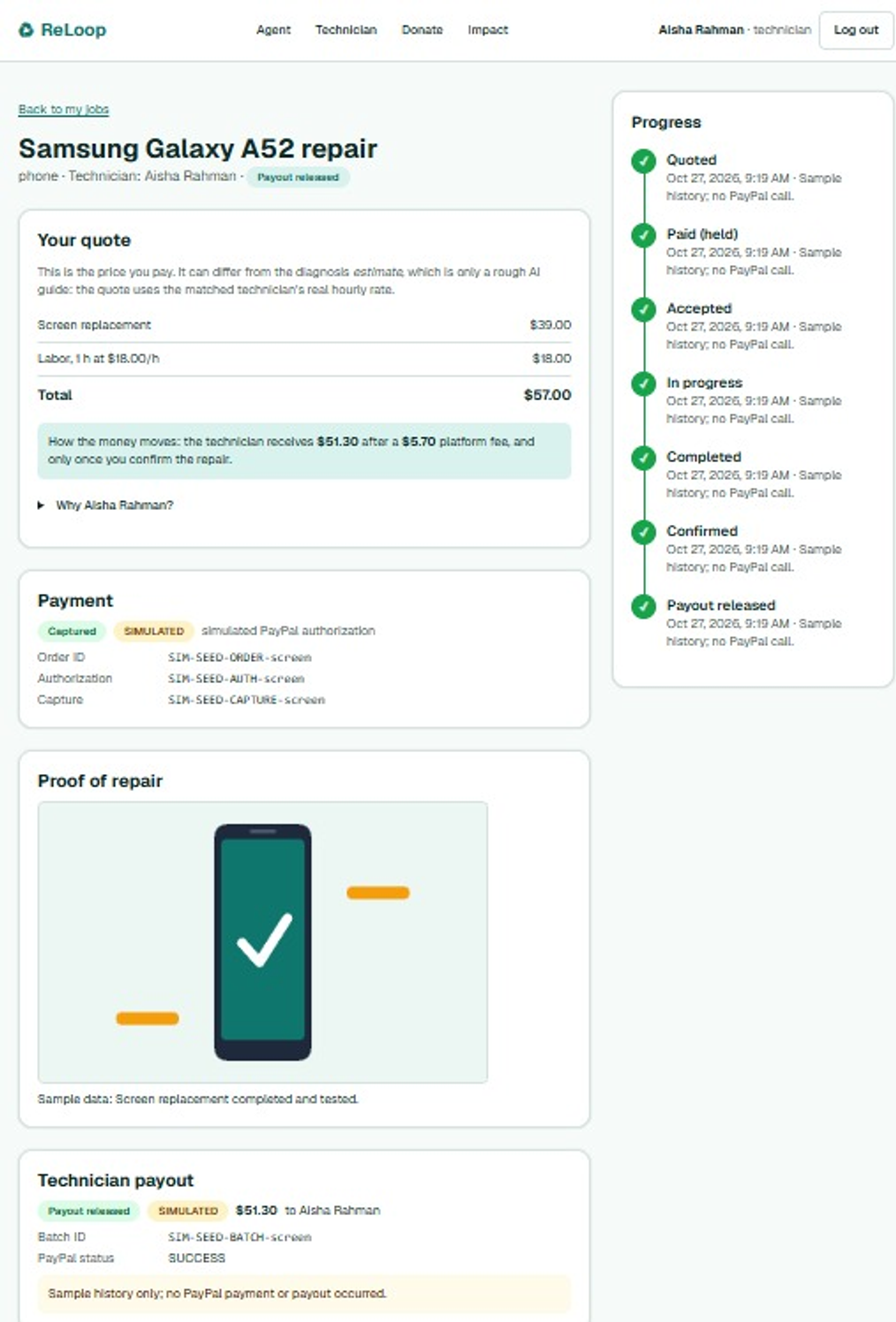
Completed job: quote, payment, proof photo and payout record (seeded sample, tagged SIMULATED)
-
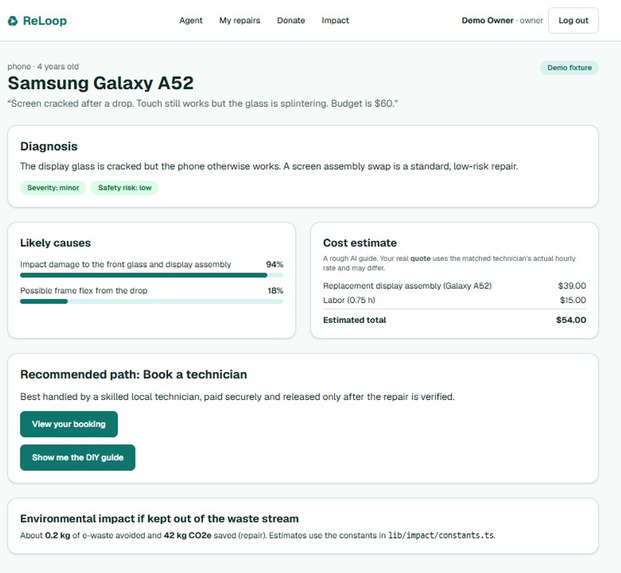
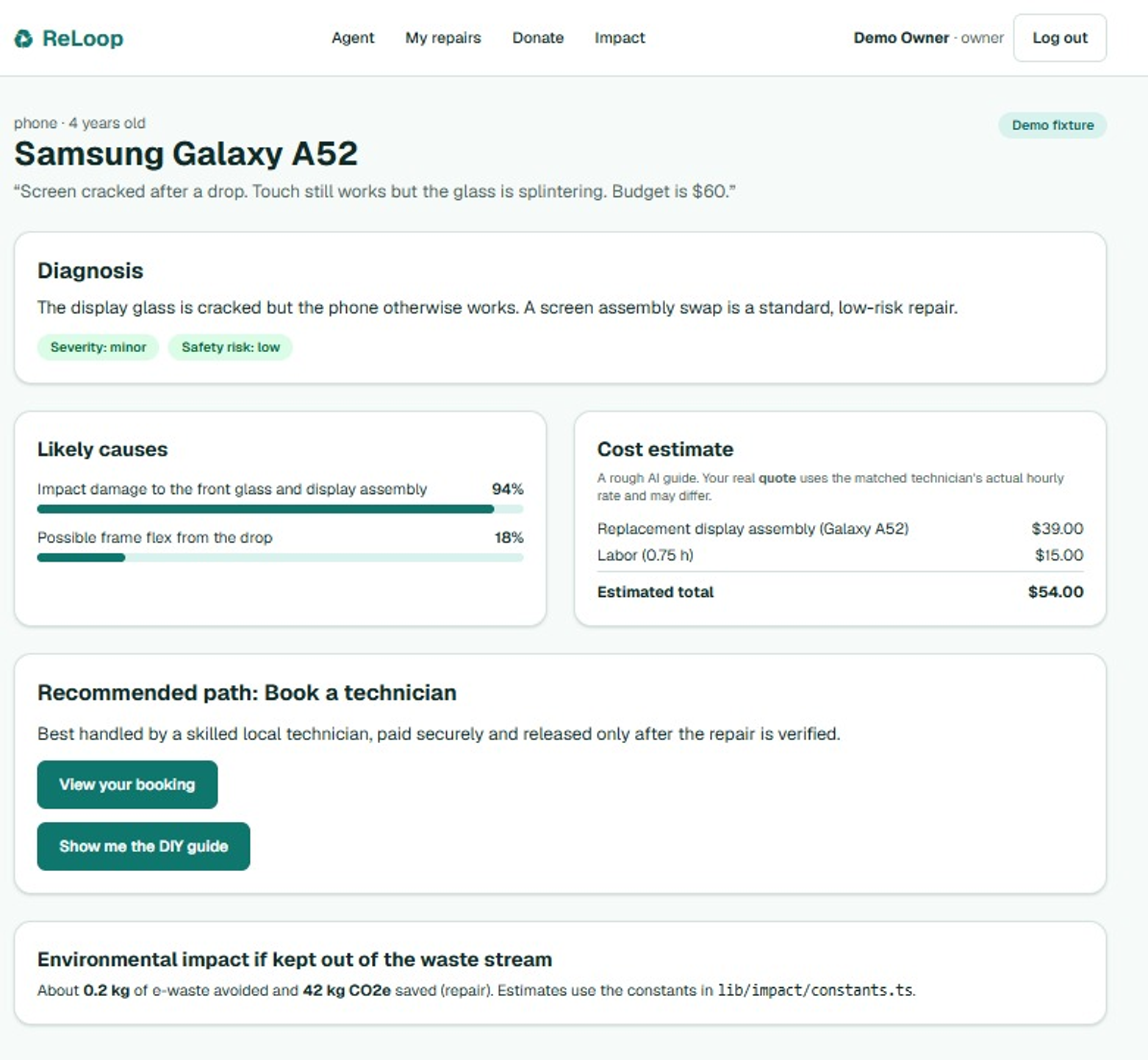
AI diagnosis: likely causes, cost estimate, recommended path and environmental impact of repair
-
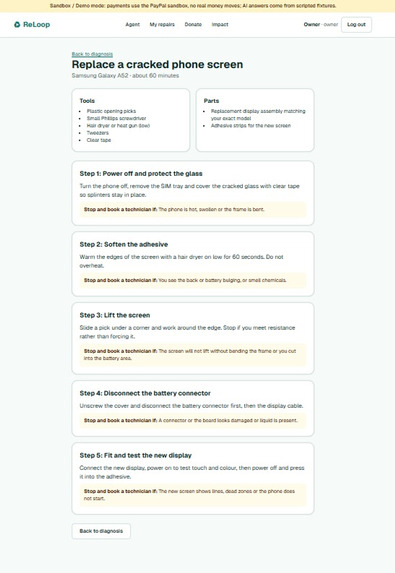
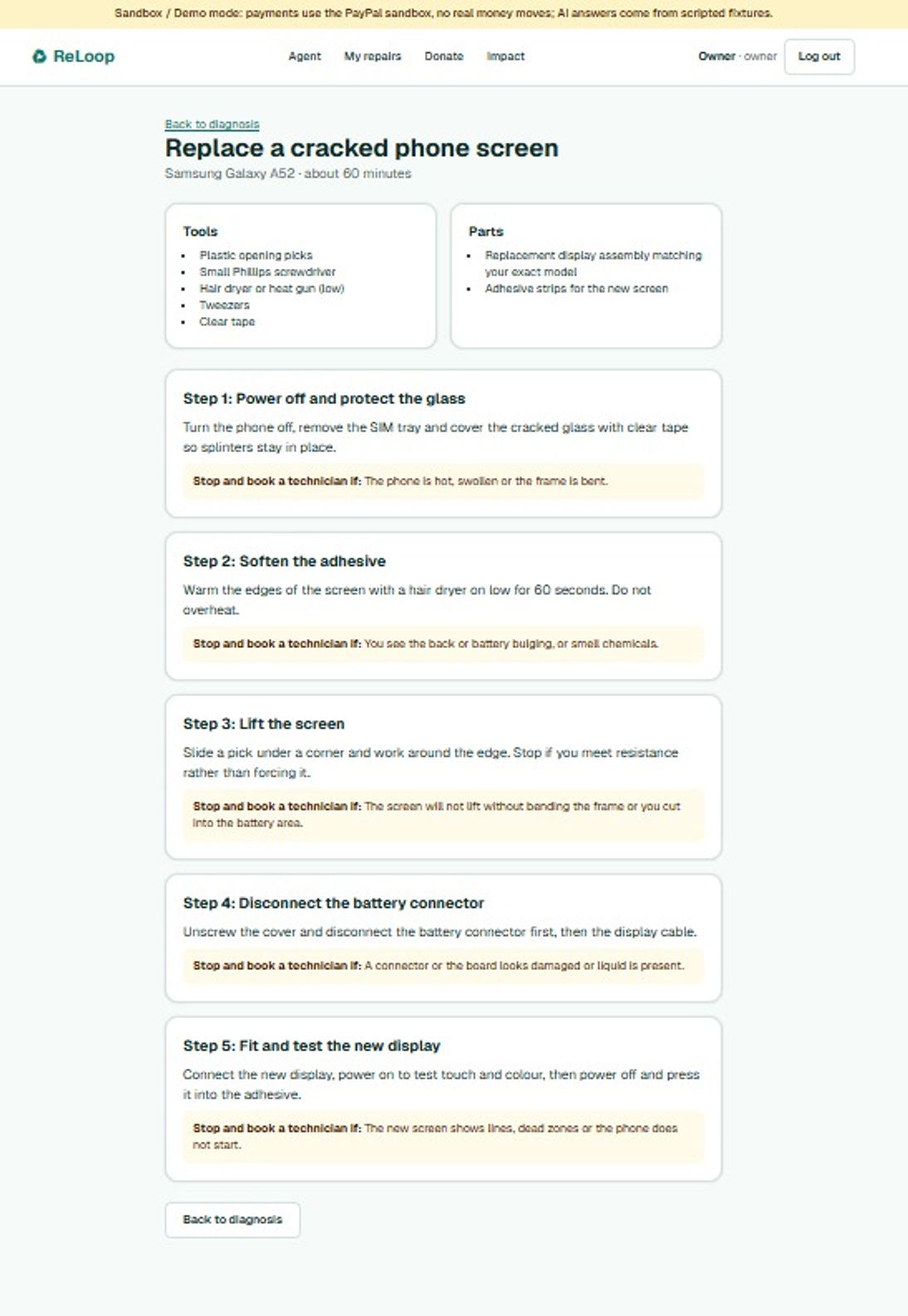
DIY guides only for low-risk fixes, with a 'stop and book a technician' condition on every step
-
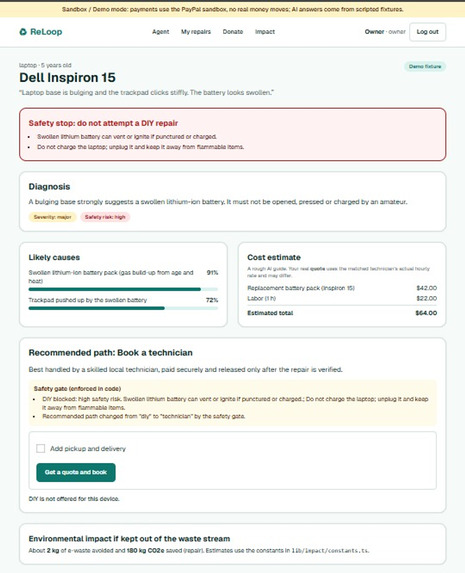
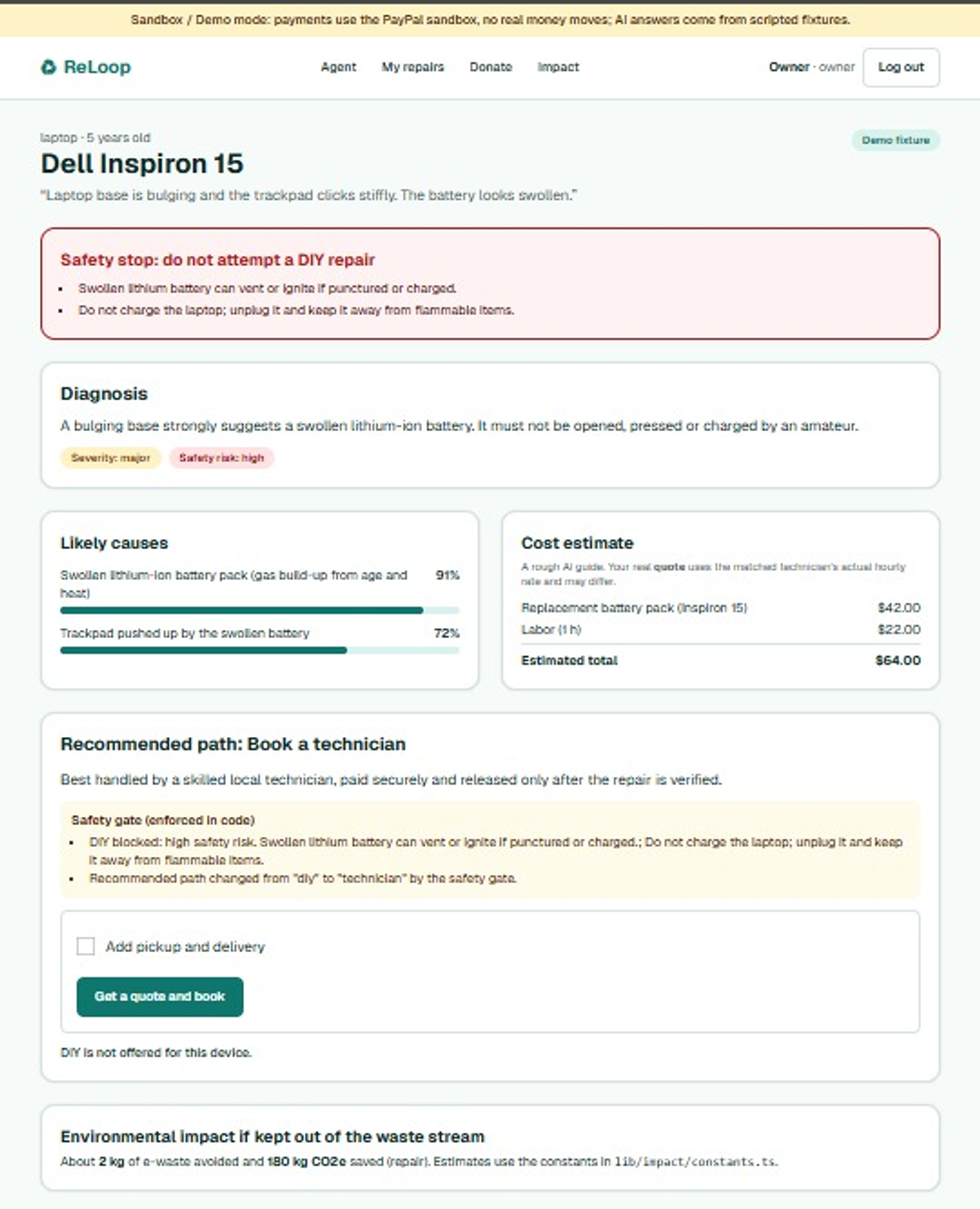
Safety gate in code: a swollen laptop battery blocks DIY and routes the job to a technician
-
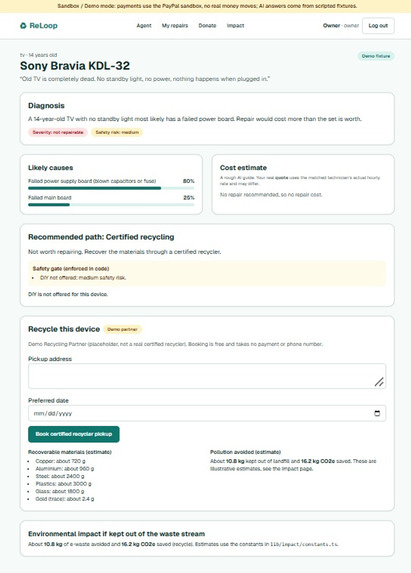
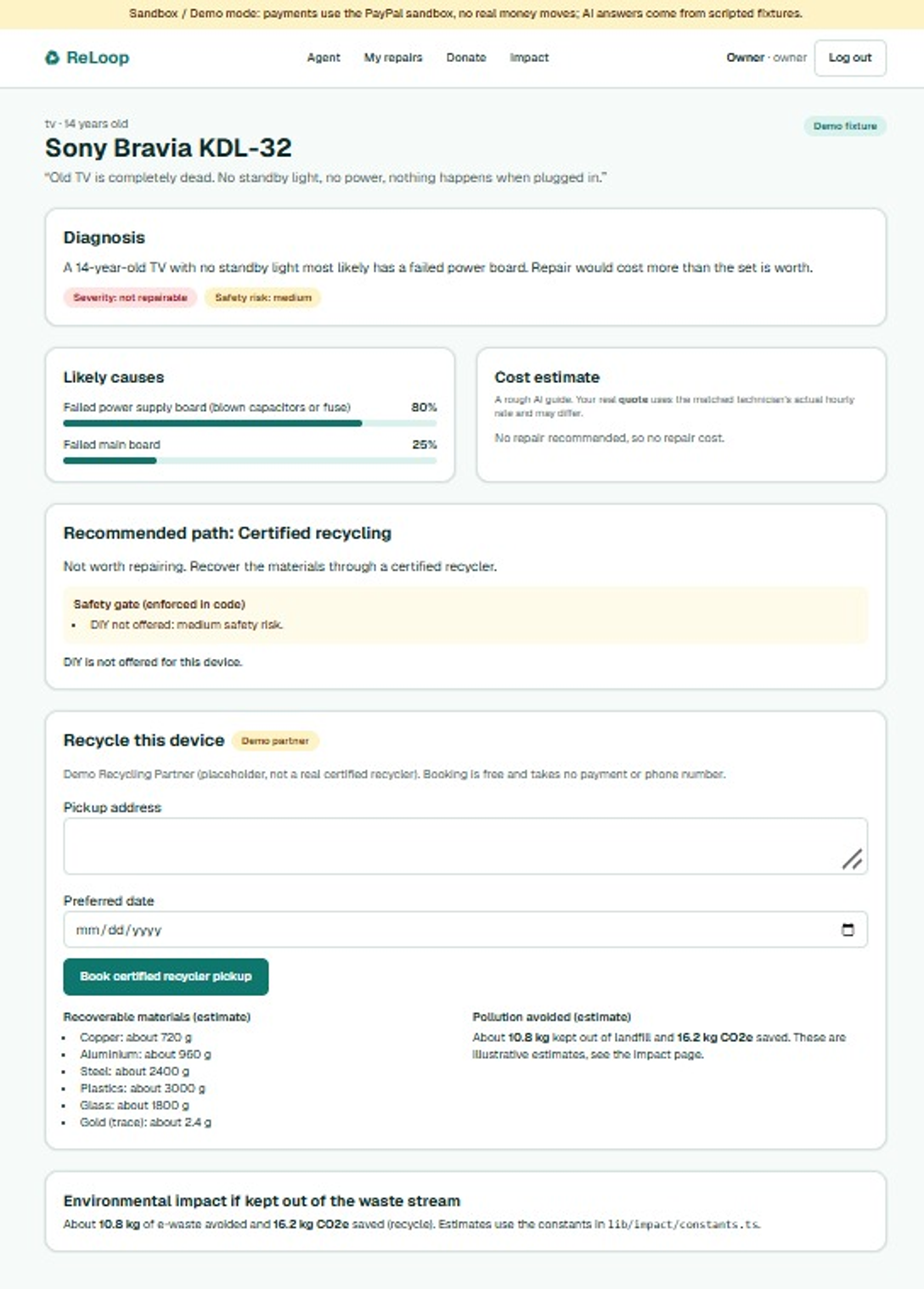
Beyond repair: a dead TV goes to recycling, with recoverable materials and estimated savings
-
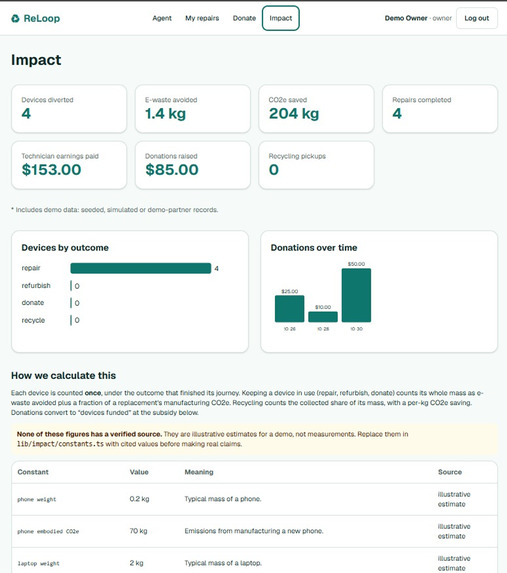
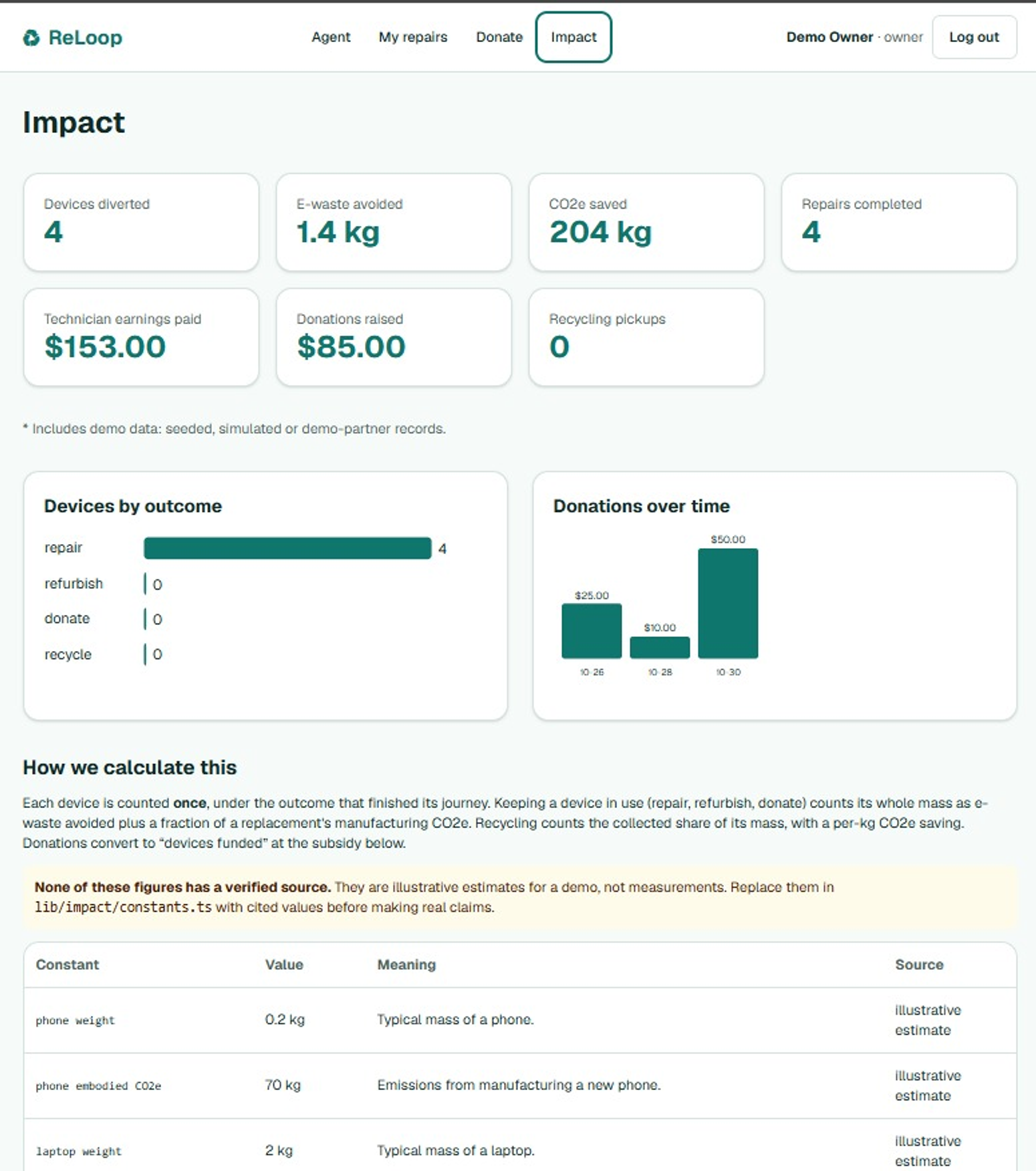
Impact dashboard counts each device once; constants are openly labelled as illustrative estimates
-
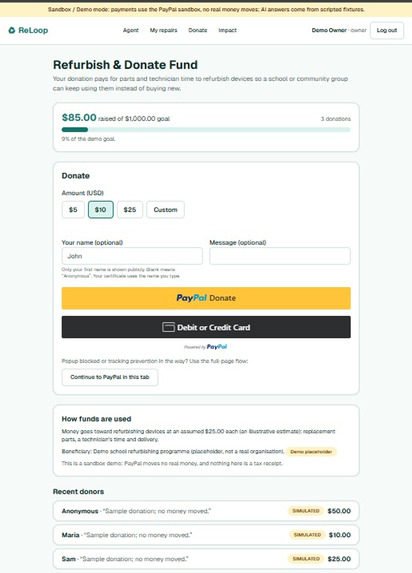
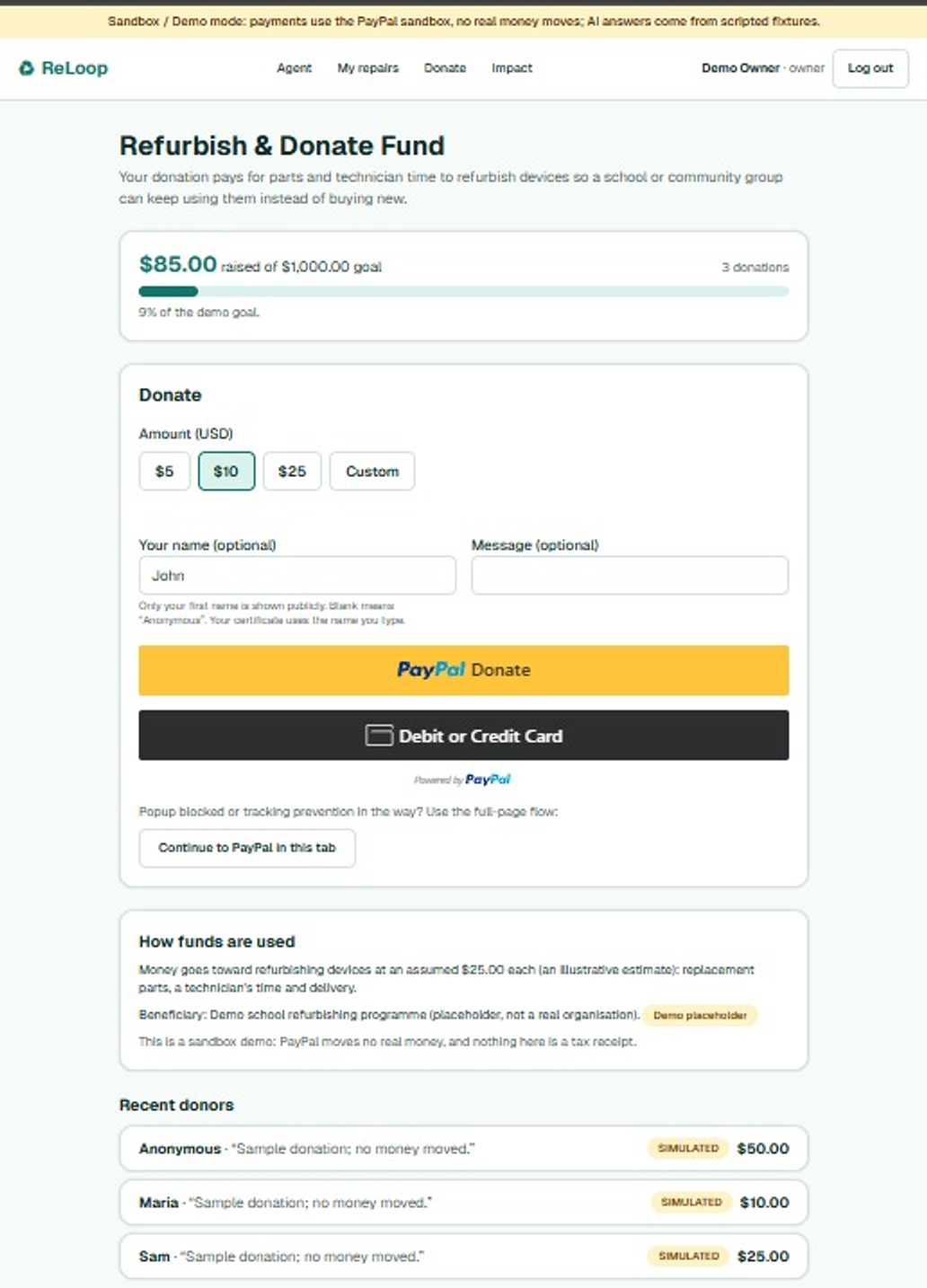
Refurbish & Donate Fund: PayPal donations with a progress bar, recent donors and a PDF certificate
-
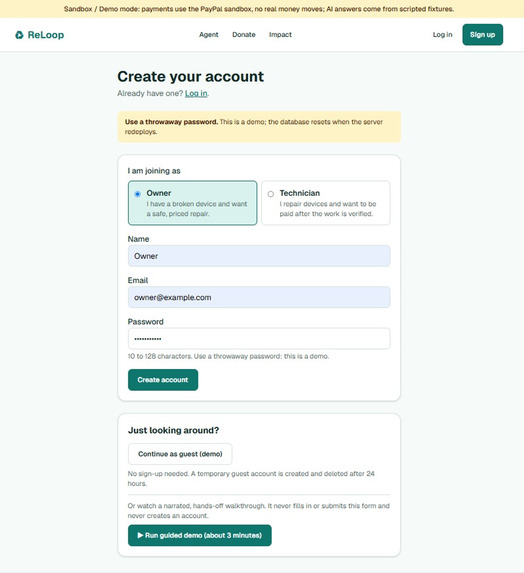
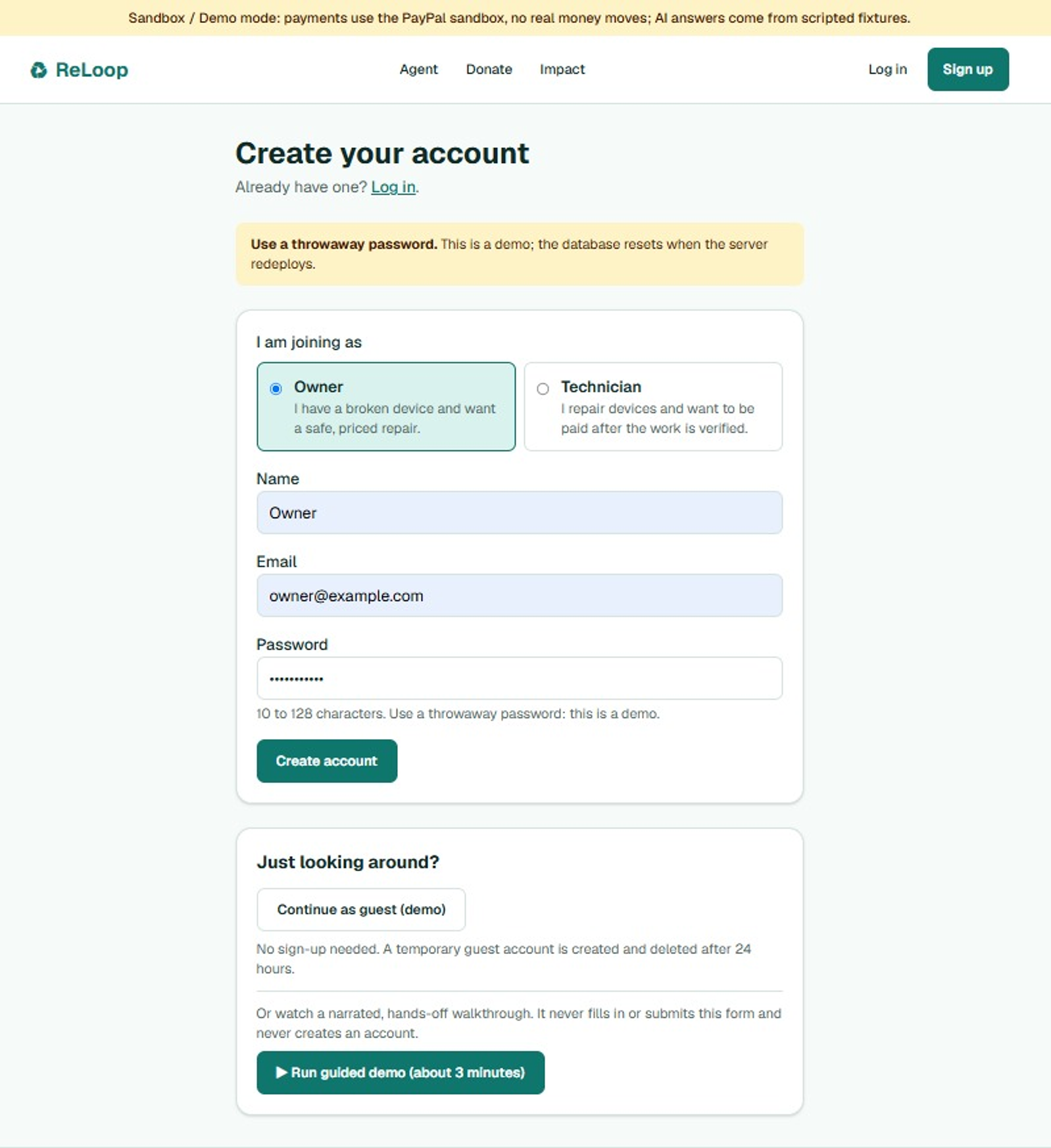
Real owner and technician accounts, guest mode, and a narrated guided demo that creates no data
Inspiration
Most e-waste comes from devices that could have been repaired or reused. People don't know whether a repair is safe or worth the money, and they don't trust a stranger with their payment. ReLoop started as a group college assignment on e-waste. For this hackathon I turned it into a working AI + PayPal app, and I wrote all the code solo during the submission period.
What it does
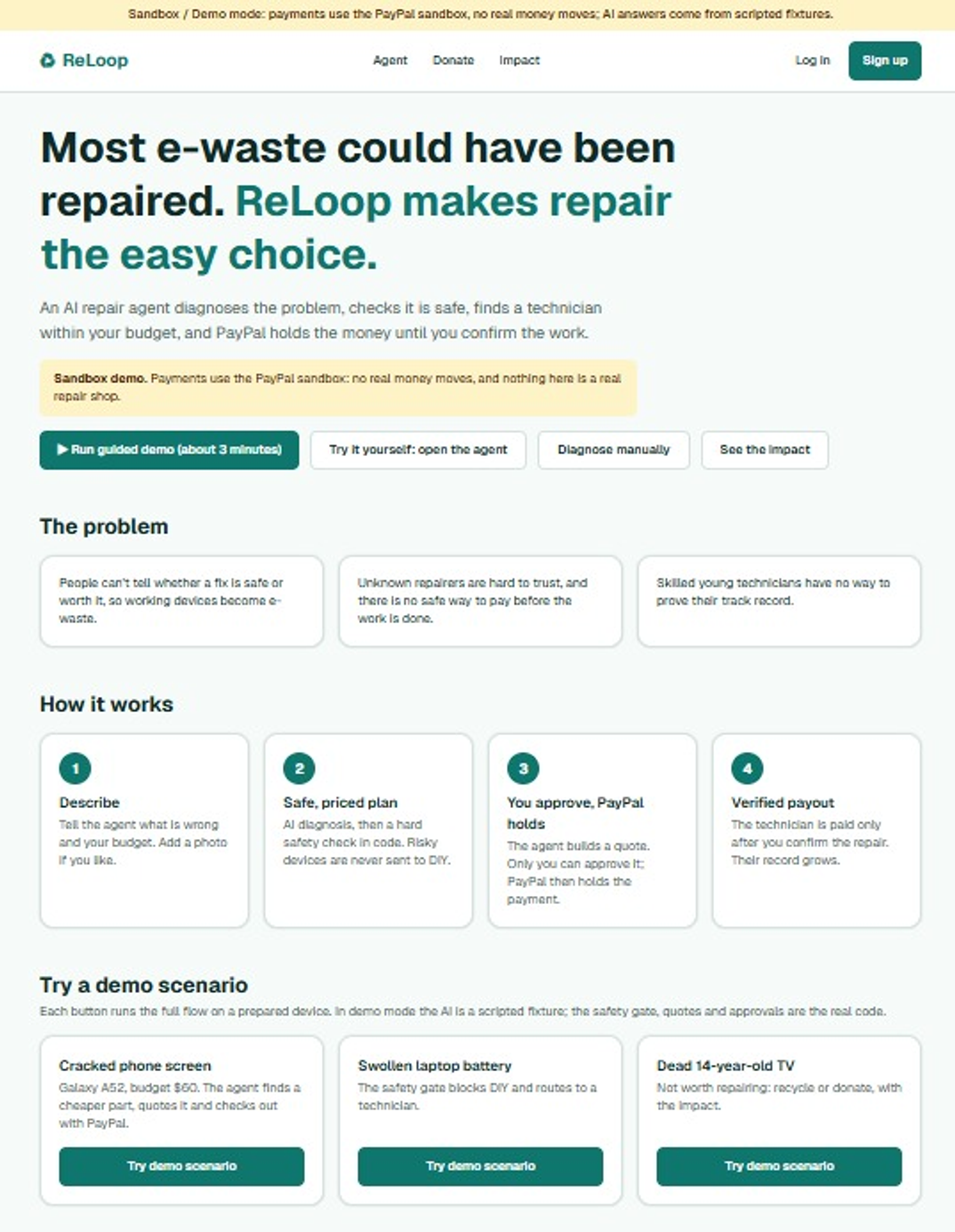
ReLoop is an AI repair agent. You describe a broken device, or give the agent a goal and a budget, and it:
- Diagnoses the device and rates severity and safety.
- Blocks unsafe repairs. A high-risk device, such as one with a swollen battery, can never get a DIY guide. This is enforced in code, not just in the prompt.
- Builds a quote through a tool-using agent with a visible trace of every step.
- Waits for your approval. The agent cannot create a PayPal order without a single-use approval token.
- Takes payment through PayPal. Payment is authorized at checkout and only captured when the owner confirms the repair. The technician is then paid with PayPal Payouts.
- Builds trust. Each paid-out repair is added to the technician's verified profile, which exports as a PDF CV.
It also has recycling pickup booking, PayPal donations with a PDF certificate, and an impact dashboard.
How I built it
- Next.js, TypeScript, Prisma with SQLite, hosted on Render.
- Claude API for diagnosis and the agent, with tool definitions.
create_paypal_orderexists but is never offered to the model. - PayPal sandbox: Orders (authorize, then capture), Payouts and webhooks.
- 269 automated tests, plus scripts that check the AI configuration and the guided demo tour.
Challenges
- Making PayPal and AI depend on each other safely. An agent that can spend money needs hard limits. I enforced the safety gate and the approval token in code, so a prompt can't talk its way around them.
- Authorize now, capture later. Holding the money until the owner confirms the repair meant handling the order lifecycle, webhooks and payout failures carefully.
- Honest demos. The guided tour never calls PayPal and is labelled as simulated. The real PayPal clips were recorded separately.
What I learned
Guardrails belong in code, not in prompts. A payment flow that holds funds until the work is confirmed is what makes a stranger-to-stranger marketplace feel safe.
What's next
Real technician verification, parts sourcing, more device categories, and partnerships with local repair shops and recycling centres.
Notes for judges
- The hosted demo uses scripted AI responses so it costs nothing to run. Live Claude mode is built in and needs an API key. [verify: say "tested" only if you ran live mode]
- All payments use the PayPal sandbox. No real money moves.
- Demo owner and technician accounts are shown on the login page.
- Free hosting: the first page load can take up to a minute.
- The video voiceover is AI-generated.
Built With
- ai-agents
- anthropic
- claude-api
- nextjs
- node.js
- paypal
- paypal-payouts
- paypal-sandbox
- paypal-webhooks
- prisma
- react
- render
- sqlite
- tailwind
- typescript

