-
-
-
Integration with Elasticsearch: https://www.elastic.co/elasticsearch
-
-
-
Inspiration
We've all left a networking event with a pocket full of business cards and zero real connections. You forget names before you've even walked away, miss the person you really should have met, and never quite get around to following up. Relio fixes that. Whether you freeze up in a room full of strangers or you're great at meeting people but terrible at keeping track of them, Relio has you covered. It surfaces the right people to connect with based on shared interests, then helps you remember the details that matter and stay in touch after the event ends. Because the best professional relationships don't start with a LinkedIn request… they start with a real conversation.
What it does
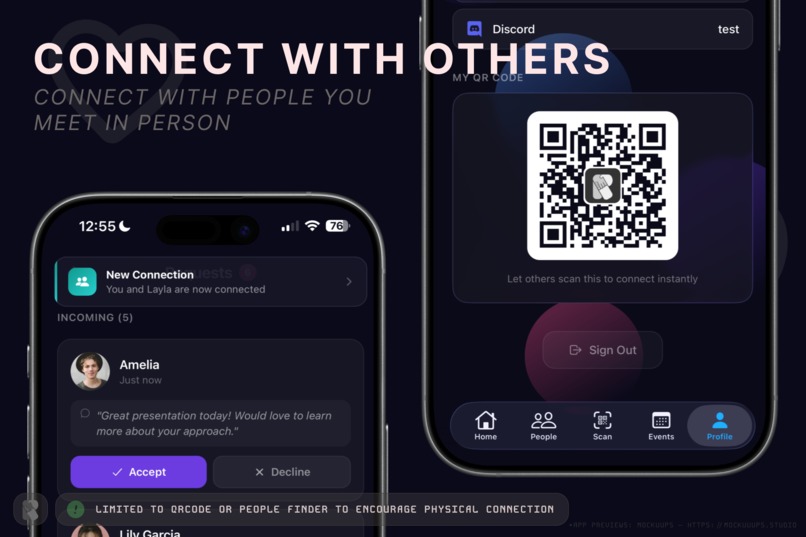
Relio makes networking events smarter and more meaningful by helping you connect with the right people. Instead of wandering through a room full of strangers or leaving with forgettable contacts, Relio uses shared interests and event data to recommend the most relevant people for you to meet. Whether you're a student, professional, introvert, or social butterfly, Relio helps you start better conversations and keep track of the connections you make. Unlike traditional networking tools that only store contacts, Relio helps you build real relationships by organizing your connections and reminding you to follow up so introductions turn into lasting opportunities.
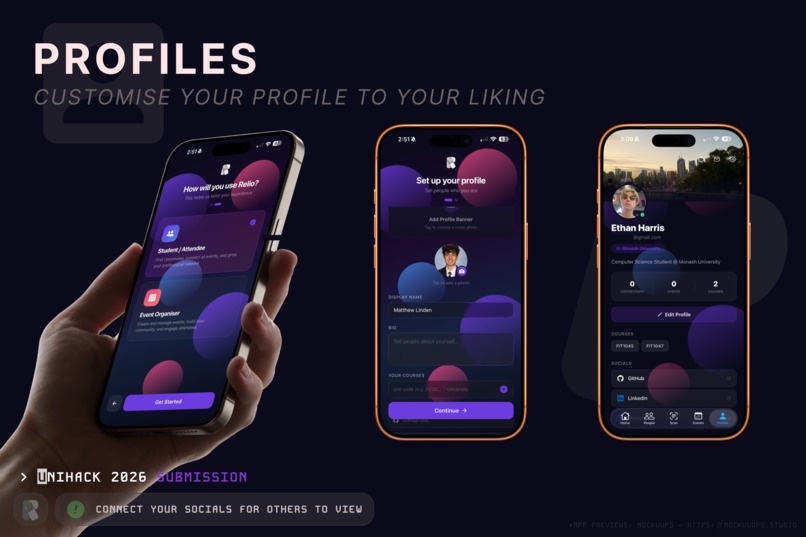
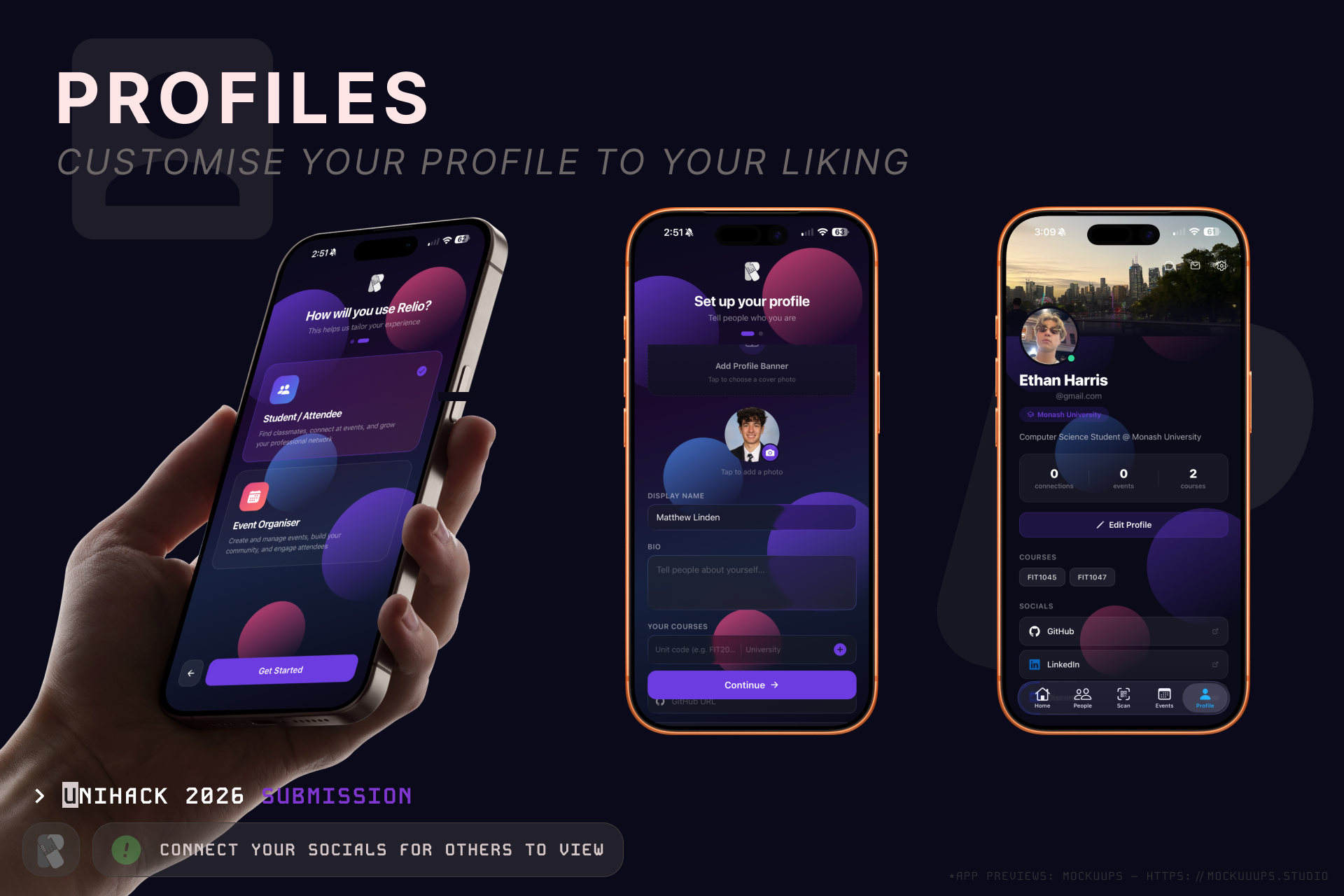
Profile Setup – Add your name, a quick bio, and university or course info so others can see who you are at a glance.
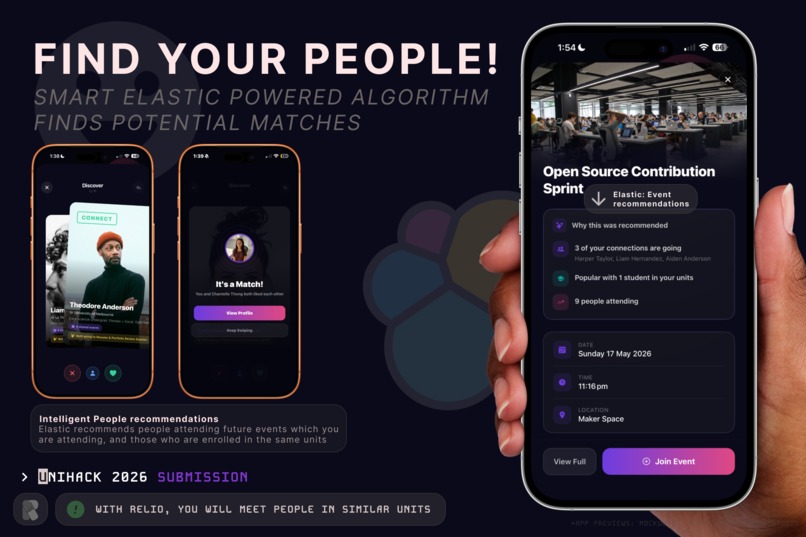
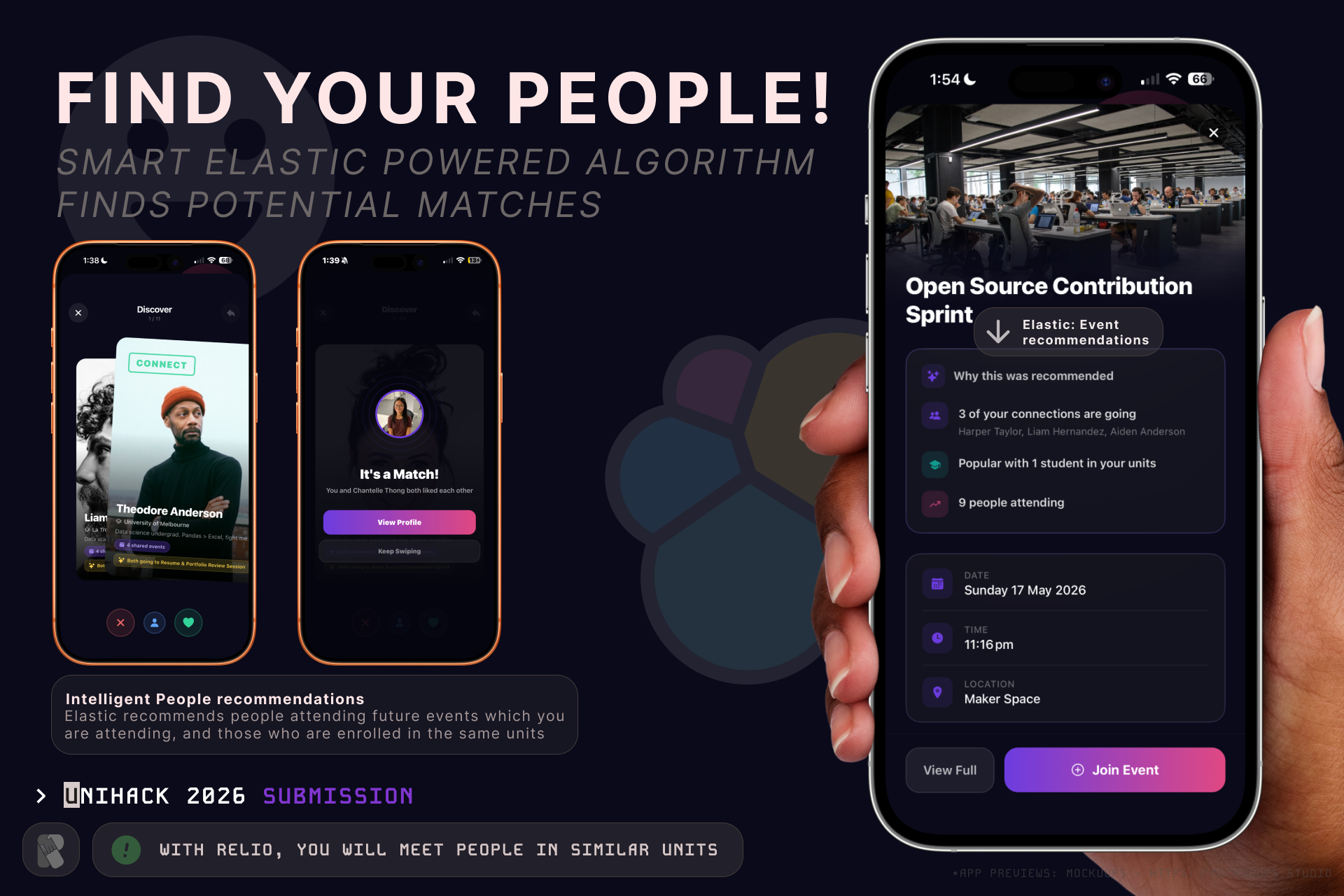
Event Discovery – Browse upcoming events and get personalized recommendations for ones you’ll be most interested in using Elastic Search.
Smart Connection Suggestions – See who you should connect with based on your past events and shared interests using Elastic Search.
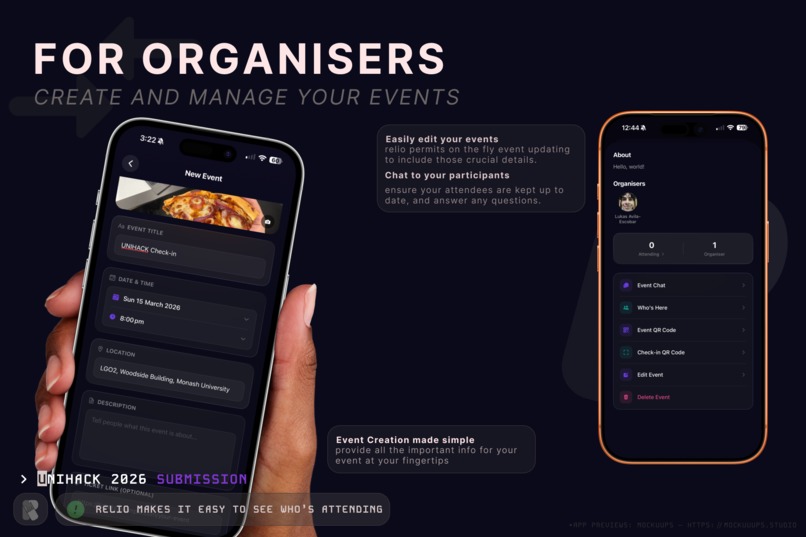
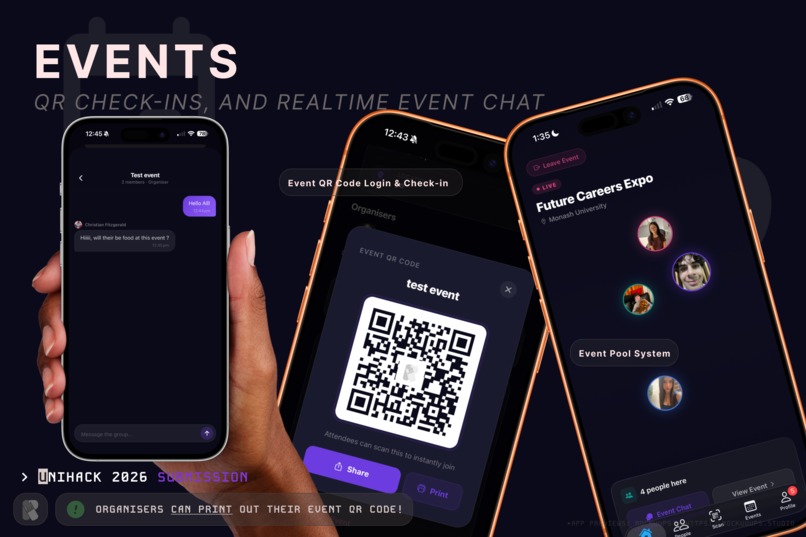
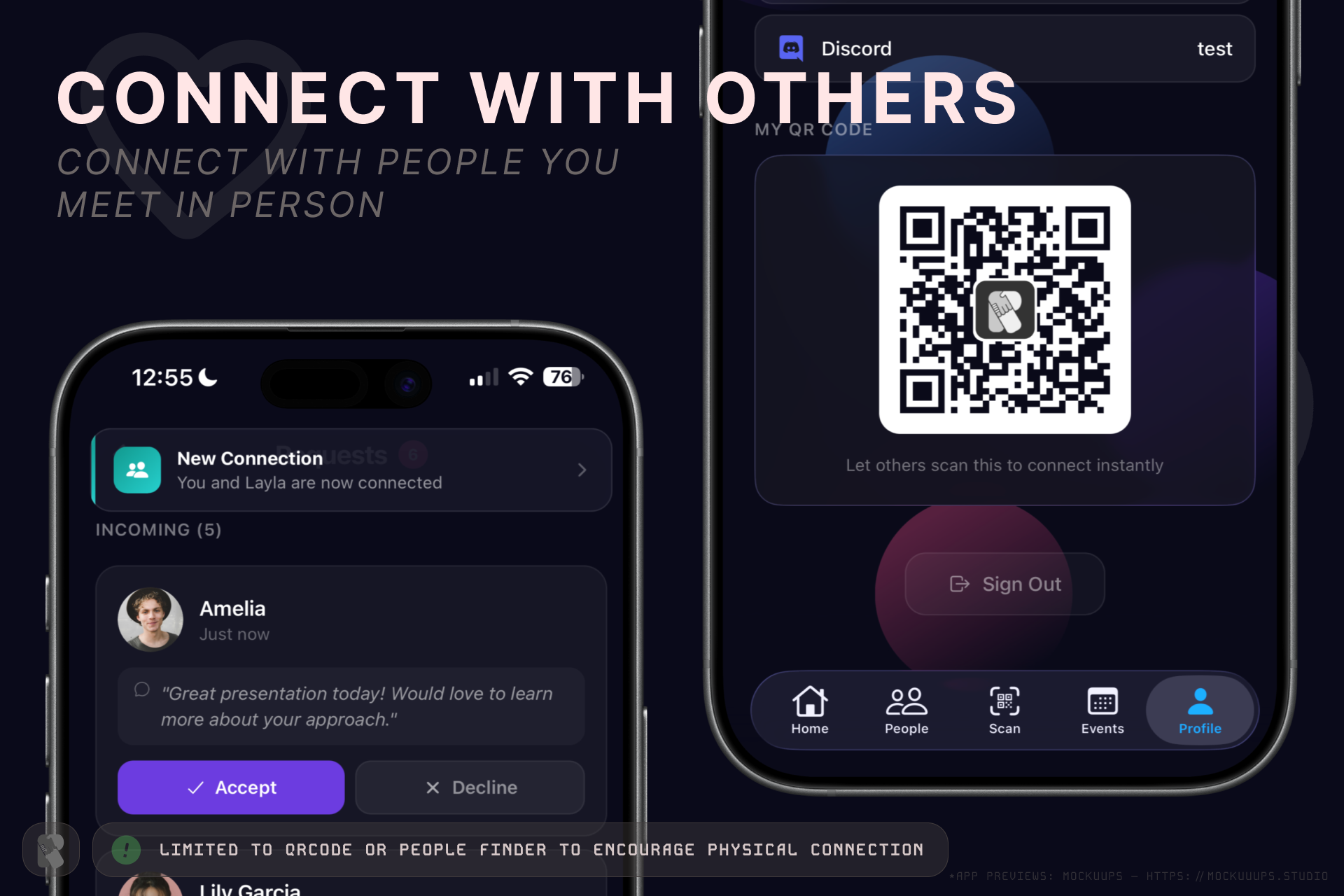
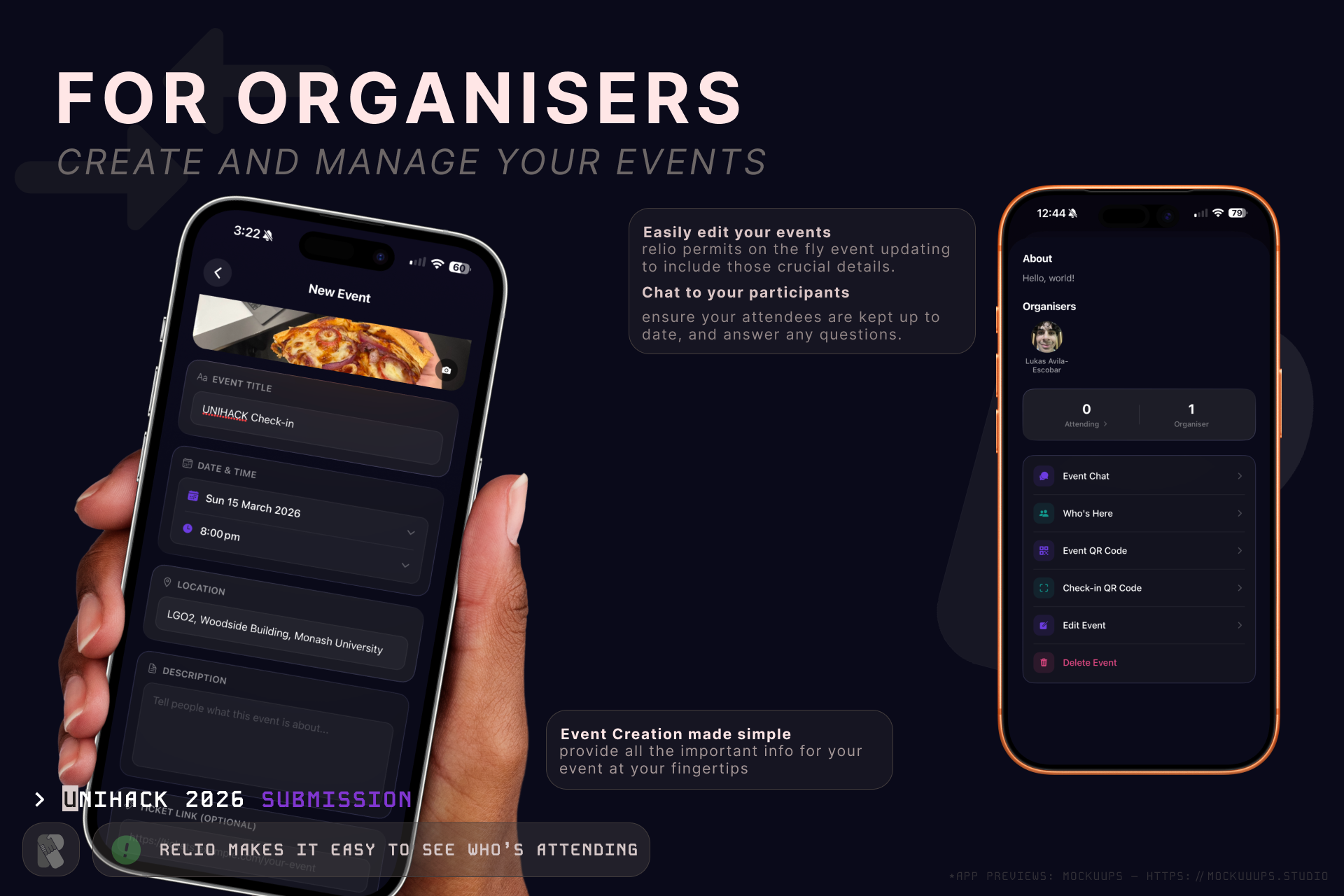
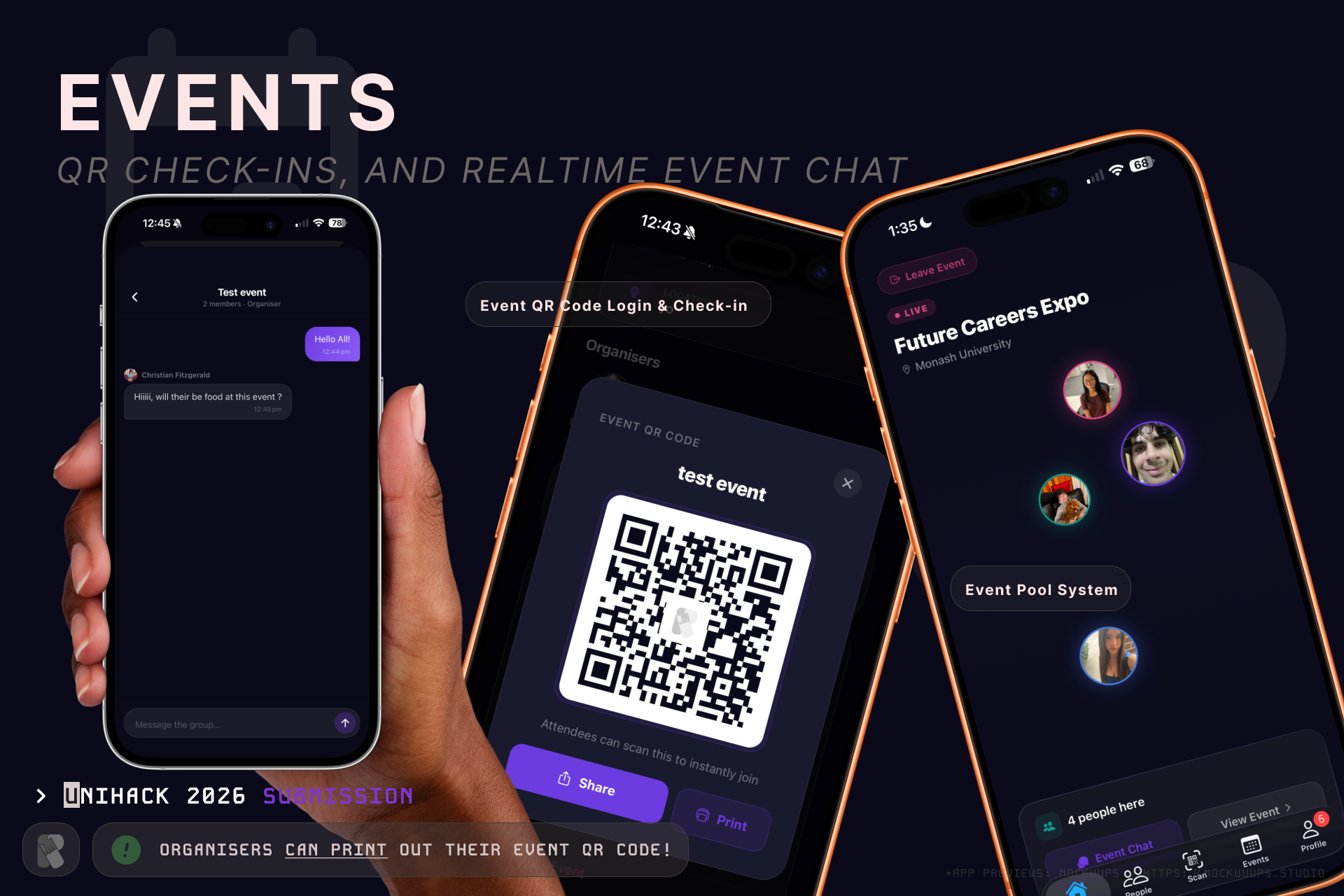
Attendee Insights – Scan QR codes at events to join, view profiles, and quickly find people you want to meet.
Connection Reminders – See people that you connected with at previous events that you may want to message
How we built it
We built the app using the T3 Turbo stack, which brings together Expo, React Native, Next.js, and TanStack Query to give us a solid base to work from. We then layered in Prisma for the database and Better Auth for authentication, and from there it was a matter of building out features and designing the UI. We also used GitHub throughout development, which made it easy for the whole team to collaborate on the same codebase.
We used Elastic search as mentioned above to power an algorithm that determines recommended events, and powers the matching swipe system, which we explain in the video. For more information please see this markdown file in our repository
Challenges we ran into
Building for iOS takes a lot longer than you'd expect. There are so many small issues that can pop up that work perfectly fine in your development environment but break things completely once the app is properly built. We spent a good amount of time getting everything running smoothly before we could submit it to TestFlight.
Accomplishments that we're proud of
The app is fully functional, every feature shown in the video and on the app is live and available to anyone via TestFlight. On the technical side, we integrated Elasticsearch to power AI-driven recommendations for both events and people. We also built the app to be cross-platform, supporting iPadOS, iOS, and Android. We didn't have an Android developer account at the time of submission, and since sideloading felt like an unnecessary security risk, we focused on delivering a polished iOS build. While we leaned on AI for design assistance and to generate UI components with styling, a significant portion of the codebase was written by hand, this wasn't a vibe-coded project. And beyond the product itself, one of the best parts of this hackathon was the people. There's something about 2am coding and brainstorming sessions in the Matheson Library that has a way of turning teammates into friends.
What we learned
Organisation is key: Due to the very little time available to create the app, and to create a video which showcases our features while also making sure all the checkpoints are completed by their due time, our team had to learn how to manage many different things at one time. We had to learn how to effectively communicate, to prioritize certain tasks and to delegate tasks to who is best to do it.
Team work is essential: Without everyone doing their own part of the project it would not have been possible to submit the project by the due date, therefore it was essential that all team members were able to do their tasks without others having to keep an eye on them and complete it to a high standard so others would not have to carry someone else's weight in the project
What's next for Relio
The future of Relio will be focused on growth and refinement. As the platform continues to develop, the priority will be expanding the user base while steadily improving the overall experience. One key direction is attracting a larger community of users. A bigger user base not only increases engagement but also creates more opportunities for feedback, collaboration, and network effects that strengthen the platform. At the same time, Relio will continue adding new features and polishing existing ones. Improving usability, fixing small issues, and refining the interface will make the platform smoother and more enjoyable to use. Even small improvements can significantly enhance the overall experience.
Foot notes
All the images like on the project media and the logo were created fully by hand, no AI was involved :)
Built With
- better-auth
- elastic-search
- expo.io
- nextjs
- pnpm
- postgresql
- prisma
- react-native
- tanstack-query
- trpc
- turporepo
- typescript


Log in or sign up for Devpost to join the conversation.