Inspiration
Addiction is the biggest threat to patient safety post-operation. When the patient leaves the monitoring of the doctor, they’re on their own to make certain decisions. A patient leaving a high stress operation is not in a good position to make the appropriate medication assessment for themselves. In fact, the only tool by which a patient 1) understands and 2) communicates their pain experience is the existing 1-10 pain scale, which is too rudimentary and lacks nuance. People tend to inaccurately place their pain on this poorly designed scale which leads to excessive dosing of pain meds, which increases risk of opioid addiction.
Someone taking pain meds for the first time experiences “high” pain for the first time, so they don’t have a reference for what an ‘8/10’ pain is, no reference to rate this pain in the context of other pains, and overall no reference for what level of pain requires medication. Prolonged use affects the perception of whether they need pain meds, as taking the meds seems easier than not taking them, leading to habit formation. It is no longer as daunting as the first time, so decision-making becomes less conscious, with the mindset that it has been “fine so far.” Additionally, the pleasure experienced subconsciously encourages them to overrate their pain and take pain meds when not necessary. Thus, even though their pain improves, their pain ratings remain high, and usage increases.
What it does
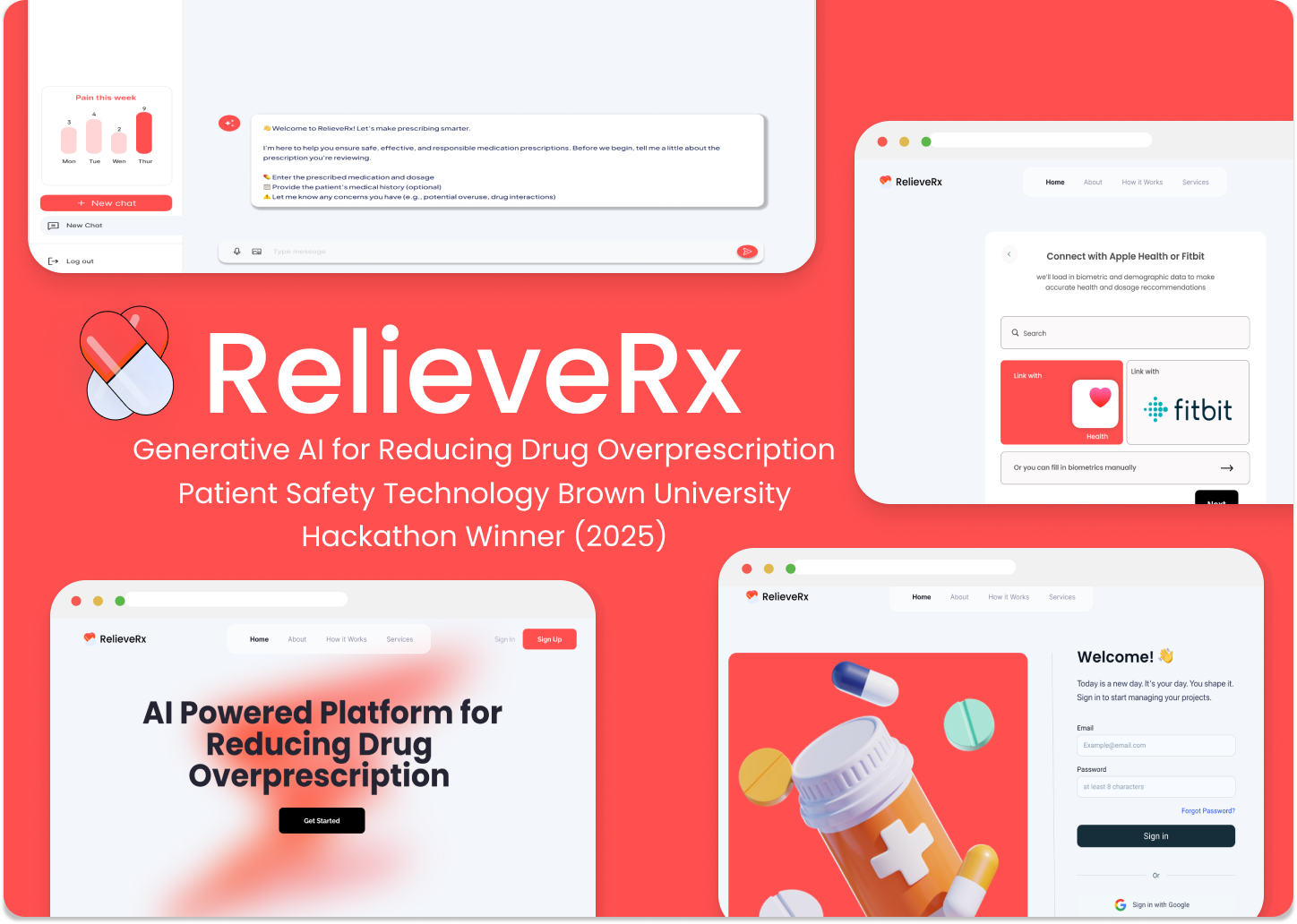
onboarding and patient biometrics/hospital data are past thru the ai's context window. our chatbot interacts with the user pushing probing questions and analytics to give the patient a recommendation on when to take opioids and alternative pain management.
How we built it
Figma for the frontend and UI, while the chatbot simulation was supported by Groq/Deepseek.
Challenges we ran into
we basically piecemeal-MVP'd our the front end and back end bc building the LLM from scratch in 24 hrs was a bold feat--we launched a site with our Groq-supported chatbot and paired it with our Figma front-end for pitch-purposes :)
Accomplishments that we're proud of
the design theory principles that drove our Figma process, and the life saving impact RelieverRx can have on launch
What we learned
for 3/4ths of us, Hack@Brown was our first Hackathon, so putting together a tech stack, learning to collaborate at that pace, and 4am caffeinated wire framing back-and-forths taught us so much about building for the user.
What's next for RelieveRX
building our in-house model, and a secure base to host patient data / working w providers. the experience of pain is a particularly sensitive and private part of people’s lives, but in the future, it would be amazing if we could train on hospital records with perfect security >>


Log in or sign up for Devpost to join the conversation.