-
-
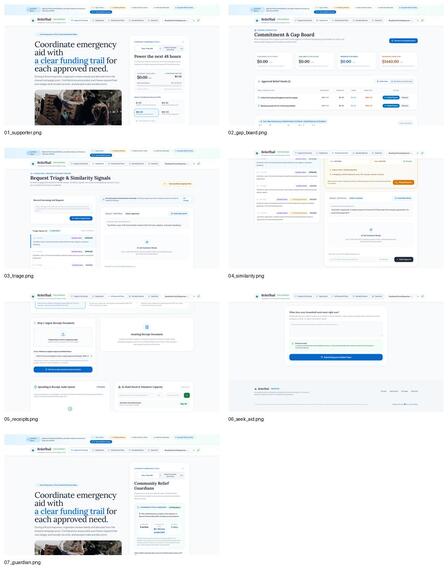
Contact
-
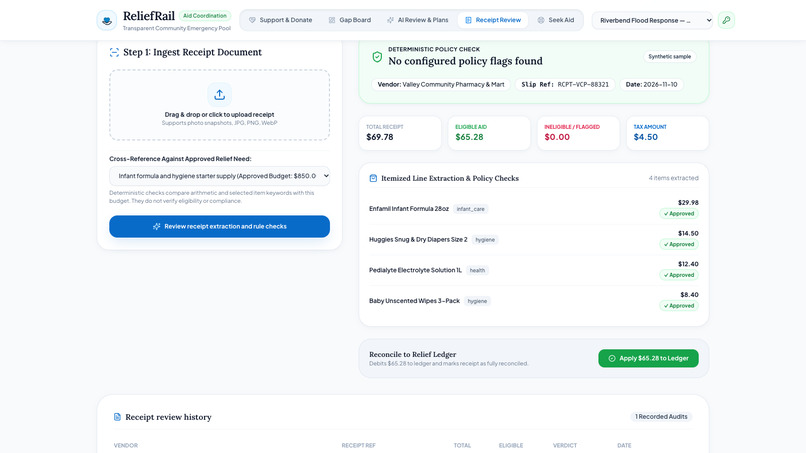
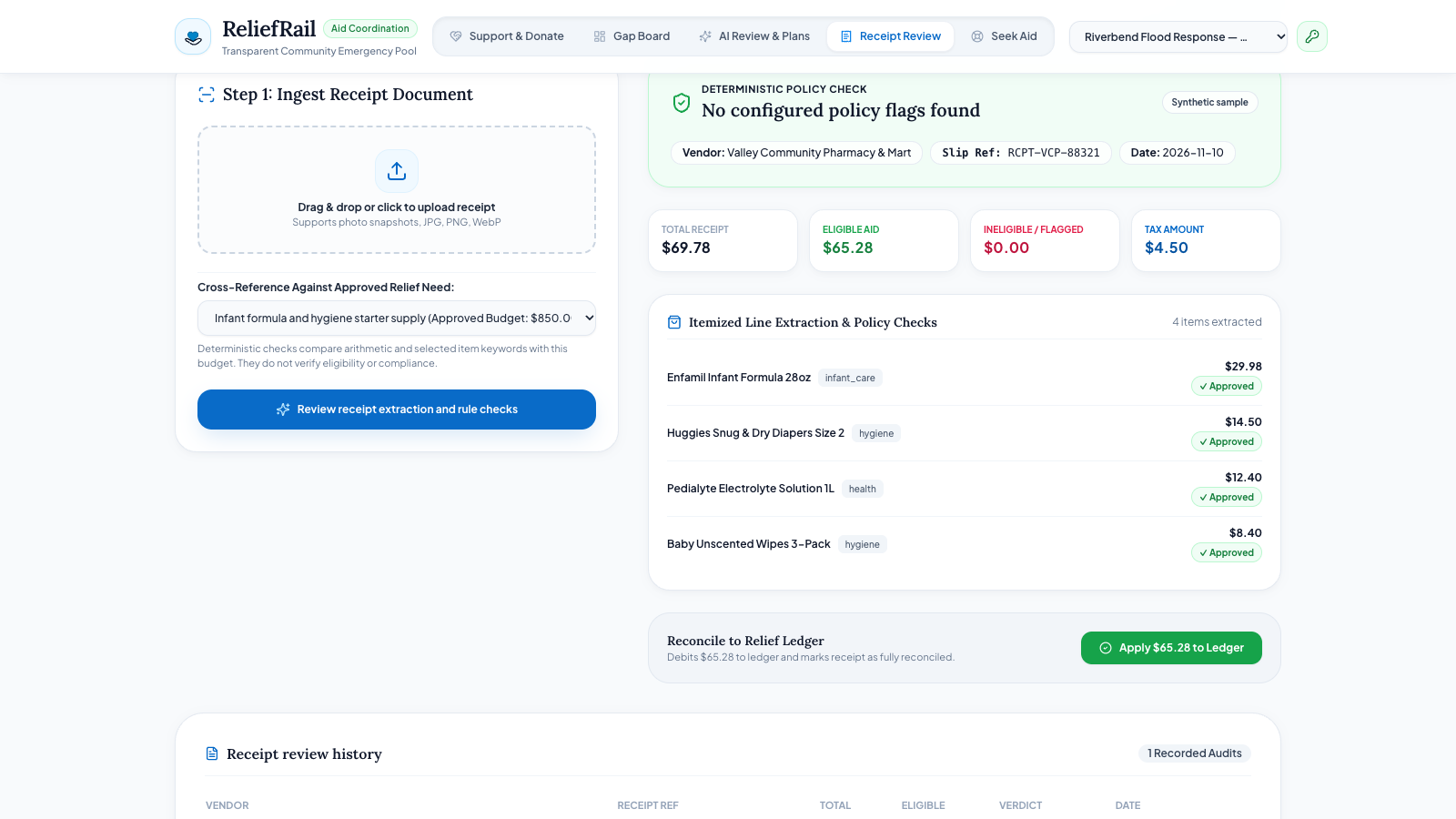
Receipt results
-
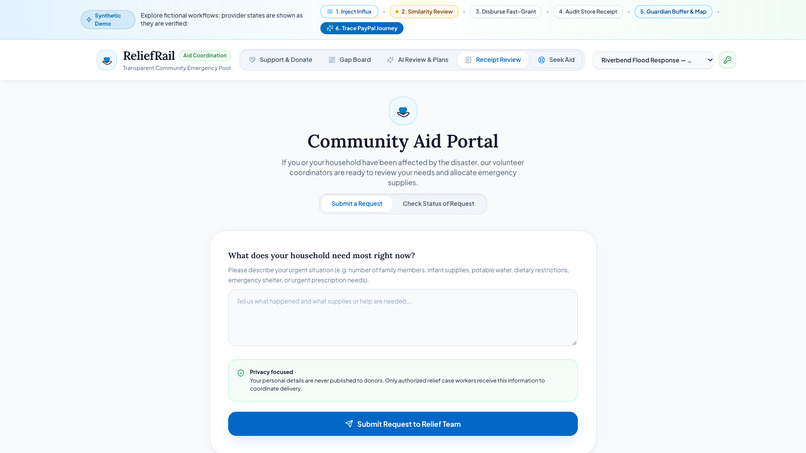
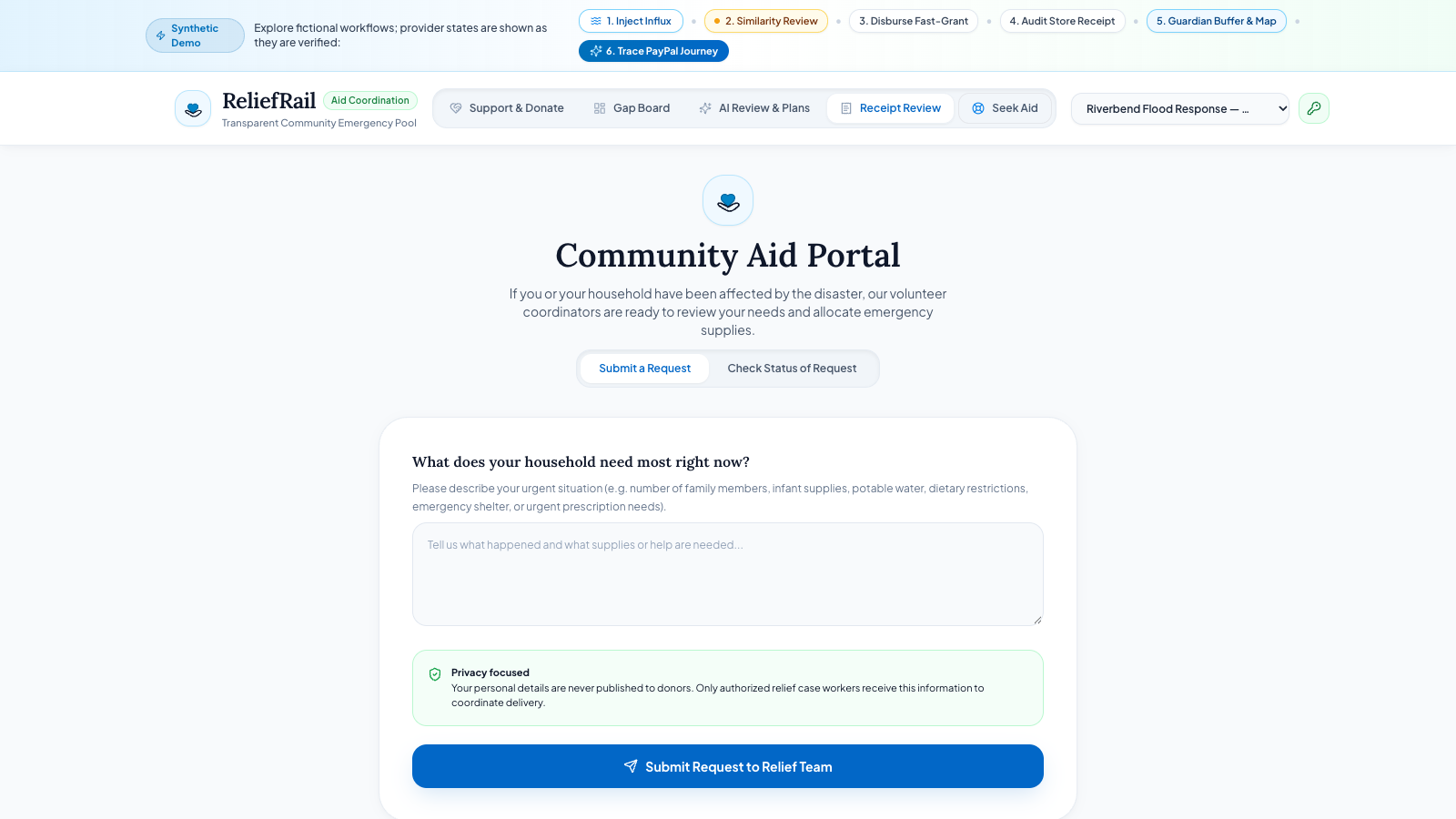
seek for aid
-
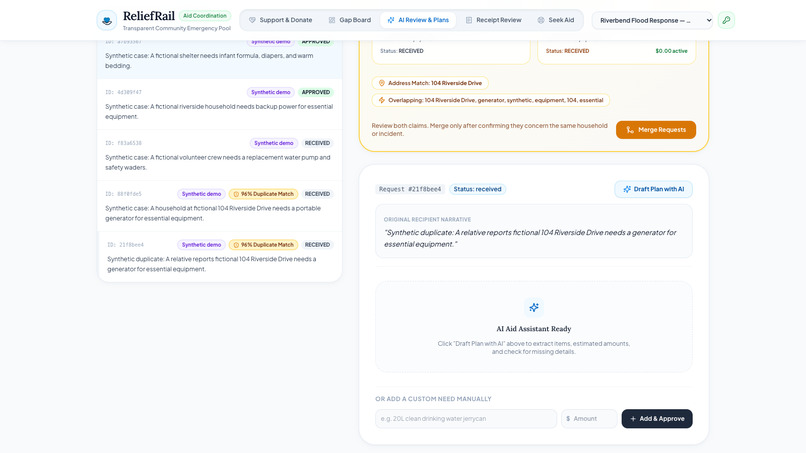
Similarity
-
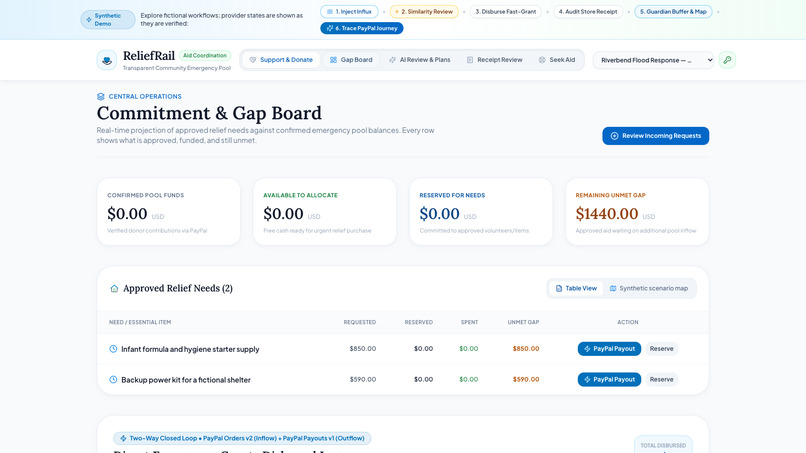
Gap Board
-
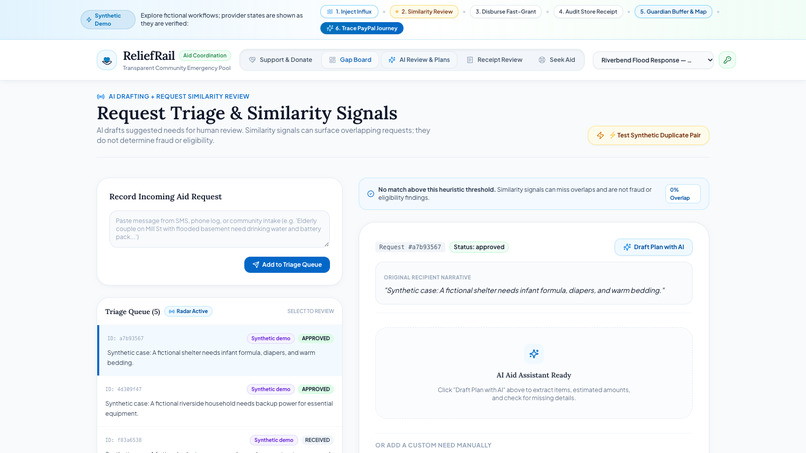
triage
-
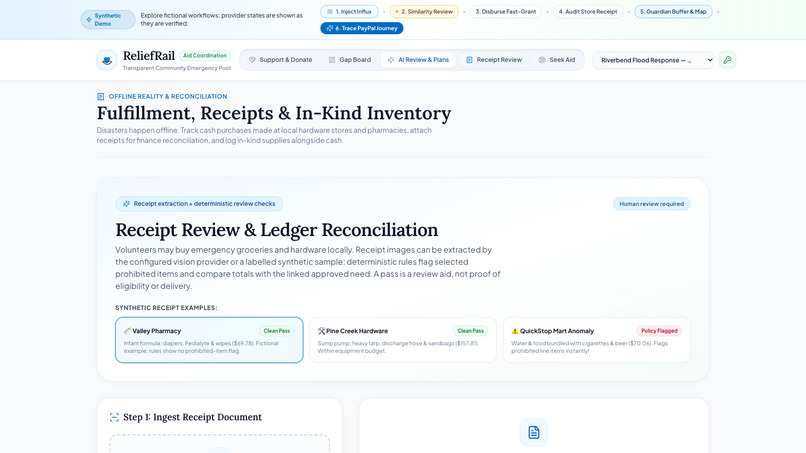
Receipts
-
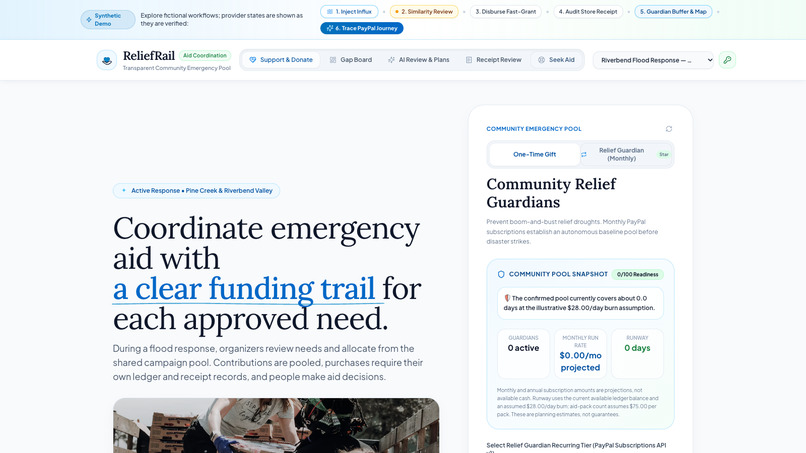
Guardian
-
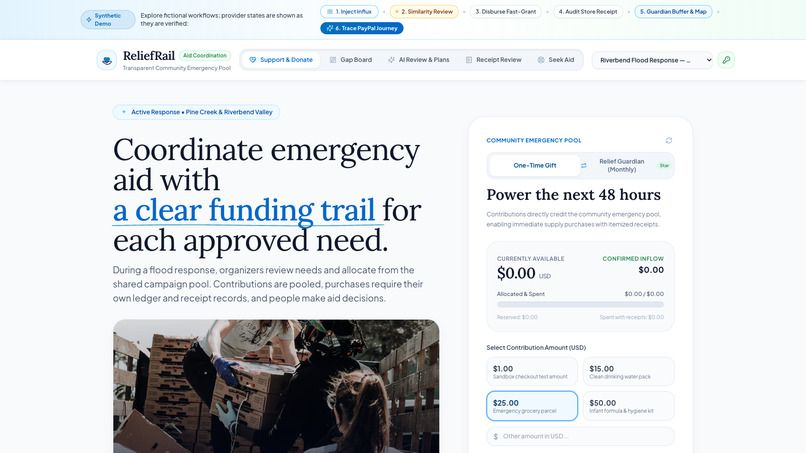
Supporter
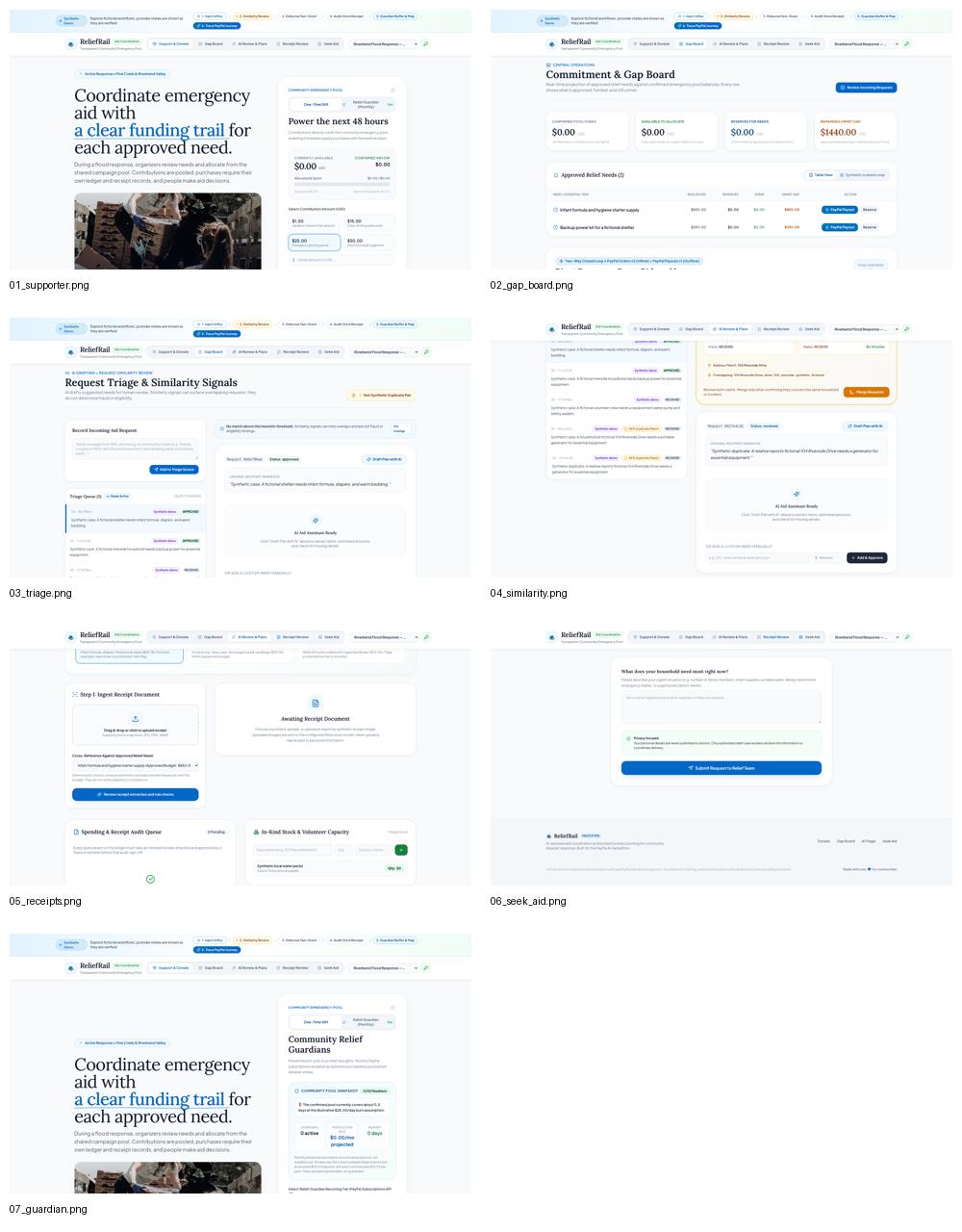
ReliefRail
When help arrives from everywhere, make every step traceable.
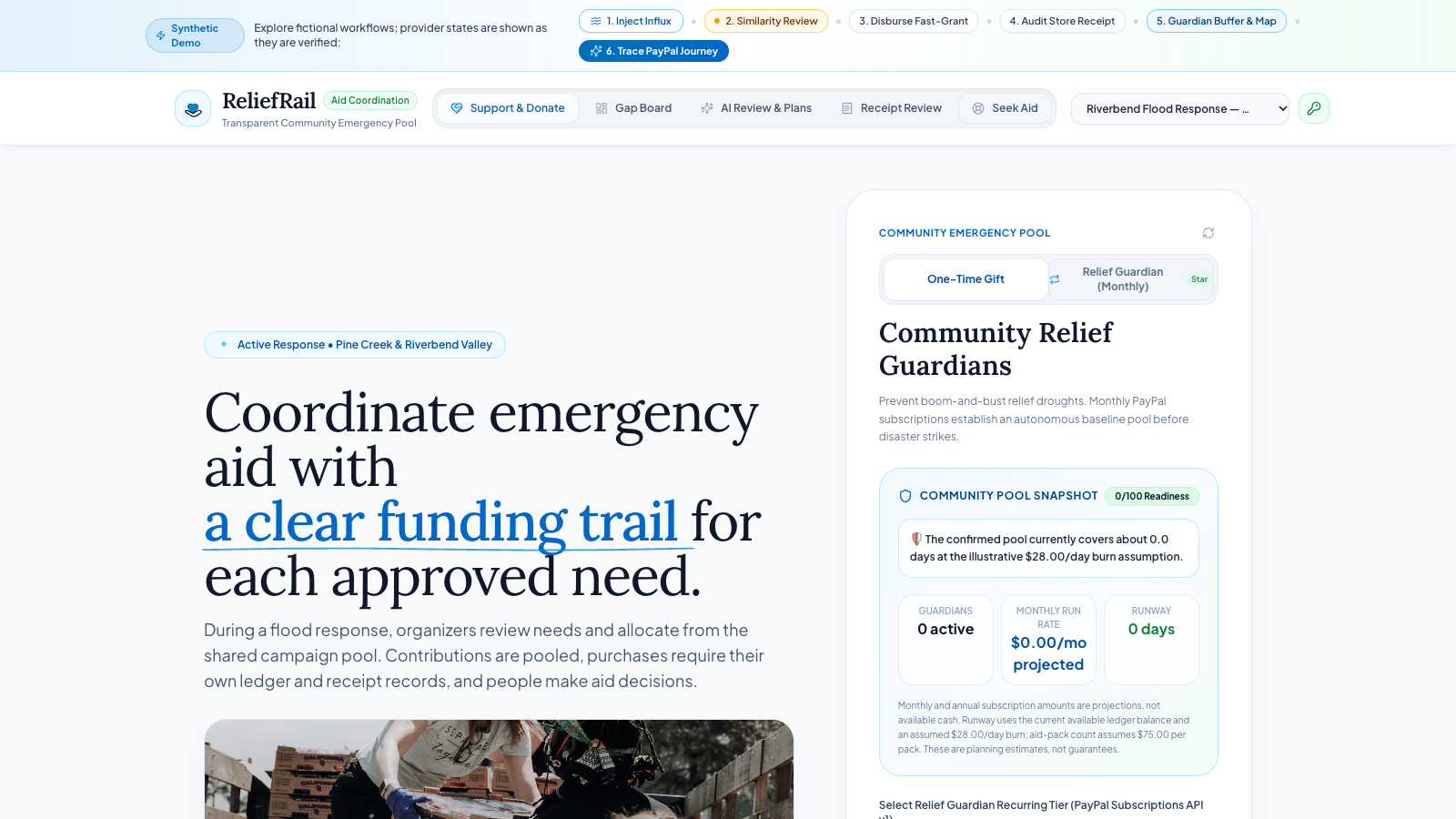
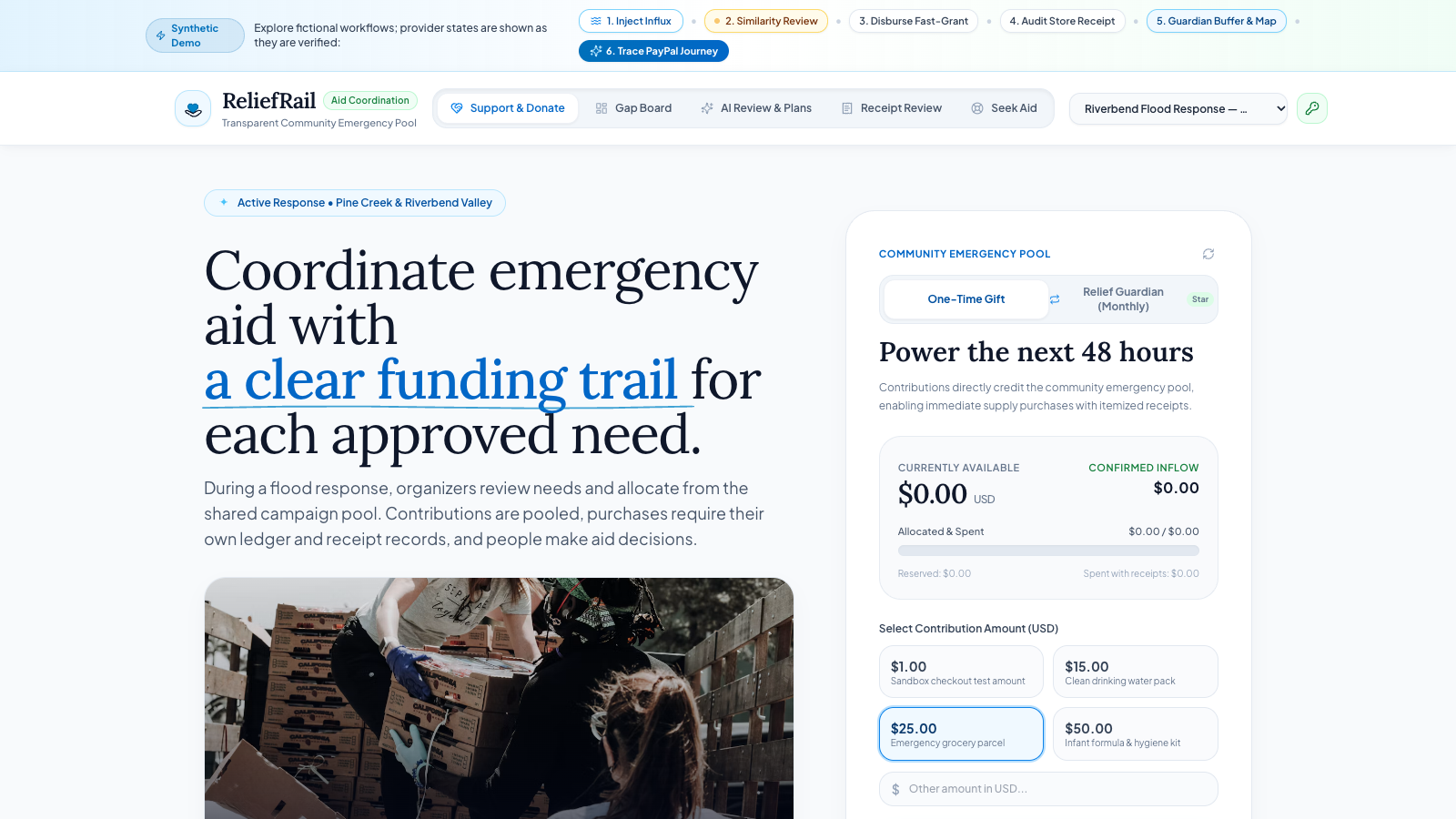
In a disaster, requests, approvals, donations, payouts, and receipts can quickly end up scattered across messages and spreadsheets. Relief teams need to coordinate urgent needs while keeping a clear account of what has been approved, what funds are available, and what happened to each payment.
ReliefRail is a prototype for bringing those steps into one human-reviewed workflow.
How it works
- A person submits an assistance request.
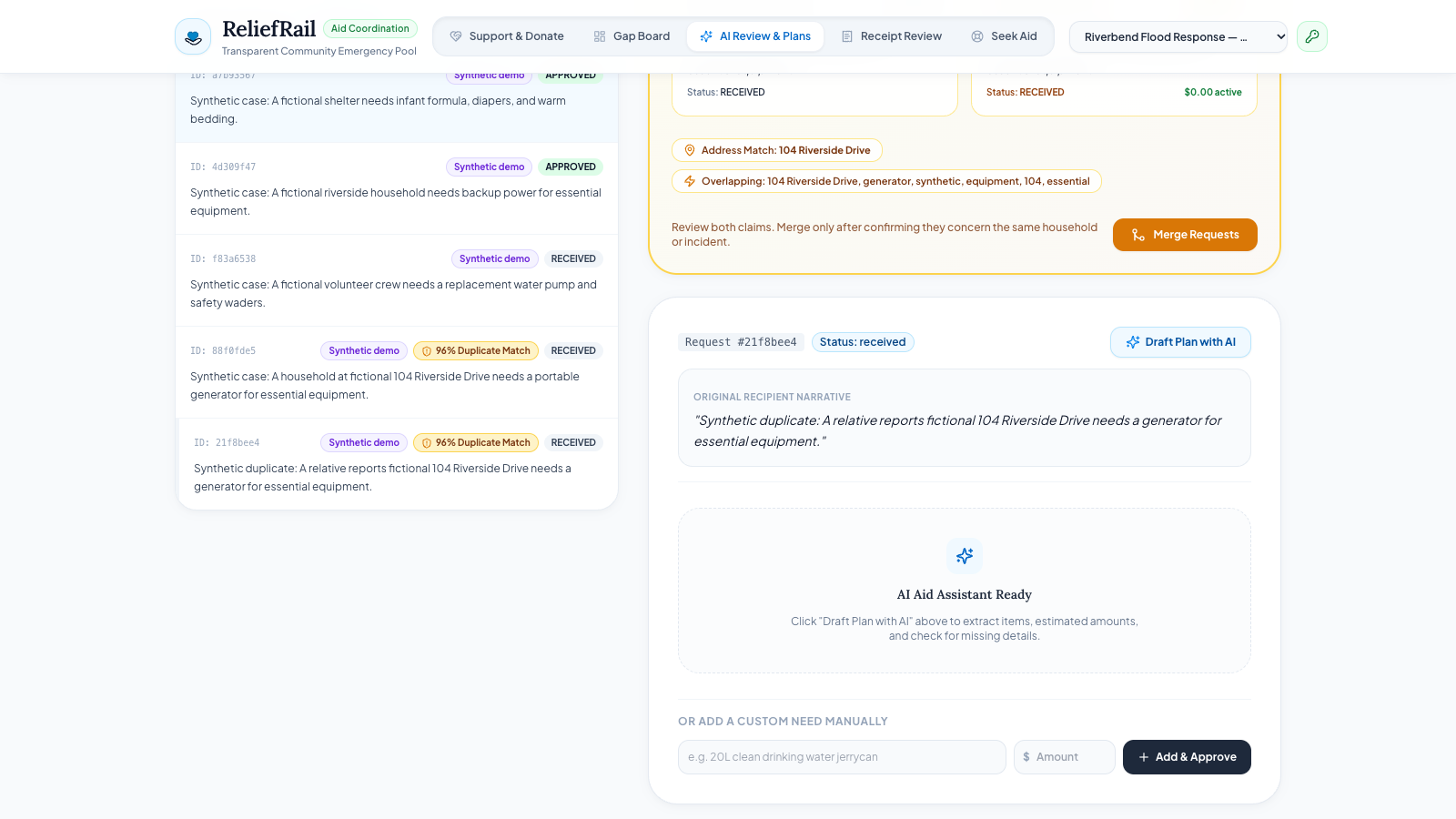
- A coordinator reviews it and approves specific, costed needs.
- Supporters can contribute through a PayPal Sandbox checkout.
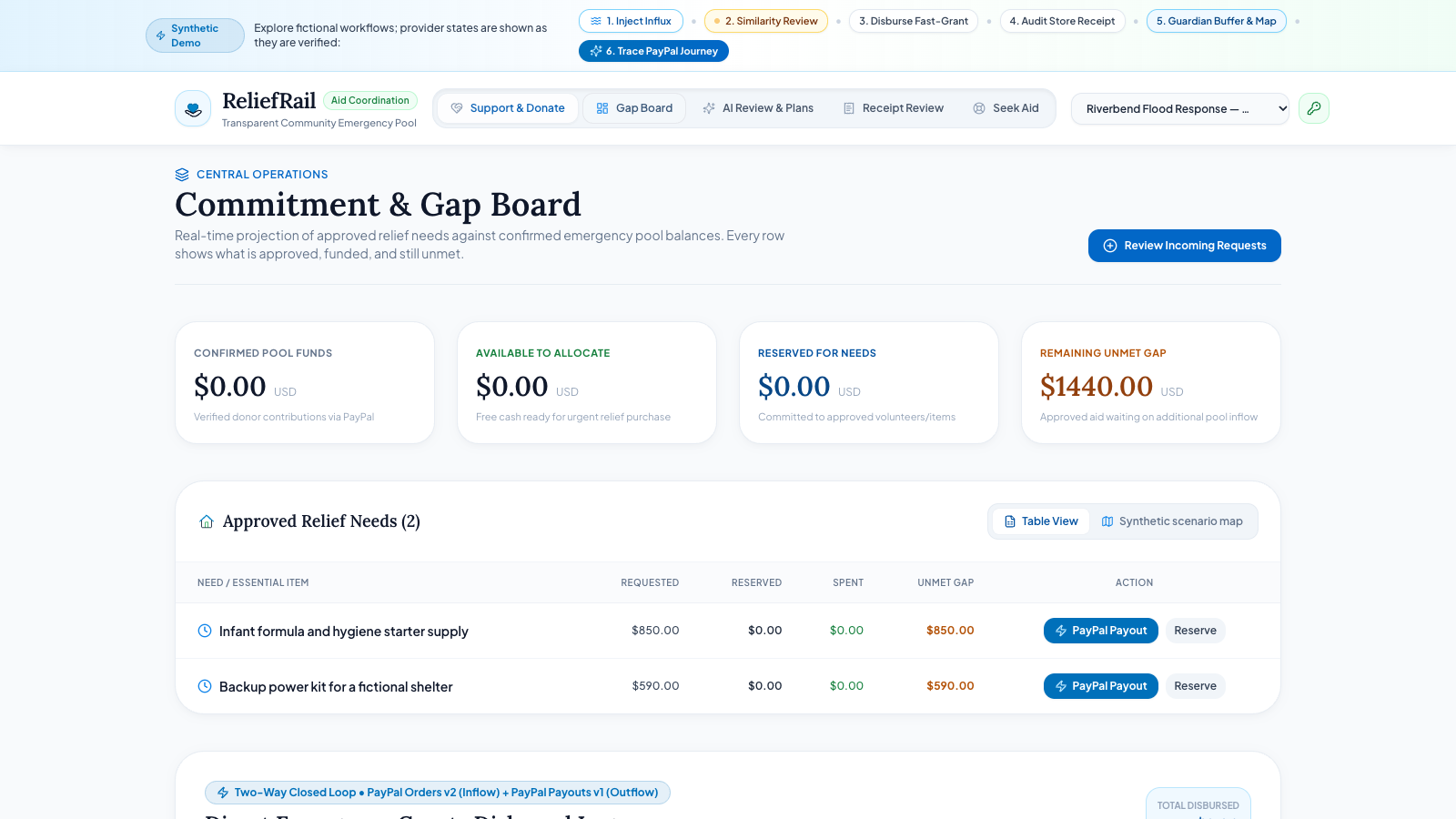
- The ledger tracks contributions, reservations, spends, releases, and payment updates as distinct events.
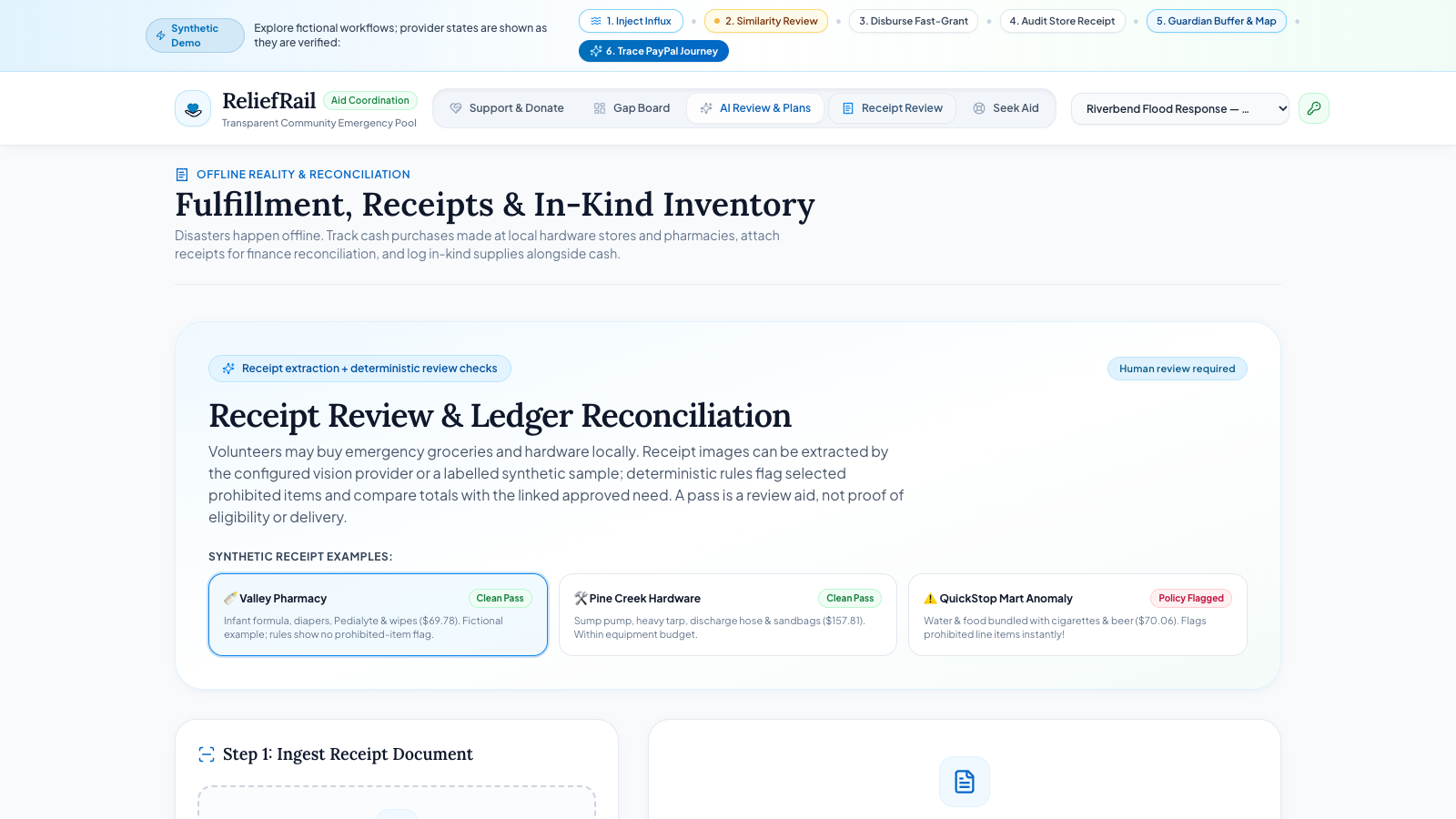
- Coordinators review fulfillment evidence, including built-in synthetic receipt examples.
The goal is to make the path from a request to a recorded outcome easier to follow. A pending payment is not presented as confirmed funds, and a reservation is not represented as a completed spend.
AI that assists without taking control
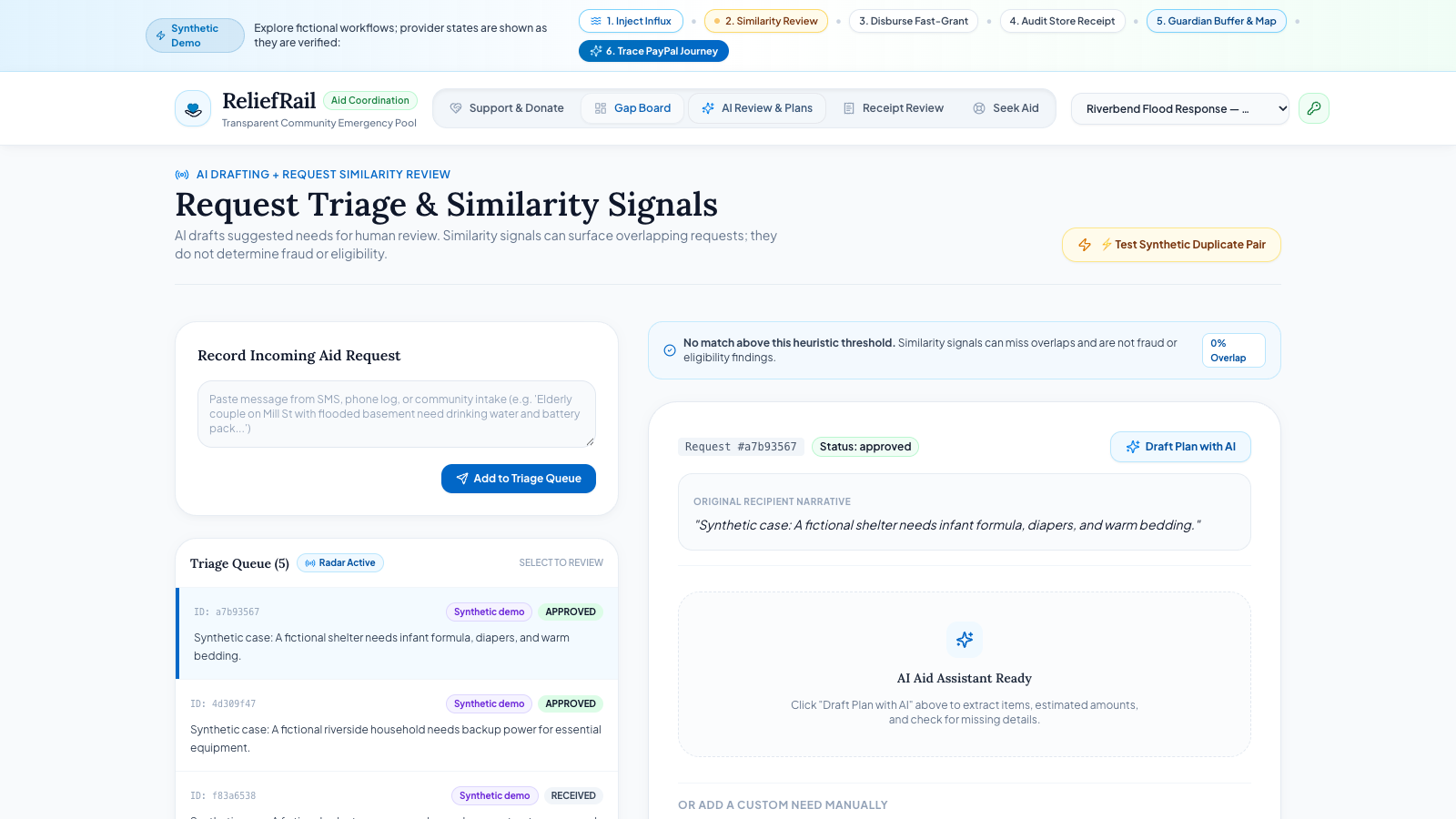
ReliefRail uses AI to help structure synthetic demo requests into draft needs and follow-up questions. Coordinators review the suggestions; AI cannot approve assistance, determine eligibility, flag fraud, or authorize payments.
The prototype also shows possible overlaps between requests using deterministic signals to prompt human review. These are not fraud findings or eligibility decisions.
PayPal integration
The prototype uses PayPal Orders in Sandbox. A supporter approves a test checkout, the server captures the order, and the backend verifies PayPal webhook signatures before treating payment events as confirmed. Event handling is designed to avoid crediting the same provider event twice.
This is a sandbox demonstration, not live fundraising.
How we built it
We built a web app and API backed by SQLite. The system separates request review, approved needs, payment events, and ledger entries so each stage has an explicit status. AI drafting is optional and restricted to synthetic demo cases.
Challenges and what we learned
The hardest part was making money states honest. A successful browser redirect alone does not prove a payment settled, and a payout accepted by a provider is not the same as confirmed delivery. We designed the workflow around provider events and distinct pending, reserved, confirmed, and released states.
We also had to decide where AI belongs. We chose to use it to reduce the effort of organizing information, while leaving decisions and approvals with people. In a high-stakes setting, clear limits are part of the product.
Current scope
ReliefRail is an experimental prototype using PayPal Sandbox and synthetic demo records. It is not ready to coordinate real disaster response or handle real recipient information. It has not completed independent security, privacy, legal, accessibility, or operational review.
Our next step is to learn from relief coordinators, then evaluate low-connectivity intake and verified local supplier workflows before considering any real-world pilot.
Built With
- ai
- artificial
- disaster
- fastapi
- generative
- intelligence
- payments
- paypal
- python
- react
- relief
- social
- sqlite
- typescript
