-
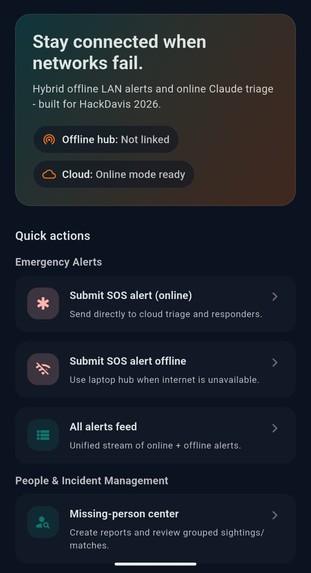
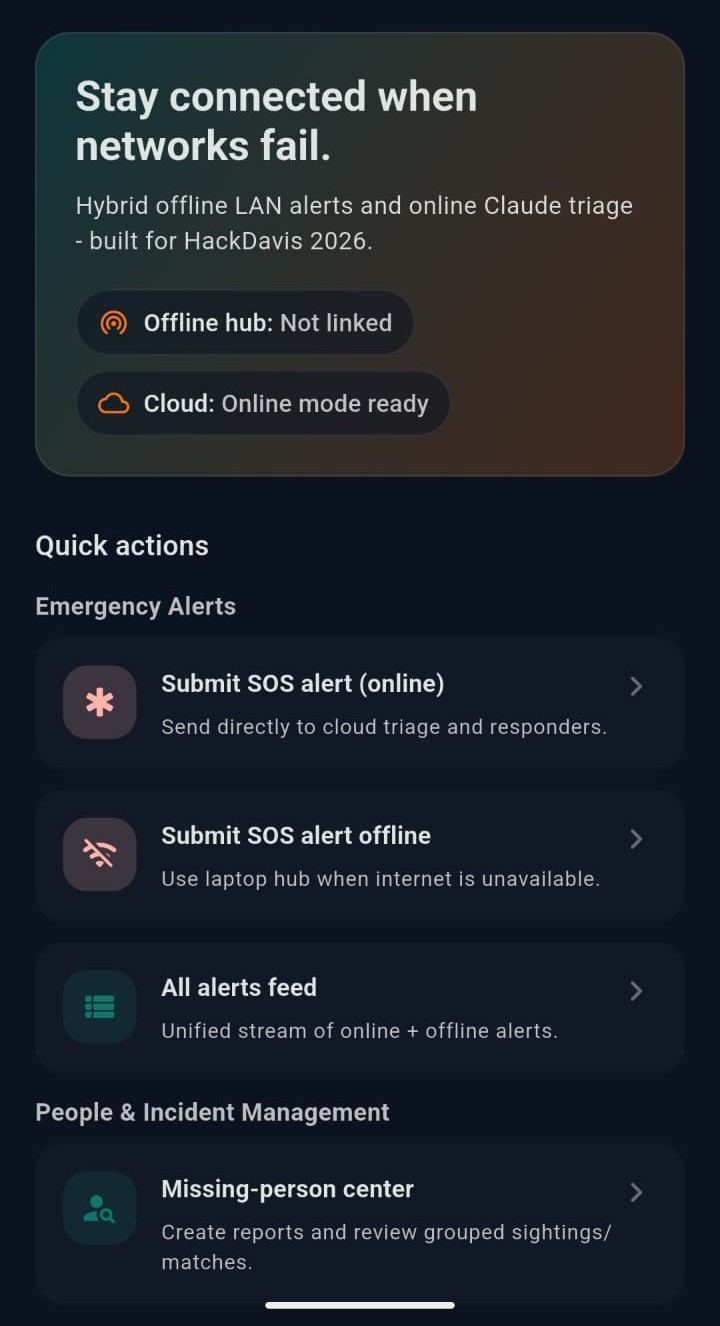
Home Page: One app, every disaster response tool in one place.
-
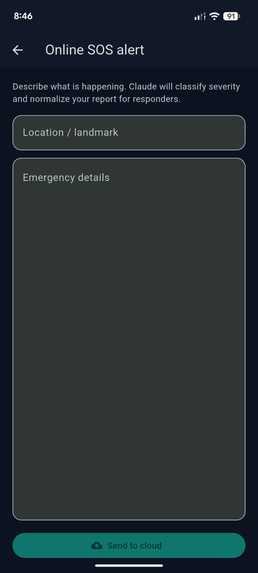
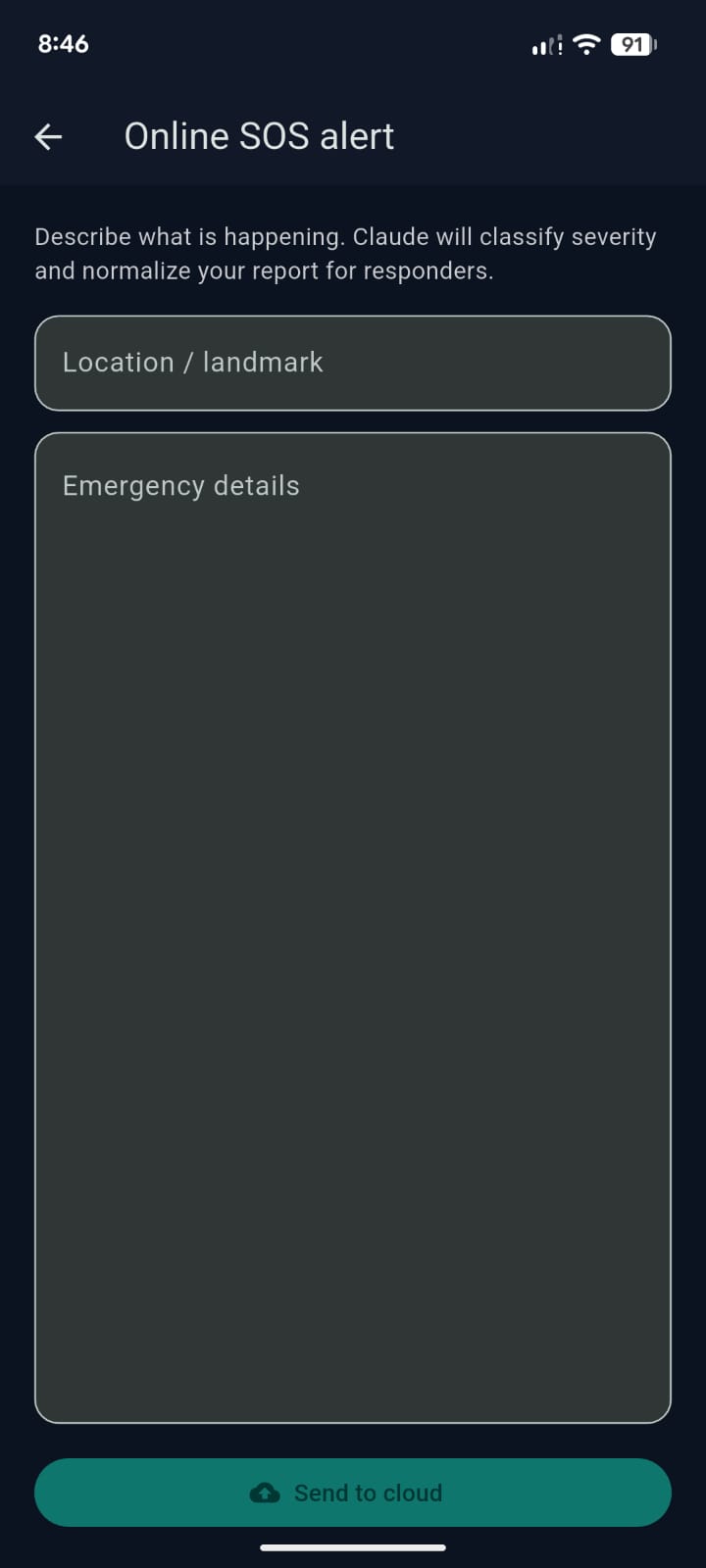
Online SOS Alert: When connected, AI reads your alert and assigns severity before responders even open it.
-
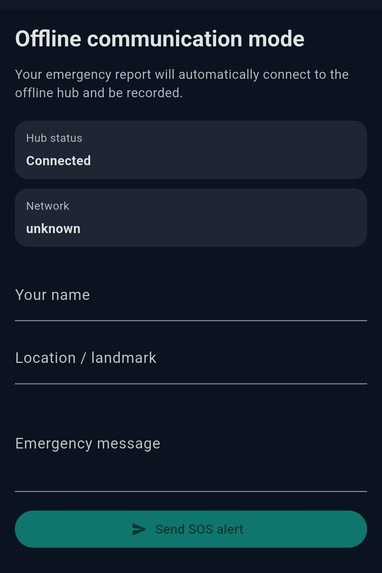
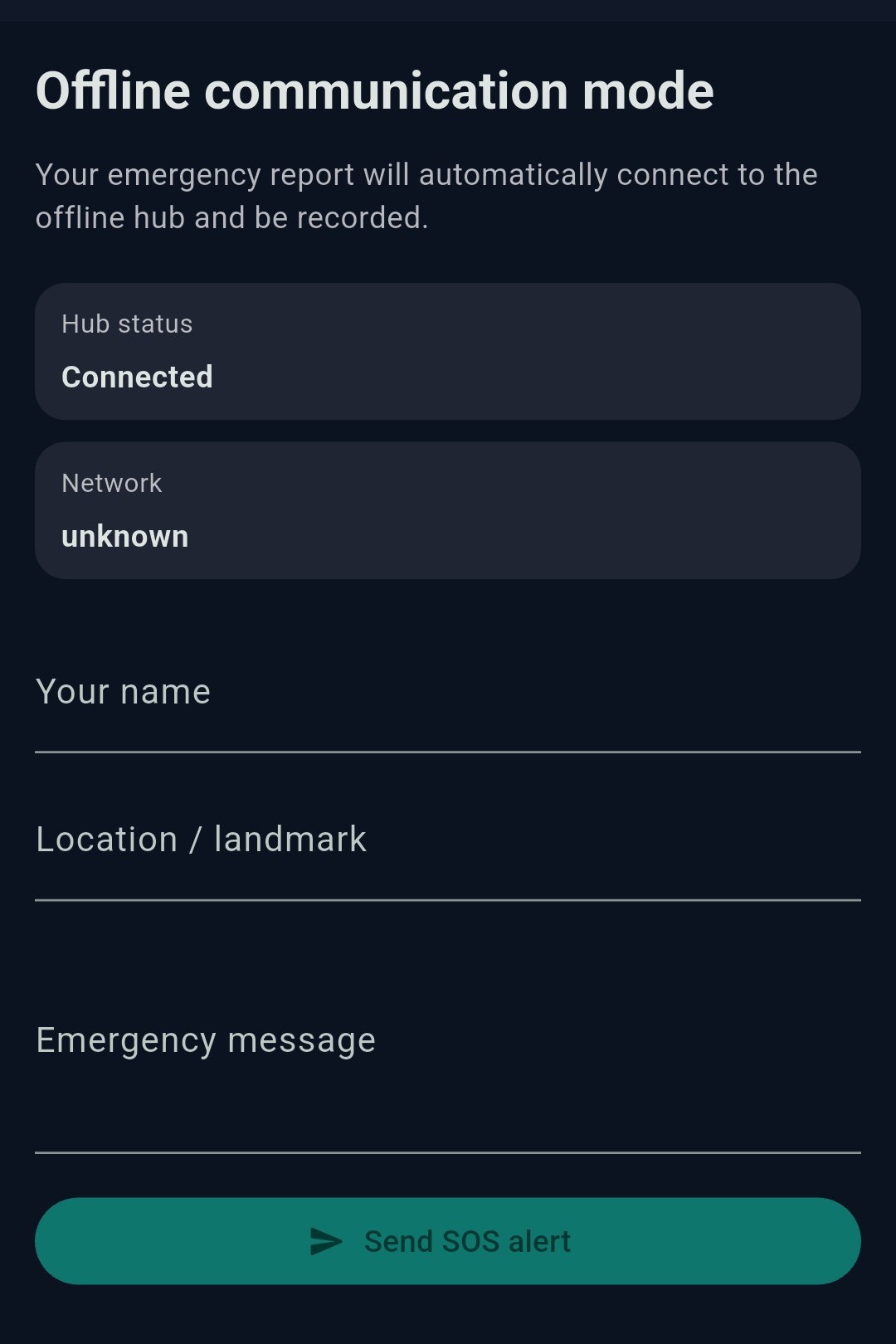
Offline Hub Alert: No internet, no problem — alerts reach responders over local hotspot in real time.
-
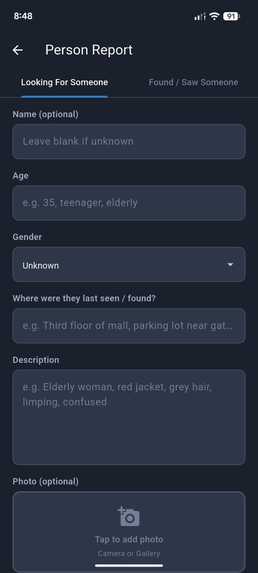
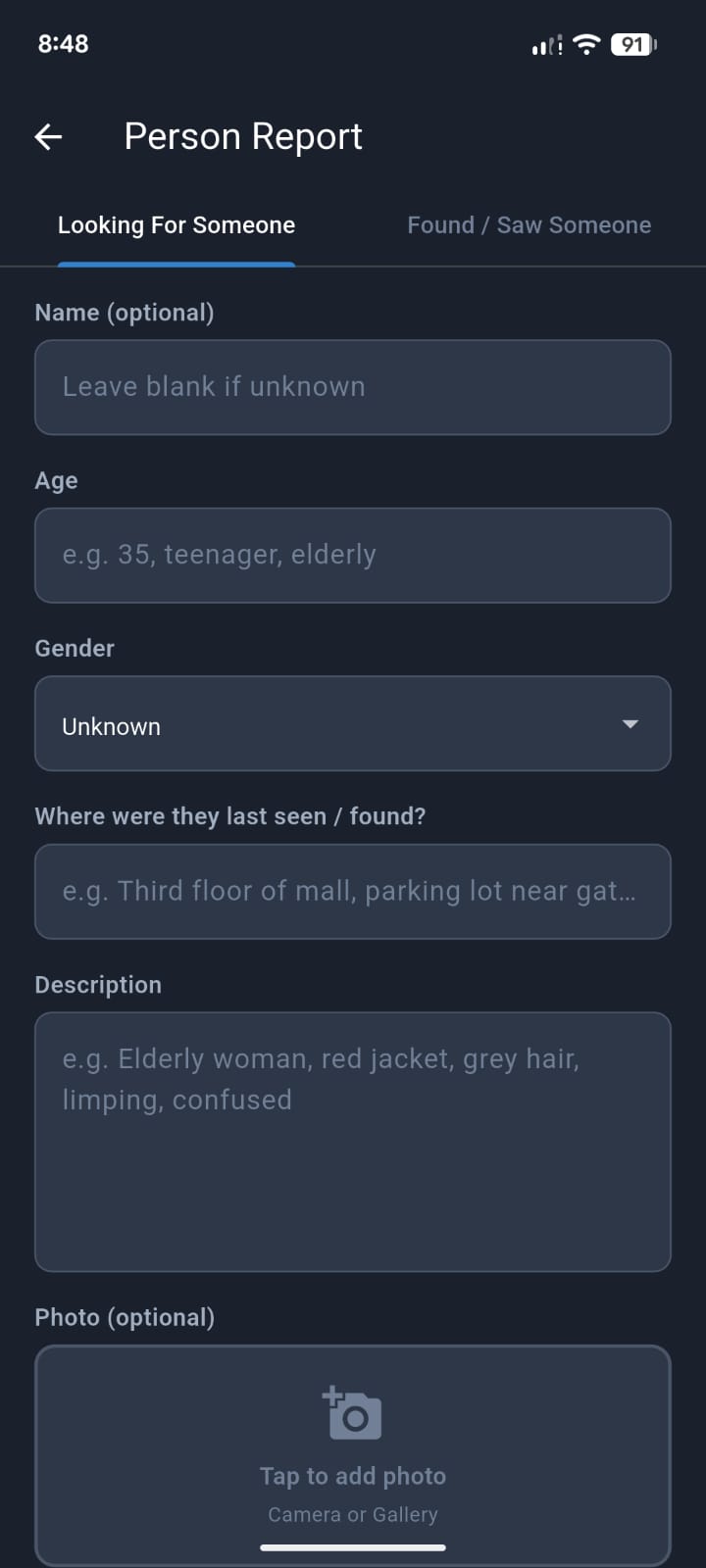
Person Lost and Found: Report a missing person or someone you found — matched by description in seconds.
-
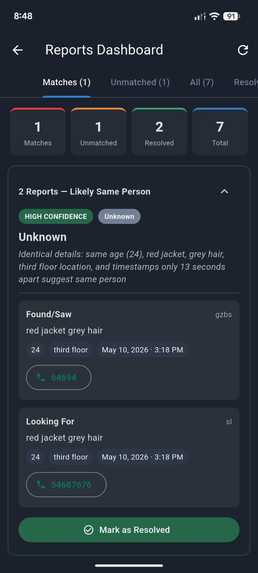
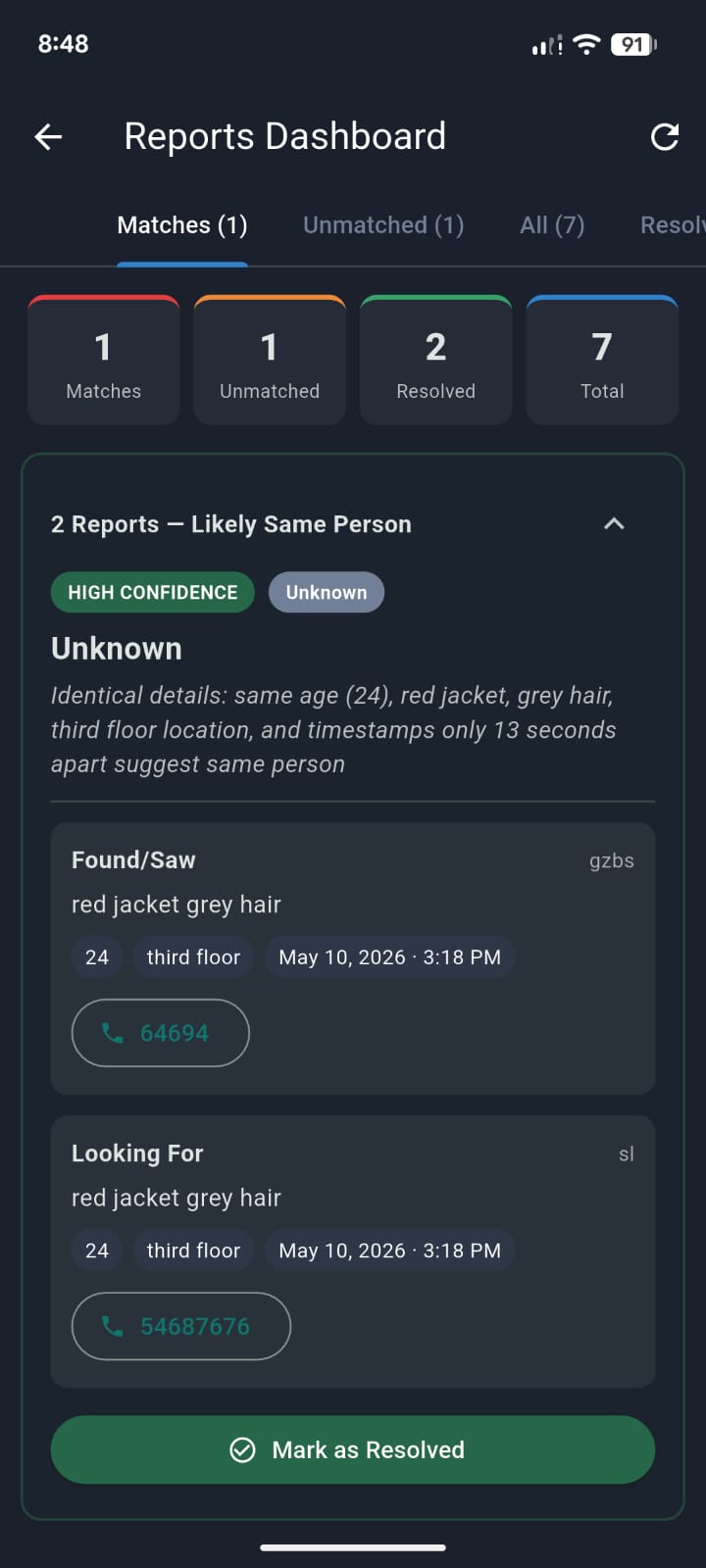
Reports Dashboard: Duplicate reports detected, grouped, and resolved by AI so no one gets missed.
-
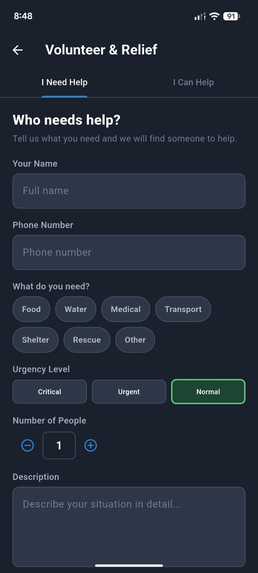
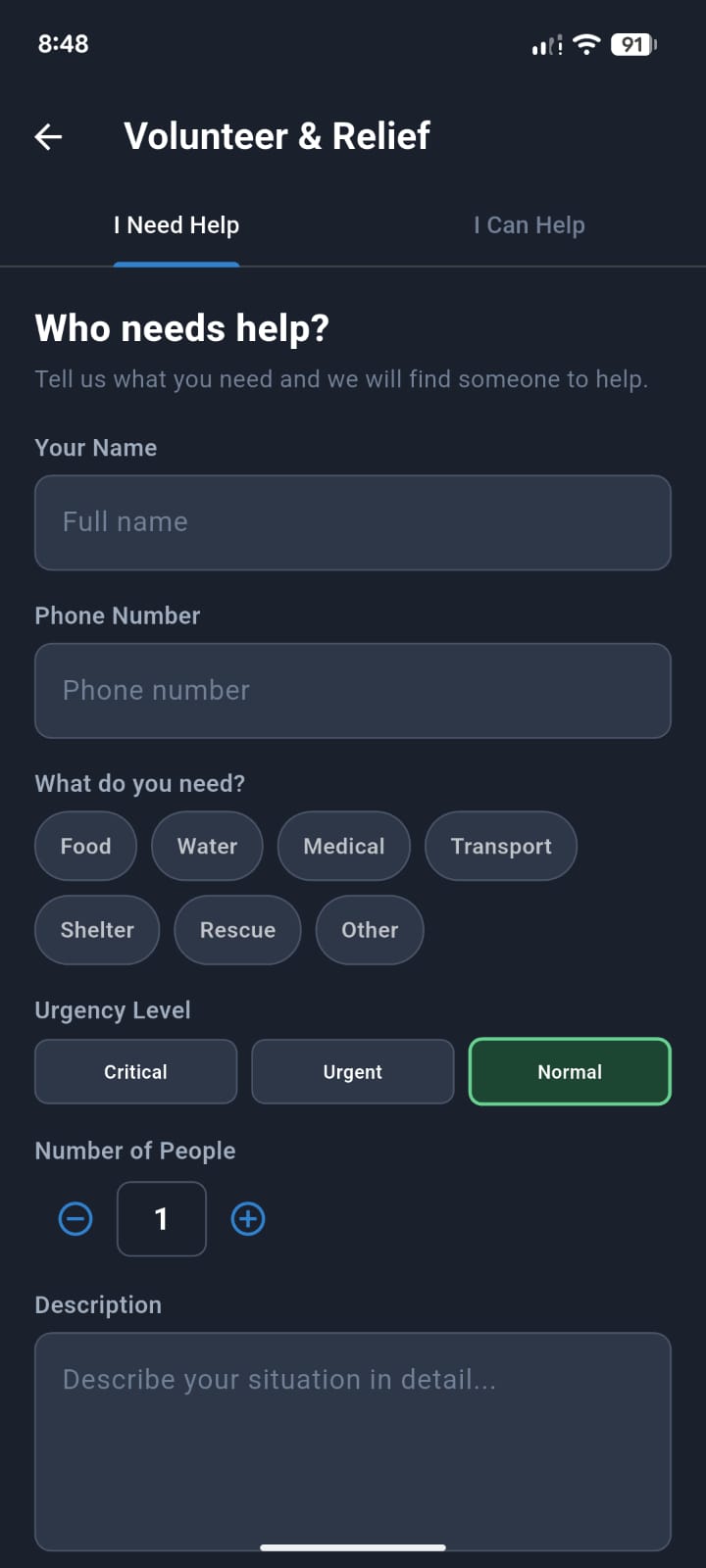
Volunteer and Relief: Tell us what you need or what you can give — AI handles the connection of senders and receivers in realtime
Inspiration
During disasters, the systems people depend on most often fail first. Internet connectivity disappears, communication networks become overloaded, and emergency responders are overwhelmed with fragmented and duplicate information. At the same time, volunteers, supplies, and victims may exist only blocks apart without any reliable coordination system connecting them.
We built AlertU to address this breakdown. Our goal was to create a disaster-response platform capable of functioning in unstable or completely offline environments while still supporting intelligent coordination, emergency reporting, and real-time response workflows.
AlertU is designed not simply as a mobile application, but as a resilient operational coordination system for chaotic, high-stakes disaster environments.
What it does
AlertU is a hybrid disaster-response ecosystem built using Flutter and Node.js. It combines cloud-based AI triage with offline local-network communication to maintain emergency coordination even during infrastructure collapse.
Core Capabilities
- Offline emergency alerts through hotspot/LAN communication
- Real-time responder dashboard across connected devices
- AI-powered emergency triage and severity prioritization
- Missing-person matching with duplicate detection
- Volunteer and donation coordination workflows
- Voice-to-text emergency reporting
- Automatic cloud synchronization after reconnection
How we built it
Frontend
- Flutter (Dart)
- Material 3 UI
Backend
- Node.js + Express
- MongoDB + Mongoose
- Anthropic Claude API
- Socket.IO
- Auth0 authentication
Offline Infrastructure
- Laptop-based local emergency server
- WiFi hotspot communication between devices
- Local persistence and delayed synchronization
- Zero-internet emergency reporting
Challenges we ran into
- Building reliable communication without internet access
- Synchronizing offline and cloud data safely
- Preventing duplicate missing-person reports
- Managing real-time updates across local and cloud systems
- Handling merge conflicts across multiple integrated features
- Ensuring alerts were never lost during network failures
Accomplishments that we're proud of
- Built a functioning offline-first disaster coordination system
- Implemented AI-powered emergency triage workflows
- Developed volunteer and donation matching infrastructure
- Designed a resilient architecture for real-world disaster response
What we learned
- Offline-first system design requires fundamentally different thinking
- Reliability and graceful degradation are critical in emergency systems
- AI can significantly reduce responder overload during crises
- Real-time synchronization introduces complex operational challenges
- Disaster-response software must prioritize accessibility and resilience
What's next for AlertU
- Bluetooth mesh networking between phones
- GIS disaster heatmaps and responder routing
- Multilingual emergency translation
Built With
- android-studio
- anthropic-claude-api
- auth0
- express.js
- flutter-(dart)
- git
- github
- lan/hotspot
- mongodb
- mongoose
- node.js
- rest-apis
- socket-io-client
- socket.io
- vs-code
- vultr


Log in or sign up for Devpost to join the conversation.