-
-
ReliefConnect
Here’s a structured breakdown of ReliefConnect based on the categories you provided, aligned with the problem statement and overall vision of the platform:
## Inspiration
The inspiration for ReliefConnect stems from observing the inefficiencies in disaster response during major natural disasters. Notable examples include the aftermath of hurricanes and earthquakes, where aid delivery was hindered by disorganization and fragmented communication. Real-life accounts of families struggling to access resources and volunteers facing challenges in helping their communities motivated us to create a unified platform to ensure timely and coordinated assistance.
## What it does
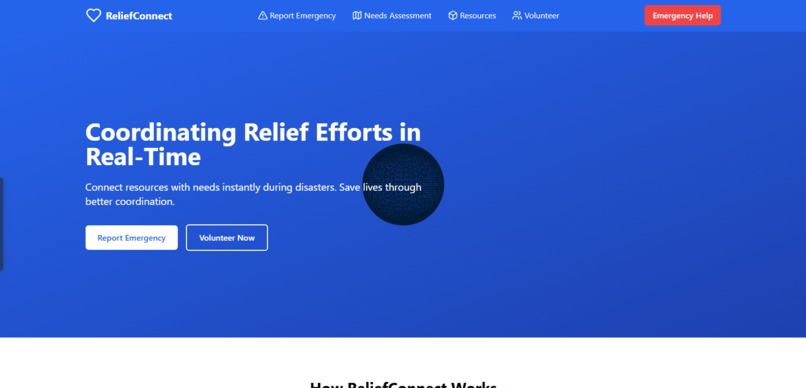
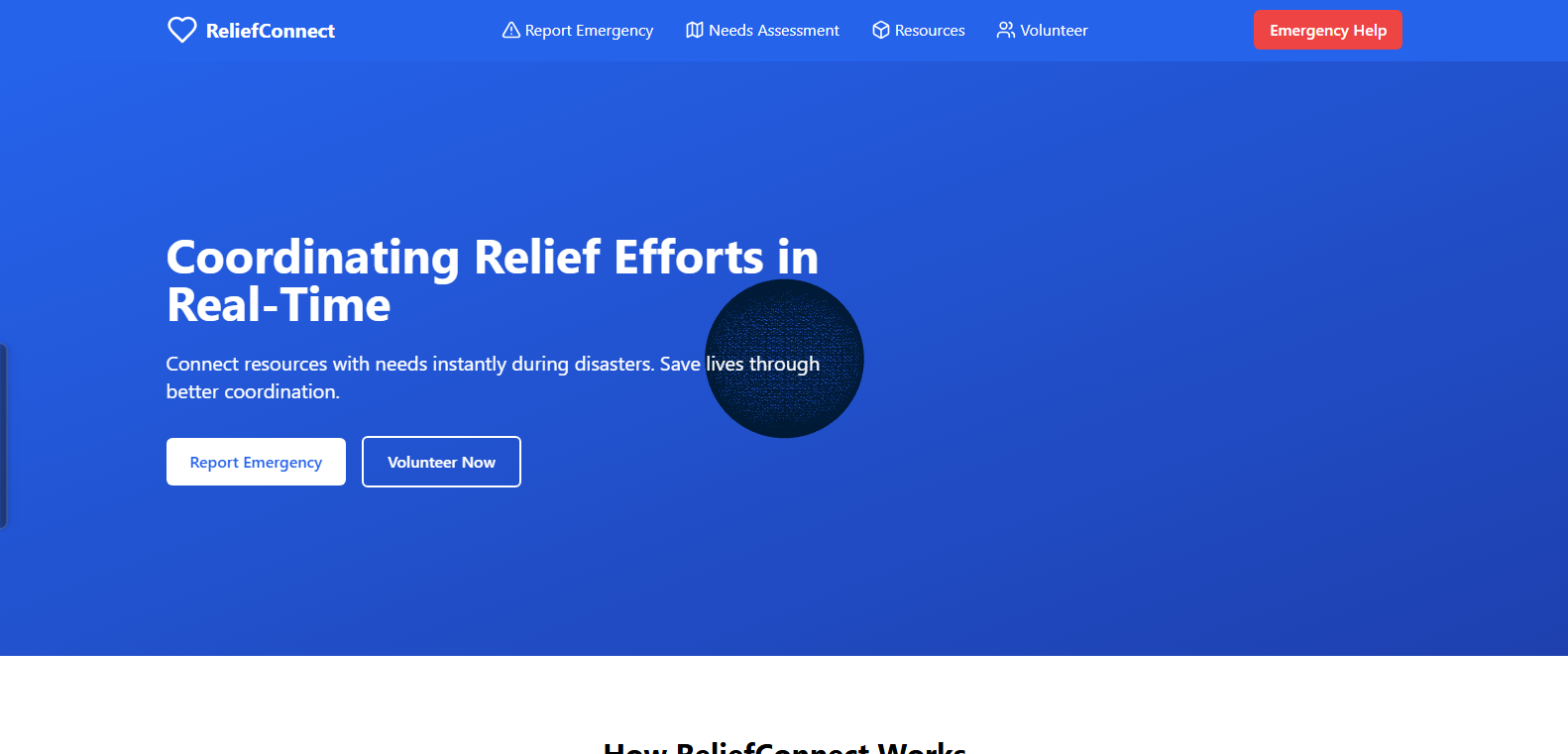
ReliefConnect serves as a real-time disaster relief coordination platform that centralizes information and communication among disaster-affected individuals, relief organizations, and volunteers. Key functionalities include:
- Real-time Needs Assessment: Victims report urgent needs (e.g., medical attention, food).
- Resource Management: Relief organizations log available resources for easy matching with reported needs.
- Volunteer Coordination: Connects volunteers with suitable tasks based on skills and availability.
- Communication Hub: Facilitates real-time messaging among stakeholders.
- Situational Awareness: Provides interactive maps showing affected areas and resource locations.
## How we built it
We built ReliefConnect using a combination of:
- Front-end Development: Leveraging web technologies like HTML, CSS, and JavaScript to create an intuitive user interface accessible on multiple devices.
- Back-end Development: Utilizing a robust server framework (e.g., Node.js) and database (e.g., MongoDB) to manage user data, resources, and reported needs.
- APIs: Integrating with external APIs for real-time weather data and emergency service notifications, enhancing situational awareness.
- User Testing: Conducting iterations of feedback loops with real users to refine functionality and interface.
## Challenges we ran into
- Data Integrity: Ensuring that user-reported needs and resources remained accurate during high-traffic periods proved challenging.
- User Engagement: Encouraging engagement from both disaster-affected individuals and volunteers required significant outreach and trust-building.
- Technical Limitations: Optimizing the platform for low-bandwidth scenarios while ensuring real-time updates was a technical hurdle.
## Accomplishments that we're proud of
- Successful Beta Launch: We achieved a successful beta testing phase, garnering positive feedback from users in simulated disaster scenarios.
- Strong Partnerships: Formed collaborations with several non-profit organizations and local government agencies to ensure broad implementation and support.
- User Adoption: Recruited a substantial number of volunteers within the first few months of launching, demonstrating strong community engagement with the platform.
## What we learned
- Importance of User Feedback: Early involvement from potential users helped shape the platform’s design and functionalities, emphasizing the need for a user-centric approach.
- Flexibility and Adaptability: The necessity to pivot and adjust plans quickly in response to challenges was crucial in maintaining momentum during development.
- Community Involvement: Building trust and relationships with organizations and communities is essential for effective deployment and utilization of disaster response tools.
## What's next for ReliefConnect
- Enhanced Features: We plan to develop additional features, such as AI-driven resource matching and predictive analytics for needs assessment based on historical data.
- Expanding Reach: Focus on scaling the platform to work in diverse geographic areas, including rural and underserved regions.
- Training and Awareness Campaigns: Implement training programs for organizations and volunteers to maximize effective usage of the platform.
- Long-term Data Collection: Gather and analyze data from real disaster responses to inform future improvements and disaster preparedness strategies.
Built With
- apis
- backenddevelopment
- datavisualization
- frontenddevelopment
- mangodb
- realtime-register
- webapplication


Log in or sign up for Devpost to join the conversation.