-
-
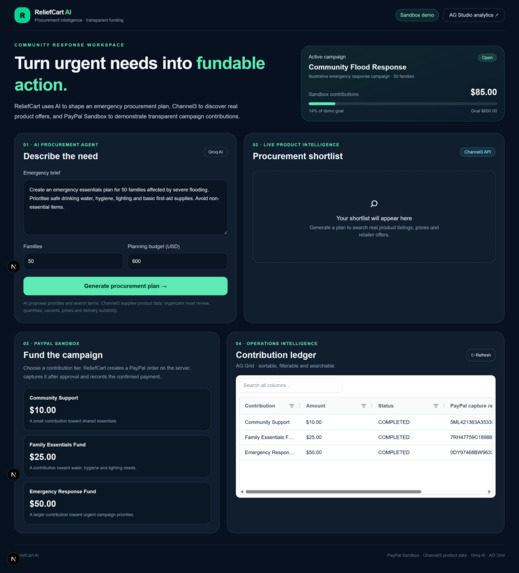
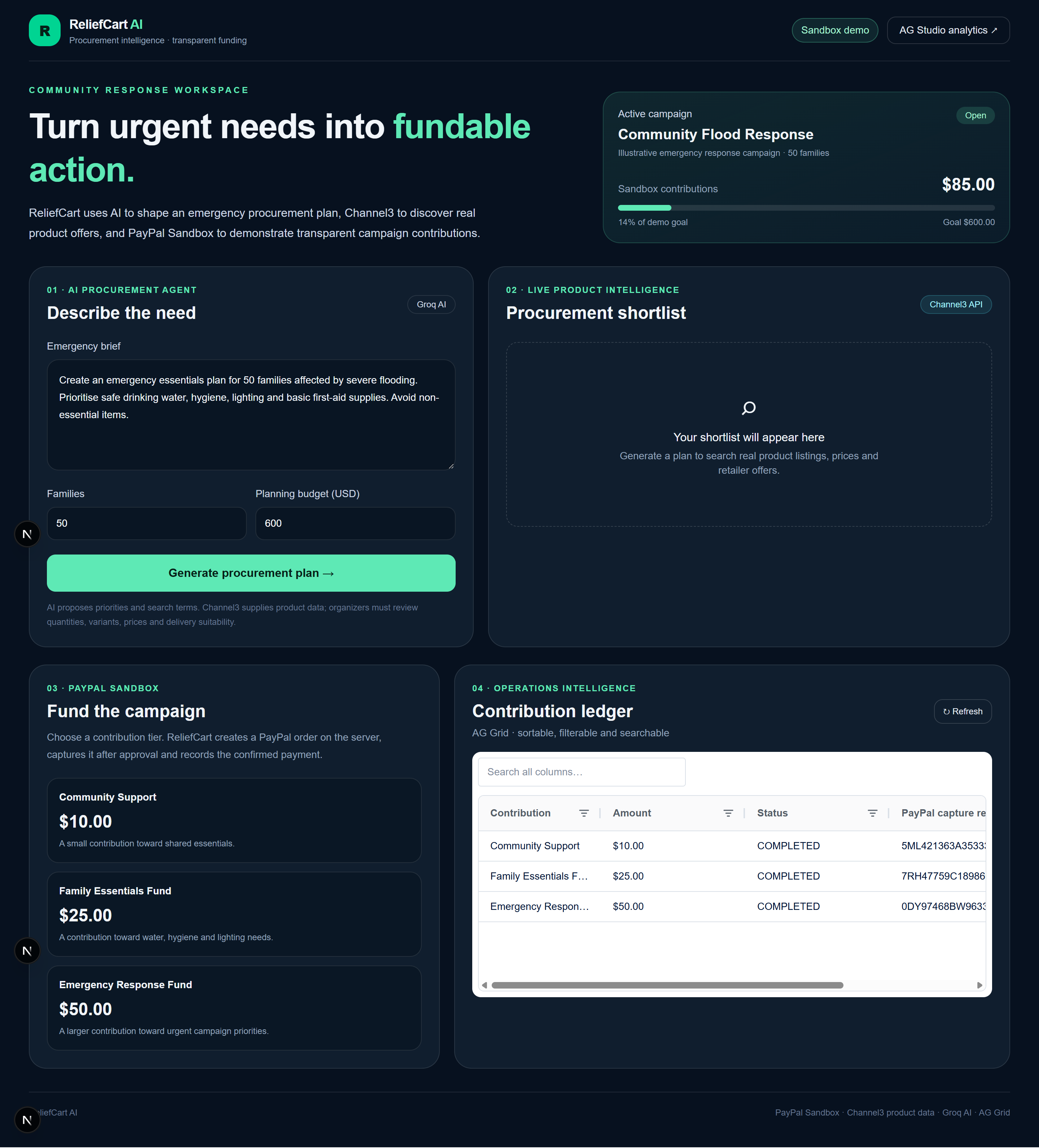
ReliefCart Landing Page
-
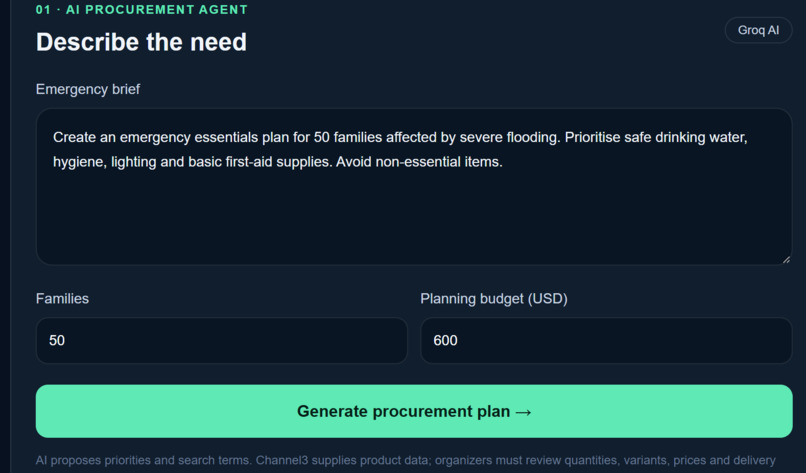
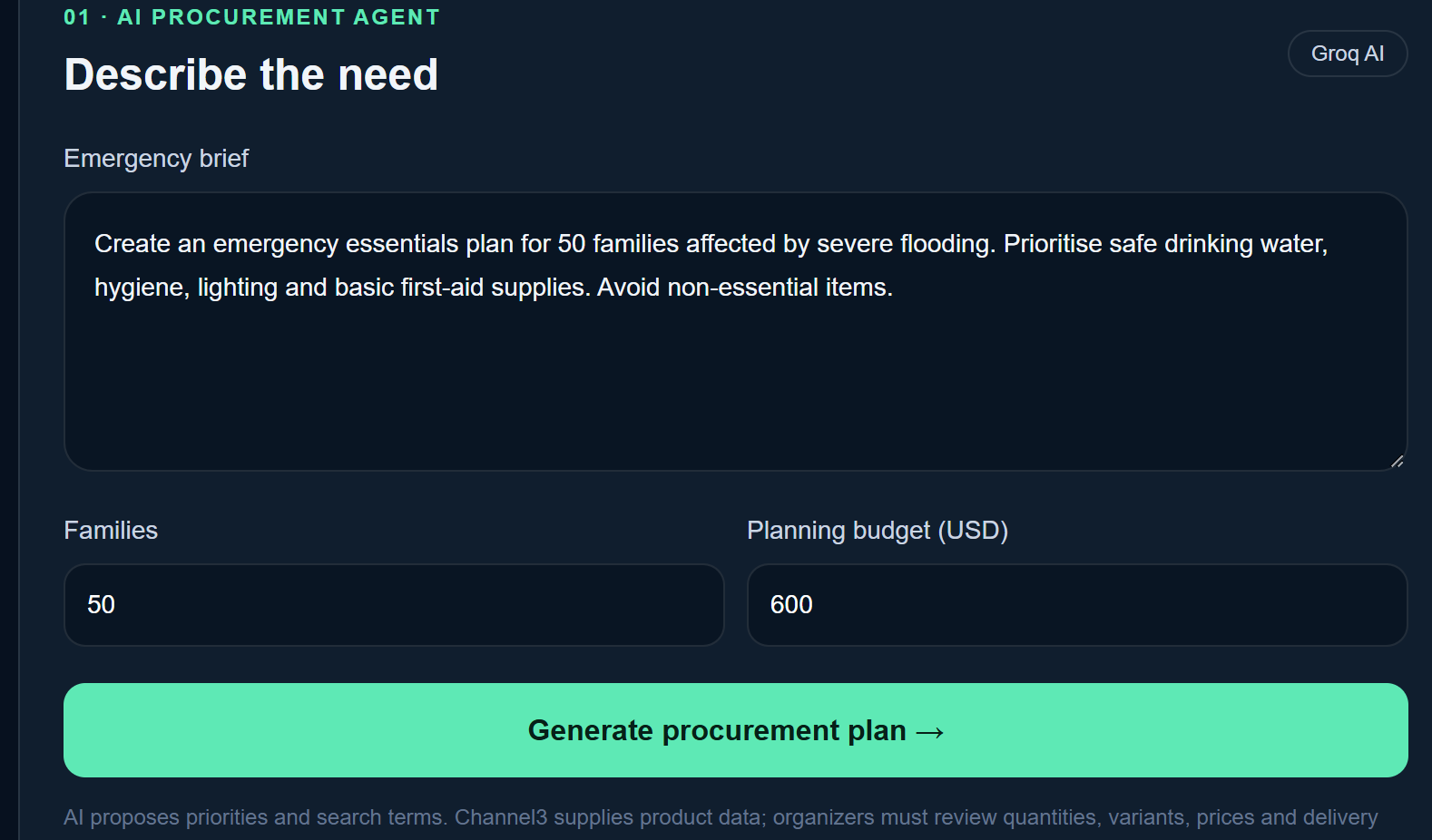
Relief Description of the need
-
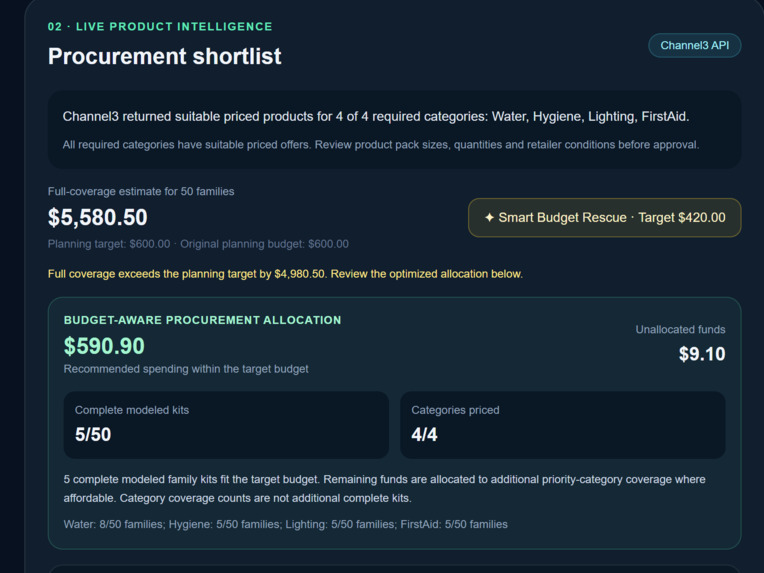
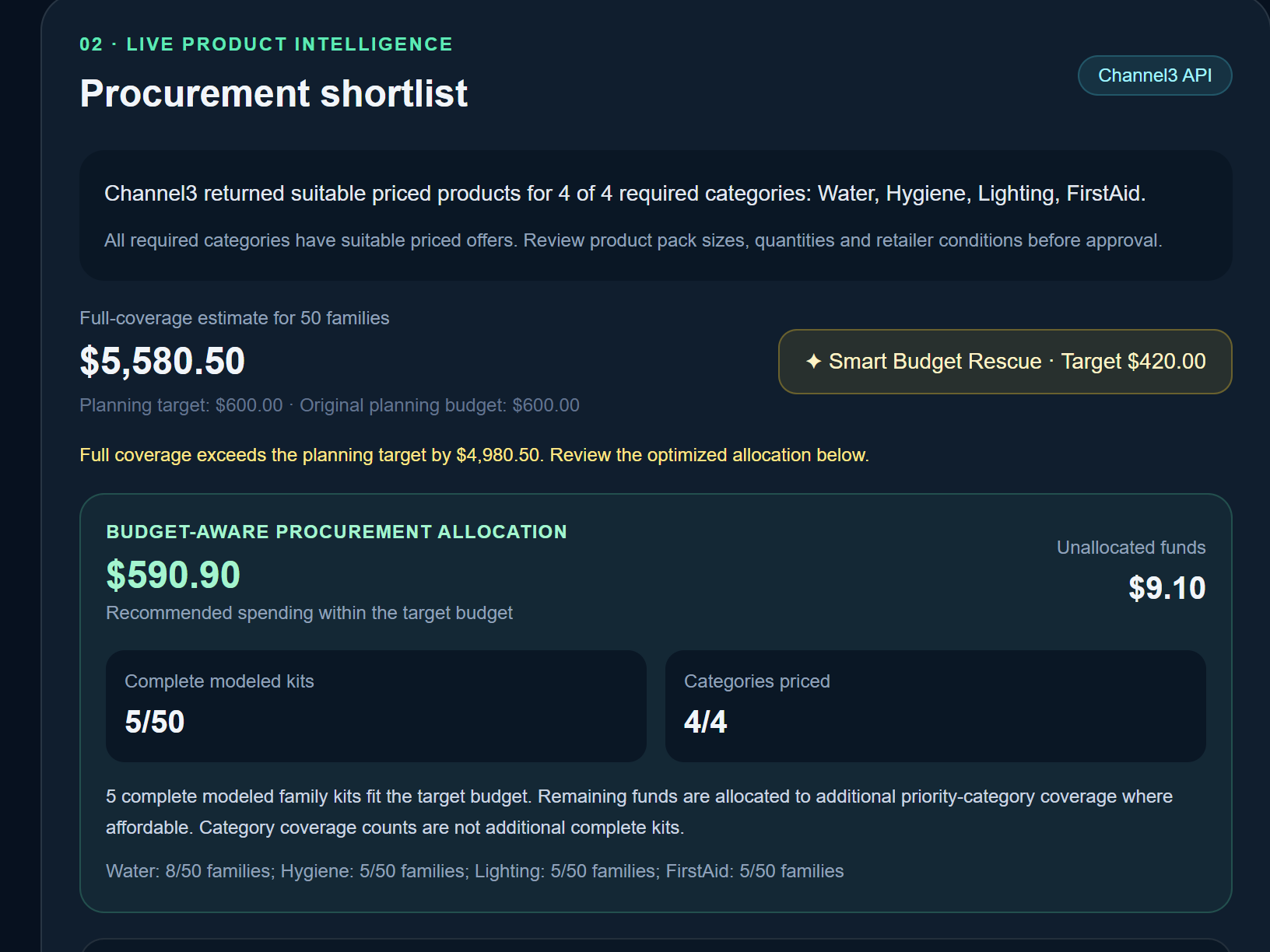
procurement plan and budget calculation
-
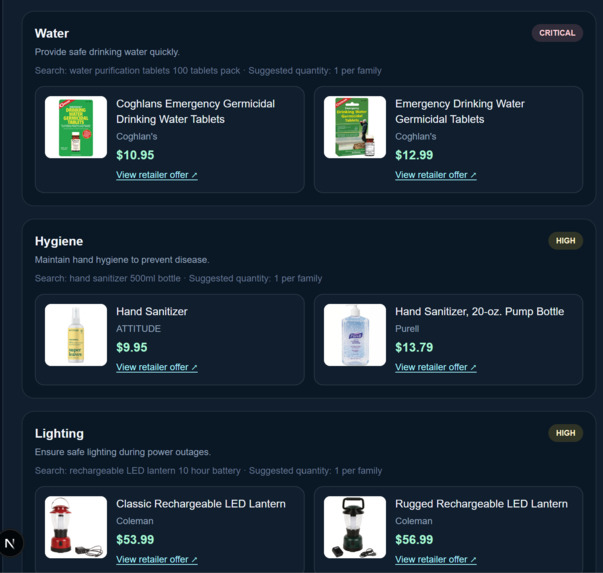
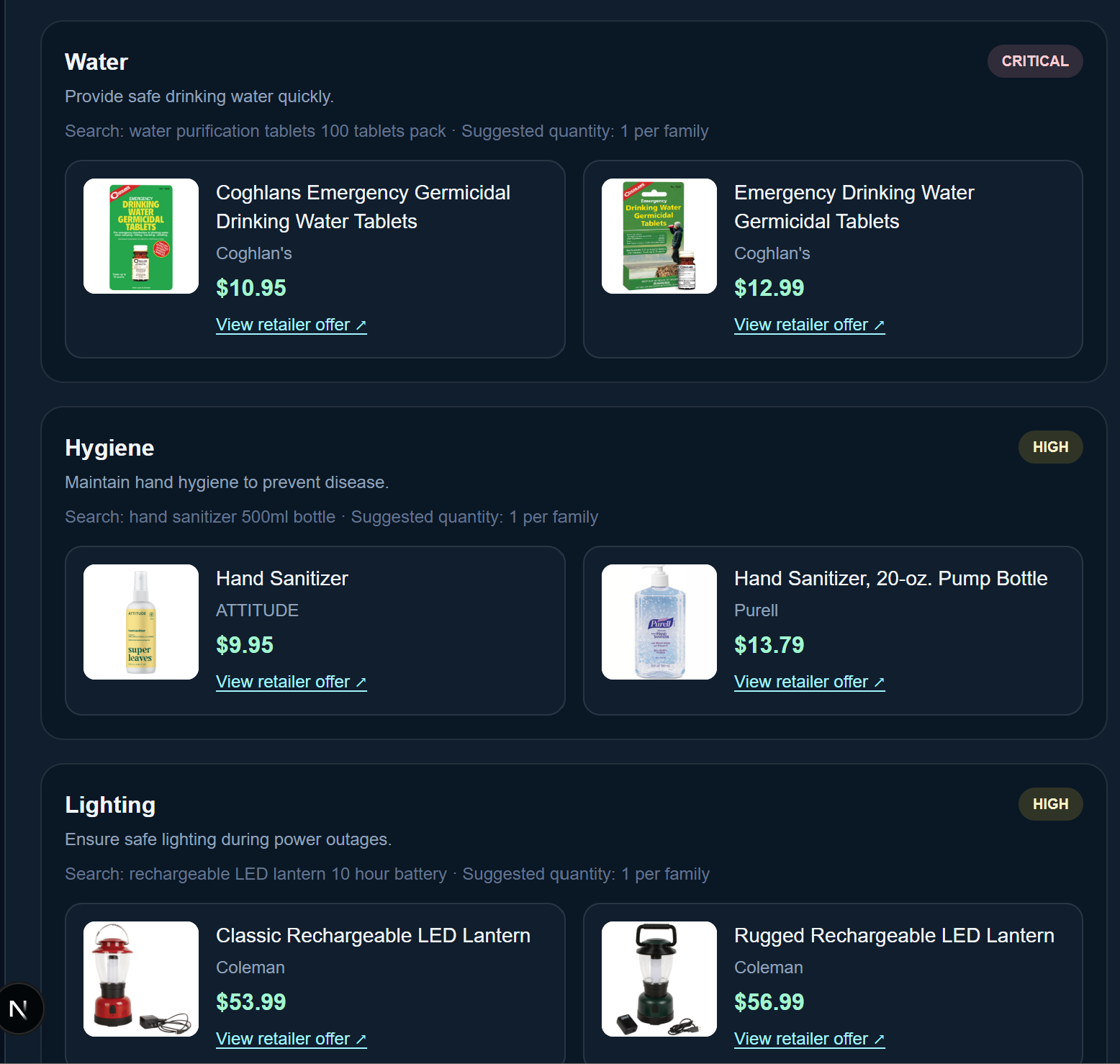
equipments display using Channel3
-
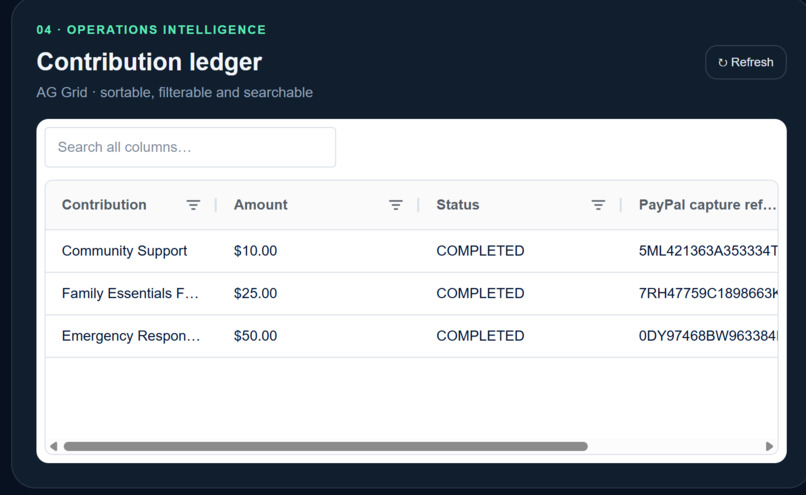
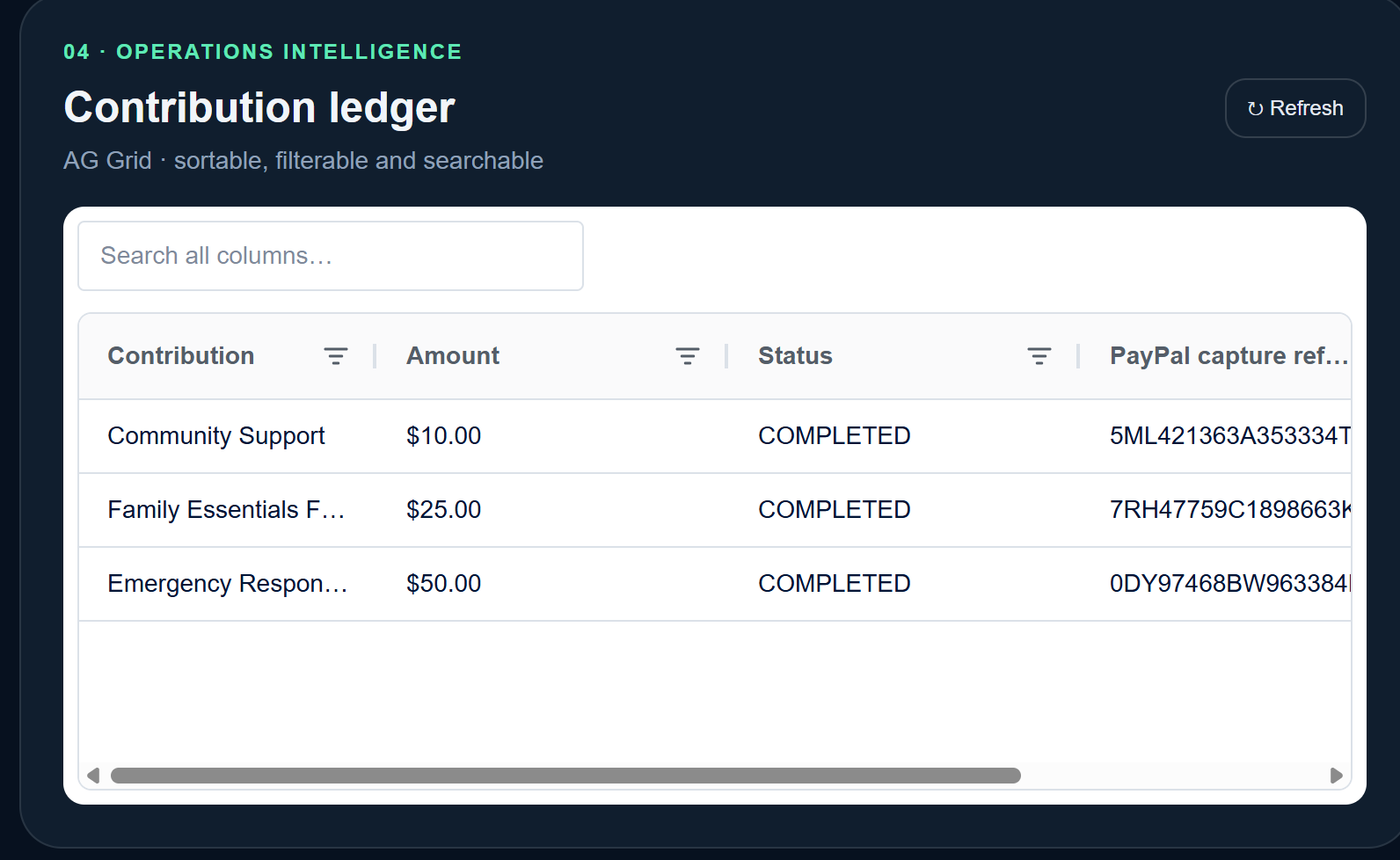
Contribution ledger database
-
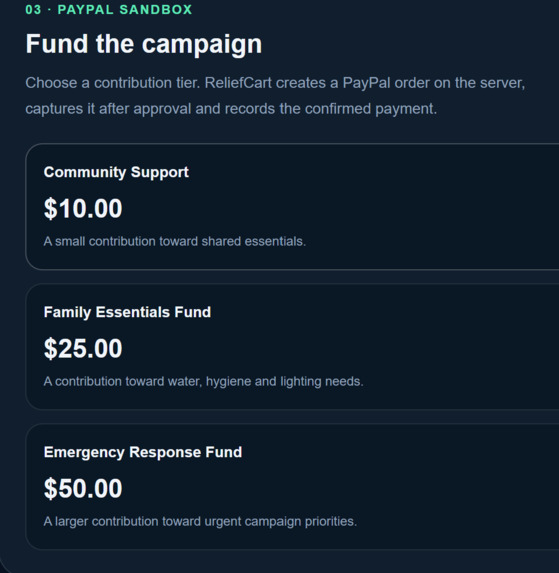
contribution Box
-
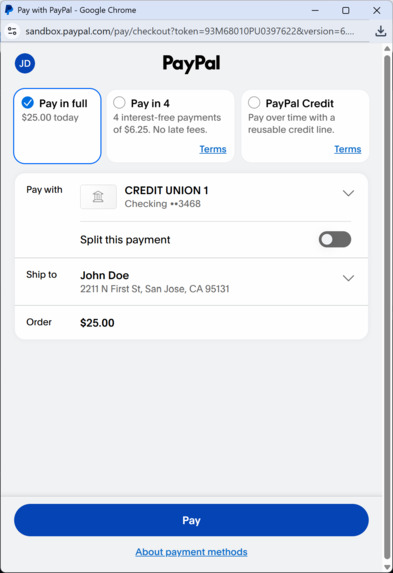
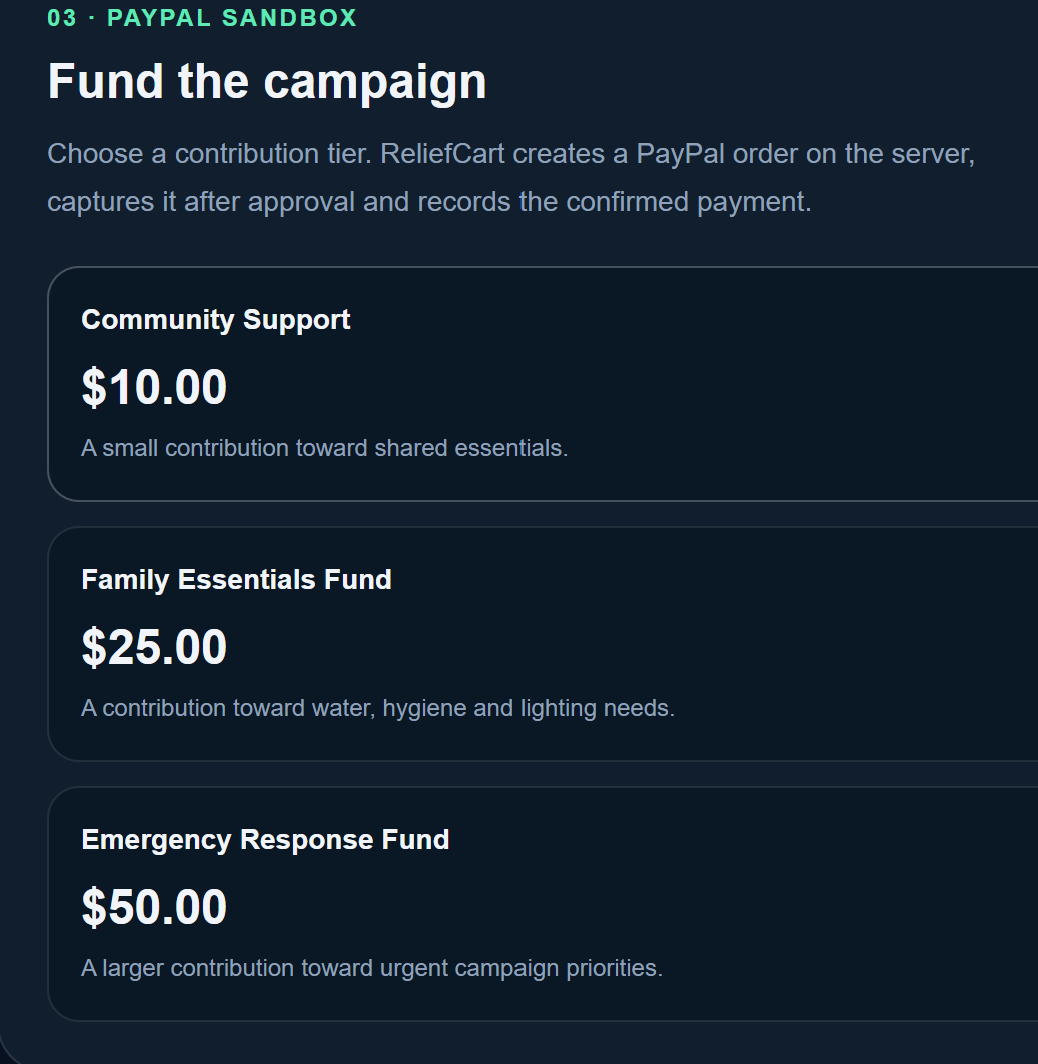
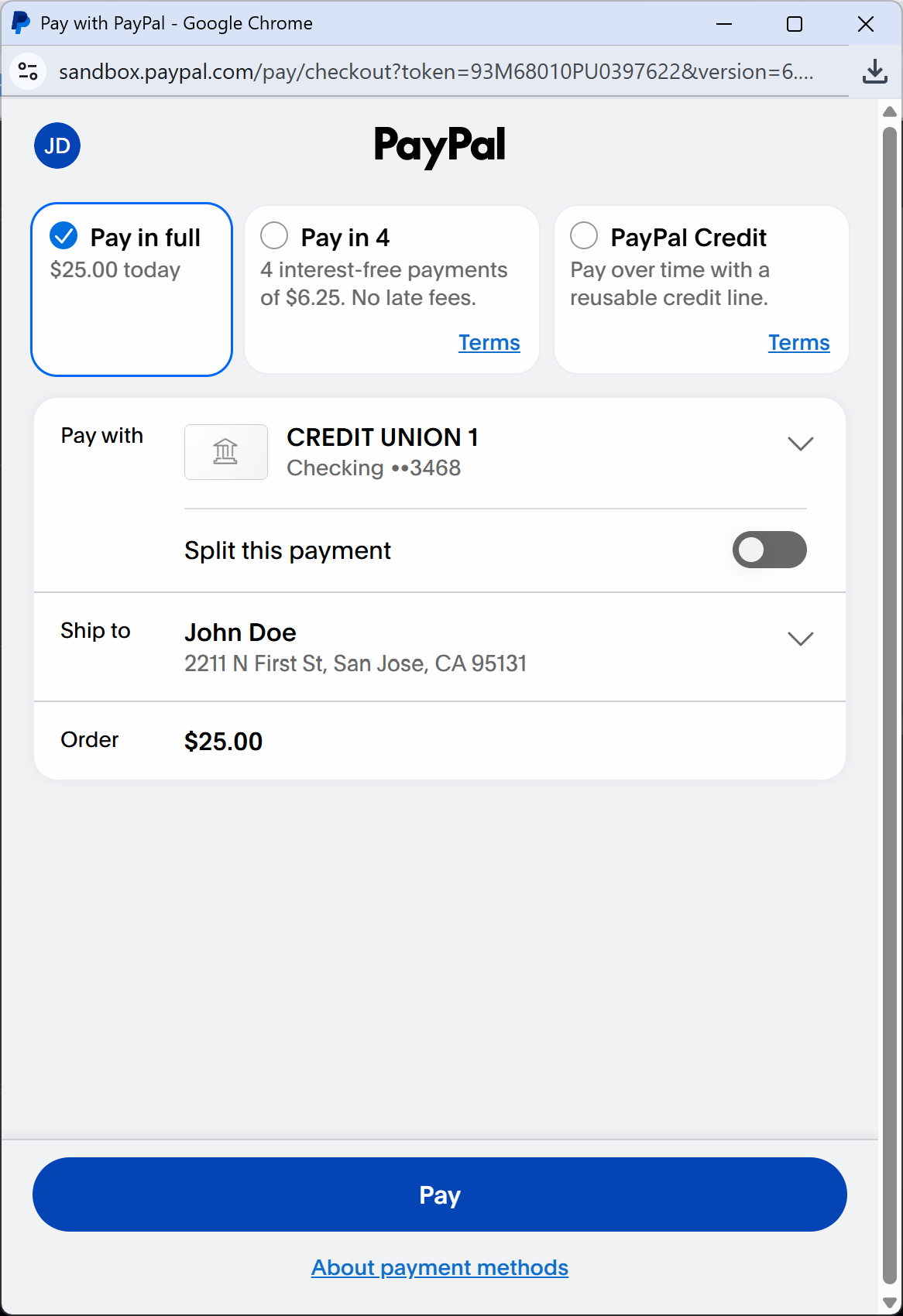
Payment with PayPal
Inspiration
During natural disasters and emergencies, getting essential supplies to affected families is only part of the problem. Relief organizations also struggle with limited budgets, rapidly changing product availability, inefficient procurement, and a lack of transparency in resource allocation.
We wanted to build something that goes beyond collecting donations. We envisioned a platform that could intelligently connect donations with real-world relief needs, helping organizations make smarter purchasing decisions and ensure that every contribution creates the greatest possible impact. This inspired ReliefCart – a smarter, AI-powered approach to disaster relief and resource management.
What it does
ReliefCart is an AI-powered disaster relief platform that helps coordinate fundraising, emergency supply procurement, and resource allocation.
Its key capabilities include:
Donation Management: Provides a centralized system for managing relief campaigns and tracking contributions.
AI-Powered Procurement Planning: Uses Groq-powered AI to generate emergency procurement plans based on the number of affected families, their needs, and available resources.
Smart Budget Rescue: When essential supplies exceed the available budget, ReliefCart explores alternative products and purchasing options to help optimize spending.
Live Product Discovery: Integrates Channel3 to discover products from real-world catalogues and identify alternative supplies.
Emergency Resource Planning: Organizes essential supplies into four categories: Water, Hygiene, Lighting, and First Aid.
Donation Tracking: Uses Supabase to manage donation-related data and provide a centralized record of contributions.
Our demonstration scenario focuses on supporting 50 families through a Community Flood Response campaign, with a fundraising goal of $600.
How I built it
We built ReliefCart using a modern web technology stack, combining AI, database management, product discovery, and payment infrastructure.
Next.js 16.4.6: Used as the primary framework for building the application and backend API routes.
Supabase: Used for database management and storing donation-related information.
Groq API: Powers AI-driven procurement planning and budget optimization.
Channel3: Enables live product discovery and alternative product searches.
PayPal Developer Sandbox: Selected for secure donation payment integration and testing.
AG Grid: Retained from the PayPal starter template as the foundation for structured data presentation.
The AI procurement workflow analyzes emergency requirements, generates supply plans, and uses product discovery to explore purchasing alternatives when budget constraints arise.
We started with the PayPal developer boilerplate and progressively developed our own ReliefCart application around its foundation.
Challenges I ran into
Building ReliefCart involved several technical and problem-solving challenges.
Budget Optimization: Ensuring that AI-generated procurement plans respect the actual available budget was challenging.
Product Relevance: Some alternative product searches returned unrelated items, highlighting the need for better filtering and relevance validation.
Cost Estimation: Translating AI-generated recommendations into realistic quantities and estimated costs required additional validation.
AI Reliability: Making AI recommendations practical, consistent, and suitable for real emergency situations required careful prompt design and structured outputs.
Integration Complexity: Connecting multiple services, including Groq, Channel3, Supabase, and PayPal's development environment, required debugging and configuration.
One important lesson was that an AI-generated recommendation is not automatically a feasible procurement decision. It needs to be validated against actual requirements, product relevance, quantities, and budget constraints.
Accomplishments that I'm proud of
Successfully developed the Next.js foundation for ReliefCart.
Established a working Supabase-backed donations API.
Integrated Groq-powered AI procurement planning.
Implemented Channel3 product discovery and alternative product searches.
Developed the Smart Budget Rescue workflow to explore alternatives when procurement exceeds the available budget.
Designed a realistic flood-relief demonstration scenario covering 50 families and four essential supply categories.
Established a multi-service architecture that brings AI planning, product discovery, and donation management together.
We are particularly proud of turning the idea of AI-assisted disaster procurement into a working prototype rather than limiting the project to a conceptual solution.
What I learned
Developing ReliefCart taught us that building impactful AI applications requires much more than connecting an LLM to an API.
We learned how to integrate multiple external services, design AI-powered workflows, manage structured data using Supabase, and use live product discovery to support practical decisions.
We also learned the importance of validating AI outputs, maintaining strict budget constraints, filtering irrelevant recommendations, and designing systems that prioritize reliability over impressive-looking AI responses.
Most importantly, we realized that technology can make humanitarian assistance more organized, transparent, and efficient when it is designed around real-world needs.
What's next for ReliefCart
We envision expanding ReliefCart into a more complete and reliable disaster relief ecosystem.
Our future plans include:
Secure PayPal Donations: Complete and test the PayPal Sandbox checkout and payment confirmation workflow.
Verified Beneficiaries: Introduce beneficiary verification to ensure assistance reaches genuine affected families.
Advanced AI Procurement: Improve product relevance, quantity calculations, cost estimation, and budget-aware recommendations.
Smarter Budget Rescue: Add feasibility checks, priority-based allocation, approval workflows, and rollback mechanisms.
Transparent Relief Dashboard: Expand the AG Grid dashboard to provide better visibility into donations, procurement, and resource distribution.
Real-Time Tracking: Enable donors and relief organizations to follow campaign progress and understand how funds are allocated.
Scalable Emergency Response: Extend the platform to support multiple disaster campaigns, locations, and relief organizations.
Our ultimate goal is to transform ReliefCart into a reliable, intelligent, and transparent platform where donations become actionable resources and help reaches the people who need it most.
ReliefCart – Every contribution should make a difference.
