-
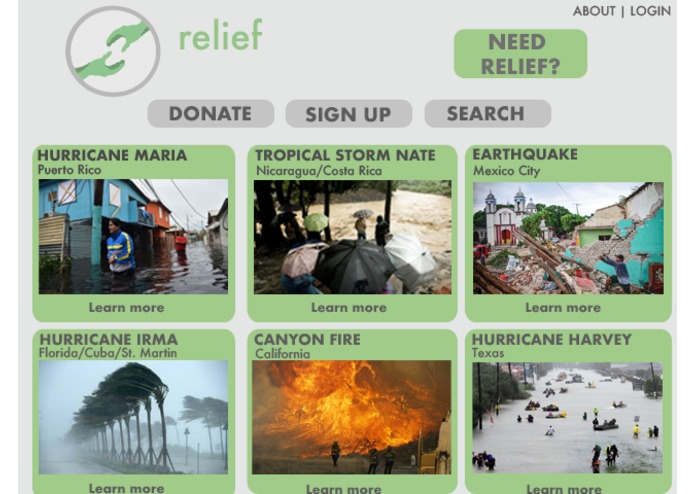
Home Page Sample
-
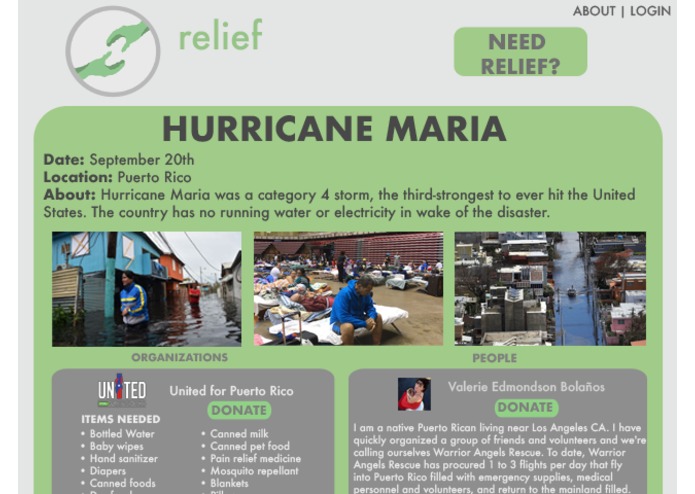
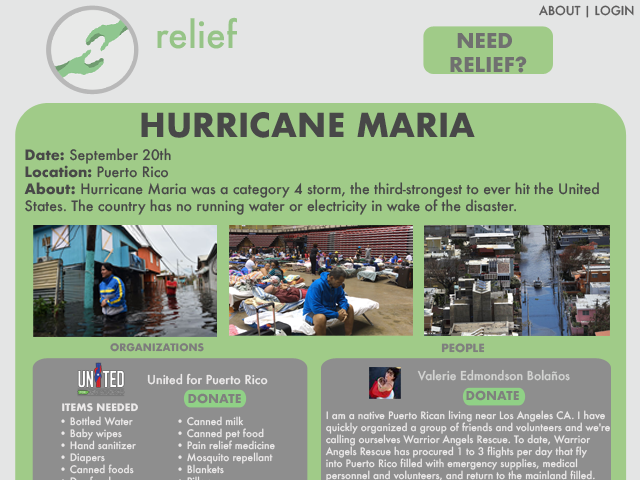
Disaster Description Sample Page
-
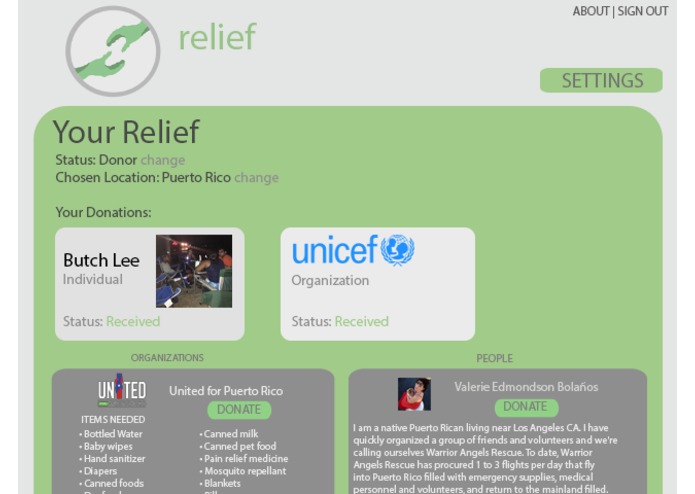
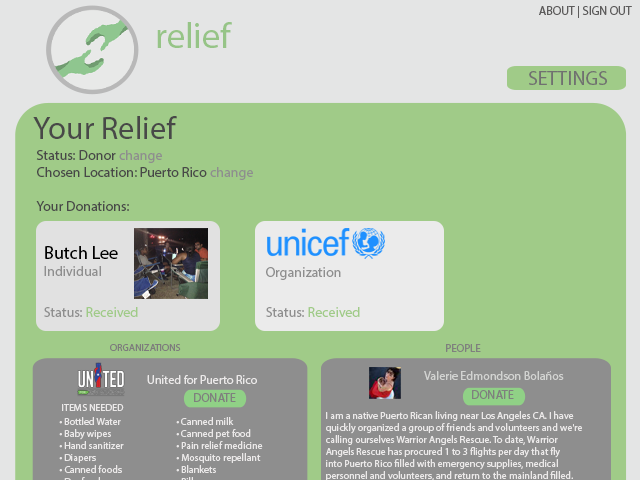
Signed-In User Sample Page
-
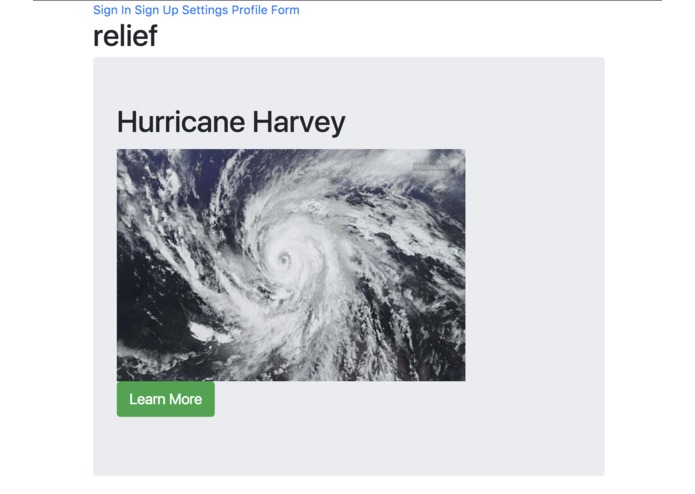
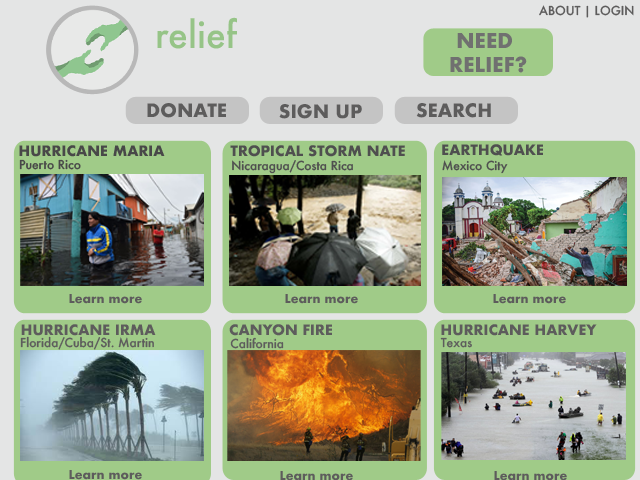
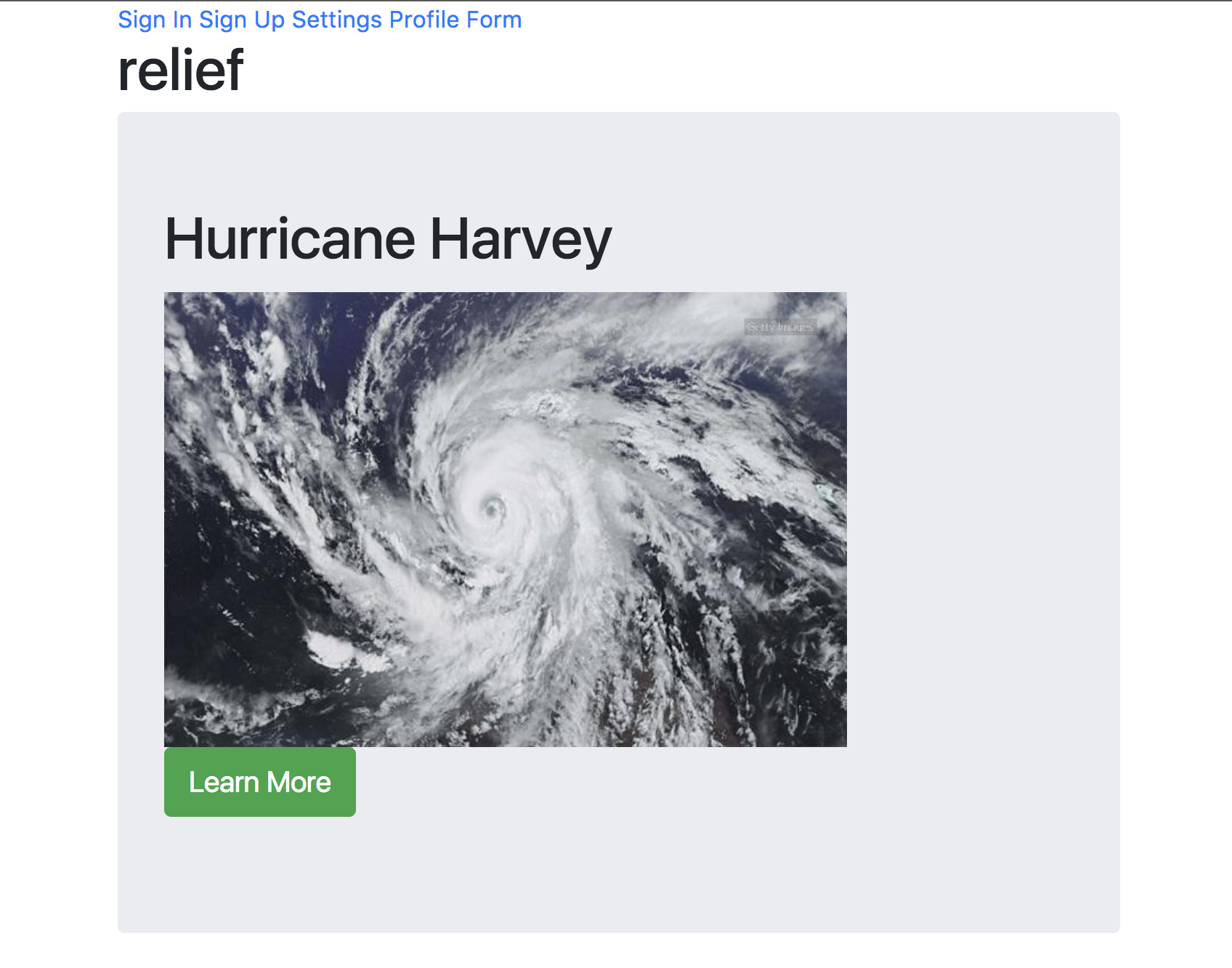
Home Page
-
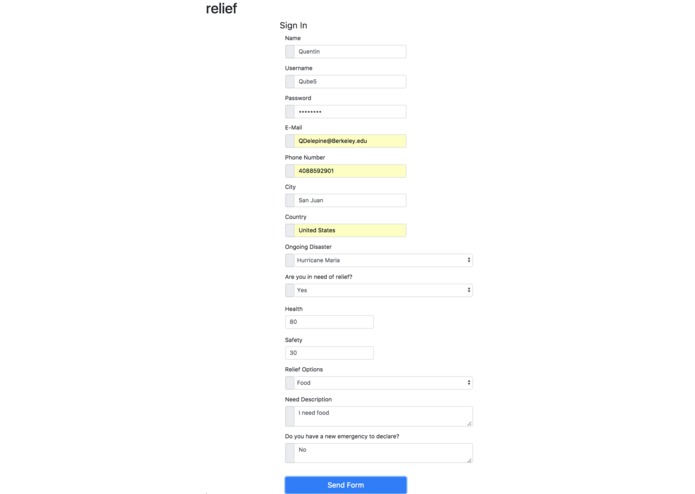
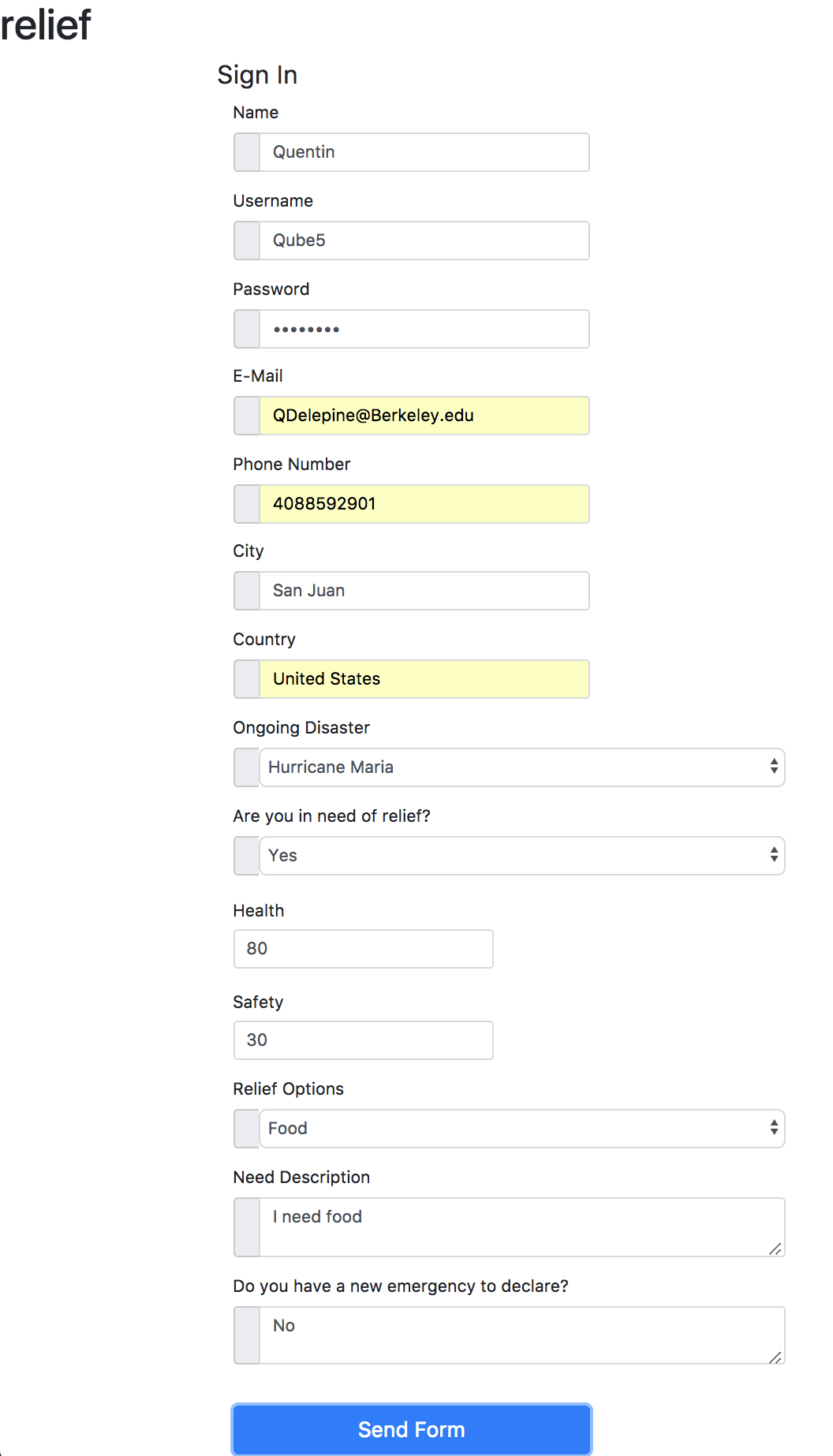
Sign In/Request/Donation Availability Form
-
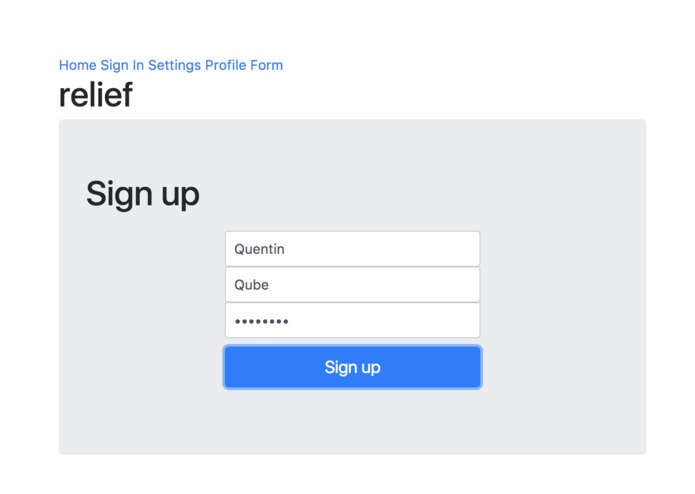
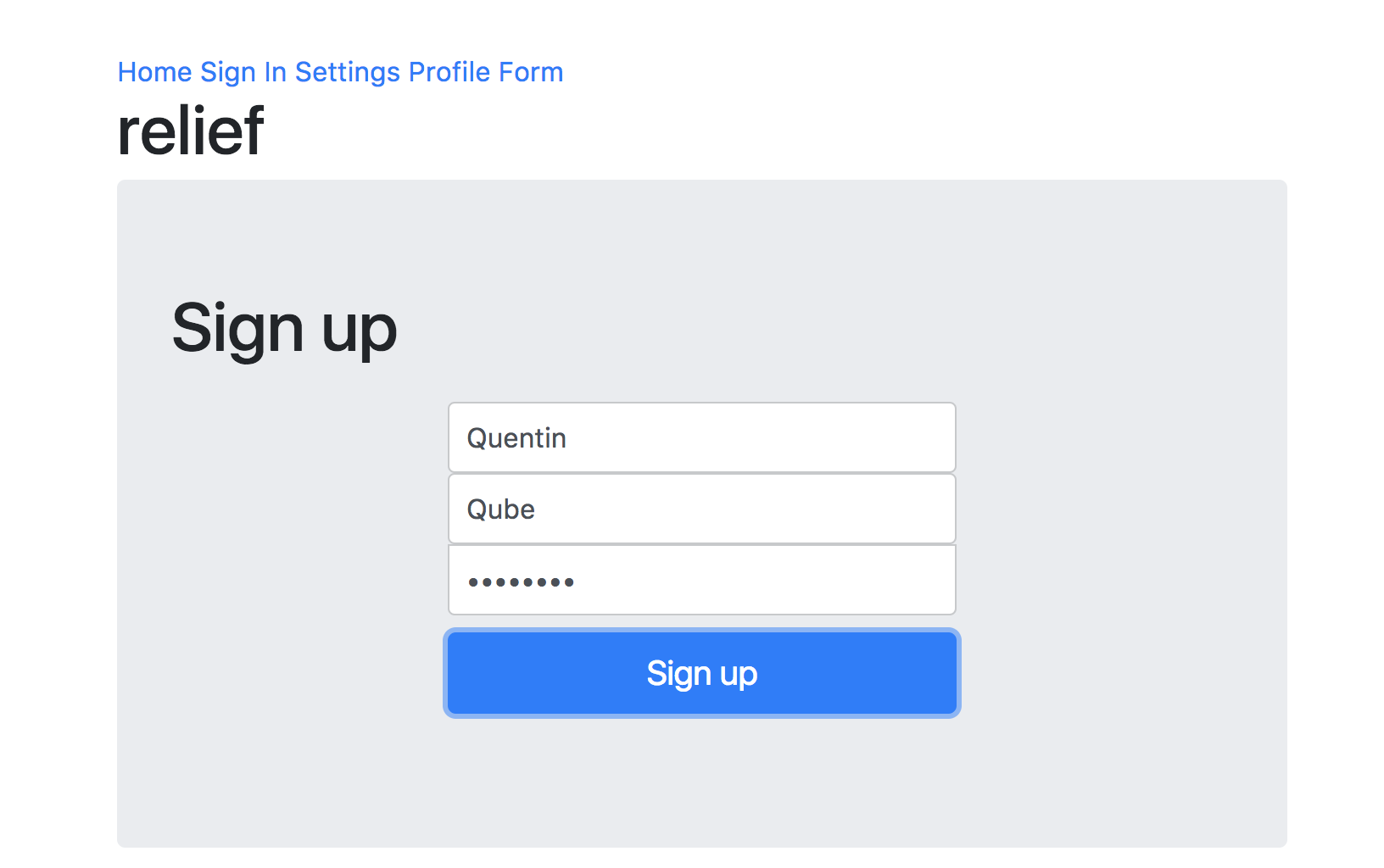
Sign Up Form
-
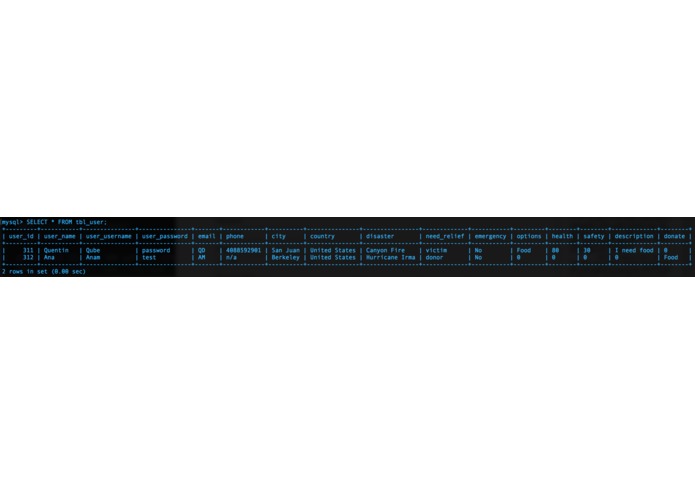
Database

Inspiration
With the sheer amount of natural disasters that have been occurring recently, our team had to wonder what we could do to help. We didn't know where to start - how could we donate, what were the essentials people needed? GoFundMe would only allow a user to donate money, and organizations can't accept material donations from long distances. So we decided to attempt to create a website and app that would give anyone a central location to submit requests for life essentials in the case of an emergency, and that would also allow users the chance to donate these items or other forms of relief directly to individuals. The web/mobile app would of course also allow for making donations directly to organizations, depending on what the organizations need. The website would allow for ease of accessibility in the case of loss of a smartphone, and the mobile app would allow for ease of accessibility by most users who would want to donate. Overall, such a product would greatly streamline the request and donation process and make it more accessible to anyone, giving top priority to increasing efficiency and quality of relief in the case of a disaster.
What it does
It allows users to sign in either as current victims of a disaster, or as donors towards the cause of victims in chosen disasters. Depending on their role, users can either submit requests for essentials such as food, clothing, temporary housing or wishlist items, or fulfill such requests. Relief would also allow users to submit new disasters for review, allowing for disaster relief in little-known areas of the world, in situations that otherwise might not gain attention from the media, not allowing people to donate.
How we built it
We started off building only the website, using Flask for Python to easily run and operate our webpage. We modeled the homepage, sign-in system, and form for submission of requests or donation availability, using MySQL to create and access a database of users. In our future plans lie making the pages for view of ongoing disasters for a non signed-in user, as well as the view for the signed-in user and the systems for actually making various donations.
Challenges we ran into
Since our team had no prior web app or mobile app development experience, we learned how to create the html bones and the database for our website entirely during this hackathon. Progress was slow due to our lack of experience, so we were not able to put out a final product, but we do have the working backend model as a base for a future product.
Accomplishments that we're proud of
We created a user-friendly form native to the website, making it as fast as possible for users to provide the basic information they need to submit requests. We also created our own database, now being able to write any form of data we want to it and access it as necessary. We're pretty proud of these basic accomplishments because it wasn't something we'd ever tried before.
What we learned
We learned how time-intensive it is to make a quality product, and how much this niche exists in the market for our concept. We believe it would be worth spending time to learn how to create our ideal product and release it at some point in the near future, given how necessary it has become to provide fast disaster relief to so many regions of the world.
What's next for Relief
The next steps are to develop it further, by implementing the UI mockups directly in the website, and creating the desired mobile app. After the application is fully developed, then we can begin to promote the product to gather users. We would try to reach out to organizations that already are doing disaster relief support and put them on our platform. One other product we can introduce is an integration with DisasterRelief.gov for users in disaster situations to be able to see what government resources are available as well. This would allow Relief to become a homepage for all disaster relief services and allow all of the resources to be clear and organized in these situations.


Log in or sign up for Devpost to join the conversation.