Inspiration
The inspiration for ReliefChain came from the Beijing Floods this summer, which hit close to home for us. We saw how disaster response was slowed down by bureaucracy, financial intermediaries, and hidden fees. Families in urgent need of food, shelter, and medical aid had to wait too long. This revealed the critical flaws in traditional relief systems and inspired us to create a better system.
What it does
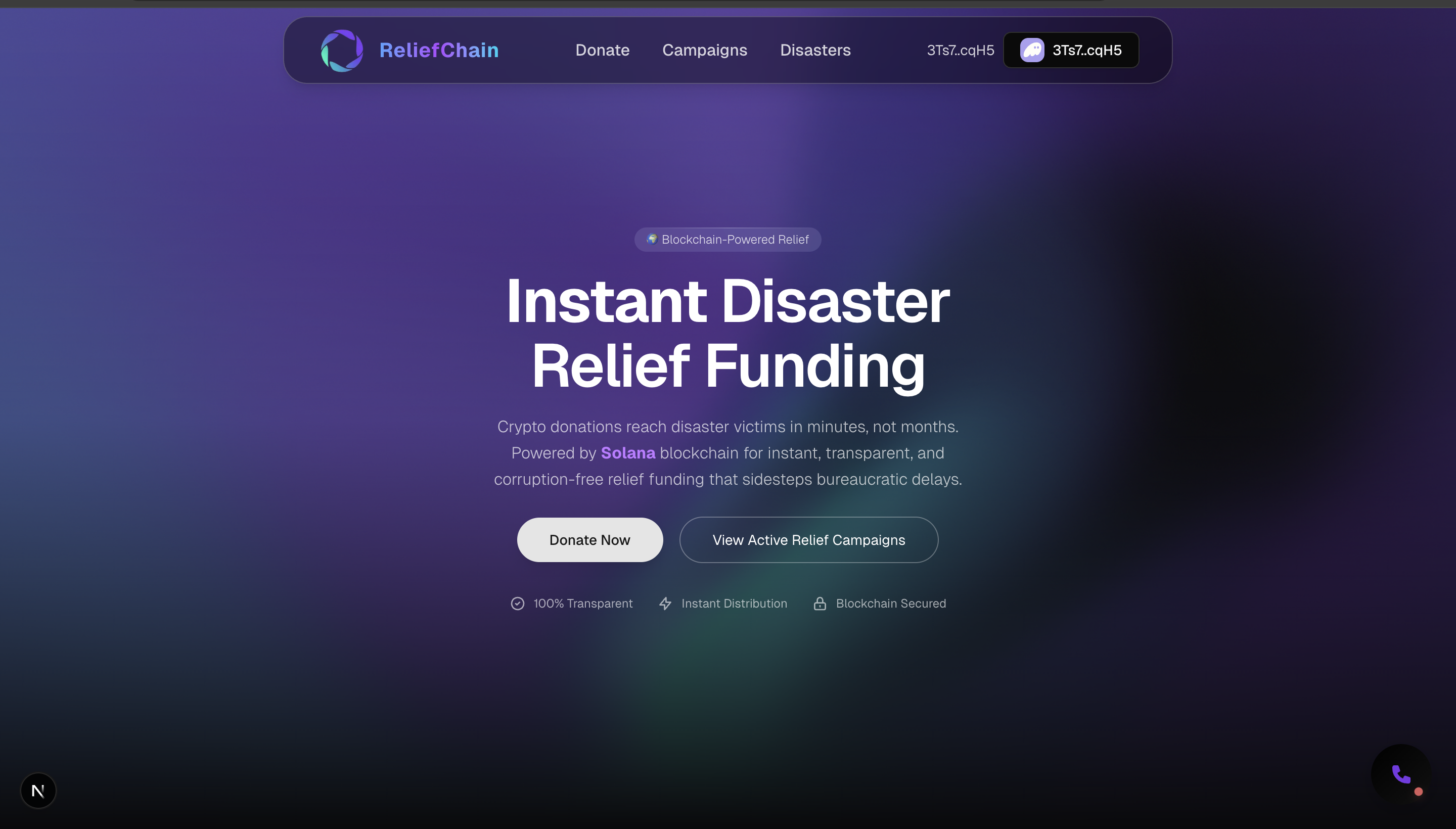
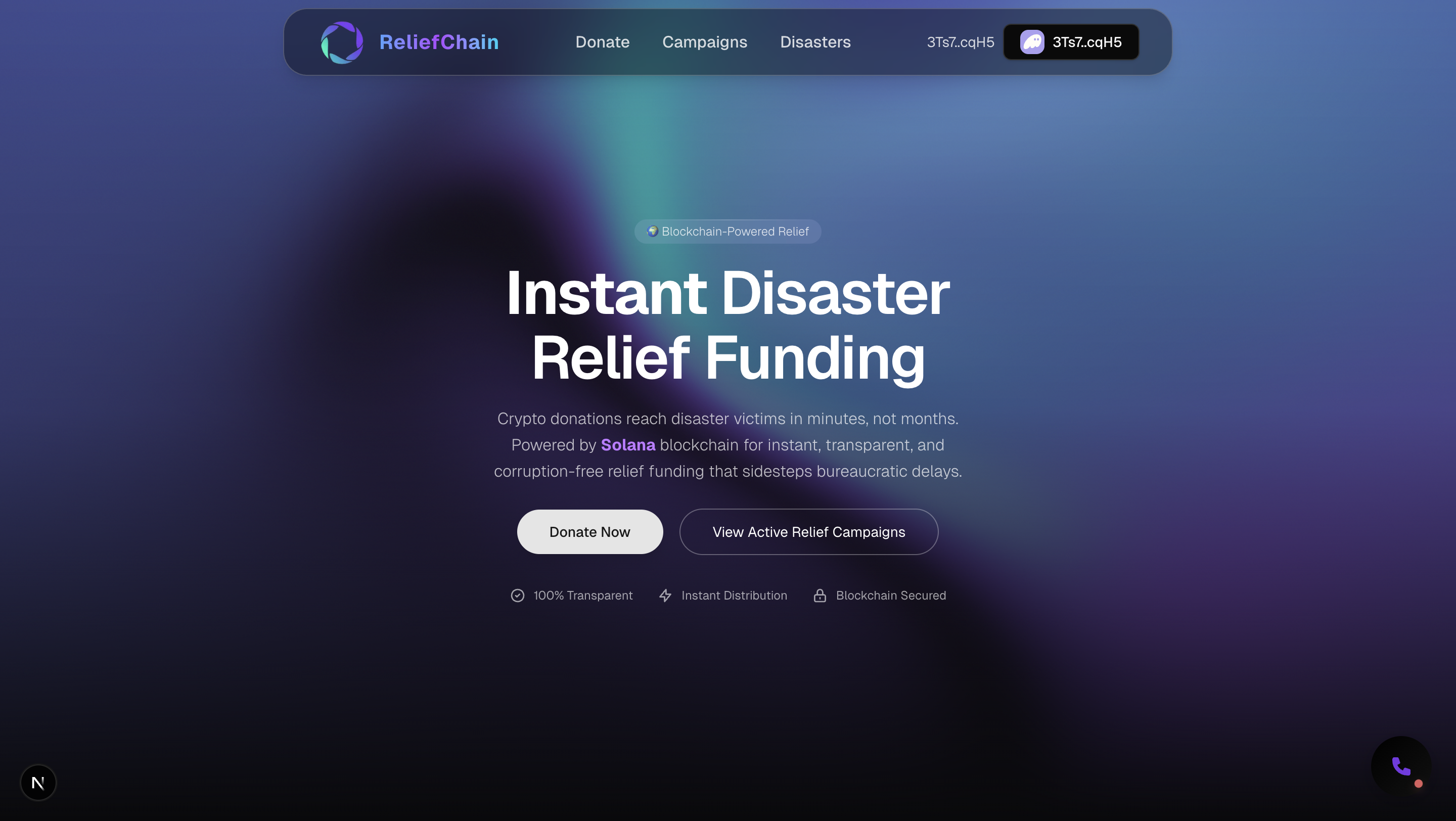
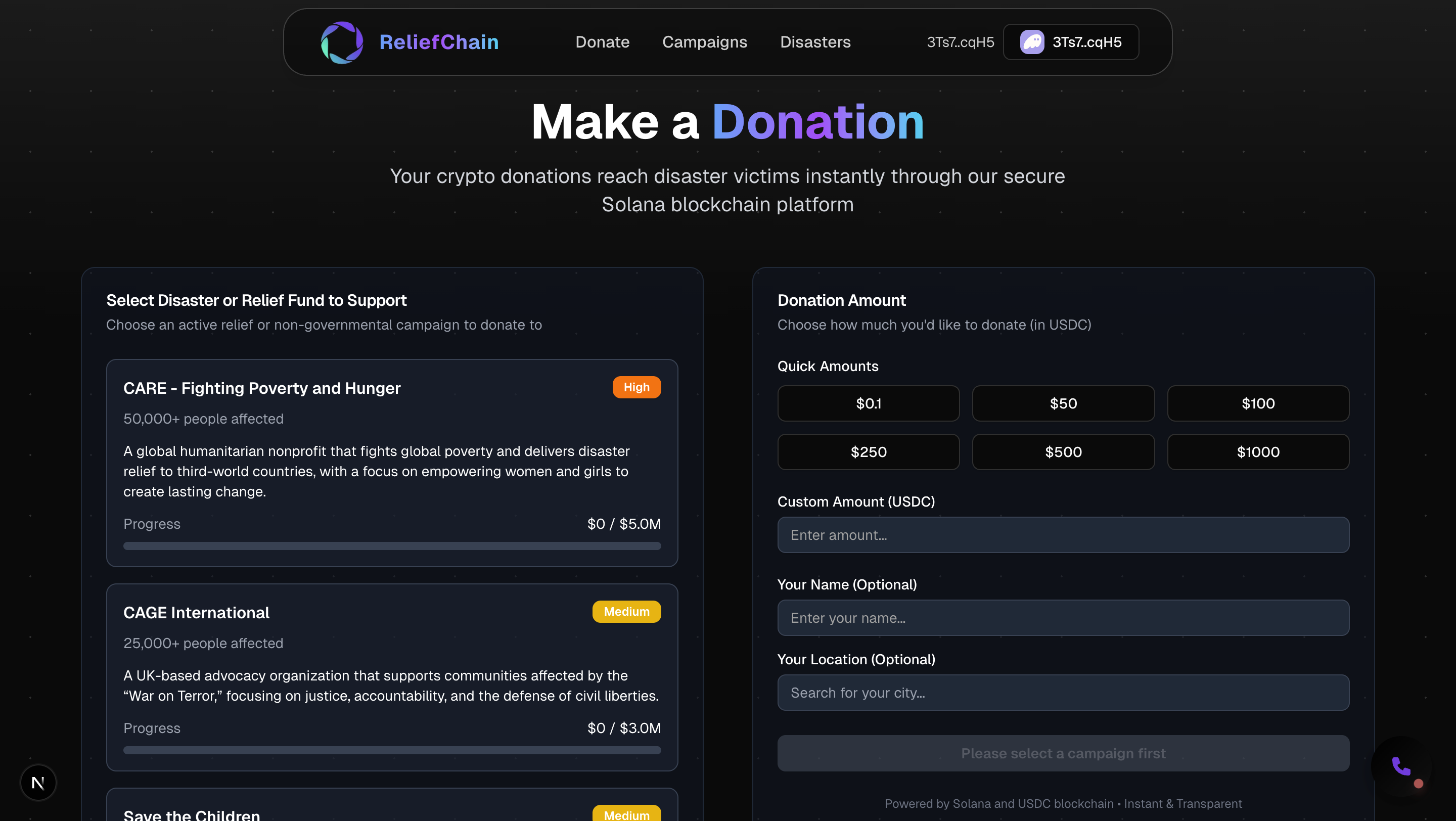
ReliefChain makes disaster donations transparent, fast, and global.
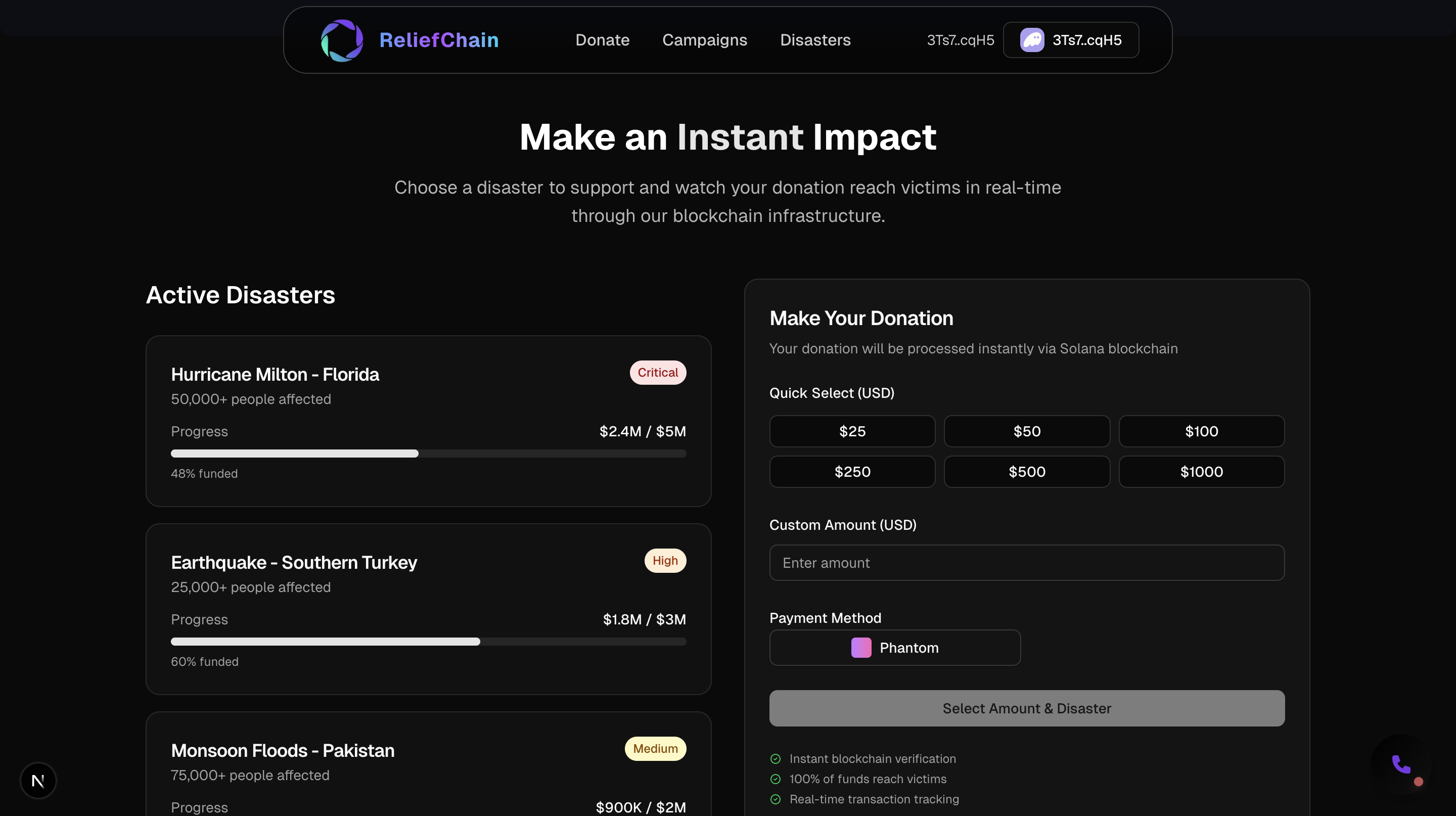
- Donors can contribute in crypto (via Solana) or through a voice AI assistant that guides them step by step.
- Every donation is recorded on-chain, so supporters always know where funds go.
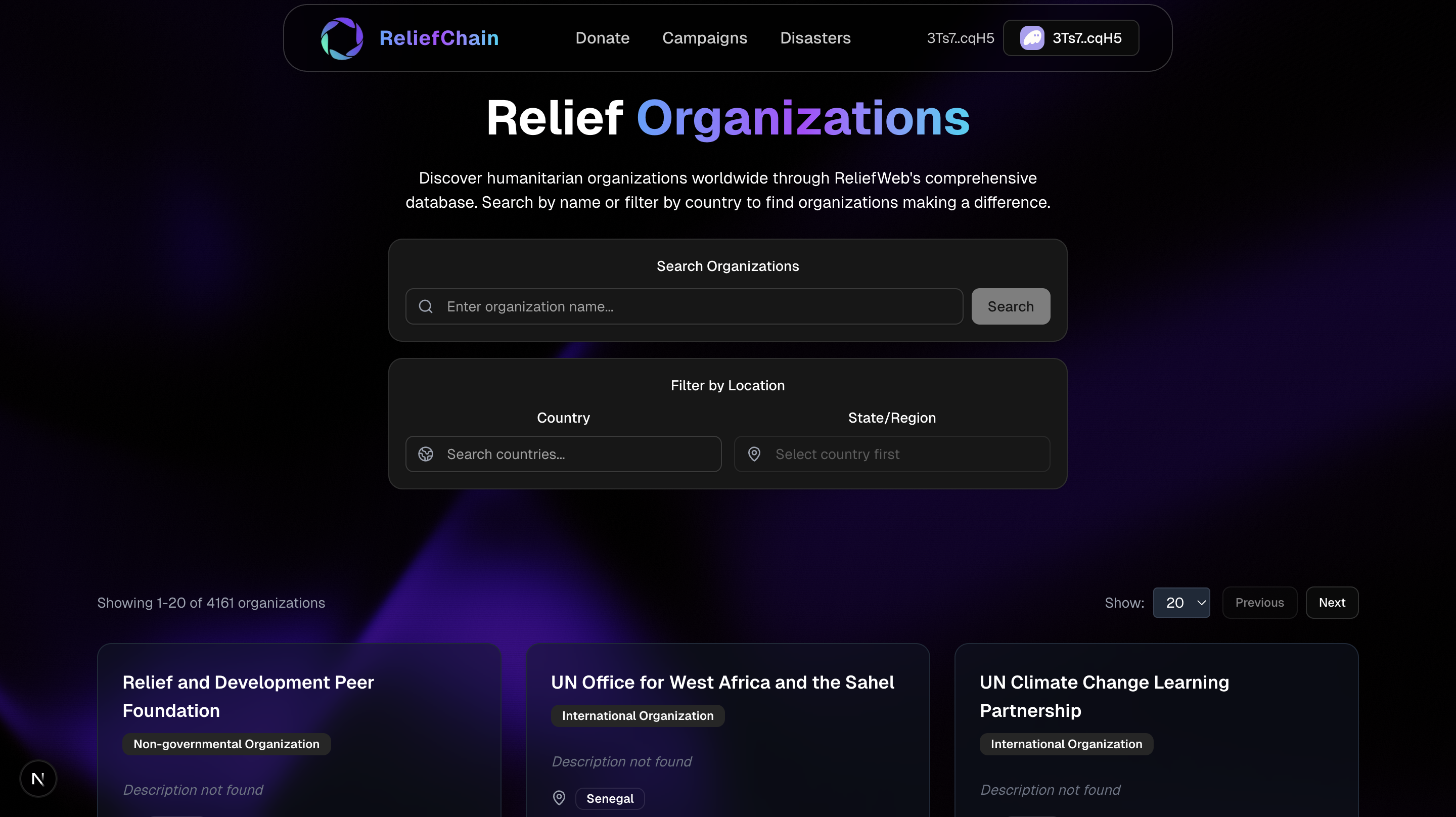
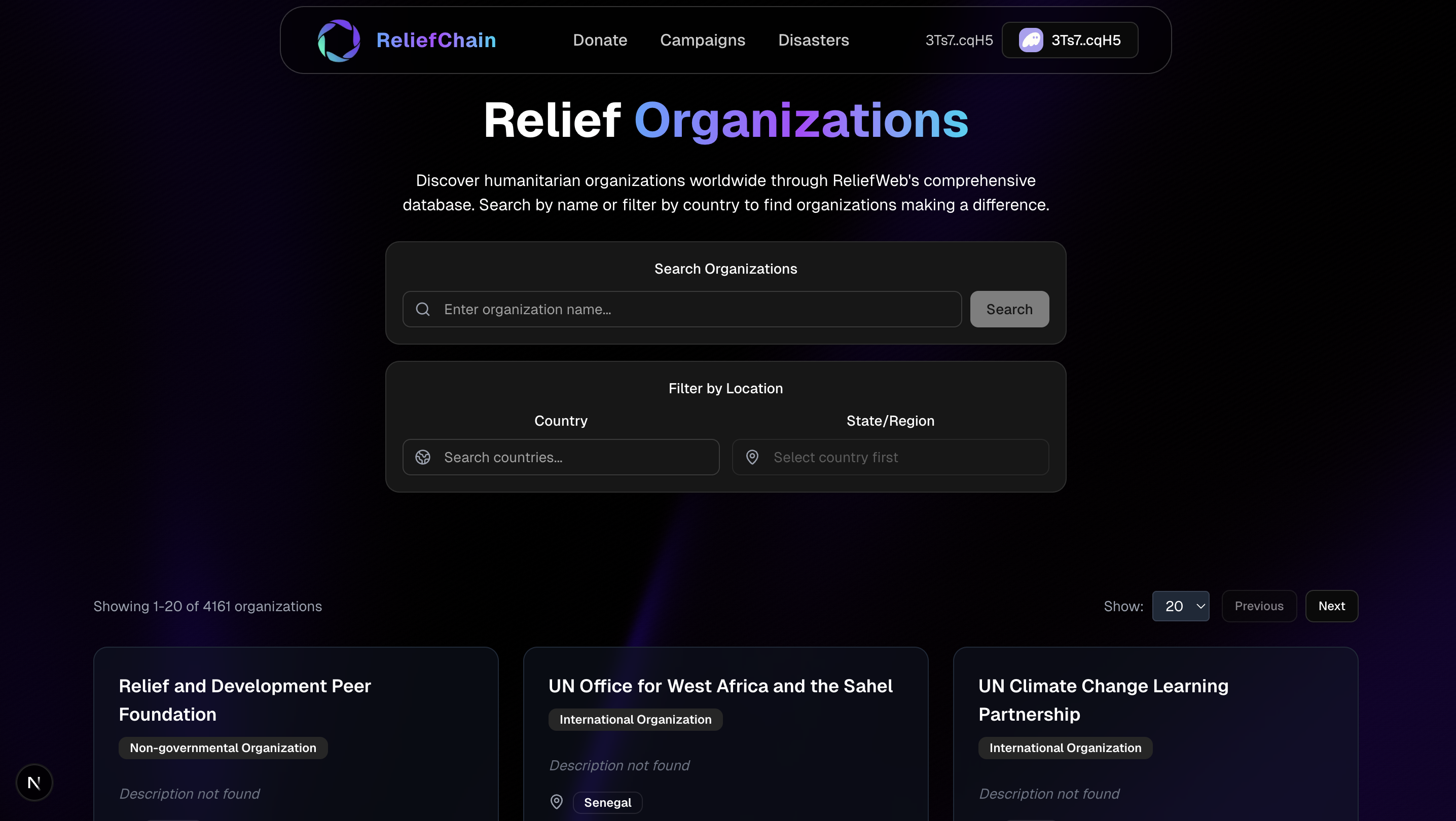
- An interactive map shows active disasters and connected organizations, allowing donors to choose specific causes.
- Nonprofits receive funds in real time, avoiding delays and middlemen.
How we built it
Front End Next.js, Tailwind CSS
Back End Supabase GillSTK Solana Ankor
What we learned
We learned the meaning behind Web3 and it's importance How to handle complex integrations across multiple platforms
What's next for Relief-Chain
Citizen involvement in catastrophe reporting Smart contract automation Impact summaries Scale our app for maximum impact
Built With
- css
- next.js
- solana
- supabase
- tailwind


Log in or sign up for Devpost to join the conversation.