-
-
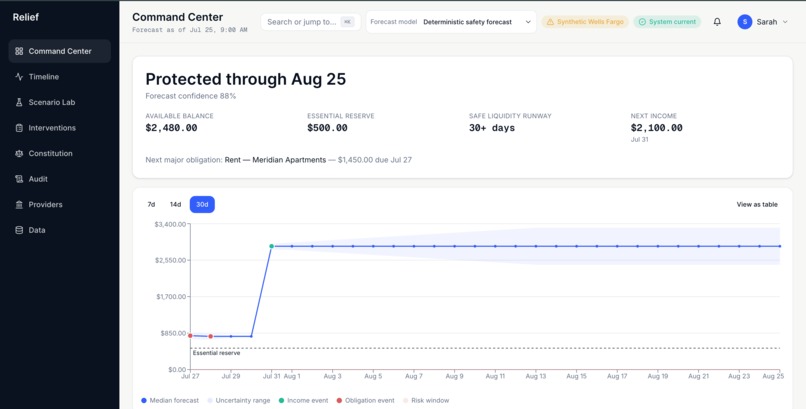
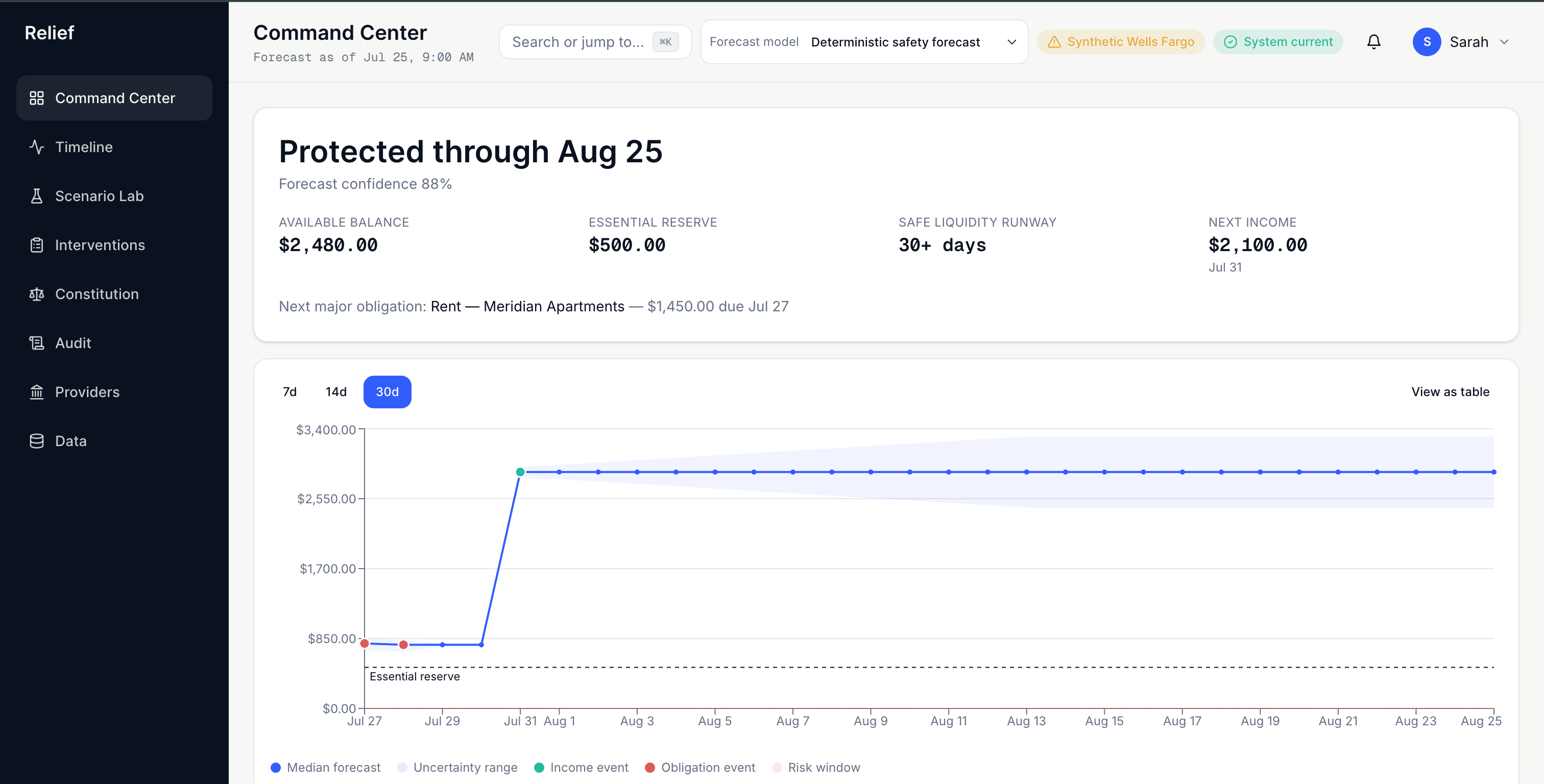
Command Center
-
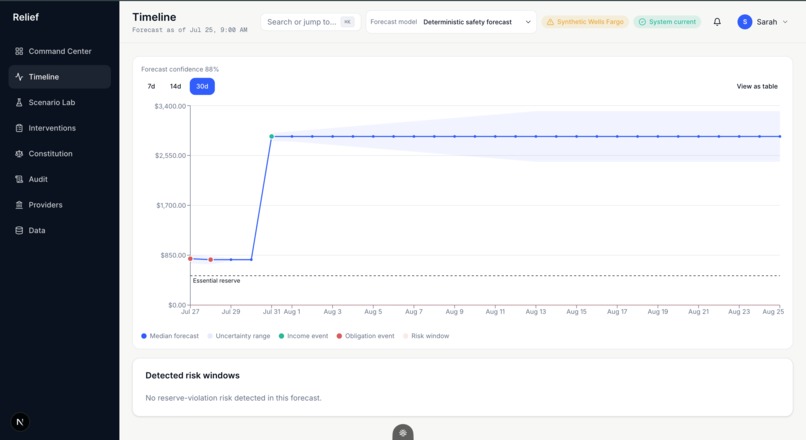
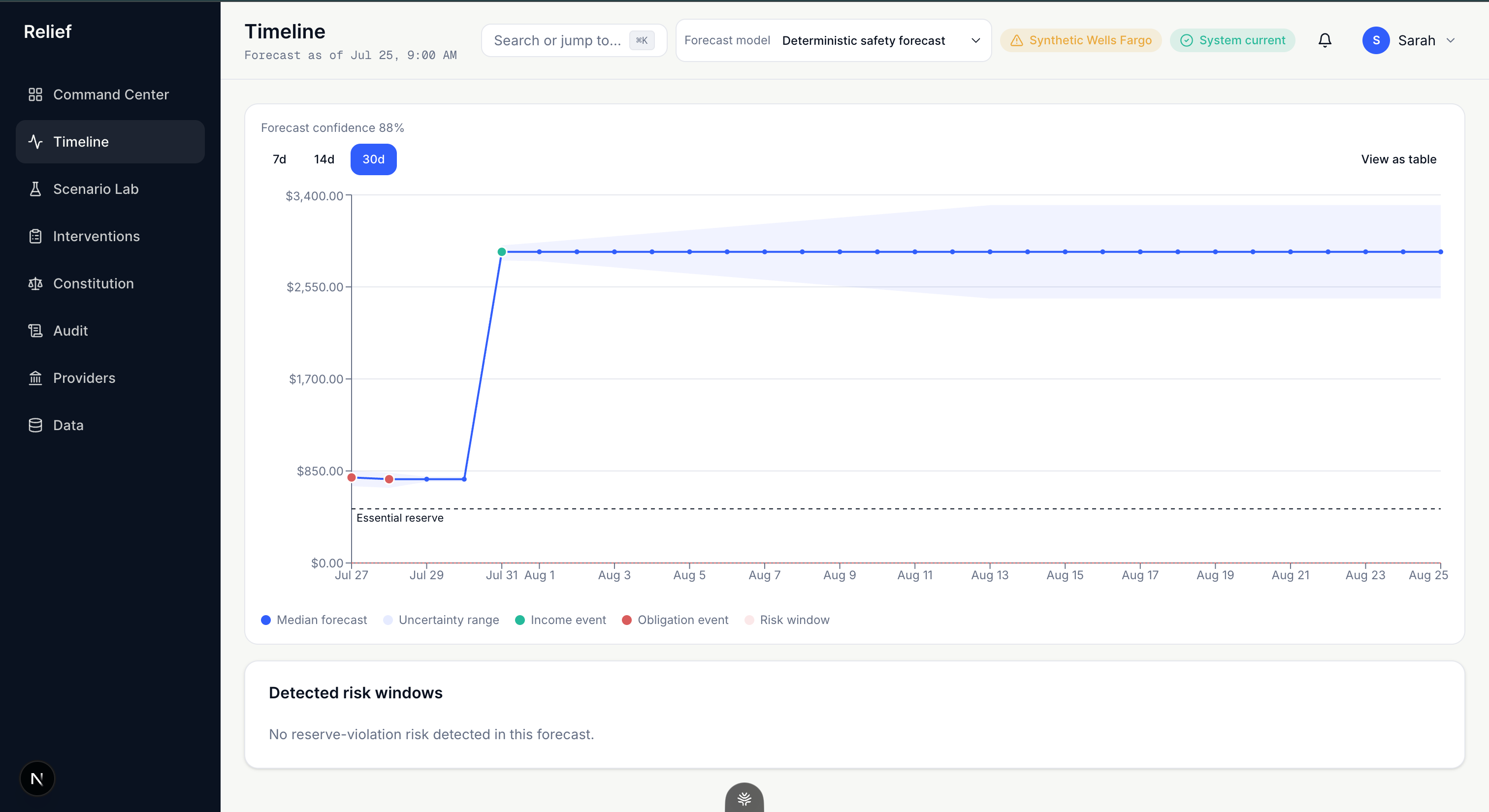
Timeline - Users can see their cashflow based on connector data
-
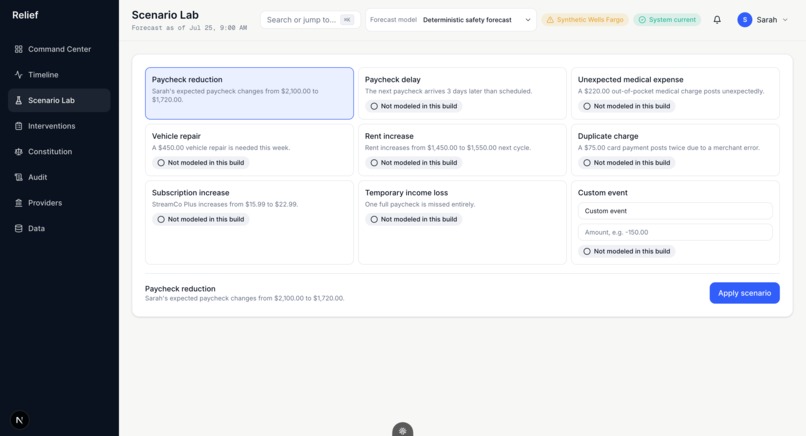
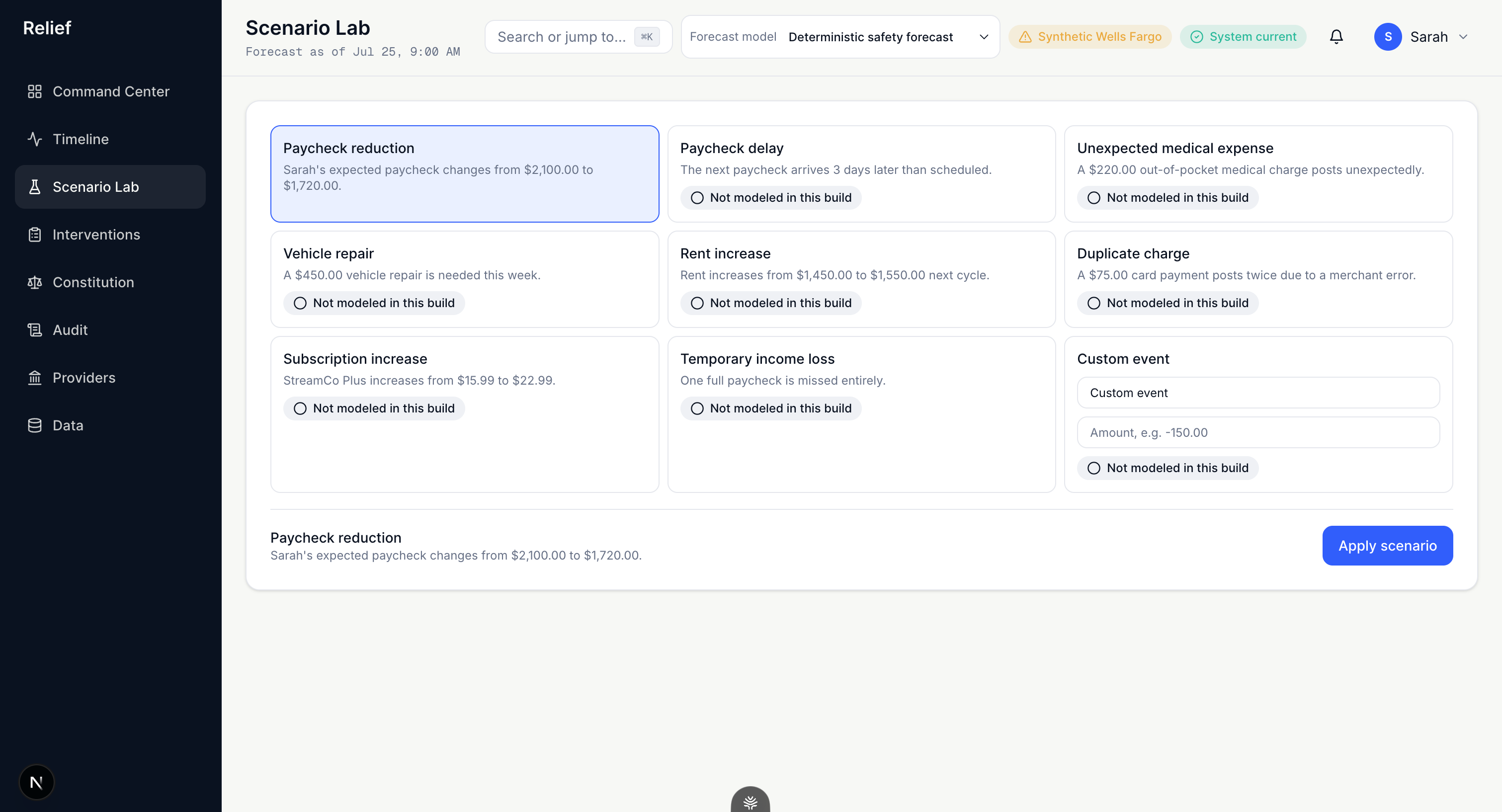
Scenario Lab - Users can simulate specific and custom instances to see the iterations delivered by our foundational models
-
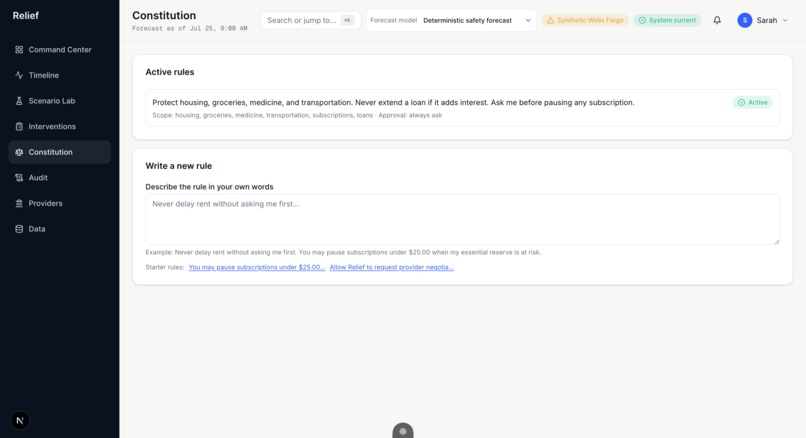
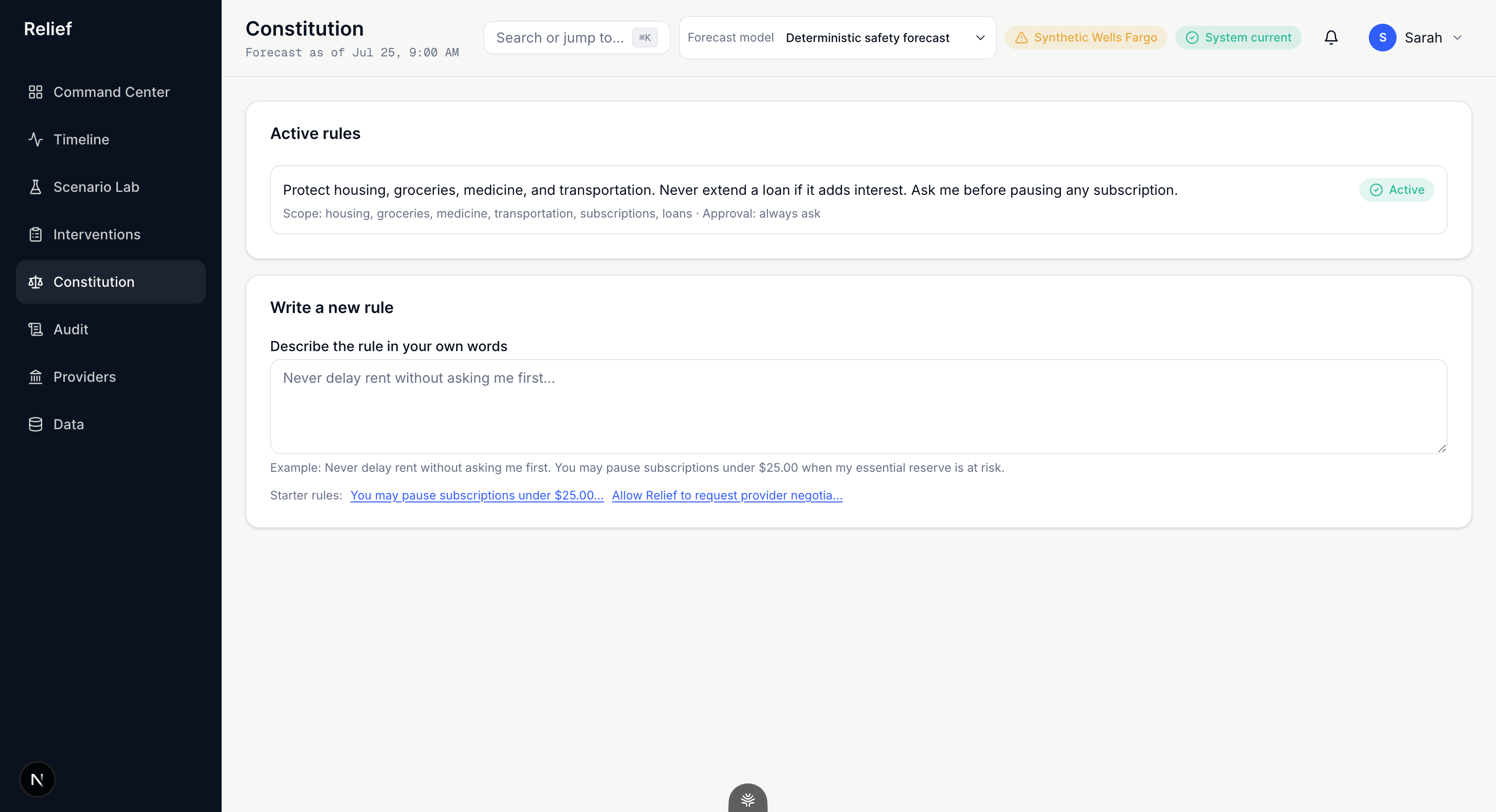
Constitution - Users can set their specific guidelines
-
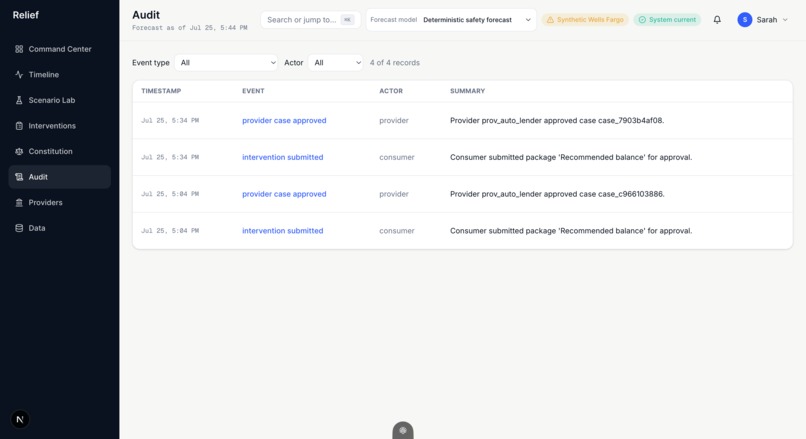
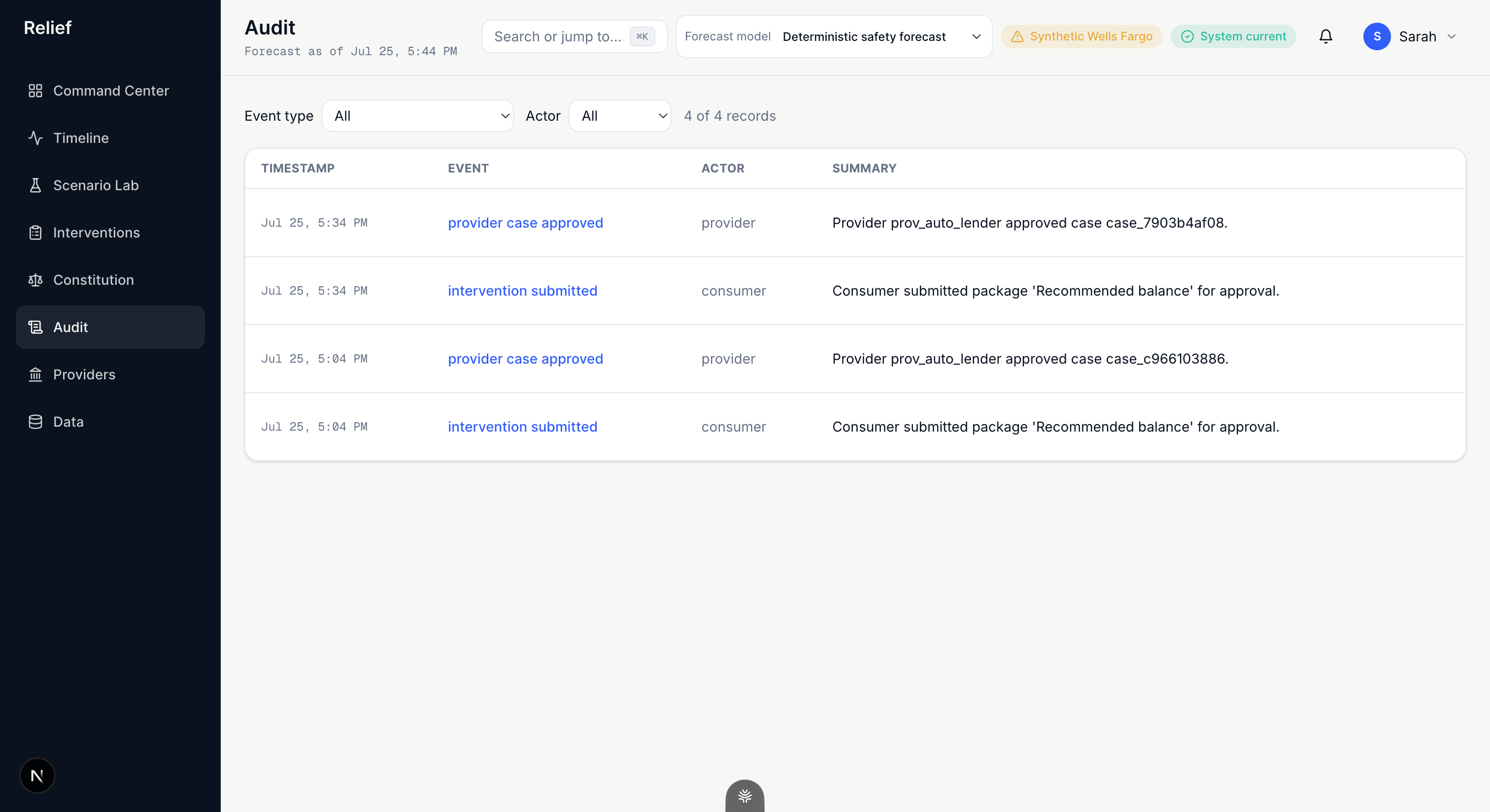
Audit - Users can see a live view of what's processed
-
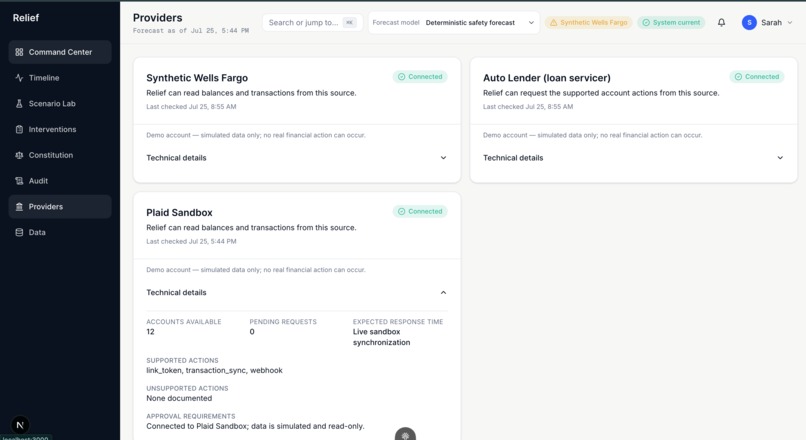
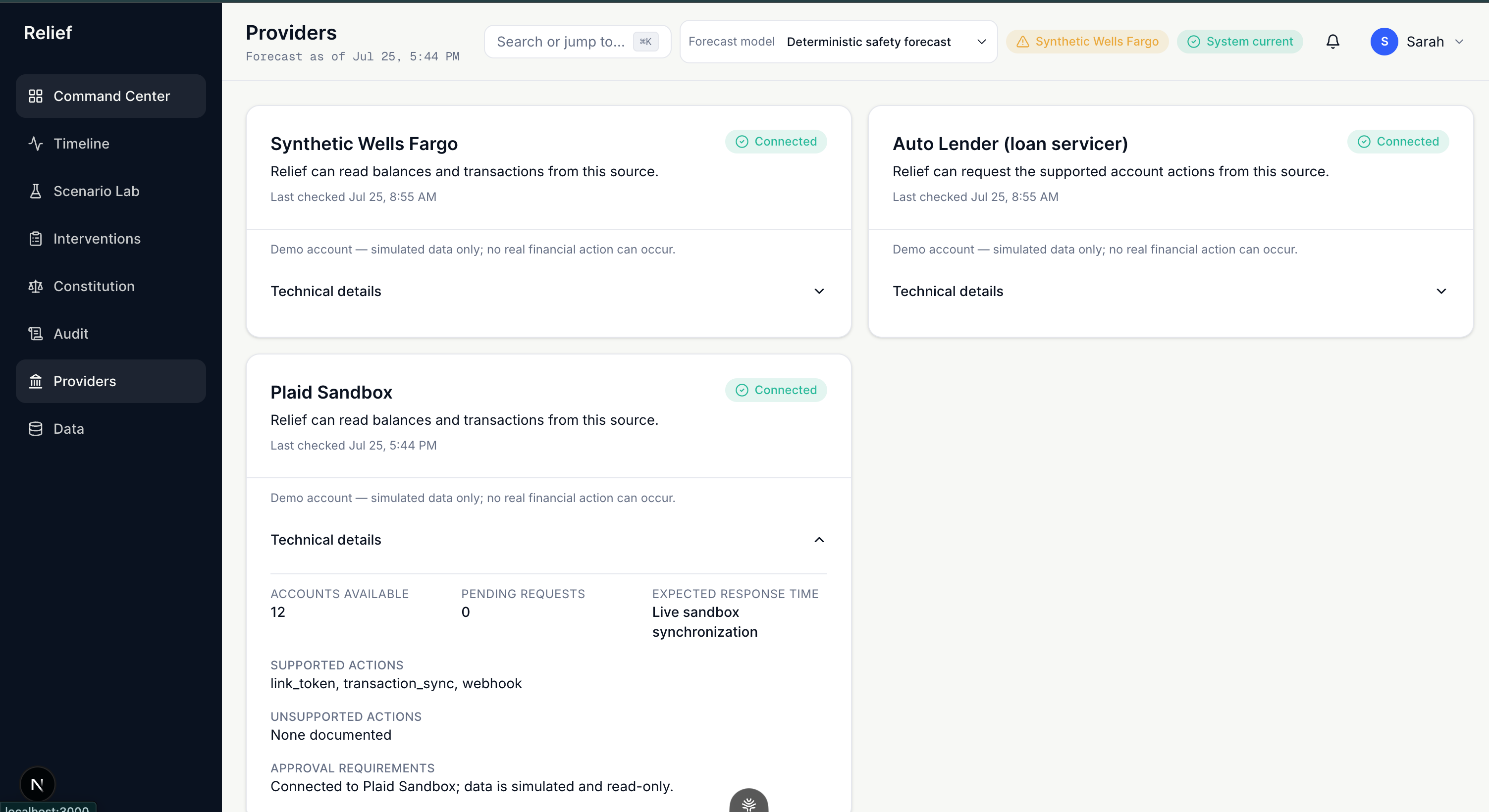
Providers - Users can decide what data to connect to Relief.ai
-
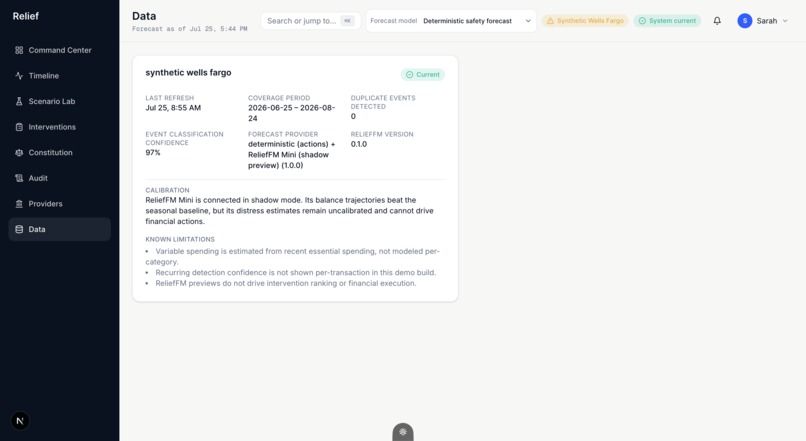
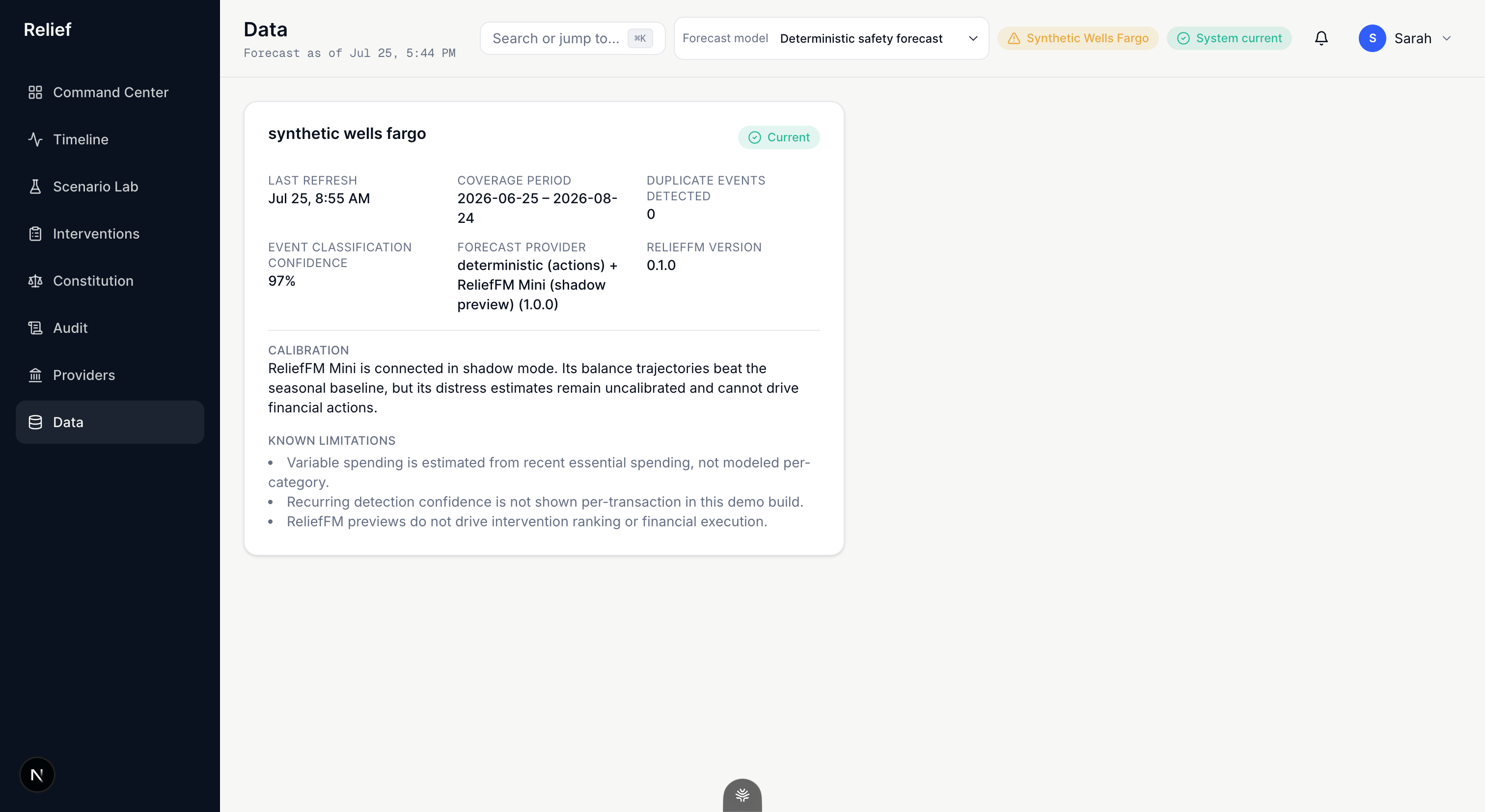
Data - Users can zoom into the data extracted by Relief.ai
-
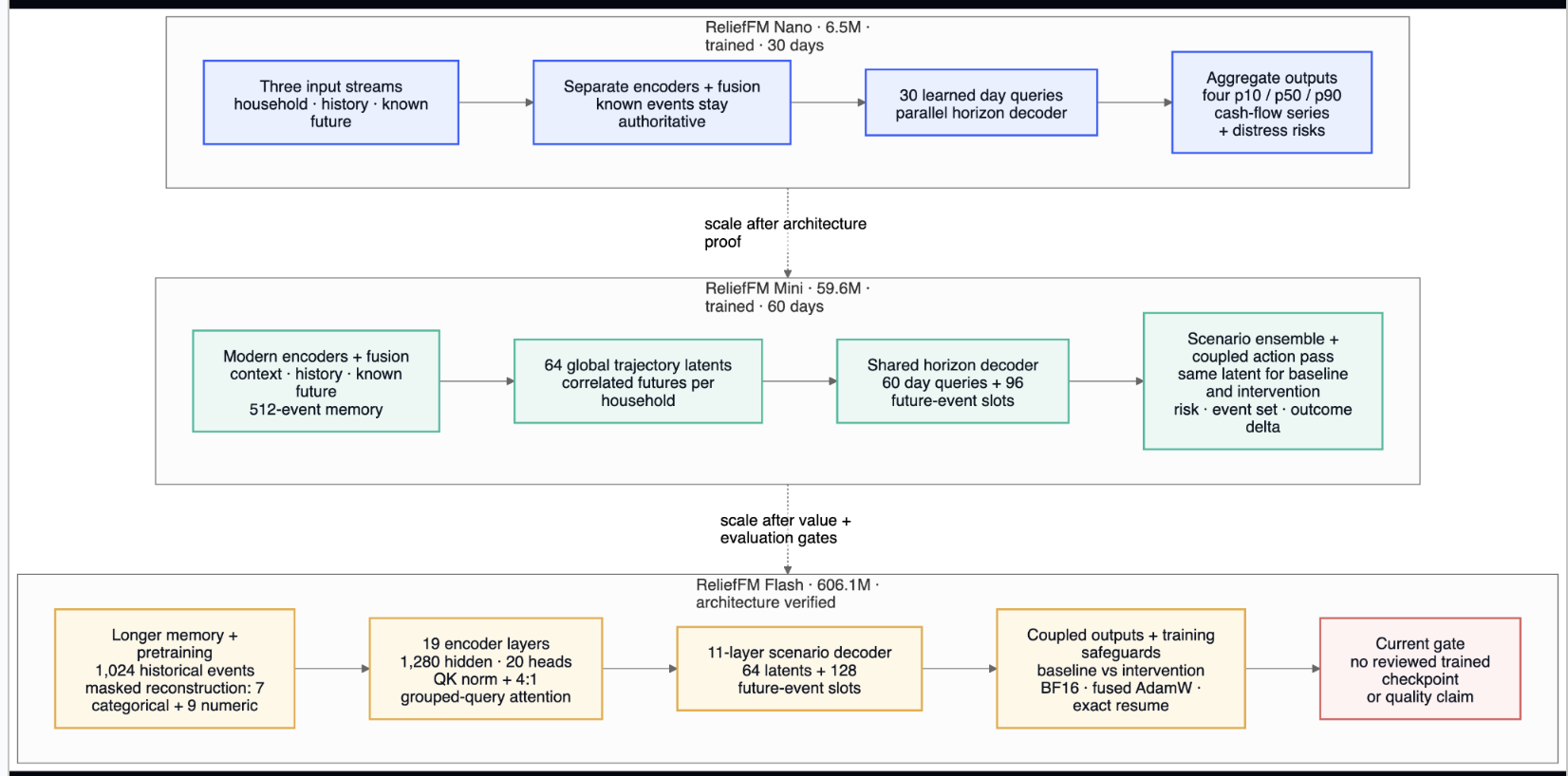
ReliefFM Mini - Foundational model with 60M parameters
-
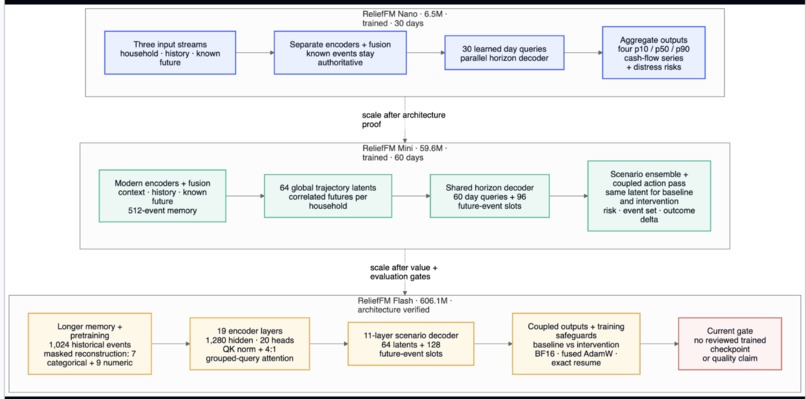
ReliefFM Nano - Foundational model with 6M parameters
Inspiration
Over 150 million people in the United States live without any financial safety net, living paycheck to paycheck through loan payments and insurance. A car crash or loss of income has sent millions of people into severe debt. This problem is too old to exist in the age of AI. Our product, Relief.ai, solves all of these issues.
What it does
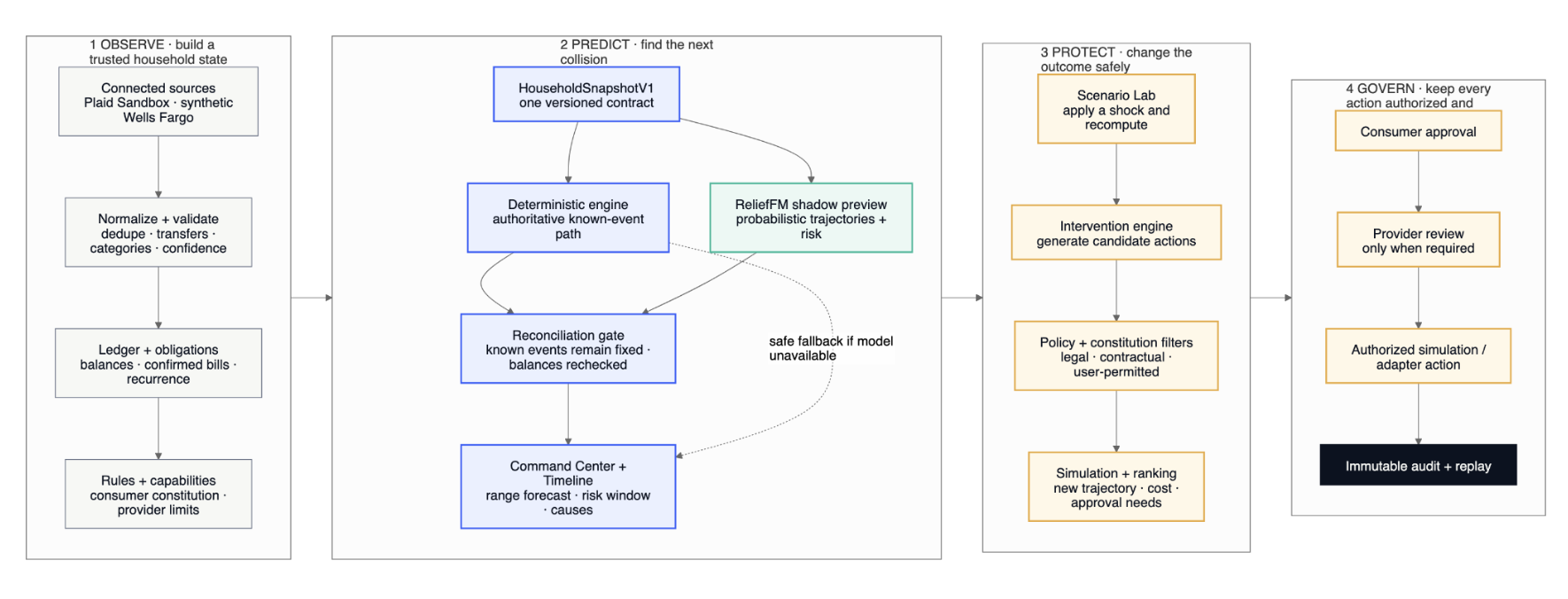
Relief.ai is a dynamic financial safety layer that continuously adjusts financial obligations according to a person's real ability to pay.
How we built it
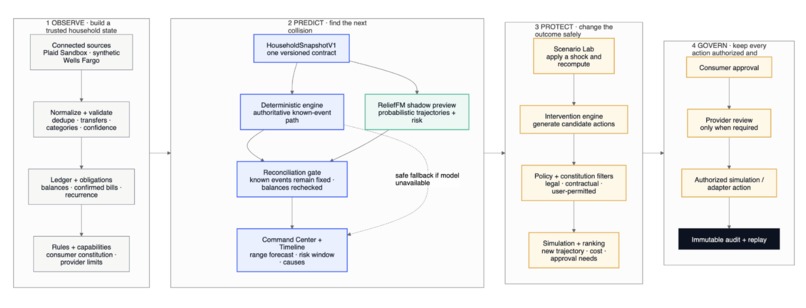
Relief.ai is built on three segments: The Brain: A transformer model forecasts 30-day cash flow and ranks the smartest interventions. A foundational model structurally works better because it's trained on financial data, not hard-coded algorithms. The Safety Net: Deterministic rules-based backend keeps working flawlessly even if the AI fails completely. We recognize that our users are connecting sensitive data, which means that our backend is airtight. The Plumbing: Typed contracts, containerized deployment, and immutable audit trails guarantee compliance and reliability
Challenges we ran into
Compute was our biggest obstacle while we figured out the right parameter size for our foundational models. After digging through overlooked GCP credit programs late into the night, we stumbled on a forgotten pool of research tokens that gave us the runway we needed. That lucky break let us train two flagship models, which crossed 65M+ parameters in total, that now stand as proof of what agile persistence can build within 4 hours.
Accomplishments that we're proud of
While successfully training two foundational models within 4 hours, we were also able to successfully operate with the PlaidAPI reference adapters to ingest real financial event data, bringing live account connectivity into our platform. This took our project to a whole new level because we were able to validate our entire intervention workflow end-to-end with authentic bank data, moving beyond mock fixtures to prove the system works with actual account balances, transactions, and provider approval flows.
What we learned
We learned a few key lessons today.
Time Management - Surprisingly, we were able to ship 2 foundational models, entire backend platforms with 108 passed tests and 15+ modules, built and designed 7 full routes per a canon, and production-grade integrations.
Decisions - We were able to make calculated decisions such as picking mock profiles over integrations, before realizing that a product that has a slightly raw UI but production-grade API integrations and self-trained foundational models is better to show proof that this project is a winner.
What's next for Relief-AI
We'd like to validate Relief-AI through immediate user testing, implement deferred core features, and then transition toward scalable, production-ready market deployment, with strong prioritization on the cybersecurity angle of a financial infrastructure layer regardless of current guardrails, over a stagnated timeline of 6 months.
Relief AI - Life changes, so should your finances!

Log in or sign up for Devpost to join the conversation.