-
-
Reliability-Memory-Customer-Operations-Agent-Architecture
-
Evidence-Gathering-From-Memory
-
Production-Failed-Enterprise-Case
-
Human-Review-Customer-Case
-
CockroachDB-Preview
Inspiration
Customer service and operations teams spend too much time collecting information from disconnected systems before resolving a case. Existing automation often relies on fixed thresholds or model confidence, which can automate uncertain decisions and escalate routine ones.
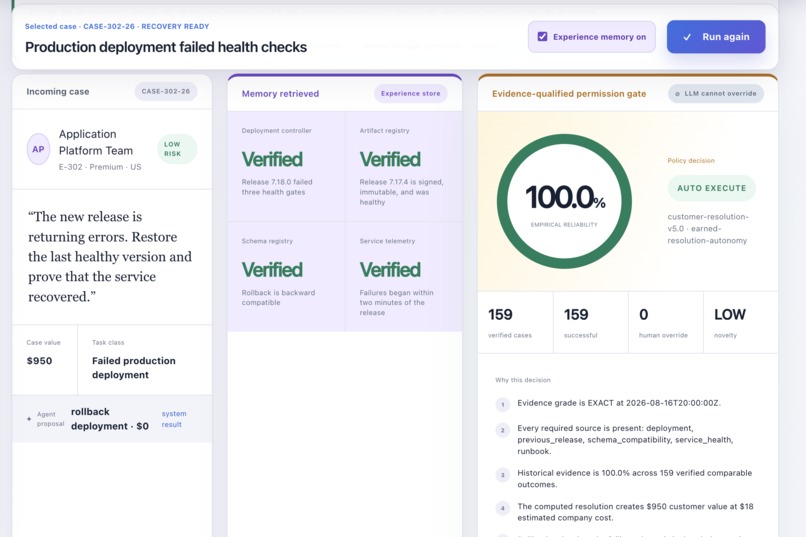
We built Reliability Memory to make automation evidence driven. The goal is simple: automatically execute decisions only when the current evidence and verified history support them, while giving humans a complete investigation when approval is required.
What it does
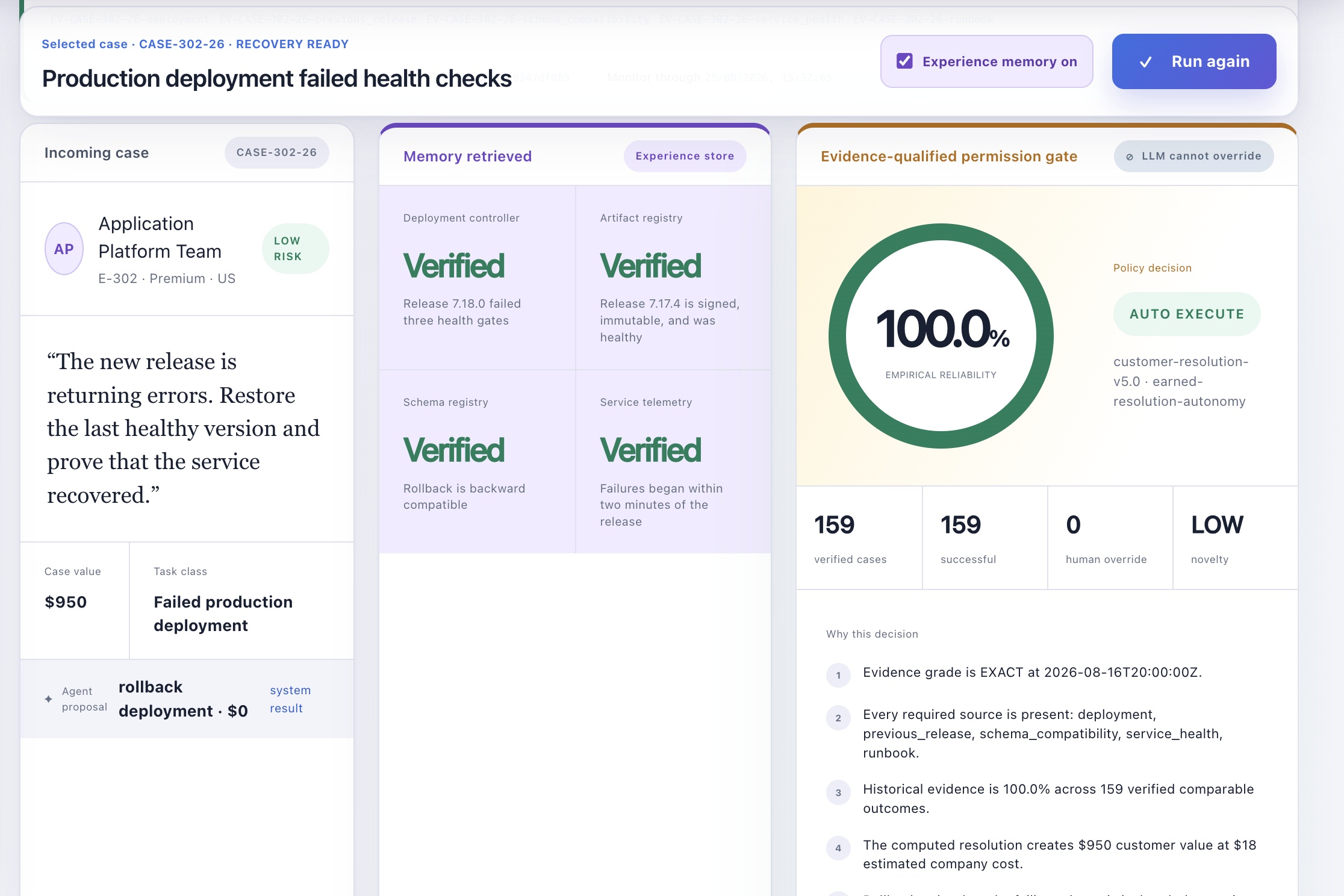
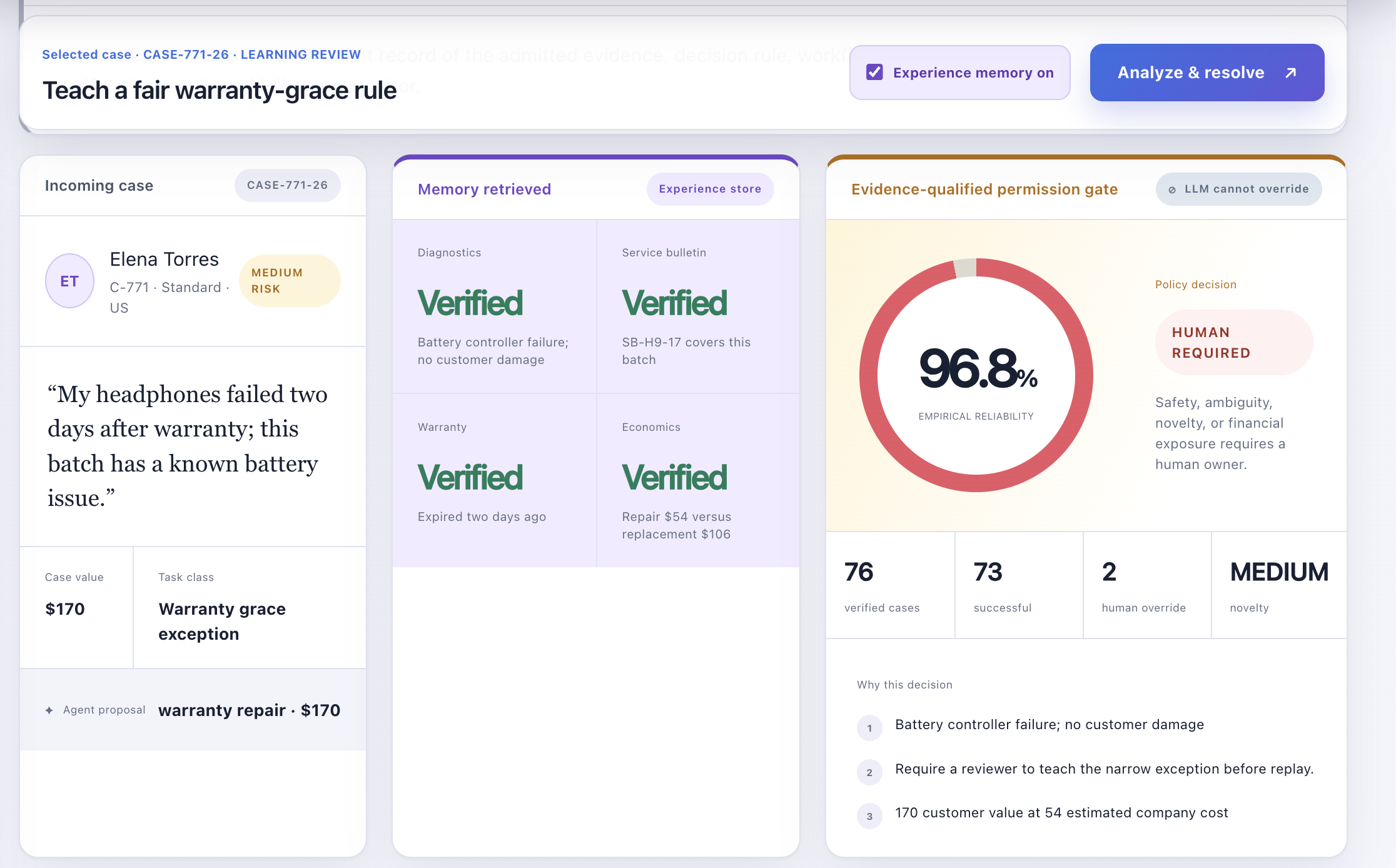
Reliability Memory investigates consumer and enterprise cases such as product failures, billing disputes, warranty exceptions, failed deployments, access problems, and infrastructure incidents.
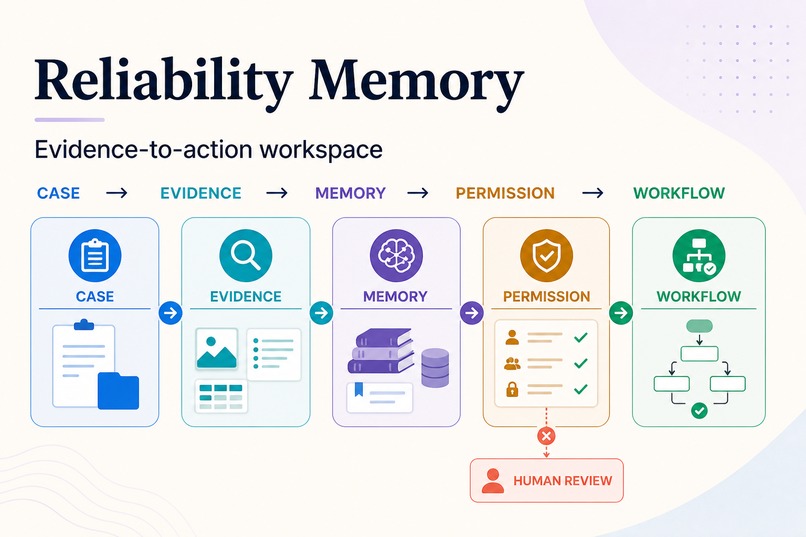
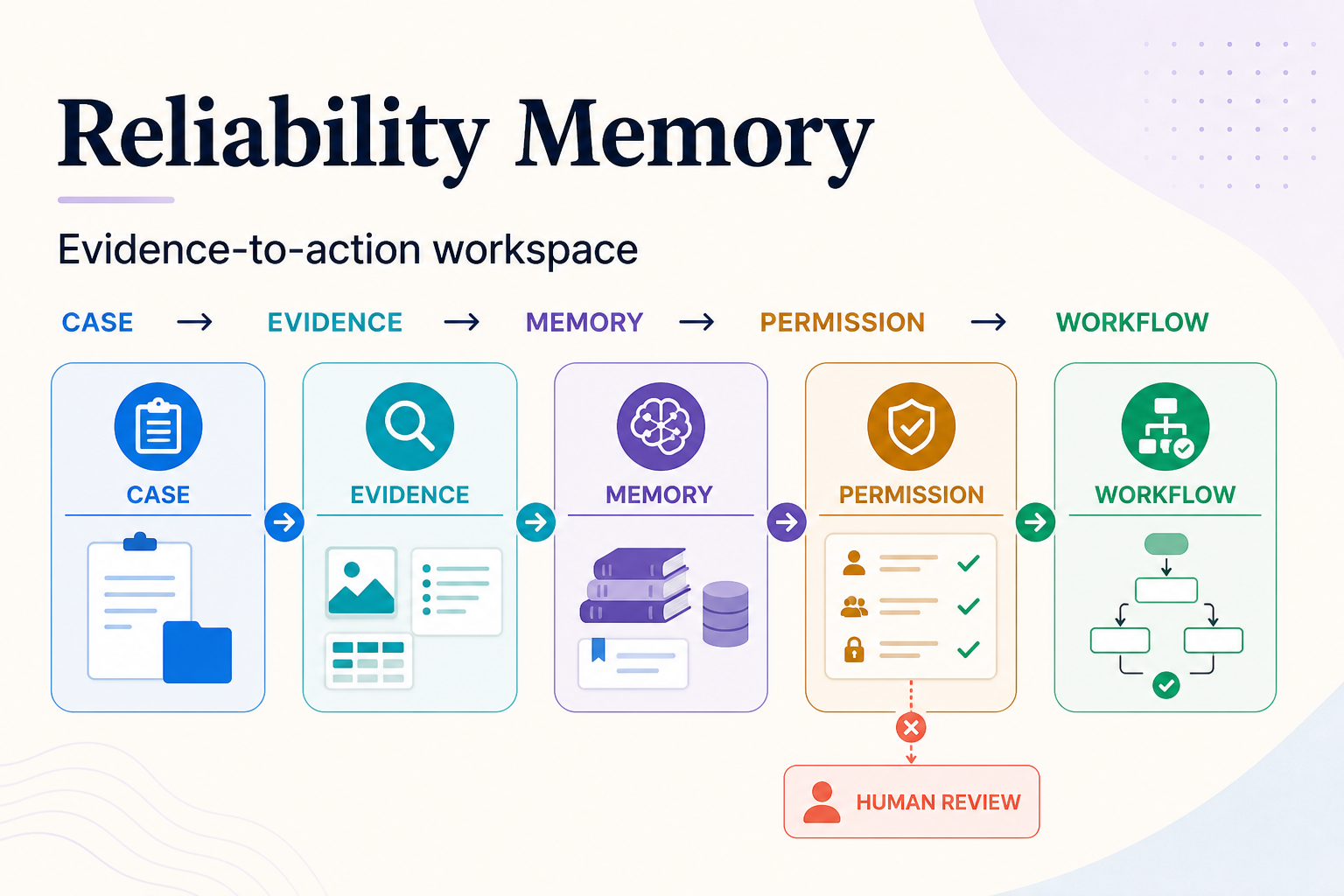
For every case, the agent:
- Collects issue specific evidence.
- Validates its authority, integrity, freshness, and relevance.
- Retrieves similar verified experiences from vector memory.
- Evaluates eligible resolutions and business costs.
- Applies deterministic policy.
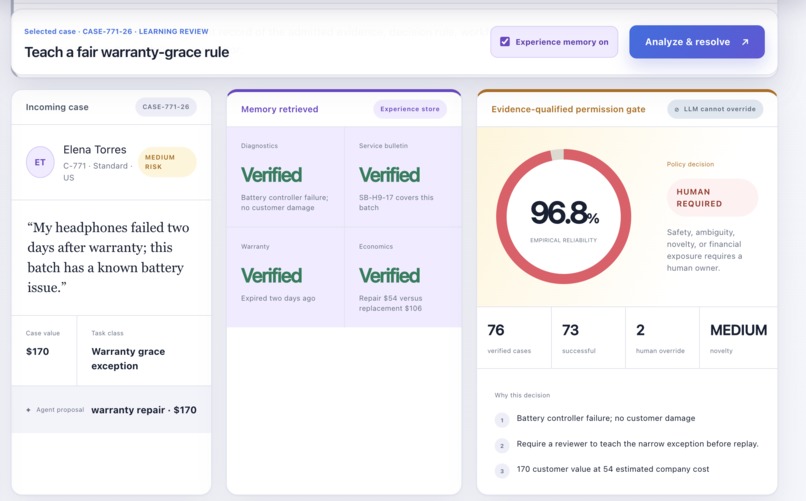
- Executes the workflow or pauses for human approval.
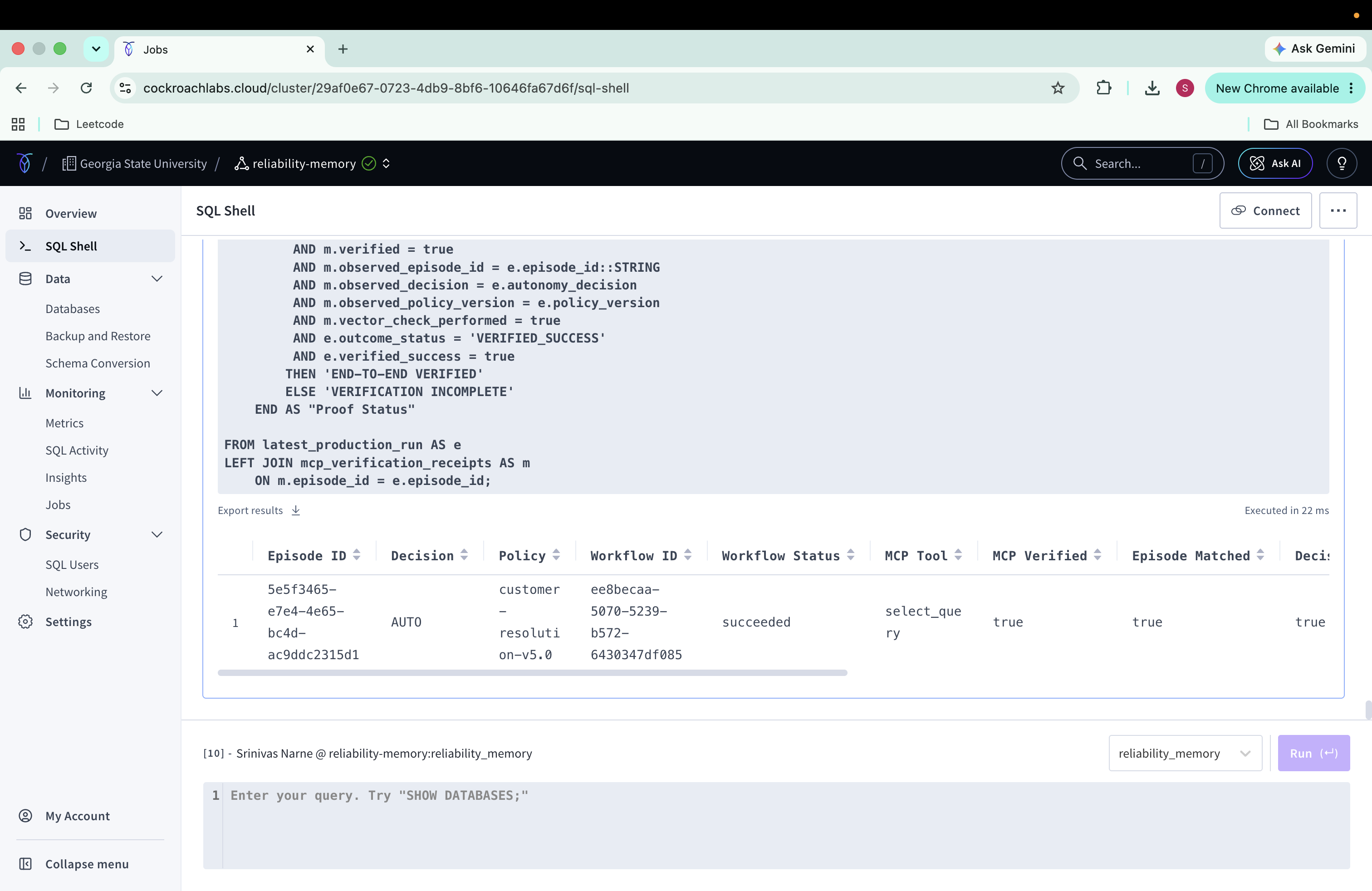
- Verifies the outcome and stores an auditable receipt.
The model can propose a solution, but it cannot override policy.
How we built it
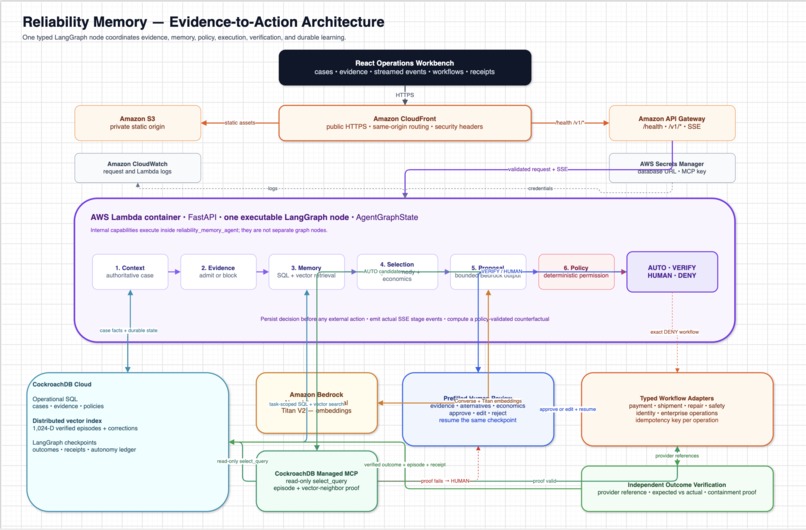
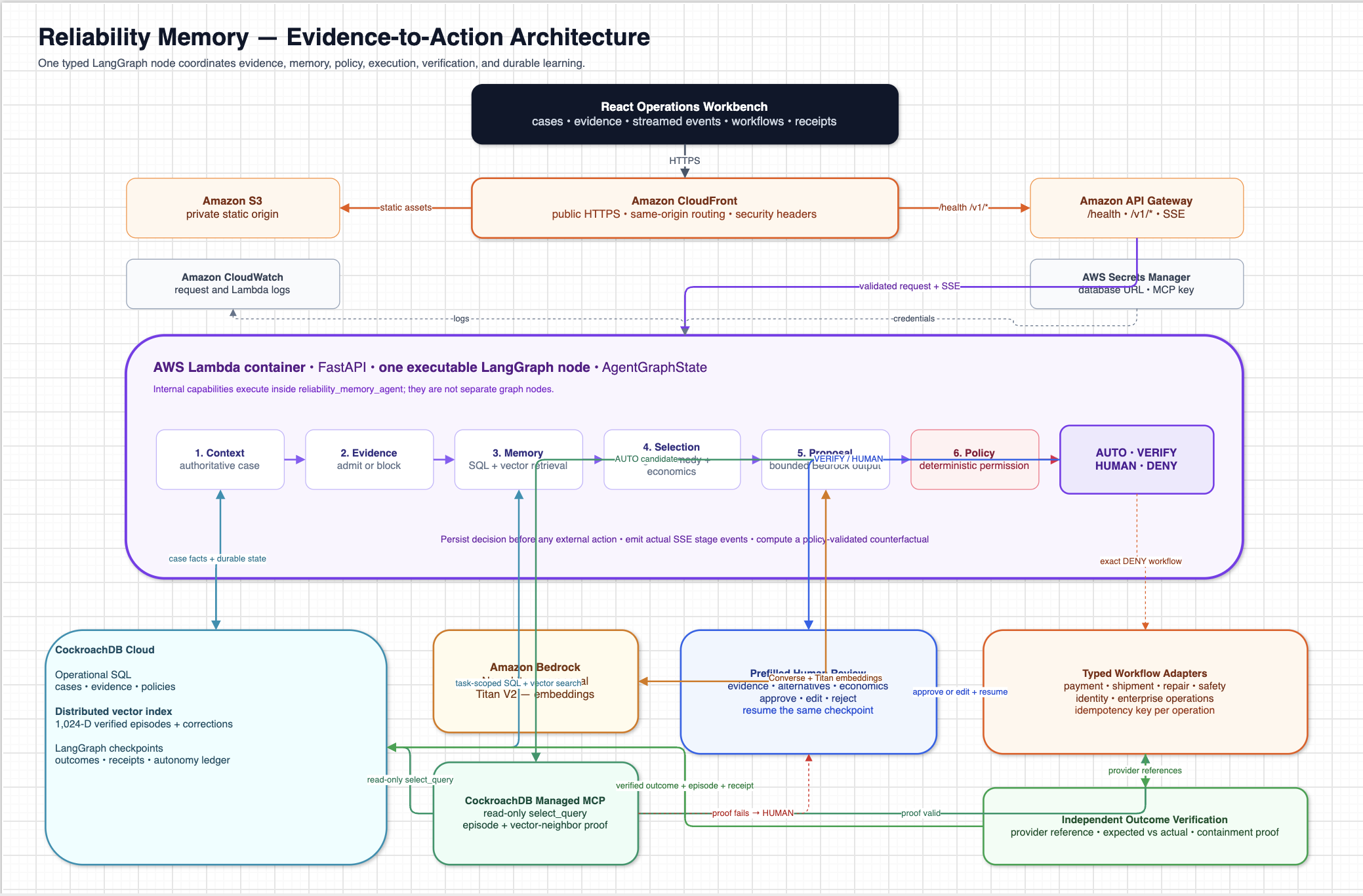
The frontend is a React and TypeScript operations workbench hosted through Amazon S3 and CloudFront.
API Gateway sends requests to a Python FastAPI application running on AWS Lambda. Amazon Bedrock supports case reasoning and embeddings.
A Single node LangGraph workflow manages typed state, streamed events, execution, and human interruption. When approval is required, LangGraph saves the case state and pauses. After approval, it resumes the same workflow without repeating the investigation.
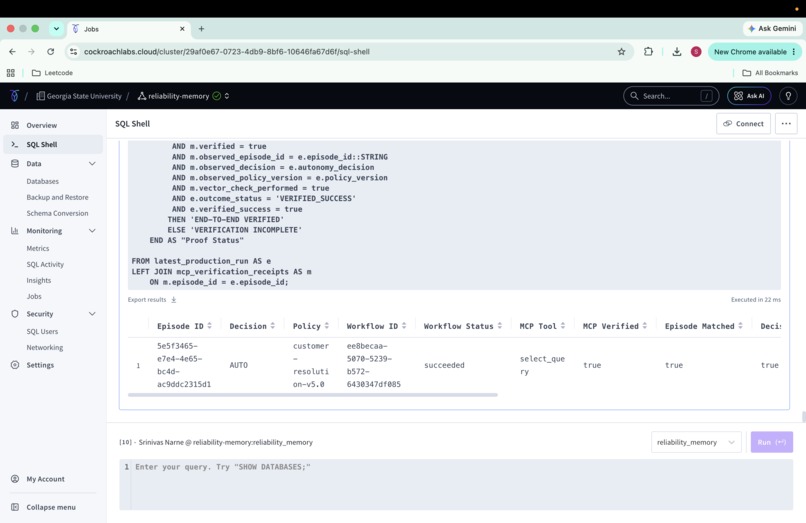
CockroachDB Cloud is the persistent memory layer. It stores operational evidence, decisions, outcomes, workflow receipts, human corrections, LangGraph checkpoints, and vector embeddings.
CockroachDB Distributed Vector Indexing retrieves relevant verified experiences. The CockroachDB Cloud Managed MCP Server then independently confirms the persisted episode, policy decision, and vector-memory results before autonomous execution remains authorized.
Challenges
The biggest challenge was separating reasoning from permission. A model recommendation should not be treated as authorization, so we built a deterministic evidence and policy boundary around every action.
We also had to make retries safe, preserve state across human review, keep UI and backend decisions consistent, and connect vector memory with transactional operational data without creating separate consistency problems.
External provider operations use deterministic sandbox adapters, allowing us to demonstrate execution, retries, receipts, and verification without changing real payment, fulfillment, or infrastructure accounts.
What we learned
We learned that useful agent memory requires more than storing conversations. The system must remember verified outcomes, corrections, policy versions, context, and delayed failures.
We also learned that human review becomes much faster when the agent completes the investigation first and asks the reviewer for one focused decision.
What's next
Next, we plan to connect production provider systems, add organization specific policy configuration, expand delayed-outcome learning, and provide deeper operational analytics for containment, cost, reliability, and customer satisfaction.
Built With
- agentic
- ai
- amazon
- amazon-web-services
- api
- bedrock
- cloud
- cloudfront
- cloudwatch
- cockroachdb
- distributed
- fastapi
- gateway
- indexing
- lambda
- langgraph
- managed
- mcp
- pydantic
- python
- react
- s3
- vector
- vite

Log in or sign up for Devpost to join the conversation.