Inspiration
The idea for ReliefLink is inspired by a very intimate experience—one that made an indelible imprint on my life. It was 2020, and I was residing with my parents in West Bengal. Cyclone Amphan hit with raging fury. I was young, but I recall the noise, panic, and hopelessness that held captive entire communities. Villages were obliterated overnight. Lives were dislodged. My family and I were rendered homeless, struggling through days of uncertainty, deprivation, and adversity.
What was notable at the time wasn't only the magnitude of devastation—but the absence of effective and timely relief. Relief from the government was tardy. Efforts from NGOs were haphazard and decentralized. There were individuals in urgent need—starving, wounded, or stranded—and yet assistance didn't always get to the destination in time.
That encounter seeded an idea in my head: What if technology could fill that gap? What if, in the midst of the devastation of a disaster, there were a system in place where all the pleas for assistance were heard and answered—quickly, openly, and efficiently?
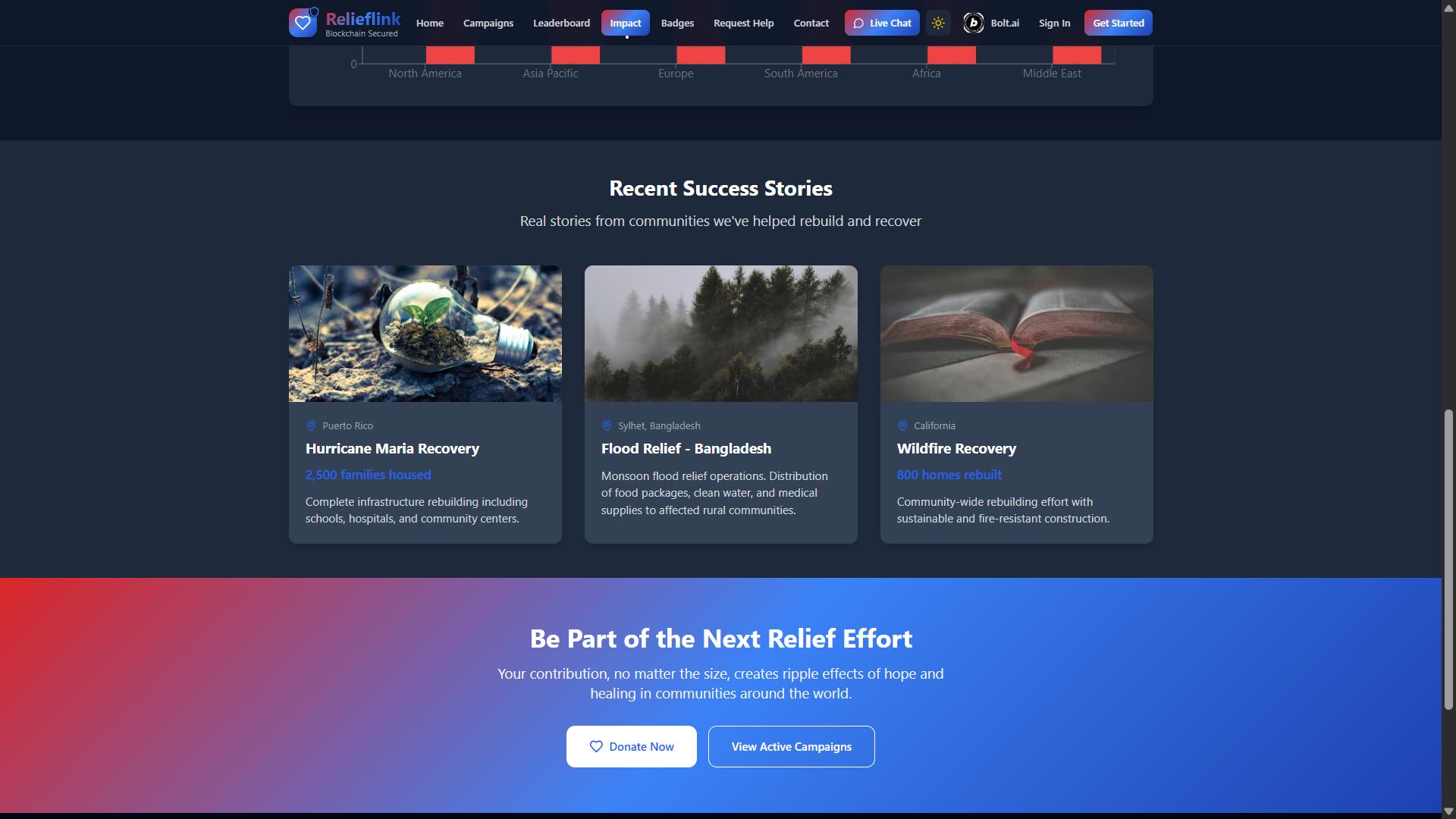
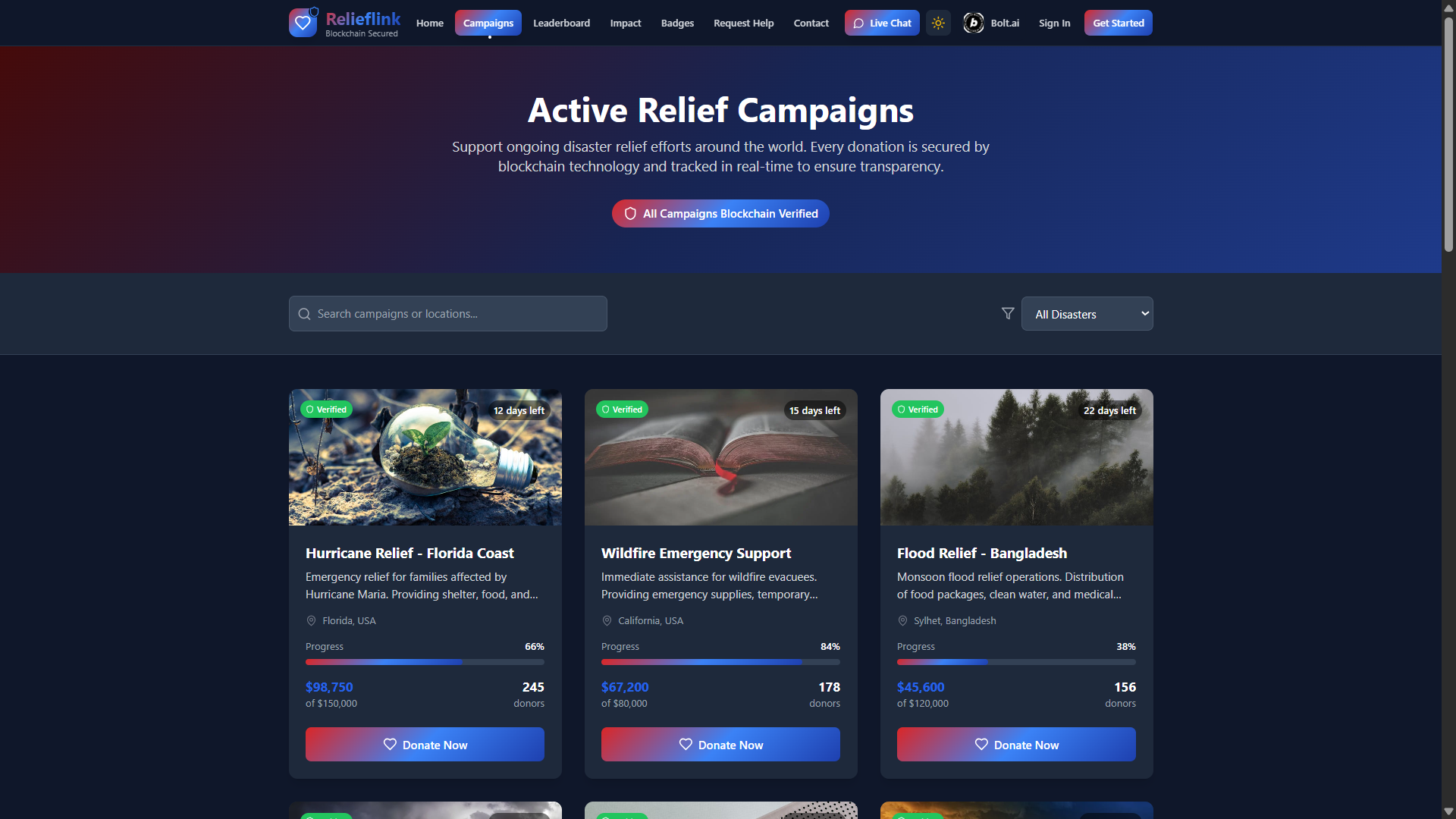
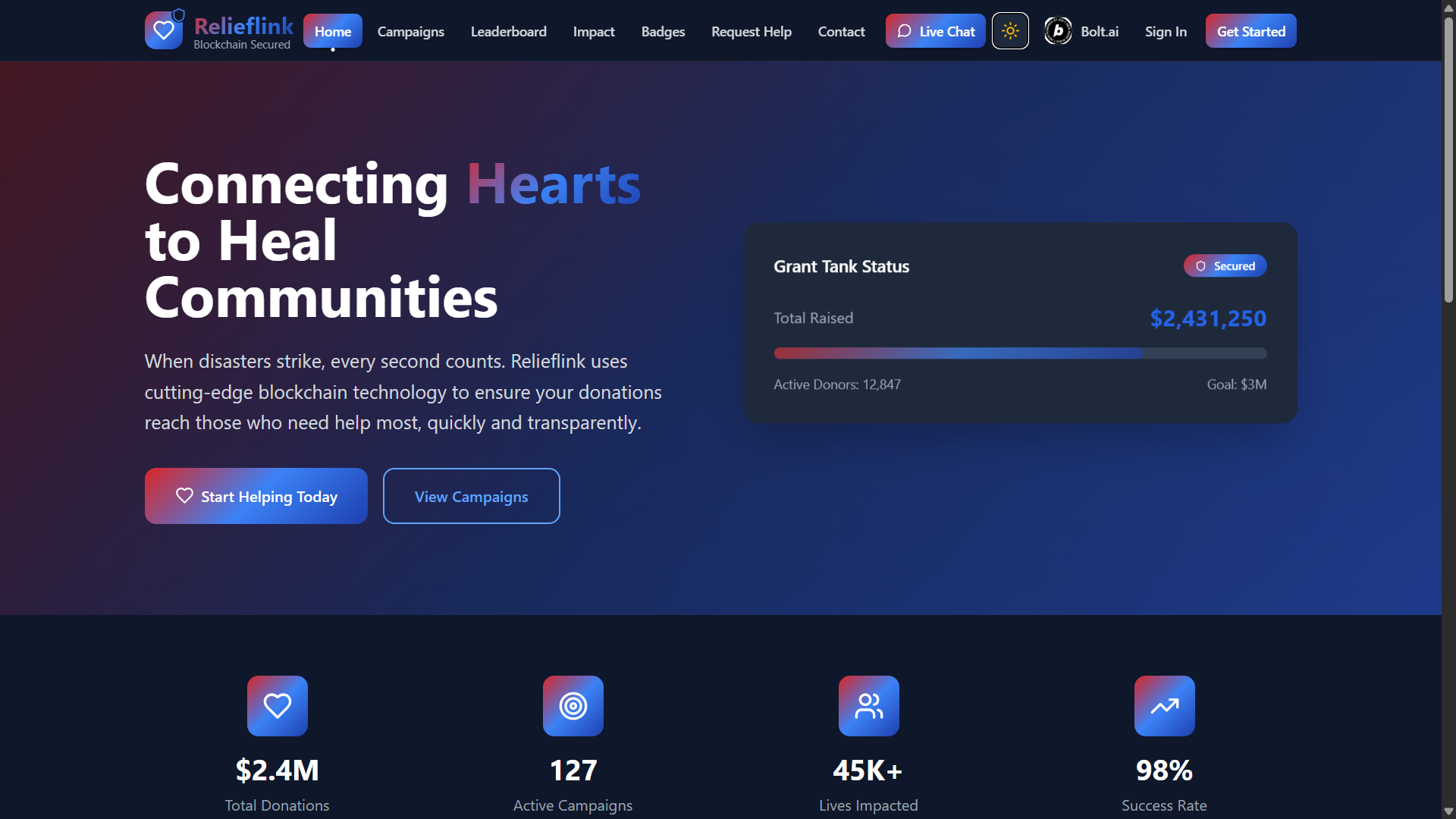
Years later, the seed has borne fruit in ReliefLink—a blockchain-based trust and AI-driven smart coordination platform for empowering victims, directly linking donors to ground needs, and supporting authorities and NGOs in immediate response to disasters.
It is not a project. It's a mission—to ensure no one goes unheard or unprotected in their most helpless times.
What it does
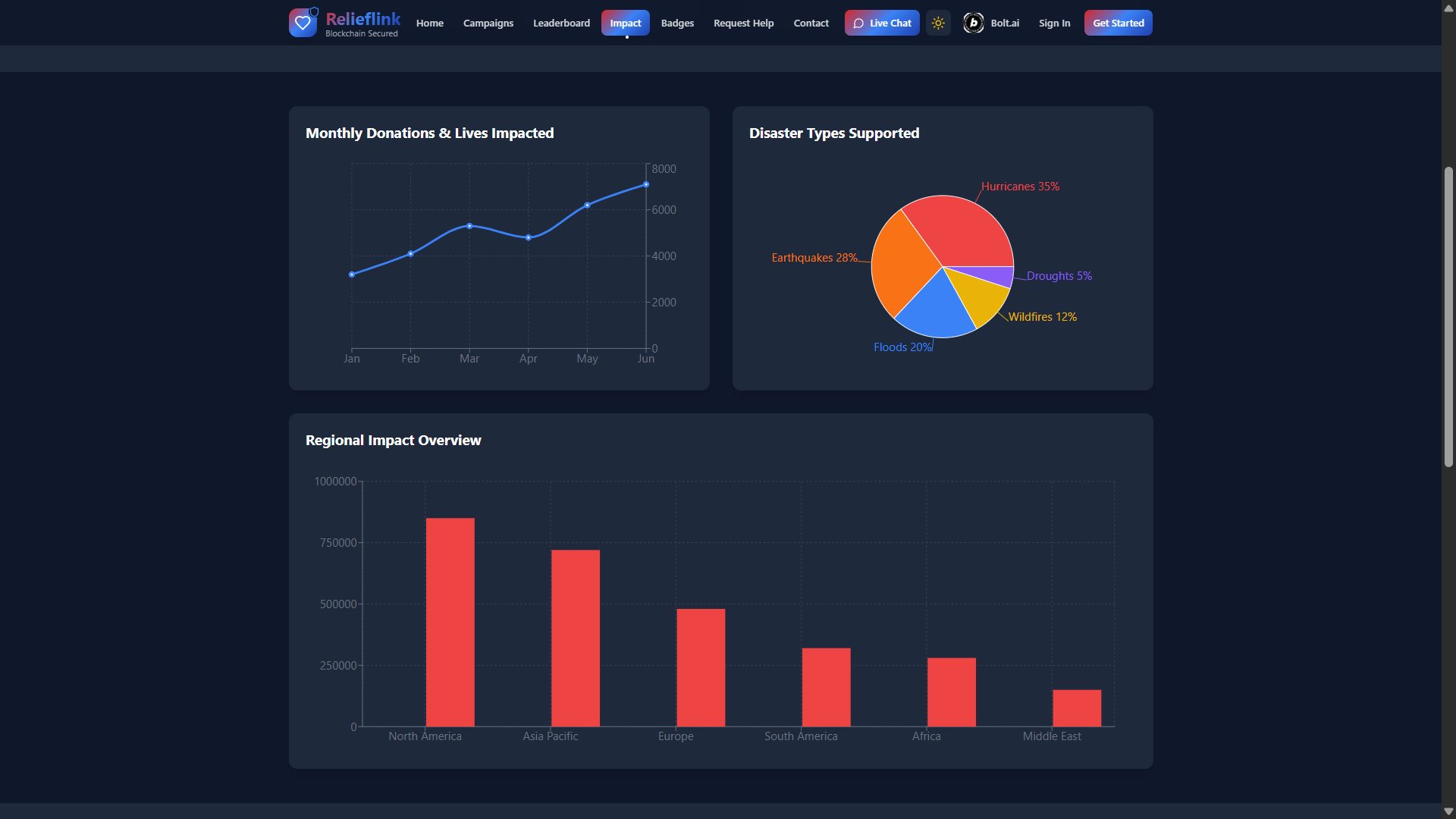
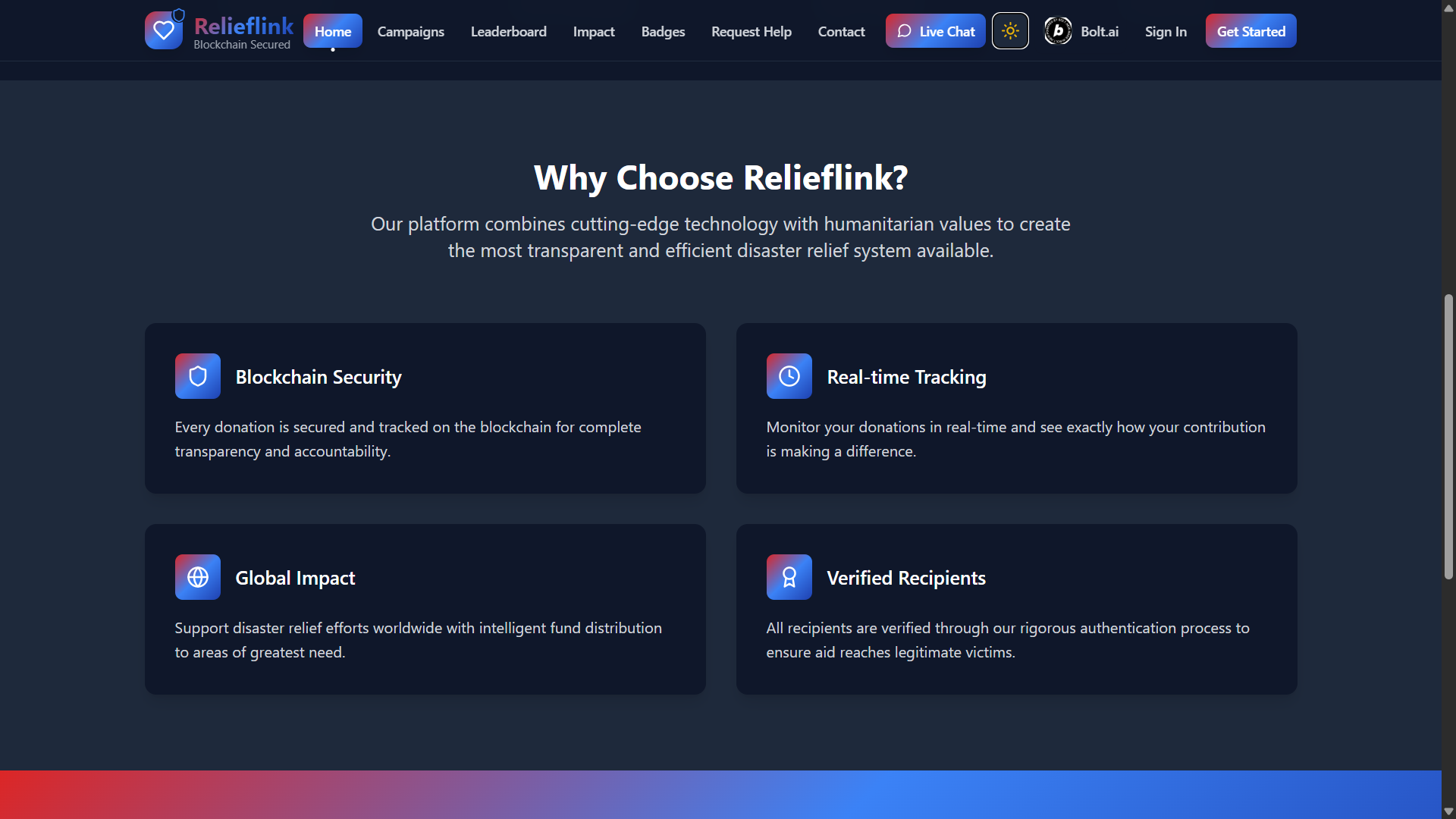
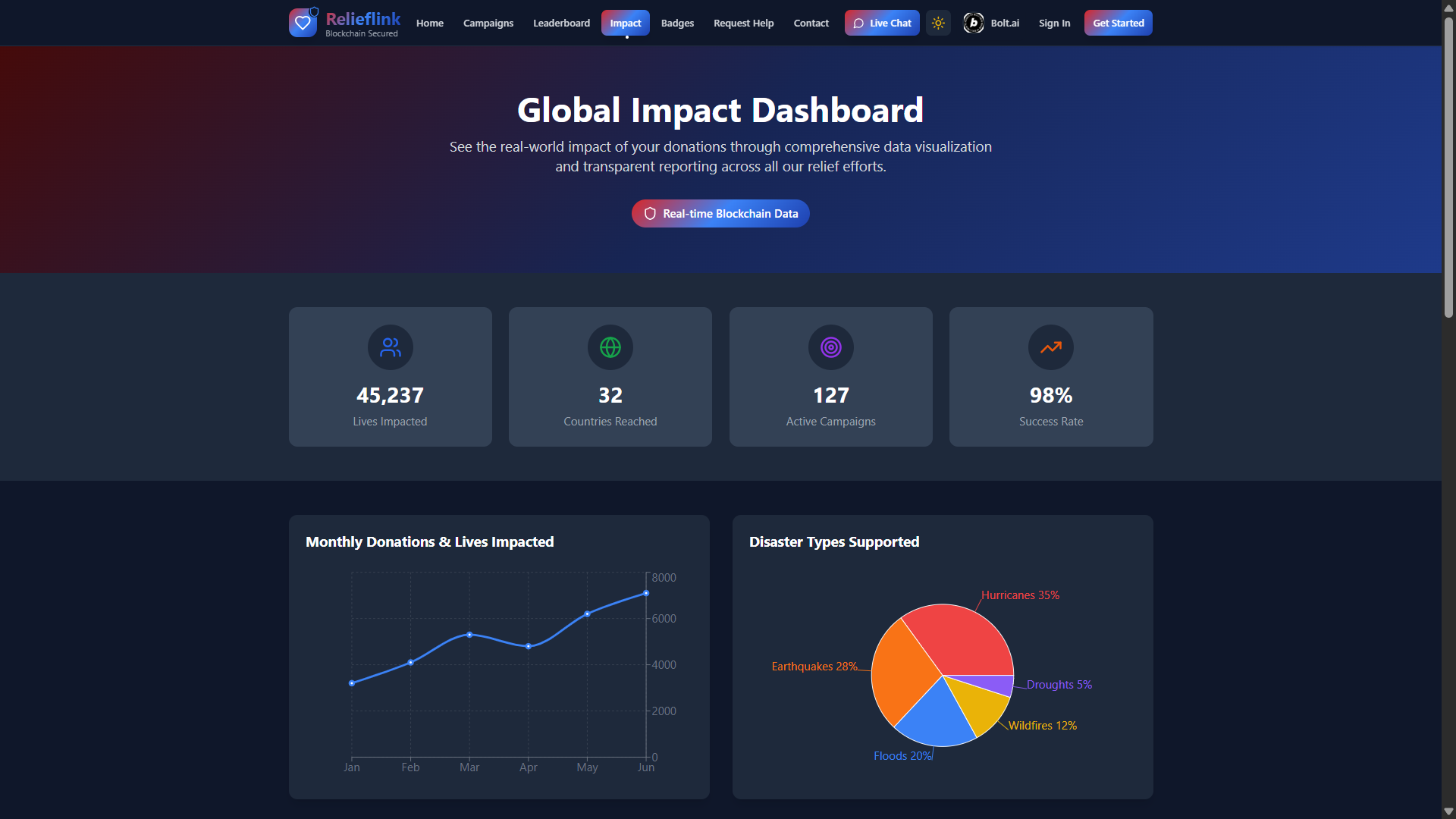
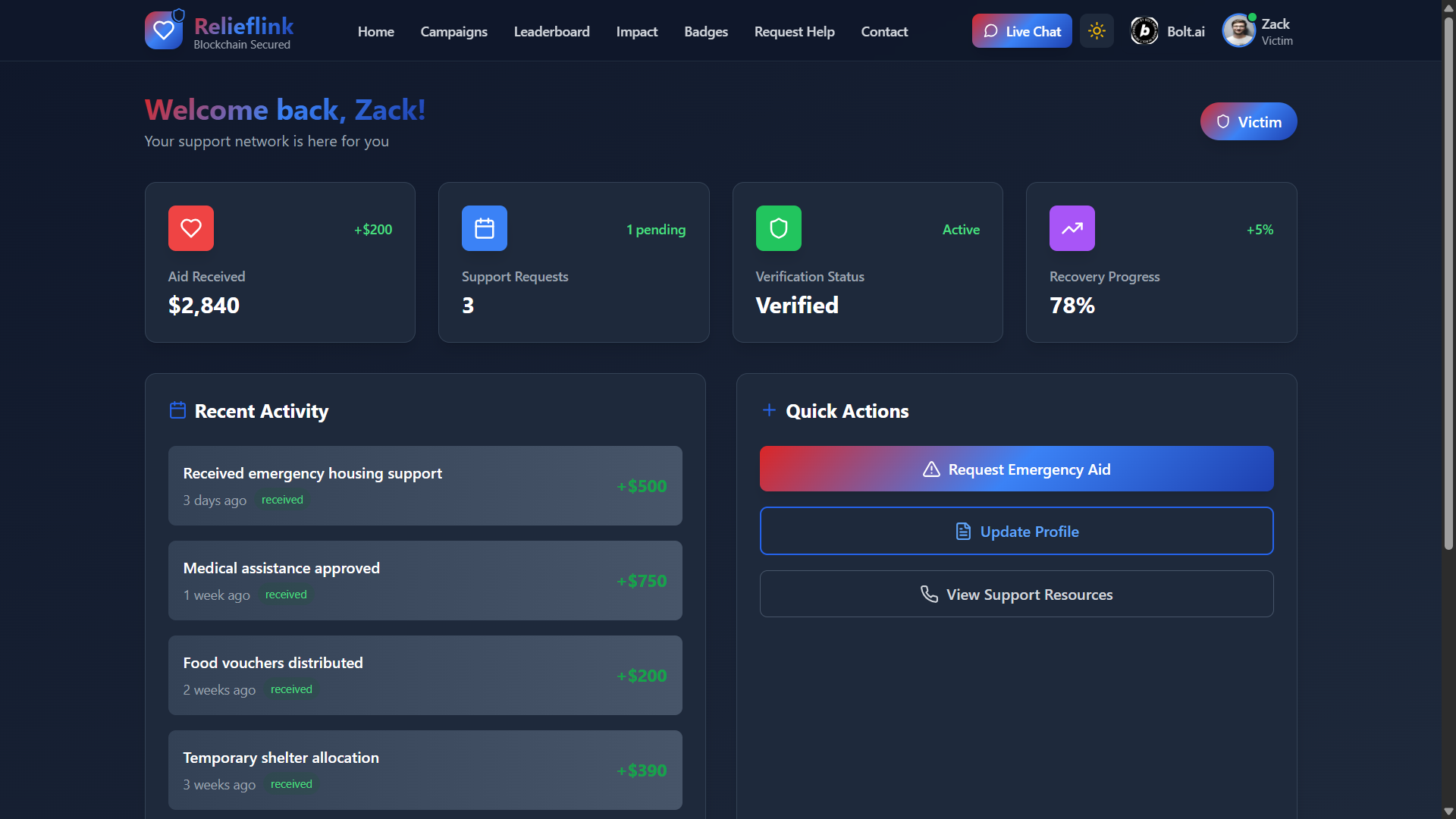
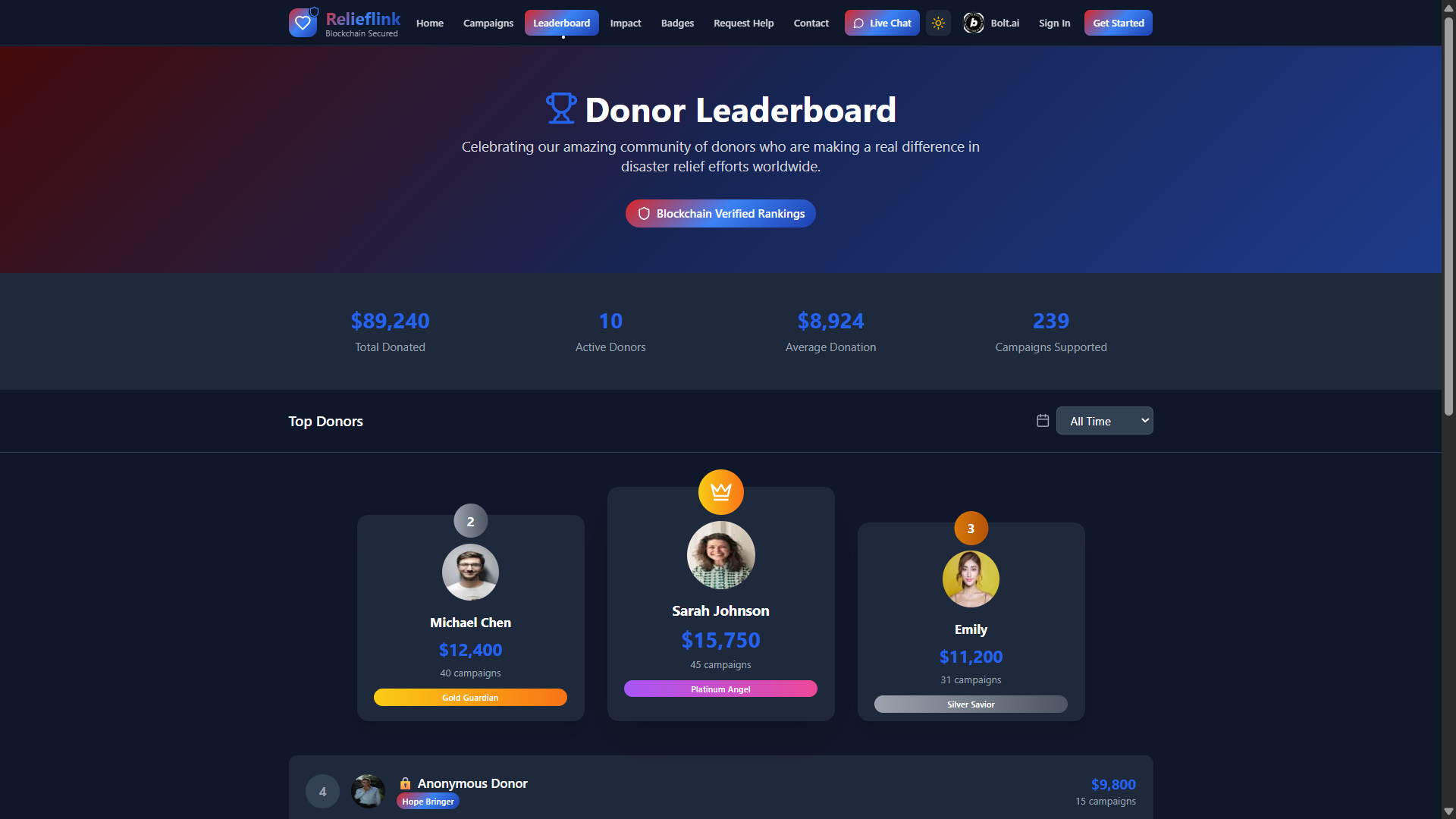
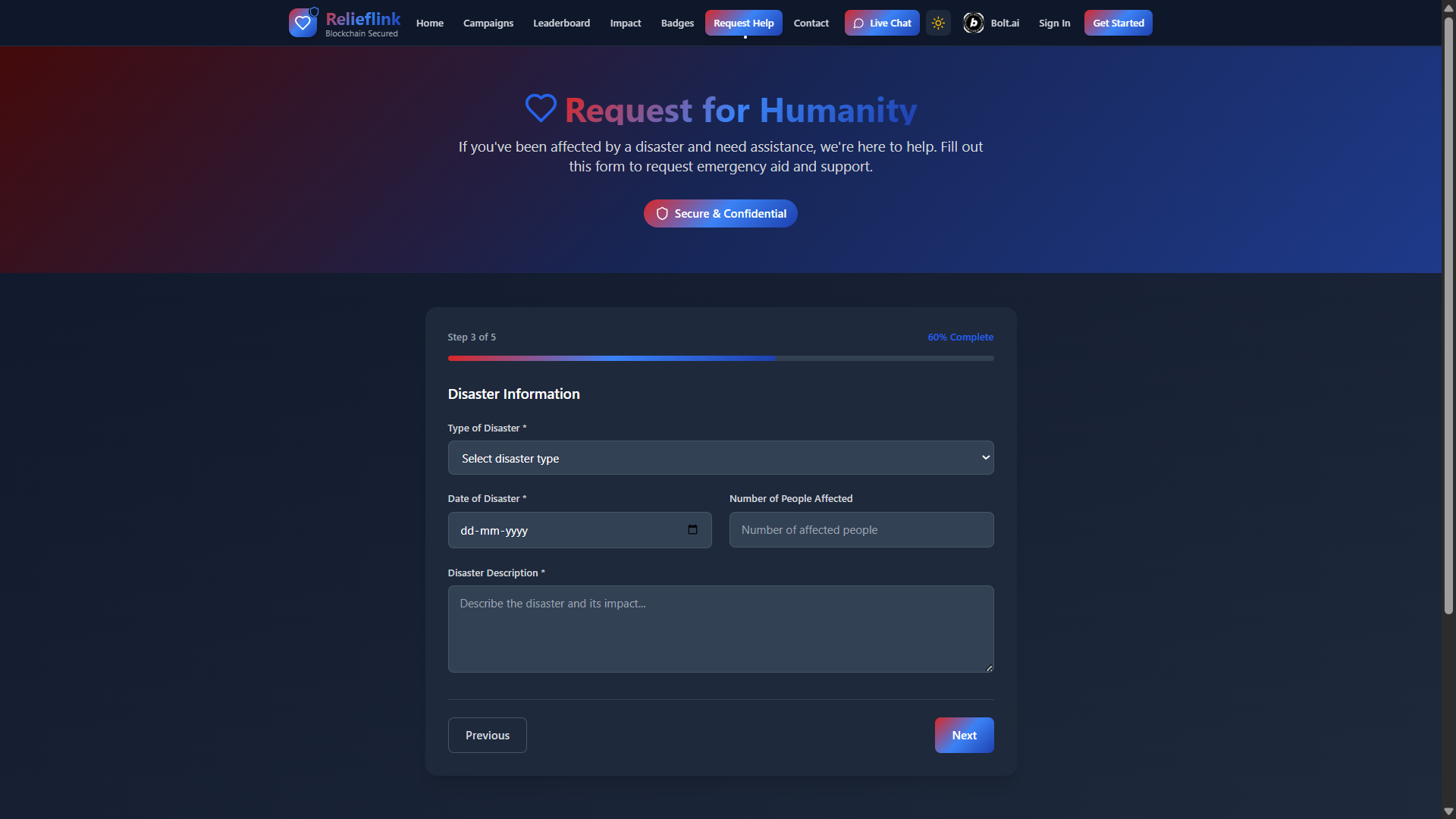
ReliefLink is an AI- and blockchain-powered disaster response platform that enables real-time coordination between victims, verified volunteers, NGOs, and authorities to deliver fast, transparent, and targeted aid during emergencies. At its core, ReliefLink solves the life-threatening delay in disaster response caused by fragmented communication and inefficient resource allocation. It empowers victims to send geotagged SOS alerts through a lightweight app (even offline), which are then instantly analyzed by AI to categorize and prioritize needs—medical, food, shelter, rescue, etc. Meanwhile, all actions—requests, responses, aid transactions—are recorded immutably via blockchain, ensuring transparency, accountability, and trust in how relief is distributed.
How We Built It
We built ReliefLink with a focus on real-time response, offline usability, and trust through transparent systems. →Frontend: React + TailwindCSS (PWA for offline-first experience) →Backend: Firebase (Realtime DB, Auth, Cloud Functions) →AI Layer: OpenAI API for classifying and prioritizing SOS requests →Mapping: Leaflet.js for live, geotagged disaster maps →Blockchain: Simulated smart ledger for immutable aid trackin
Key Highlights: →AI-powered triage and urgency detection →Verified volunteer-responder matching →Real-time dashboard for coordination →Works with poor/no internet using offline caching →We followed an agile, user-first approach with continuous testing and feedback loops to ensure reliability in disaster scenarios.
Challenges we ran into
→Offline Functionality: Ensuring SOS alerts and maps work without internet was technically complex and required deep caching strategies. →Real-Time Sync: Managing live data updates across victims, responders, and NGOs using Firebase while maintaining low latency. →AI Accuracy Under Stress: Training and tuning prompt-based AI to accurately categorize diverse and urgent SOS requests. →Volunteer Verification: Designing a lightweight but secure method to verify responders quickly without slowing down the system. →Security & Trust: Simulating blockchain transparency in a prototype while keeping the architecture lean and fast.
Accomplishments that we're proud of
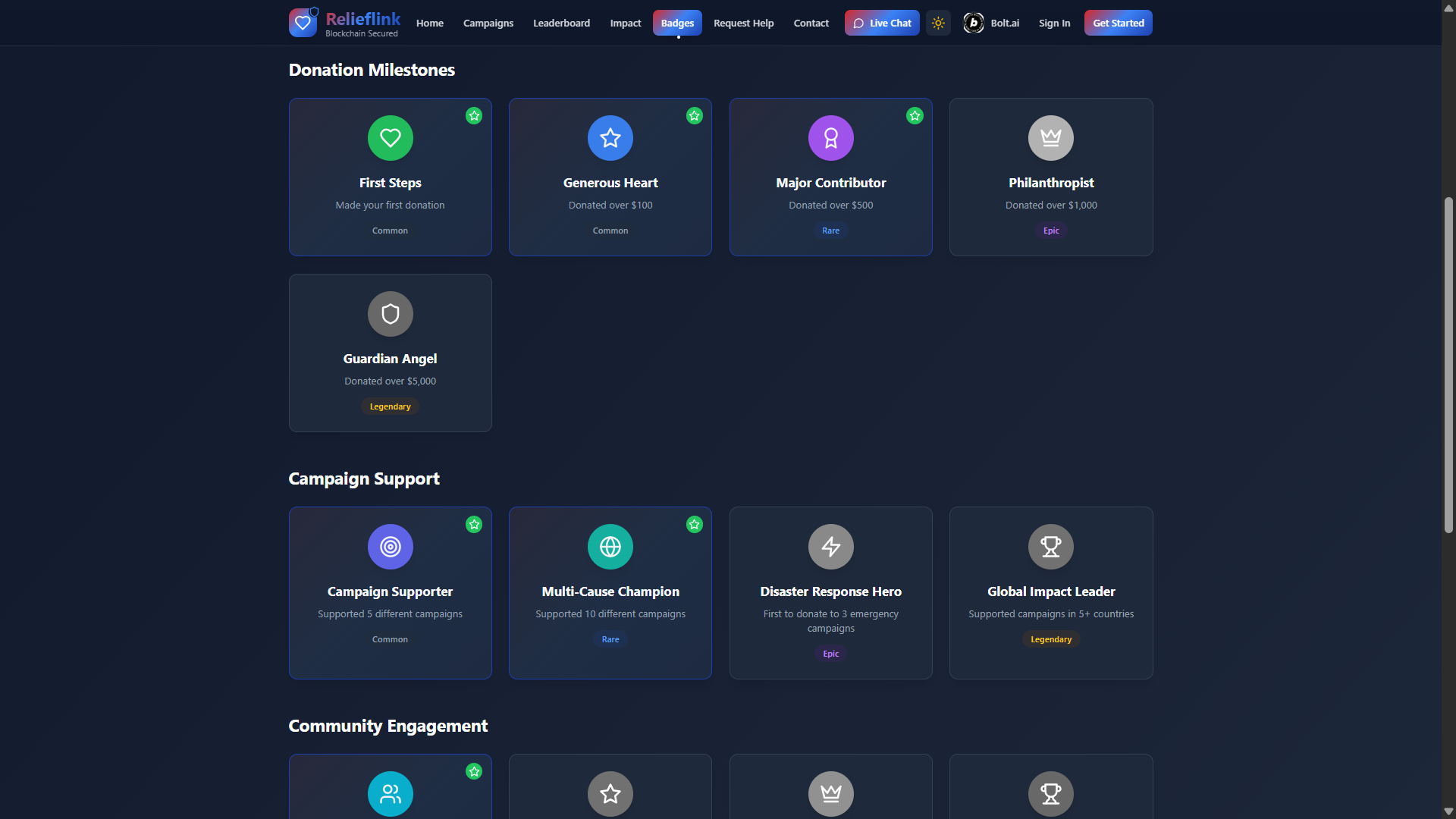
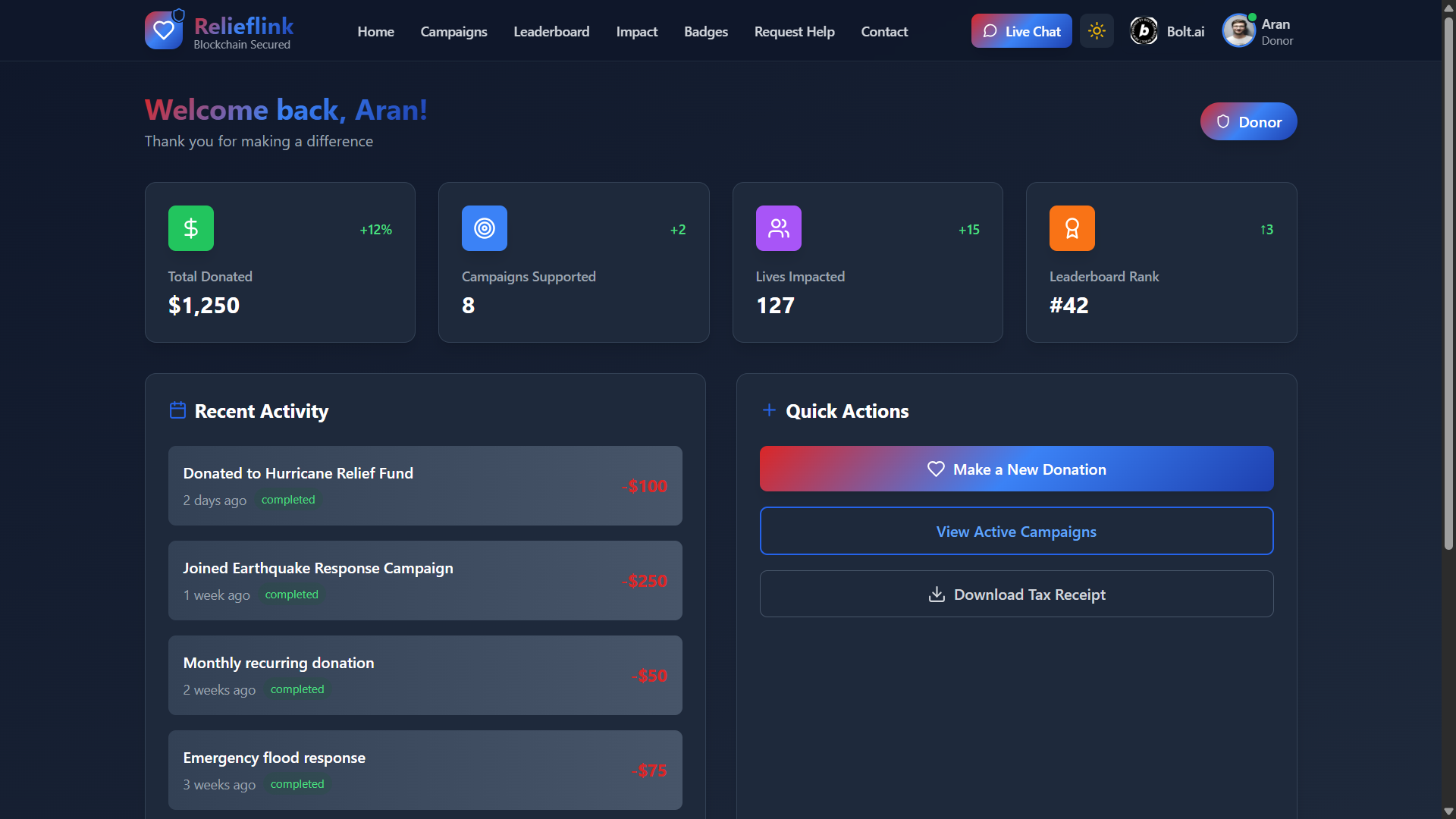
→Simulated blockchain-based aid tracking to ensure transparency in relief distribution. →Created an end-to-end system that connects victims, responders, and donors in real time. →Built a fully functional PWA that works offline for disaster zones with limited connectivity. →Integrated AI triage to auto-prioritize SOS alerts based on urgency and category. →Designed a live coordination dashboard for responders, NGOs, and officials
What we learned
→Tech alone isn’t enough—understanding real human pain points is key to building meaningful solutions. →Designing for offline-first systems requires rethinking how apps store, sync, and communicate data. →AI must be guided carefully—prompt design and testing are critical for accurate, life-saving outputs. →Real-time coordination is complex, especially when balancing speed, scalability, and trust. →User simplicity wins—in disasters, even one extra click can be the difference between life and death →Cross-functional collaboration accelerates innovation when everyone brings empathy to the table.
What's next for Releiflink
→Mobile App Release: Launch iOS and Android applications with full offline capabilities to ensure usability during network outages in disaster zones. →NGO Collaboration: Partner with organizations such as the Red Cross and local emergency services to validate workflows and improve on-ground effectiveness. →Pilot Deployment: Conduct initial trials in earthquake-prone regions like California, Japan, and Turkey to gather real-time feedback and refine the platform. →Government Engagement: Initiate pilot integrations with local authorities to align ReliefLink with official emergency protocols. →Lives Reached: Strive to assist thousands of disaster-affected individuals, with the goal of saving lives through faster, smarter coordination. →Protocol Adoption: Work toward formal adoption as a trusted tool in international disaster response toolkits. →Educational Outreach: Develop training resources for volunteers and responders to empower the next generation of emergency management professionals.


Log in or sign up for Devpost to join the conversation.