-
-
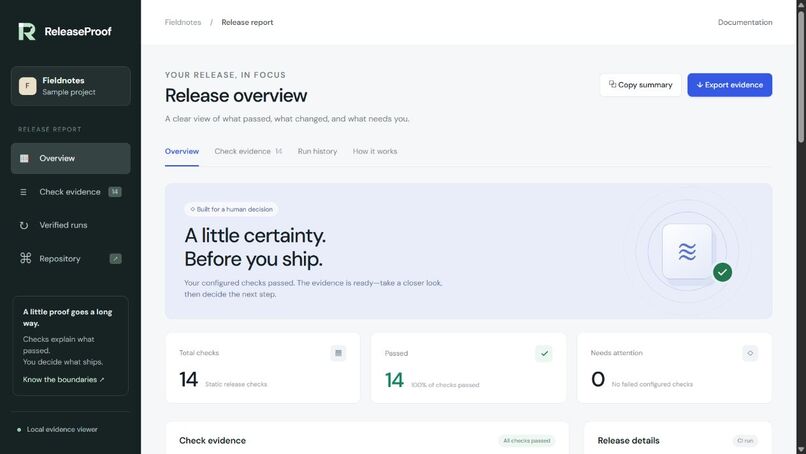
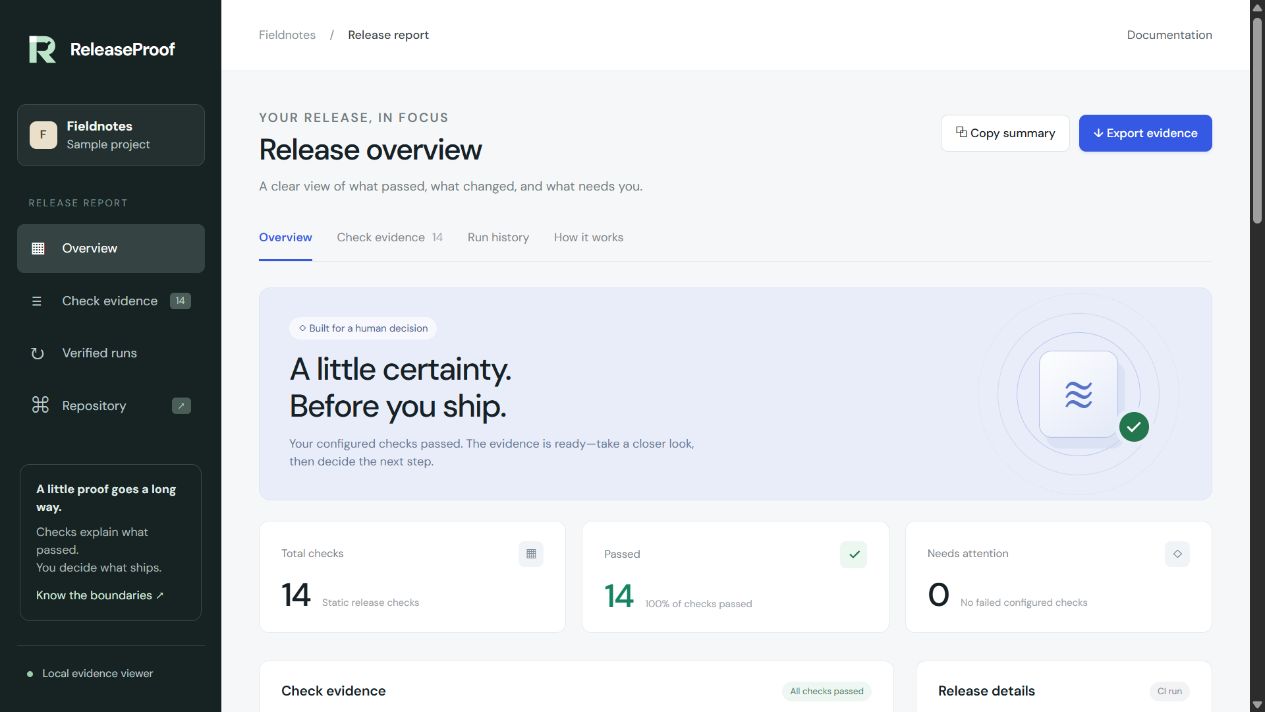
Public CI-generated report: all 14 configured checks passed; search, filter and export the evidence.
-
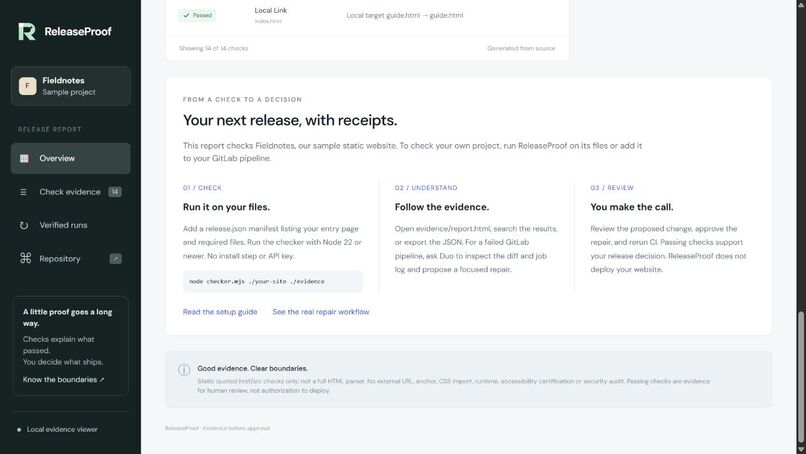
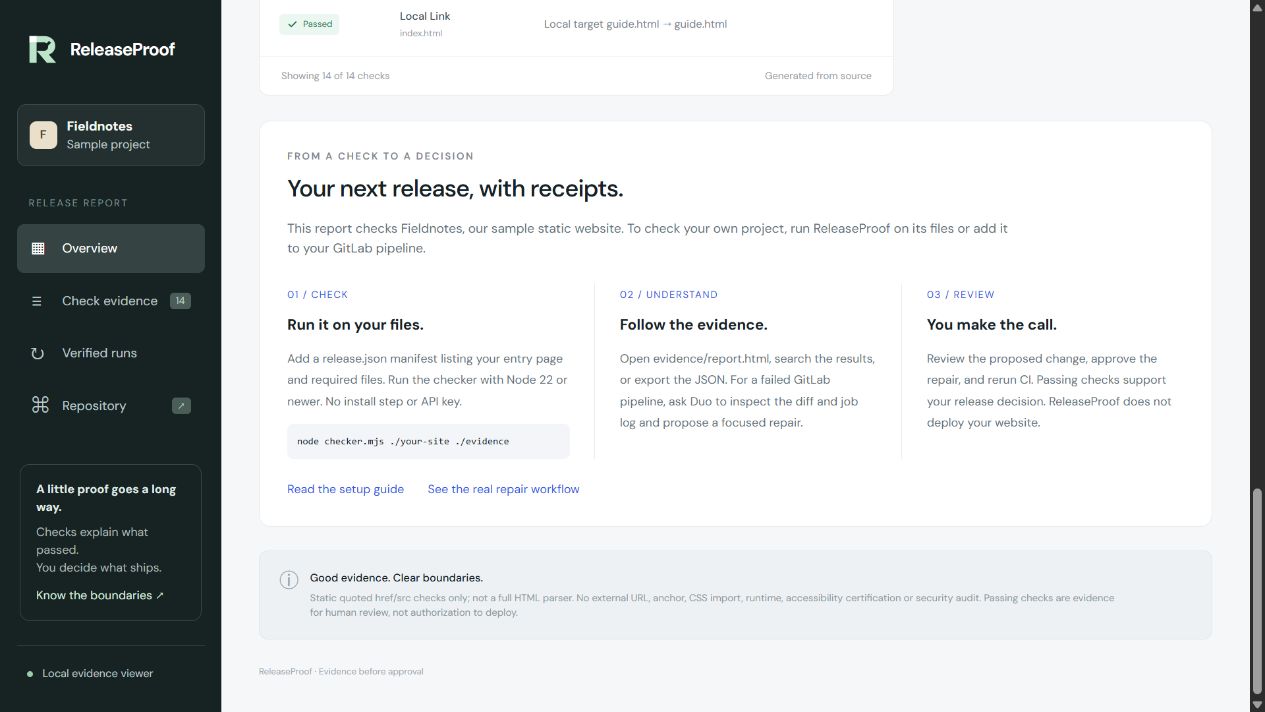
How it works: check the files, inspect evidence with GitLab Duo, review a repair and rerun CI.
Why ReleaseProof
A green pipeline is useful only when a reviewer can explain what it checked. Small static sites need a lightweight path from a failed check to an understandable, reviewable repair. ReleaseProof makes that evidence visible without adding a dependency install or runtime API key.
What it does
ReleaseProof checks a release manifest, required files, page titles, language declarations, and local quoted href/src targets. It emits JSON evidence and a responsive HTML report with searchable checks, result filters and export. Its example report uses Fieldnotes, a fictional static website.
GitLab CI runs the checker and regression tests. GitLab Duo Agent Platform reads the merge request, failed job log and source, explains the failure, and proposes a focused repair. A human reviews the proposal before the correction is committed and fresh CI evidence verifies it.
A real failed-to-passing demonstration
The demo branch deliberately changed guide.html to a missing field-guide.html. Pipeline 2990758644 failed with 13 passing checks and one broken-link failure; all four checker regression tests still passed. Duo used eight read tools to inspect the actual MR, diff, log and source, then proposed restoring the existing guide link without weakening the checker.
After user approval, Codex applied the one-attribute correction in commit aa50bee1. Pipeline 2990783221 passed all four regression tests and all 14 release checks. Duo independently compared both JSON artifacts and verified their commit and pipeline provenance. The original failed run and repair commits remain available in draft MR !1.
How it was built
The checker uses Node built-in modules. The report uses plain HTML, CSS, JavaScript and inline SVG, with optional DM Sans typography and a system fallback. GitLab supplies the public MIT repository, CI jobs, artifacts and Pages demo hosting. GitLab Duo Agentic Chat supplies the real diagnosis and evidence comparison. Codex authored the implementation, tests, original interface and documentation and operated the GitLab editor; Duo did not autonomously commit the repair.
Challenges and lessons
The checker needed explicit boundaries: path traversal and malformed local URLs must fail safely, hostile strings must remain escaped in reports, and artifact provenance must be preserved across failed and repaired runs. Four regression tests exercise those cases. Keeping diagnosis, user approval, code correction and fresh verification separate made the demonstration traceable.
Limits and next steps
This is a focused static checker, not a full HTML parser, browser test, accessibility certification or security audit. It does not test dynamic routes, anchors, CSS imports or external service availability. Passing checks support a human release decision. The public site is a demo report, not a repository connector or upload service.
Next steps are broader static-site fixtures and a configurable review policy. No customer results or measured time savings are claimed.
Built With
- gitlab
- node.js

Log in or sign up for Devpost to join the conversation.