-
-

Login Screen
-
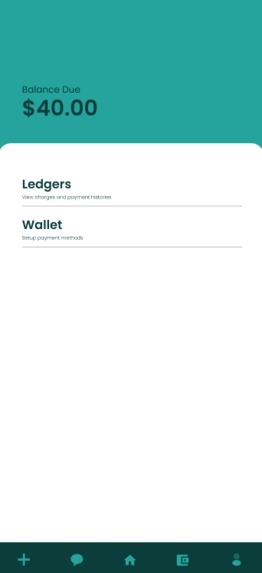
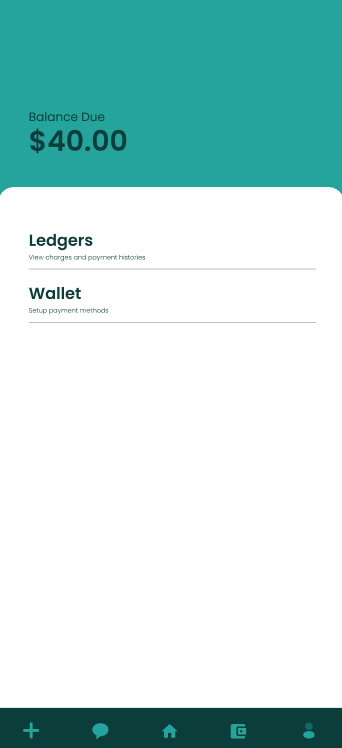
Ledger Screen
-
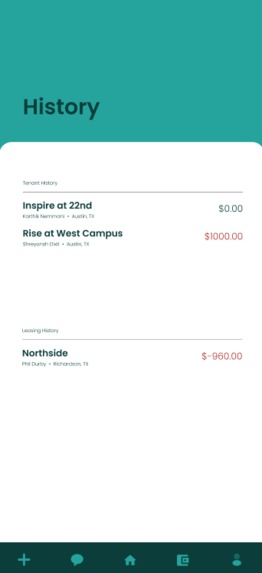
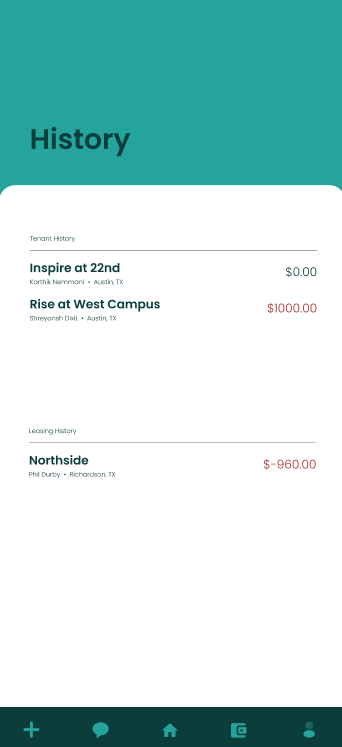
History screen
-
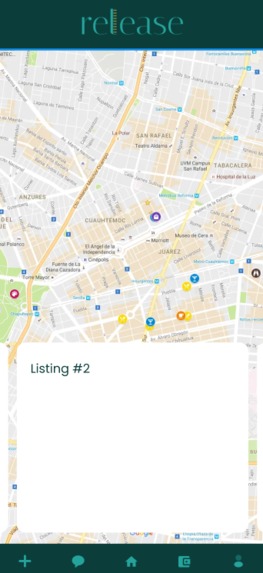
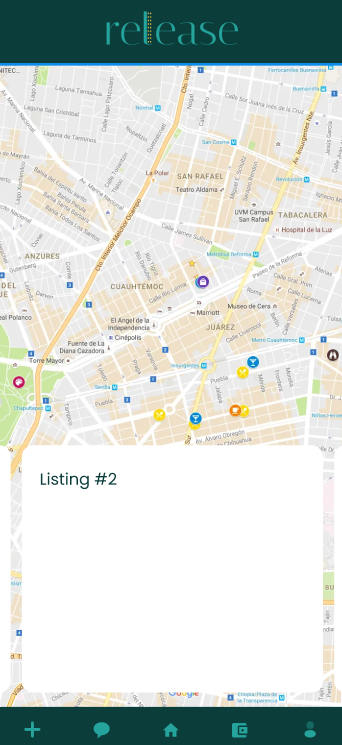
Home Screen

Inspiration
The inspiration behind our app emerged from the common challenges many of us face when seeking or offering sublease opportunities, particularly during the summer months. We recognized the need for a streamlined and efficient platform that simplifies the process of finding or listing summer subleases. Subleasing can be a daunting task, often marked by uncertainty, time-consuming searches, and complex arrangements. Our goal is to alleviate these pain points and create a user-friendly ecosystem that empowers individuals to secure housing arrangements that are not only more convenient but also cost-effective.
What it does
By bridging the gap between those looking for temporary housing solutions and those with properties to sublease, our app aspires to bring ease and affordability to the housing market, enhancing the overall summer experience for users. Whether it's a student searching for a temporary apartment near their internship location or someone looking to sublet their own space, our platform aims to provide a convenient and accessible solution for all. We envision a future where finding or offering a sublease is as simple as a few taps on a screen, making housing arrangements more desirable and financially viable for everyone involved.
How we built it
We leveraged a full tech stack that included React Native, Node.js, Figma, and Firebase. Reach Native and Figma led the development of our front-end, allowing us to build a seamless mobile application. Firebase, on the other hand, played a crucial role in providing various backend services such as authentication, databasing, and cloud storage during the app's development.
Challenges we ran into
The use of integrating APIs was very difficult. Specifically, the implementation of the Google Maps API was intensive and required a high degree of customization. In addition, linking data returned by Firebase queries was an intensive process that required a lot of attention and debugging.
Accomplishments that we're proud of
We're happy to have built out most of the front end in a day. At the same time, we built out many components of the back-end, such as parsing addresses and getting appropriate GPS coordinates.
What we learned
This project has provided us with a Real-World insight into software development. From a technical standpoint, we sharpened our skills in front-end mobile app development with React Native, and we tackled complex challenges such as implementing interactive maps with Google Maps and linking the front-end with the backend. This project also helped us improve our skills in designing a smooth user interface. Overall, this project has been a valuable learning experience, equipping us with skills and insights that can be applied to future endeavors in mobile app development.
What's next for ReLease
Next, we hope to implement advanced messaging systems as well as more functionality and filters for the profile. We hope to bring functionality that will allow users to sort by the university they want to attend.

Log in or sign up for Devpost to join the conversation.