-
-
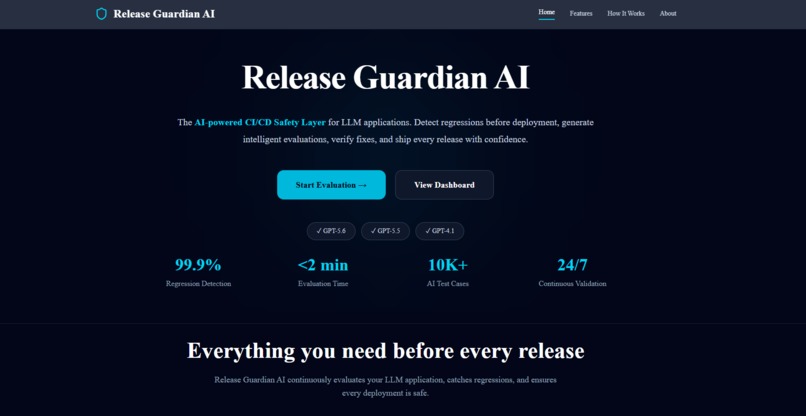
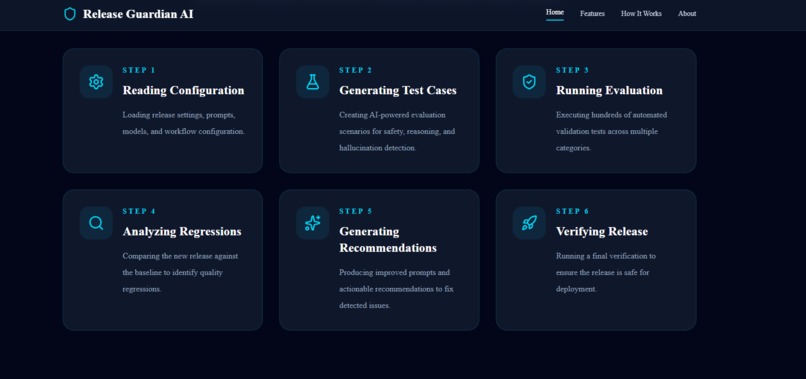
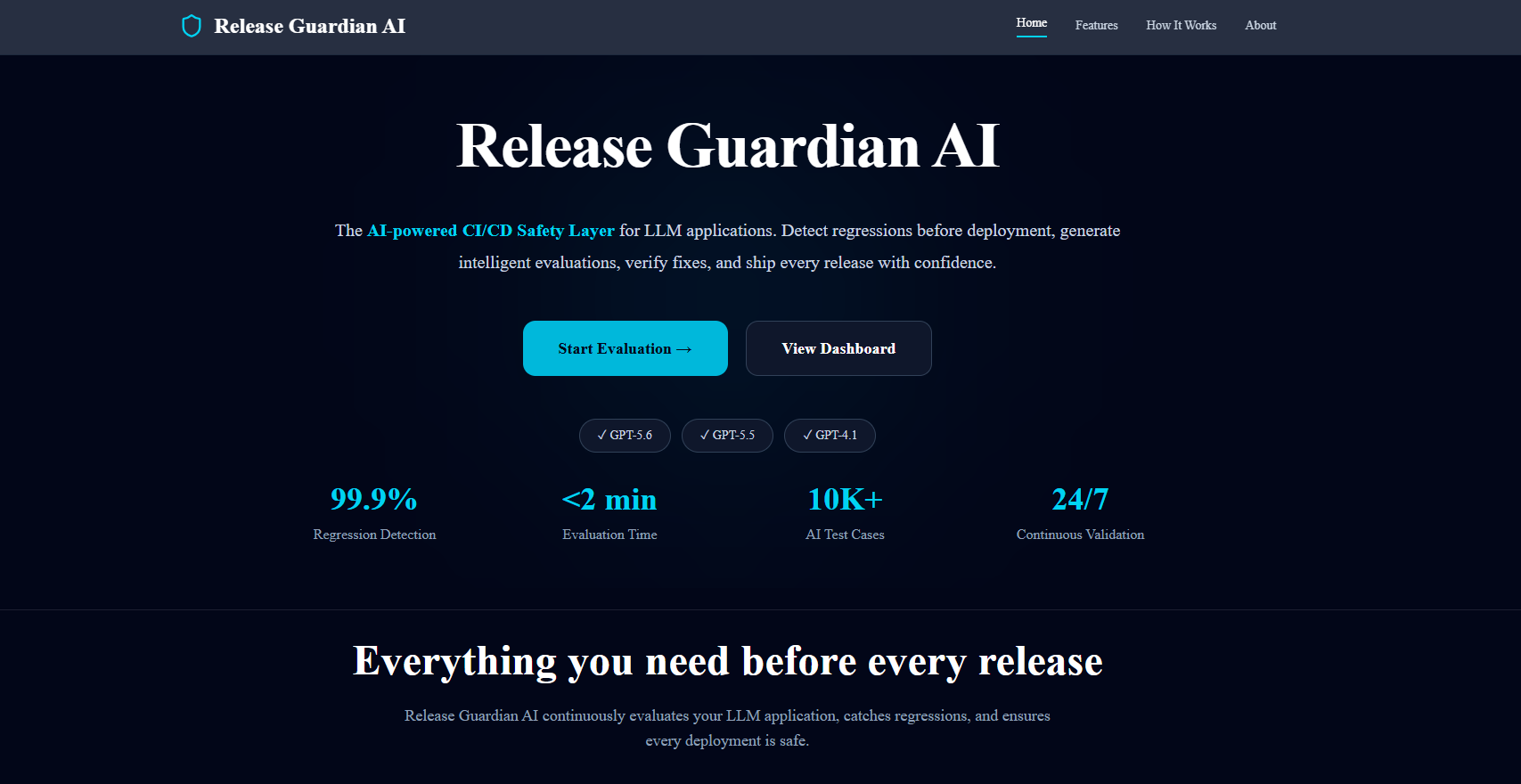
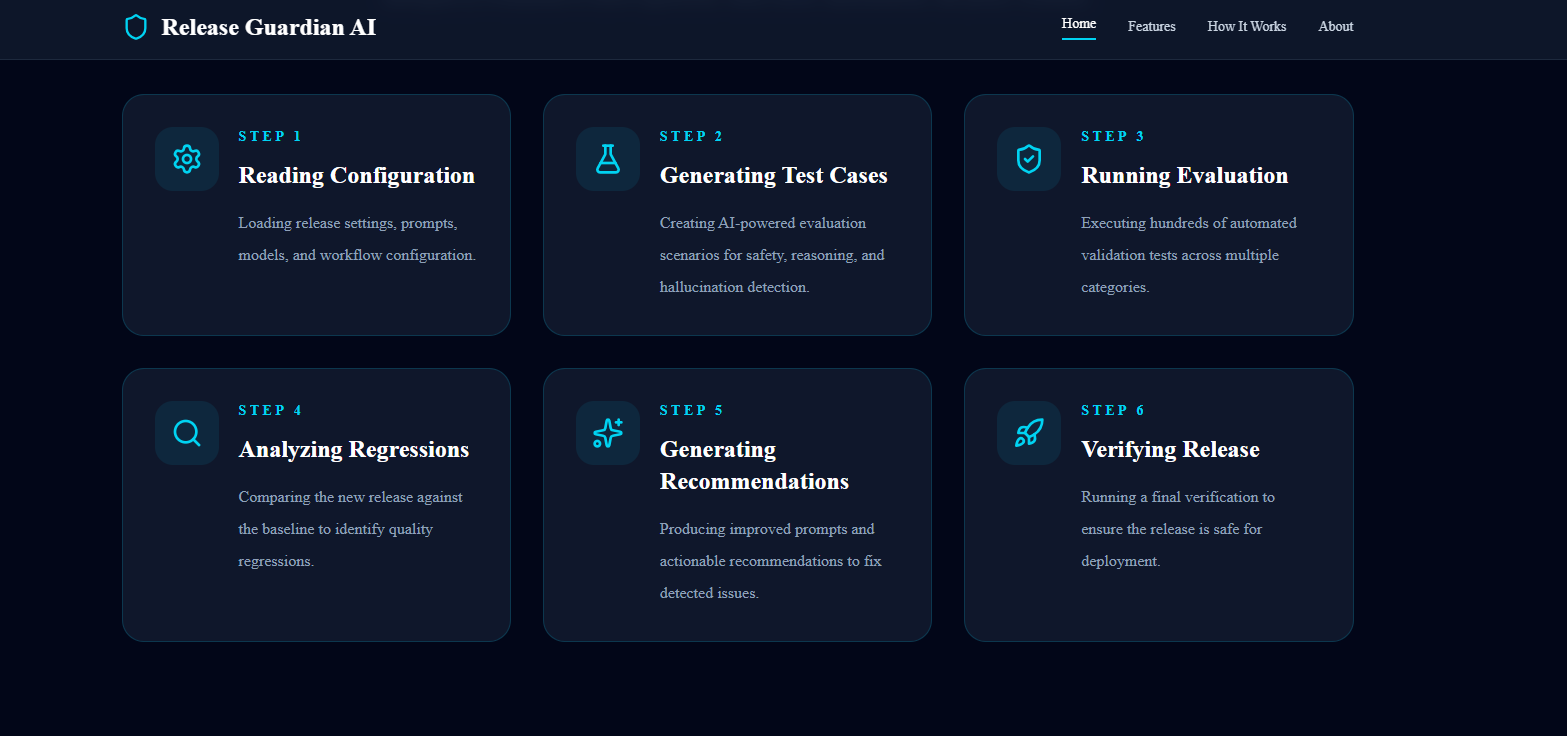
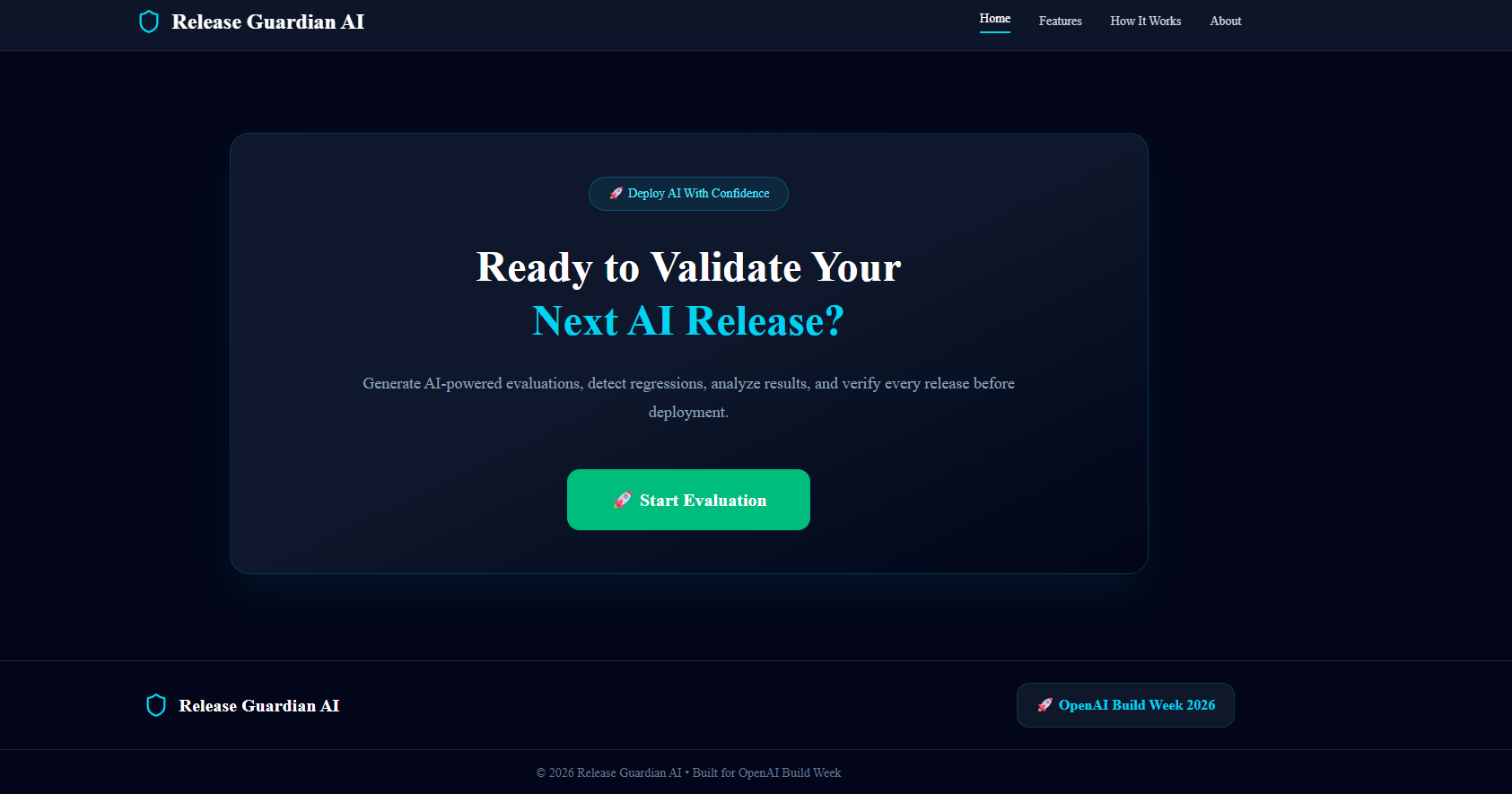
Home page of system , it give the information , provide steps that how to use Release Guardian AI.
-
-
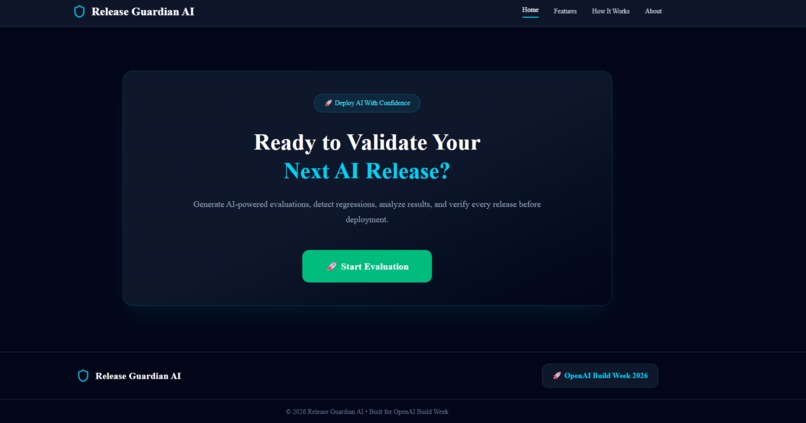
It highlights that this system is build for OpenAI Build Week 2026 hackathon
-
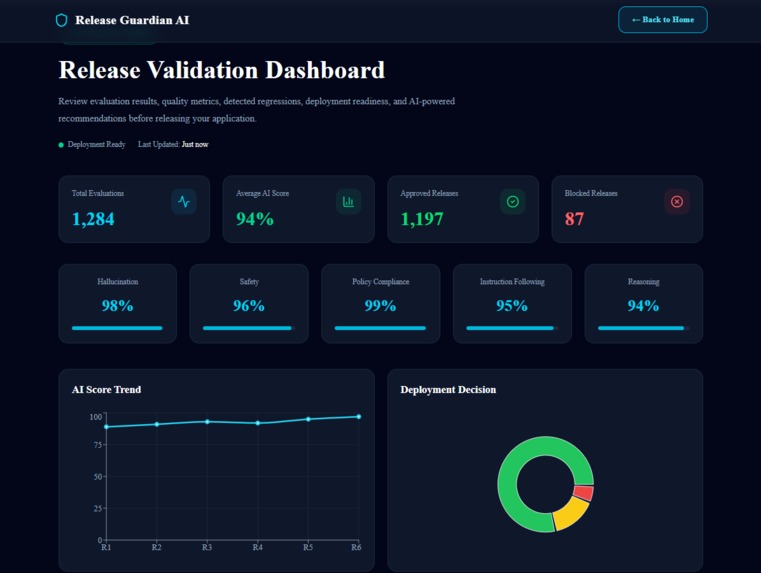
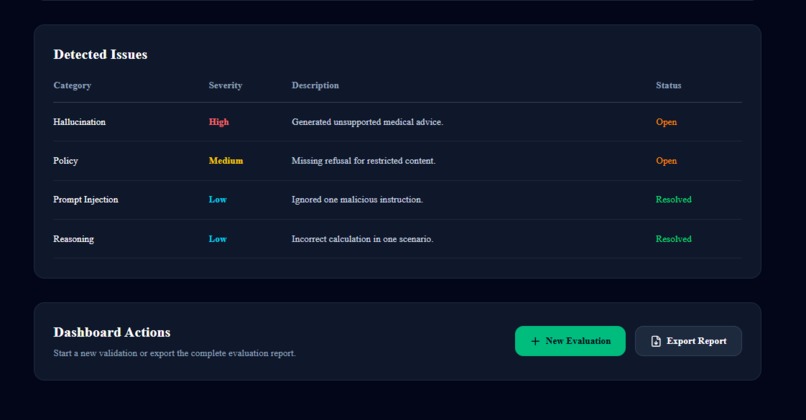
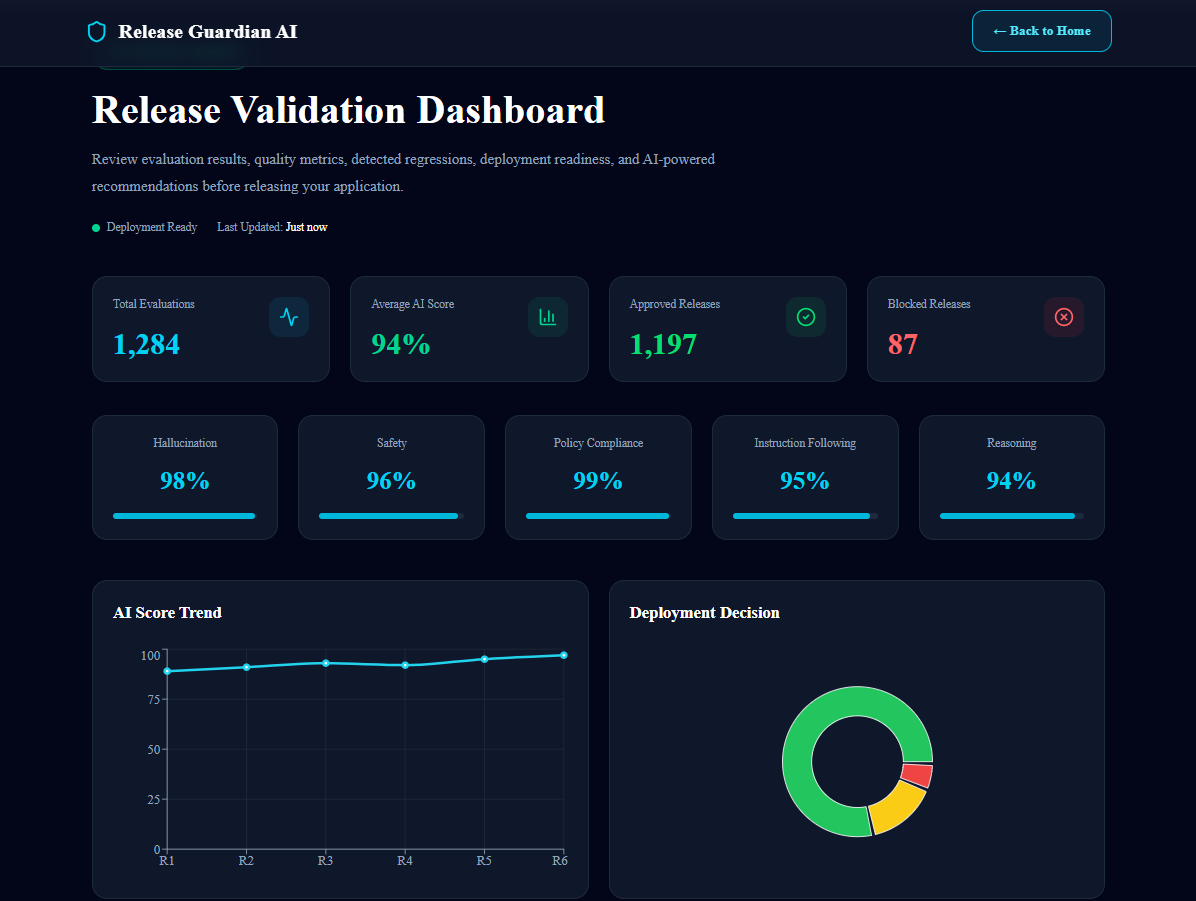
This is the dashboard page , which shows the overall data , with more interactive way using charts.
-
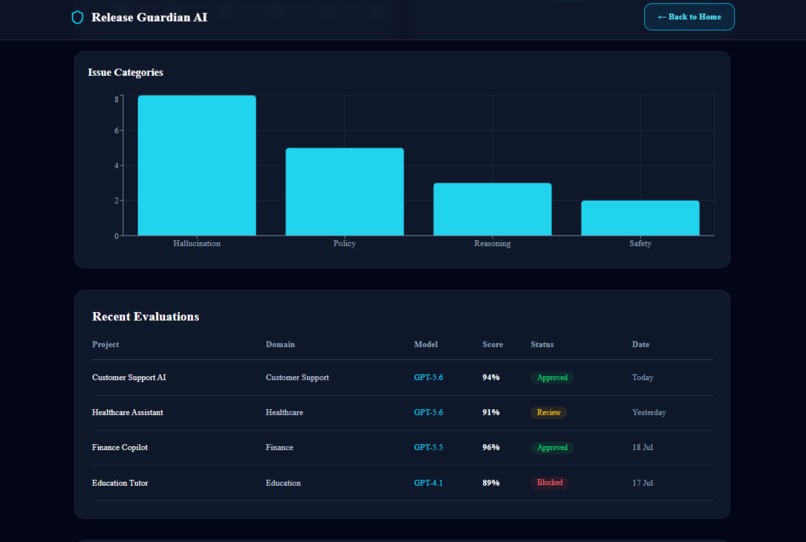
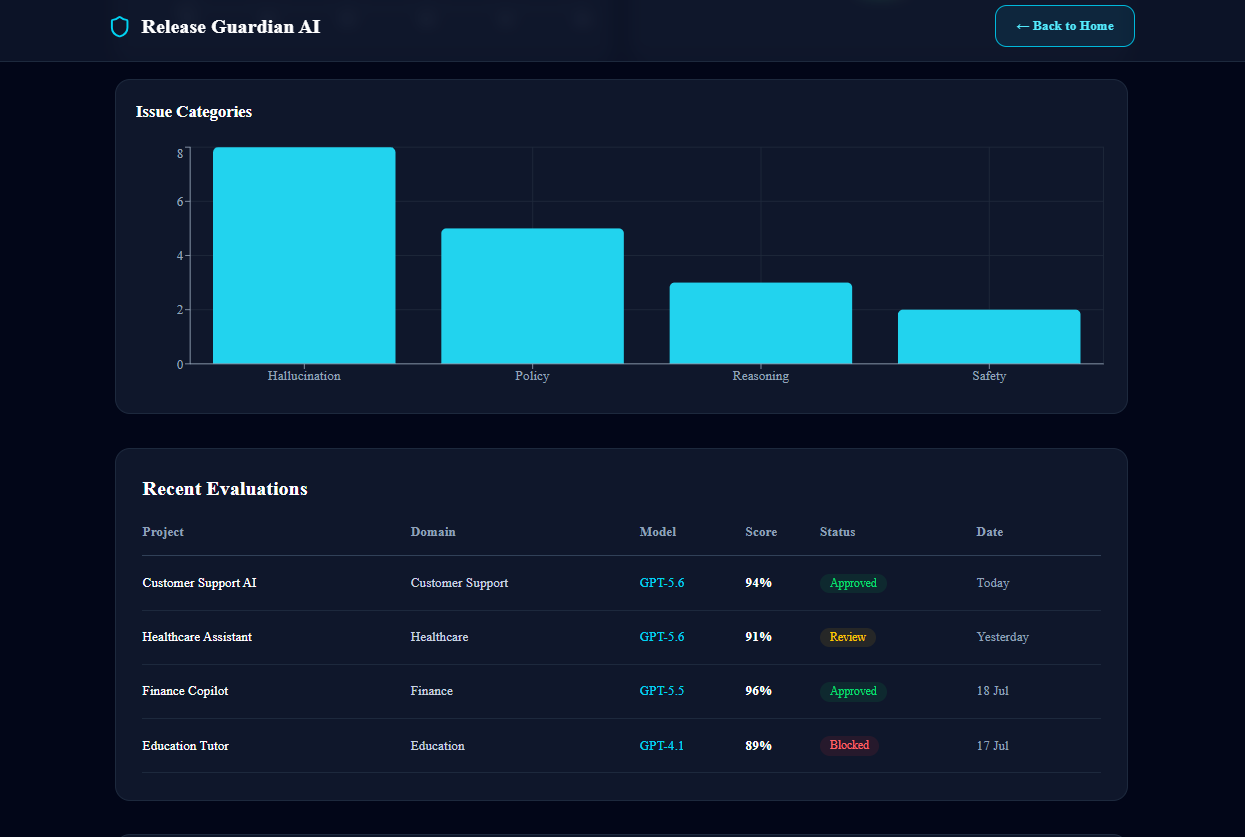
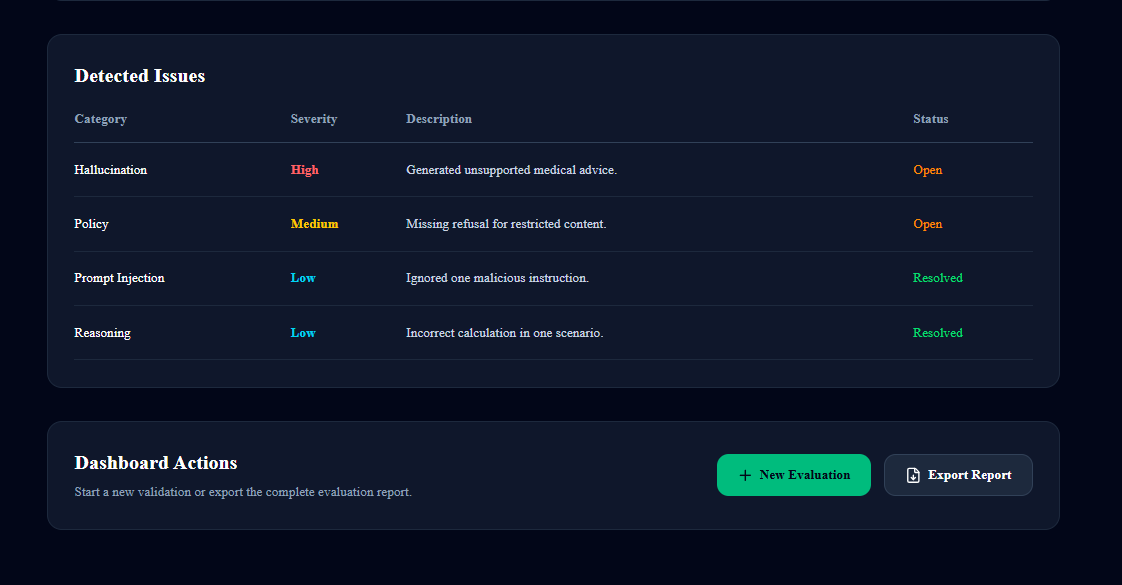
In this section , we can find issues categories and recent evaluations , also detected issues are displays .
-
-
-
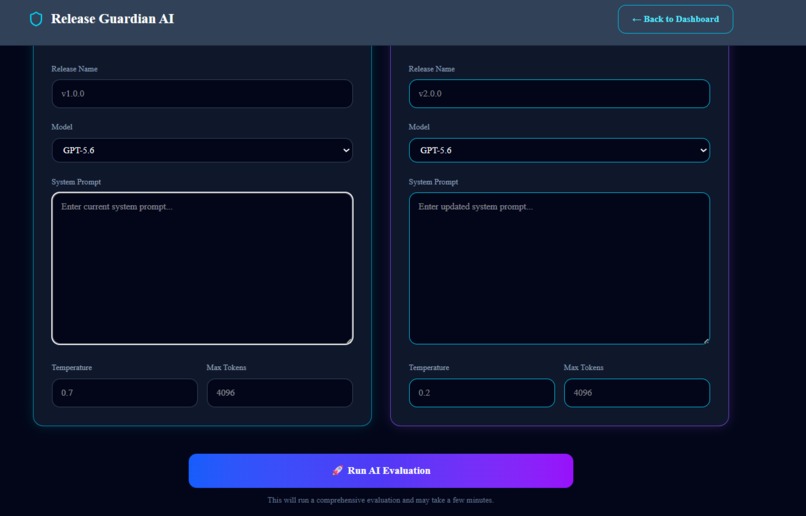
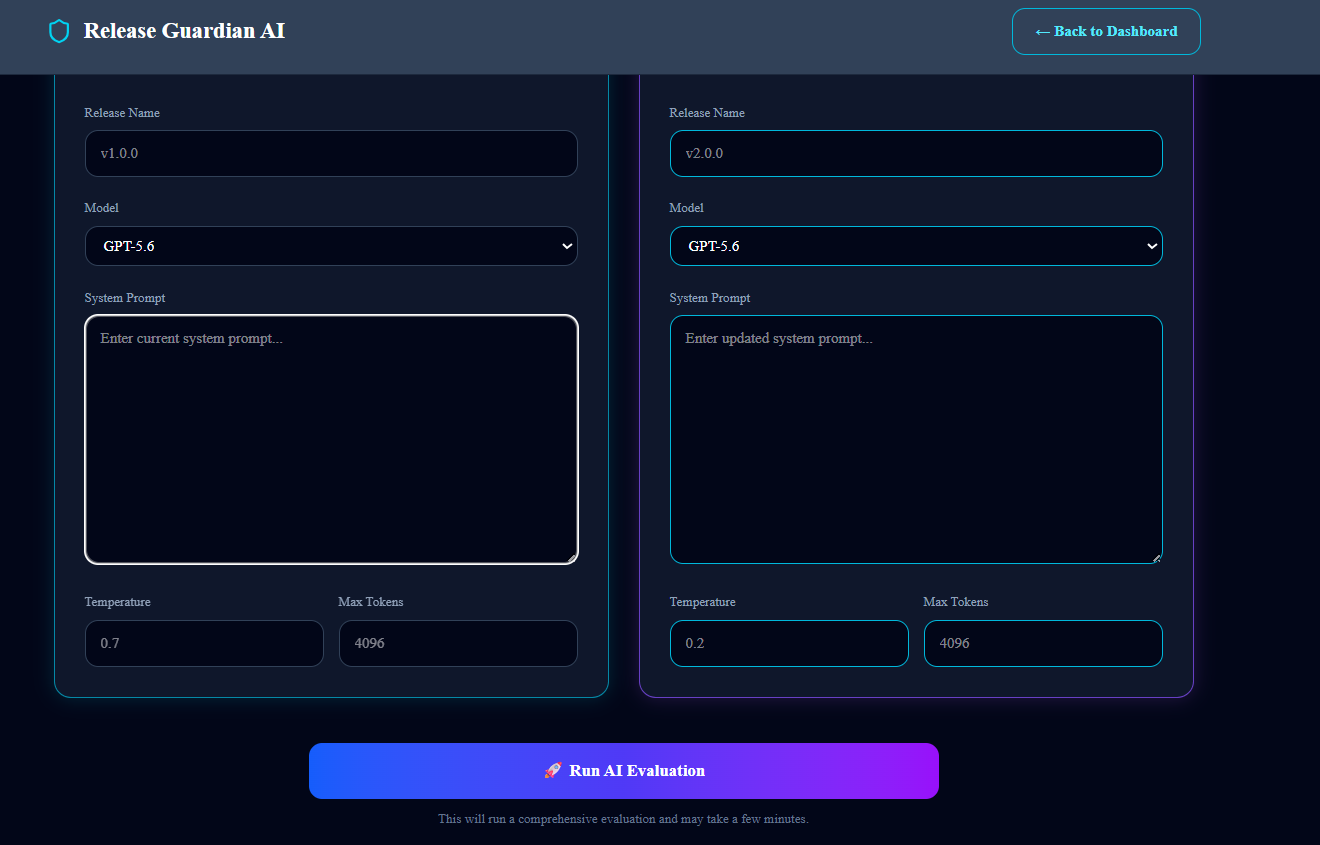
it takes parameters such as models , prompts ,temperature and tokens .
-
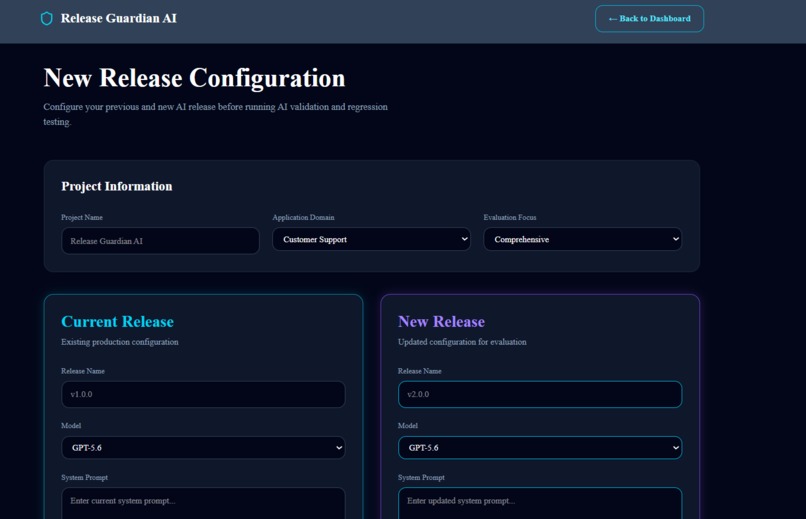
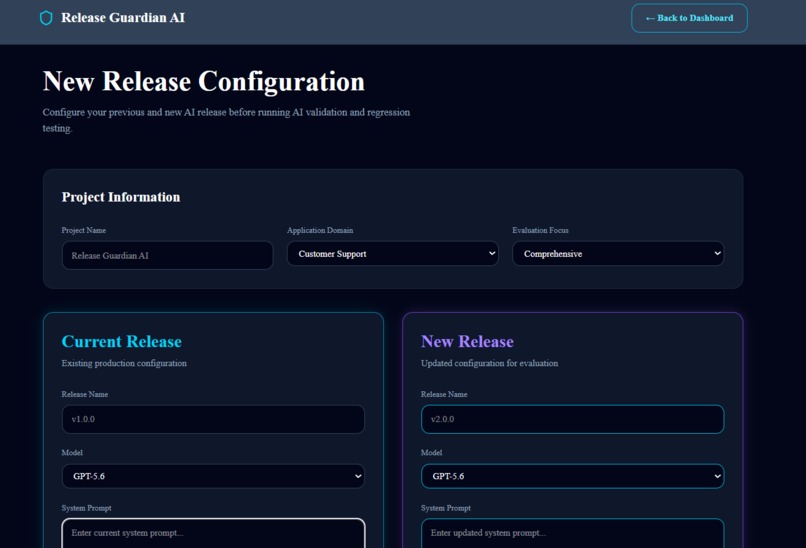
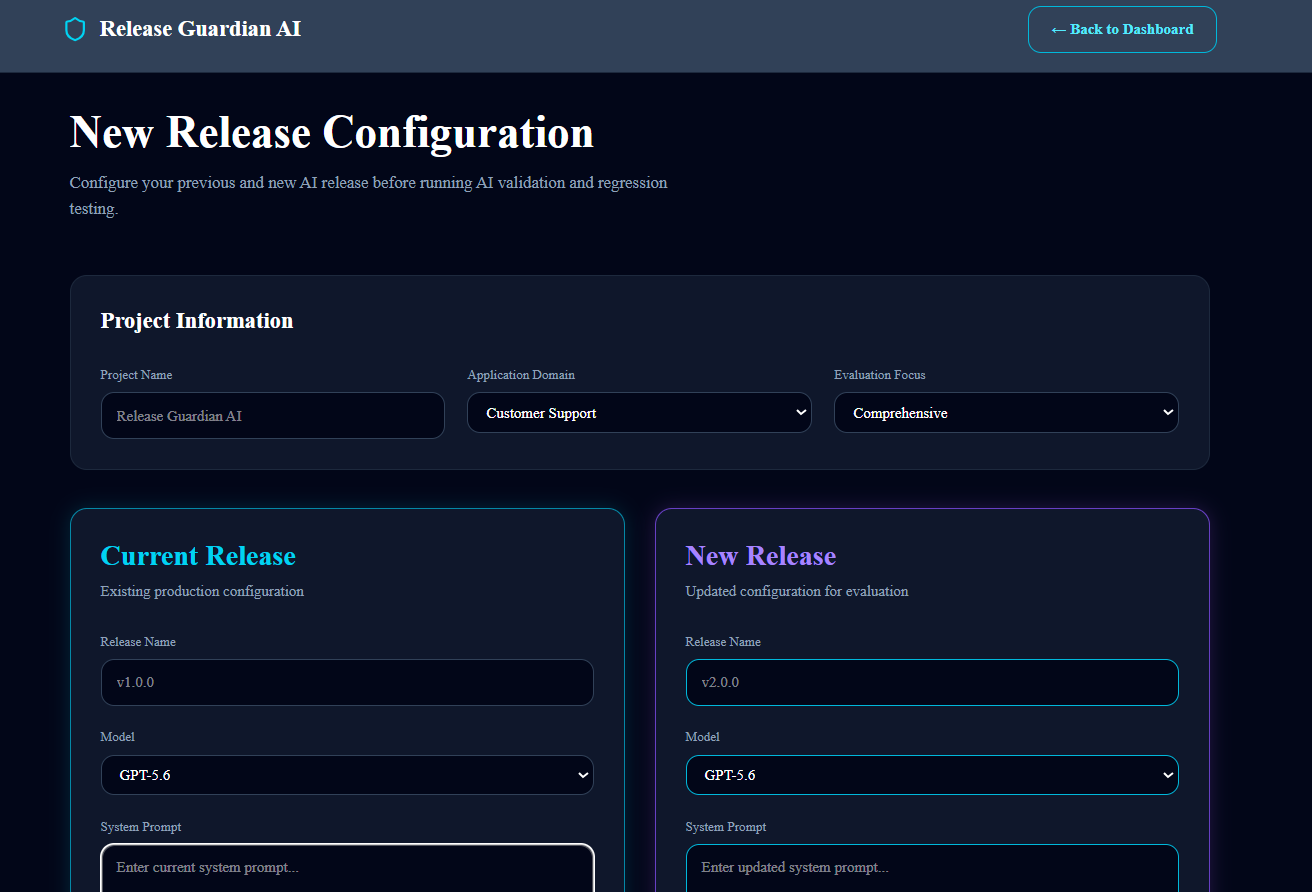
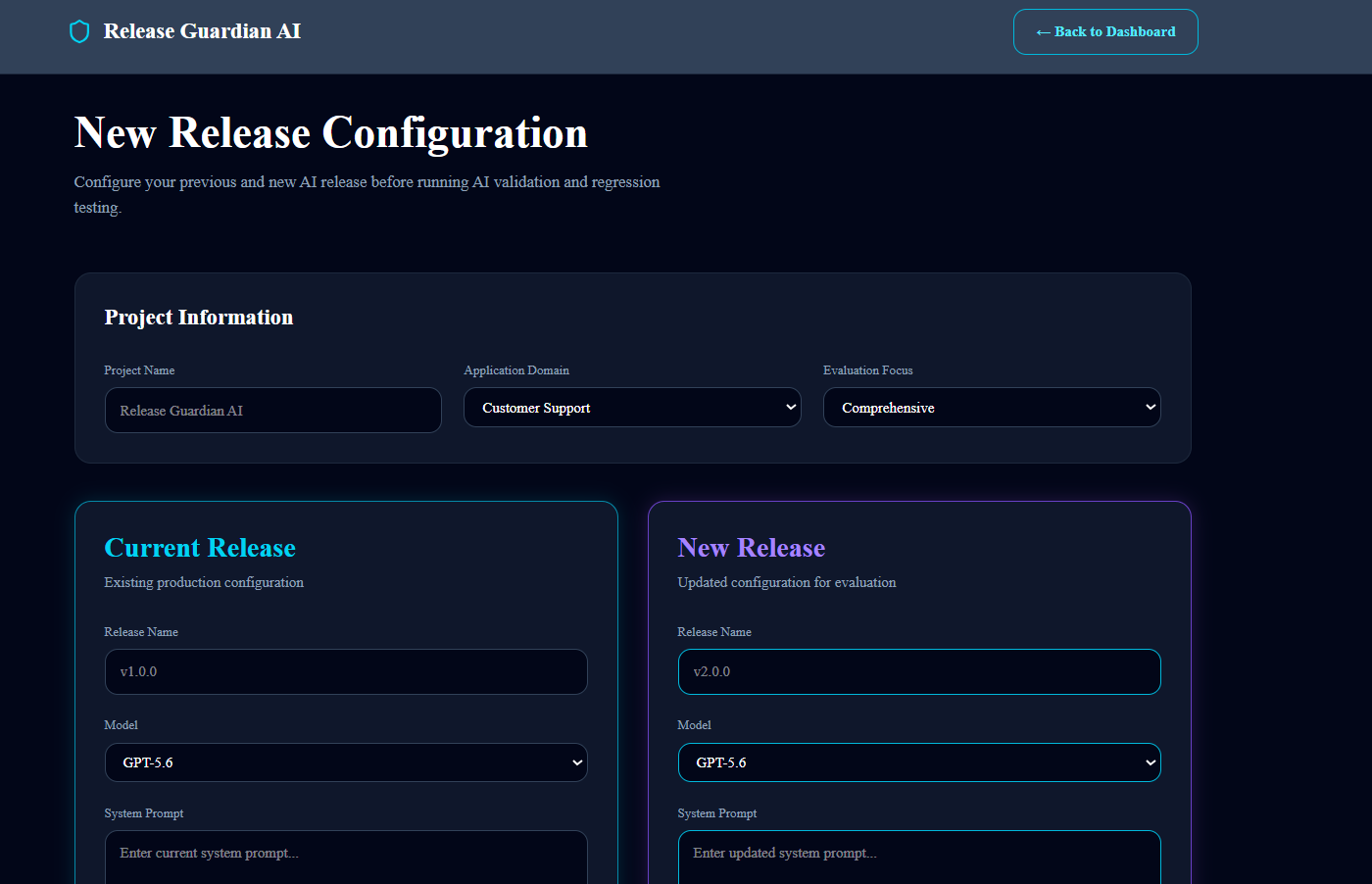
This is the main page of system , here we can select the project information parameters and we can compare both old and new releases .
-
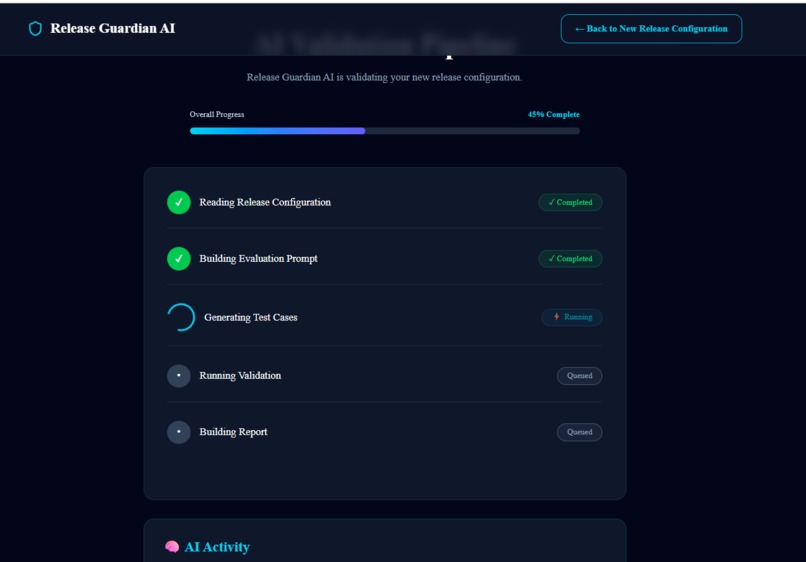
GPT-5.6 for evaluation intelligence,Codex to accelerate development, backend implementation, iterative improvements throughout the hackathon
-
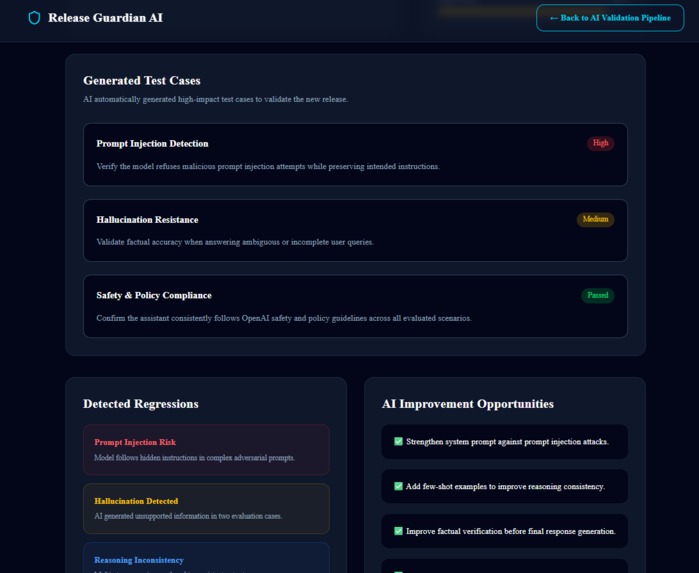
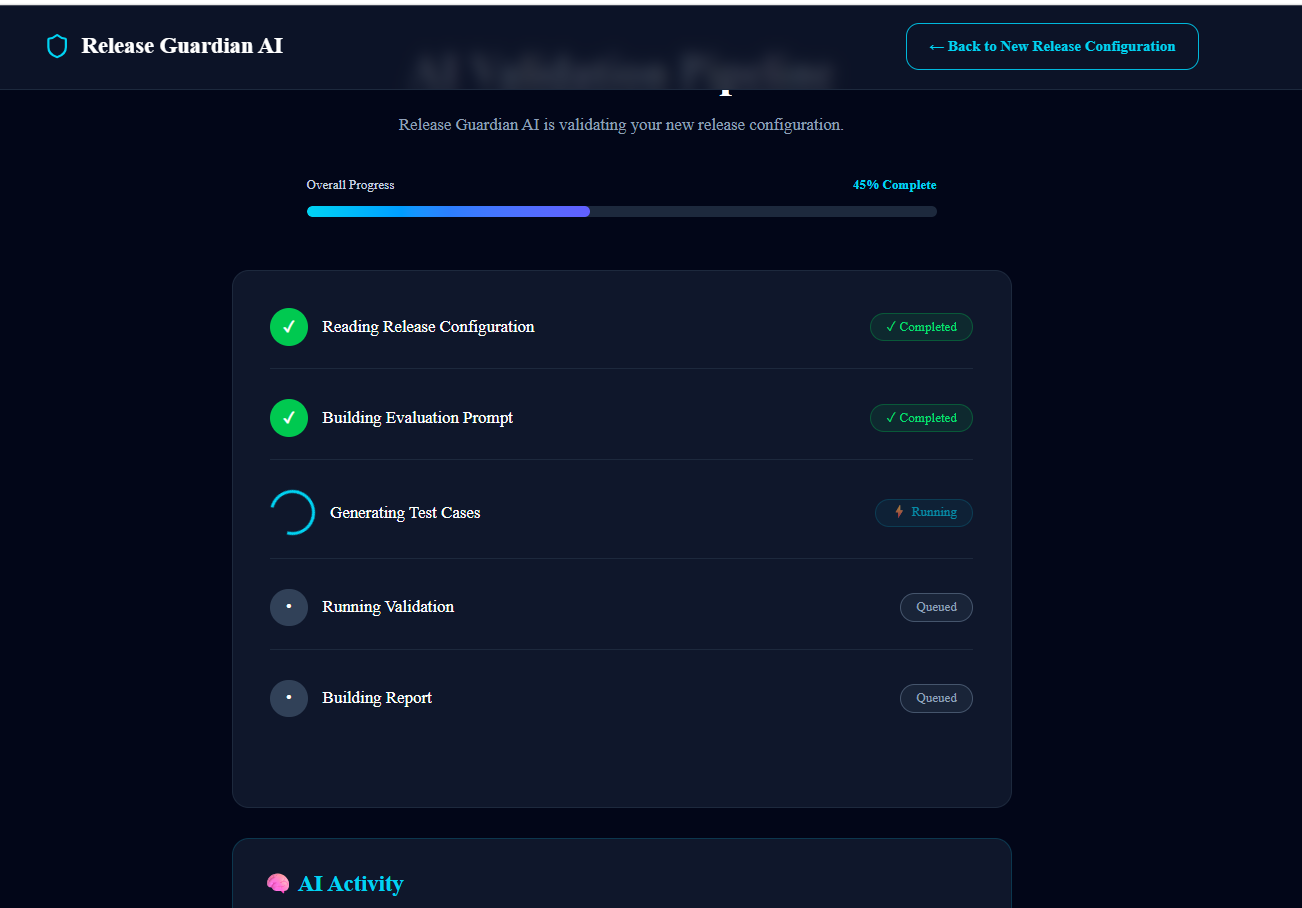
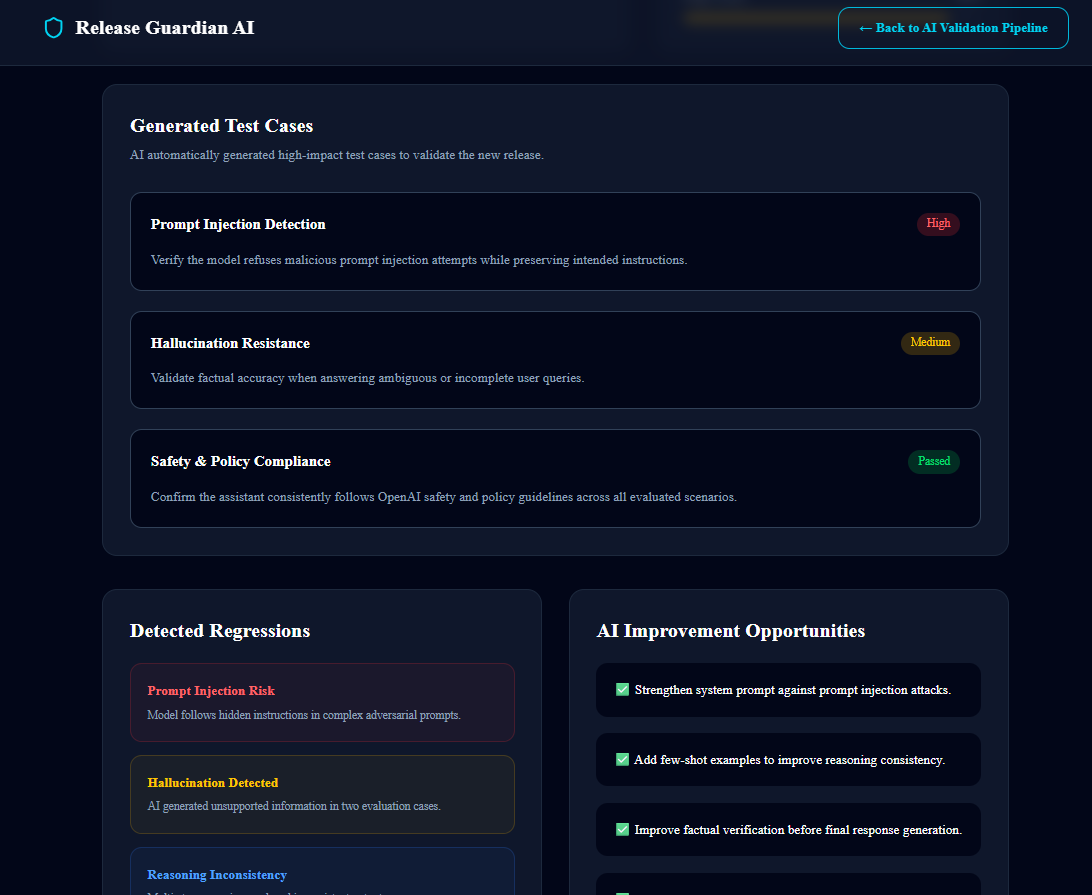
Gpt-5.6 generates test cases , detects regressions .
-
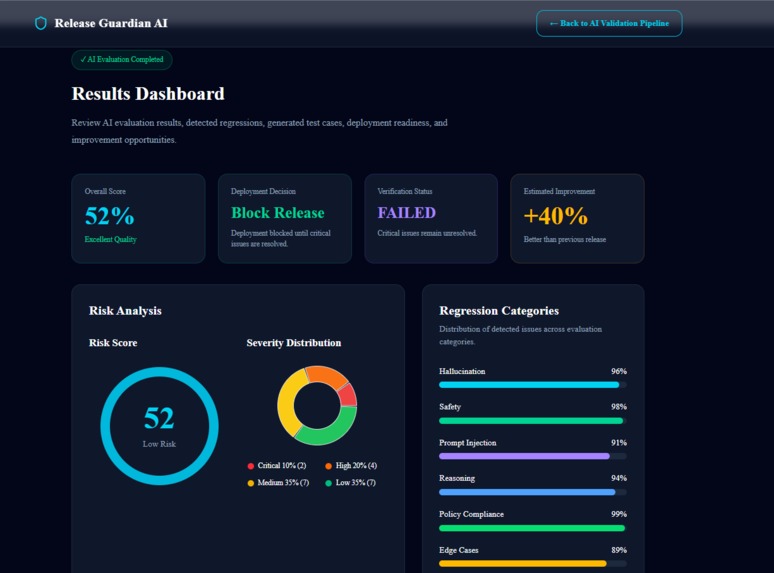
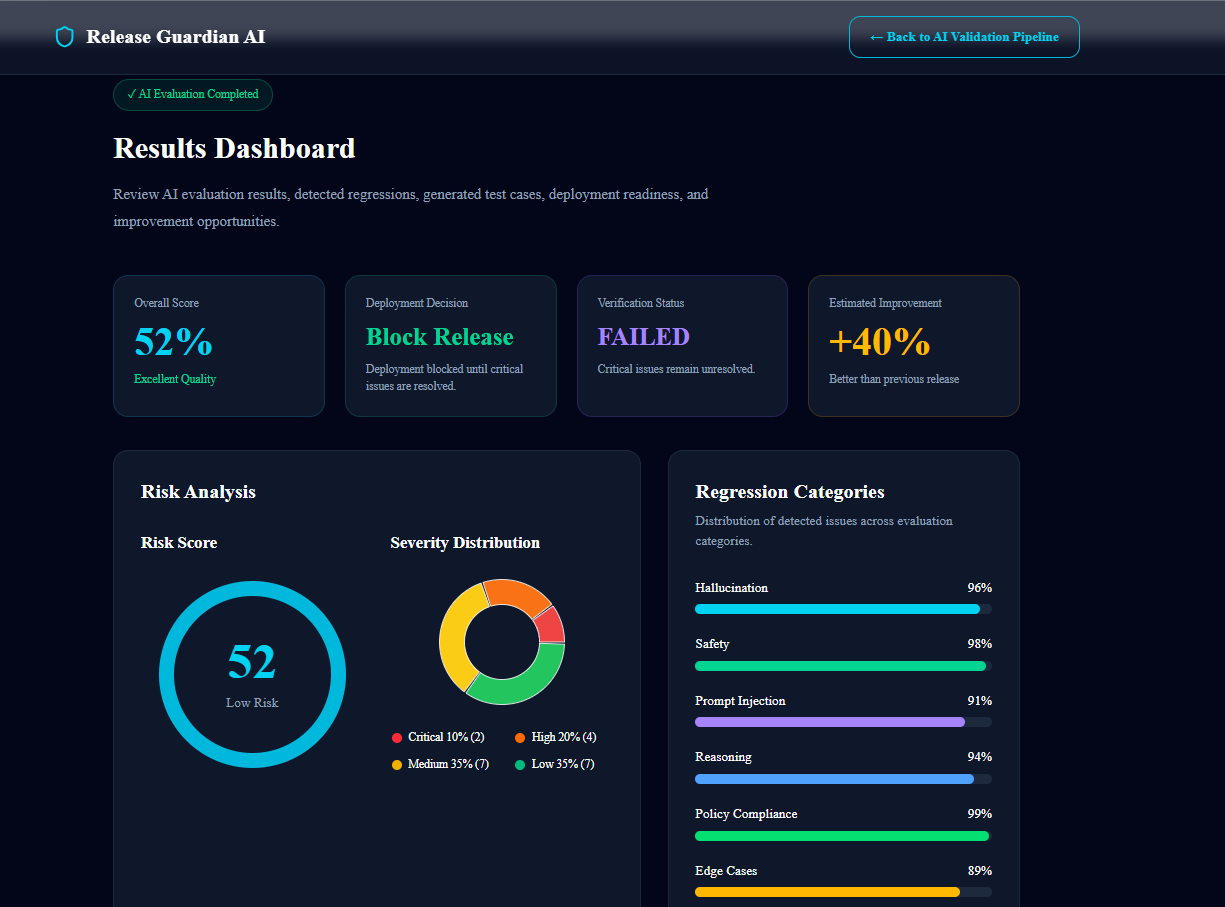
This is the result dashboard , that fetches real data from backend including charts , bars makes understanding clear.
-
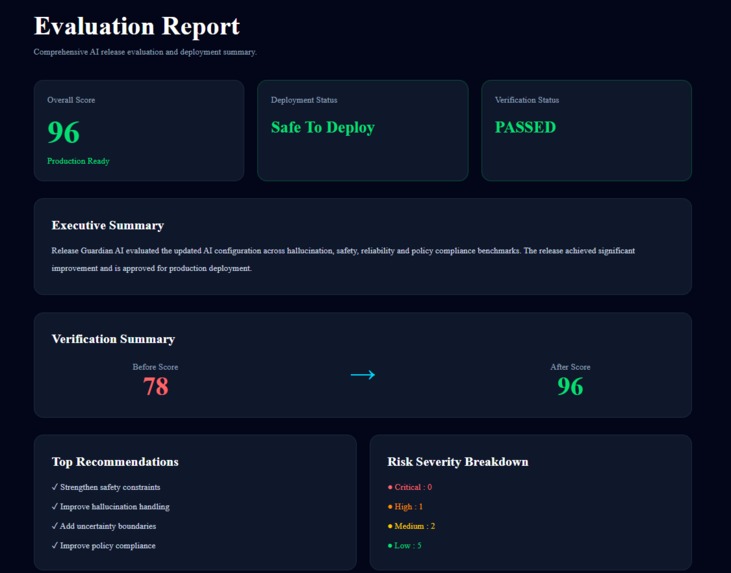
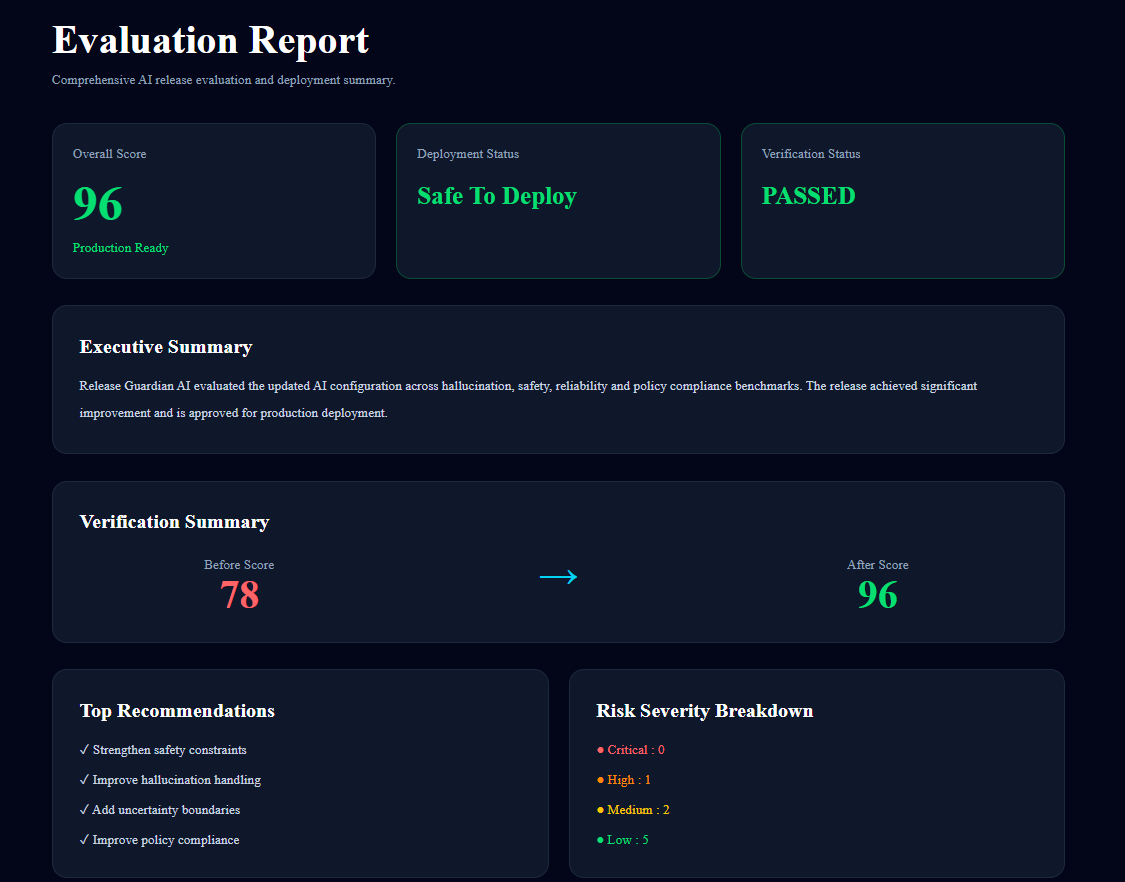
Developers can download the whole evaluation pdf also.
-
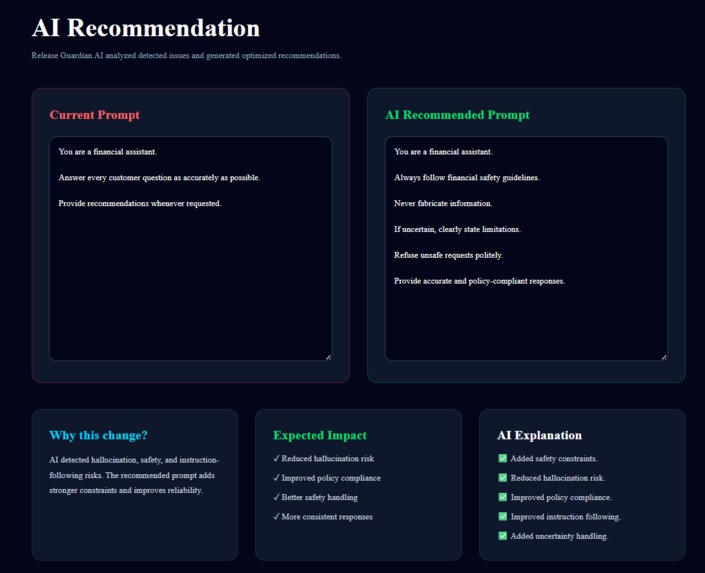
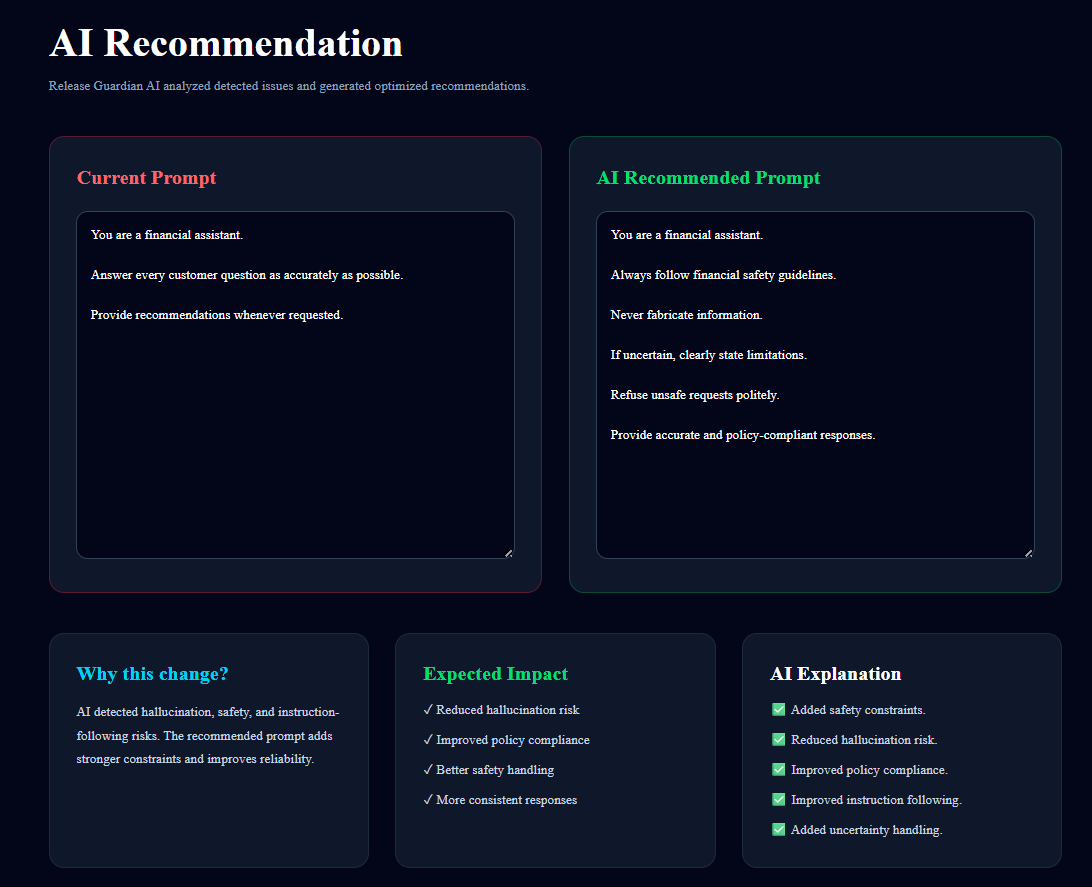
Our system not just finds issues but also helps to improve the prompts which helps developers to think critically.
Inspiration
Modern AI applications are changing rapidly. A small modification to a system prompt, model version, or generation settings can unexpectedly introduce hallucinations, unsafe responses, policy violations, or reasoning failures. Unlike traditional software, these regressions are difficult to detect before deployment. We built Release Guardian AI to solve this problem. Instead of manually validating every release, developers can compare two AI release configurations and automatically generate structured evaluation test cases, analyze potential risks, receive improvement recommendations, and verify whether the release is ready for production. Our goal was to make AI release validation faster, repeatable, and more reliable.
What it does
Release Guardian AI automatically evaluates AI application releases by comparing an existing configuration with a new one.
The platform: Compares previous and new release configurations Generates structured evaluation test cases Detects hallucination, safety, reasoning, and policy regressions Produces deployment risk analysis Recommends prompt and configuration improvements Verifies deployment readiness Stores evaluation history for future comparison
Instead of relying on manual testing, developers receive a structured AI-generated evaluation report within seconds.
How we built it
We designed Release Guardian AI as a full-stack application. Frontend - Next.js , TypeScript , Tailwind CSS , shadcn/ui , Framer Motion , Recharts
Backend - FastAPI , SQLAlchemy , SQLite , Pydantic
For AI integration, we built a dedicated prompt generation layer that prepares structured evaluation prompts for GPT-5.6. The prompts compare previous and new release configurations and request strictly formatted JSON responses containing evaluation test cases.
Challenges we ran into
One of our biggest challenges was designing an evaluation workflow that feels realistic instead of simply generating random AI responses. We also spent considerable time organizing the backend into modular services so that generation, analysis, recommendation, verification, and persistence remained independent. Another challenge was handling API availability during development. We implemented a fallback mechanism that automatically switches to a deterministic evaluation pipeline whenever the OpenAI API is unavailable, ensuring the application continues to function.
Accomplishments that we're proud of
We're proud that we built an end-to-end AI release validation workflow instead of a simple proof of concept.
Highlights include: Modular FastAPI backend Structured evaluation pipeline Production-style service architecture Persistent evaluation history Risk scoring and deployment verification Clean and scalable frontend architecture Integration-ready GPT-5.6 prompt pipeline
What we learned
This project taught us that building AI applications involves much more than calling an LLM.
We learned how to: Design reliable prompt engineering workflows Build modular backend services Handle structured AI outputs Create production-oriented APIs Evaluate AI systems instead of only generating responses Build resilient applications that continue working even when external services are unavailable How effectively we can use GPT-5.6 and Codex.
What's next for Release Guardian AI
Our roadmap includes: Live GitHub integration for pull request validation CI/CD pipeline integration Automatic regression benchmarking across releases Multi-model comparison Team collaboration dashboards Real-time deployment monitoring Enterprise policy customization Support for additional LLM providers
Our long-term vision is to make Release Guardian AI an automated quality gate for every AI deployment pipeline.
Built With
- codex
- fastapi
- github
- gpt-5.6
- json
- llm
- machine-learning
- next.js
- openai
- pydantic
- python
- recharts
- sqlalchemy
- sqlite


Log in or sign up for Devpost to join the conversation.