-
-
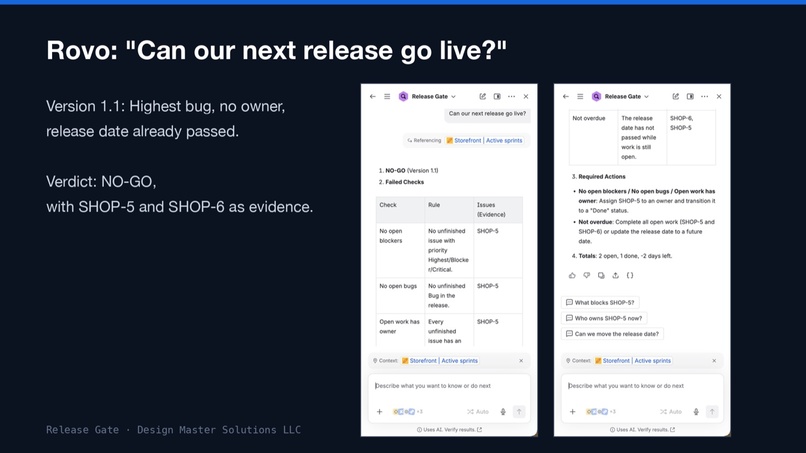
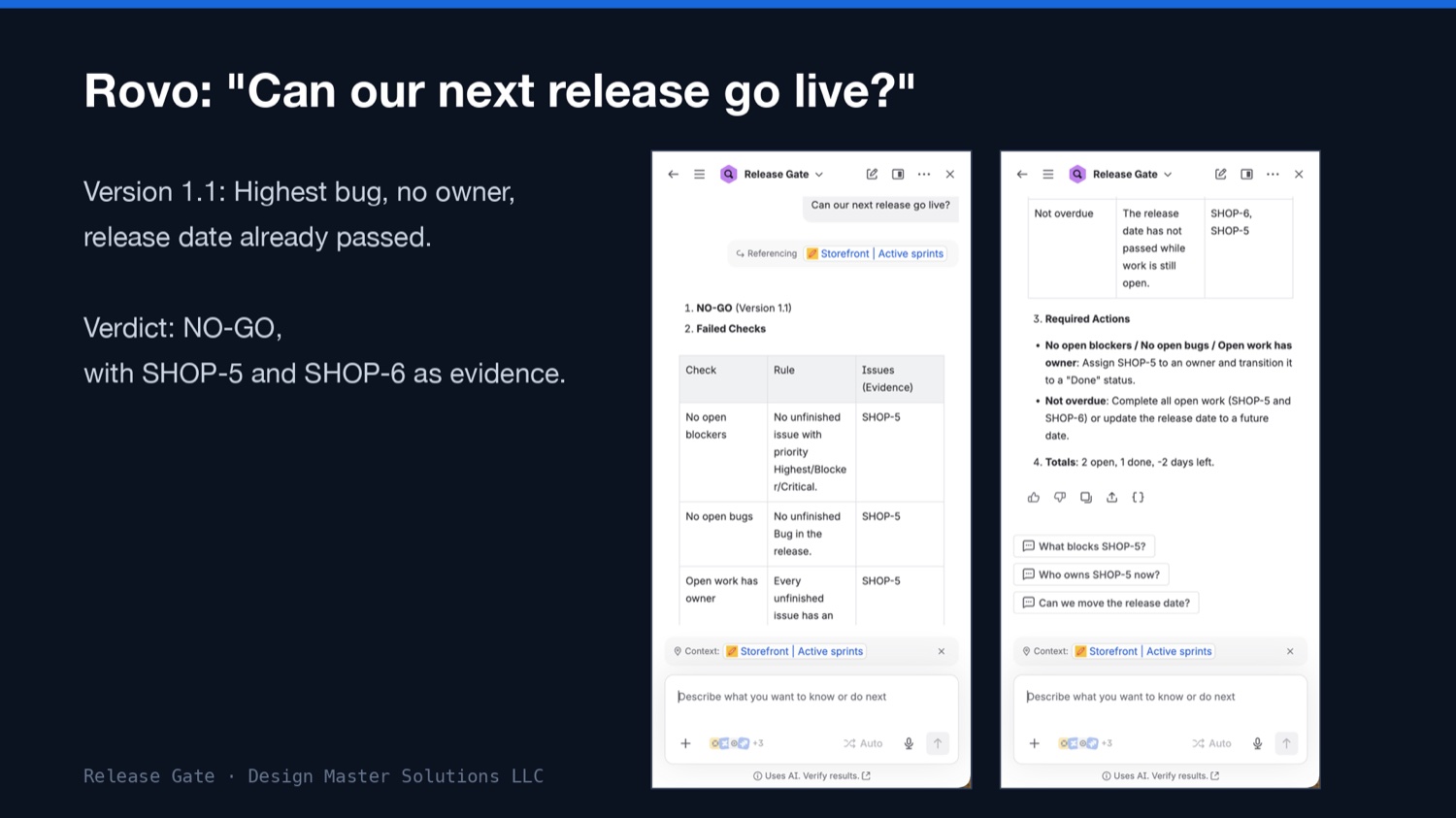
Asking Rovo in Jira whether the next release can go live: version 1.1 gets NO-GO, with SHOP-5 and SHOP-6 as the evidence
-
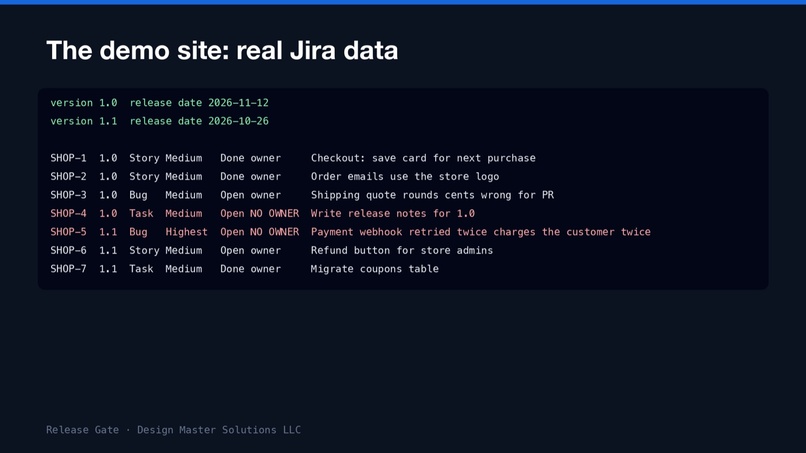
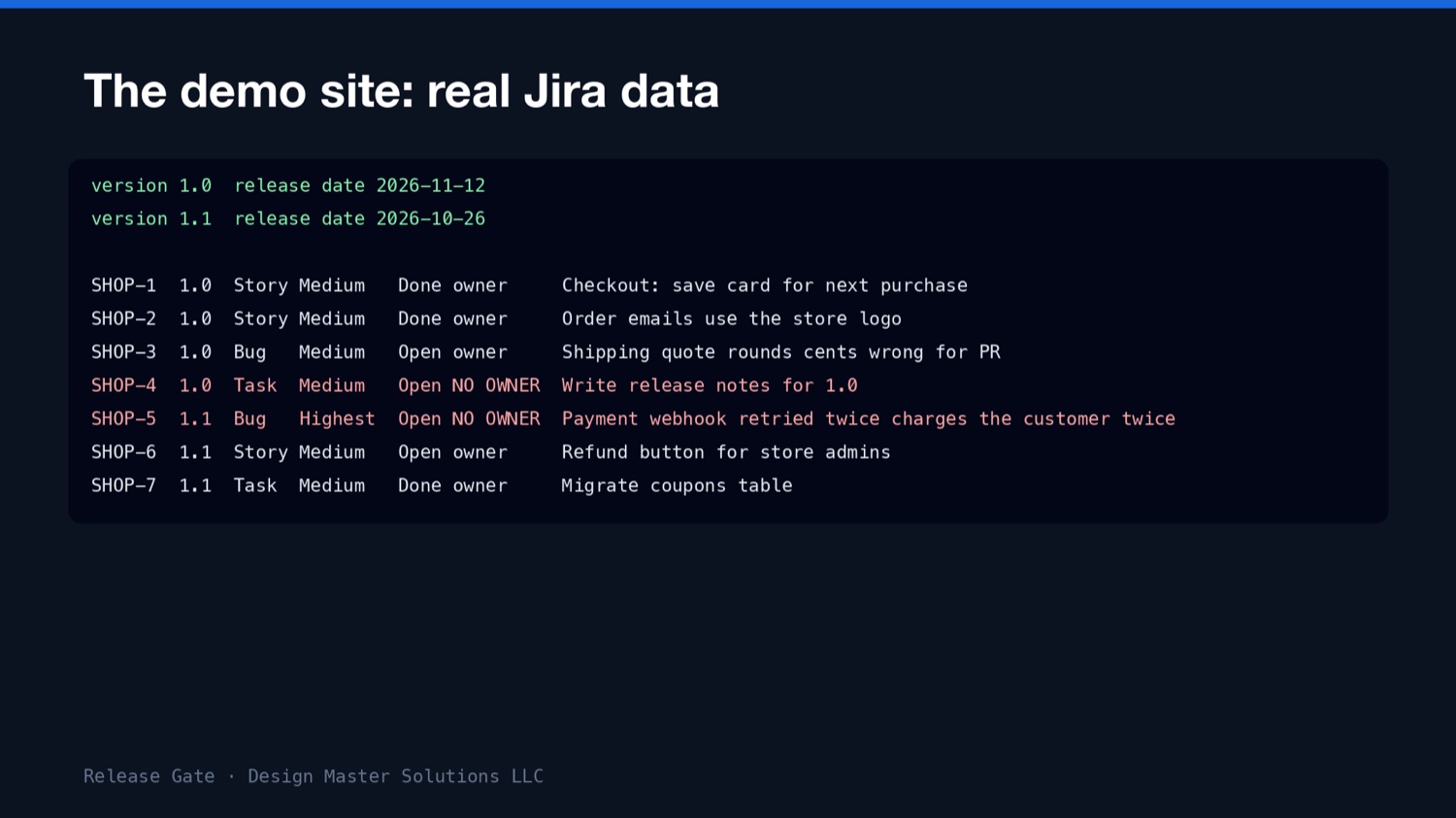
The demo Jira site behind the answers: versions 1.0 and 1.1 and their seven issues, with the unowned work in red
-
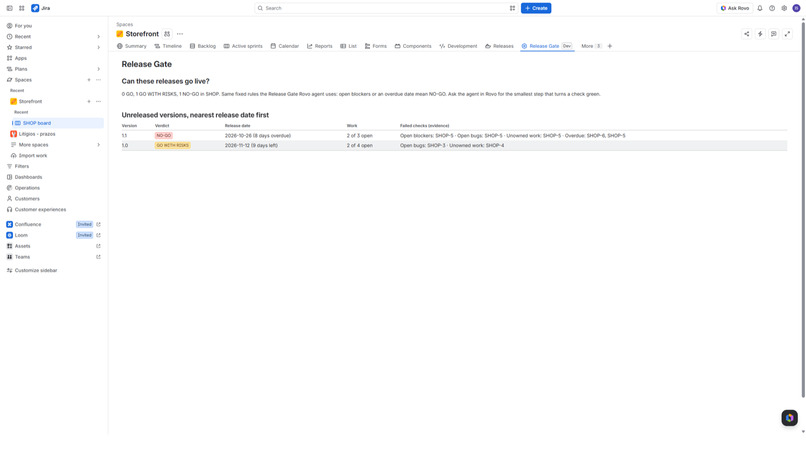
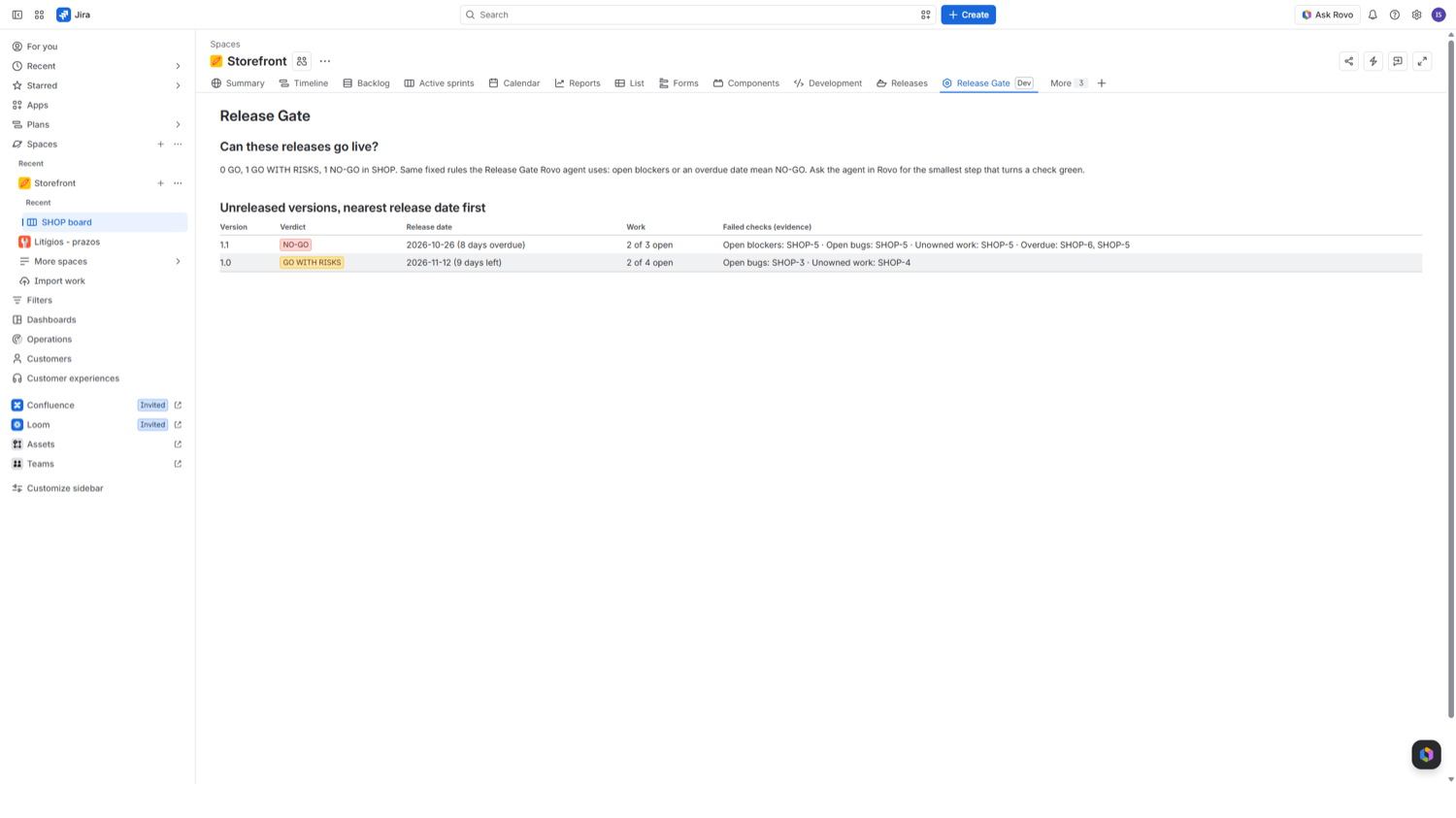
Release Gate page in the Jira project sidebar: each unreleased version with its verdict, date and the issues behind each failed check
Inspiration
Go-live calls are made from memory in a meeting. A Highest bug with no owner hides inside a version, the release date passed last week and nobody moved it, and an AI summary that counts issues by itself can be confidently wrong. We wanted the same answer every time for the same issues.
What it does
Ask Rovo "Can our next release go live?" or "What is blocking version 1.0?". The Release Gate agent calls one action, check-release, which reads the version and its issues from Jira and runs six fixed checks: no open blockers (Highest/Blocker/Critical) and not overdue (NO-GO), no open bugs, open work has an owner, done issues have a resolution, the version has a release date (risks). The answer is GO, GO WITH RISKS or NO-GO, a table of failed checks with the issue keys as evidence, the smallest action that turns each check green, and totals (open, done, days left). Ask "Which of our upcoming releases are ready?" and the second action, check-all-releases, runs the same checks on every unreleased version (nearest release date first) and answers with one table and the totals: how many GO, GO WITH RISKS and NO-GO, and which version needs attention first. Teams that do not use Rovo get the same table as a Release Gate page in the project sidebar: every upcoming version with a GO / GO WITH RISKS / NO-GO lozenge, the release date with days left or overdue, the open work, and the failed checks with their issue keys.
How we built it
Forge app with a rovo:agent module and two rovo actions backed by Forge functions (Node). The functions use the Jira REST API through api.asUser() with only read:jira-work. The rules are a pure module with unit tests. The agent prompt forbids stating any count, key or date that is not in the action result, so the model explains and never computes. The project page is a UI Kit jira:projectPage whose resolver calls the same check-all-releases function as the agent, so the page and the agent cannot disagree.
Challenges we ran into
Status names are not portable: our demo site was created in Portuguese, so "Done" came back as "Concluído". The rules read the status category (new, indeterminate, done) instead of names, so they work on any workflow and language. "Overdue" also needed care: a passed release date only blocks while work is still open, and a test covers both sides.
Accomplishments that we're proud of
Same issues in, same verdict out. On the demo site, version 1.0 is GO WITH RISKS (SHOP-3 open bug, SHOP-4 without owner) and 1.1 is NO-GO (SHOP-5 Highest bug without owner, release date passed), and a test checks the seeded plan gives exactly those verdicts.
What we learned
Rovo agents are best when the action does the deciding and the model does the explaining.
What's next for Release Gate
Configurable rules per project, a Confluence release checklist page, and a Jira automation that posts the verdict to the version on demand.
Testing instructions
Install with the link in the submission on a Jira Cloud site with Rovo. Seed the demo data from the repo: JIRA_SITE=https://<site>.atlassian.net JIRA_EMAIL=<you> JIRA_TOKEN=<api token> node scripts/seed-demo.mjs <PROJECT KEY>. In Jira open Ask Rovo, change the agent to Release Gate, and ask "What is blocking version 1.0?" and "Can our next release go live?". Without Rovo: open the project, choose Release Gate under Apps in the sidebar, and the page lists every unreleased version with its verdict and evidence. No configuration or external accounts: the app only reads Jira.
