Inspiration
ReLeaf was born from the growing realization that while climate change is a global problem, the world still lacks a unified, citizen-powered, verifiable platform that turns everyday eco-conscious actions into measurable, visible impact. We were inspired by the fragmented nature of sustainability efforts and wanted to build something that connects individual efforts into a collective force — a living digital ecosystem where every action, no matter how small, contributes to a greener planet. The emotional weight of environmental anxiety and the lack of agency in the average citizen's experience further fueled our determination to build a solution that empowers people with immediate feedback, reward, and connection.
What it does
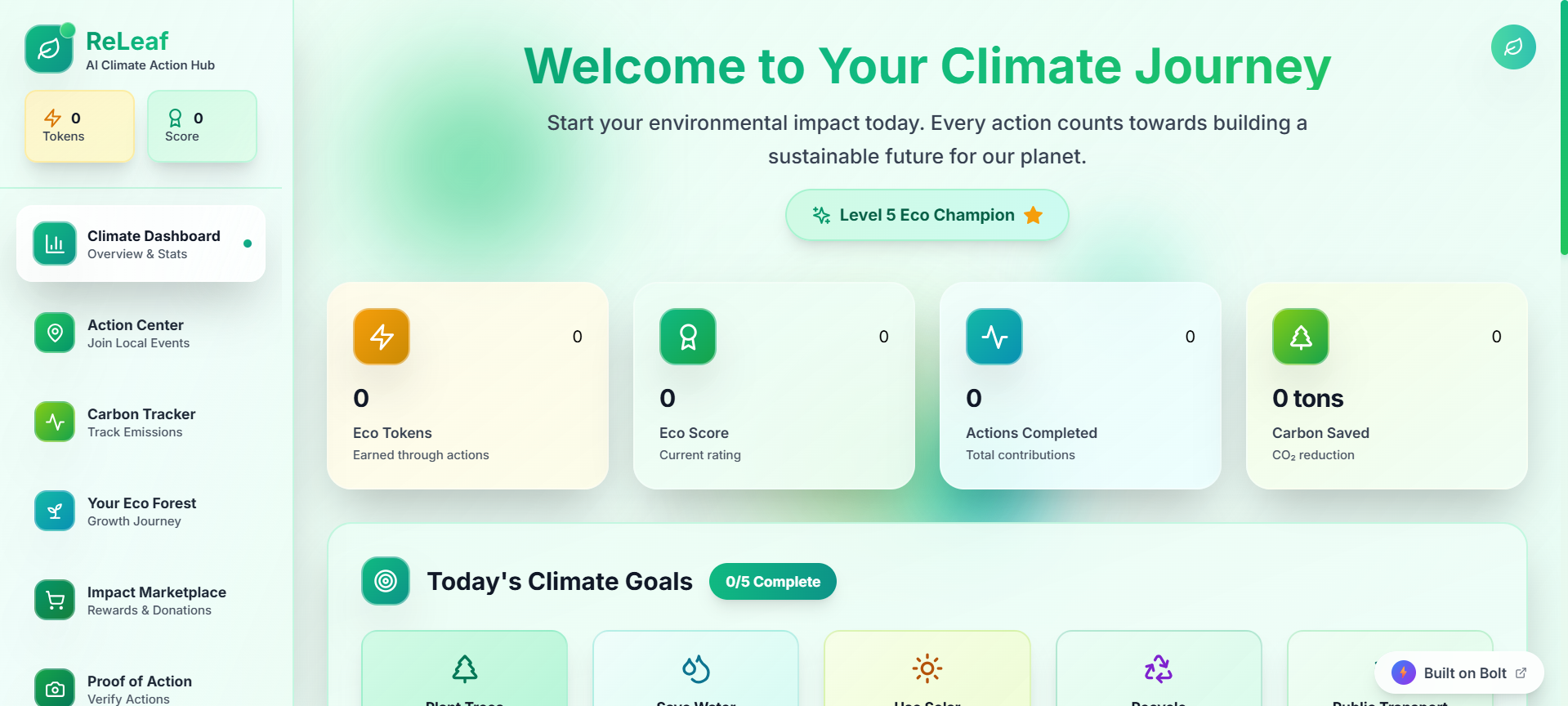
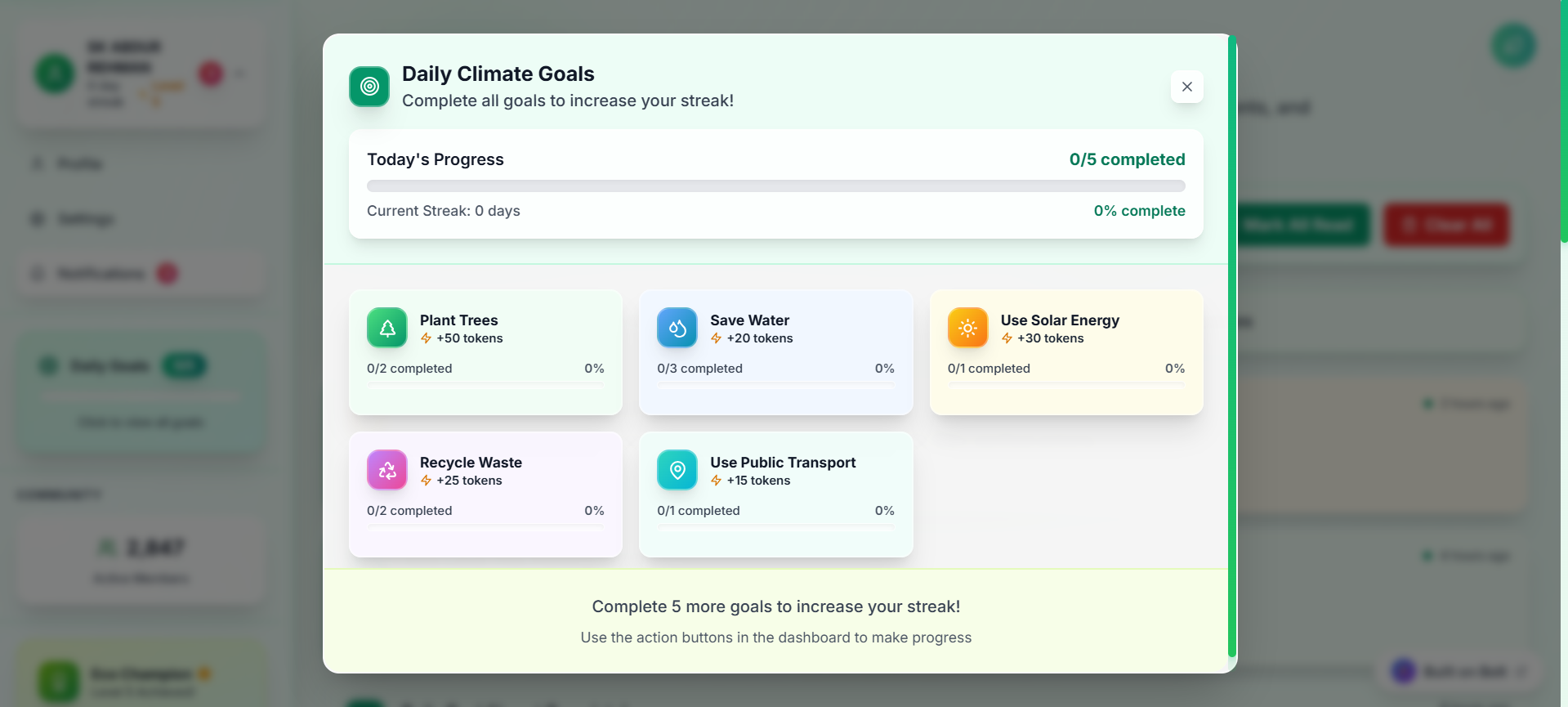
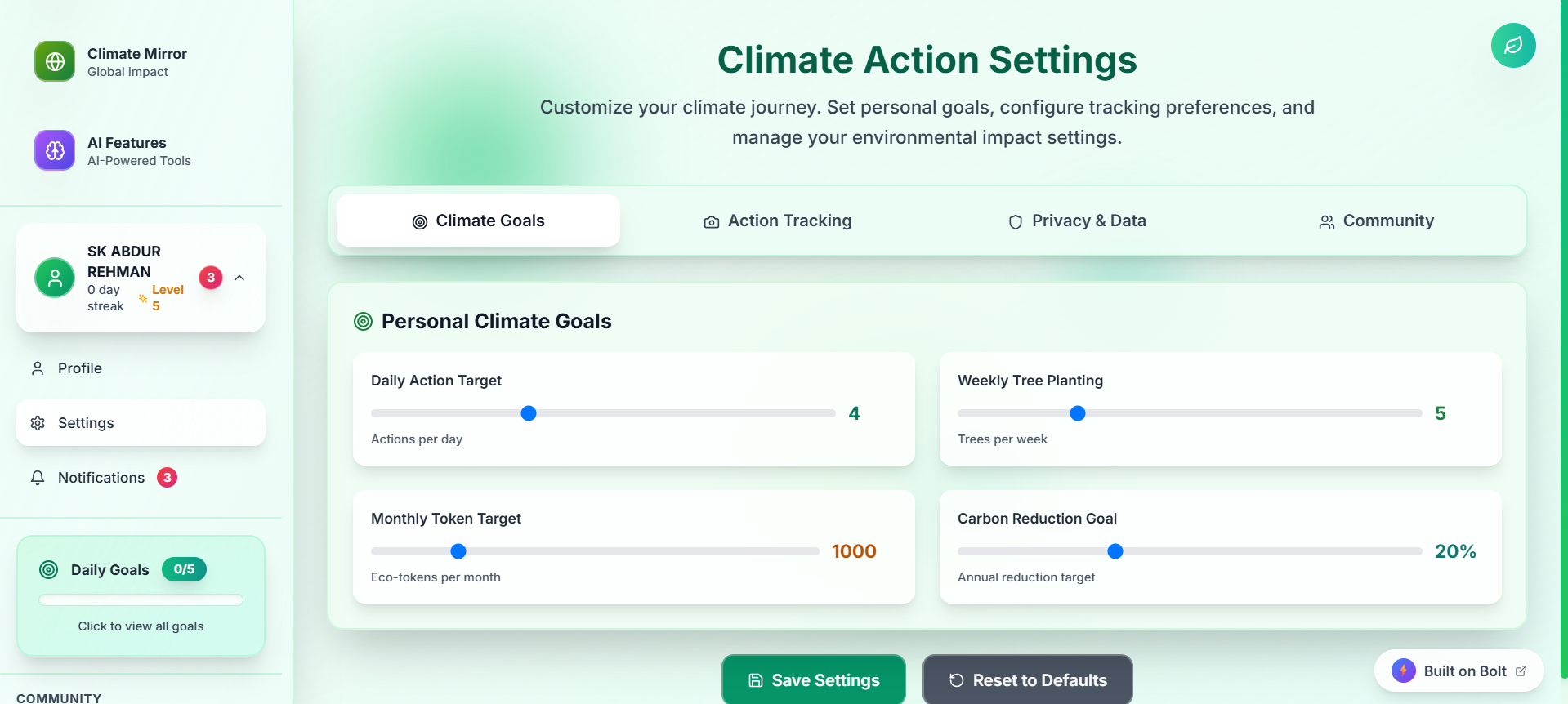
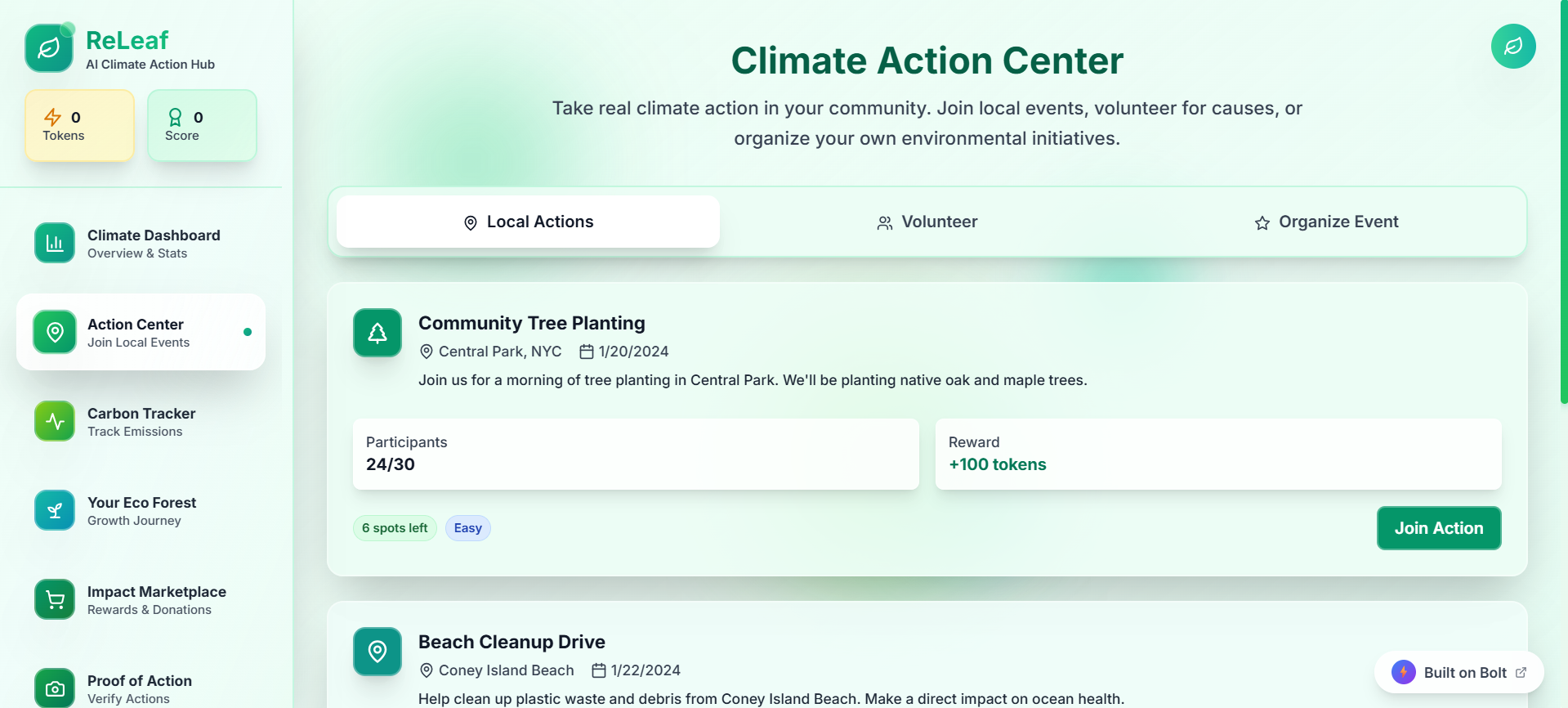
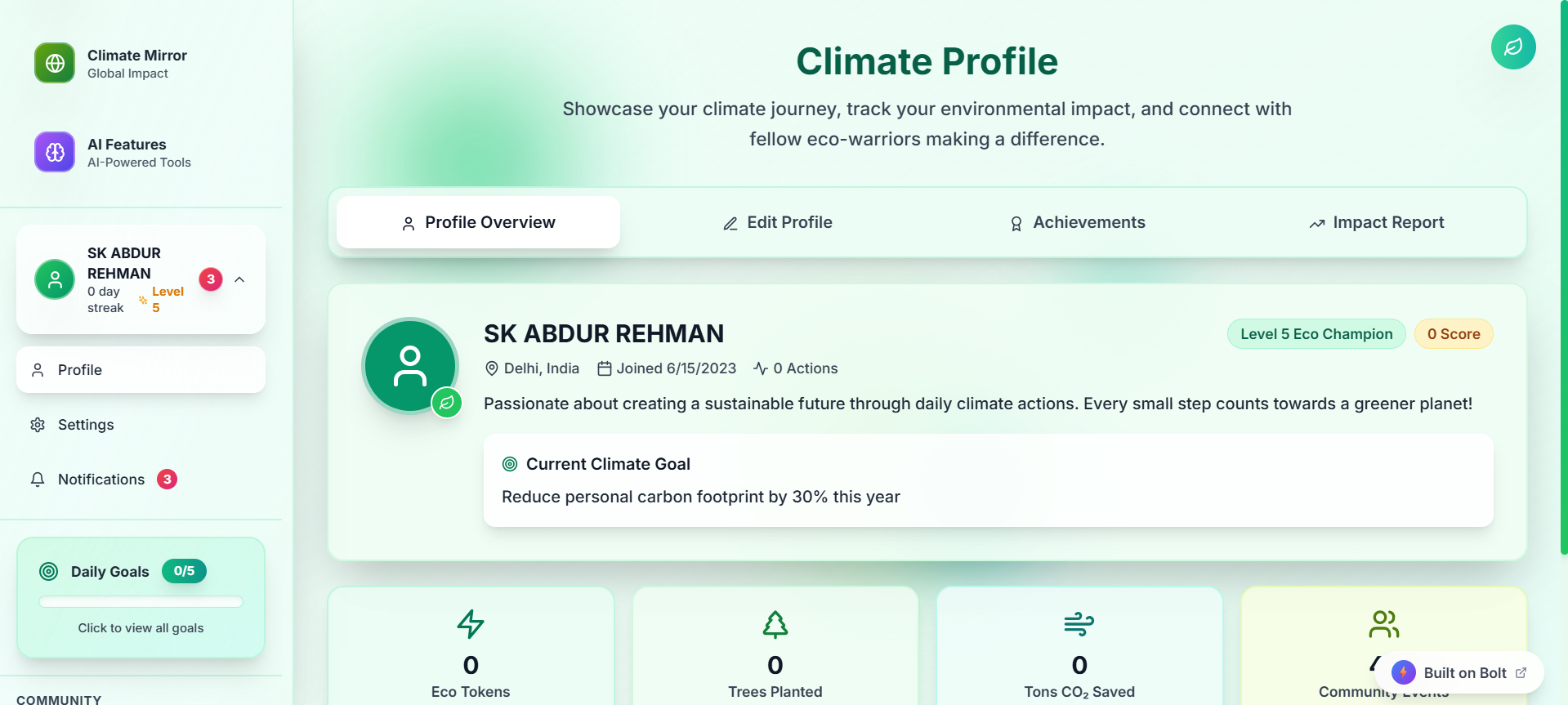
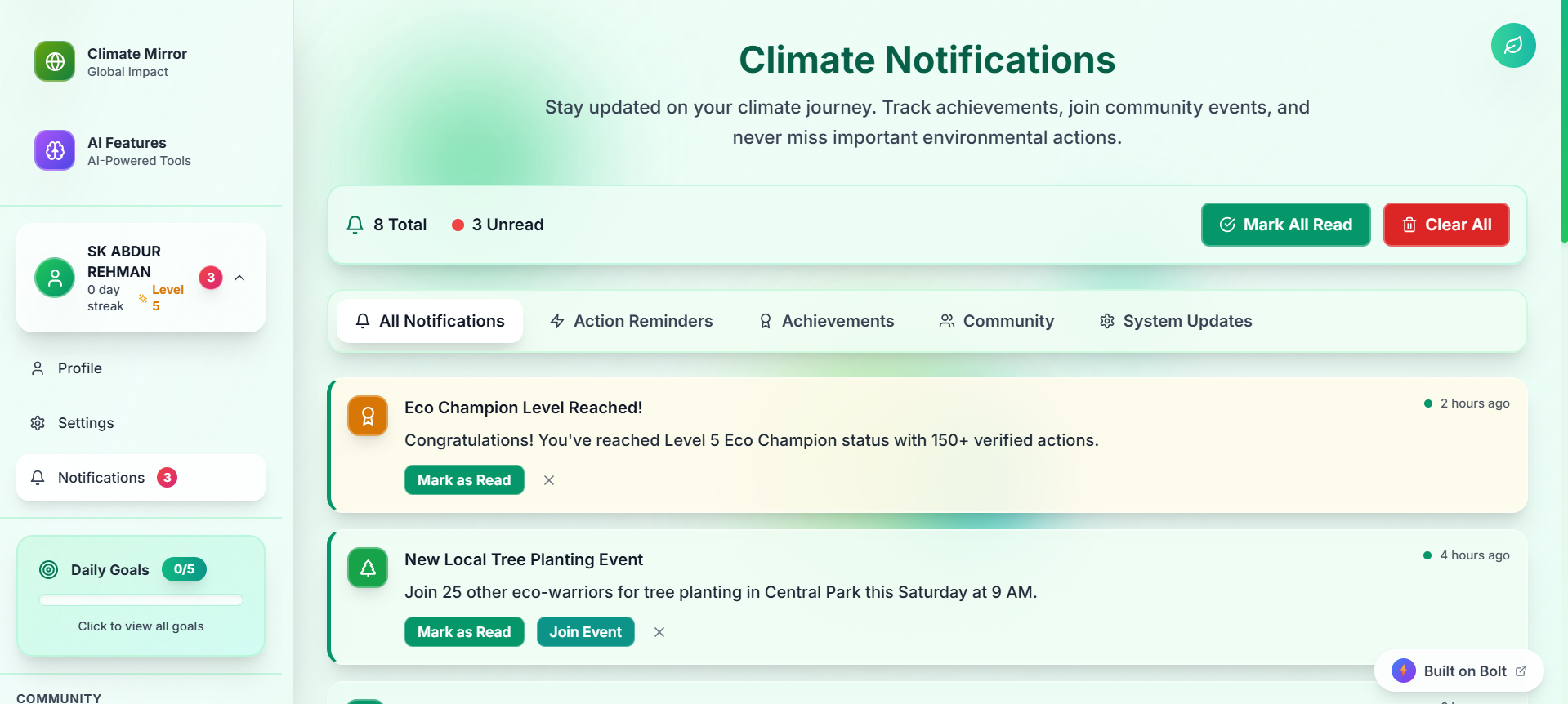
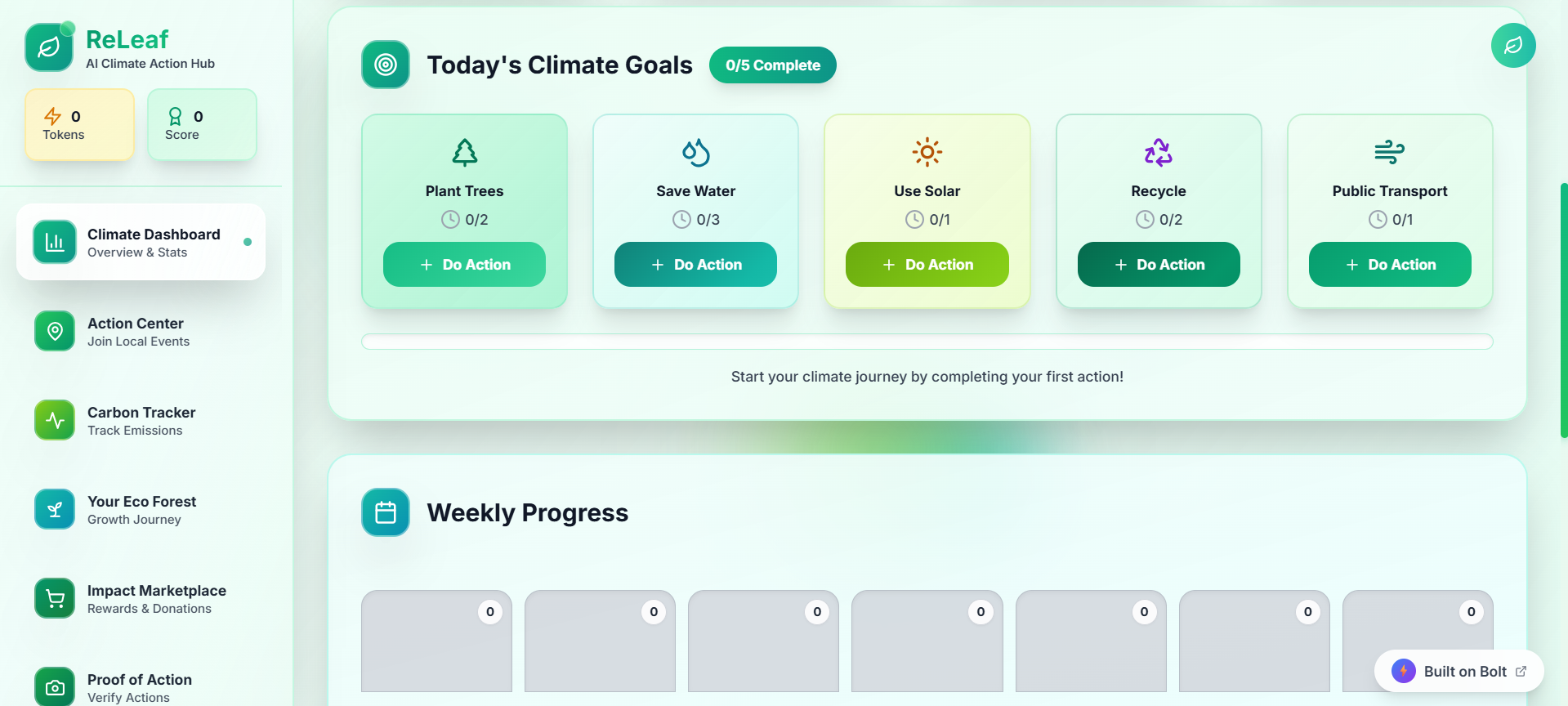
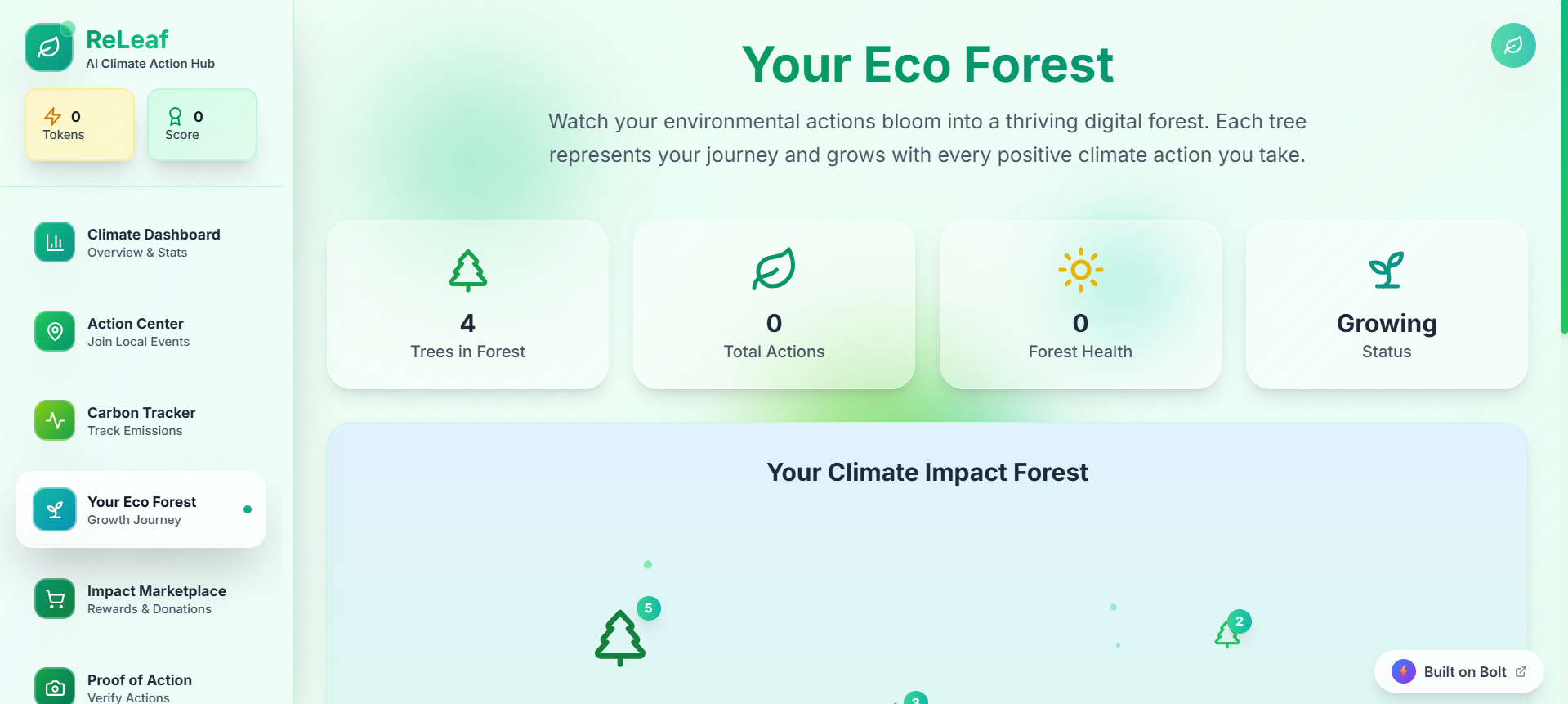
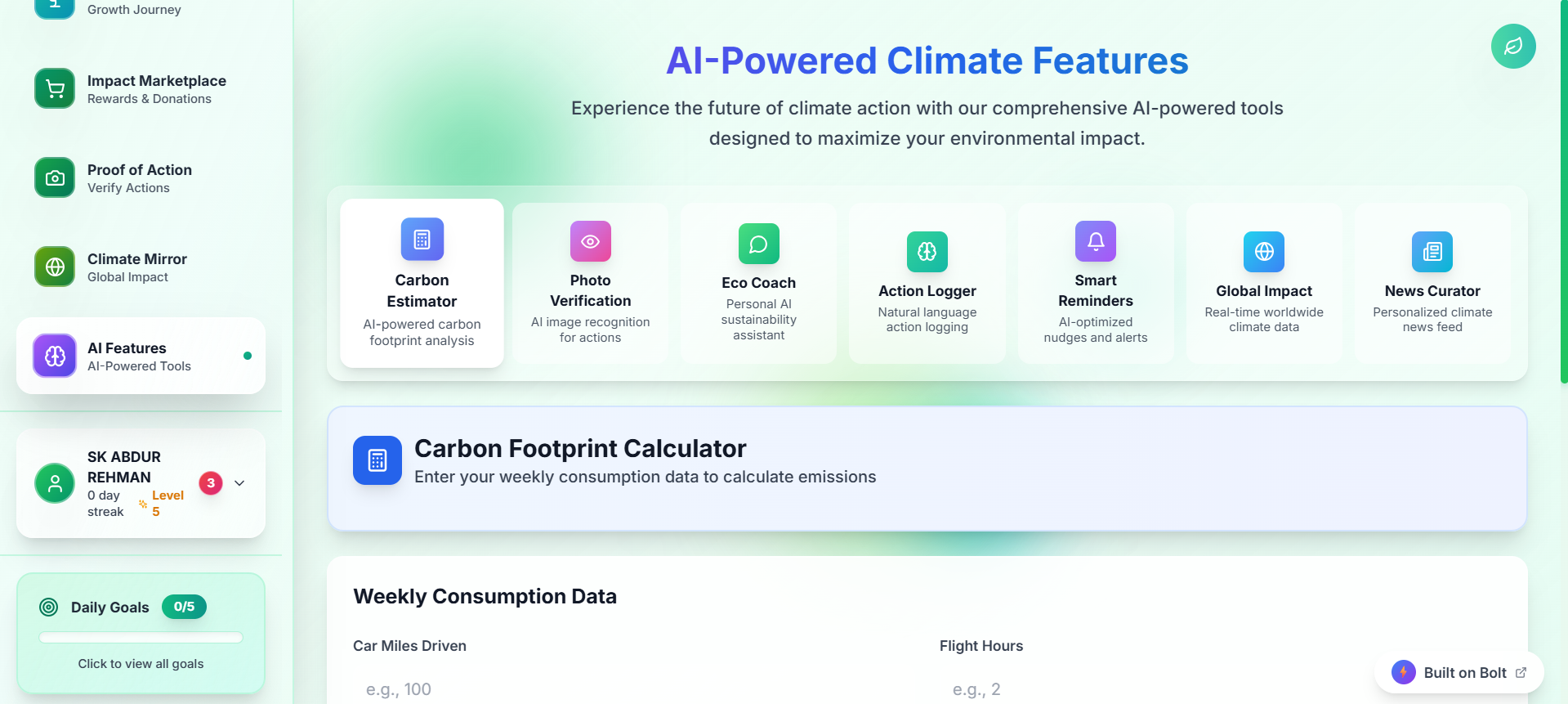
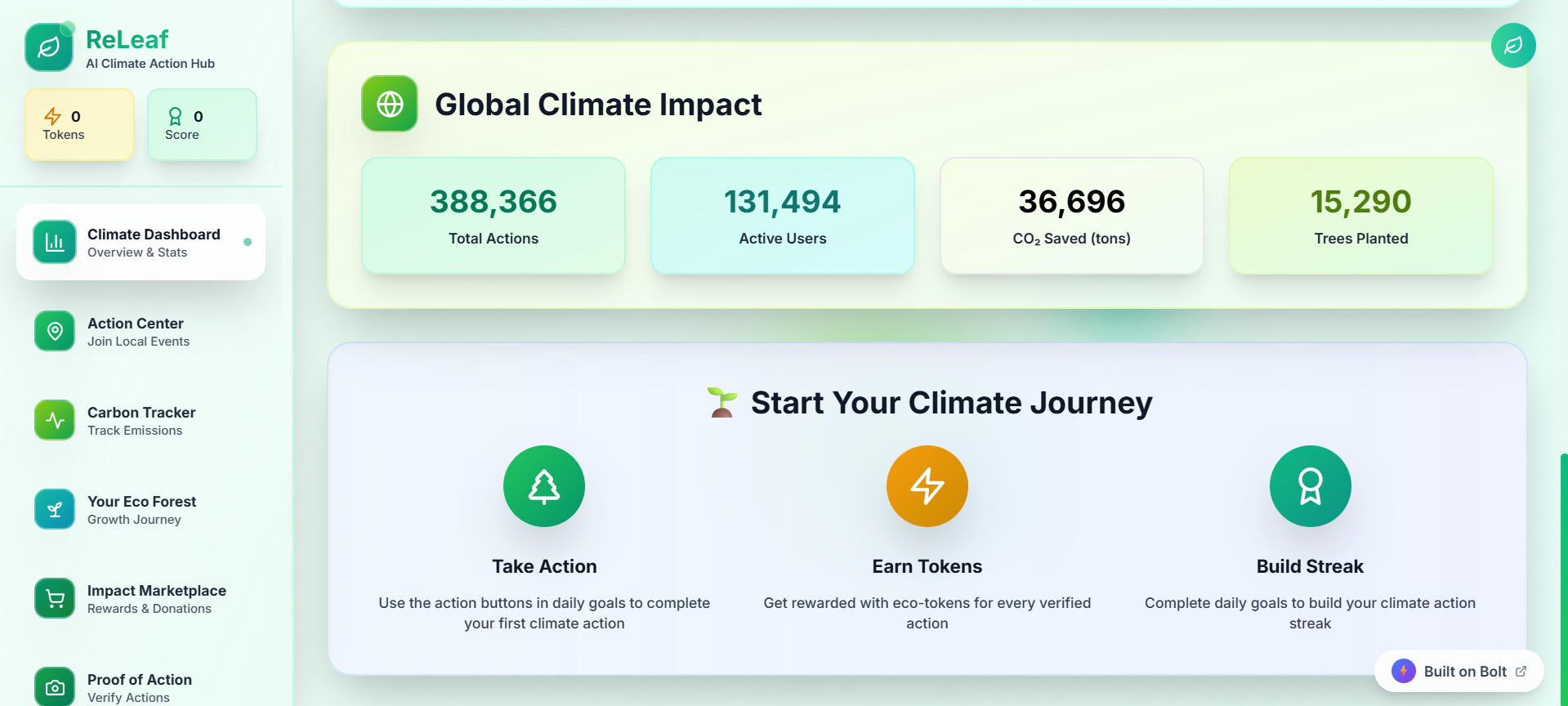
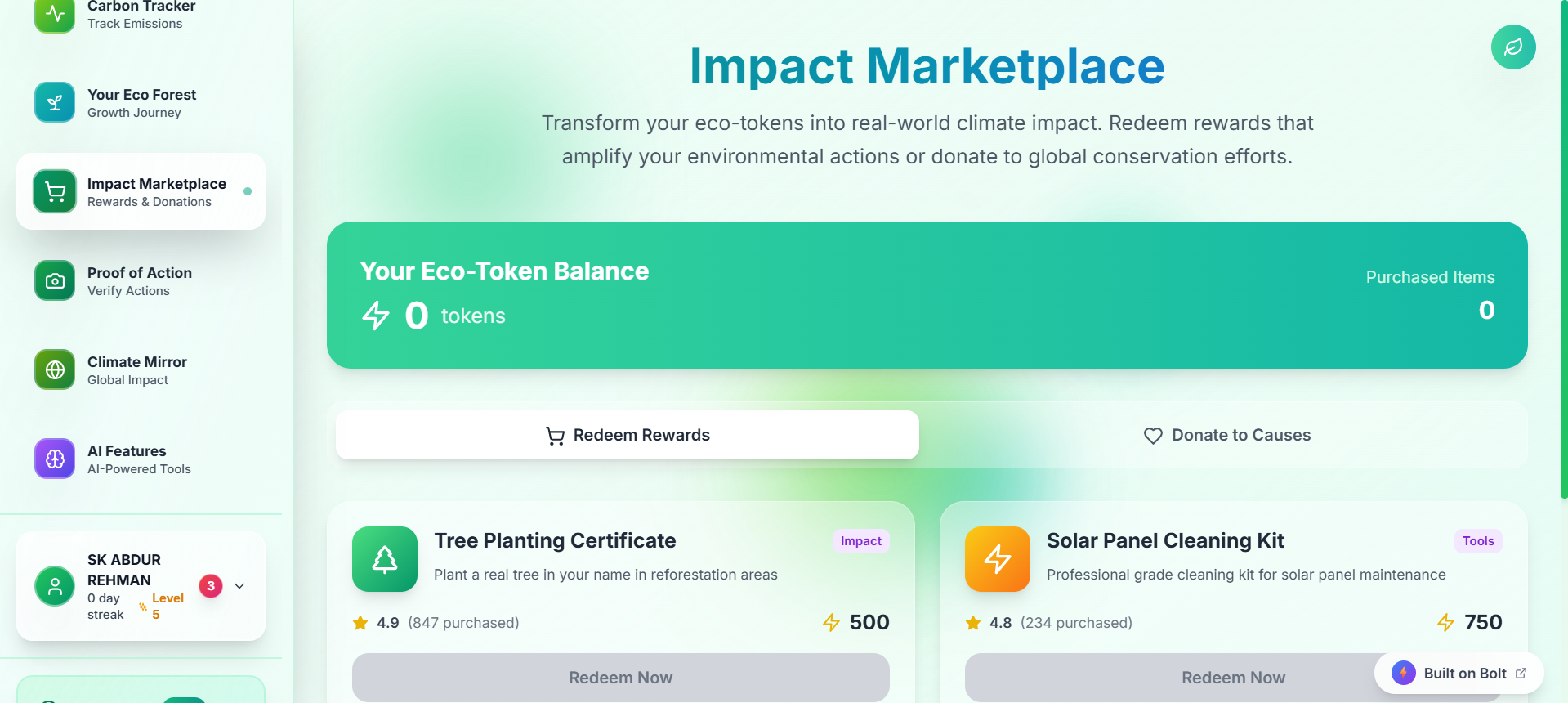
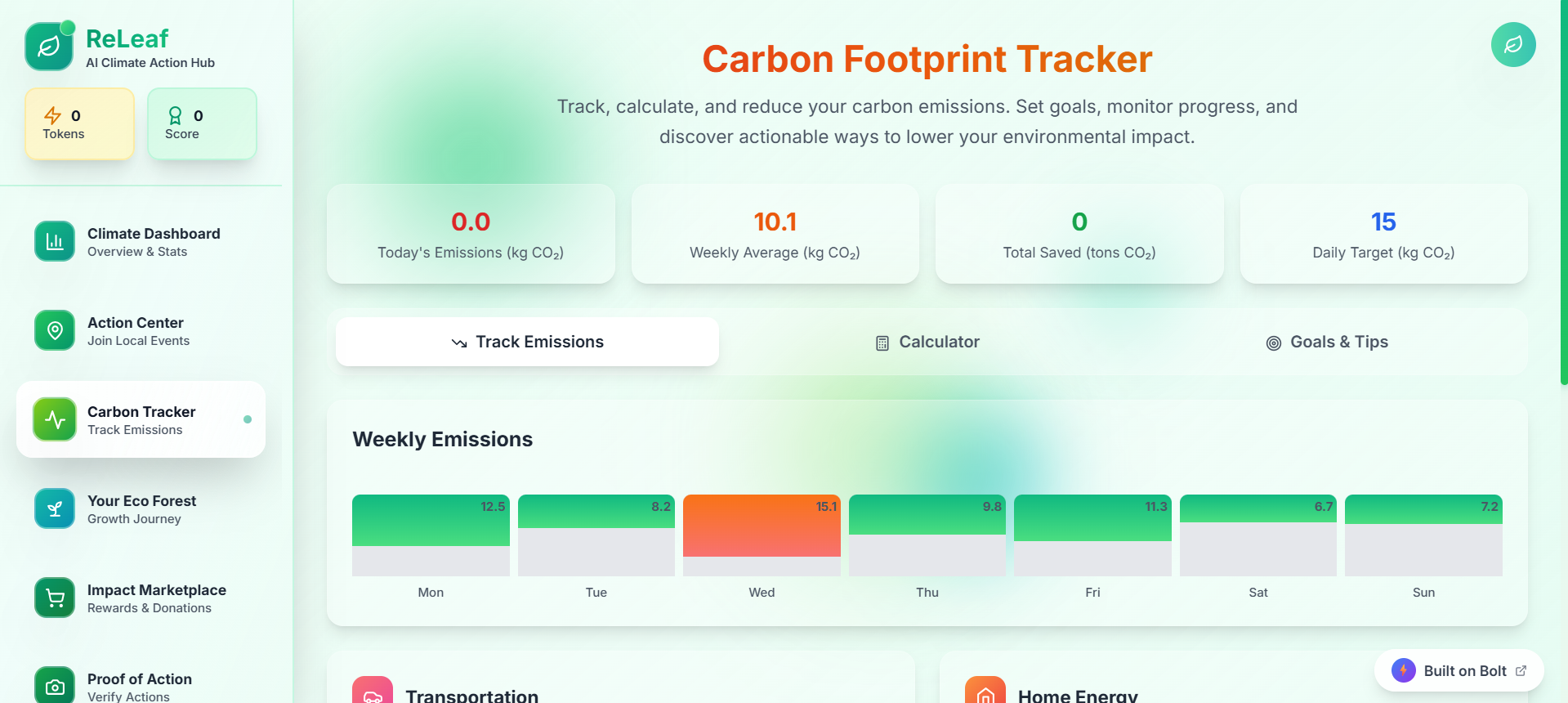
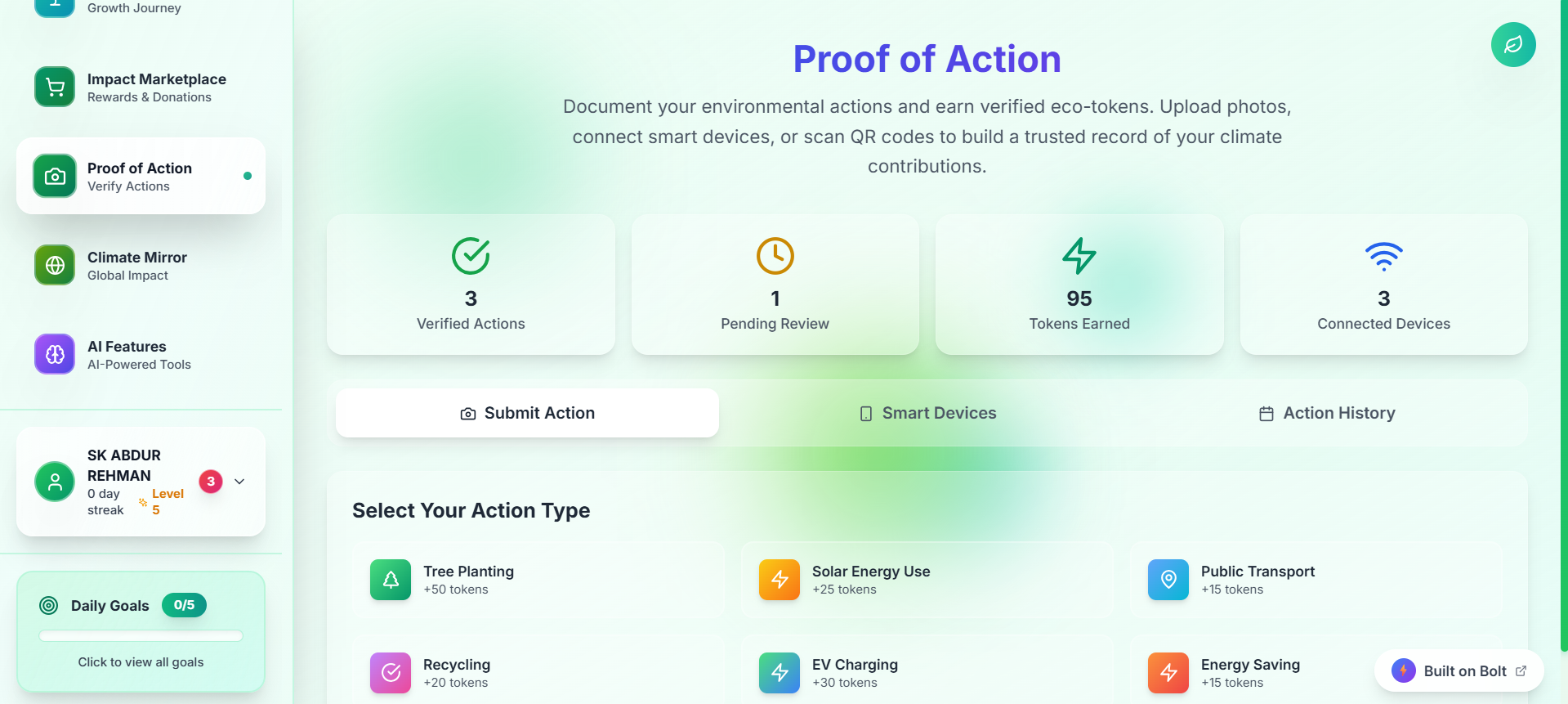
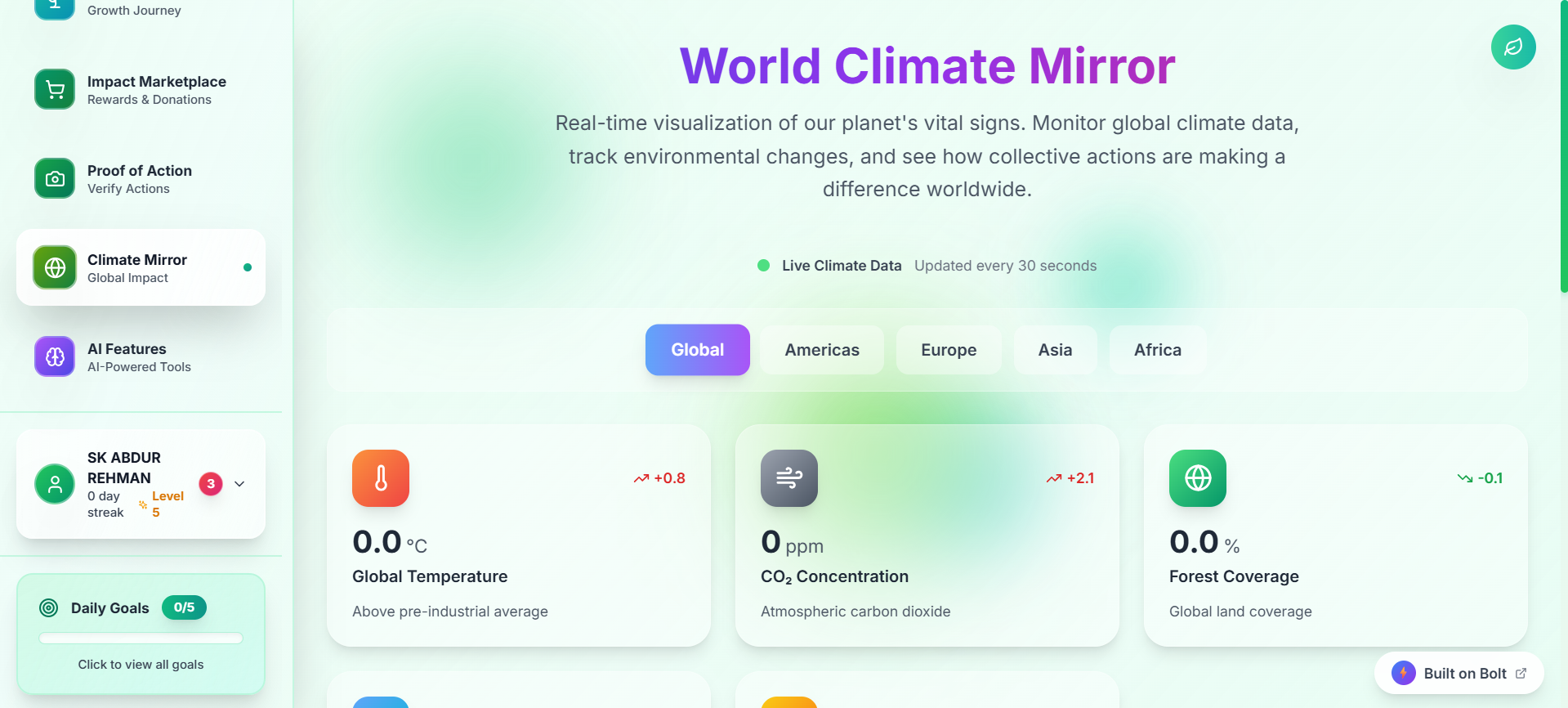
ReLeaf is a global climate action platform that verifies, rewards, and visualizes sustainable actions taken by individuals, communities, and businesses. Users can log eco-friendly activities such as recycling, using public transport, or planting trees, which are verified using AI through text, image, or sensor-based inputs. These verified actions generate tokens, grow personal and global eco-trees, and contribute to collective climate challenges. The platform includes personalized carbon tracking, global dashboards, token-based incentive systems, and emotional design that helps users feel more deeply connected to their actions and their impact.
How we built it
ReLeaf was built entirely on the Bolt platform using a fully no-code approach. The entire app was constructed using a mix of custom prompts written by me and AI-generated prompts via ChatGPT, without any external tools, scripts, or coding environments. All UI/UX logic, layouts, and page structures were designed inside Bolt’s visual builder. Data models for profiles, medicines, consultations, logs, and conditions were created and refined within Bolt. Every screen, animation, icon, and interaction was crafted using Bolt’s built-in logic system and styling utilities. I alternated between my handwritten prompts and ChatGPT-crafted ones to iteratively shape the app’s design and functionality. I followed strict constraints: no video, no audio, no AI agents, and zero placeholder elements—everything is fully usable and bug-free.
Challenges we ran into
One of the biggest challenges was ensuring verification of sustainable actions in a way that’s both scalable and believable. It was also difficult to strike the right balance between functionality and beauty, given our goal of designing an emotionally immersive experience while keeping the app responsive and functional. Implementing token mechanics that felt rewarding but not gimmicky was another layer of complexity, especially without introducing blockchain directly. Additionally, ensuring that the app remained globally adaptable — across languages, locations, and cultures — pushed us to constantly rethink how we handled content, feedback, and user flows.
Accomplishments that we're proud of
We’re incredibly proud of creating a platform that makes climate action feel beautiful, personal, and rewarding. The real-time action verification pipeline, the living forest metaphor, and the immersive morphism-rich UI all came together better than expected. We're also proud of the thoughtful, non-gamified use of tokens to create meaningful behavior change, and the AI-powered carbon insights that feel contextual, human, and dynamic. The global dashboard visualization that lights up in response to real user actions was a dream we managed to realize.
What we learned
We learned that climate tech is not just about data and sensors — it’s deeply emotional. People want to feel that their small actions matter. Designing with empathy, aesthetics, and behavioral psychology helped us elevate the app far beyond a tracker into a shared digital ecosystem. We also learned the value of real-time feedback and how AI can be used meaningfully not just to automate, but to emotionally connect users to their goals. Building a global-facing product taught us how important design consistency, localization thinking, and scalable verification really are.
What's next for ReLeaf
We plan to integrate deeper partnerships with NGOs and municipal bodies to allow verified physical tree planting and waste cleanup events to directly reflect in users’ ReLeaf profiles. We aim to expand our AI verification capabilities to include location-aware public transport detection and utility API integration for electricity savings. A creator-driven challenge mode is in the works, where climate influencers can host custom missions. Long-term, we’re also planning to introduce a carbon offset marketplace and create a lightweight SDK for companies to plug their internal sustainability metrics directly into ReLeaf’s visual ecosystem.
Built With
- bolt
- chatgpt


Log in or sign up for Devpost to join the conversation.