Inspiration
I use a lot of AI agents, each with its own strengths. Alexa+ is my preferred voice assistant at home, but my agents lived in separate apps and workflows. I wanted to bring them together through the assistant I already talk to every day.
That inspired Relay: make Alexa+ the front door to my agents. Instead of opening another app, I want to ask for the agent I need, give it a task, and get a reply.
What it does
Relay connects a conversational interface to an agent messaging system. It routes a request to the selected agent and matches the response back to the original conversation.
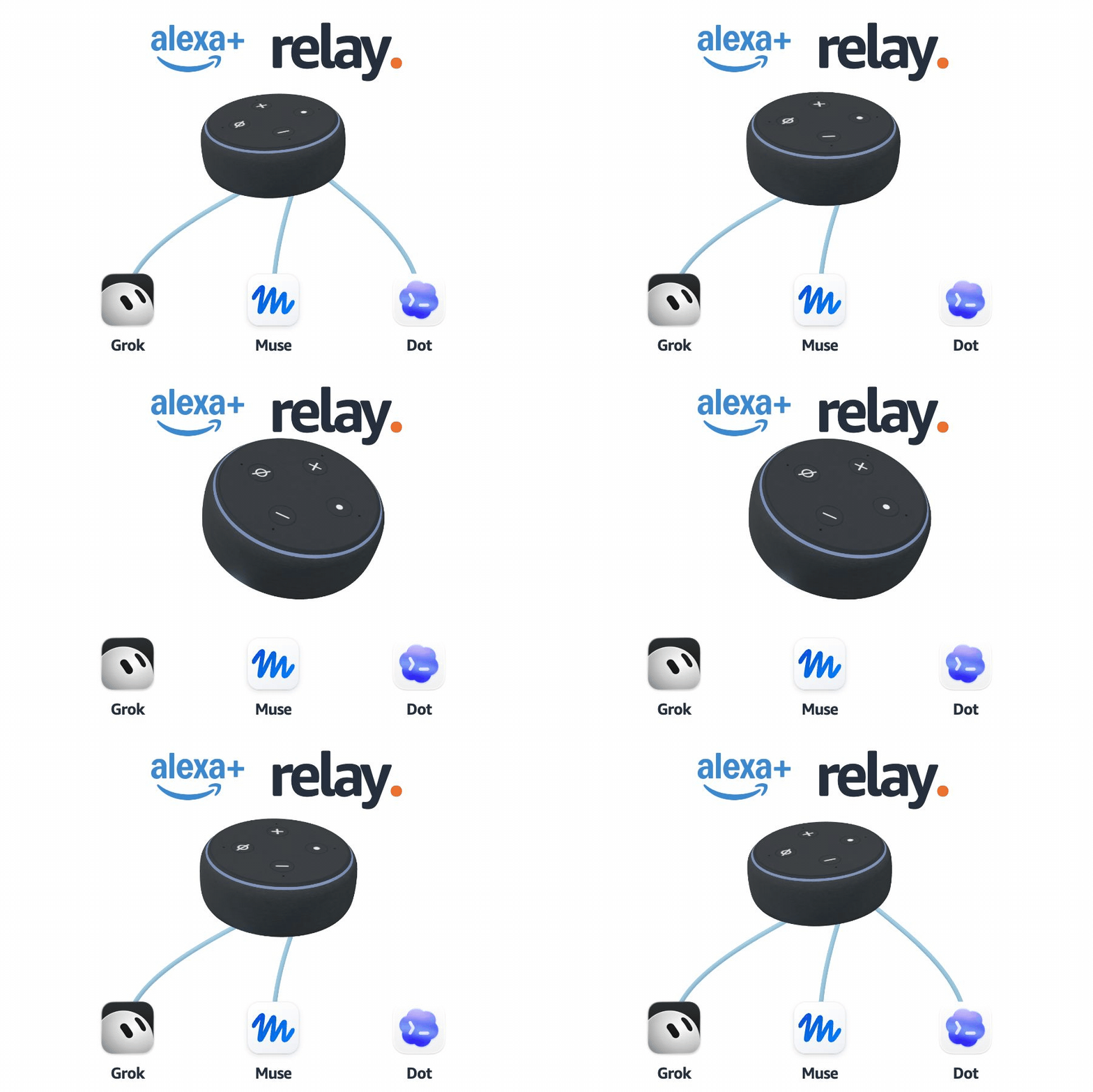
The hackathon demo uses a simulated Alexa+ web interface connected to a live Dot agent. The request and reply are real. The broader interface illustrates the vision of reaching agents such as Grok, Muse, and Dot from one familiar place.
How I built it
I adapted an existing Relay messaging system that already supported my Rabbit R1 workflow. Reusing that working foundation let me focus on the Alexa experience while preserving the existing integration.
The system uses a mailbox to pass requests and replies between the interface and an agent. Each request has an identifier so responses stay connected to the right conversation. Routing and duplicate handling help keep messages organized.
I added an Alexa adapter and a web simulator, then verified a complete request-and-reply flow with the live Dot agent. I also built a landing page that visualizes Alexa connecting to the agents.
Challenges I faced
The biggest challenge was timing. A voice interaction expects a quick response, while an agent may need longer to finish a task. That led me toward an asynchronous flow: acknowledge the request, let the agent work, and retrieve the reply separately.
Another challenge was separating the experience I envision from what I could verify during the hackathon. The demo demonstrates the live agent messaging path through a simulated Alexa+ interface. Physical Echo reply playback remains unverified.
What I learned
Connecting agents is about more than sending a prompt. The experience depends on clear routing, reliable replies, and helping the user understand when a task is still running.
I also learned how valuable it is to build on a working foundation. Reusing Relay’s messaging path made it possible to demonstrate the core idea without rebuilding every integration.
What’s next
My next steps are to verify spoken replies on a physical Echo with Alexa+ MCP, extend the tested flow to more agents, and make longer-running tasks feel natural in a voice conversation.
Built With
- alexa-skills-kit
- aws-lambda
- cloudflare
- css
- html
- javascript
- node.js
- three.js

Log in or sign up for Devpost to join the conversation.