Inspiration
Most student delivery apps fake the hard parts — race conditions, GPS spoofing, fake "delivered" states. We wanted to build the real thing.
What it does
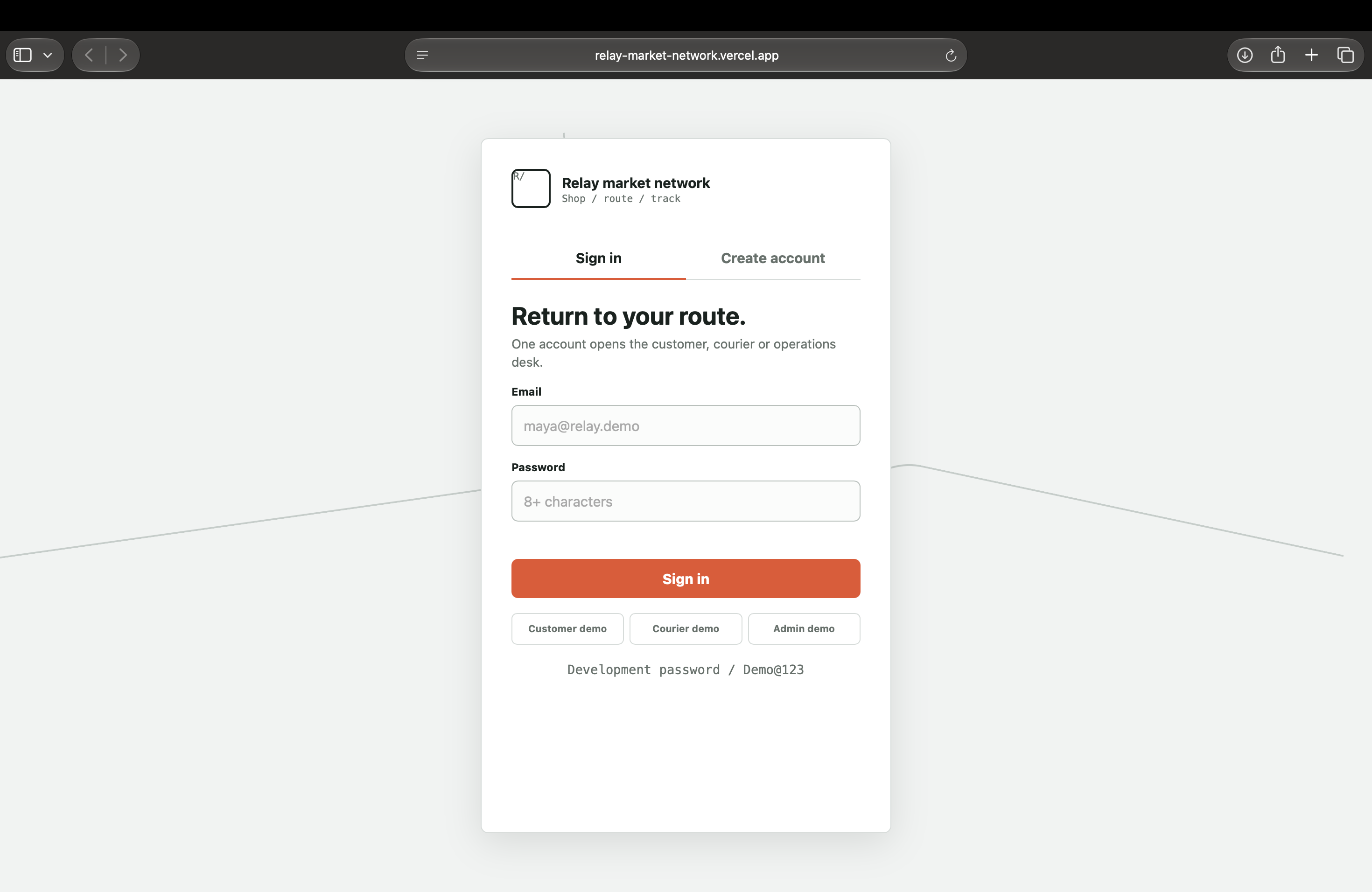
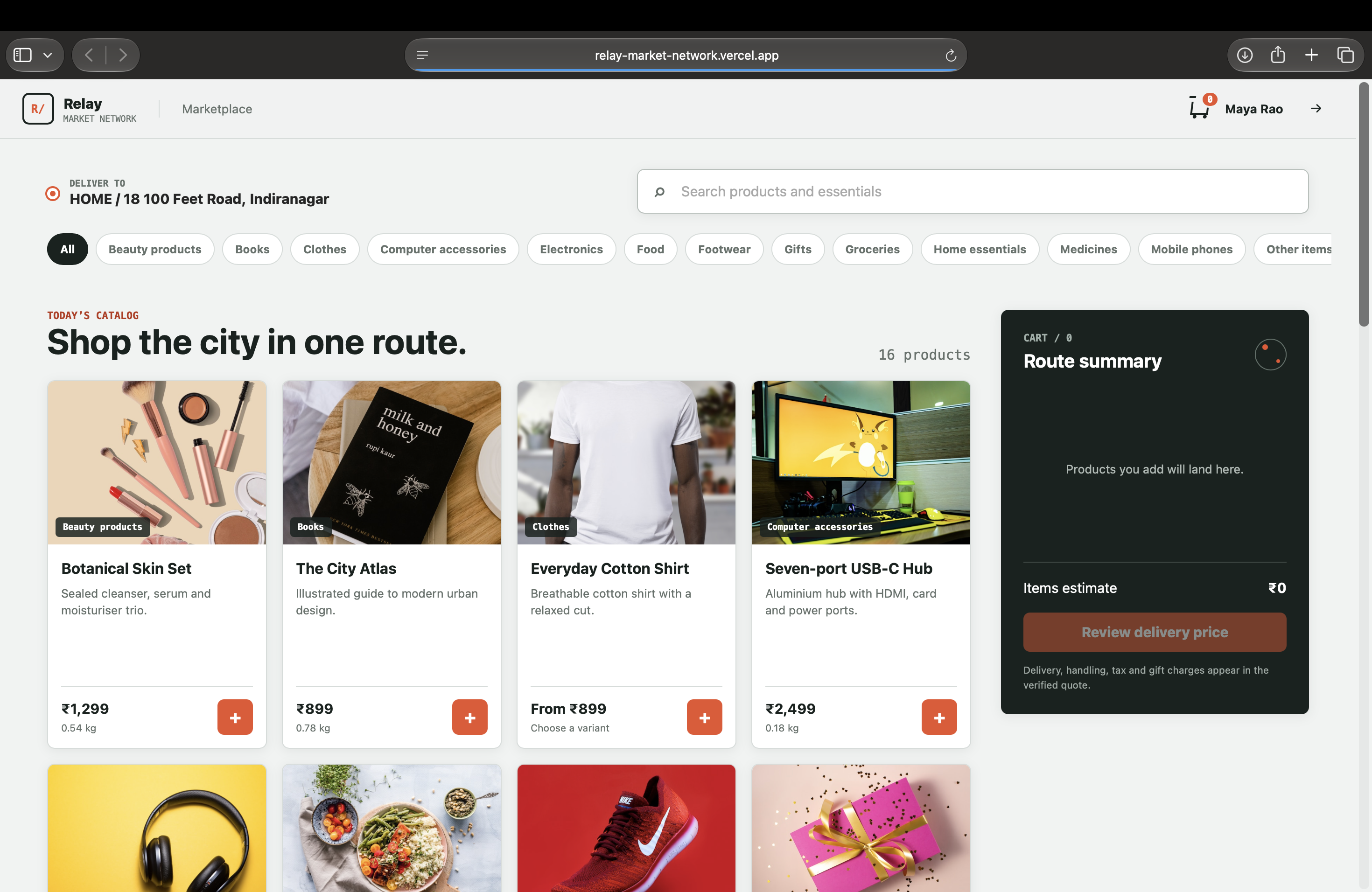
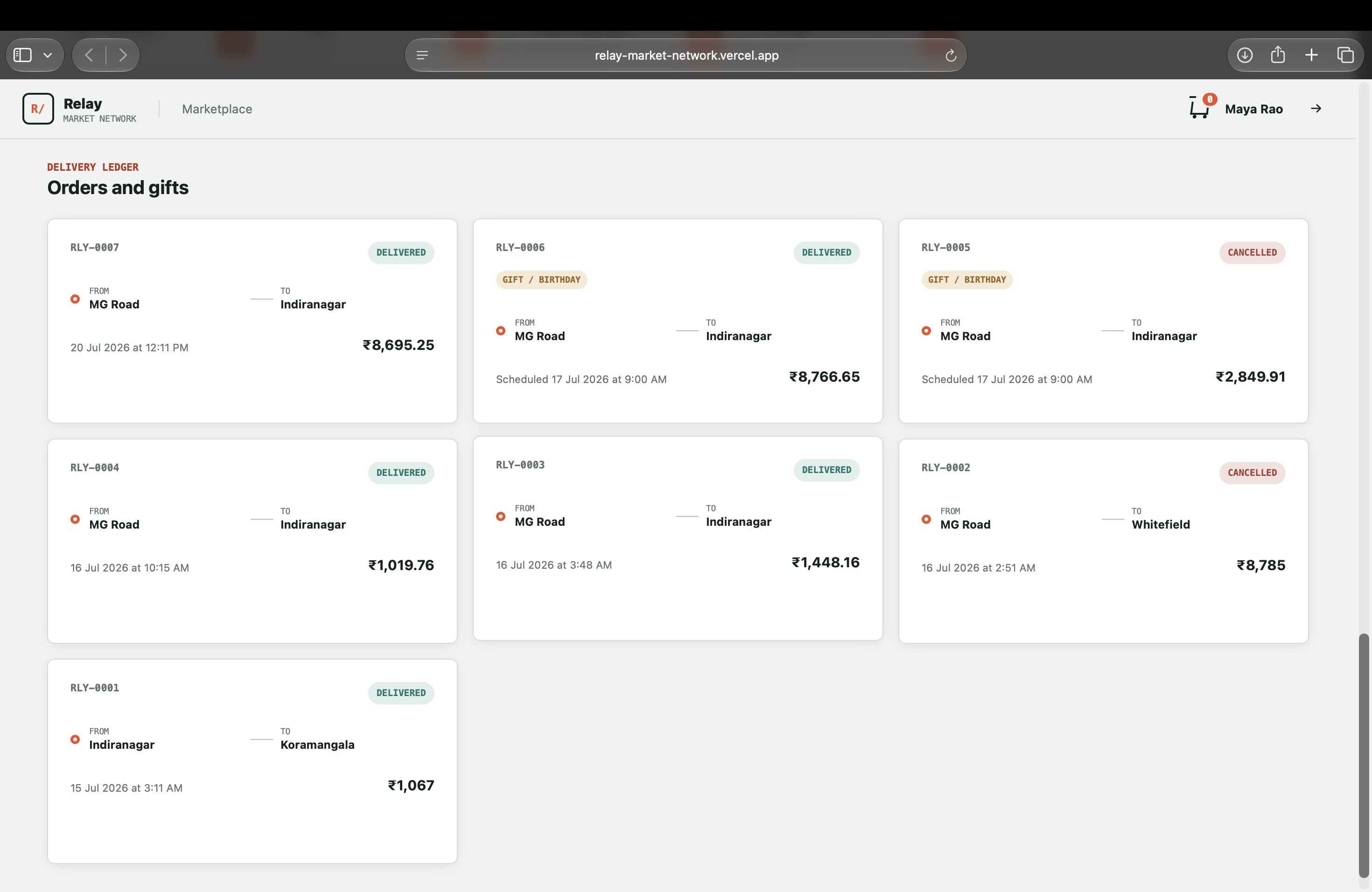
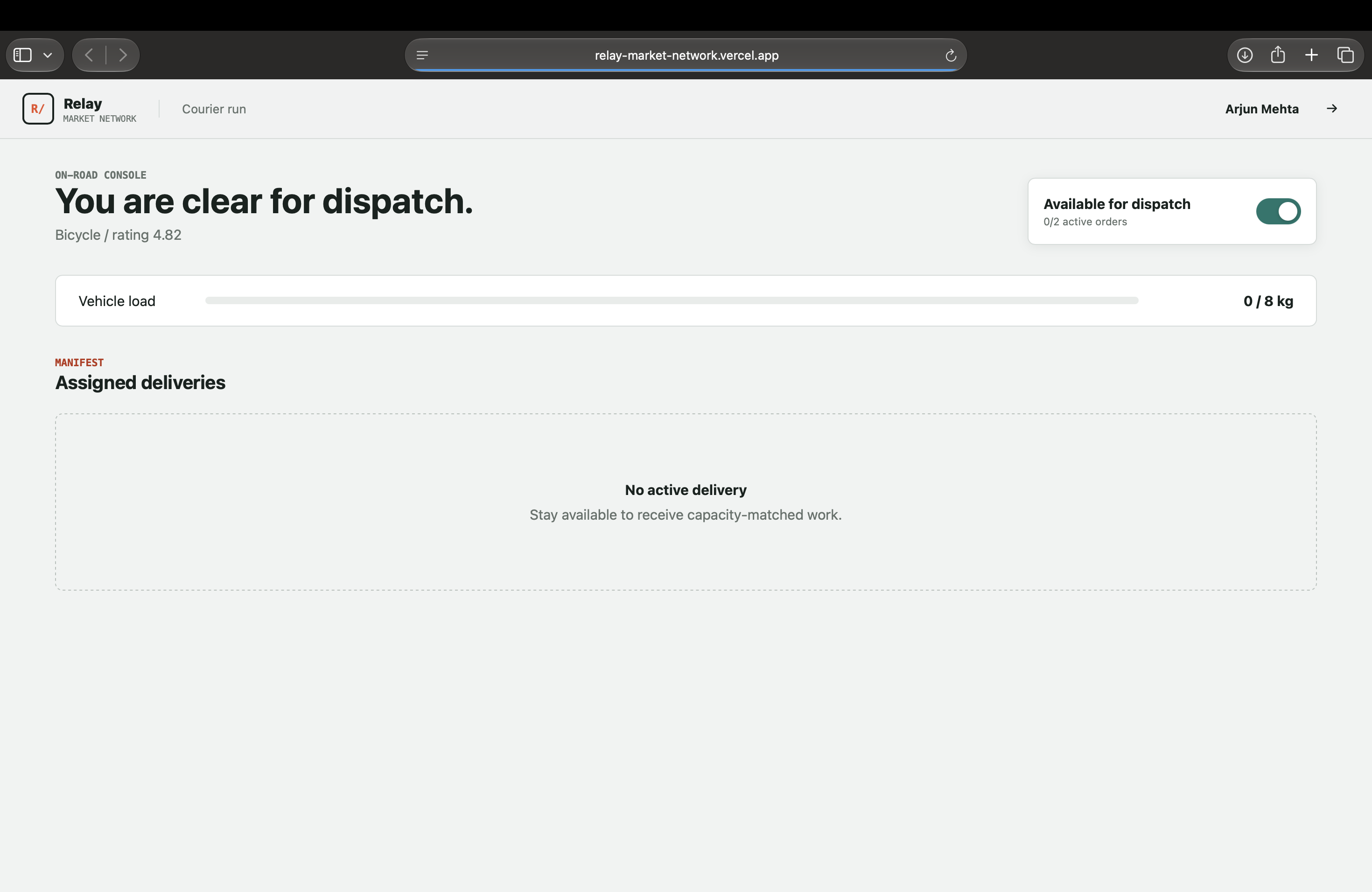
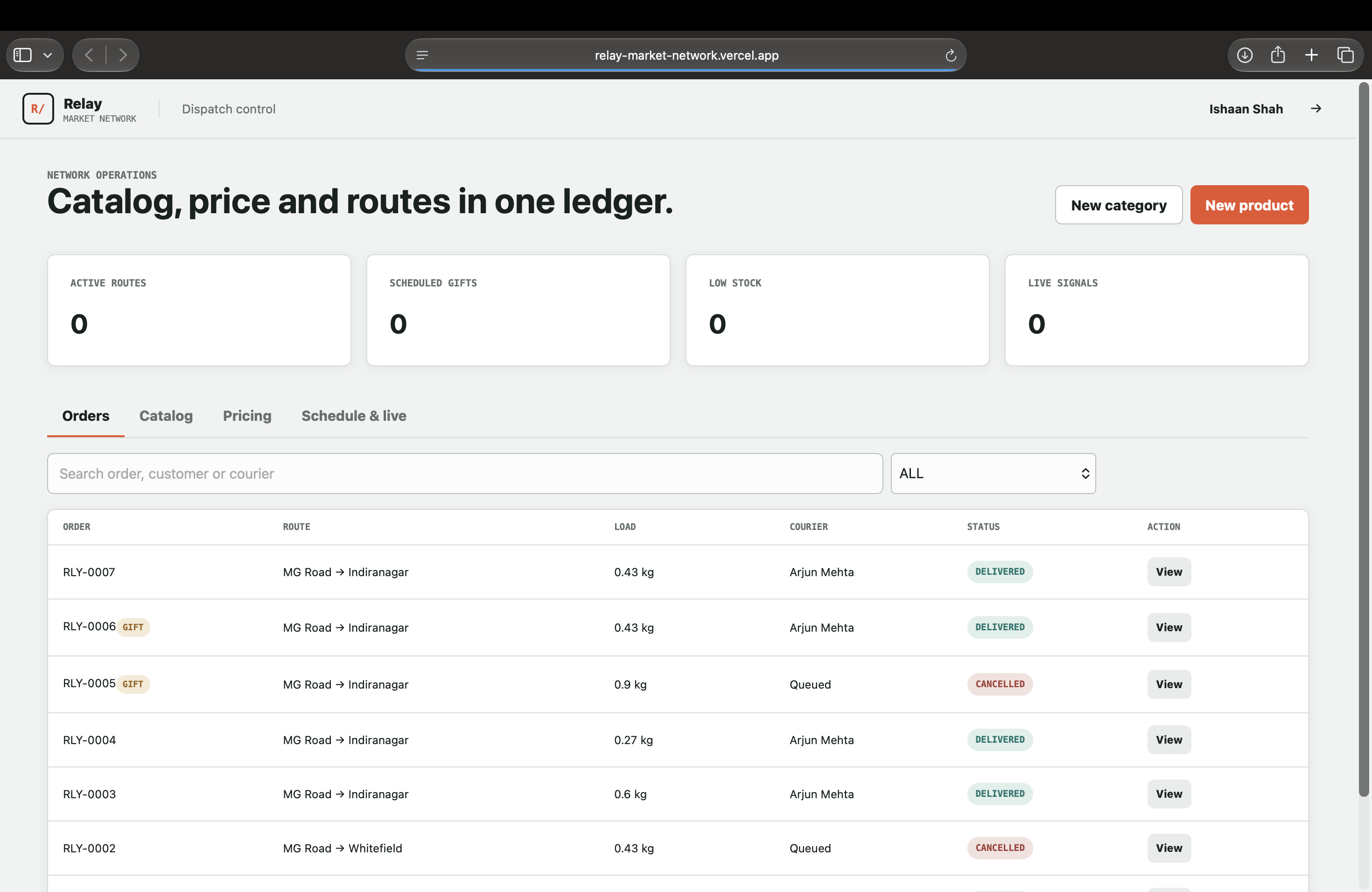
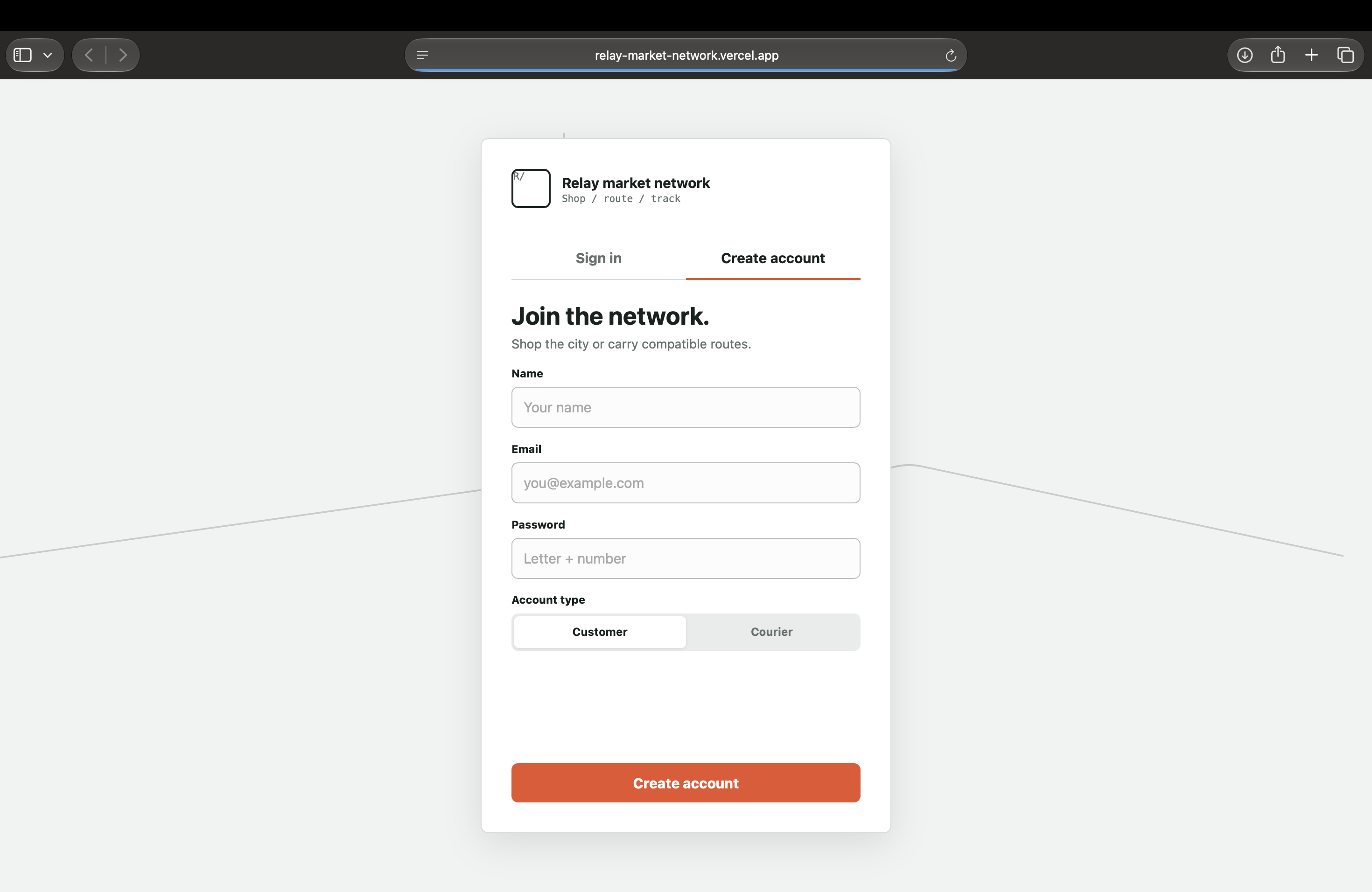
A three-role marketplace — customers order with server-priced quotes and live tracking, couriers get dispatched and verify handoff with a secure code, admins run catalog/dispatch from a live dashboard.
How we built it
Java 17 + raw JDBC + PostgreSQL for hard transaction control, Min-Heap + Dijkstra for dispatch, vanilla JS frontend with optimistic UI patches.
Challenges we ran into
Getting checkout, courier reassignment, and scheduled-order release safe under concurrency without an ORM to hide behind.
Accomplishments that we're proud of
A fully transactional pricing engine, real dispatch algorithms (not a sorted list pretending), and a delivery-code system with no admin bypass.
What we learned
How SKIP LOCKED queues, optimistic versioning, and PBKDF2/AES-GCM verification actually behave once you build them instead of read about them.
What's next for Relay Market Network
Real map SDK, WebSocket tracking instead of polling, payment gateway, and horizontally scaled schedulers.
Built With
- aes-gcm
- algorithms
- concurrency
- cryptography
- css3
- data-structures
- dijkstra's-algorithm
- fetch-api
- hikaricp
- html5
- java
- javascript
- jdbc
- maven
- mermaid
- min-heap
- node.js
- npm
- pbkdf2
- postgresql
- rest-api
- sql
- statemacine
- vanilla-js
- vitest


Log in or sign up for Devpost to join the conversation.