-
-
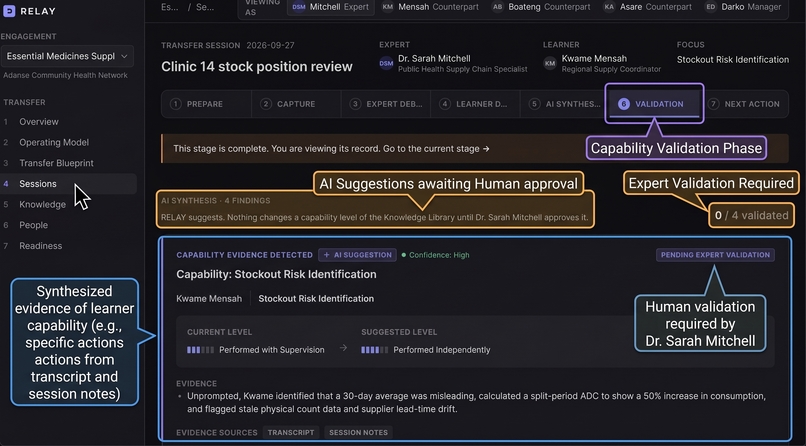
Daily Skill Transfer Assist/Review
-
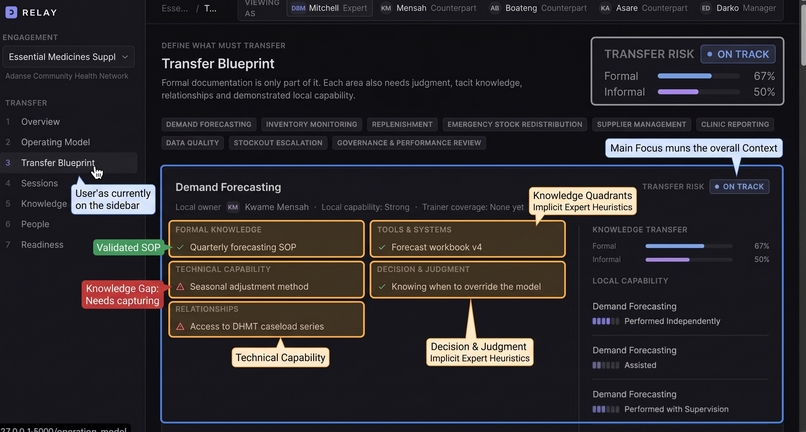
Blueprint on Skill Transfer
-
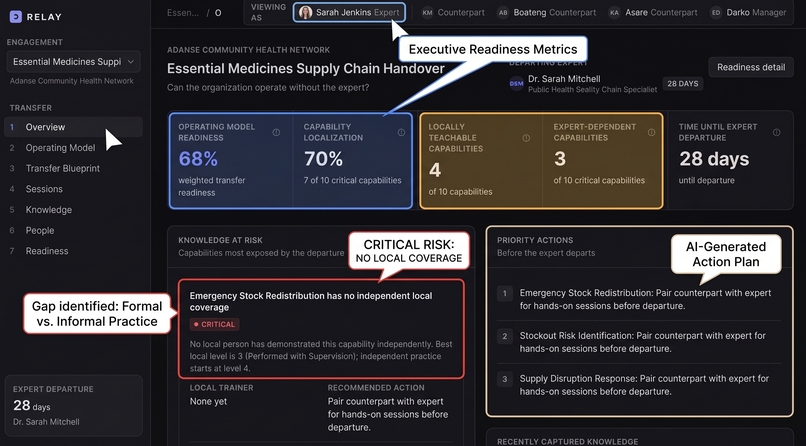
Overview/Home Page
-
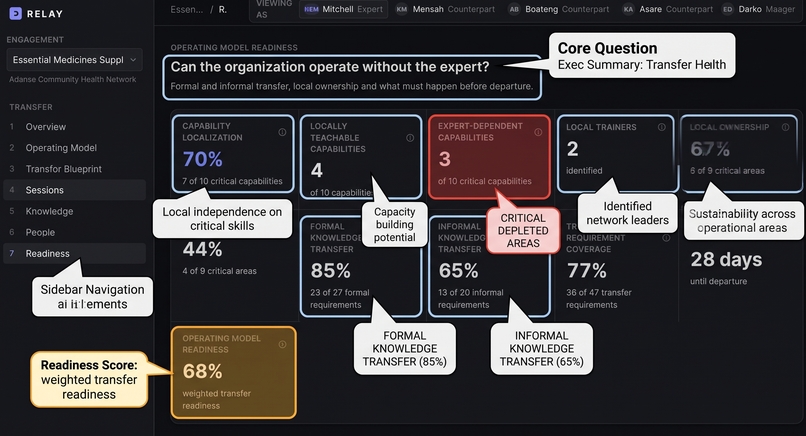
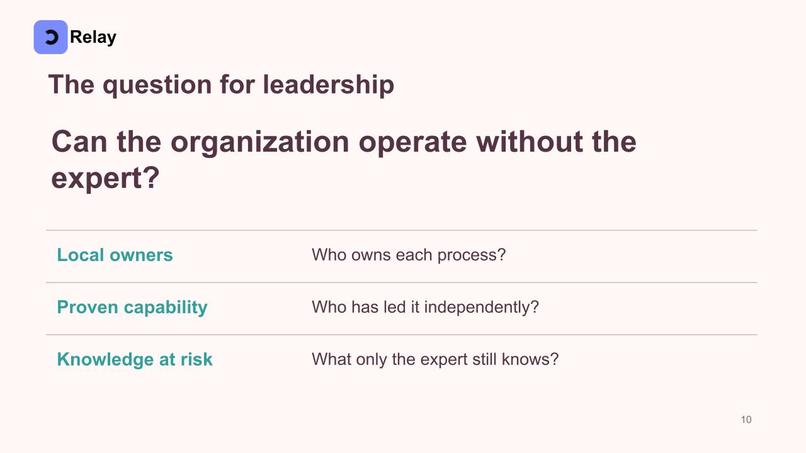
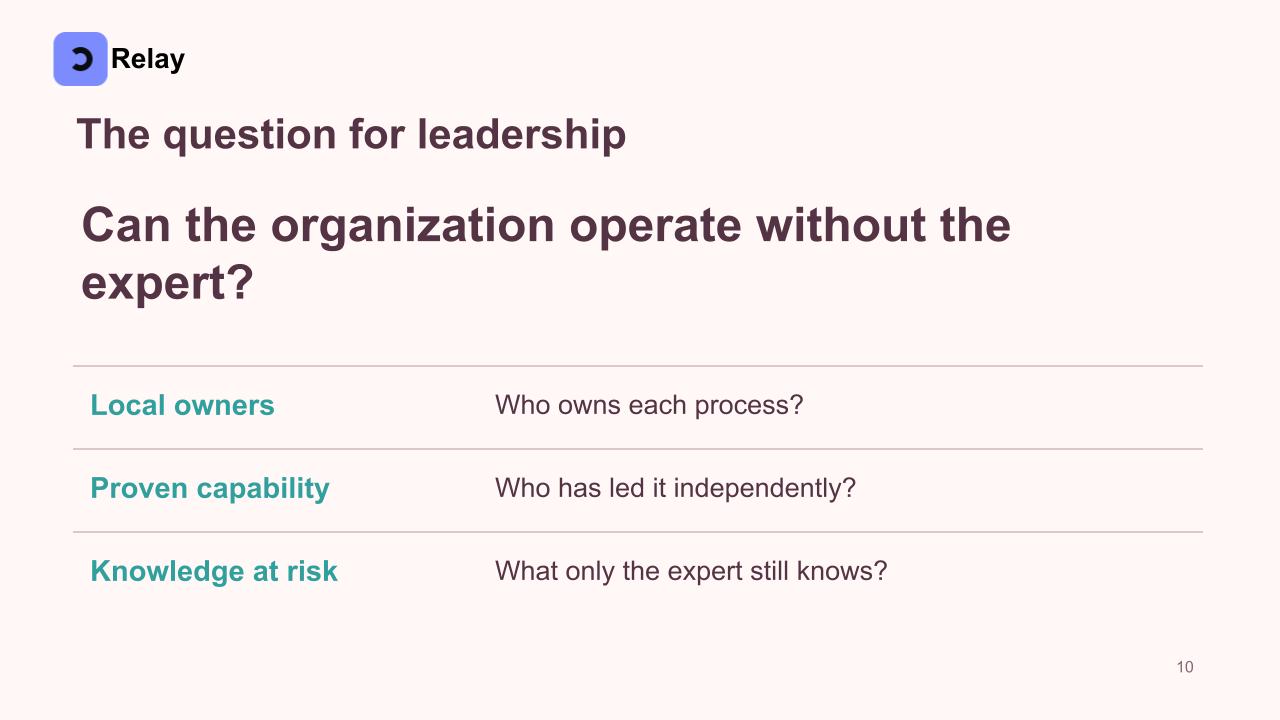
Readiness without the Expert
-
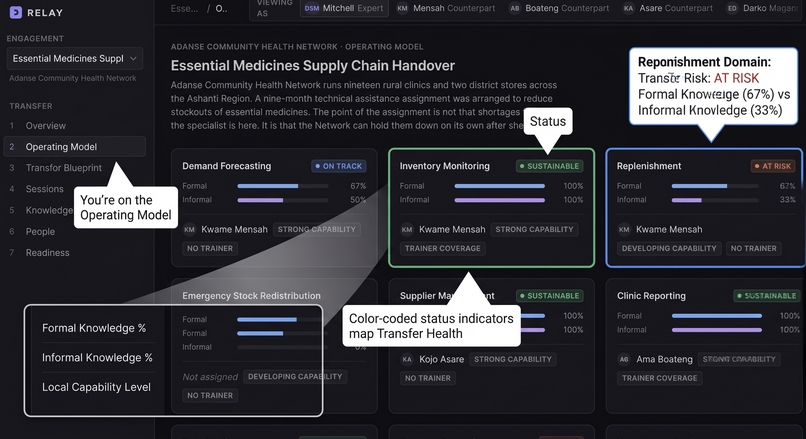
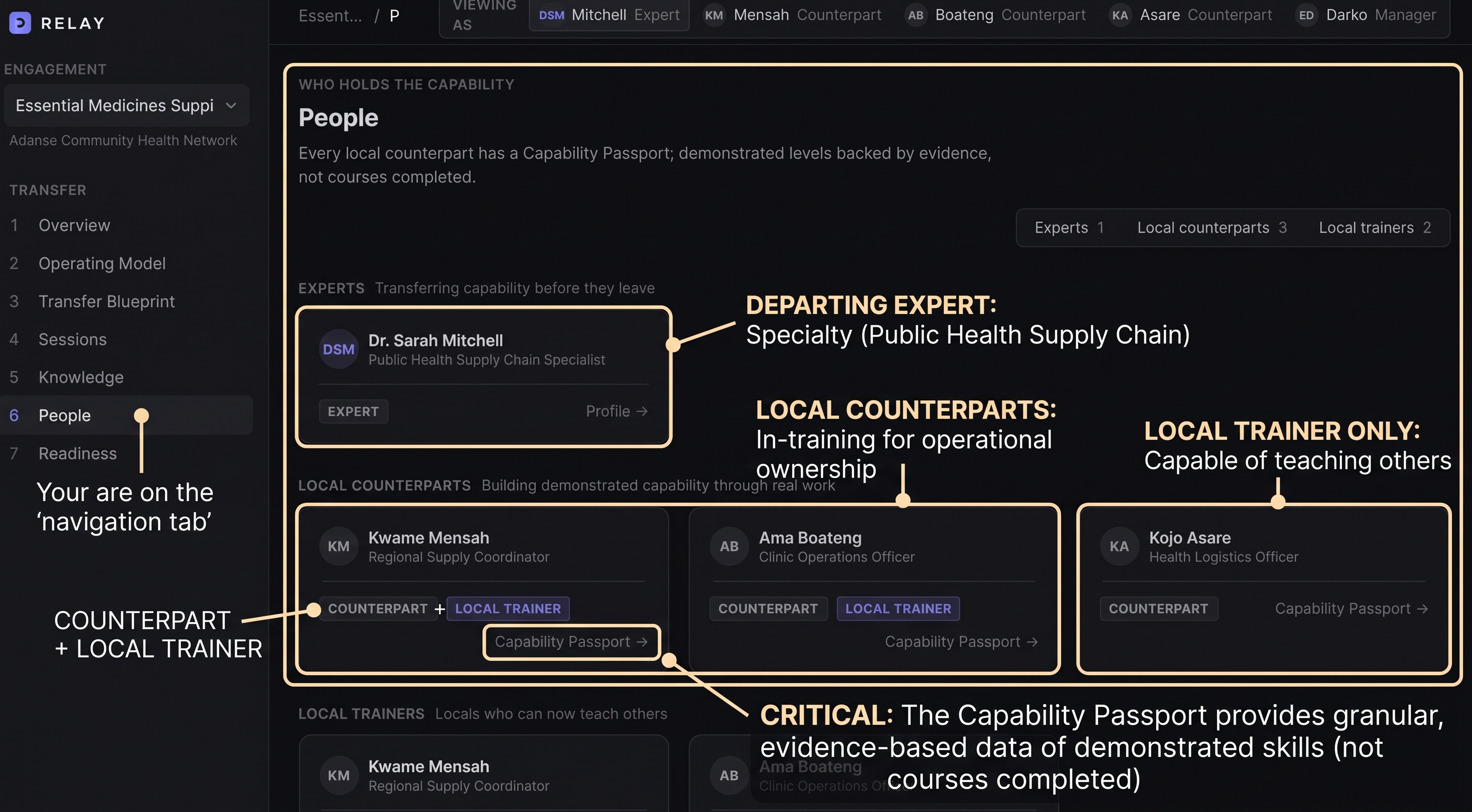
Skills/Operation Model Laid Out
-
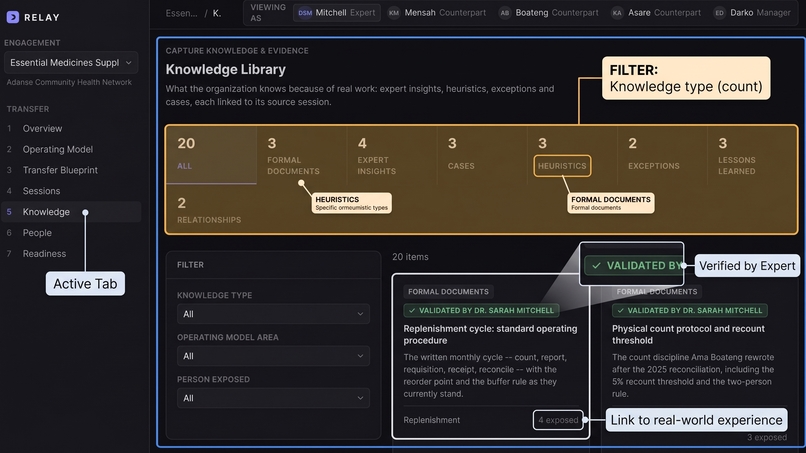
Knowledge Library/Transferred Skills
-
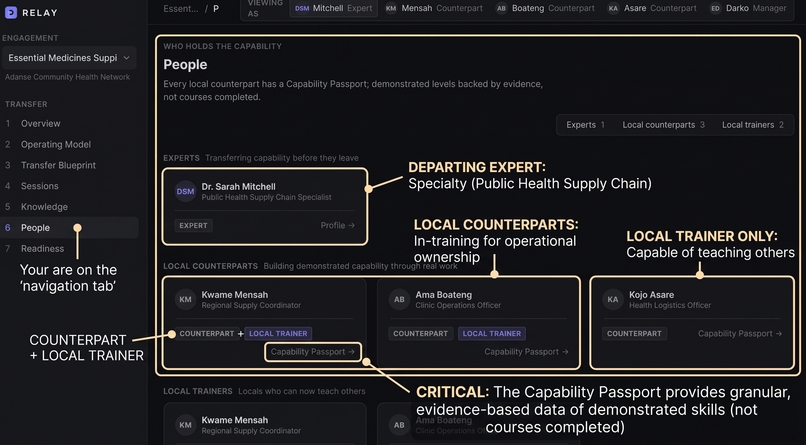
Organization Hierachy
-
-
-
-
-
-
-
-
-
-
-
Inspiration
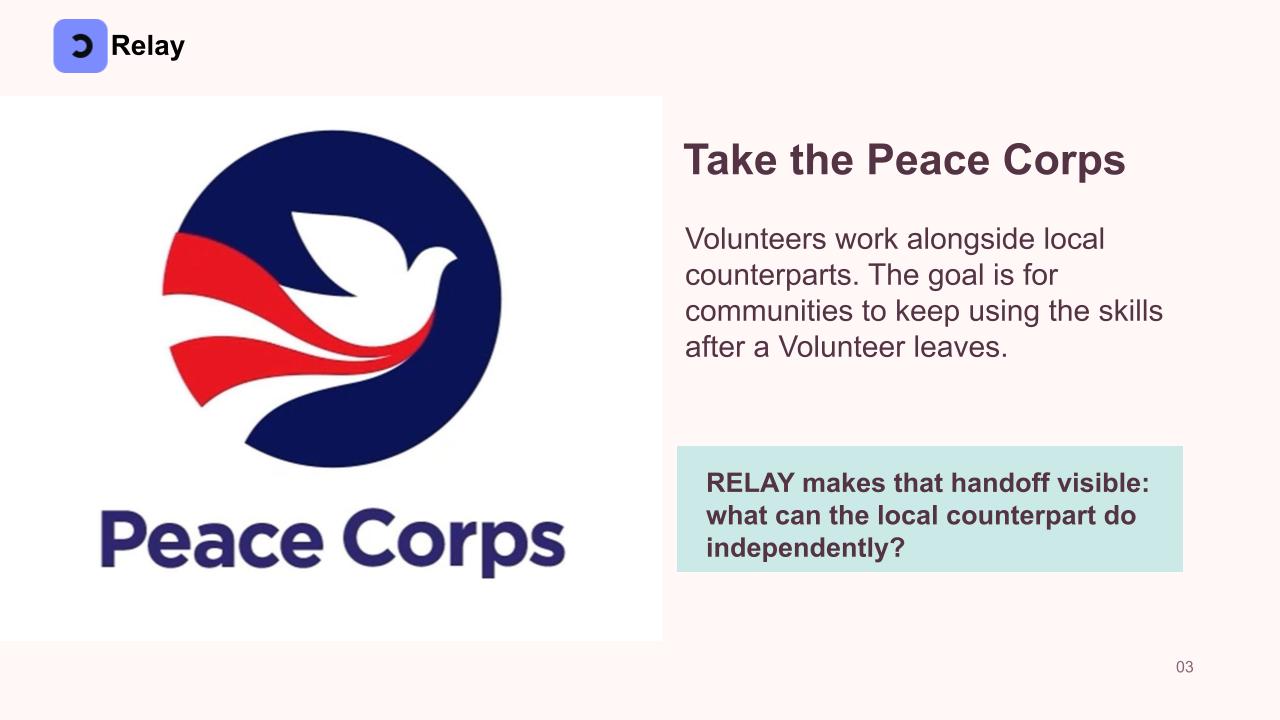
The world already knows how to move experts. We are terrible, however, at moving expertise.
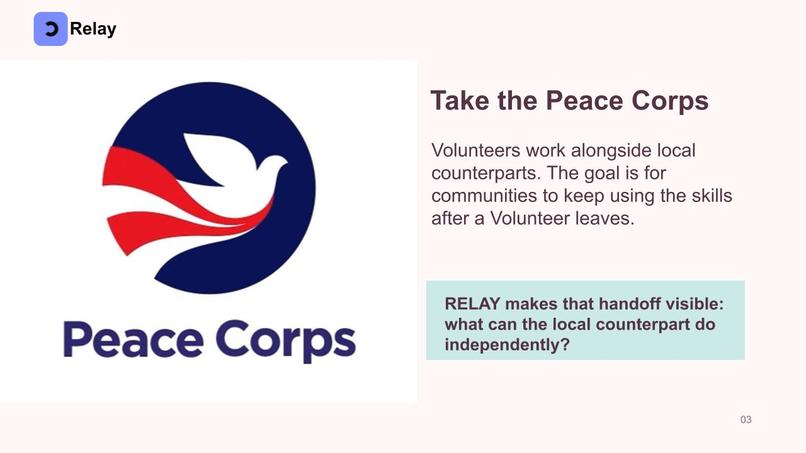
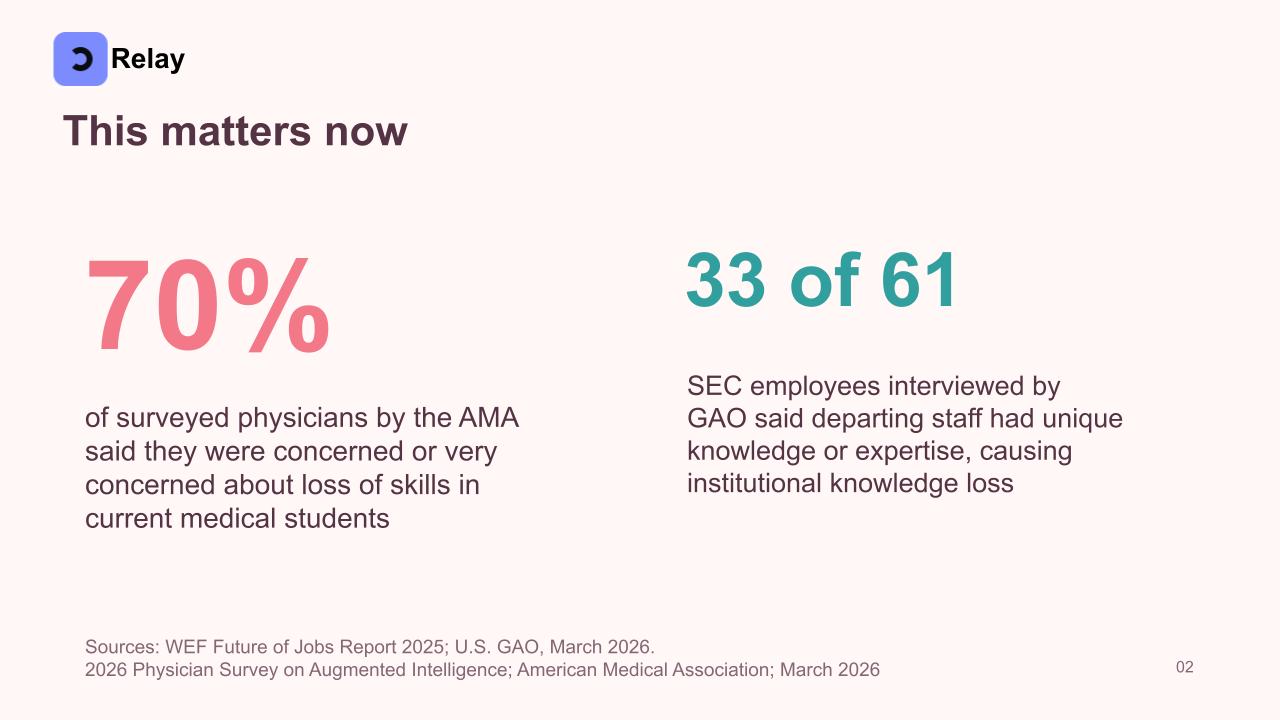
Organizations routinely deploy highly skilled specialists into environments where capabilities need to be developed, whether through international development programs, expert secondments, workforce nationalization initiatives, or simply managing the retirement of veteran employees. But an expert practitioner is rarely an expert instructional designer.
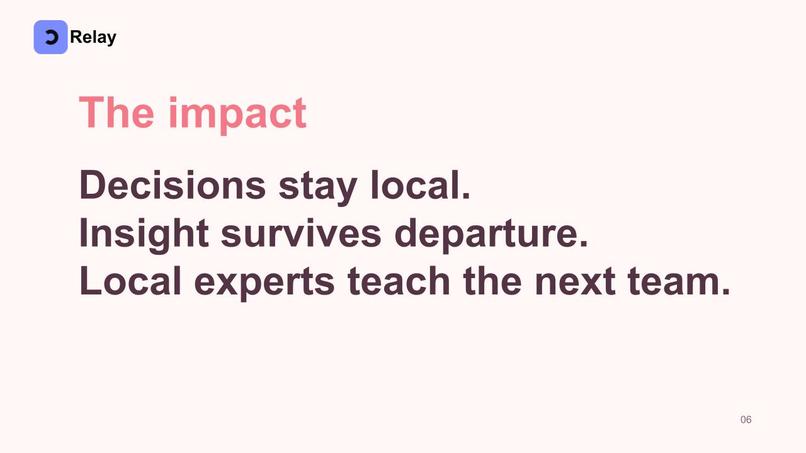
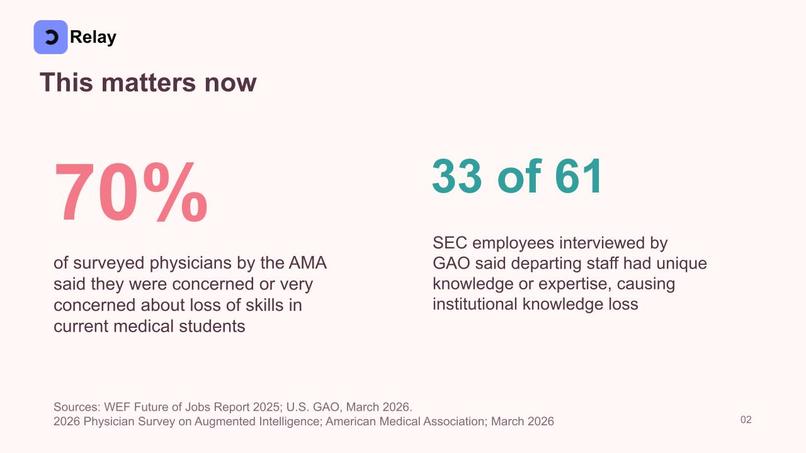
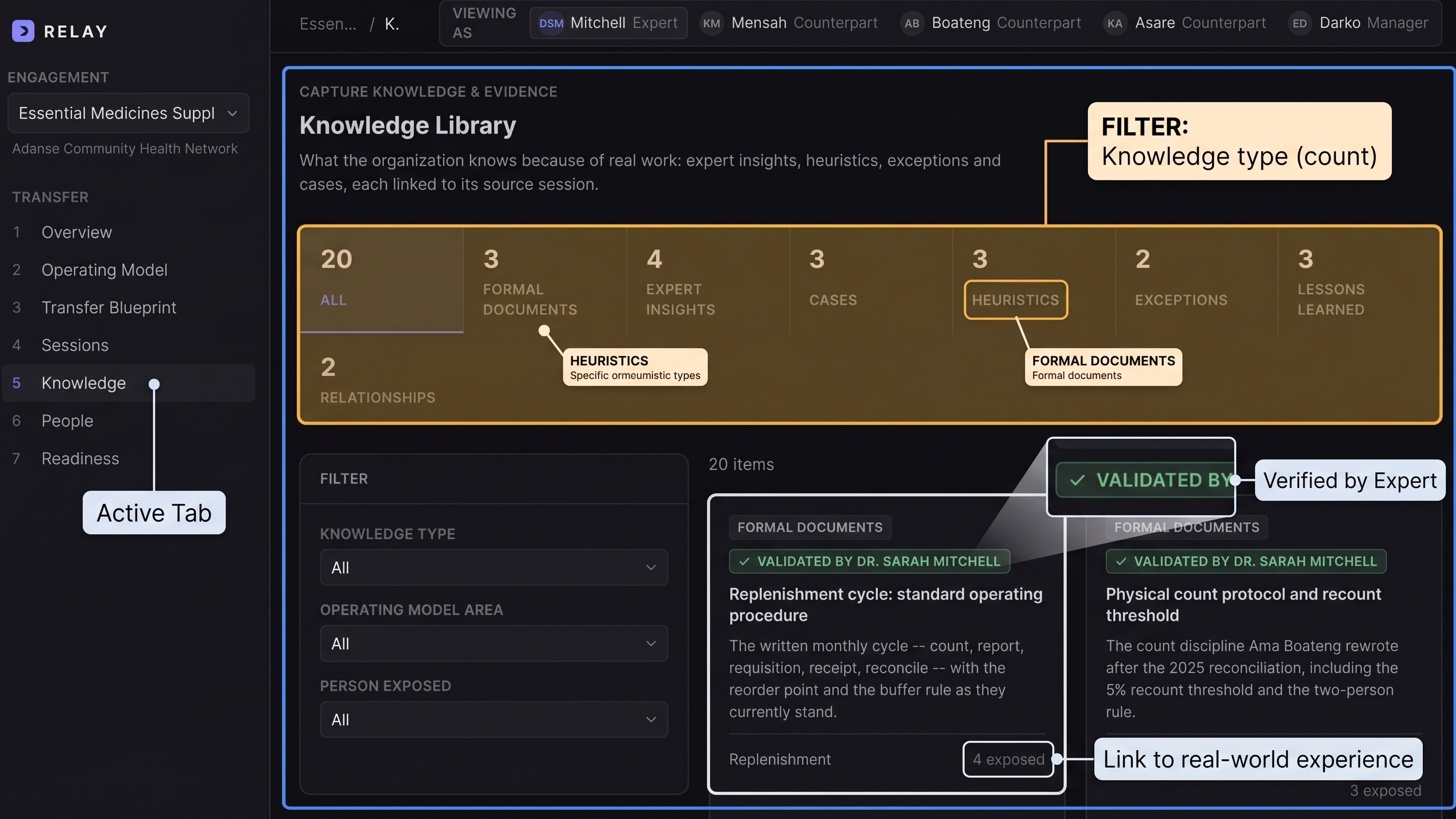
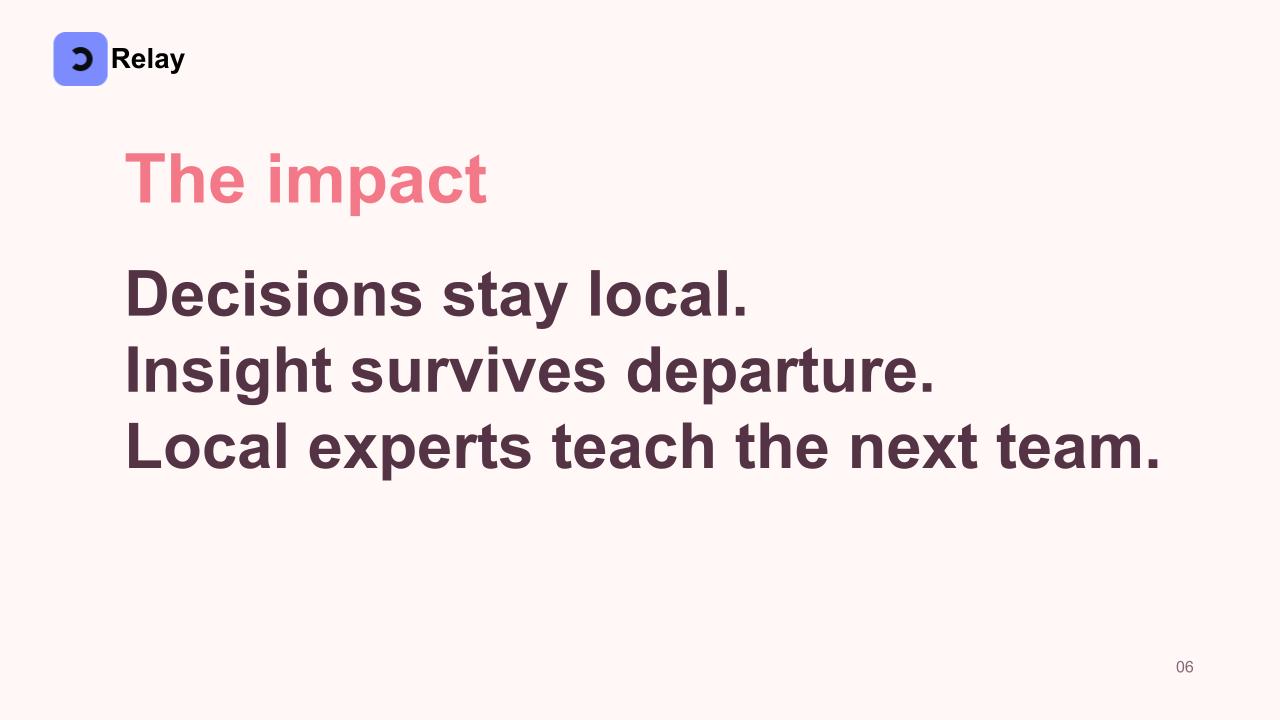
We realized that when experts are deployed, they end up performing the work instead of transferring the capability. Tacit knowledge stays trapped in their heads, informal relationships disappear when they leave, and management is left wondering if the organization can actually operate independently. We built RELAY to provide the operational scaffolding around the human expert, ensuring that human-to-human knowledge transfer becomes structured, measurable, active, and persistent.
What it does
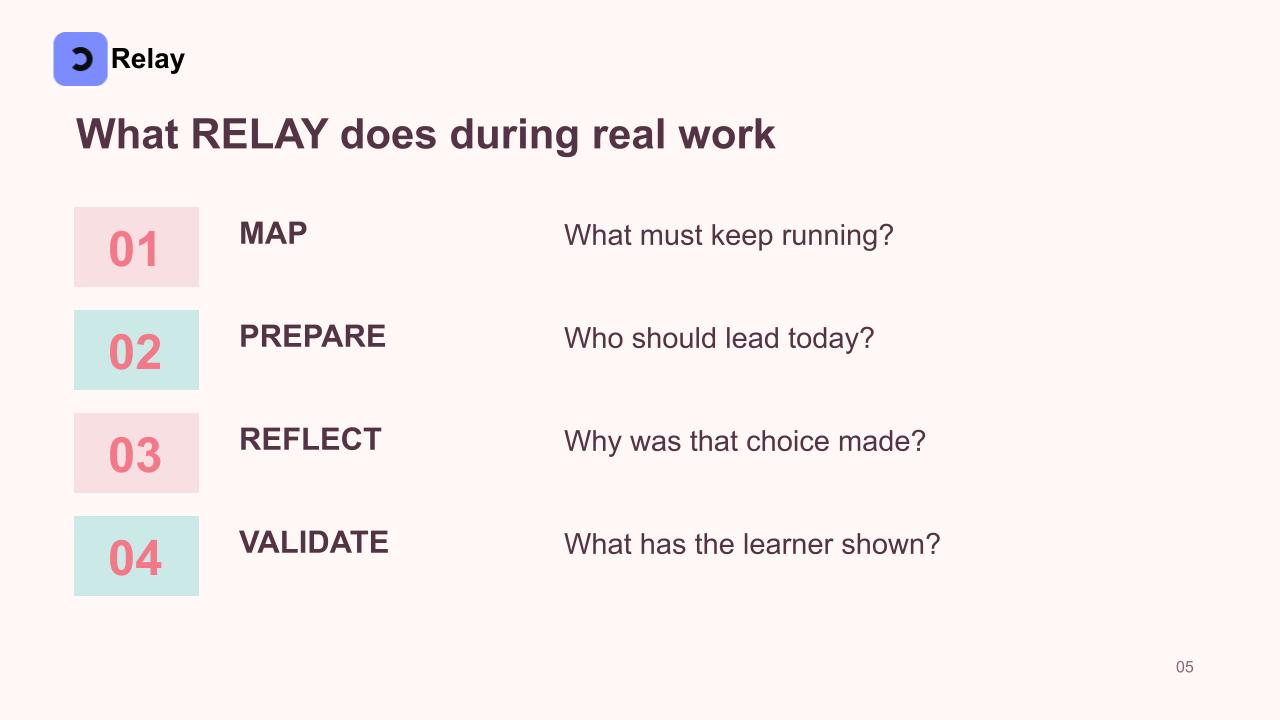
RELAY is an AI-powered knowledge-transfer and workforce-localization platform. It does not replace the human trainer; it makes them a better one. The platform guides users through a five-layer progression:
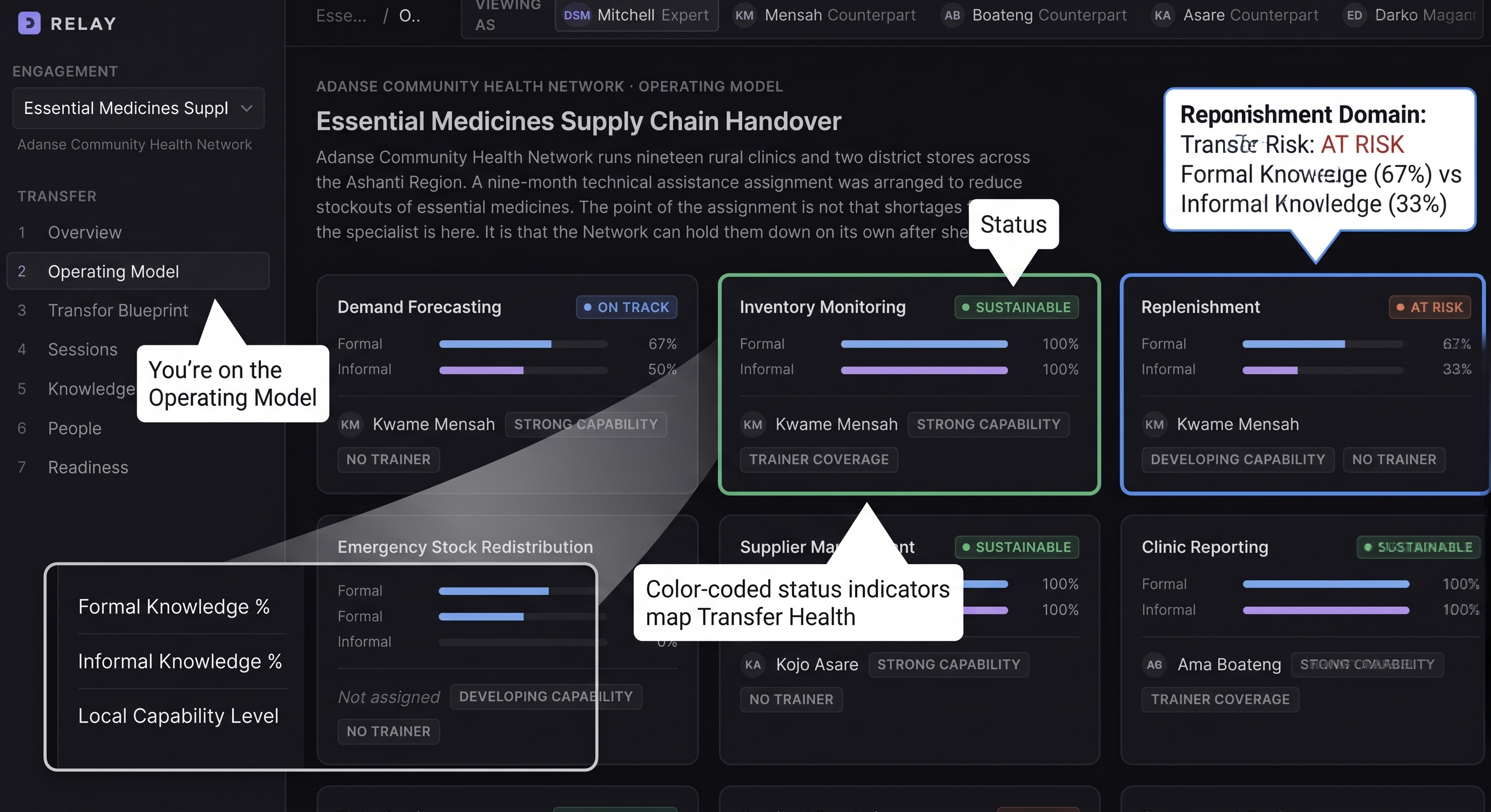
- Operating Model Builder: An AI-guided chat interface helps the expert map out what actually needs to function after they leave (processes, governance, tools, and decisions).
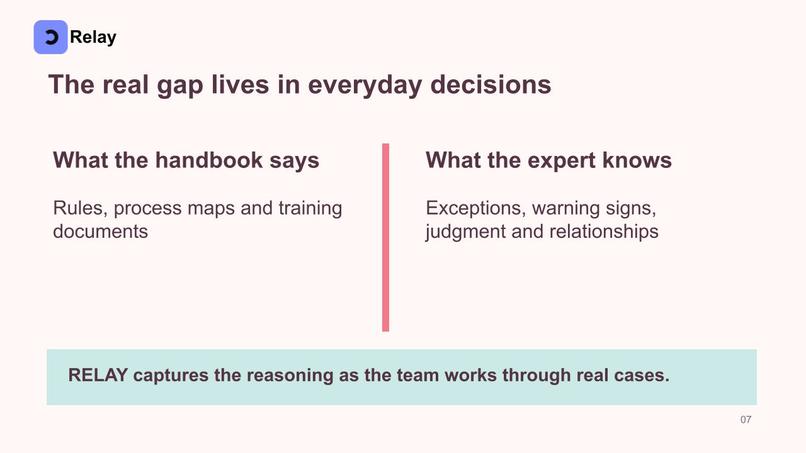
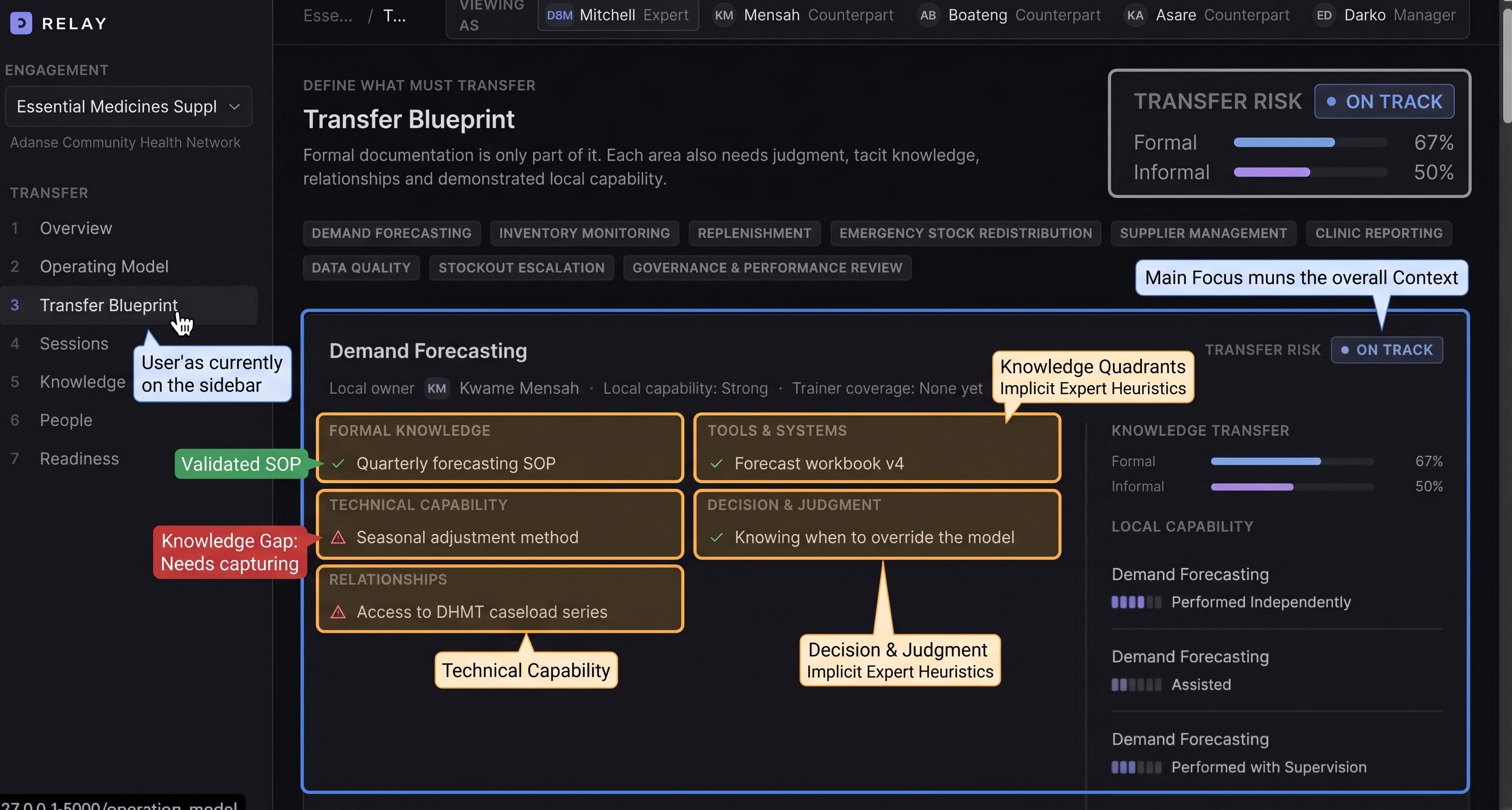
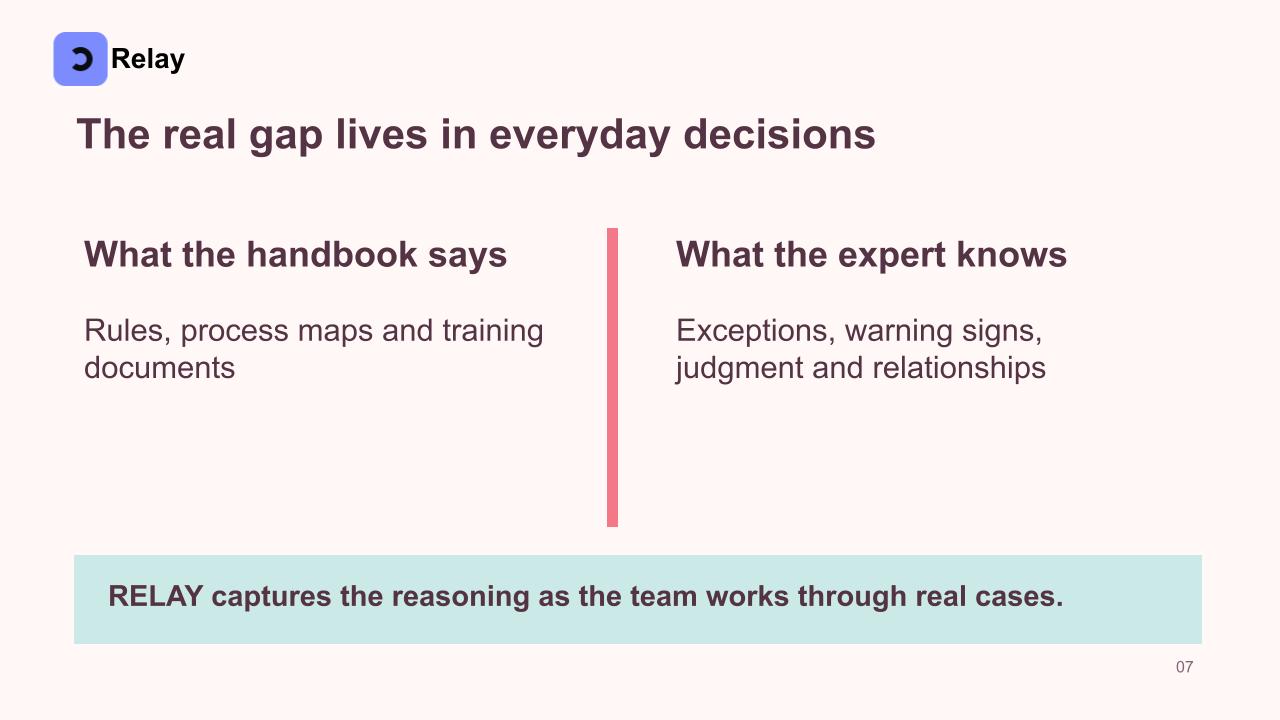
- Transfer Blueprint: RELAY automatically identifies gaps between Formal Knowledge (SOPs, manuals) and Informal Knowledge (heuristics, workarounds, and "gut feelings").
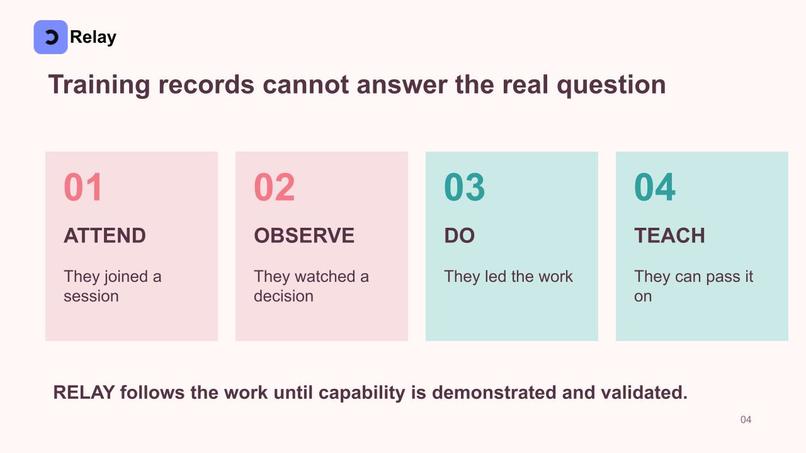
- Transfer Rails: RELAY structures experiential learning through defined stages.
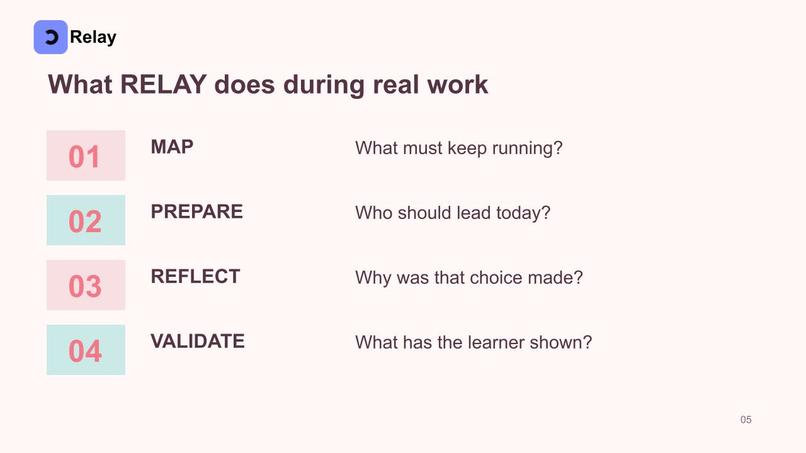
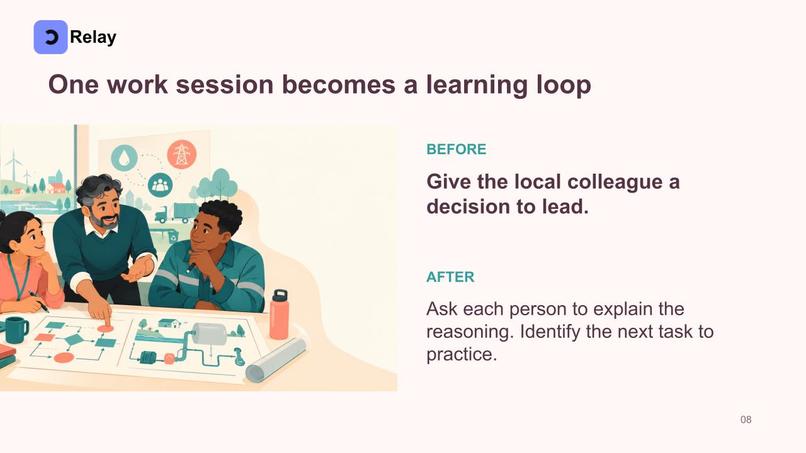
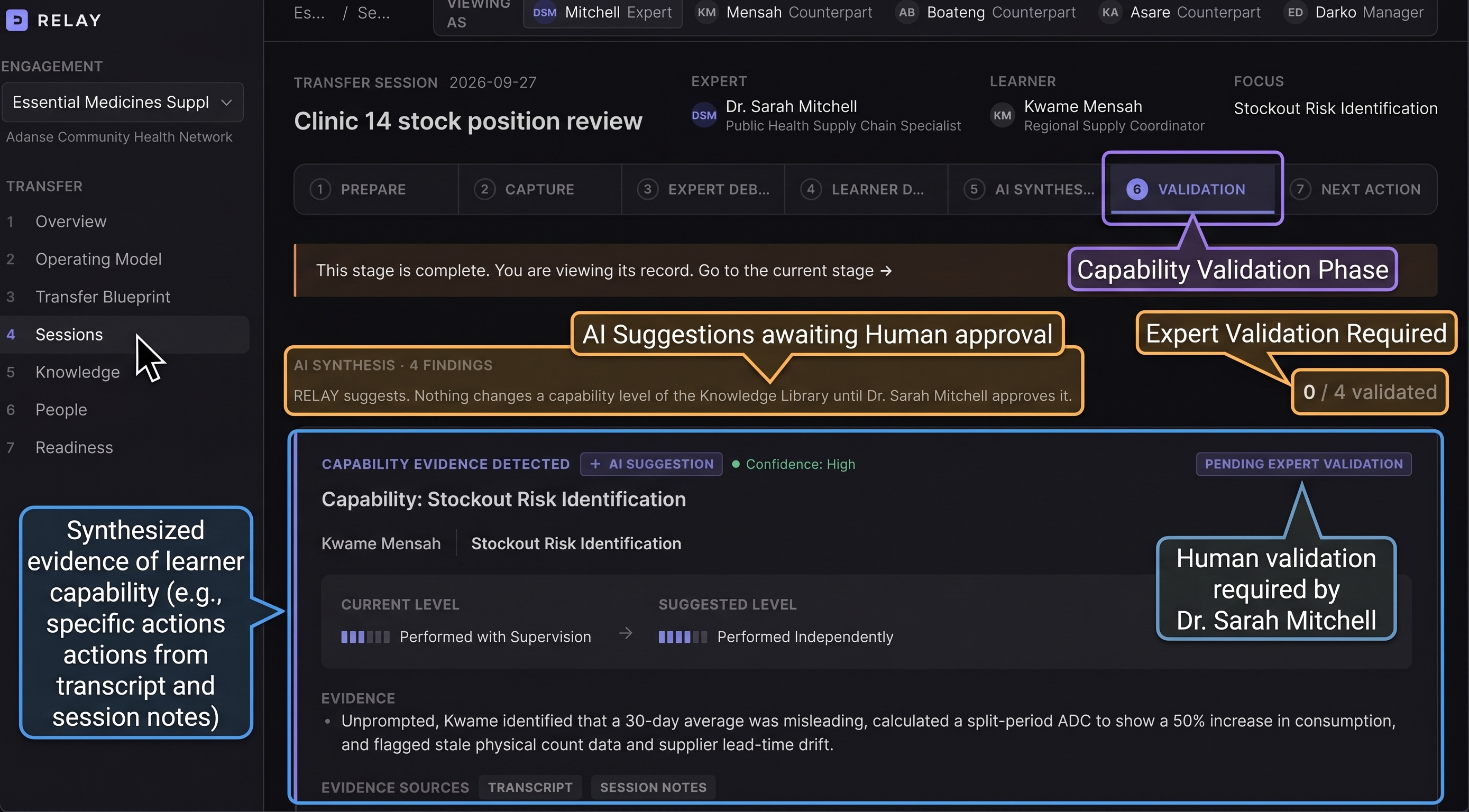
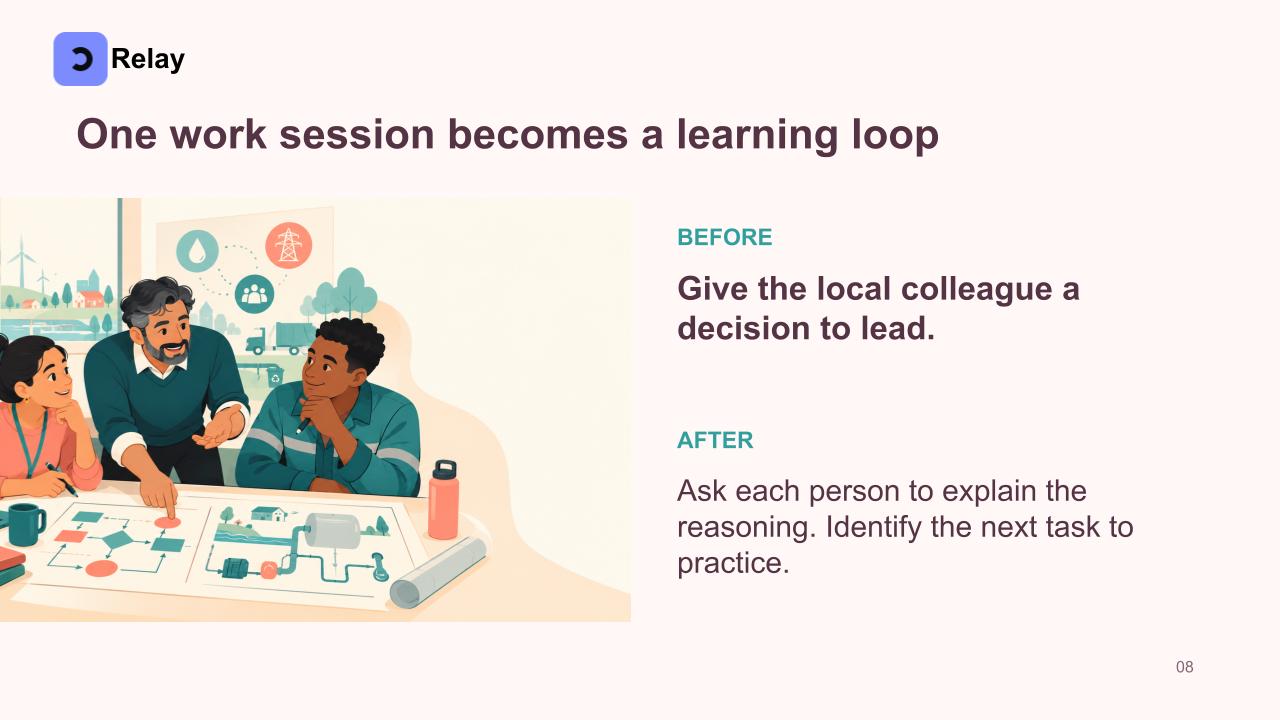
- Transfer Sessions: Before real work begins, RELAY provides a "Session Brief" to coach the expert. Afterward, targeted AI debriefs extract tacit knowledge from the expert and validate the learner's actual comprehension.
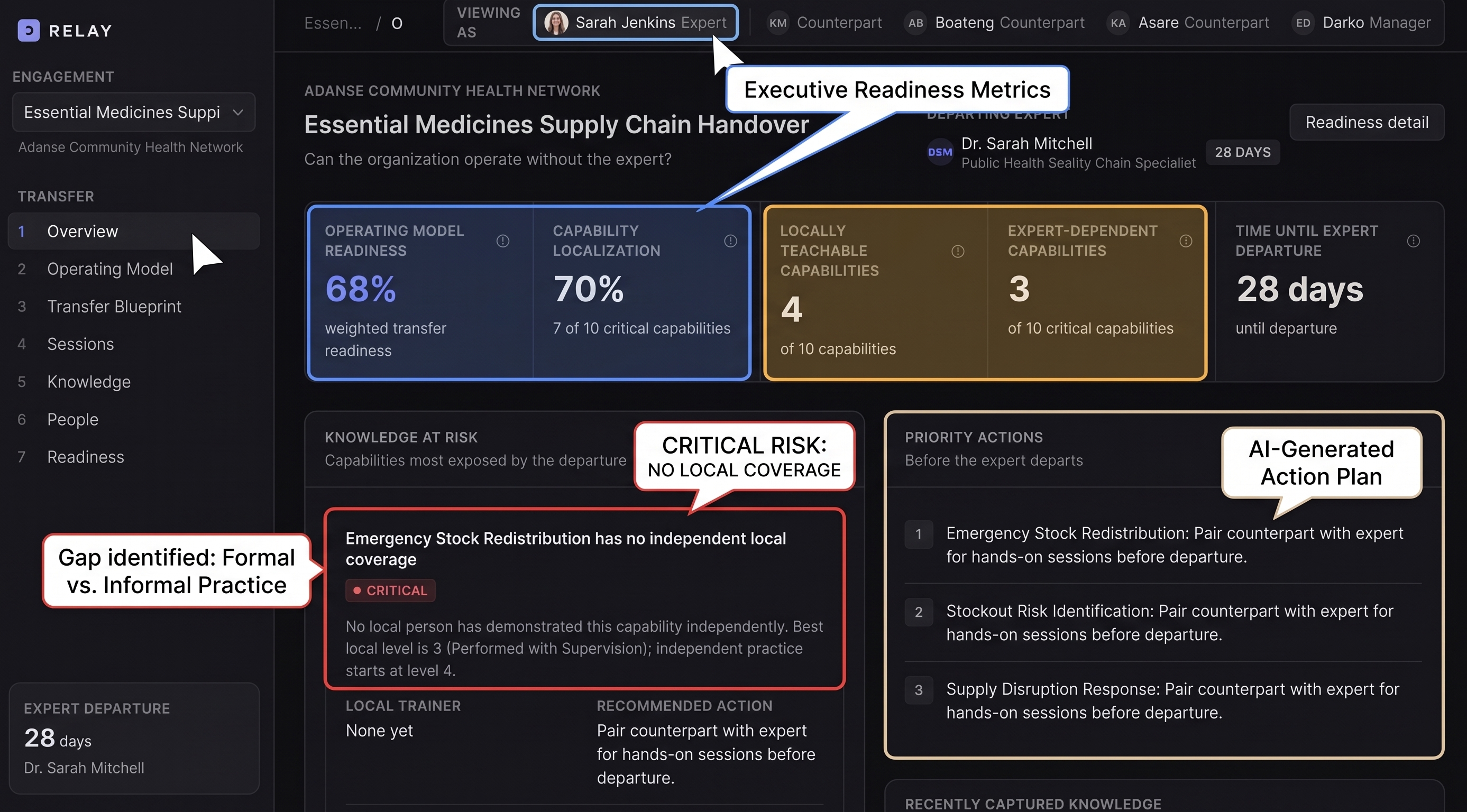
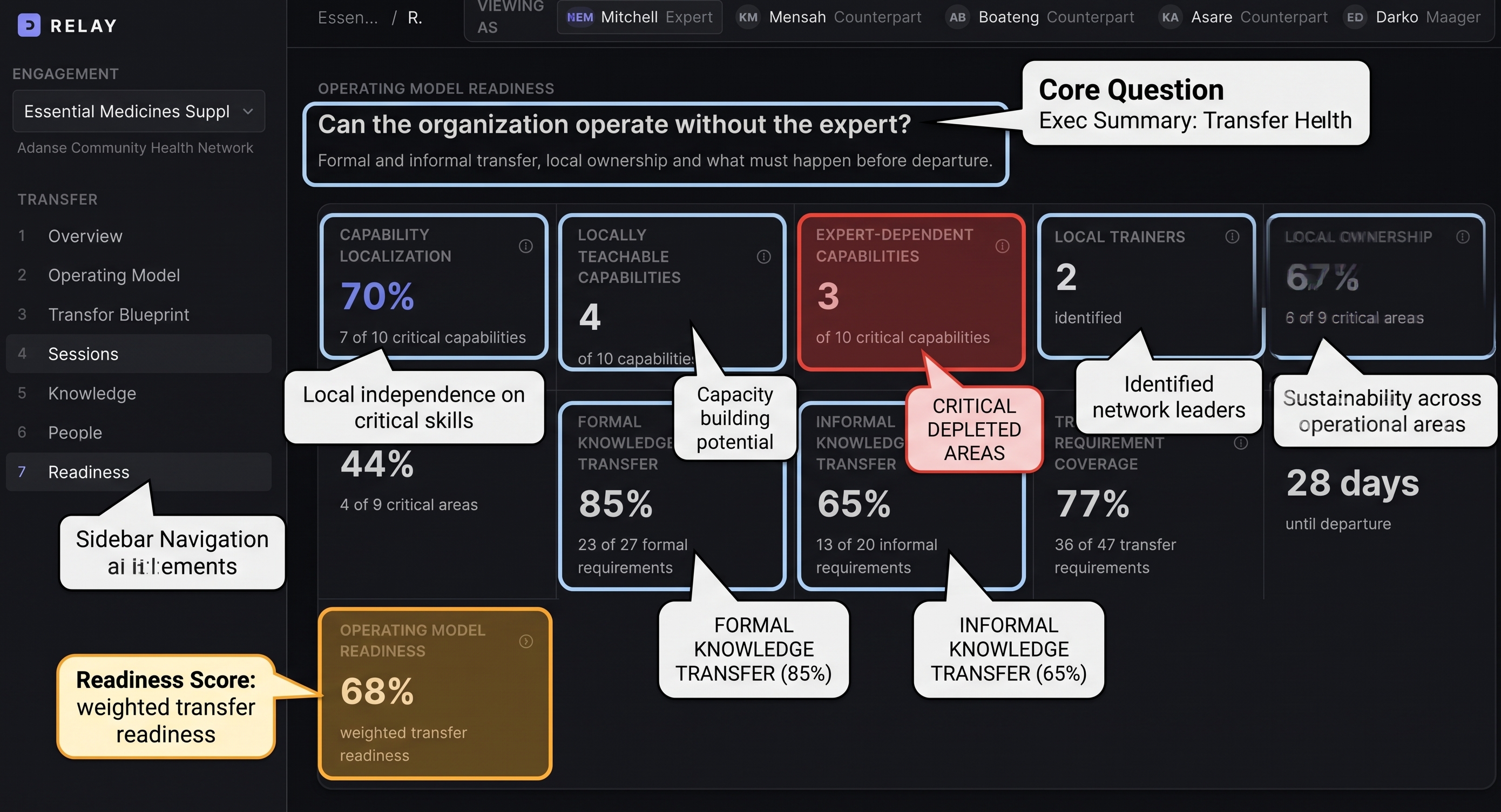
- Readiness: The platform synthesizes this data to validate when a learner has achieved independent capability.
How we built it
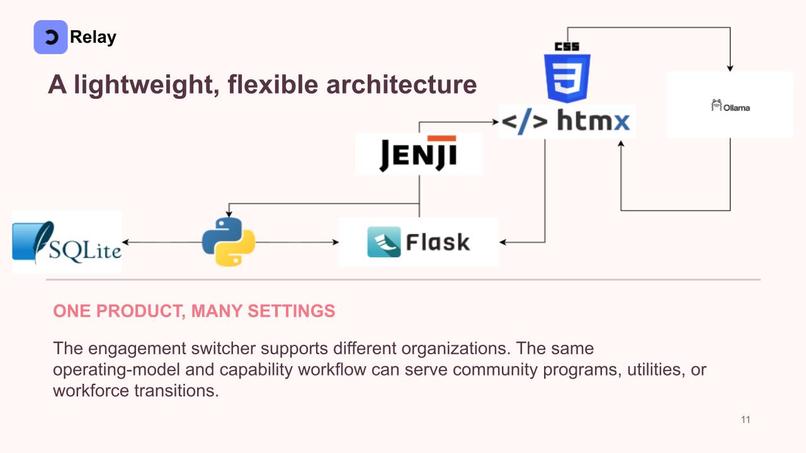
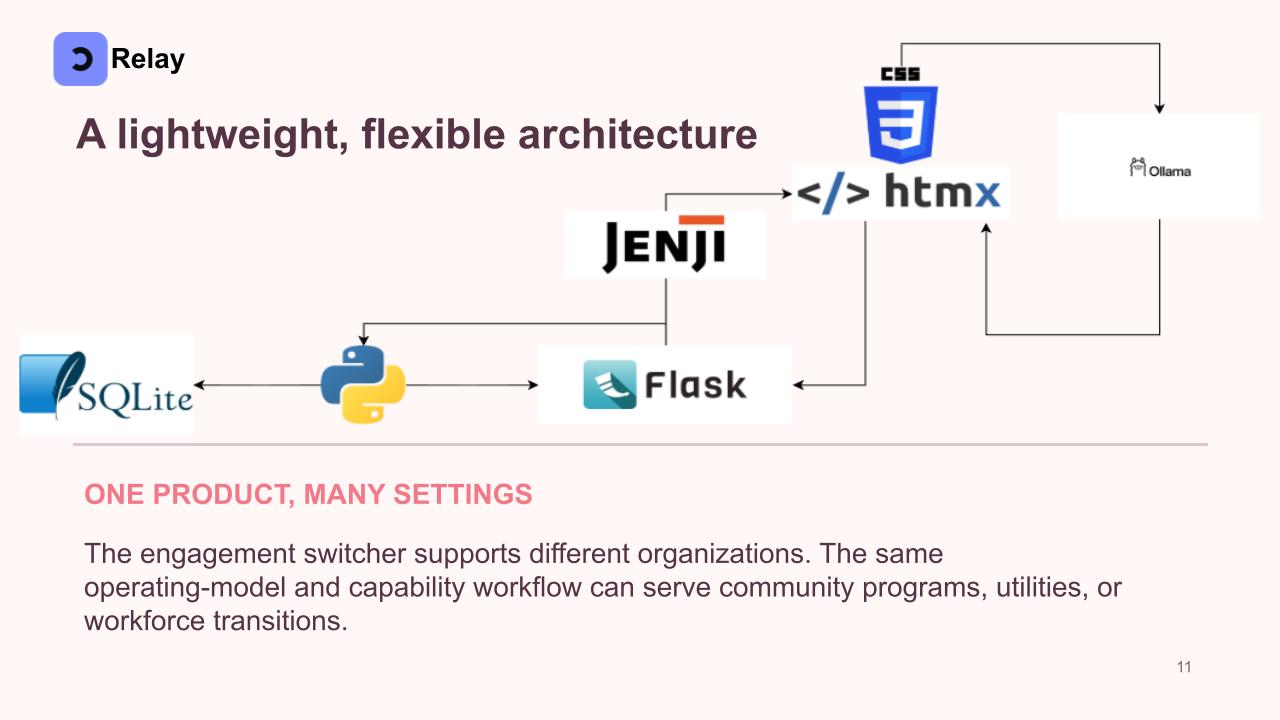
We built the RELAY prototype using a modern web stack optimized for rapid iteration: Flask (App Router) with HTMX for clean, enterprise-grade iconography.
For the hackathon, we designed a "Wizard of Oz" AI architecture. Rather than relying on external API calls that could rate-limit or timeout during a live demo, we built a robust state-management system to simulate LLM latency, streaming, and structured JSON extraction. This allowed us to perfectly demonstrate the workflow and UX of the AI-guided Operating Model Builder and the automated Debrief Synthesis without risking weekend infrastructure bottlenecks.
Challenges we ran into
Our biggest challenge was conceptual: Coming up with a viable idea. We spent a significant portion of the hackathon brainstorming how to solve the very human problem of knowledge transfer. It was difficult to pinpoint exactly how software could capture unstructured human expertise without just defaulting to another generic course catalog. We went through multiple iterations and pivots before finally landing on our five-layer structured workflow.
Another technical challenge was mapping the conversational AI output to a structured data model. We had to figure out how to take an unstructured user transcript and reliably parse it into distinct Operating Model Components (Processes, People, Governance) while flagging the crucial gaps between documented rules and actual practice.
Accomplishments that we're proud of
We are incredibly proud of the Formal vs. Informal Knowledge extraction engine. The moment during our testing when the mock-AI successfully flagged that an expert was ignoring a "14-day reorder SOP" in favor of checking "weather forecasts and supplier lead times" proved the core value proposition of the app.
We're also proud of the clean, intuitive UI. By utilizing a split-pane design in the builder, users can have a natural conversation with the AI on one side while watching their structured organizational blueprint build itself in real-time on the other.
What we learned
We learned that knowledge transfer is fundamentally an operational problem, not a human resources problem.
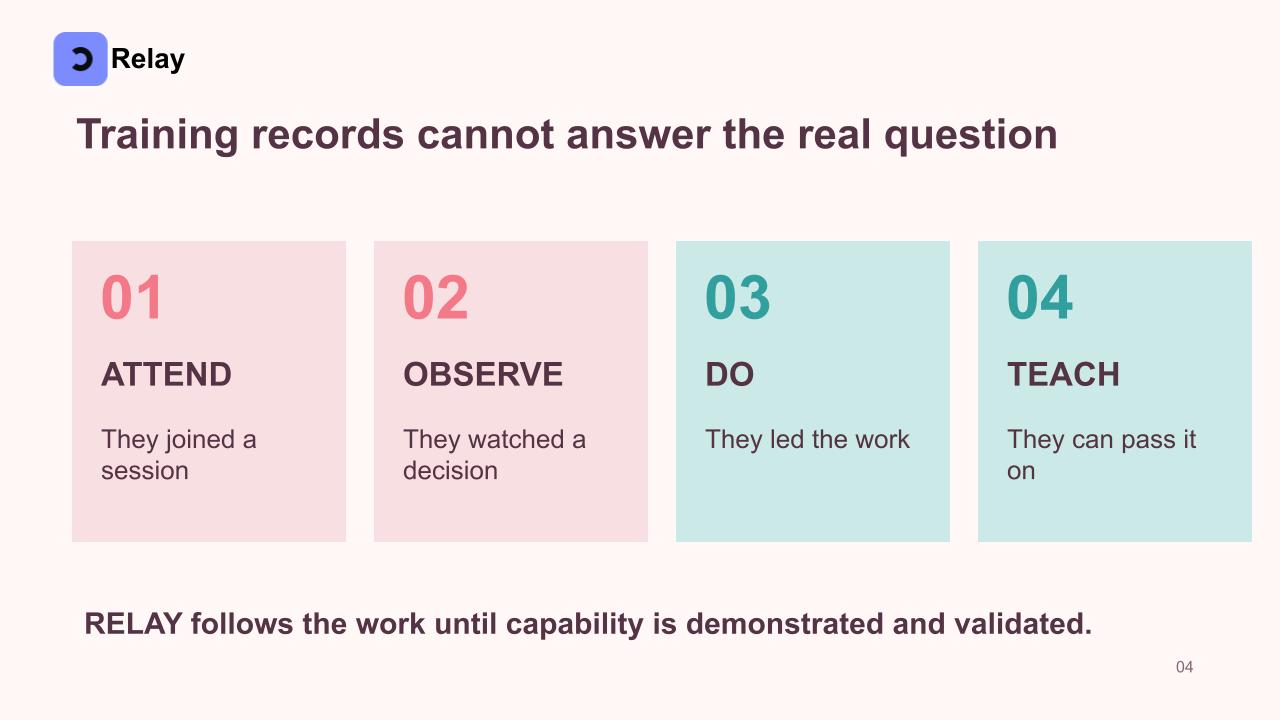
Through building RELAY, we realized that traditional training often just tracks who read the formal manuals. Real capability requires hands-on experience and the transfer of informal, tacit knowledge. By systematically capturing the "gut feelings" of experts and structuring real-world practice, we saw firsthand how technology can bridge the gap between just observing an expert and actually unlocking the readiness of the local workforce.
What's next for RELAY
The immediate next step is swapping our "Wizard of Oz" architecture for live integrations with the OpenAI or Anthropic SDKs to power dynamic, unstructured conversational extraction.
Beyond that, we plan to implement:
- Audio Transcriptions: Integrating with the Microsoft Teams/Zoom APIs and field audio capturing so the "Knowledge Capture" phase happens automatically without manual copy-pasting.
- Organizational Readiness Dashboards: Scaling the individual capability metrics up to team and enterprise levels, allowing executives to see exactly which departments are still dependent on external experts.
- Automated Blueprint Generation: Ingesting existing corporate PDFs and SOPs to pre-populate the Formal Knowledge baseline before the expert even begins their first session.

Log in or sign up for Devpost to join the conversation.