-
-
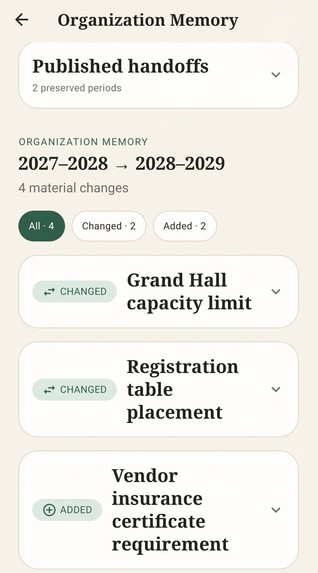
Role Memory
-
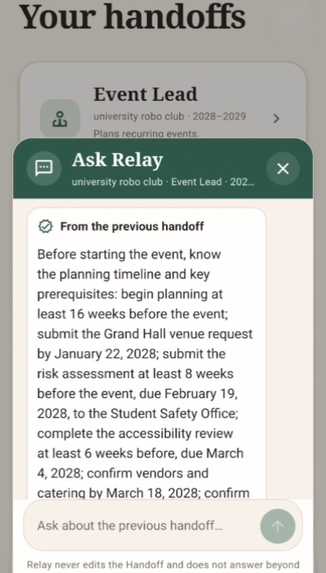
ask relay
-
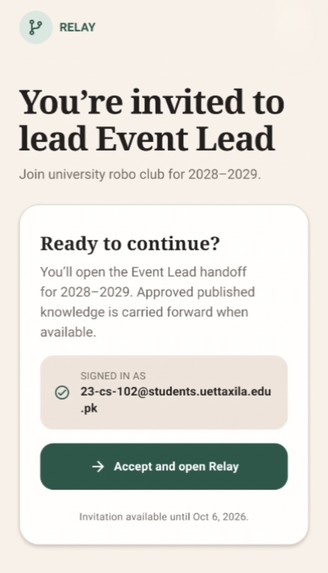
invitation for upcomming leader with handoff
-
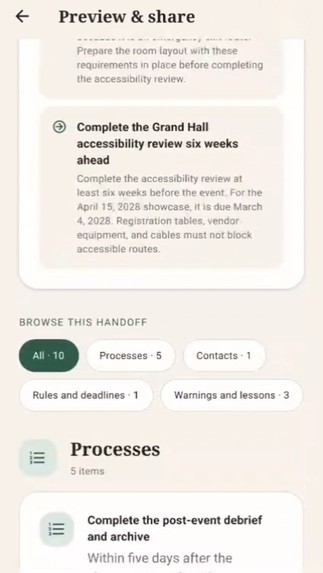
leader published handoff
-
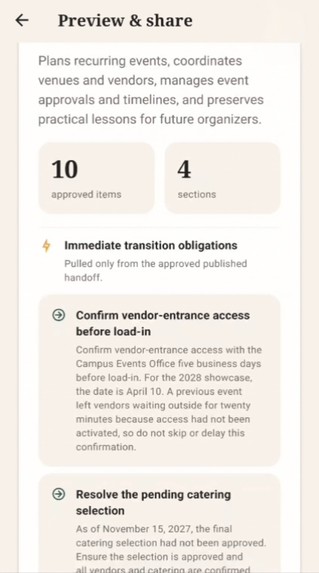
leader published handoff
-
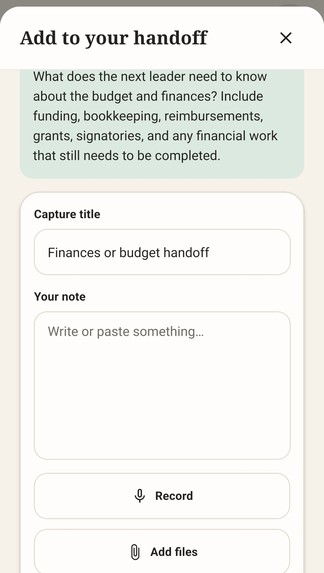
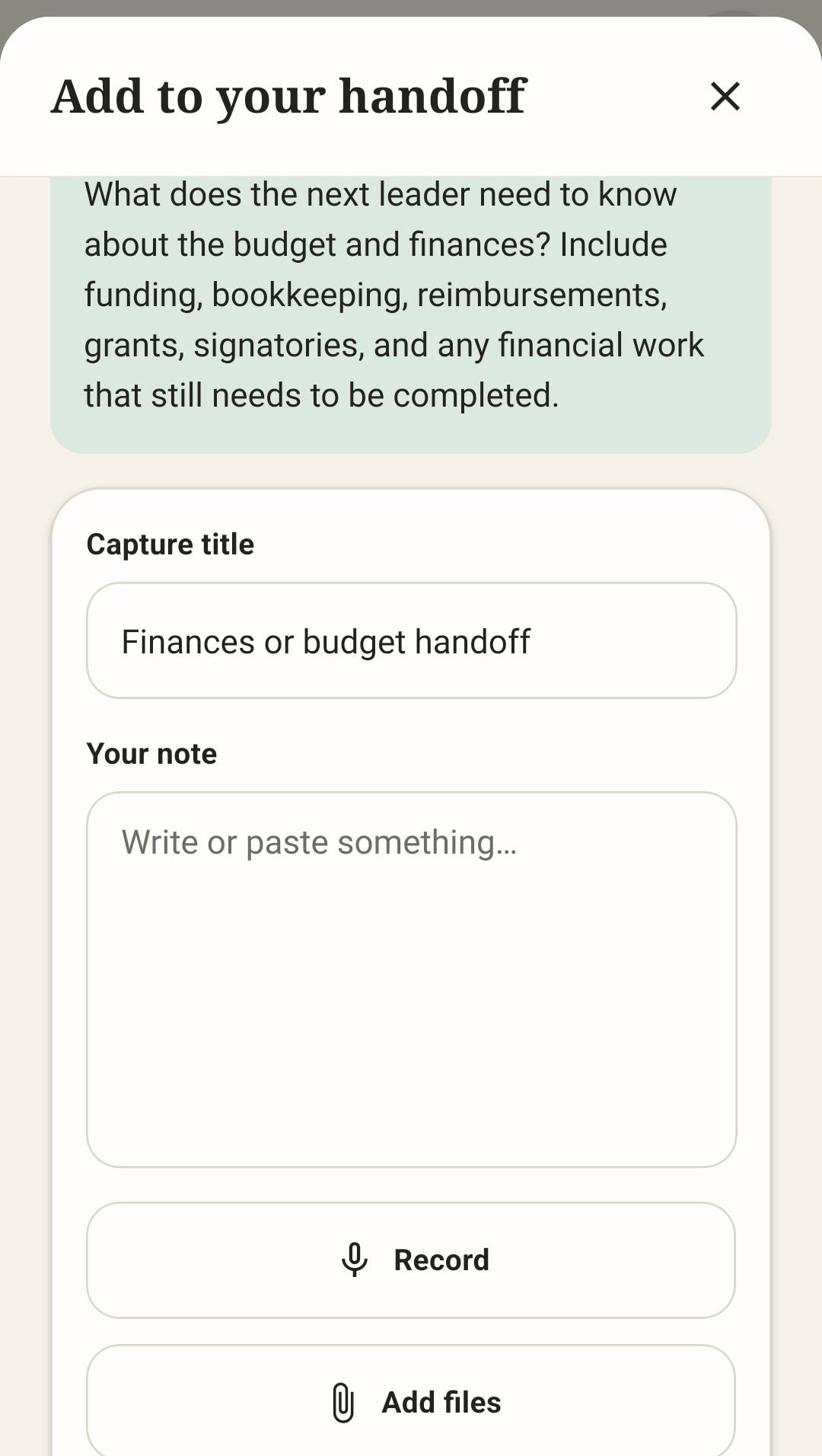
capture-composer
-
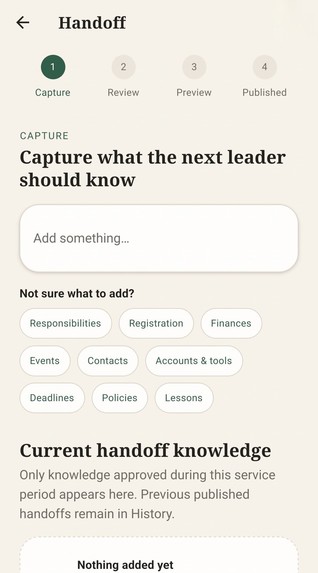
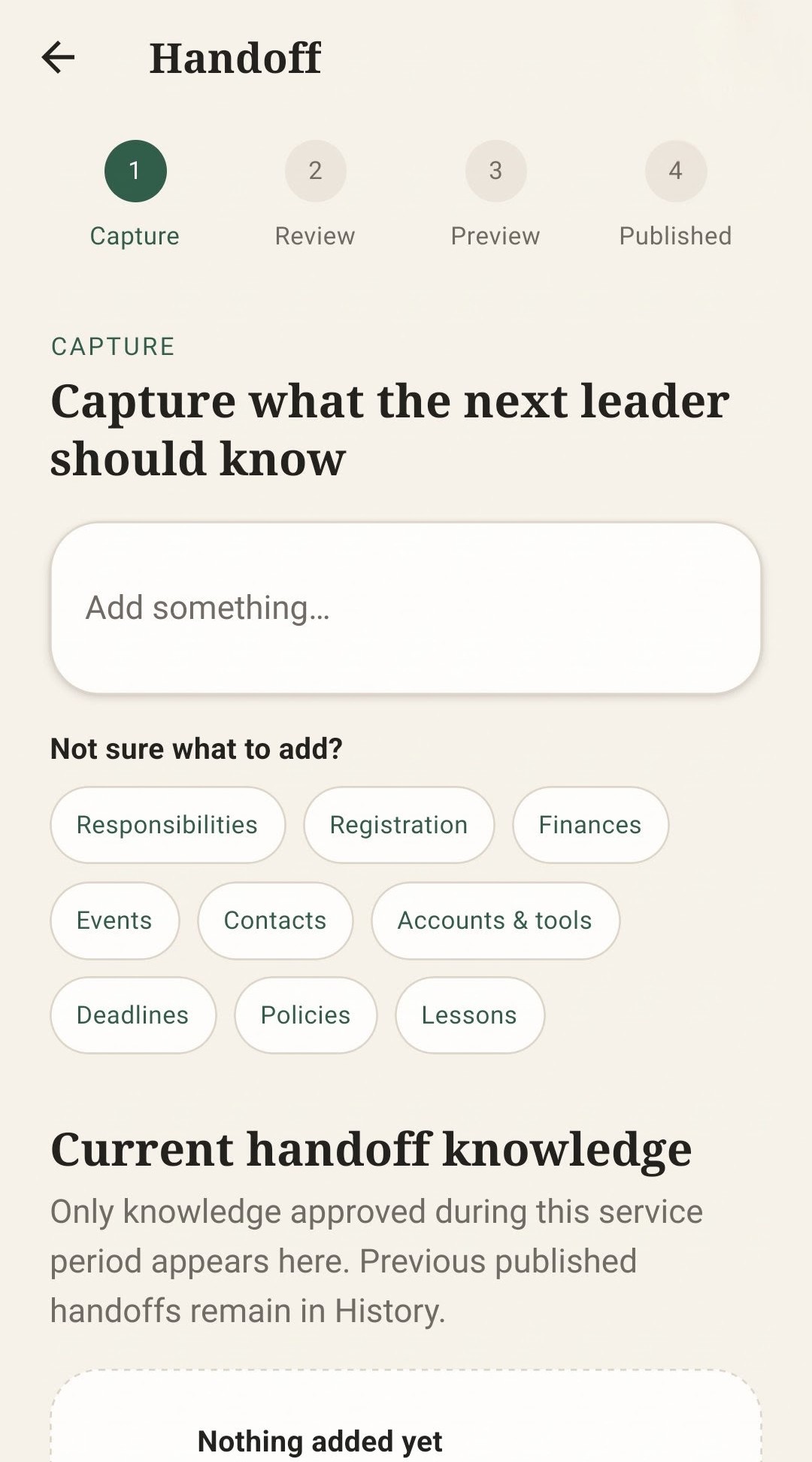
handoff page
Inspiration
Organizations regularly change the people responsible for important roles, but the knowledge needed to perform those roles often leaves with them.
Picture a student society's treasurer graduating. The new treasurer doesn't know which approvals the budget needs, which vendor requires a purchase order, or why last year's process was changed. That knowledge lives in old chats, spreadsheets, shared drives, and one person's head.
When it isn't transferred properly, incoming Role Holders waste time reconstructing processes, lose the context behind past decisions, repeat mistakes, and risk missing important work.
I saw this problem firsthand as a student leader in my university society. When my term ended, almost everything I had learned (who to contact, which approvals were needed, what deadlines to watch, what had gone wrong the year before) lived in my head, my chats and scattered files. My successor had to rebuild it from scratch, and I couldn't capture it all in one last meeting.
This isn't unique to student societies. It happens anywhere responsibility changes hands: companies, nonprofits, committees, volunteer groups and project teams. Relay is built so the knowledge doesn't leave when the person does
What it does
Relay turns scattered operational knowledge into a living, role-specific memory that survives people changing.
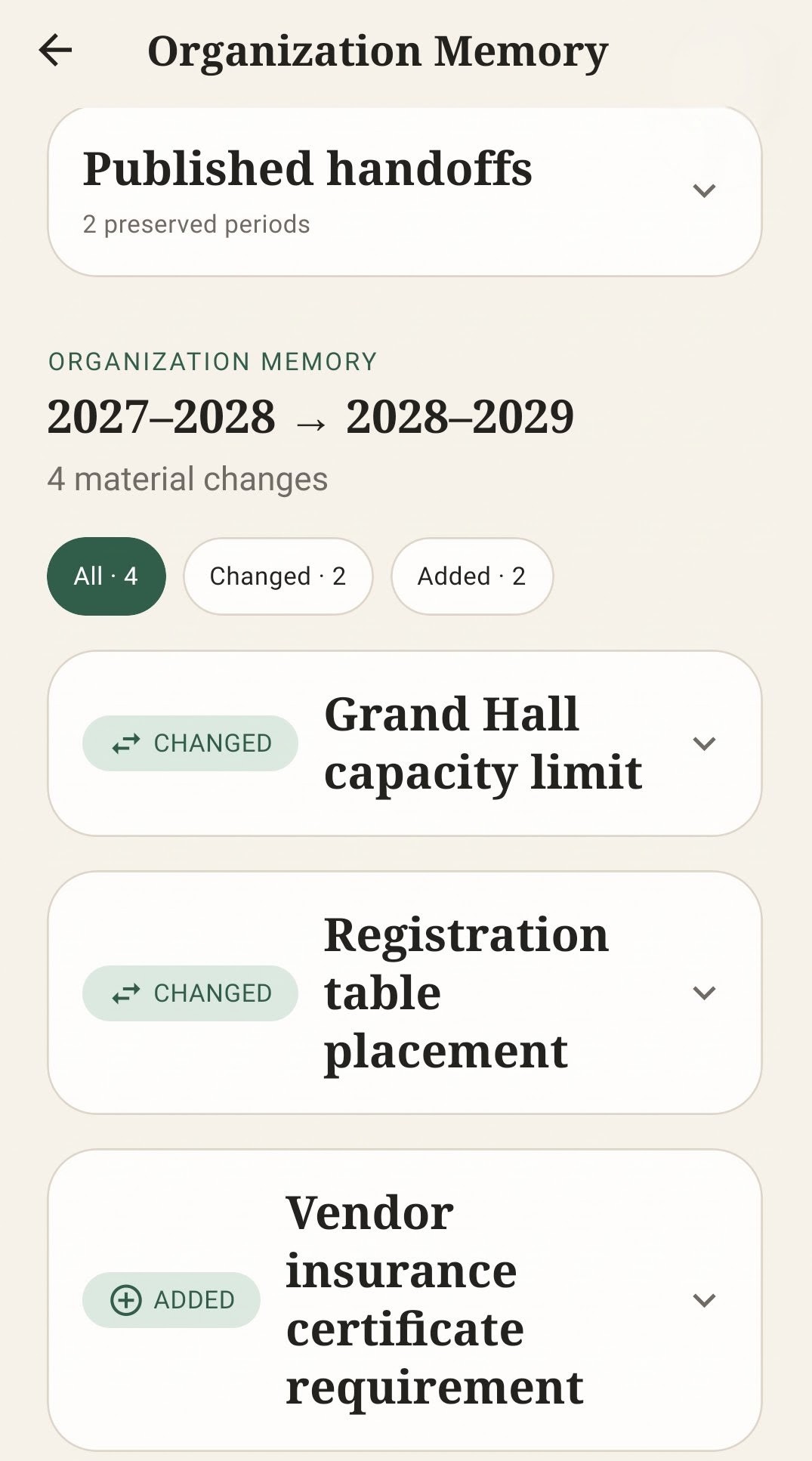
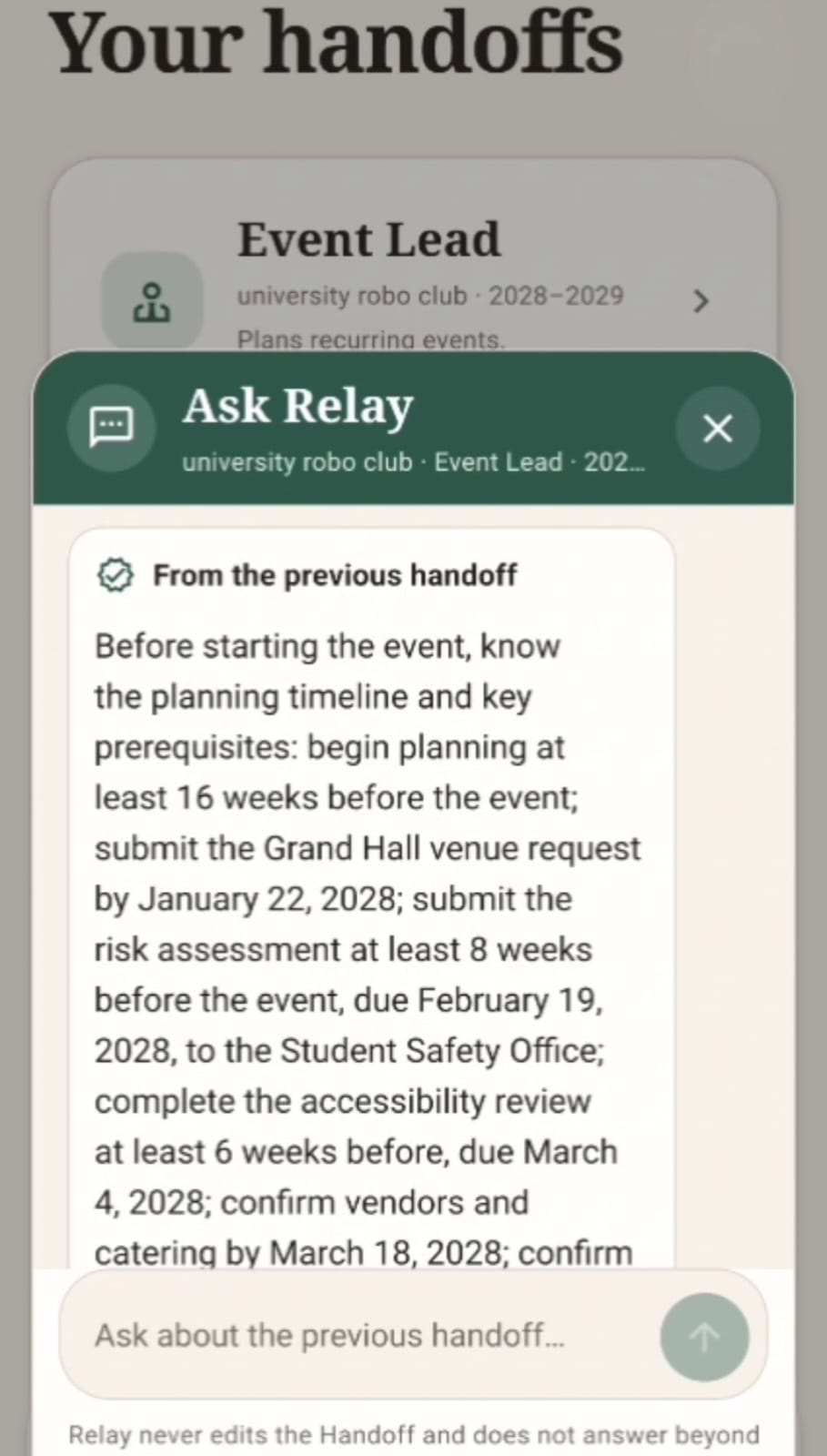
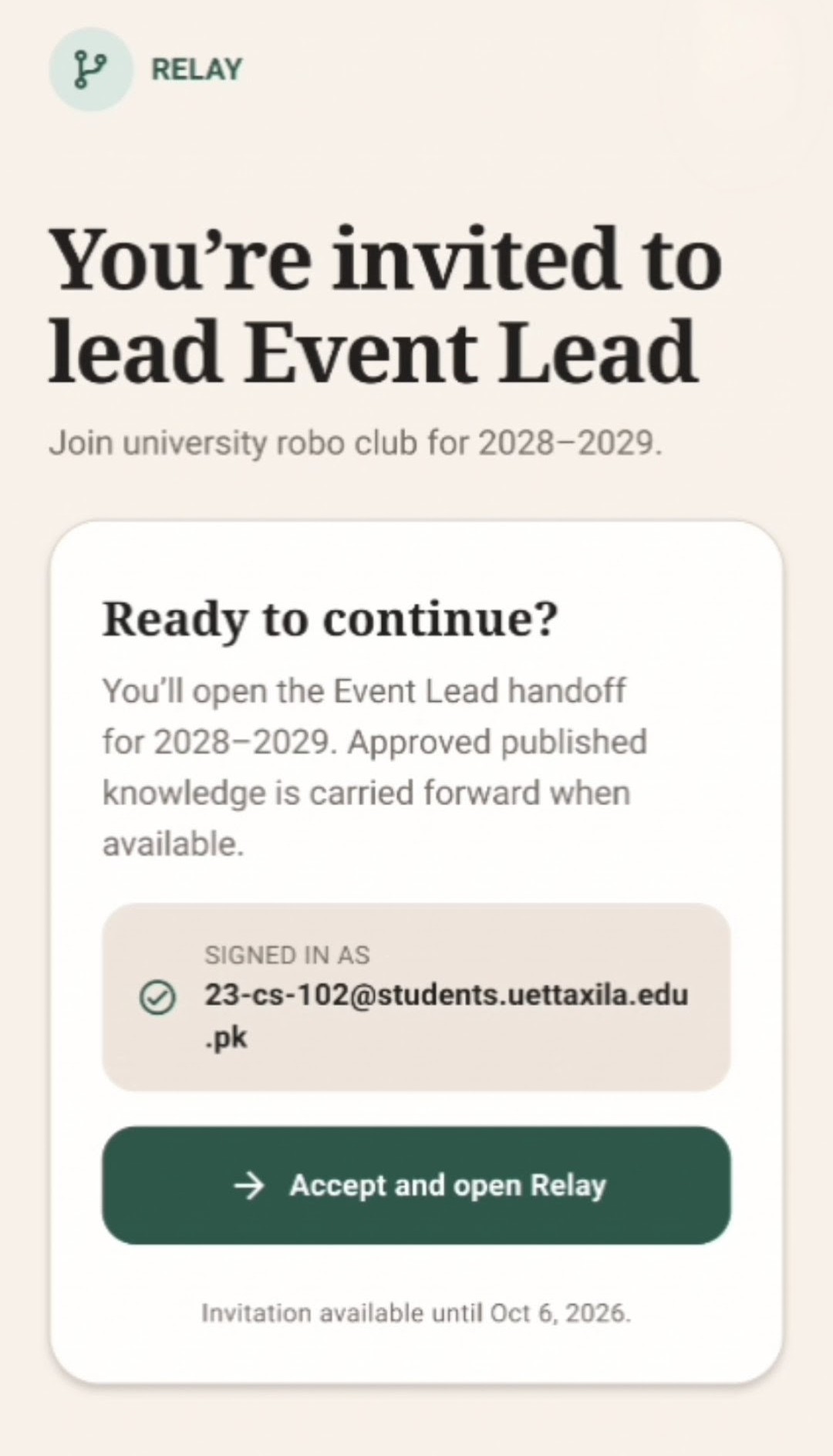
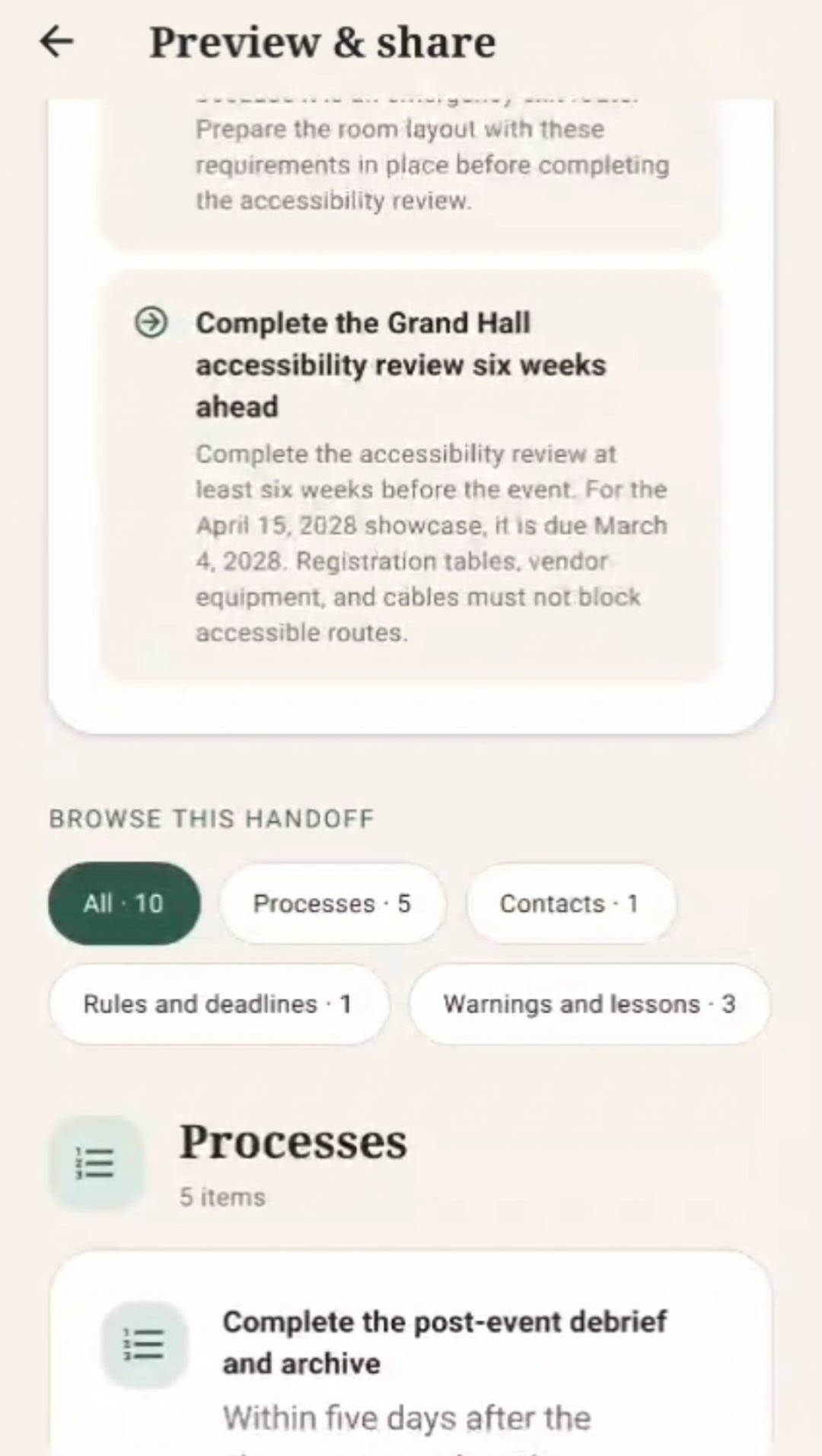
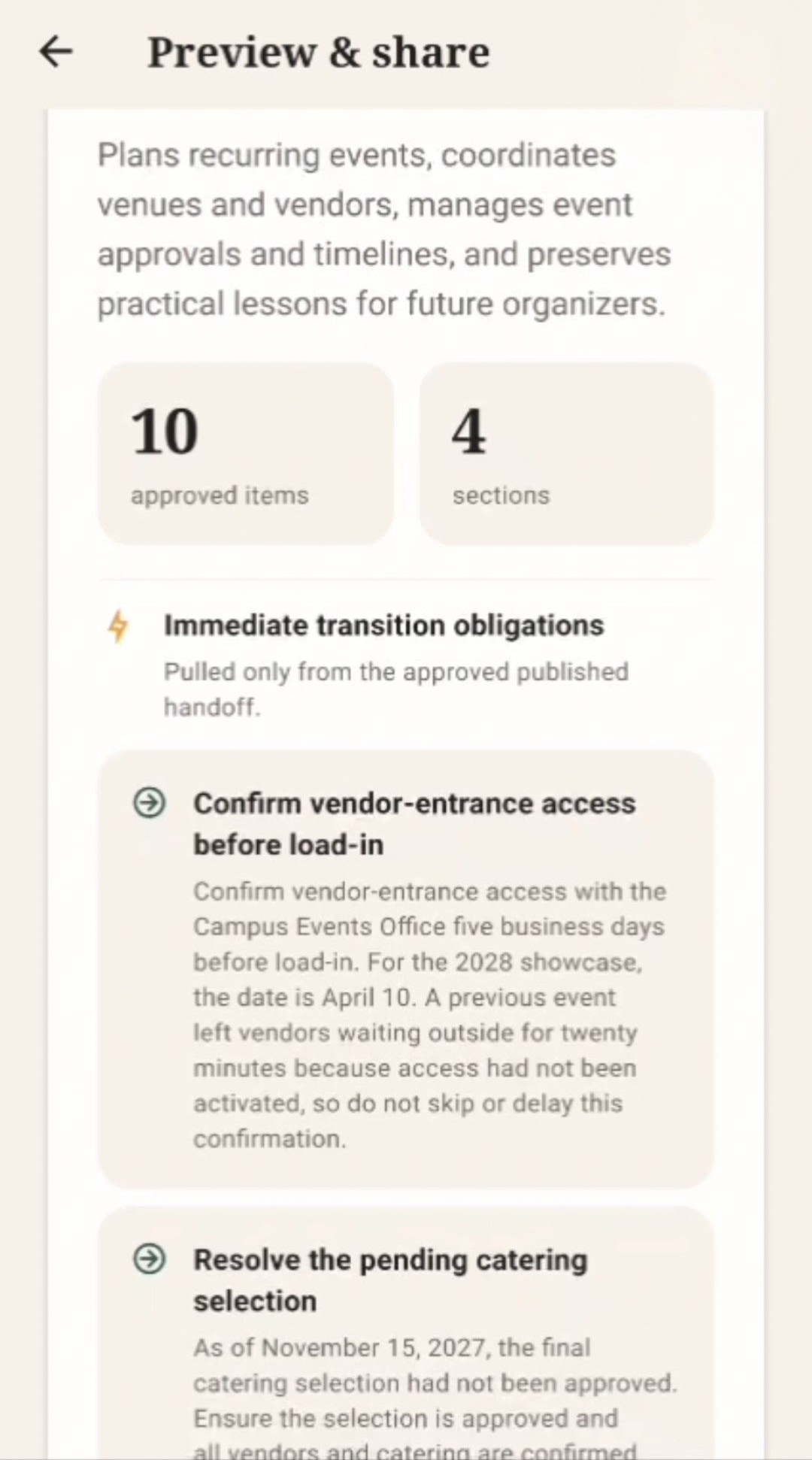
Throughout their time in a role, the Role Holder captures what they learn. Relay organizes it into useful operational knowledge (contacts, deadlines, processes, warnings and lessons), and the Role Holder reviews and approves what becomes part of the trusted handoff. When the role changes hands, the successor receives the published handoff, can ask Relay questions about it, and starts a new living handoff of their own. Over time, Relay shows what changed from one period to the next and, when evidence supports it, why.
Why it's different: notes apps and wikis store information. Relay adds human-approved knowledge, immutable published handoffs, source provenance, and change tracking across service periods.
How I built it
Technology
| Layer | Technology | Role in Relay |
|---|---|---|
| Mobile app | Expo, React Native, TypeScript | Cross-platform app |
| Backend | Supabase | Auth, database, storage, Row Level Security |
| Document parsing | Unstructured | Extracts content from uploaded documents |
| Retrieval | Astra DB, BM25F | Powers grounded answers in Ask Relay |
| Subscriptions | RevenueCat | Relay Plus billing and entitlements |
| AI | Provider-neutral LLM integration | Organizes Captures and answers questions |
how it is monitized
Relay Plus is an annual organization plan managed through RevenueCat. Subscription status is verified by Relay's backend, not trusted from the client.
| Free | Relay Plus | |
|---|---|---|
| Active Roles | Limited | Multiple |
| Handoff history | Limited | Expanded |
| Organization Memory | ❌ | ✅ |
| Continuity across service periods | ❌ | ✅ |
| Document allowance | Standard | Larger |
| Ask Relay allowance | Standard | Larger |
Existing approved knowledge and published handoffs are preserved if an Organization later returns to the Free plan.
What's next for Relay
Relay's next step is to validate the workflow with real organizations and improve the parts that matter most during leadership transition. The long-term goal is simple: every new leader should inherit the knowledge of the Role, not have to rebuild it from scratch.
Built With
- astradb
- expo.io
- qwen
- react-native
- revenue-cat
- supabase
- unstructured.io


Log in or sign up for Devpost to join the conversation.